About this episode
Fresh Air is made possible by:
Singer is the author of Coding Kids: Big Tech’s Battle to Remake Public Schools. She spoke with Terry Gross.
Subscribe to our free weekly newsletter
Follow us on Instagram
Subscribe to our YouTube channel
Check out the Fresh Air Archives
See pcm.adswizz.com for information about our collection and use of personal data for sponsorship and to manage your podcast sponsorship preferences.
NPR Privacy Policy
Get every episode summarized
Each time Fresh Air publishes, we email you a written briefing from the transcript — the topics, who appeared, and any specific claims, with the ad reads skipped.
Email me new episodesFree for 3 shows. No card needed.
Hosts & guests

Transcript ready
500 searchable segments. Every word is indexed and playable.
Full transcript
Fresh Air — Back-to-school with Big Tech. Machine-transcribed; use the interactive transcript above to jump the player to any line.
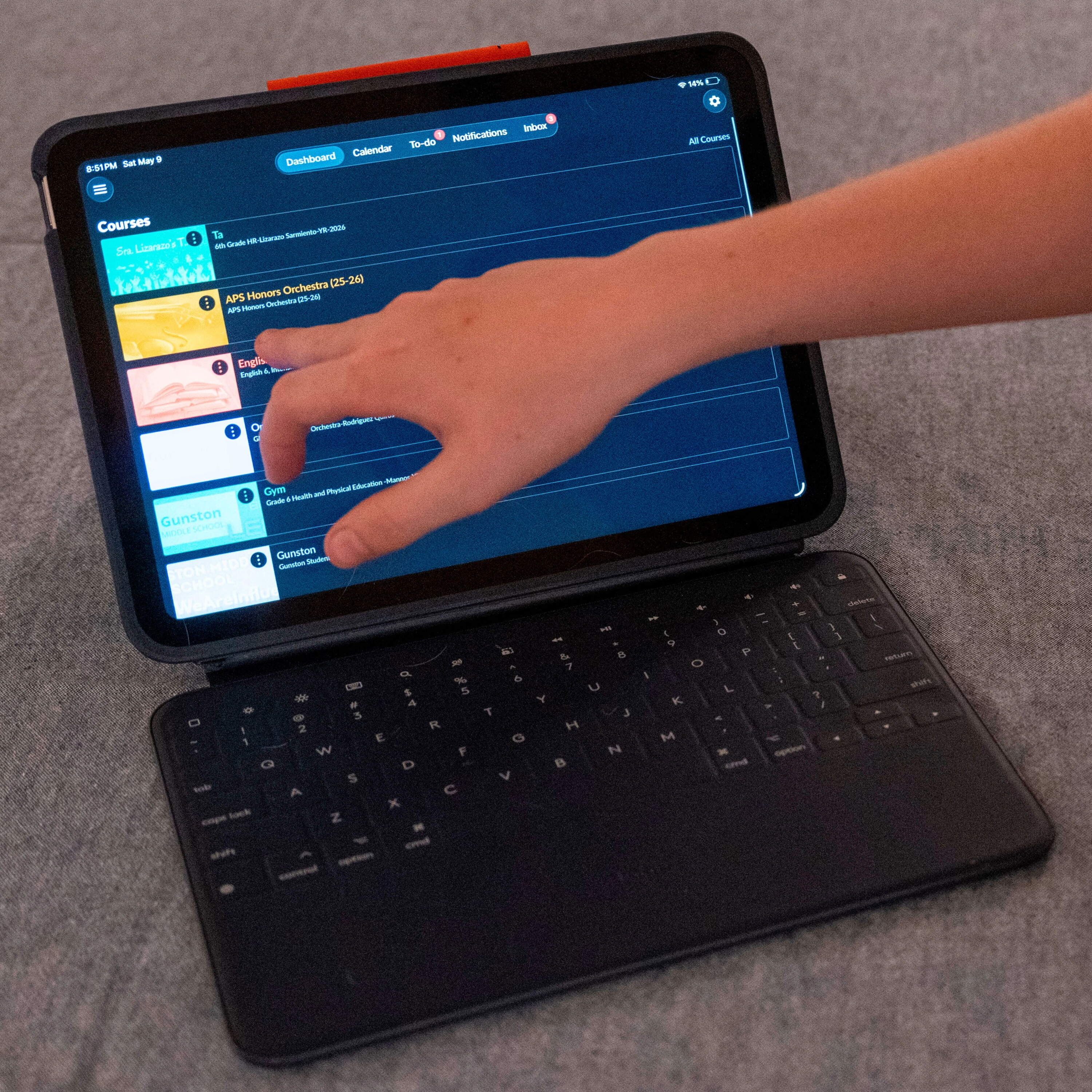
How do you handle really big emotions? It starts with emotional intelligence. Emotional intelligence is okay, A, what am I really feeling? B, is this emotion helpful or unhelpful for achieving my goal? If it's unhelpful, what am I going to do about it? Or what's my strategy for regulating it? The science of emotional regulation on shortwave. Listen on the MPRF or wherever you get your podcasts. This is Fresh Air. I'm Terry Gross. It's back to school season and in many classrooms, digital devices have replaced or supplemented books. Tech giants like Google and Microsoft have tried to get schools to buy their products and have offered tech training to teachers and students in subjects like coding, the use of AI, online safety, and basic computer tools. So what are the tech giants getting in return for this investment and how much are they influencing what and how children and teens are taught in schools? My guest Natasha Singer as a New York Times reporter covering the intersection of technology, business, and education.
She's written a new book titled, Coding Kids, Big Text Battle to Remake Public Schools. She writes that in interviewing more than 100 education and tech industry figures for her book, and reviewing hundreds of school, government, and corporate documents, quote, it became clear that a handful of giants have used their money, their might, and their mammoth platforms to influence nearly every step of the education's supply chain. Unquote. Singer was a member of a Times reporting team whose coverage of tech industry privacy violations when a George Polk Award in 2019 and was a finalist for a Pulitzer Prize in National Reporting. Natasha Singer, welcome to Fresh Air. You describe how tech companies have provided things for schools. Are they donating them or are there schools buying them? So public schools in the United States spend billions of dollars a year
buying technology for the classroom including software, math apps, but also computers for every kid. And so those are purchases and companies like Google and Microsoft have education divisions that sell technology to schools. Then these companies provide software services like if you're going to buy a Chromebook for every kid, then you need a system to track where the Chromebooks are. And if you're going to give tests, you have to lock down the computers. So that might cost like 12 dollars per kid per year. So there are services that schools pay for. And then on top of that, the companies provide a lot of services that they don't charge schools for, including if you're a client that uses the Google apps for your schools, then you get Gemini, Google's Chatbot. And the teacher training is often funded by tech companies or even led by tech companies. And there are other things like their digital lessons for kids on how to be proficient with spreadsheets or how to make PowerPoints or how to analyze data or how to code that the companies
have funded or have made themselves. And those are often free. How do the companies compete with each other to convince schools or school boards to buy their products as opposed to their competitors products? So we already have an entrenched system where school districts refer to themselves as we're a Google district or we're a Microsoft district or we're an Apple district. And so imagine that if you are a wealthy suburban district, then I can afford to buy MacBooks for all the middle schoolers and high schoolers and iPads for all the elementary schoolers. And Apple comes with a new thing. You know, it's going to fit with the system you're using and you're going to want to use maybe the Apple coding lessons. And if you are a huge district like Chicago Public Schools or Miami-Dade County Public Schools and you are a Google district and your students all have Chromebooks or you're a Microsoft district. And Google comes and says like you can just start using Gemini with your students. And because you already have all the software and apps, the Gemini will
be embedded in. And so part of it is the like incumbent advantage in school districts. And then when you see newcomers trying to break into this market, so OpenAI with its chat GPT chatbot is one of the newcomers. And education is a crucial market for tech companies because if you want your product to scale and have permanence and have lifelong customers, the best thing to do is either target elementary schoolers and they're going to use your app for life or you target teachers who are going to introduce them to kids. And so we see that OpenAI made deals with some large school districts and some small districts and they agreed to provide chat GPT EDU, which is a form of chat GPT that doesn't use teacher and student data to train OpenAI's model and has some increased safeguards compared to the consumer product. OpenAI did deals with schools to train teachers on
these tools and to allow teachers to use chat GPT EDU for free for, you know, initial period of a year or so. And then, you know, the school will see how it works. Our teachers more efficient if they use a chatbot to help make their lesson plans or their quizzes, you know, are the teachers doing interesting things with a chatbot with kids. And so now in the last few weeks, Amthropic, which makes the Claude chatbot announced it had made a program for teachers with online lessons that teachers can sign up for to become proficient at Claude. And so you can see that the newcomers are trying to break into the space where companies like Google and Microsoft and Apple already have heavy footprints. Do the companies make suggestions of what to teach with their tools or what kind of like computer literacy, whether it's AI or coding or just digital knowledge? Do they make suggestions of what to teach and how to teach it? They do. And I think that there's a very interesting
tension here between the desire of schools and teachers and parents to want students and kids to learn the latest technology. We don't want kids to be left behind. We want them to be able to operate in this machine, late and world we're living in. But at the same time, when you have tech companies shaping the curriculum and training the teachers, they're going to teach what is good for them, but also what their world of view is. And so, you know, I've talked to these companies and they're like, yes, AI literacy. Every kid must have AI literacy. And sometimes when I say what is AI literacy mean, it means learning how to use their particular chatbot. And that's a very, very narrow way of thinking about AI. And so, you know, there are also moves to teach much bigger themes about AI to students, including like, where do these generative AI tools come from? Who made them? You know,
who profits from them? Because we have a handful of companies that have massive amount of data and have scraped the internet and books and newspaper archives to build their language models that are then able to make these powerful tools. Right? And so, and then the question is, how do you use these tools? And what about the biases of these tools? And what about the fact that like, if the tech industries are pushing it, they're pushing their world of view, which is machine centered. And if you read the marketing to teachers of these companies, which I do, they're all saying something really similar, like Microsoft says something like, teachers prepare your kids for an AI driven future. Right? And the Google one says something like, teachers, use our tools and help prepare students for an AI first future. And the tech companies want kids to be prepared for the world, the tech companies are building. But we're not saying to kids, do you want an AI driven future? Do you want an AI first future? Like we're skipping over all the hard questions. And the tools are just helping kids and teachers bring into being the AI driven world that the tech companies want and that benefit,
the tech companies. It's also a world that may leave students without jobs because a lot of the jobs will have been taken over by AI. And one example of that that you write about is that the tech companies were really pushing coding. Like you have to teach students how to code, they'll have great jobs. And we need more tech engineers who know how to do this. We need more coders. And of course, coding is becoming really obsolete because AI is taking over the job of coders. The story of how big tech companies like Google and Microsoft and the nonprofit groups they funded, catalyzed computer science and schools is extraordinary. And I don't think we've seen anything like it in the history of public education in the United States. And it's part of the backbone narrative of my book because you see around 2011, 2012 tech executives start to say publicly, we have this
really big challenge. We're growing really fast. We're innovating. We can't find enough talented software engineers to hire. And the blame lies with the public school system that's not teaching enough kids to code. And it becomes a kind of national emergency, right? There's this urgency that's created to get computer science and schools. And the argument to parents and schools and kids and teachers is really winning. It's that if we just teach every kid to code, every kid computer science, they will be able to get these high paying, high powered jobs and they'll be able to change the world. And also it will help the tech companies and the economy. And so schools really are enthusiastic about this. And you see this prominent nonprofit group called code.org that has been funded by Google and Microsoft and others really put coding on the map in families. And schools begin to teach this. And more and more kids begin to take it. And you see an increase
the number of kids majoring in computer science and universities. And then a decade later, generative AI comes along. Chat GPT and Clawed are being used by software engineers and other tools like Repplet to generate computer code. And the tech industry's interest in funding computer science in schools, Wayne's. And the tech industry pivots to AI, spending hundreds of billions to build these data centers. And the tech industry is laying off tens of thousands of people. And now you get students who are graduating from college with computer science degrees, who are struggling to get jobs. And so I do think what is our responsibility as a country who told this generation that if they just coded, they'd be magiced into money and power. And especially the tech companies who drove that narrative, what's our responsibility to those kids? So how did getting coding taught in schools, payoff or not payoff for the big tech companies?
I think the main payoff for companies was goodwill. Right? Here are these companies coming into schools and fostering a subject that is really popular that is advertised to help kids become not consumers of technology, but creators of technology. Right? The argument was code or be coded. If you don't know how to code, these apps are going to enact themselves on you and steer your life. And instead, you could be the one making the products. I think one of the things that tech companies got was a lot of goodwill for the work they were doing to get computer science into schools. I think we see that large tech companies in the past and even now tend to hire from elite universities, elite state schools, Berkeley, UT Austin, when they're looking for kids in computer science. If you are in a small state college, it's much harder even if you've been coding for a decade to get hired at these companies. So I don't know the extent to which the companies directly
benefited in terms of hiring, but it's certainly widened the hiring pool for other industries like banking and pharmaceutical companies who also needed technologists, you know, Walmart, huge companies, everybody needed technologists. Was COVID a big turning point for tech giants like Apple and Google and Microsoft in terms of getting their products into schools because all the students were learning remotely? Yes, the big wave of getting computers in schools had already started, you know, like in 2013, companies were shipping nearly 7 million devices to schools, but it really grew, you know, in the pandemic when everybody was doing remote learning. And it also put everything as you know, online. And so parents were sitting at home and they were watching their kids, including their younger kids on iPads and their older kids on Chromebooks and the
teacher is using Zoom to teach them. And then they need to type things into the computer and do all these online lessons. And it, you know, became a tech-centered kind of education by necessity. So what are some of the ways that the different companies who make different chatbots are trying to get their chatbots into the schools now? Different companies are trying different avenues to get their AI chatbots into schools. And different school districts are doing different approaches to AI in schools. And I visited Miami-Dade County Public Schools, which is the third largest US school district, because they had decided to give Gemini the Google chatbot to every high school student that's more than 100,000 students. And it was super interesting because they were very careful in vetting the chatbots and figuring out whose brand of chatbot they want to use. And they had very rigorous training of teachers on privacy and safety and other things. They
tried to control all the things they could control. And when I went to visit, which was early on in this process, they were experimenting with different ways to use chatbots, including this English class I went to, where they were studying the idea and writing about the idea of free will versus destiny, like in edipus Rex. And the teacher asked students to write just a short essay in which they had to argue whether humans had free will or whether they were ruled by destiny. And the teacher put a rubric into Gemini to grade students on, did they have a thesis sentence? Was it strong? Did they have strong evidence to back up their thesis and did they have a concluding sentence? So the students, you know, was short, wrote their essays. Gemini gave them instant feedback. Some of it was, yes, you've got all the stuff. You got all the points and your thing is logical and great. And sometimes Gemini said, well, actually your evidence does not back up your thesis sentence or actually only have one piece of evidence and you need three. And so Gemini was not giving kids
feedback on their writing, whether they were literary, whether their word choice was wrong. It was just evaluating the content based on what the teacher had asked it to do. And, you know, teachers, if you've got five classes of 30 kids and you're going to have to grade 150 pieces, even if they're only a couple paragraphs long, it's a whole bunch of work. And so when I spoke to the teacher, she said, I'm going to read every single one. The same way I always write every single one. What this does is in class really quickly gives kids feedback on what they're missing and what they might strengthen. And they can change it and then they're going to submit it to me. And I'm going to see what the chatbot told them and whether the chatbot was helpful. So I think they're really interesting ways that we're going to see AI being used in schools. Now you might not want that. You might be like, I don't want my kid talking to a chatbot. I don't want my teacher giving kids feedback through a chatbot. People have all kinds of feelings about this. But I think we're at the beginning of this. And we don't know how it's going to pan out or what uses are going to be good
or what uses might be extremely problematic. We don't know yet. We're just at the start. You've spoken to a lot of parents and a lot of teachers. How would you describe their biggest concerns about the use of AI in the classrooms? Terri, I think there's a large thing going on in society. And then specific things the parents are worried about. So like we're in this extraordinary moment where big tech companies are facing a reckoning and AI is the catalyst. So we see communities pushing back against AI data centers, for example. And we're seeing in New York and Los Angeles and elsewhere, parents groups push for a moratorium on AI in schools. And I think part of that is just this feeling that tech companies have run away power in schools and that parents don't want their kids to be guinea pigs for AI. And they saw what happened with social media. And they want there to be safeguards and proof that AI is beneficial for learning before schools use AI tools
with kids. Because it hasn't really been tested yet. It doesn't it doesn't have a history. We just don't know. Microsoft has been funding studies. And there was a study of adults using chatbots, you know, white collar workers. And it was a study with Microsoft and Carnegie Mellon. And it found that kind of offloading tasks like research and writing to bots hindered the critical thinking of the humans. Because you're basically turning the human into a handmaiden of a chatbot. And the handmaiden is reduced to like checking the accuracy of what the chatbot produced. Or you know, is this writing good? And then smoothing out the writing. And then there was another Microsoft funded study with Cambridge University Press in the UK, which looked at students that were randomized to either use a chatbot or not when reading text passages. And the kids that were randomized to use a chatbot to summarize the reading to help them did less well in reading
comprehension and retaining the information. And kids that took notes by hand on the text passages. Do you think you can recognize the difference between an AI generated essay and one that a student wrote and do teachers think that they can tell a difference? So I think that there are some telltale signs of AI writing that teachers can spot. But students are clever and the students that want to do this first get an AI to generate an essay. Then they run it through another AI and ask it to take out the signals that it's an AI. Well really? That's so clever. There are these tools called humanizers. Yeah, no AI can insert mistakes and slang words and things to make it look kidified. So I think that teachers know they have to get ahead of this by not giving kids a writing to do at home. And you see some schools are going back to blue books and saying you're going to have to write this by hand in the classroom. But I also think that like
teachers are trying to reframe the way they teach to get kids to think critically and to say like, okay, you've written this. Like tell me the thinking that went into this. Right? Like how did you arrive here? And so I think we're in a I mean I think are also in this race where like some teachers are using AI to generate their lesson plans and assignments and their quizzes. And then kids are using AI to do them and then teachers are using AI to grade them. So we just have bots talking to bots and is that what we want education to look like. Well, we need to take another break here. So let me reintroduce you. If you're just joining us, I guess as an Atasha singer, she's a reporter for the New York Times covering tech in schools and she's the author of the new book Coding Kids, Big Tech's Battle to Remake Public Schools. We'll be right back after a short break. I'm Terry Gross and this is Fresh Air. Hey, it's Ray from Car Talk. You tied up all the depth and thoughtful care that goes into NPR shows.
Want some good old fashioned goofing around and stumbling? They figure out what's going on. Well, I've been taking occasional car questions again. You can hear them by signing up for NPR Plus, along with lots of other bonus content. Just go to plus.npr.org. The fatal shooting of a teenager at a protest in Seattle has gone unsolved for six years. This is open in your face to how are there no answers. Our investigation has uncovered new evidence and witnesses who say they've never talked to police. Did police ever call you? Not once. Listen to We Keep Us Safe, a new true crime series on the embedded podcast from NPR. On NPR's Wild Card Podcast, musician Sarah Barellis on being a crier. My mom is a big crier too and she loves to take credit for my crime. Mom, my crying is mine. Watch or listen to that Wild Card conversation on the NPR app, YouTube or wherever you get your podcasts. This is Fresh Air. I'm Terry Gross. Let's get back to the interview I recorded yesterday
with Natasha Singer. She's a New York Times reporter covering tech in schools and she's the author of the new book, Coding Kids, Big Text Battle to Remake Public Schools. She writes that in interviewing more than 100 education and tech industry figures for her book and reviewing hundreds of school government and corporate documents quote, it became clear that a handful of giants have used their money, their might and their mammoth platforms to influence nearly every step of the education supply chain. It seems like there was a turning point fairly recently in the thinking of a lot of school administrators and in the American Federation of Teachers, the Teachers Union about the use of AI and you offer the AFT, the union. As an example, can you talk about how the AFT, the American Federation of Teachers, kind of shifted course on AI? Yes and I've been talking with Randy Winegarten who's the head of the American Federation of
Teachers for more than a year about this. So last year in July 2025, the AFT announced that it had done a deal with Microsoft and OpenAI and Anthropic to help train teachers on AI. The AFT was going to start a national academy of AI instruction. And at the time, Randy Winegarten said that this was really important because teachers needed to learn how to use these tools. Partly because kids were using them, so teachers needed to learn how to use them just to catch up but also because it could be efficient, you could generate emails to parents, you could generate lessons plans, it could free teachers up to spend more time with kids. And second of all, because Winegarten said it would get teachers a seat at the table with these big tech companies and help the companies shape their products to serve schools and teachers and students. So that was last summer and she got some flak from union members who felt she had cozyed up to big tech and she said she knew that but she felt it was the right thing to do. And then a few months ago, she gave this talk in Washington,
D.C. at the National Press Club in which she said she was wrong, that she had mistaken engaging technology that keeps kids hooked for something that was definitely going to improve learning. And she had big worries about AI chatbots, particularly these ones called companion chatbots, which befriend you and it's, you know, Erzatz emotional support. And she don't want kids be friend chatbots. But more than that, she was concerned about the effect that AI could have on young kids and she said she thought elementary schools should not be using AI with kids. And that was a major change from, you know, just a year ago. What was the turning point? Well, I think that Randy Winegarten is a very savvy politician and the wind around AI changed in the United States. We see communities pushing back against these AI data centers that big tech companies want to build.
We see this concern about these flock cameras that are going up that surveil people. We see push back against meta glasses that have cameras in them that people are calling spy glasses, surveillance glasses. And then also there have been a few lawsuits, right? We see that parents are suing some of the AI companies saying that their child developed a relationship with the chatbot. And the child was feeling bad about themselves, some of them, you know, are adolescents. And the chatbot essentially helped the child die by suicide. And they're blaming the companies, you know, for making defective products that don't have guardrails for kids. And so in the midst of our concern about social media, the fact that these similar concerns are beginning to bubble up for AI, I think bothered Randy Winegarten, but also the notion that we don't know how these tools are going to work in schools and whether they're going to hinder the basic critical thinking that kids need. So during the second Trump administration, he created a White House task force
on AI education. And that was a meeting of that task force hosted by Melania Trump. And I want to play a clip of Google CEO Sundar Pichai talking about the tech industry's campaign for AI education. At Google, we see AI as the most profound way we'll deliver on our mission and transform knowledge and learning. We really imagine a future where every student, regardless of their background or location, can learn anything in the world in a way that works best for them. We've been really focused on this for decades. It's why we built Chromebooks for every classroom, why we have worked to make our AI model, Gemini, one of the best models for learning. It's why we are offering our Gemini for education to every high school in America. We are providing access to every high school student and every teacher with our best AI tools, including guided learning. So that was Google CEO Sundar Pichai talking about the tech
industry's campaign for AI education at a White House task force on AI education conference hosted by Melania Trump. So Natasha Singer, when you hear that, what message do you hear? So I hear two things, right? I hear one of the most powerful companies in the world saying, we've created this magical tool that's going to change the world and it's going to transform learning and we are going to make it available to schools and every kid is going to be able to use it. And here you have to ask like who benefits, right? Is Google going to benefit more than kids? Basically what it's doing is it's going to hook kids on its AI and they could be the lifetime loyal customers. It's not altruistic. That doesn't mean we don't want kids to learn to use these tools, but like he is saying we are going to give our product away. It is a product. It is not a learning tool. The second thing I would say is if you believe that public schools and education generally has a wide purpose. Yes, we want to train kids with the skills of today, but also
we want to help them learn how to learn. We want to help them discover their passions. We want to help them be active citizens in a democracy. There's a whole bunch of things we want from schools. And if that's what you believe, then the question you're asking is not how fast can we get this AI product into the hands of kids? It's what is it that we want kids to learn? Because you notice the tech companies are not asking what is in the best interest of kids. What has the Trump administration been doing in terms of AI education and how active has it been in advocating for it? So last year the White House issued an executive order. It was April 2025 called advancing artificial intelligence education for American youth. And the executive order made the argument that AI was going to be crucial to the nation's future and the economy and our well-being. So it was fundamental for kids to be able to learn this. It also said that schools should begin
teaching AI in kindergarten and teach it all the way through 12th grade and that it should be integrated in every subject. And then the White House sent up a pledge in which it asked corporations to pledge to give money and technology and teacher training resources to help public schools, teach AI. And you see a whole bunch of companies, Adobe and Anthropic and Google and IBM and Amazon and Metta say, okay, we're going to pledge to spend this much money or we're going to pledge to provide, you know, our AIs to schools nationwide, like everybody stepped up and very few of them were educational organizations. Let me introduce you here because we need to take another break. If you're just joining us, I guess it's Natasha Singer and she's a New York Times reporter covering tech in schools and she's the author of the new book, Coding Kids, Big Text Battle to remake public schools. We'll be right back. This is fresh air. Well, and it seems like everything is being called
a recession indicator these days. Yeah, like the box of hamburger helper in my pantry or the new Apple Neo book or the resurgence of press on nails or lipstick or no lipstick. I've lost track. There is only one way to know if these are actual economic warning signs though. Listen to the indicator from Planet Money on the NPR app or wherever you get your podcasts. On NPR's Wild Card podcast, musician Brittany Howard says when she's writing music, she's really just trying to impress her bandmates. This whole time in Alabama shakes. I think when I bring something to the table and I see Zach and Heath light up, I feel like I really feel validated. Watch or listen to that Wild Card conversation on the NPR app YouTube or wherever you get your podcasts. This message comes from the NPR Wine Club, which is generated over $1.75 million to support NPR. Whether buying a few bottles or joining the club, learn more at NPRWineClub.org slash podcast.
Must be 21 or older to purchase. This is Fresh Air. Let's go back to my interview with Natasha Singer, a New York Times reporter covering tech in schools and the author of the new book Coding Kids, Big Text Battle to remake public schools. As we were discussing, there's a lot of schools and teachers, administrators that are becoming more concerned about how AI has been used in schools and they're trying to create guardrails and critical thinking about AI. What are some of those guardrails that industry is coming up with and do you think that they're effective? I think that there's some interesting things happening in tech companies about how can we make our tools better serve schools and to limit the ways that students can use them in ways that might be beneficial. And one really interesting example is Estonia. Estonia is a very digitally forward country and they decided that they did want high school students
to use AI because they did a poll and they found the majority of high schoolers in Estonia were already using like off-the-shelf commercial chat GPT and other chatbots. So they went to OpenAI and they said, we want you to make a product specifically for Estonian schools in Estonian and that is socratic and that ask questions and doesn't answer them. So if we're reading Catcher in the Rye in 11th grade in Estonia and we are giving students chat GPT and the student comes to chat GPT and says, tell me the plot of Catcher in the Rye. The chop-up might say, well, what do you think Holden Callfield's motivations were? Instead of writing the essay for them. And so Estonia has created a specialized school-based chatbot. They are trying it out right now. They are doing research with an university in Estonia and also with Stanford to look at usability and uptake and eventually to
look at how it changed learning. There's been some pushback. Some kids don't use AI. Some kids find it ridiculous if you say to it, how can I build a birdhouse? How do you think you can build a birdhouse? A chatbot that only asks you questions and is socratic. You can't fit in all situations. But it's like, I've spoken to the Estonian Minister of Education and the President of Estonia and other folks, they are asking questions about it. And the Minister of Education in Estonia said to me, like, we are trying this in high schools. We're going to see if it works. Under no circumstances, are we going to try this with kids under 13? And schools should not be using off-the-shelf chatbots with kids' period. They should be using specialized tools that are designed for schools. Let's go back to the beginning of this story. You trace the efforts of Big Tech to get their equipment in schools and to convince teachers like how to teach computer science. You trace it
back to Apple. So tell us what you know about the very beginning. It's such an interesting story and it sets the paradigm for a lot of things we still see Big Tech companies do today. And in the early days of personal computers, in the early 1980s, Tech companies wanted to get their desktop computers into schools. And we have a tradition in the United States of powerful, charismatic inventors thinking that their technology is going to transform schools. It goes back to Thomas Edison. And Steve Jobs is one of those people. And Apple was still a fledgling company. And he wanted to get Apple's desktop computers into every school in the United States. And he figured, Apple should give a computer to every school because many schools didn't really even know what would you do with a student computer in those early days. And it was going to cost Apple millions of dollars to do that. And back then, Apple was still a small company and
they couldn't afford to do it. So Steve Jobs decided he was going to personally go to Washington, D.C. and lobby congress for a tax break. And he calls the campaign, kids can't wait. It was really urgent. He felt this personally. He had fallen for computers at a young age. And it was transformative. So he felt there was a creative imperative. But there was also a business imperative because companies also wanted to sell home computers. And if your kid comes home from school and says, mom, you know, like we're using this Apple computer in class, can we buy one? It's also going to help not just turn kids into lifelong Apple customers, but also get parents to buy these computers for home use. So Congress does not pass the Apple bill to give a national tax break to computer makers. But California passes the Apple bill. And so computer manufacturers can now get a tax break for donating computers to school. And in 1982, Apple gives Apple to be computer to nearly every school in California, thousands of schools. And it also ushers in this new thing,
which is called computer literacy. So how has that shaken out? Like who has the biggest school market now? Do you know? Oh, well, in the United States, you know, Google came along. And in the early 2000s, universities and schools were paying a lot of money for legacy software systems like email. And Google offered this free package of Gmail and docs and other things. And suddenly saw entire universities overnight switching tens of thousands of students to Google. And then after major university switched to the Google apps, you saw huge school districts like Chicago Public Schools switched to the Google apps. And then once Google really began to dominate the school market with software, Google launched a new device called a Chromebook. And it was this sturdy laptop that ran on Google's operating system and also was internet connected. And that meant like all students' documents and everything would be up in the cloud. And schools
began buying these things in bulk. And Google's argument at the time was this is going to democratize access to education. These things are cheap. And they're sturdy. And every kid could use one. And you can buy one for everybody. And also they're going to teach kids important career skills. And it was this altruistic message to schools that equated laptops, technology products with equity and democracy. So it seems from what you're saying that it's part altruistic and part all about future profits. So the altruistic part is kind of clear. I mean, if you're offering conferences and offering, you know, instructional classes that's, you know, going to be helpful, can you talk more about where the profits come in? Well, first of all, United States Public Schools are spending upwards of $30 billion a year on hardware and software. So there's a huge market
for technology in schools by itself. But the long term profit comes from getting a student on your operating system, whether it's the Apple operating system or the Google Chrome operating system or the Microsoft operating system. And then getting them in your ecosystem and creating loyal customers and keeping them for life. Because if you're a kid who's going to be using a MacBook in school, you may be also likely to ask your parents to make your first phone and iPhone. And you might be an iPhone customer for life. And then you're going to buy Apple music and Apple TV. And then you're going to buy, you know, Apple MacBooks for your whole family, right? You're like, or you're going to be a Google person for life. And you're going to buy nest cameras. And you're going to keep all your email on Gmail. Right? It's it's not about the immediate capture of a student this week with one device. It's about the long term providing training wheels in schools for your
brand of technology. It's about getting kids in your ecosystem and trying to keep them there for life. Well, let me reintroduce you because we have to take a short break. My guest is Natasha Singer. She's a New York Times reporter covering tech in schools. And she's the author of the new book Coding Kids Big Text Battle to remake public schools. We'll be right back. This is fresh air. Canada and tariffs, Venezuela and oil, the war in Iran. These are big, complicated stories. And they're changing fast to stay ahead. Start your day with up first from NPR. New episodes are available each week day when you wake up. So when new shifts overnight, you always have the latest info up first on the NPR app or wherever you get your podcasts. Hey, you know that nagging voice in your head, the one telling you to put the phone down and stop doom scrolling while it's time. Look up. Take a daily curiosity break with shortwave NPR science podcast. Let your mind wander to the edges of outer space or wonder about what's lurking in the
depths of the sea floor all in under 15 minutes. Shortwave, your daily mental reset. Listen on the NPR app or wherever you get your podcasts. Hi there. I'm Brittany Loose and not to brag, but I host a really fabulous podcast. It's called It's Been a Minute. I love making it and I think you'll love listening to it. Over the last year, hundreds of thousands of listeners have been tuning in. And I gotta say, if you haven't yet, you're missing out. Listen to the It's Been a Minute Podcast from NPR today. This is fresh air. Let's get back to my interview with Natasha Singer. A New York Times reporter covering tech in schools and the author of the new book, Coding Kids, Big Text Battle to remake public schools. Metta, the company founded by Mark Zuckerberg, which also, you know, obviously it owns Facebook, but also Instagram. They had to pay was at $17 billion in settlement after they were found to have knowingly designed a system on Instagram
that would be addictive while saying to the public that it was not. Do you think that that lawsuit has added to the skepticism around AI and around the tech industry in schools? And I know that, you know, Instagram is not AI, but Metta is a really big company that we now know, like lied to the public about knowing that they had designed something that was intended to be addictive. So I think the settlement is this extraordinary societal and cultural moment because you have Metta, which is the biggest social media platform in terms of how the public thinks about social networks, right? And Metta agreed to settle this case with the attorney's general of 47 states.
And I think it does play into this groundswell of parent concern over tech and AI in schools in several ways. The first is this notion that big tech has runaway power and is making decisions for kids that can negatively affect them. And social media is the case study. And, you know, I did a lot of research in my job at the New York Times on these lawsuits by the attorney's general. And they had all these documents showing over the years employees at Metta writing to Mark Zuckerberg worried about their underage kids on our platform and parents are complaining that we're not getting them off. There are these beauty filters that we have that girls are using to transform their face. And it's actually causing anxiety about their looks. We have kids who are reporting that they're being bullied or that they are getting unwanted sexual advances. And the scale of that is really
problematic. And every time, you know, people are making suggestions to Zuckerberg of hiring more safety engineers or changing features to be off by default. Either he or somebody who works for him, you see in these emails says, no, we're not going to do that. And so some of the things that the companies are agreeing to do now, like turn off notifications in the middle of the night that could wait kids up, turn off notifications during the school day, turn off the beauty filters, put in age verification in a way that's actually rigorous to prevent kids under 13 from being on the platform are things that inside Metta, people were asking for for years and so were parents. And so I think that the news of the settlement is big. The proof is in the pudding because Metta has also promised to make changes for years that parents feel did not go far enough. I think the way it relates to AI is also though in the way the system works because the underlying mechanism of
social media, which is that they work like slot machines, right? There's an endless speed. You just pull the lever, you get more videos, you pull the lever, you get more photos, you pull the lever, you see more posts, and you get more emoji hearts and things, right? It keeps you hooked with variable rewards. And when you use a chatbot and you're a kid, it's very similar. You're asking the chatbot something, you're getting an answer, it's human like it's interesting, it's charming, and then it says at the bottom like, can I also help you do X, Y, and Z? Right, there's never an end. And so I think that parents have very similar worries about AI, that they have had with social media, they do not trust tech companies to put in safeguards to protect kids from AI, and they do not want their kids to be guinea pigs for untested AI in schools. Do tech leaders talk to you or do they see you as being too critical? Both, I think. For my book, I spoke to Brad Smith, who's the president of Microsoft, and he has been one of the leaders in the tech industry pushing for computer science
in schools. And I also spoke to Maggie Johnson, who is the head of Google.org, who is his counterpart at Google in terms of, you know, supporting computer science in schools. And I'm grateful that tech executives talk to me because I think it's really important that we understand how tech companies are thinking about what they're doing in schools. And Brad Smith said, philanthropy in the private sector is doing this work because public schools have failed to do what they're supposed to do. And his view is that public schools should be teaching modern subjects like computer science, and they were not equipped to do it fast enough. And the tech industry stepped in to help. And is it better than if schools were able to do this themselves? He said, no, but it's certainly better than nothing. And he said to me, you know, think about where we would be on computer science if the tech industry hadn't stepped up. What's your take on that? Well, I've been having this
conversation with him for 10 years. And when we started having it 10 years ago, I said to him, I get that, but when big tech companies put their finger on the scale, it tips education in certain ways that not only favor the tech industry, but can obscure equally or more important things. So for example, schools went hog wild for coding. But what about data science? Data science is a really important subject that teaches kids to analyze data sets, to make things with data, to think about, how data is manipulated by researchers, by trolls on social media. It teaches you like when there's statistics in the news to understand if they're right or not, you can read a science paper and understand if this intervention is statistically significant. Data science is a major subject that kids would really benefit from using. And also, you learn math, you can learn some coding. Yet we are not pushing for data science in schools. And one of the reasons is that there aren't
trillion dollar companies pushing for data science. And there aren't tech billionaires going around saying, if you just learn data science, you'll get this amazing career, right? And yet, data science is crucial. And when I talked about it with Brad Smith, he said, yeah, we need to push for all the, you know, new subjects, not just computer science, except that the tech industry pushed for the thing that benefited them. Natasha Singer, thank you so much. Appreciate you coming on our show. Terry, thank you so much. Natasha Singer covers tech and schools for The New York Times. Her new book is titled Coding Kids, Big Text Battle to Remake Public Schools. We recorded our interview yesterday morning. Today, the New York City Board of Education announced that AI will be banned in the city's public elementary and middle schools. It's part of a larger new policy that will include limits on digital devices in the city's schools. New York City is the nation's largest school system. Tomorrow on Fresh Air, our guest will be Paul Greengrass, the director who put us
on board United 93 and made the born movies. His new film The Uprising stars Andrew Garfield as a farmer who leads an army against the king. A hope to join us. Fresh Air's executive producer is Sam Brigger. Our technical director and engineer is Audrey Bentham. Our engineer today is Adam Stanishevsky. Our interviews and reviews are produced and edited by Phyllis Myers and Rebordinotto, Lauren Crenzel, Theresa Madden, Monique Nazareth, Thaya Challener, Susan Nykendi, Anna Bauman and Nico Gonzalez Whistler. Our digital media producer is Molly Seveen-Espur. Roberta Shorrock directs the show. Our co-host is Tanya Mosley. I'm Terry Gross. For a lot of us, cooking can sometimes be a daily annoyance. But what happens when your life blows up and cooking becomes your only lifeline? On this week's It's been a minute, Carla Lali,
Chef, presenter and author of Food Is Feeling tells us about how writing and cooking got her through ending her decades-long marriage. Watch or listen to It's Been a Minute on the MPR app or YouTube. History is intriguing, but unlike the present, it can feel far off. On NPR's through line, we bring it back to life and put you in the middle of it. Go inside the stories from then that shape the world we live in now. Find NPR's through line wherever you get your podcasts.
More episodes
More from Fresh Air

Best Of: Life in the Mojave Desert / Director of ‘The Uprising’
Fresh Air

Stories of survival & loss at Ground Zero
Fresh Air

How the WNBA became a political prop in the culture wars
Fresh Air

How Sept. 11 changed American life
Fresh Air