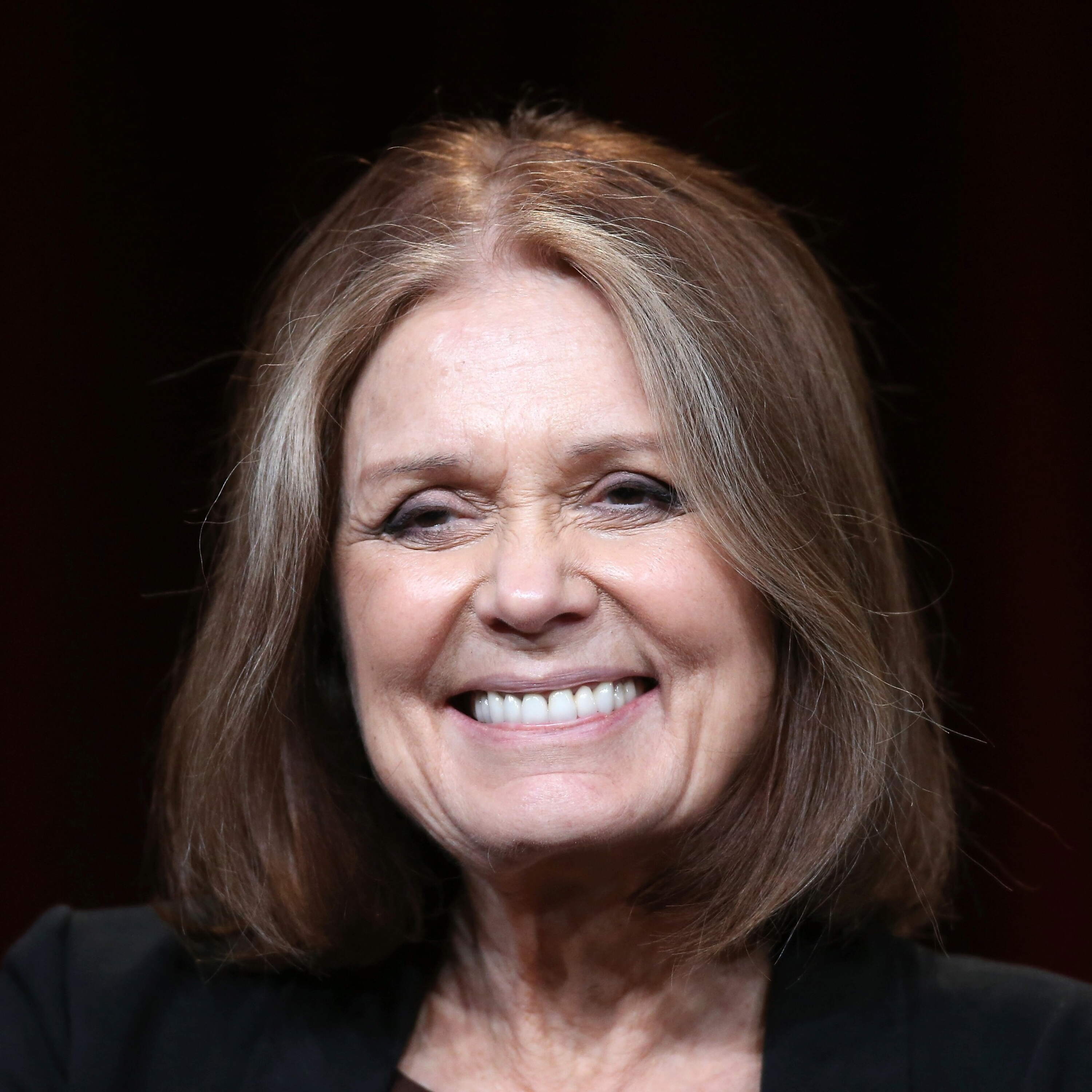
About this episode
Also, John Powers reviews the new film Coyote vs. Acme. which he calls a spoof of the classic legal thriller, like The Verdict or Erin Brockovich — but steeped in the surreal anarchy of Looney Tunes.
Subscribe to our free weekly newsletter
Follow us on Instagram
Subscribe to our YouTube channel
Check out the Fresh Air Archives
See pcm.adswizz.com for information about our collection and use of personal data for sponsorship and to manage your podcast sponsorship preferences.
NPR Privacy Policy
Get every episode summarized
Each time Fresh Air publishes, we email you a written briefing from the transcript — the topics, who appeared, and any specific claims, with the ad reads skipped.
Email me new episodesFree for 3 shows. No card needed.
Hosts & guests

Transcript ready
471 searchable segments. Every word is indexed and playable.
Full transcript
Fresh Air — Feminist Icon Gloria Steinem. Machine-transcribed; use the interactive transcript above to jump the player to any line.
This message comes from the Center for U.S. Voters Abroad Foundation. All U.S. citizens abroad may request an absentee ballot to vote in the 2026 election. Visit registerabroad.com to get started. This is Fresh Air. I'm David Beane-Kooley. Gloria Steinem, the writer, activist and feminist icon, died Wednesday in her New York City home. She was 92 years old. Steinem was the voice and often the most identifiable face of women's liberation for more than half a century. She wrote a magazine article in 1963 called A Bunnies Tale, for which she went undercover as a cotton-tailed cocktail waitress at the Playboy Club in New York. Her article about the showvinism and work conditions there caused a stir and set Gloria Steinem on a path towards both activism and publishing. She was an early contributor to New York magazine where she wrote the political column The City Polytick. Within a decade in 1971,
she and fellow feminists gathered to launch another publication, Mis Magazine, the first Glossy National Magazine to be created, owned and operated by women, and targeted at increasingly self-aware women of the 70s. It proved widely popular and hugely and so did over the decades Gloria Steinem. Politically, she co-founded the National Women's Political Caucus, along with Bella Abzug, Betty Friedan, Shirley Chisholm and others, to fight for the Equal Rights Amendment and encourage more women to run for public office. And she continued to write, essays, articles, books, and was quoted as saying, writing is the only thing that when I do it, I don't feel I should be doing something else. She wrote nearly a dozen nonfiction books. Today, we're going to remember Gloria Steinem by listening back to some of her conversations with Terry Gross. The first is from 1987. At that time, Steinem was celebrating the 15th anniversary
of the publication of Mis Magazine. Gloria Steinem, welcome to Fresh Air. Thank you. You had already worked in for several magazines as a journalist. Why did you think it was important to have a magazine written by and devoted to women? Well, first because even before I began to think about anything that might be called feminism or to question the structures that women encountered, I am lots of women could not write about political subjects for the existing magazines. We were thought to be the experts on, you know, food makeup, babies, and celebrities, but that was pretty much and though I brailed against it as many other women did, perhaps not hard enough in retrospect, but at least we tried. It really didn't budge very much. Then after we began to realize that there was a reason why women felt connected to other discriminated against groups and kind of identified with the underdog because we were also underdogs and there began to be a women's movement.
Then the magazine said, well, you know, we published our article on feminism last year or if we're going to write one article saying that women are full human beings, we'll have to publish one right next to it saying they're not in order to be objective. So it became more and more clear to lots of us that we could not either write what we wanted to or read or edit what we wanted to in the existing magazines. So we started to meet and discuss whether or not, you know, a magazine might be possible. Did you find too that a lot of male editors thought that it was just too specialized, too narrow to write about issues like abortion or equality for women? Yeah, because all of the readers wouldn't be interested in it. No, absolutely. And that was true on the left and on the right. You know, you would find, I'm sorry to say, is because I have much more affection for the language, you would find left-man editors who would say, well, you know, abortion is too controversial and we can't divide the left quote unquote with this kind of argument.
Of course, it was actually much more popular as an issue than anything they were talking about, but still, you know, that just wasn't, it just wasn't serious in their view. I mean, when I think about the life of the magazine, I think partly about the fact that everybody said after the first issue, well, they've said everything. They have to say what is there to talk about besides child care and welfare as a woman's issue and, you know, a few other things, but that's it. You know, now what? I mean, so actually the movement and the magazine has been being pronounced over ever since the, well, actually the first story that I know of, the cover story, pronouncing the women's movement over, was from 1969 before the magazine never started. Well, it was pretty premature. Right. What did you think the state of feminist coverage was in the mainstream media in the early 70s and late 60s? It was mostly ridicule, really, because that was the era of quote,
braburners, unquote, an alliterative epithet invented by a guy from the New York post who was actually covering the demonstration against the Miss America contest. And though nobody ever burned anything, although they did threaten to burn, I don't know, a Steno-Payout, a dust mop, an apron, they put all this stuff in a dust bin on the boardwalk, they were going to burn it, including a bra. But they never did because they couldn't get a fire permit. I mean, this is, you know, we were just much too docile, right? But nonetheless, he picked up, he couldn't resist the alliteration. And that was symbolic of the kind of ridicule, really. I think that women's organizations and publications functions on two levels, especially at the beginning, one was that the content was going to be oriented toward women. And the other was this kind of utopian sense that with women at the controls, it was going to have a different structure, a different sense of power and hierarchy than their male run counterparts had.
Did that happen at Miss magazine? Did you have a sense of, you know, what the utopian women's run magazine was going to be like? And I'm talking about we did and power structure. We did, but it wasn't totally, it was, it was somewhat wrong, but not totally wrong. For instance, when we started out, I mean, an example of our naivete was that we sat around the rate of us and we sat around and we fixed each other's salaries, basically. Well, first, no, the real utopian thing was we thought we should all have the same salary. But it soon became clear to us just from just from just knowing each other's lives that that was not possible. Some of us were supporting children and some were not. Some, you know, had, were older and had been earning, you know, higher salaries in the past and some. So we did fix each other's salaries, but we took three things in mind. One, what our need was to what our experience was and three, how important we were to the life of the magazine itself. What we did do, though, was to try to,
and something we've still maintained, to make sure that the top salary was no more than three times the lowest salary. So, you know, I think in a way that's a little microcosm of the, both the idealism and the realism. That is, okay, no, we couldn't all learn the same salary, but yes, we could substantially change the way Sal of Money was distributed so that the top was three times the bottom, which is very different from other magazines where the chief editor may earn, you know, $200,000 or more, and the secretary earns 10, you know, I mean, at least we narrowed the gap a lot. Did you go through this phenomenon that when you formed this magazine with other women, that male colleagues of yours, male journalists assume that what you did all day, we sit around and talk about men, complain bitterly about men. Yeah, you're right, you're right. I hadn't thought about that in a long time, but you're completely right. I remember somebody saying to me at one of
the networks, CBS, I think, that whenever three or four women had launched together that it made all the men nervous because they thought we were planning, you know, midnight castration parties or something, I don't know. And I think that's true, you know, it's so threatening, oddly threatening, for a few women to be together. I do think that that's diminished a lot. One of the early sayings in the women's movement was the personal is political. And I wonder if that still has the same resonance for you now that it did in the late 60s. It really does. I think in some ways we're only, you know, how you learn something intellectually before it gets to you emotionally sometimes, I think it's just getting to us emotionally now. How is it getting to you emotionally now? Well, I guess, I mean, this may sound strange, but I'm just beginning to realize that I
I need to do some of the things that I have been saying should be done. In other words, I've been telling women, for instance, or trying to help women, editorial know how to manage their money to save money. Have I done this up to no? No, absolutely. I mean, at no point have I had enough money to last more than a month or two, I don't think. Because I was just having much better time giving it away. But also, which is I think a positive reason, but also just because I didn't feel comfortable exerting that kind of control over over money. I hadn't internalized the message myself. Your grandmother was a suffragist and a delegate to a big international convention back in 1908. I wonder if that had any effect on you at all because I should point out she's on your father's side and I believe he left your mother and you when you were pretty young. So, was there any
feminist legacy passed on from her for the family? No, there really wasn't. And I feel bad about that because both it because it caused my mother to lead a less strong life than she might have otherwise and because it caused me to waste a lot of time rediscovering the wheel. But also because it means that our lessons of today can be forgotten too. My grandmother after the vote was achieved, stopped being active in the way that many suffragists did out of exhaustion, out of lack of self-respect, out of, you know, I don't know why, but she did. So, by the time I was born, she was not active and since she died when I was very little, I never knew really and my family kind of inadvertently concealed what she had been up to. I mean, they would tell me how she was a wonderful woman because she founded the first vocational high school in Toledo. And she raised four sons and she kept a
kosher table and so on. But they didn't tell me that she was this, you know, kind of raging feminists who marched in the streets and ran for the school board on a coalition ticket with the anarchists and the socialists. So I sort of conveniently forgot that part. Were they embarrassed by it? I don't know. It wasn't conscious on their parts exactly, but it was, I think it just wasn't socially good to have done this. So they just, they didn't exactly conceal it, but they didn't talk about it. So it wasn't until a nice feminist in Toledo wrote a monograph about my grandmother and sent it to me that I had any idea of the scope of her activities. You said that this worried you in a way because I mean that other families or other women can forget what happened before, is that what you're afraid is happening in the quote post feminist period? No, I don't think, I mean that only began to happen after a century and we're only, you know, 25 years so into this
and it is not post feminist no matter what the New York Times says, it's just the young women. If the young women have a problem, it's only that they think there's no problem and of course they will, you know, get educated by the world and by, by, you know, what they meet in the labor force and when they have children and so on. Today we're remembering Gloria Steinem, the writer, publisher, activist and feminist icon who died Wednesday. She was 92 years old. At this point, we'll hear from an interview with Terry from 2015. At the time, Gloria Steinem had just published her memoir, which was titled My Life on the Road. Gloria Steinem, welcome back to Fresh Air. I want you to start by reading the dedication of your new book. This book is dedicated to Dr. John Sharp of London, who in 1957, a decade before physicians in England could legally perform an abortion for any reason other than the health of the woman, took the considerable risk of referring for an abortion a 22
year old American on her way to India, knowing only that she had broken an engagement at home to seek an unknown fate. He said, you must promise me two things. First, you will not tell anyone my name, second, you will do what you want to do with your life. Dear Dr. Sharp, I believe you who knew the law was unjust would not mind if I say this so long after your death. I've done the best I could with my life. This book is for you. Thank you for reading that dedication to your new book. When did you first speak about your abortion? The amazing thing was that it took me so long. There was no women's movement. It was supposed to be a secret, women didn't share in the same way. So it wasn't until many years later after New York magazine had started and I had gone to cover an abortion speak out held in a church downtown in
New York City. Suddenly I heard other women standing up and talking about what it was like to have to go out and seek an illegal abortion. This was actually an alternate hearing to one that the New York State legislature was holding on the liberalization of abortion law in New York State. This was before the Supreme Court ruling. A group of early feminists had just said, wait a minute, you know, in New York in the legislature they asked 14 men and one none to testify. You can't make this up. Let's hear from women who have actually had this experience. So I sat there as a reporter for New York magazine listening to women tell their stories that were tragic and ludicrous and every human emotion all wrapped into one. Suddenly I thought, wait a minute, I had an abortion and actually one
and three American women had needed an abortion at some time in her life. So why is this illegal and why is it dangerous? It's the kind of revelation that comes from people just telling the truth and discovering you're not alone. So is this book this dedication the first time you mentioned the doctor's name who performed your illegal abortion in England? It is the first time I mentioned his name. And why did you decide? Why did you decide it was okay now to mention his name? Well first of all he was quite old at the time. So he clearly could no longer be alive no matter what. Secondly, the laws have changed our understanding. It just seemed to me that it was time to say thank you. Do you often wonder what your life would have been like had you not had the abortion and had you had a child at that age? You know it just, you know I don't know what would have happened. I had
been doing all the foolish things that we then did like writing horseback throwing ourselves down stairs, you know, all kinds of things in the hope. Well let me stop you right there. Did you throw yourself down stairs? Yeah, kind of. I did. I did. And you know I am the most cowardly person you can imagine. So physically speaking, but I did. I kept thinking that somehow, you know I could, I don't know what I thought. I was desperate. I really was desperate because you know I just knew that if I went home and married, which I would have had to do, it would be to the wrong person, it would be to a life that wasn't mine, that wasn't mine at all. Did you hurt yourself throwing yourself down the stairs? No, you know you're quite resilient at 22. Right. I didn't. No. You spent half of your life
on the road. You're still on the road a lot. You grew up on the road. Let's talk a little bit about your very atypical childhood. Your mother was often incapacitated by depression. Can we call it depression? You know I, I don't know what to call. I think her spirit was broken, you know she before I was born, had to give up everything she loved and cared about. And she was depressed. She got addicted to tranquilizers. And I don't, I don't think there was any, when I first wrote about her years ago, I was surprised that people would say to me, do you fear this was hereditary? And I was shocked. And I always said only if patriarchy is hereditary because I just think her spirit was broken. Your father, until you were 10 during the summer ran a dance pavilion that he created. Would you describe what your father did summers? This was a little lake in Southern Michigan called
Clark Lake. He had built a kind of long big pier with part of it covered, part of it uncovered over the lake. And on weekdays there would be sort of canned music in a jukebox and on weekends a band. Then the big bands of the 30s and 40s used to travel the country in the summertime in a bus. And so we would get some famous band sometimes Wayne King and Jovenoody. I mean names, I don't know if people know anymore. And this, this was his dream. And he, you know he created a kind of magical place. So what was it about being there or about being with your father, the prokier mother spirit? It just wasn't hers. Well let me describe what she had been doing before, long before I was born. She was a pioneer newspaper reporter and journalist and actually
editor, which was extraordinary. But it was an era in which she at first had to write under a man's name in order to get published. So you know she was a real pioneer and she loved it. She adored it. At the same time she was married to my father a wonderful kind charming, utterly irresponsible man. So there were always money troubles and you know lots of difficulties. She had my sister who was nine years older than me. And I think you know as she later explained she'd fallen in love with a man at work and had grown up believing that you could not divorce, you could not change. She had a girlfriend who wanted to come to New York with her where she could try her hand at being a journalist. You know she had all these aspirations. She just couldn't make it work. She had a, what was then called a nervous breakdown which meant she was in a sanatorium for a year or two. I'm not sure. And there she got hooked on an early form of tranquilizer.
Gloria Steinem speaking to Terry Gross in 2015. The author, columnist, publisher, and women's rights activist died Wednesday at age 92. After a break we'll hear more of their conversation. And critic at large John Powers reviews coyote versus acme, the comedy film based on the classic Warner Brothers cartoon character. I'm David being cool. And this is fresh air. This message comes from Glass Half Full with Craig Melvin. In this podcast, the today's show anchor talks with a listers and athletes about the moments that shaped them. Listen and you might get a
fresh perspective. Search Glass Half Full wherever you get your podcasts. Billionaire Mark Cuban has stared into the belly of the beast of America's health care system. I mean it's so bad you can go through a long list of really quality hospitals and they don't know their costs. So can Medicare for all be a solution? We take a hard look at the cost of the program along with US health care itself. Find this and hear more stories from the indicator from Planet Money on the NPR app. For a lot of us cooking can sometimes be a daily annoyance. But what happens when your life blows up and cooking becomes your only lifeline? On this week's It's been a minute Carla Lali chef presenter and author of Food is Feeling tells us about how writing and cooking got her through ending her decades long marriage. Watch or listen to It's Been a Minute on the NPR app or YouTube. This is Fresh Air. I'm TV critic David B. In Koolie. Today we're remembering Gloria Steinem, the feminist icon who died Wednesday at age 92.
Let's get back to her interview with Terry from 2015. The year Steinem published her memoir My Life on the Road. So getting back to this life that you had as a child, your mother's spirit was broken, it was often hard for her to get out of bed. Your father created this wonderful dance pavilion summers. But then when the summer was over, the family would move into a van and drive south and basically live when I say a van, I should say trailer, I suppose. And then the family would live in trailer for the duration until the following summer. You write that you never started out with enough money to complete the trip. Your father would buy antiques and then sell them to antique dealers, you know, buy them at country auctions and then sell them to antique dealers at higher prices to fund your trip south. How did you like being a tenorant like that? I suppose the two things happen at once when your child, one is that you just accept as normal whatever is around you. And the other is that you go to the movies and you see kids or your classmates because I would
go to school till I got cold to Halloween or something who are living a different way and you want to be like them, you want to be like the other kids. It never, for a moment, occurred to me that they might envy me. So I both accepted it and hoped that my real parents would come find me and take me to a house with a picket fence and a pony. I mean, that's the degree of realism and fantasy. So you weren't in school for those years that your family was on the road. How did you learn to read and do basic math? Well, I'm not sure I've ever learned to do basic math to be frank. But but I learned to read just because my family had lots and lots of books, especially my mother, you know, read all the time. My memory is that I learned how to read from ketchup bottles and labels and billboards along the highway. I don't know, I'm not sure, but I don't remember not knowing how to
read. Was it legal for you to not be in school? No, I'm sure it was illegal and my mother always said that if the Trude Officer showed up, she would use her teaching certificate. The fact that it was for university calculus, which she had been teaching in order to make money to finish college herself. I don't know how impressive it would have been, but anyway, no, but no Trude Officer ever showed up. How did your father's sense of money that you could start the trip without having enough money to complete it and just kind of buy and sell things to fund the family? How did that affect your idea of money and the security that you need or don't need for money? It felt insecure. However, I must say that unlike a lot of kids, I always had enough to eat. I always had shelter. I always had parents who loved me. So I had security in a lot of ways. But my father's philosophy was he didn't want to know what was going to happen tomorrow because
if he didn't know, it might be wonderful, as he said. So I have to say it prepared me very well to be a freelance writer and never to have a real salary. Your parents separated when you were 10 in 1944 and you had to take on a lot of responsibility for your mother at a young age. What were the things you had to do for her when you were still a child yourself? Well, it depended on the ups and downs of her moods, but I would make her meals or the child's idea of a meal. I kind of always worried about what I would find when I came home from school, because she might be really depressed or she might have retreated into another world or she might be convinced that a war was happening outside the house and be wandering around in the street. You know, talking to other people whose parents were, say, alcoholics and who also kind of didn't
know what they would find when they came home has made me realize that it's not, I mean, it's hopefully uncommon, but it's certainly not unique, my experience. She was called the crazy lady of the neighborhood. Once you had a neighborhood, what was your reaction to that and didn't make you think of her differently than you did before? No, I didn't make me think of her differently. She was someone, how can I say? I mean, she was a loving, wonderful woman who recited poetry by heart and was, you know, certainly super loving toward me, but sometimes she was just in another world and I didn't know when that would happen. Are you still convinced that your mother was suffering from patriarchy as opposed to a mental illness of some sort, bipolar depression?
No, I am because later on after I was in college and therefore my sister, my older sister was taking care of her and discovered that she just couldn't do it and keep her job. So she found a very good mental hospital where my mother was for a couple of years, which should have happened probably long before. And I asked the doctors there, the very expert doctors there, what was wrong and they said she had an anxiety neurosis. And I said, would you say her spirit was broken and they said yes. I mean, I don't think there was anything organically wrong. She did get hooked on tranquilizers and that became part of the problem, not the solution. What was it like when you started school after you were 10, having not been in school before, whereas all the other kids in school had been in school before? I had been somewhat in school because I would go till it got cold, you know. So I'd been
every year, I'd been a couple of months in school. I kind of knew what school was. But when I went for my first year, I discovered a, I didn't know how to do long division, I didn't know the multiplication tables. Although I'd been in many states, I had no idea what the map looked like. It was a big deficit. I'm not sure I've ever made up for, but I had a huge vocabulary because I'd been reading all the time, grown up books, kids books, everything. And I soon learned two things, one that that could compensate in a lot of ways and get me through school. And the other was that I shouldn't indulge in this enormous vocabulary too much because it was strange to the other kids. Gloria Steinem, Speaking to Terry Gross in 2015. More after a break, this is Fresh Air. This message comes from Glass Half Full with Craig Melvin. In this podcast, the Today's Show anchor talks with A-Listers and athletes about the moments that shaped them.
Listen and you might get a fresh perspective. Search Glass Half Full wherever you get your podcasts. Looking for love? One New York event promises to find you your perfect match using Palantir, though not affiliated with the actual software company. They can do me. I could lose everything, but it would all be worth it if at least two people here have a spark. So no pressure. The facts, myths and dark jokes surrounding Palantir. Listen to Plana Money on the NPR app or wherever you get your podcasts. This week on Weight Weight Don't Tell Me, we talk with our panel Joy-El Nicole Johnson, Peter Gross, and taking a tarot about the new trade war with Canada. I can't imagine maple syrup being any more expensive like it costs as much as a car. Like this true? What kind of car are you buying? Don't miss our full conversation and the rest of our games listen to the Weight Weight Don't Tell Me podcast in the NPR app or wherever you get your podcasts. This is Fresh Air. Let's get back to Terry's interview from 2015 with Gloria Steinem,
the writer, publisher, activist, and feminist icon died Wednesday. She was 92 years old. Do you remember the moment when you first realized women's rights was a legitimate issue, along with all the other rights that you were interested in fighting for? The amazing thing is how long it took me, actually. There was no, at least to me, there was no visible women's movement. I thought I just had to function within the system as it was. I identified with everybody else who was having a hard time. I think women often do that without knowing that it applied to us, too. But I owe it to the women who held that hearing on abortion, for instance, or who had been inside the civil rights movement and the anti-vietnam
movement. Even in those movements that we utterly loved, still were not treated equally. And so had understood that there needed to be an additional women's movement. How did it redefine you to know that as somebody at the forefront of the women's movement, you were going to be an example of what you were fighting for and that the choices that you made were going to be public choices? I didn't really think about that because it seemed to me was the whole idea was the ability to make our own choices. So I never felt that I had to behave in a certain way that was subject to outside dictates. I thought the whole point was that we were able to use our own talents and do what we wanted. So I didn't feel inhibited by it in any way. Because you spent half of your life on the road, you've had a very
ambivalent relationship to home. You write that it took you a really long time to create a comfortable home for yourself. In part because you were on the road all the time and you grew up on the road until you were 10. At what point in your life did you create a home that was truly a comfortable place, more of a nest that was a good place to return to? I really only after 50. I had buried in my head this idea that you only made a home for husband and children. I didn't see a lot of women making a permanent home for themselves. I didn't think that way. And also I was on the road so I was always living out of suitcases and cardboard boxes when I was at home. And even though I now to this day live in the same apartment that I did then, it was more like a storage place than an apartment. It was only after I was 50 that thanks to dear friends who came and helped me to unpack my cardboard boxes.
And another friend who explained to me how to make beautiful colors on the wall and took me around to auction places to buy things that I loved. She said, only by what you fall in love with, because if the same person falls in love with all these things they'll fit together. Don't worry about it. I remember going out with her to buy antique sheets. It was orgasmic practically, the pleasure of buying antique sheets. So I began to make a home a nest for myself. And I take such pleasure in it. I think in general as a culture we tend to think there are two choices settling down or traveling and actually you need both. You need a nest, birds needs nest a nest and they still fly. So it took me a while that it wasn't either or it was both. I interviewed you several times on fresh air in the past and I want to play an excerpt of our interview from 1992. So this was
23 years ago. That's shocking. Right. And one of the things you talked about was you were looking back on having had a lump back to me on breast cancer and how that affected you. So I want to play what you said about that. So again this is from 1992 glorious dynam looking back on having that lump back to me and how it affected her life. It made me realize several things. One was this may sound strange if I try to say it short but that actually I wasn't I was less afraid of dying than of aging or not of aging exactly. I didn't know how to enter the last third of life because there were so few role models because when I first heard this diagnosis first I thought ironically oh so that's how it's going to end you know. And then I thought to myself as if it was welling up from the deepest part of me I've had a wonderful life. And I treasure that moment
you know it it meant a lot to me but on the other hand it also made me realize that in this culture women we know how to be in the central plateau of life and I've been there a terrifically long time because I'd become a grown up too early because my mother being an invalid. So from about 10 to 52 I'd been in this central plateau. Now I was entering a whole new place it was like falling off a cliff because I couldn't see enough people ahead of me. You know in the last two or three years of really how shall I say of kind of paying more attention to my own inner life I've realized that this aging in the last third of life or whatever is a new country. I've I now actually feel excited about it because because you as Carolyn Heilbrunn has pointed out so brilliantly in writing a woman's life women become ourselves after 50 you know we leave behind this female impersonator role and drop a lot of baggage and really become much more our true selves. You know what I find particularly
interesting about hearing you thinking about about the latter part of your life is that I think for a lot of women is the end of your life where you're supposed to be punished for the freedoms that you've taken during the first parts of your life. You know like if you've decided to be independent or you know not be married or not have children or something you're punished for that in the end because you're supposed to look forward to an old age where you're you're lonely you're alone there's no one to be with no one to take care of you. I mean I think that's that's been really instilled in all of us. Yes it's it's sort of the secular version of hell I think. And and and like the religious version of hell it has nothing to do with real life. Okay that was glorious, don't I'm on fresh air in 1992 and I just did the math and I think you were 58 when that was recorded. So thank you thank you for playing that because it's fascinating to listen to your earlier self. Yeah so just what you said then still ring true? Yes it does and I I realized that I realized more now that I'm past that stage that 50
was a very difficult birthday because it was the end of the central years of life. But 60 which I was just entering and when I was speaking then was like entering as I was saying a new country and that means that all the demands of gender that spread from something like 12 to something like 50 and are something of a prison sometimes are gone and suddenly you're free. Here's here's my comparison now remember when you were nine or 10 and you were this independent little girl climbing trees and saying I know what I want I know what I think and so that was before gender descended for most of us as Carol Gilligan has pointed out in her work. After 50 you theoretically according to society had kids raised them so your gender role is over and ironically I found by 60 you're free again. So you're the same person you were at nine or 10
only now you have your own apartment you can reach the light switch you know you hopefully have a little money so you can you know do what you want there is as I was saying then of a whole different country after 60. But you were never tied to those gender roles anyways you didn't need to be well we're all tied to those gender roles I mean I don't I don't think they're but it sounds like you had the children who were now out of the house so now like you have that's true no that that's true it wasn't it wasn't tied to the life cycle of of a child but it was tied to hormones and sexuality and affairs and how you looked and none of us escapes this completely or nor should we escape it necessarily. What does being in your 80 symbolize to you now if you told us a little bit what's 50 and 60 symbolize it yeah. Shocking what's in I I stopped people on the street and tell them how old I am because I make myself believe it. I mean 81
is an age that I think is someone else's age you know it's quite bizarre and part of it is I think because we don't have role models of people going ahead of us I don't have I've a very few role models of women my age who are doing what I'm doing and in fact the the people I work with every day in love and you know are my current chosen family in terms of numbers are probably I don't know at least 40 years younger than I am and even my friends from Ms. and so on are at least 10 years younger than I am. Gloria Steinem it has been great to talk with you again thank you so much thank you so much. Gloria Steinem speaking to Terry Gross in 2015 Steinem died Wednesday at age 92. Her latest book An Unexpected Life is scheduled to be published later this month. Coming up critic at
large John Powers reviews Coyote versus Acme the newly released film in which Will Forte shares the screen with some classic cartoon co stars this is fresh air. This message comes from Glass Half Full with Craig Melvin in this podcast that today's show anchor talks with a listers and athletes about the moments that shaped them listen and you might get a fresh perspective search Glass Half Full wherever you get your podcasts. How do you handle really big emotions it starts with emotional intelligence. Emotional intelligence is okay A. What am I really feeling? B. Is this emotion helpful or unhelpful for achieving my goal? If it's unhelpful what am I going to do about it or what's my strategy for regulating it? The science of emotional regulation on shortwave listen on the mprf or wherever you get your podcasts. At NPR there's a little something for everyone if you need advice for that big life change try listening to life kit if you want to know more about that new TV show check out pop culture happy hour and if you want to dive deeper into your favorite
podcasts and enjoy perks like bonus episodes archive access and more check out npr plus find out more and support the shows you love at plus dot npr dot org. This is fresh air the famous cartoon series featuring the road runner and wily Coyote was created in 1949 it has remained so popular it's even spawned the new movie Coyote versus Acme which is now in theaters our critic at large John Powers says that it offers many of the pleasures of the original cartoon while taking it in new and deeper directions like most of you I grew up watching cartoons for me the best and purest series was always the road runner it's true hero is not of course that smug bb-bick bird it's his perpetually thwarted pursuer wily Coyote who alone in the most stripped down of deserts endure the endless futility of a back at character in fact the character was created the same time
as waiting for good though scheming it inept wily so hell bent on catching the road runner that he keeps buying shoddy contraptions rocket skates self guiding bombs earthquake pills from a corporation called acme their misfires inevitably blow him up clobber him with anvils or sent him plummeting off a cliff the unreliability of these products inspired a witty 1990 new yorker piece by Ian Frazier Coyote v acme in which wily Coyote sues acme for damages in turn that piece inspired the terrifically entertaining new movie Coyote v acme which has finally turned up in theaters after Warner Brothers in a controversial acme-esque move tried to shelve the finished film in order to claim a tax write off bending live action with animation Coyote v acme takes Frazier's piece and transforms it into a spoofing riff on the classic legal thriller think the vertical Aaron
Brockovich but one steeped in the surreal anarchy of loony tunes the story begins when the fed up wily decides to take legal action and hires an albuquerque lawyer Kevin Avery played by will forte alas the scruffy Avery proves to be a hang dog soul who fears failure so much that he only takes on small cases and settles them for a pittance luckily Avery's interned page that's Lana Condor is an idealist she pushes statement to filing a massive suit against acme the world's most powerful company acme is run by the strutting tune foghorn leghorn and represented by killer lawyer buddy crane that's John Cena whose body seems to be bursting from his suit soon Avery page and wily go out looking for evidence and encounter numerous other Warner Brothers tunes daffy duck tweedy bird panceless porcupig and of course the incomparable bugs
along the way team Coyote unearthed the sinister acme project named after cissophus the mythic stone pusher whose story anticipates the coyotes own futility over and over Avery wants to throw in the towel you understand why on the first day in court after buddy cranes confident opening remarks Avery struggles to find a response as wily coyote goes nuts beside now uh now what what did the uh defense say we're gonna argue huh i mean i know the answer to it i know the answer i'm not asking you a question i mean it is it is a question but it's a question that i'm asking to me let me start over let me start over objection to my start so the defense said that we were gonna argue that uh the products are dangerous and that acme is negligent in selling them i i do really agree with all that i mean it's not fancy but it's true
of course one of the pleasures of Warner Brothers cartoons was their imaginative delight in shattering the laws of nature often violently wily coyote can get smushed by a steam roller pick himself up dust himself off and inflate himself back to normal size coyote versus acme serves up a slew of delirious gangs like this several of them terrific in which the flesh and blood characters face the same crazy universe as the tunes still what works in a six minute cartoon is exhausting in a feature film which is why writer sammy birch and director dav green do something the old roadrunner cartoons never did they give their story a plot and a meaning and even some feeling we watch avery develop a spine we see wily's wistful longing beneath his a-hab like obsession with the roadrunner and we recognize the existential bond between the coyote and the roadrunner the chaser
and chasey whose lives depend for their meaning on the presence of the other and needless to say coyote versus acme delivers a message about runaway corporate power which may explain why viewers are enjoying it so much acme is the very archetype of today's mega corporations that outsource jobs to cheaper countries manufacture goods designed to last only until their warranties lapse force you to wait on hold to talk to an ai bot and find it cost efficient to pay off occasional lawsuits like wily's rather than change corporate practices when the movie suggested the courts in congress cow-tow to acme's power it's just saying what everybody knows now what was always great about old Warner Brothers cartoons was their gleeful irresponsibility they were never sentimental or improving like disney and in this respect anyway coyote versus acme violates the tradition the movie celebrates
wily coyote's willingness to fight on even in the face of constant failure i don't know about you but i have to love any movie that's clever enough to turn wily coyote into a role model john powers reviewed the film coyote versus acme which is now in theaters on monday show for labor singer and songwriter rosanne cash when she was eighteen her father johnny cash gave her a list of 100 essential country songs years later she returned to it and released an album featuring 12 songs from that list hope you can join us fresh airs executive producer is sam brigar our technical director and engineer is Audrey Bentham with additional engineering support from julien hertzfeld and adam stanna shesby our interviews and reviews are produced and edited
by philis mires and marie baldenado lorin crenzel terisa matten monique nasiareth say a chaliner susan yukundi anabalman and neco gonzala's whistler our digital media producer is molly nespa our social media video producer is hila re kissing her for cherry gross and tanya moseley i'm david being cool this message comes from glass half full with craig melvin in this podcast the today's show anchor talks with a listers and athletes about the moments that shaped them listen and you might get a fresh perspective search glass half full wherever you get your podcasts how do products end up on big box shelves well we have planet money pitch deep planet money board game trying not to think how much of a big deal it is and how much work has gone into it's really big is it helpful if I remind you how big it is it's sort of the whole thing we go inside the minds of the people who decide what goes on store shelves listen to planet money on
the npr app or wherever you get your podcasts this week on sources and methods the pentagon in the oil business this is being carried up by the pentagon but it's an entity that's supposed to be focused on upgrading us weapons systems and not on pumping oil we unpacked the latest intel and big unanswered questions about president trump so-called deal with benizuela this week on sources and methods from npr
More episodes
More from Fresh Air

Best Of: Life in the Mojave Desert / Director of ‘The Uprising’
Fresh Air

Stories of survival & loss at Ground Zero
Fresh Air

How the WNBA became a political prop in the culture wars
Fresh Air

How Sept. 11 changed American life
Fresh Air