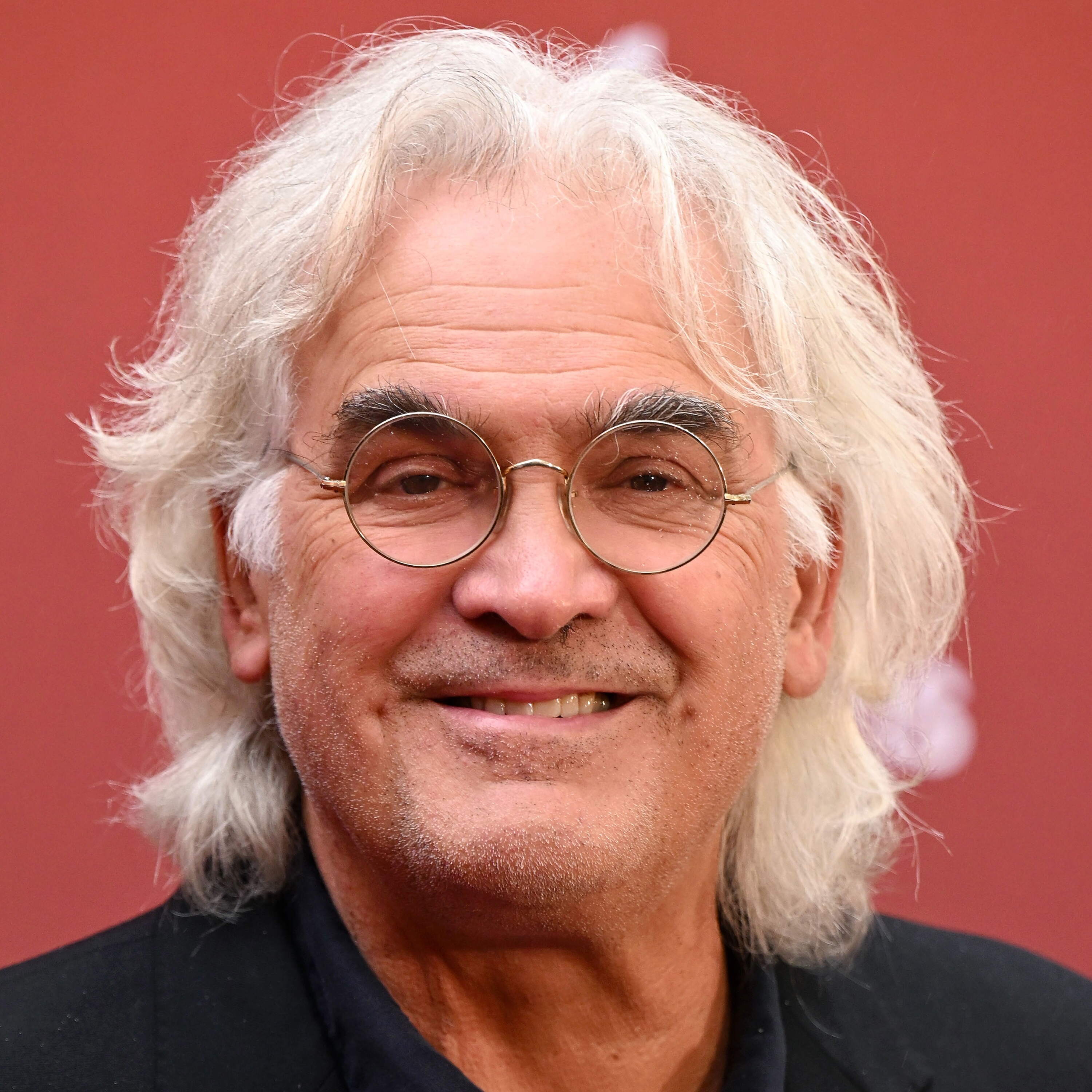
About this episode
Fresh Air is made possible by:
Film critic Justin Chang reviews the new drama Filipiñana.
Subscribe to our free weekly newsletter
Follow us on Instagram
Subscribe to our YouTube channel
Check out the Fresh Air Archives
See pcm.adswizz.com for information about our collection and use of personal data for sponsorship and to manage your podcast sponsorship preferences.
NPR Privacy Policy
Get every episode summarized
Each time Fresh Air publishes, we email you a written briefing from the transcript — the topics, who appeared, and any specific claims, with the ad reads skipped.
Email me new episodesFree for 3 shows. No card needed.
Hosts & guests


Transcript ready
453 searchable segments. Every word is indexed and playable.
Full transcript
Fresh Air — Filmmaker Paul Greengrass on rage, rebellion and ‘The Uprising’. Machine-transcribed; use the interactive transcript above to jump the player to any line.
This message comes from Schwab. At Schwab, you can get everything from self-directed investing to full service wealth management all in one place. No matter your investing goal, life stage, amount to invest or know how, you can invest your way with Schwab. This is Fresh Air, I'm Tanya Mosley. My guest today, director Paul Greengrass, makes films about the choices ordinary people make when they're trapped inside forces they cannot control. He's taken us to the streets of Dairy as British soldiers open fire on civil rights marchers in play Sunday, aboard a hijacked plane on September 11th and United 93 and onto a cargo ship seized by Somali pirates and Captain Phillips. His new film, The Uprising, takes on a story familiar to generations of English schoolchildren. The peasants revolt of 1381. In the film, the play cut the population in half, making workers more valuable than ever, but the ruling class is determined to keep them in their place. When the government
imposes a brutal tax to finance its wars, tens of thousands march on London. Andrew Garfield stars as an unnamed farmer called the Plowman. He's buried his wife and children and is deep in debt on land that no longer produces a crop. As the revolt gathers around him, his private grief becomes political rage. And in this scene, the radical priest, John Ball, played by Jamie Bell, offers the plowman a new way to understand his suffering. God, that's taken much from you. God left my fields longer ago. No, he has not left you. But this is planned. The player. Why would God have a player to cause us such pain? The second is what is this punishment for the crimes of the rich. Why are we suffer also? To show us the truth. And fill us with rage. Surrendered to it. And up a second shoot.
I saw the uprising earlier this summer. And since then, just weeks before the September 10th release, the film has taken on a surprising new frame, the rise of Robin Hood. Paul Green Grass, welcome back to Fresh Air. Very nice to be here again. So Paul, I am very curious about this connection between the peasants revolt and the story that we know of Robin Hood. Tell me about it. Well, the film is about the peasants revolt, which is one of the greatest revilians in English history in 1381 in the middle of the medieval world. And it's from that period that the legend of Robin Hood emerged. And the two are connected because both of them speak to a bitterly divided world between the rich and the poor. And one of the things that occurred in a Robin Hood was really just a moniker for an outlaw, prior to 1381. But after the peasants revolt, that was when the ballads and the legend of Robin Hood
got going and became wildly popular in medieval England because it spoke to people's desires for a better world, a fairer world against the rapacious rich. And so in the story of this simple farmer, he eventually becomes an outlaw and he becomes an outlaw at the time when the Robin Hood legend was getting going and it got going because of the world that the peasants revolt took place in. This is a story that you grew up learning as a schoolboy. And it came back up for you though during the pandemic. Take me to that place where you're thinking about this story coming back up for you. Well, yes, I started writing it in the pandemic. I've been thinking for a while about doing a sort of story rooted in English history and about sort of resistance and a sort of freedom fighter type film. And so when the pandemic came and we were all
locked down, it just became natural. What I wanted was to do a story about an ordinary person, an ordinary farmer caught up in tumultuous events, events that would feel, I think, although it's set in the medieval world, would feel very familiar to an audience today because I think in many ways when you think of the turbulence in our world today, it is driven by these great inequalities and the rage that people feel about elites and all those things that wherever you are on the political spectrum, I think we recognize that that's what's going on in your country and mine and Europe. And beyond, isn't it? It just seemed to me that this story really spoke to that. You know, I was really struck by the fact that I mean, we lost more than a million people to co-bet in this country and during the plague. I imagine really, isn't it? It is unimaginable. I mean, when you look back, it's only a few years and yet it seems like we haven't really processed it properly. But I think that's how it goes. I think these things work in subterranean
and mysterious ways. And it certainly was the case in medieval Europe. Yeah, take me to that place because, right, we have lost so many people not so long ago. And these people, these characters in this film are living that same reality. It is after losing an unimaginable amount of people to the plague. And one of the things that really struck me is that how numb they seem to feel disassociated. Yeah. And this was the first time that plague came to Europe. You know, and it literally that we call it in England, or it was called the death, the great plague. It wiped out literally half the population literally and the same in Europe. And so in the decades after the plague, people were left, as you say, numb and then this gathering rage at a system that seemingly privileged the rich and the powerful over the week and the
defenseless. And, you know, the economy faltered, government didn't seem to work. And in the end, all it took was a spark. And then suddenly you had this enormous rebellion. Almost overnight, it was extraordinary. And within days, a huge army mob gathering whatever you want to call them tens and tens of thousands of people marching on London. And they marched on London and they besieged the city and they got in. And what followed was it all took place really over five or six days. And that's really the story of the film. The march on London getting in, the Mayhem, the attempts to fashion a new form of society, a fairer future, all those things, the hopes and dreams of any rebellion. That's a kind of classic movie story really and a great adventure. And certainly what I wanted to do was to, you know, not make a dry history lesson. I like my movies to
entertain people and have spectacle on scale. The movie certainly does that. But it has all the pieces of like there's so many parallels to what is happening to us in this moment. Except for the revolt. Well, even some elements of that we've seen in your recent history, you know, the invasions in DC, you know, it's not a million miles away. The interaction. Yeah, I think people, you know, this is, I'm not making a political point. What I'm saying is that there is a great rage out there, I think, and all of us know it. It's an underlying rage. It is. It's, I feel it in our country. I'm sure it's there in yours. And, and at some level, our governments seem unable to address it. And that I think is going to be the big challenge going forward. You research a film pretty deeply in ways like an investigative reporter or documentary and does. And I've wondered about the casting, as you say, because we can't know, I mean, it's medieval time. So there's not
an autobiography written, but something you have said when you, when you cast Tom Hanks in some of your previous films, you've said, you love the every man that he was. Yeah. The chance that he can be compared to Jimmy Stewart and Henry Fonda. What did Andrew Garfield give to this particular character of Flouman? The same thing really. I sort of every man quality, a mixture of strength and vulnerability and emotional kind of quality to him. And also, you know, because it's a story of a rebellion and, you know, there's a tremendous amount of action in it. He has to be able to do all that. It was fantastic. I really good partner in it. Then there's the king played by Woody Norman. He's a boy of 14. He's troubled. He's untested. He is a reluctant leader. Maybe not fit to even be one, you know. He's, he's a child that has been raised to believe that he has been chosen by God and he's surrounded by a man who
are ruling in his name. Okay. So I note about this king. He felt very much to me like a mix of Michael Jackson and Joffrey from Game of Thrones. There was just, of course, there's just a fragility to him. Like, how did you concede him? Well, the real Richard II was the boy king. He was clearly mentally ill, mentally health issues of a profound way. I mean, really profoundly, he was very cruel. But at his core, the problem was that he was brought up to believe that he was the Messiah. And he was controlled by these cynical, wealthy oligarchs around him. And as he became sort of 14, which meant that he was on the cusp of Boyard and Manhood, he really in the course of these events became the dominant figure because it fell to him to deal with this rebellion. And, you know, the story of the film really is the extent to which he meets that challenge and the way
in which he meets it because in the end, you know, the true story of Richard is that he became the great tyrant that we know from history. Did you write some of the songs in this? I wrote The lyrics in this. The lyrics? Yeah, Volker wrote. Was this the first time that you wrote lyrics for someone or... Well, I've done a few, but it's first time in a film. Yeah, it was fun. I mean, Volker, Bertmann wrote in a fantastic score. And we just, I wanted, of course, it's a part of the stories, the story of the March of the Rebel March on London. And of course, people would have sang songs for sure. And they would have probably been religious songs, mixture of hymns, but also sort of simple folk songs. And also protest songs, you know, I mean, if you think of the great movements, you know, I made a film many years ago about Bloody Sunday in Northern Ireland, you know, people sang songs on the way down in that March. That's what you do. That protest
songs and it would have been no different than medieval England. So we wanted to have that feeling running through it because it's part of the hopes and dreams that lead people to March for change. Music is so... Oh, yeah. Such a foundational part of that. But I, not knowing that you wrote music or you wrote lyrics, are you a songwriter? I have a group of friends and we have a little band and we tutel around a bit. Yeah. We released a single last year, which was good fun. Seriously. What kind of music? What kind of rootsy, you know, dad music, you know, what can I say? Dad music. What's the name of the singer? I'm not, I'm not 20, you know, I'm a bit older than that. So, you know, it's going to be mellow music. Yeah. Oh, we're going to have to find this single. Yeah. Oh my lord. But you know, I mean, your films are famous for not really leading people on how to feel like the score does not work in that way. And so I was
really fascinated when I saw that you, it wrote the lyrics here because I feel like you're very intentional in the way you use sound and the way you use score. You never lead us, you know, how music and listen to the feeling. I try to tell you. It's very, very important. You want people to be drawn into a story and then you've got to have the experience of the movie and then they take from it. What they take from it, you know, you never want to tell people what to think or feel. You know, part of the magic of movies, I think, is that that relationship that you had between the film that you make and what the audience bring and take from it. You know, Paul, rewatching United 93, I mean, it really took me back to that day. And I was trying to find the right ways to articulate this to you. It made me feel innocent again. It took me to the place I felt when it happened. And when we didn't really know what this all meant. And I happened to be watching it with
my 19 year old daughter. And I looked over at her at a certain point and she was just sobbing. And I saw too. And it was the first time in a long time that I've cried about September 11th. Well, it remains a great, you know, pivotal event, a great wound. I mean, it was an intense film to make. It was a great privilege to make it, I think, for all of us who took part in the relationships that we made with those families who lost family members on board. It was the most extraordinary thing. In fact, they're about to have a screening at the Gettysburg Film Festival. And I thought I can't be there because I'm here in Los Angeles, but I sent a message. And there's going to be a lot of family members there. And there's some actors who took part.
And one of the things I've actually found it incredibly moving sort of being taken back to the experience of making it in those relationships with those extraordinary people and to think for a moment about what was accomplished on board that airplane. And I did say my remarks that it was very fitting, I think, that that screening is at the Gettysburg Film Festival. And that we think of that astonishing address that your president gave. It's very interesting. And what he said was, it has fallen to us. He was talking, of course, about the legacy of the Civil War, to see if we can meet the test, the challenge. Meet the moment. Meet the moment. And what I said and believed is that those people on board that airplane
as that plane closed as it was on the Capitol building. With no military aircraft in sight to stop it, it felt a that group of people to meet the moment. And they did. And I think that's inspiring. And when we think of the problems and divisions, I'm thinking about my country, but I'm sure it's true in your country too, of today, 25 years later. And the difficulties we have and the divisions that's out there and the inability for us to come together as well as we all might as societies. I did think at that moment of those people and that coming together in that moment of extremist on that airplane, facing that situation, unimaginable. They did come together. And I think that's inspiring for your country, but for all
of us, I think. I actually want to play clip from the film in this scene, passengers on the plane are coming to understand that the plane has been hijacked by al-Qaeda terrorists and that it is probably not going to land. This is the moment when they realize this. Let's listen. We're okay. I work. We're here. Hey. This is a suicide mission. We have to do this. We are not going to land this plane. They are not going to take us back to the airport. We're going to die. We're going to die. They're flying this into a building. We can't do that. You should not do that. There's a lot of us, but we've got to do something. Do you see how low we are? Is there a weapon? Is there something we can use? Go back. You go back. Sture this. Listen to me. Are you listening? Go back and you get every weapon you can. Get whatever we can use as a weapon. That was from the film United 93, directed by my guest today, Paul Greengrass.
You went to the families of those on board and you conducted more than 100 interviews before you wrote a word. Yeah. What did they give you that the official record and their detailed statements could not? Because you had those as well. You could have written an entire film based on those. I think they gave us two things. One, their encouragement and support without which we would never have made the film. That support and trust that they gave us that they didn't need to have done was what really gave wings to that film, gave it the ability to be what it was. The second thing they gave us was who the people were on the plane.
You know, an enabled the group of actors to embody those people. And it remains the greatest privilege of my working life to make that film. And I'm forever in their debt. And I think we all are. They're an extraordinary group of men and women of very different opinions about their society and the world, but brought together by that common shared moment of tragedy, but also of astonishing courage and achievement. Our guest today is Film Director Paul Greengrass. We'll be right back after a short break. I'm Tanya Moosley and this is Fresh Air. Support comes from our 2026 lead sponsor of Fresh Air Viking,
committed to exploring the world and comfort journey through the heart of Europe on an elegant Viking longship with thoughtful service, destination focused dining and cultural enrichment, onboard and on shore. And every Viking voyage is all inclusive with no children and no casinos. Discover more at Viking.com. This message comes from Midi Health. Most women never get real answers about their hormonal health. Midi is changing that with virtual care covered by most major insurances. Understand your hormones. Visit joinmitty.com to book your first visit today. This message comes from BetterHelp. Imagine carrying a backpack every day. Inside it, every conversation, every mistake, every expectation. It is easy not to notice how heavy it is until someone asks if you want to put it down. Sometimes feeling better starts exactly like that. Better isn't one size fits all. Better as personal. It's therapy tailored to the individual
to help lighten what you carry. Match with a therapist who truly understands. Visit betterhelp.com slash NPR. This message comes from Capital One. Capital One offers checking accounts with no fees or minimums. What's in your wallet? Terms apply. See capital one.com slash bank guy for details. Capital One in a member FDIC. This is Fresh Air. I'm Tony Mosley. And my guest today is award-winning film director Paul Greengrass. His new film The Uprising stars Andrew Garfield as a farmer who loses his family to the plague and rises to lead the peasant's revolt of 1381, the rebellion that helped inspire the legend of Robin Hood. Greengrass is known for putting audiences inside real events as they happen. The streets of Dairy on Bloody Sunday, the hijacked plane on September 11th in United 93, and the cargo ship seized by pirates and Captain Phillips. Before he made these films,
Greengrass spent a decade documenting conflicts around the world. Another pivotal moment. It's a very recent film that you directed. In 2025, your film The Lost Bus took us back to 2018 to the campfire in Paradise, California, in which 85 people died. More than 18,000 buildings burned. And the town of Paradise was basically all but erased. It remains one of the deadliest wildfires in California history. And I covered that fire. I was there a few days after it happened and I spent several weeks there. And rewatching your film, I realized how much I hitlet myself forget. And these are such big events that change who we are. And yet it's so interesting the human condition. How we a few years passed it, we can completely almost erase it from our minds in a way. Maybe as a coping mechanism to get through it. And your films bring us
back to that place, but not in a place where there's an indictment. There's there's almost like a tap on the shoulder in a way. Yes, I suppose. I think it's really important that the films that you make reward your audience for the privilege of giving you two hours of their time. So I don't want to ever make a film for people that is boring or worthy or giving them a lecture or anything like that. You want them to have an intense experience in the cinema or a cinematic experience. That's what the movies are about. You can get to a place of hope. I don't think I've ever made a film that doesn't have hope at the heart of it. In fact, I'm sure of it. I want to talk a little bit about you and growing up. You grew up in public housing and it's graves. How would you describe it? I was trying to figure out what was it. I grew up, I mean, my father was at sea. He was what we would
call it, Merchant Mariner. Essentially, he was in the Navy as a young, young man in the second world war and then he went into the civilian marine fleet. My mother was a teacher. So I would say I grew up in a seafaring family. That's what I would say, which is a particular sort of an upbringing because it involves solitary men who are very rarely there. Because they're at sea and strong women who have to cope on their own, which would be my mother. And that's of course the story of a seafaring family and for thousands of years, that's the paradigm really of a seafaring family, I think. Your dad, how often was he gone and what it was it like when he came back? Well, he was away for very long periods of time. Six months, it could be three months, it could be nine months, one time it was 18 months. And then later on he
stopped the long trips and started to join it and we became pilot. That would be a day or two or three and back and you know, because he was really guiding the ships in rather than taking the long trips around the world. And how old were you when that shift happened? I guess I'd have been about 11, I think, something like 10 or 11. So you know, quite an important time and that was that was quite interesting when he came home as it were because my mother and father had to learn how to live together. That was that was quite entertaining for us children. Right, because your mom had the household. Oh, yeah. She was doing her thing. Yeah, running the household. Yeah, yeah, that was and so that was pretty tempestuous. I can't wait. Oh, and what way? What do you mean? Well, solitary man, dominant woman, that's how it is, you know, and they clashed. But you know, they got through and they lived a long life. I lost my dad last year. Finally he was very, very
honored. He was very, very old. He was 98, 99. But they were together till the end. And very devoted, actually. But it was a marriage of opposites, I would say. Can I repeat something back to you that I've heard you say in an interview? You said, directors are made by childhood loneliness and domestic conflict and you had both. What is the connection to having that type of life and being a director? I would say that it is a strange thing to end up making films. And I think it is to do with childhood loneliness. I do. I think childhood loneliness and experiences of cinema too. You know, I remember as a young boy, my grandmother taking me to the movies and those being very, very profound experiences, you know, seeing snow white as a young, young, young child. I can still remember that. So I think my sense is that if your
home is perhaps more conflicted, perhaps than it should be in an ideal world, then the movie theatre becomes a place where you can escape and have these very intense solitary experiences in front of a screen. And so I think later, if you get to start to pursue the life of a filmmaker, you're sort of drawing on those experiences. Those are the profound sort of emotional wellsprings that drive you to make films. And one of the things you're trying to achieve, I think, is to try and create cinematically the intensity of the experiences that you have in front of a screen in a movie theatre when you're very, very young. That would be my feeling. Your grandma took you to see snow white. But do you remember the movies that just took hold of you? I remember snow white. Yeah, I can remember,
I remember now, I must have been four or five. But I can remember it absolutely vividly being terrified, absolutely terrified of them. Of course, being in love with snow white, of course. And I can remember, we used to have Saturday, Mayonnaise, they'd be comedies. I can remember the sound of music still to this day, one of my favourite films. The experiences that you have in a movie theatre are the most precious things that you draw on really. Because somewhere if you can locate the truthfulness of the emotional reactions that you have, that's what you're trying to give your audience if you can, fashion something that can give your audience something of those same feelings. Let's take a short break. If you're just joining us, my guest today is film director Paul Greengrass, the Academy Award nominated director of United 93 and Captain Phillips. His new film The Uprising
Starring Andrew Garfield tells the story of the peasants revolt of 1381. We'll be right back. This is Fresh Air. This message comes from HomeServe. A burst pipe, a dead water heater, the AC calling it quits. Who do you call? HomeServe is an easy way to handle unexpected home repairs, with plans covering stuff basic homeowners insurance usually won't. Instead of scrambling for a contractor, you make one call to get the repair process started. Join the millions of customers who trust HomeServe right now. Go to homeserve.com slash podcast for 50% less your first year. Savings compared to renewal price. Void in Florida. Support for NPR and the following message come from FX's The Drop, a snowfall saga. Wanda and Leon are back, but this time they're chasing a different kind of legacy. As West Coast rap begins to take over 90s Los Angeles, Wanda is betting on a new generation of artists ready to make a name for themselves in hip hop. But in a city where every opportunity comes
with a price, they'll have to decide what they're willing to risk to leave their mark. FX is The Drop, premieres September 8th on FX and Hulu. This is Fresh Air and today I am talking with award-winning film director Paul Greengrass about his new film The Uprising. When did you know this was your direction that you were going to be? You were going to tell stories like as I know that you had a career working traveling. It was difficult. I mean, I think that when I was a teenager, I found life quite difficult, I think. You were thrown out of two schools. I was. Yeah. What did you do? I mean, not bad things. I just was not attentive and wasn't really very interested and you know, turned it a bit and just generally was not the right sort of. I found living inside institutions quite hard. You know, I was quite rebellious, I suppose. But when I got a bit older, I was very
lucky. I had an art teacher who was a very wonderful man who really showed me that using my eyes and painting and printmaking and that it was a safe space and it was a place where I could express the same. That's where I made my first film. I was very young. I would have been at 16 or 17. Oh, what was that film about? It was really a horror film when it was only about 30 seconds long, but I've shot it with a friend of mine. I just found myself transported, but I wouldn't say I decided then that I'm going to make movies because who thinks like that at 16 or 17, and then I went to college and came out and started working in television and originally made documentaries. That really I suppose is the making on me because I kind of traveled a lot and saw a lot of the world. I began to understand what the world was about a bit more, but I always had a hunger to make movies. It would have been a secret desire, I think, because it would have been a bit
preposterous to have said it publicly. And as a documentary filmmaker. It was a hard transition to make, but I did get there in the end. I want to go back though to your documentary filmmaking because I'm really curious about those experiences and how they have helped shape what you put on screen today because you were in Beirut during the Civil War, South Africa, under a part-time Central America in the middle of its wars. You were in your 20s at this time. You're seeing things that were ridiculously young. Yes, but you're seeing things. Northern Ireland during the troubles. You're seeing things. The Philippines in the revolution. When you think about the time period in your life and your young 20s, is there any one particular moment that really stands out to you that you really come back to thinking about from time to time in the building of your craft? Well, there's a welter of memories I suppose. I mean,
you know, I've got some regrets about that period because I was away and I had young children and I didn't really see them because that was what you did in those days and you, these are young men, you're reckless and the job demands that you go off and do those things. So there's that side of things. But in terms of understanding how the world works, you know, the program that I worked on was a program called World In Action. That was what it was called. The title of which belonged to John Gris who's the founder of the documentary film release, the sort of the grandfather of it if you want to call it. He had this phrase and it was bought and became a very, very successful television show in the UK and around the world, actually. And I think that's what I made. I was trained to make those films about the world in action and I like to feel that
many years later I'm still making films about the world in action. That sort of sounds trite and I suppose yes, perhaps. But that is as it seems to me true. And when I think of those experiences, you know, I mean, things come to mind. I can remember being in Beirut in the first time that I experienced sort of being in, you know, a war zone as it were the first morning we got there. We landed at Juni Port. We had to walk into Beirut at night, which was pretty dangerous. I have to say. And then we got there and we were, I was with a very famous being this documentary camera called George S. E. Turner and Sam Mankle, Phil Taylor and we were standing or actually inside a building when an air raid started. And he was George was changing film in those days. You were shooting a film on digital and you changed your film
magazines in what they called a day back. So you could film, you could put your hands in and see young boy yet to be trained. So you could do it without exposing the film and change your magazine. He was changing a magazine when the raid started and I'd never been and I literally jumped down the stairwell literally and emerged when it was over about 10 minutes later. Look him quite worse. I had actually peed my trousers to be absolutely honest at what had happened. And when I emerged, he was, George was still still standing with their hands in the day back, changing to them. And they looked to me and they laughed so loudly. They're like, where did you go? What are you talking about? I jumped down the stairwell and said, no, no, no, no, no, let's sit listen. If we run, that's when you need to really be worried because they've done it. They've done it many, many times. Yeah. So that was the tip. If George doesn't run, you don't have to worry
about it. So that was one lesson I had. But then ultimately you became the guy that the younger guys had to look to you. If you run, then it's time. I guess so. I guess so. Yeah. But there were many, many experiences. I remember, for instance, being in the first time I worked in Northern Ireland when it was the middle of the hunger strikes and I'm going into the maze prison. That was an extraordinary day and we shot inside the cells there. And you saw these cells and on, it was a card outside each cell, you know, it would have the name. And it would have the date of birth. And I suddenly realized that I was looking at a whole generation of young men of exactly my age, you know, I would have been I suppose 24. So 24 I think, remember when we went in there, they were all young men who were serving these enormously long sentences for the most horrendous
acts of violence. But you couldn't go in and see this as a crime wave. Obviously, something had happened in this society to create this enormous essentially civil war where people felt that their only option was to go to war. And I'm not seeking to justify it, you know, but that was the reality and that taught me a very valuable lesson. Why do young men take up arms? They take up arms because the rage gets so bad. It's better to do that than not to. So, you know, that's always taught me a lesson. I often think of that. Your wife, Joanna, she produces your films. And she has said, I'm hoping I'm getting this right, but she says of how you work. It's not good for your health, but it's good for the film. And so when you were talking about you as a young man,
and you know, you're out there, I think it's it is the choice that so many people who are driven by something they love to do. What does she see? Well, one of the joys is working together because our kids now are growing up. So we can go wherever we want and we can make our movies and you know, when when when we were younger, it was always a bigger challenge. How do we make sense of it all? And you know, deal with that now. We don't have that problem. So it's all joyful that way. And it was an absolutely lovely experience. And she's the wisest person. So, and you know, when you get look, filmmaking is a, in some ways, it's a little bit like sports, actually, professional sports. You know, I do feel that as I get older, you know, in the sense that when you cross that line, you know, when a football player goes out in the field, they're not kidding around. They're going
out there to win. They're going to leave it all out there. And filmmaking is the same. That same sense that for all of you in front of camera, particularly the actors, you know, you're you're trying to create this collective endeavor where you leave it all out there. Paul Greengrass, I feel so lucky that I had a chance to talk with you. Oh, it's been great. Thank you for this conversation. Thank you for having me. Director Paul Greengrass was my guest. His new film, The Uprising, will be in theaters on September 10th. Coming up, film critic Justin Chang reviews the new drama, Philip Inna, which follows a teenage girl who's just started working at an upscale resort in Manila. This is Fresh Air. This message comes from HomeServe, a burst pipe, a dead water heater, the AC calling it quits. Who do you call? HomeServe is an easy way to handle unexpected home repairs with
plans covering stuff, basic homeowners insurance usually won't. Instead of scrambling for a contractor, you make one call to get the repair process started. Join the millions of customers who trust HomeServe right now. Go to homeserve.com slash podcast for 50% less your first year. Savings compared to renewal price, void and Florida. Support for NPR and the following message come from FX is the drop of Snowfall saga. Wanda and Leon are back, but this time they're chasing a different kind of legacy. As West Coast rap begins to take over 90s Los Angeles, Wanda is betting on a new generation of artists ready to make a name for themselves in hip hop, but in a city where every opportunity comes with a price, they'll have to decide what they're willing to risk to leave their mark. FX is the drop premieres September 8th on FX and Hulu. This is Fresh Air. The new drama, Philippine Aynia, follows a teenage girl who's just started working at an upscale resort in Manila. It's the first feature from the Filipino writer director
Rafael Manuel, and it won a special jury prize at the Sundance Film Festival earlier this year. It's now playing in select theaters, and our film critic Justin Chang has this review. The few weeks or so that stretch between late August and early September are generally thought of as the doldrums of the movie release calendar. The summer blockbusters have come and mostly gone, and the fall Oscar contenders have yet to drop. Yet there are always new films worth seeking out, usually flying just under the radar. You might not have heard of the terrific new movie, Philippineana, which premiered earlier this year at the Sundance Film Festival. It's in theaters now, and it marks the arrival of a remarkable talent, a Filipino writer and director named Rafael Manuel. In a way, Philippineana is an ideal thing to watch in a nice cool theater at the end of a brutally hot summer. It's been a while since a movie so powerfully captured
the sweltering heat of the season, or established such a vivid sense of place from its opening moments. It begins on a tour bus, making its way through the crowded streets of Manila, where a local guy tries to teach the board-looking passengers a few words into Galic. Mabuai is how we greet one another here in the Philippine. Mabuai in English is wrongly lived. Why don't you guys give it a try? It's easy. Ma Bu Hai Mabuai. Manila is in the midst of a drought. Early on, Manuel shows us weary residents lining up for water
rations, and then cuts to a shot of sprinklers irrigating an enormous golf course. That's a bluntly effective bit of commentary. We have arrived, along with that bus full of tourists, at an upscale resort, a lush green oasis of luxury in one of the most densely populated cities in the world. For the rest of its 100 or so minutes, Philippiniana will never leave the resort. It's a realistic, yet satirical portrait of life inside a hermetically sealed bubble. Our guide is a 17-year-old girl named Isabel, played by the intensely watchful Joribel Agoto. Isabel has just started working at the driving range as a T-girl, whose job is to tee up balls for golfers one after another. It's a tedious, ridiculous task, one of many that keep the resort in operation. Some workers are forced to spend hours waiting in the ponds, fishing out errant golf balls.
It's mostly through Isabel's sharp eyes that the movie's class critique comes into focus. We follow her as she wanders this carefully manufactured paradise, which is dotted with non-native trees that have been trucked in from afar and meticulously planted. Isabel has a rebellious streak, and she can't help breaking the rules and sampling the resort's amenities, whether she's dipping a finger in a guest's strawberry cake, taking a shower in a spa, or simply basking in a few minutes of air-conditioned bliss. Manuel also introduces us to another key character, a significantly more privileged young woman named Clara, played by Carmen Castellanos. Clara, who lives in New York, is visiting the resort with her uncle, who wants her to move back to the Philippines and help him run his golf equipment business. Her uncle insists it's her duty to support her country and fight what he calls brain drain. The flight of young Filipinos seeking better opportunities abroad.
But Clara is reluctant. Probably because like Isabel, she can see that people are being exploited and marginalized in the name of development and progress. Filipiniana has just a few spare dribbles of plot. From time to time, we hear ominous whispers of a young girl who's gone missing on the golf course. Isabel is given a seemingly simple task to return a stray golf club to the president of the resort that becomes a kind of quest, with a few disturbing and even devastating revelations along the way. But what distinguishes Manuel's filmmaking is how much of the story he conveys visually through texture and atmosphere, framing and blocking. He shows us the resort from a seemingly infinite number of angles, shooting in long takes and seldom moving the camera. But the filmmaking never feels static. Every shot of Filipiniana positively churns with life.
Early on, Manuel unleashes a playfully choreographed sequence worthy of the great French director Jacques Tatig, in which the resort workers perfectly synchronized movements, setting a table, stacking chairs and cleaning a pool, are brilliantly set to music. It's a rich dose of comic fantasy that serves to underscore the situation's grim reality. Filipiniana is an impeccable piece of world building that genuinely challenges us to imagine a better world. Justin Chang is a film critic at The New Yorker. He reviewed the new film, Philippinania. If you'd like to catch up on interviews you've missed. Like our conversation with Annie Lowry, about the tax all of us pay, waiting in line at the DMV, on hold with insurance companies, and the hours we spend filling out forms for basic services, or with The New York Times reporter Natasha Singer, about how tech giants like Google and Apple influence how and what children learn,
check out our podcast. You'll find lots of fresh air interviews. You can also watch some of our interviews on our YouTube page and divine out what's happening behind the scenes of our show and get our producers' recommendations on what to watch, read and listen to. Subscribe to our free newsletter at WHYY.org slash fresh air. Fresh air's executive producer is Sam Brigger. Our technical director and engineer is Audrey Bentham. Our interviews and reviews are produced and edited by Phyllis Myers, Roberta Shorock, Anne Marie Boldonato, Lauren Krynzel, Theresa Madden, Oneik Nazareth, Susan Yakhundi, Anna Balman, and Nico Gonzalez Whistler. Our digital media producer is Molly CV Nesper. They a challenger directed today's show, with Terry Gross, I'm Tanya Mooseley. This message comes from Workday, the Enterprise AI platform for HR,
Finance and IT. When it comes to your company's finance and HR functions, you can't afford to get it almost right. Workday's AI platform empowers agents to work securely and accurately, following your organization's unique context in guardrails, agents operate within predefined permissions to complete tasks, and they log every action to guarantee auditability. From automating routine data entry to flagging financial anomalies, every workflow runs within enterprise controls. So it does the work to drive real outcomes you can trust. This is the world Workday is creating, where the limitless potential of AI is combined with the certainty and predictability your enterprise needs. It's a new Workday. Learn more at Workday.com.
More episodes
More from Fresh Air

Best Of: Life in the Mojave Desert / Director of ‘The Uprising’
Fresh Air

Stories of survival & loss at Ground Zero
Fresh Air

How the WNBA became a political prop in the culture wars
Fresh Air

How Sept. 11 changed American life
Fresh Air