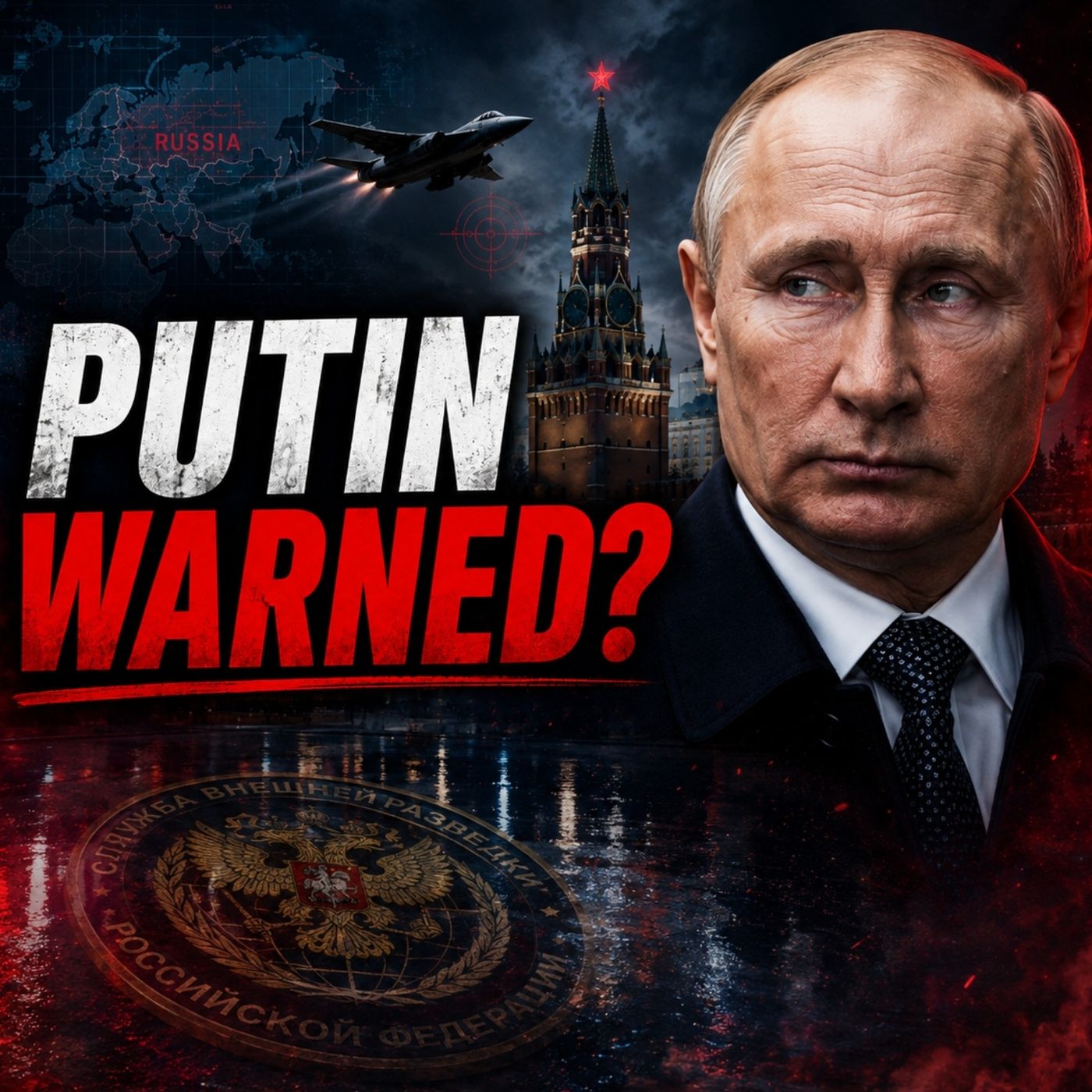
The CIA’s "Secret" Moscow Trip & Putin’s Growing Problems | EYES ON GEOPOLITICS
About this episode
Support the show on Patreon:⬇️
https://www.patreon.com/TheTeamHouse
Jack's news outlet:⬇️
https://thehighside.substack.com/
Find Jon Hackett here:⬇️
Jon's Twitter:
https://x.com/jonathanhackett
Jon's LinkedIn:
https://www.linkedin.com/in/thejonathanhackett
Jon's books:
https://www.amazon.com/stores/author/B0C5L659N5?ccs_id=e11a2062-f8d3-498e-bfd7-7d2f3869caf6
Linkedin: https://www.linkedin.com/in/thejonathanhackett
Twitter: https://x.com/jonathanhackett
Check out Mick's new podcast here:⬇️
Apple Podcasts:
https://podcasts.apple.com/at/podcast/pub-and-porch-applied-stoicism/id1836955475
Spotify:
https://open.spotify.com/show/1k3QPmkAMwnGJxMLDwUSSd?si=n6piIu8XRcag1Z0K43A3bQ
Youtube:
https://www.youtube.com/@UCd0Hq6QFk8CoTu5j-VU0Ong
Find Mick Mulroy here:
Fogbow ⬇️
https://fogbow.com/
Lobo Institute ⬇️
https://www.loboinstitute.org/
Twitter ⬇️
https://x.com/mickmulroy?s=21&t=-Ze3F_Ix2vlJ18KFvORTCA
LinkedIn ⬇️
https://www.linkedin.com/in/michael-patrick-mulroy-31198b52/
Whitefish security summit ⬇️
https://whitefishsecuritysummit.com
Find Marc P here:
https://x.com/Mpolymer
Find Andy Milburn here:
Twitter ⬇️
https://twitter.com/i/flow/login?redirect_after_login=%2Fandymilburn8
LinkedIn ⬇️
https://www.linkedin.com/in/andrewmilburn2023
Substack ⬇️
https://amilburn.substack.com/
Andy’s book ⬇️
https://www.amazon.com/When-Tempest-Gathers-Mogadishu-Operations
"Karl Casey @ White Bat Audio"
00:00 – Start
01:59 – Why Did CIA Director John Ratcliffe Go to Moscow?
05:17 – Was Ratcliffe Warning Russia About NATO?
08:33 – U.S. Intelligence, Strategic Surprise & Defending Europe
11:04 – Can the U.S. Defend NATO While Fighting Iran?
14:00 – Russian Sabotage Operations Across Europe
16:19 – Ratcliffe’s Meetings With the FSB & SVR Chiefs
22:23 – GRU Operations, Assassinations & Sabotage in Europe
26:07 – Estonia’s Intel Chief Warns Putin Has “Only Bad Options”
29:59 – Could Russia Face an Elite Revolt Against Putin?
34:11 – Russia’s Casualties, Oligarchs & the Risk of Mobilization
38:31 – Is Estonia Sending a Message to Russia’s Elite?
41:44 – Six Months Into the Iran War & “Economic D-Day”
44:46 – Divisions Inside Iran Over Ending the War
48:03 – How Long Can Iran Survive the Economic Pressure?
49:03 – Should the U.S. Be Arming Opposition Groups Inside Iran?
53:36 – Why the U.S. Iran Strategy Still Lacks a Coherent Campaign
56:51 – Andy Milburn’s Upcoming Gaza War Book
58:18 – Jonathan Hackett’s Books & Upcoming Audiobook
59:27 – Upcoming Fiction Book & Closing Remarks
Become a supporter of this podcast: https://www.spreaker.com/podcast/the-team-house--5960890/support.
Get every episode summarized
Each time The Team House publishes, we email you a written briefing from the transcript — the topics, who appeared, and any specific claims, with the ad reads skipped.
Email me new episodesFree for 3 shows. No card needed.
Hosts & guests

Transcript ready
1,590 searchable segments. Every word is indexed and playable.
Full transcript
The Team House — The CIA’s "Secret" Moscow Trip & Putin’s Growing Problems | EYES ON GEOPOLITICS. Machine-transcribed; use the interactive transcript above to jump the player to any line.
I started or not in 2013 and we make bike apparel. The best part of Shopify for me is our ability to run the business as essentially non-technical people. We're able to admin everything on the back end, front end, and sell things online easily. If Shopify were a bike accessory, I think it would actually be the bicycle. It's the thing that you do the thing on. We run the business on Shopify. Start your free trial on Shopify.com. Toyota's easy choice sales event is on. Whether you're looking for the performance of a camera, the versatility of a RAV4, the efficiency of a Corolla, or all electric driving in the BZ. There's a Toyota that's just right for you. And with great deals across the lineup, now's the time to find yours. But hurry, these deals won't last long. Toyota's easy choice sales event and soon. We make it easy. Toyota, let's go places. Hey everybody, we are back.
Another episode of IZone Geopolitics. I'm here with Jonathan Hackett. Mick Mulroy dressed up for us today. Thank you, Mick. And Andy just can't get off. Got off a workout looking pumped as ever. Lot happening as usual. Iran's kind of like in a standstill, the Shredo Heart Mooses Open. No, it's not. It's open. No, it's not like it's hilarious. What's going on? I guess in the headlines between both sides. I think today we're going to focus on obviously everybody saw CIA directors, racclips, secret. Fuck, and I'm saying that in air quotes for the people that are listening. Trip to Moscow, that was basically fucking telegraph the whole time. All the O-O syn accounts that follow plain data and transpolences were following the sky. When he hit Riga and then when he hit Moscow. So I don't know if you could really technically call it secret because after it happened, there was like a spin cycle that was going on for the last week. A lot of speculation as to what they were talking about. He met the head of the FSB and SVR.
Putin wasn't the air, but he's briefed right after. So yeah, I mean, there's a ton of speculation. Supposed, like I'll throw it off to you guys. I mean, I'm sure you guys have been paying attention to this really tightly. Andy, let's go. All right. So on the, I got nothing on it, really on the racclip, is it? So I picked the wrong guy to go first. Well, yeah, let's, I mean, let's talk about that first, but I would deflect that to to make. And then I'll chime in with some useless comments in the tail end of that. And then, and then I thought we could talk about the, that that excellent article you afforded it deep by the head of, of Estonia's intelligence service in the wake of the racclip. Right. Yeah, but that's a good segue. Yeah, we talked about a lot on, uh, maybe see this week. So to your point, I mean, there's other ways to get the director of the CIA and that's much less obvious
than going on a military transport plane. We have very non-descript jets, for example, that can do that. It's not perfectly flondest, and of course, but this, I think to your point, the, I think it was meant to be known, right? They wanted this to be something that historically, they could go back and say, remember that time? Because one, you could also do a phone call rather than take a 14, 15 hour flight for two hour meeting. So I think if you look at it that way, so they wanted it to be known. I'm not saying it's a bad thing, but they sent the CIA director. So it probably was about intelligence, although the CIA is often used for sensitive diplomacy, with terrorist groups and stuff like that. We don't want to get, you know, or state departments hands dirty, so to speak. But I think if you look at most of the reporting New York Times, it was likely about the intelligence
they had specific to the potential challenge to a NATO country. That's my take. Why? You don't need to fly all the way out there to tell them and not doing well against your grain. Like why? You don't need to fly all the way out there to ask them to stop helping Iran. They know that. They know that we don't want them to help Iran. We're in a war with Iran. I'm not saying they need to address it, but like there had to be something that spurred one, them wanting to put a marker down that we did this and two sending them all the way out there to the little of it. And I think the sensitivity of telling them that we know that they have, obviously we think they're gonna do a major escalation in Ukraine, and it might potentially be a challenge to a NATO country, and then we know it. I think it's probably the most likely. Maybe they talked about all of it, but I think that's probably the reason why they got a director ad clip on an aircraft, the fly all the way there. So what does it mean? Well, I think it's important to point out that we actually are just from looking at it
from public reporting. Good intelligence on what Russia intensity, I mean, how we were talking about before, or in Ukraine, like we know they're gonna do this, it's gonna happen, they denied it and then they did it. So I think we must have good intelligence, and I think the point is, hey, what element of surprise do you think you have? You don't. They're not a whole world talk about it. See what I mean? And hopefully it spurs the countries in Europe to start really happing up their own personal, or their own national security defense and preparedness. Because it's one thing just to make them a lot of fancy new weapon systems, another thing to be prepared to use them. So I'll stop there, but I think that's likely the cause. And it's certainly, if something like that happened, that's all we're gonna be talking about, right? So a challenge against NATO, which we have a treaty obligation to have been. So Mickey, it was, it's kind of interesting.
He, you know, it wasn't a direct approach to Putin or even Lavrov, right? He met with the FSB and the SVR chiefs, which I thought was kind of interesting. So maybe it was a, that's kind of a, I think he believed that was just gonna be more effective. I like what you said about, it wasn't intended to be secret, because in this age of Twitter plus transponders and all these geeks who track commercial aircraft, it's impossible, you know, the days of Nixon and Kissinger disappearing for a few days to talk to China for long. You can't do that anymore, right? So I, you know, I'd heard about, I'd heard about, and because the next thing we're gonna talk about, obviously, is this Estonian article. And in the head of the Estonian, Estonia's intelligence agency thought
that it was specifically to warn off Putin against attacking a NATO country, which is probably, you know, Estonia. But then a couple of, I think it was a Washington Post and Axios and Wall Street Journal, and everyone's been covering this visit, right? And so they, they suggest that that was not the primary reason. Primary reason was that the US had received intel that the Russians were saying, that the Russian intel was reporting that the United States was exhausted by the Iran war, unable to intervene to support Ukraine, even if the decision was made to do so. And that Rackliffe's mission was to disabuse them because they are the ones who'd said that to Putin, he was gonna address that directly with them and say, hey, you're off target. And at the same time, indirectly, propose indirectly because it's him going through the intelligence chain
rather than a direct over proposal that they open. You know, remember they talked about trilateral talks when the whole Iran thing blew up in February, there was this discussion of Slansky Putin and Trump meeting. I forget where, but it was planned and then it was all shelved when the Iran war started. So the secondary, you know, the papers were reporting that the secondary objective of this meeting was to float a Trump Putin-Sylensky trilateral summit again and it's kind of a testing whether Russian intelligence could get Putin to reengage with US mediated talks. You know, the ones that had stalled without a direct approach that could be shot down and look as though we'd be humiliated. And then the third reason, as you pointed out, again, this is just open-source media, it's been suggested was to warn off Russia
against potentially escalating against a NATO country. I think also we're seeing, you know, at the highest level of intelligence activity, strategic intelligence, there's a couple of goals, reduce strategic surprise, reduce uncertainty, and inform decision makers. And here we're seeing a public element of a larger thing. So we're seeing the public movement of RAK-LIFT to Russia, but there are also other things that the public is not seeing, such as the duty to warn. So there's likely if there was intelligence that's instigating this behavior in Europe, our European partners are probably receiving separate things connected to this activity. Letting them know we see these things, we're aware of these things. This is to help inform your decision making and help reduce your strategic surprise in case of a Russian escalation. So there's stuff that's happening that's probably larger. It's like the iceberg metaphor. We're seeing this little small piece of an iceberg and there's a lot of other activity happening, like sensitive diplomacy, intelligence activity, with our allies and partners in Europe
to help them understand the problem as well, because even if we're not physically there in Europe, defending on the ground today, defenses in just a physical military activity is also an intelligence activity. So we're helping our partners be ready, especially the Latvia, Lithuania, Estonia, Corridor, and Poland, of course, helping them get ready as a bulwark against what might be rolling westward if there was to be such a thing. And then Ducen out. So I mean, to John's point, so John, you're basically saying that there's always the danger, right, when it comes to interpreting moves, there's always a danger that things can be miscalculated. So it's a serious danger if the Russians are underestimating US capability and intent, right, to get involved, should there be a significant threat to a NATO country? I hope that the message was delivered. And hopefully right after we said,
we think you might have designs on a NATO country, we will defend the NATO country. I mean, that's what. And maybe that's one of the reasons I wanted it face to face in done for the intelligence services. Like he's delivering a message. He's not speaking. Because the intelligence services reportedly are the ones who had told Putin, had everything the US is, they don't have the will or the capacity right now to intervene. Should you want to do this? Do X whatever it is. I mean, you guys are military experts. Do we have a capability at this point to do one of the NATO? Yeah. Yeah. I mean, it would take repositioning, it would take reprioritization. That's all, right? Yeah. I mean, you know, you take something as simple as interceptors and this long torturous argument about interceptors. I mean, Lockheed Martin is still churning them out, but it's US government that gives Lockheed Martin the prioritization to use the interceptors. And recently that has gone to the war in Iran.
But I mean, again, it's question of prioritization. If the government says, okay, now we're going to pull on our resources, we're going to put this around thing on hold and we're going to focus everything on containing Russian, Russian aggression. Of course, we can do it. We have the capacity. We'll do it. Let's go to the other position. Let's not overstate like we have in the past, Russia's capability. There are, there are. They don't make with Ukraine. Yeah. Right? So, yes. And we need to, one of the things hopefully that comes out of it in addition to passing the message and the promise of like we won't stand for it, is we can now go to the NATO partners and say, let's prepare for this. Let's literally. Only that afford. You've got seventh fleet vessels in fifth fleet right now. So they're much closer to the Middle East, which means they're physically closer to Europe. So you have aircraft carriers that are not typically in that proximity to Europe that are nearby.
That can be easily called off. And if we have to remember, you know, the Chairman of Joint Chiefs of Staff is the global force integrator. That was an upgrade in his position after the Goldwater Nichols Act in 1987, where he is the single individual that can actually move all these forces through these different areas from seventh fleet in Pacific to fifth fleet to sixth fleet in the Mediterranean, for example. So that would be to answer your question, D. If the chairman is told, hey, new priority one is defensive Europe. Go. It's very easy for him to shift those forces through those corridors and move them through their different areas so that they can be ready to respond to this new priority issue. And as it stands, they're actually closer than usual. So that would be a shorter timeline to actually readjust. And there's something called the Global Force Management Allocation Plan or GIFMAP that is basically a big chart of spreadsheet where it's like a chessboard essentially, like moving pieces around, and that global force integrator can instantly start moving forces, flowing forces to Europe. And they don't have to be in Europe. They can be offshore. They can be even further away,
especially with strategic bombing assets. And we're talking about Russia. You will certainly see those strategic assets employed in a much higher scale than they would be against a country like Iran, which is a middleing regional power that does not require such strategic assets to be put against it. And those assets were developed in the first place to fight Russia in the Cold War. So that's what they're built for. Let me ask you in a meeting like this high level, would there be talking about Russia cutting stopping all the sabotage that's been going on across Europe? I mean, so what happened in life's sake with the unexploded drones and stuff like that? Is that even brought up or talked about or is that like talked about like on a lower level and not such a high profile meeting? I've depends on if it might have been part of the assessment of their intent, right? These advanced force operations, I don't know specifically. If it's just, it probably would need, since it was very concentrated, right? A two hour meeting. And I'm told it didn't go well, by the way,
pretty specifically. It was, we didn't expect them to go, you caught us, yeah, okay, well, we're not gonna do it now. So we knew that was gonna be the case, but that's why they sent a red clip over there. And I tell you what, if you wanna, you know, a more definitive view of this, they don't treat grass, grass, grass, mark all them are up. It's like, you know, if this idea that you're a guest and therefore it's, it really reflects on you how the guest has treated like most cultures. I'm not saying it's a cultural thing for us. I'm just saying it's the regime thing. They still treat you like crap. Like keep your waiting, look like waiting for hours and hours standing up and go here, go there. I mean, it's petty, but I don't know how bad it was. But I think they would probably focus it on, they might have talked about it wrong, they might have talked about, hey, why don't you guys come up with a reasonable path toward a ceasefire in Ukraine, but I think it was probably focused on, if this was in fact what they're talking about,
which is the only thing that makes sense to put them on a plane like that, I think it's gonna, the supporting evidence, to the extent that you don't wanna give away your hand either. Right? And they're gonna deny it. And then they're gonna yell at us for starting to warn Iran, stuff like that. But I think it was important to do. So that's off for doing it. I think they probably wanted to put a marker on the field saying on this date, we went and told them we knew what they're doing. Not that that's gonna keep them doing it, but... Hello everyone, if you're here in this, you are not a member of the Patreon. You can get your hands on ad free episodes that come out early, and you can ask us questions, maybe we'll answer them. You can also watch the Teamhouse podcast, completely ad free and early, and you can also watch it live as we interview our guests. And it's the best way to support the channel. So if you can, if you're open to it,
you can go to patreon.com slash the teamhouse. That link is in the description. We appreciate the supporters, and we hope you would consider being one. So it's patreon.com slash the teamhouse. Thanks guys. McDonald's is putting value back on the menu. Whether you're craving a Big Mac, McNuggets are sausage egg and cheese, McGrittle's, make it a meal, and save. Your favorite is now your wallet's favorite too. Extra value meals are back. Get a big something extra. With a Big Mac or 10 piece McNuggets, fries and a medium Coke, all for just $9. chicken wings and bacon. Mike cancellation and limited time only promotion pricing may be lower than meal pricing. hey McDonald's is putting value back on the menu, whether you're craving a Big Mac, McNuggets are sausage egg and cheese McGrittle's make it am for and save.
If your favorite is now your wallet's favorite too, extra value deserve to the most the most quantity of $6.00. Price and participation may vary. Promotion pricing may be lower than meal pricing. Ba-da-ba-ba-ba-ba. McDonald's is putting value back on the menu. Whether you're craving a Big Mac, McNuggets, or sausage egg and cheese McGrittle's, make it a meal and save. Your favorite is now your wallet's favorite too. Extra-value meals are back. Get a big something extra. With a Big Mac or 10-piece McNuggets, fries and a medium coke all for just $9.00. Limited time only, promotion pricing may be lower than meal pricing. Ba-da-ba-ba-ba-ba. I have a couple questions. So there was a bit, I don't remember the exact article where they mentioned, like, Ratcliffe felt that the FSB director was like the right go-between and like a good actor in terms of like getting Putin to listen and come to sit down, I guess, for the trilateral meeting with Zelensky and Trump.
That sounds like bullshit, because like, how the fuck can we ever trust the FSB director, who is a big part of Putin's inner circle? Yeah, I guess it's all compared to others. So he was at least dick of the bunch. Yeah, because you think about it when it comes to the head of the intelligence, they generally do very limited public engagements. And if it is, it usually is on anything political, right? So, and I've just bring that up because other people that could potentially have shared the message are gonna be asked nonstop about it, whereas Ratcliffe is just not gonna answer the question, he's not really expected to, or whoever the CI director is. And maybe that's the case that he just has a best relationship with his counterpart. You see what I mean? So I don't know, I don't think we trust any of them, and they don't think they probably trust any of us, but you're probably picking the best relationship that is conducive to the past and this message.
And obviously, we're the intelligence folks. So if we're passing a message, it's based on intelligence assessments, and that makes sense. But it's also a political issue too, in the sense that these two are probably the least political. Yeah, the, they, and make correct me for long, but Ratcliffe, it's not the, I mean, the FSB is primarily a domestic security service. I mean, I know it goes beyond that, but the SVR, I suppose, the most direct pairing for the agency. I think they were both in there, right? Is that what we're saying? Yeah, they were both in there. But neither of this, not a huge amount of snow in about both of these guys, and it's born Nekof, I forget the name of this. The risk in Nekof, yeah, something beginning with, and you're surging to rest. But I know, I know born Nekof's been head of FSB forever.
I mean, it's in almost, almost 20 years. You know, it's new mentioned having a single CIA director that long. You know, and he's, he's come through, you know, the KGB apparatus. I mean, he's, he's obviously, he knows his way around undoubtedly, not just the intelligence community, but politics. He came through the same pipeline as Putin. He's obviously close to Putin. And so that, that may have been why he does a useful target for this kind of message. Does anybody seen that? A movie about Putin? No, I want to see it though. A Jude Law Playsam. Yeah, I need to see it too. I don't think it's out here. It might be like select theaters or something. I haven't, I haven't seen it like that. I've advertised much. I don't know that. You know, I just want more point on that. It, you know, it occurs to me. Though, I mean, it is true FSB is domestic intelligence, but it's not.
I suspect that it and Migno's more about this scenario and John does too. But I suspect it's not as clean and cut as that. Because remember, when there was kind of that discussion about in the aftermath of Ukrainian invasion and there was a lot of discussion about where was Putin getting his intel. And reportedly, he got the bad intel about Ukraine being ready to fold quickly from Bornekov from the FSB. So I suppose from one viewpoint, it's surprising Bornekov still has his job. But then, you know, Putin doesn't want to admit that there was any mistake or failure made there. But it's interesting was that was clearly foreign intelligence unless domestic intelligence is a wider, you know, former Soviet Union view of domestic intelligence. Yeah, they don't have the legal restrictions that we oppose ourselves, right? We don't want the CIA to run around doing weird stuff with US citizens, right? So we have, and it was actually is something
they had to adjust after 9-11, right? Because it was such a wall. It was deliberate because they didn't want law enforcement talking to intelligence. Now they have, for example, these joint terrorism task force around the country where there's a place to fuse it, but still the US doesn't use the CIA against US citizen. Whereas there, I imagine everybody's anatomy, including citizens, right? But their view is a potential threat to the regime. So it's probably a much more mixed bag, like a lot of regimes have that, you know. They have a lot of components to do similar things because they want to pin them against each other and, you know, it's kind of like a regime protection policy several groups like the IRGC and the military ever on, for example, doing a lot of similar things. It's like the Ministry of Interior in a lot of countries. In America, the Ministry of Interior manages our parks and wildlife.
The Ministry of Interior in a lot of other countries does very different stuff. Yeah, that's got people hanging up other angles and stuff. Well, I guess ours is the FBI, right? That's our internal domestic intel. For the Russians, I know we're going to talk about this next. So I mean, there's FSB, it's supposedly domestic SPR, which is their foreign intelligence service, but all this, all this shit happening in Europe that the Estonian intelligence chief was talking about and that, you know, like the Leipzig airport attack, all of that is the GRU, which is military intelligence, of course. I mean, they're the ones with the Nova Chalk attack in Salisbury, they're the ones who did the 2014 Czech ammunition depot explosions. They failed, remember, they failed coup in Montenegro
or the kind of the state, but destabilization efforts and maltover during the elections. The London warehouse bombing, I think that was 2024 and the drone attack and Leipzig, all of that's the GRU. Yeah, what's the unit call that unit 29, something 29, 28155 or whatever the unit's called? It's like 29155. Yeah. So let me ask you something. I'm sorry, Andre, I forget the name, but it's some, it's Andre, Andre Everinoff, right, is the leader of the unit and how his name got out in the public sphere, but it has this stuff. Can you look at the GRU? I know it's military intel, so it's probably its own division and stuff like that. Is it kind of like their paramilitary arm? I don't want to compare apples to apples with the CIA, but like their ground branch. Some of it took a DMI.
They do stuff in a military intel. Yes. Yeah, but they do things like these targeted killings. So not that we do, but. So like the way I'm tuning in my head is like SVR, is like their SB and I's arm, like they cultivate sources, do all the stuff and other intelligence agencies do. The GRU gets after it in terms of like poisoning sabotage. Is that fair to say? Yeah, yeah. So I mean, it doesn't completely line up with our system, but there's crossovers. And of course, they don't have a lot of lawyers telling what to do like we do. Even in the clandestine coverage. Yeah, because GRIU does the, they do kind of the offensive cyber stuff, but SVR does a lot of the hacking, you know, the collection was a called, you know, the cozy bed and solo wins reaches were SVR operations. And there's another unit.
I can't say the fence ministry unit. That's, so it's quite complicated. I mean, it's a patchwork, right? And I'm sure there's, there's bleed over and who knows whether they share their operations with, with each other. Shine you guys. I mean, it's like in the US, we have 17 intelligence entities. Many of them do very similar things and looking at it from the outside, we see the product. We don't see the purpose. So a lot of times you might see GRU with Nabi Chock and Britain killing Andre Skirkel. That looks like an assassination, which it is, but it could be carried out by any of these entities. It wouldn't really matter which one it is, because we don't know what the actual foreign policy purpose was for doing that intelligence activity. So we just see the outcomes or we see the behaviors and things on the street. And it's kind of less relevant, I think, to kind of try to even untangle it, because it's not really important to untangle, because it's all part of the same government, you know, ultimate entity pushing policy down to these independent actors that all are funded and directed by the same leadership,
which is putting it into this inner circle. All right. There was an interesting article, I think, from the telegraph, I'm almost positive it was. I don't remember, I think it's telegraph from, I'm trying to get his name, I'm going to miss him pronouncing his name from the Estonian intelligence chief, Kwapo Rosen, basically warning that Putin's entering a period where increasingly he has only bad options, essentially. I also wanted to talk a little bit about, like we've heard the rumors about Russia mobilizing again, you know, and what that does. You guys can correct me in front of wrong, but that article basically stated that, he has low confidence that a ground up by the people revolution will happen, but like more on the side of the elites, where like the elites will start getting kind of pissed at things again, squeeze more and more, they're not making the exact same money they're used to making and that somebody might make a move. There was another intel chief that kind of called it wishful thinking in terms of like being able
to overthrow Putin and stuff like that. If you watch the Times radio YouTube and I don't want to take a shot, it's like every other video is like Putin's in trouble, Putin's trouble, it's been like three years of videos like that. I mean, I get it, like that's where they make, they bread is buttered, but realistically, and I know Estonia, like they hit that nail in the head in terms of the invasion in 22, and when it was going to happen to you, so like they have a ton of like, you know, political capital for a lack of a better term in terms of like, when the intel chief comes out and says something like this, people are going to take notice and be like, yeah, oh, wow, because it's like basically their whole job is, are they number one priority is keeping an eye on Russia, right? Because they're right there and they can get probably taken over in a few days. It's not a huge country. There's not a lot of people. So I mean, that's their number one threat. Where are you guys at? Andy, make your up now. So give me something good. Don't pass it off to make again.
OK, no, I thought that was good article. Actually it was David Blair in the telegraph, but I love the Estonian. So I love their attitude. I love what they do. But it's also important to bear in mind. They don't do anything that is not deliberate. You know, no one in the Estonian government or their intelligence community appears suddenly and jubbers away throw away lines or will sense out something on X that is kind of a random spark. It's all very clearly designed and clearly timed. And I think this interview was too from a guy who doesn't often give interviews. So, you know, I agree with just the article, but I think it's important to remember this. And do you mention that the bad options framing, right? That's the most quotable line, but it's also the line
that's most likely to be subject to intelligence, community, messaging bias, right, from European. It's every Western intelligence official has an incentive. European intelligence official has an incentive to describe Russia as fragile, futonous, cornered because it justifies continued Ukrainian funding, which is definitely something the Estonian support. You know, I mean, it mentions in that article, there's a Ukrainian flag flying in the intelligence, you know, right next to the Estonian flag and the headquarters building of the Estonian intelligence, because they see this as a common fight. So, I mean, he's obviously not a neutral analyst. And I didn't think anything in that article is particularly surprising. I mean, he said, he's not saying Russia could collapse overnight. As you said, you know, he's basically said Putin's one bad month
from a palace coup. I mean, he's not saying that. You know, but he is saying that there is, I think he uses a term, echelons, he's saying that there's growing anger in influential echelons within Russia. And he mentions, you know, he says, yeah, it's not going to be revolution in the streets. I mean, that's not the way it's going to happen. But discontent rising, and as he said, all echelons, which includes the oligarchs, right? He said, if the real risk is that it's these people with what he calls money, weapons, and information, quietly concluding that it's time for Putin to move on. And when that happens, he says, as typically happens in Russia, there won't be any warning. It probably won't be predicted.
And he uses the 2023 pregozion mutiny as proof of how, you know, how the system can suddenly appear from unexpected source. So nothing, I can see anything really new there. You know, a key part of his messaging. I mean, he talks, he says, hey, let's not call this hybrid war, right? What we just talked about, what the GRU is doing in Europe. It's warfare, it's open war. We're already in a state of war. NATO is already waging war against Russia, or other Russia's waging war against NATO. You know, you can call it war. You can call it state-sponsored terrorism. And he talks about the drone attack and Leipzig. By the way, Farid is not familiar with that. Those Ukrainian aircraft, I believe is a commercial cargo plane on the ground in Leipzig hit by a drone under the Lurussian,
which fortunately, I mean, it was carried explosives. Explosives didn't detonate, otherwise it would be in a much, you know, bigger mess with great risk to obviously a man in the apron of the airport. But he talks about all of that. He said, hey, that's war. Let's not, you know, let's stop using this hybrid bullshit term. You know, when he's talking about bad options, he's talking about the fact, and we've quoted this on this show that the Russians are losing at least a thousand guys a day. That isn't a throwaway number. That's been, you know, the M.O.D.'s assessment, British M.O.D.'s assessment, at least a thousand, sometimes 1,200 casualties a day, which is just hard to imagine. Their economy is in the shitter. He talks about their massive debt, although who watch the United States talk about massive debts. And he talks about the risks of announcing mobilization
and obviously another round of mobilization is going to again bring it home to a Russian public that's already suffering economically from the war. And now they're watching again, and you know, they're having to run for the excess to avoid being mobilized to fight in this war, which is seen by most young Russians as being a debt sentence. But, you know, his key point there was, he says, look, NATO is safe as long as the turn its holds, right? And that holds only if the West keeps spending and stays unified. So it was kind of an explicit message, I think, to Trump, or rather, you know, the Trump here at Doubt's about article five. And that's right in line, of course, with the Estonian messaging. So yeah, I mean, it was an interesting audit, but I didn't see anything else shattering there.
So Putin is 73, just looked it up, unfortunately, still young. And I think the guy is purportedly like super into longevity, you know, that stuff, you know, we make statements about it quite often. So to the point of the article, I didn't get a chance to read, I was doing the other podcast when he sent it out. But I would say that it's easier from intelligence assessment to say the status quo is going to remain the status quo, right? Because it's something has to actually happen dramatically, especially when it comes to regime change for that to be the case. But there are a lot of things that could lead to it. So I mean, Andy already pointed out one, he's eliminating an whole generation of Russian males and they all have moms. And they have that matters everywhere, including Russia, the mother factor, even in the regime of Russia, has a has a major factor. Is it enough to bring down the regime? Probably not, because of brutally oppressive if they have to.
But that's why they're so talking about the oligarchs, right? The oligarchs and senior members of his government could eventually get to a point where it's like, this is just destroying the entire country. And we're not winning. And the longer it goes on, something I would say the longer it goes on, the chances of Ukraine advancing and getting more lethal and having direct impacts on every aspect of Russian society, right? Because they're gonna have longer range strikes. It's gonna cause more fuel shortages, power outages, et cetera, as they get better and better. And we all, I think, expect that whoever comes in next after this administration is probably gonna support, hopefully, hopefully, as I guess we shouldn't say we know, but it could be a major increase in support for Ukraine. So they have a, Ukraine does have a lot of things going on in Putin's only real response to it is,
let's kill a bunch of civilians by launching Kyrz missiles into parmed complexes, which is horrible and every one of them is a war crime. Every time they do it, they make the resolve in Ukraine a strong. So I would say the quagmire that Putin's got him into the decimation of the whole generation and potentially pressure from adjacent power structures could lead to it, but where are things to happen? But we'll see. I can't make a prediction, but I hope that we are putting our thumb on the levers that are making this more likely, but of that way, like a lot. He's the biggest. Interesting. There's a lot of context actually in Russian history, especially Soviet history, post-Stalin. If people remember, after Stalin, there was kind of a change in internal politics inside Russia, trying to figure out how do we live now that Stalin's gone.
And Berea was in charge and there was some restructuring that Berea did that was not popular with people like Krusev and Malenkov, who eventually actually ousted Berea from the party. And that's kind of the type of palace coup context that we could probably look back toward to see how did that occur because it's still in part of the Russian common memory, the cultural memory. And it's also an Estonian cultural memory because Estonia was part of the Soviet Union during that time when that coup occurred. It's not technically called a coup today, but it's similar to what you would consider a palace coup. And it's very, the reasons are also similar. This satisfaction with how the government leadership under Berea is happening because it's harming elites that were initially benefiting and now are no longer benefiting from those policies. And they have the ability to do something whereas, as you mentioned, the people on the street do not. They could try, but they would be stopped. I mean, how many is it? 500,000 Russian men have died in Ukraine so far. That's an incredible number outside the country. And that shows how little Putin cares
for the people of his own country. So those people on the streets will not be able to actually do anything. It would be very similar to a Berea ousting that happened already in the 50s. I got a question. Is an article like this what the chief, the intel chief of Estonia, right? When I'm sure he's taken very seriously by our NATO allies and our sides, right? They're right there. They're on the front line. And their whole thing is about worrying about Russia. What Russia is going to do? Is his whole thing doing this article kind of like a message to the elites in Russia like, hey, if you guys are interested, we're available. Whether it's like where you're going to pick up guns and shoot Putin, are you just going to give us information on what's going on? Is it kind of like a way to either signal to the Russian elite that like, hey, we're for business and also kind of use up more of the FSB bandwidth
in terms of like, oh, is somebody fucking around and like talking to foreign intel and stuff like that and working against us? Like, let's burn some of our resources doing that instead of sabotaging. All the above. All the above. Multiple reasons for doing that. You've covered a couple of them. It's also telling everybody else that at least in his assessment, which I would imagine is based on some credible intelligence that Putin is under challenge. So it's trying to promote the idea that he is. It's trying to promote the idea that the elites could cooperate with us to facilitate it coming about. If you guys had a bit of money, would you see Russia mobilizing more people, more men? What's the option? I mean, if the option is like either except the current state, which isn't going well for them, and then likely we'll start becoming even less well for them, or they do something dramatic.
But of course, mobilizing that many that didn't just get thrown right in the meat grinder could, you know, from Putin's perspective, make it far more likely that he gets, he's hanging from the lightpost. So eventually, how many people has to be, I mean, what is the life expectancy now on the battlefields, like 30 minutes? Yeah. Like when is the people in Russia going to say, well, yeah, if I protest, they're going to kill me. But if I'm going to die anyway, you know, maybe I can save the next generation. Maybe I can save my little brother. Like, what does that happen? Like, I'm going to go ahead and fight the man right now rather than getting, you know, shishkabat, my drone and other don't boss. So my little brother who's going to be eligible to be sent there in three years doesn't have to. I mean, what would you do? I mean, I think we should really promote that, you know, idea. I think it's time to step up rather than, you're going to lose your life anyway. Young, not connected Russian man. Are you going to do it to save your brother?
Or are you going to do it just because Putin can't figure out how to get out of something he started? And you're just father piece of art. I had a question. I forgot it. Sorry. And of course, I mean, I know we've tried, we deliberately didn't want to just talk about Iran, because we talked about all the time. But we did hit the six months mark. So that was a big topic this week, six months. It seems to be focused primer. And if you're cool with this day, I was just going to throw a little bit about the Iran stuff. But it seems to be focused primarily on the economic aspect, this economic day. It's unclear to me actually how much was actually implemented. Like when the Treasury Secretary gave the, you know, I've been pushing this, these people who follow the show, I've been pushing this for a while. But then when I was listening to the press conference, it sounded like a lot of it wasn't happening theoretically. We might, we might, we might.
I don't know if you guys are tracking that we're doing more. But I'm like, OK, well, why do we announce this stuff? And then I know we, we sanctioned some individuals, some companies, et cetera. But it seems like a lot of the major aspects we just put on hold. Seth here. Yes. On OFAC's website, I was looking actually that same day to see did they publish some new actual sanctioned documents. And there were no new substantive sanctions that were separate from what we'd already been working with. And it actually seems more like the US is trying to ask other countries to enforce existing sanctions. Because that's really the challenge. We've talked about that is we can make sanctions all day. But if the activity is happening in another country, there's very little we can do economically to enforce those sanctions unless the partner nation or the host nation agrees to commit their own resources to doing something to assist with that sanction enforcement. So the Trump administration lied? I'm shocked.
Well, I guess they held off. I guess they've held off. I just don't know why you'd announce it as. I mean, China has to participate for this to have maximum effect. They buy like 80% of their energy. So, and I think China already came out of it. And why would they? So they don't want to do something too disruptive because President Xi's coming up US here. So we probably have stalemate here until after the elections. But that doesn't mean we're busy. We're too busy like trying to strong on Canada too, which if anybody was following that, it was absolutely ridiculous. Like some of the things that we were demanding are just like who the fuck, like that's honestly if I'm Canadian, I'm telling the US to go fuck themselves too, frankly. Like who were you to dictate to us? Our sovereign like domestic like who are you? You just because you guys buy a lot of shit from us? It's not our fault, you're fucking consumers. And that's all we're really good for, frankly. I mean, yeah.
So I'm not really surprised to go back to the economic D-Day. That nothing really happened and they made a big show of it just to get some headlines. Not really surprised by that, by this administration. Well, inside Iran, domestic politics wise, President Pasadashkin is even more vocally opposed to what's going on with the US-Iran relationship. In other words, he is promoting diplomacy. He thinks he has said on Iran controlled media that the Iranian government should be pushing for diplomacy to end the war, which is a very different narrative than others that we've mentioned like Gali Baf Bahidi and others that are now in control. There was a reshuffle of people in power. I'm not sure if people had noticed that in June through now, where after the Supreme Leader, quote unquote, took control. A lot of new IRGC people that most are unfamiliar with rows to the top and took over. They're much more extreme and willing to basically die on the hill that they're on right now. And Pasadashkin is basically shouting at them
and saying, please stop. We need the country to get back to order so that we can manage our own domestic issues. Because I think Pasadashkin's looking at this long term and he's saying, we had unrest from October last year through January when the massacres have heard. We're going to have unrest again if prices continue going the way they are. And they will go the way they are if we continue at the stalemate. So Pasadashkin is pushing for some concessions on the Iran side and a lot of the others in the Iran government are not promoting that. They're not supporting that. So there's division within the domestic politics of Iran that are important to keep an eye on. Because the economy is really, really stressed. So we should point that out. They are inflation, what's the reality? It's like two points over 200,000 Tommons, which is, it's like six times more than it was five years ago. Which is really incredible because five years ago was already dramatically high. The price of an iPhone there is something like $8,000 right now. Wow. I mean, so they are under economics, right?
Like Jonathan pointed out that was the purpose of the protests or the reason. So it's going to get worse and worse and worse because the blockade, because everything else it goes with it. And the economy is a unifying principle. So there may be disagreements inside of Iran or any country about what's going on. But there's one thing everybody can agree on. It's that they don't want to spend more money on stuff. So these camps that don't normally agree can have that and come together. And that's, there were gasoline protests a few years ago because they wore gas lines. And this is a thing in Iran. Gas is actually subsidized. So it's still cheap now. And there's been this back and forth about should the Iranian government stop the gas subsidy? And the reason they have not is because they know that last time they did that, they had some of the largest protests in their history. It, countrywide, it was very dramatic and almost got out of control. And they don't want that to happen again. But it might have to because you can't just keep printing money unless you want to be using LaBoi and have a $1 trillion bill, right? Yeah. And I mean, you could do without an iPhone maybe,
but you can't do without a tomato, right? Right. The inflation for food is gone to the roof. They have to eat. So yeah, even back in May, there were people that had to take out a payment plan to buy yogurt at the grocery store. Like the stores actually had informal payment plans because they understood the issue with the currency at the time. I mean, realistically, how long do you think Iran can hold on? Economically, if it stays like this, or gets worse? Well, Iran is not a monolith, and that's the problem. The government can hold on for a long time because it's the Ho Chi Minh Trail in Vietnam. While we're bombing Vietnam, there's this whole Ho Chi Minh Trail going on, and they're just resupplying themselves. It's very similar if you think about that metaphor with the elites have access to resources outside of Iran. So if all of our stuff is focused on inside of Iran, the elites are going to survive because they're drawing all their energy and power from somewhere else. Whereas the people in Iran are the regular people,
the everyday people, they will suffer, they will die, they will starve, they will have mass unrest, there will be all kinds of problems soon, but the government will still be able to protect itself very long-term, and they're committed to doing that. Even people like Pazashkian, who sounds like he's opposed to the policies, he's going to survive too. So there's definitely a difference between this very small group of people who can last for a very long time, and everybody else. Yeah. You think we're doing anything in terms of trying to arm them? Not just doesn't appear to be. I mean, isn't that crazy? Are we nuts? Like we already are burning through our patriots and fatten missiles, and all of our, if there's any left, political will in the region, to not be doing this covertly, or at least trying to do it, or at least taking it seriously, to me, sounds fucking insane. The amount of time we would take to arm train, equip an actual fieldable force, his way beyond the time horizon
of the time we have right now. It would be years to get a large enough force. I mean, the IRGC has several hundred thousand active members. There are hundreds of thousands of reserved members. The Beseech has up to two million people that can be called into duty now. That's a huge, huge opposition force that has to be balanced against. It can't just be small groups of tribal fighters, like it was in the 80s, against the Soviets and the Afghan government that we produced under Operation Cyclone. And it won't be like Timberstikhamor in Syria. We're talking about a very, very large surrogate force. If that was to be the case, that would take years to build, years to sustain man and equip. And then actually field by the time that happens, the country might not even be the same country it is today. Right. If I might take on, I don't know. Or wouldn't be talking about it, but I don't know. I would, these are all the best done and comprehensive approach, right? So if we decide we want to go with Gore, the Rod, then we should be doing stuff like this. It's Jonathan's point. It's not going to be, you know,
dispositive on the outcome, but it could enhance what we're doing. We could have no, no go zones for the regime, right? They could essentially start blocking off parts of the country that they can control, but not really challenge, you know, the multi-million people they would have to go through to bring down the regime. But it's not necessarily one or the other. So you have military, economic, internal, from the inside the regime, and then a covert program and an influence covert program. We should be doing too, right? Because it's covert ops, although, you know, most people think of actual ops or like action type stuff is also influenced, propaganda and all the other stuff. The way the NSC should work, it should be a comprehensive plan that supports each other just for a stated political objective, or strategic objective. So if it's starting now, just because we've decided,
it doesn't work to do just airstrikes. Yeah, two little two-year-old. That's the opposite of the way it should work. And that's what that, you know, to stick out from my old outfit a little bit, that's a concern that the agency gets is like, well, we tried to diplomacy that didn't work, we tried the military that didn't work. So it's like, you know, that burning dumpster outside, that's yours. It's like, wow. So it's already like a complete failure, and they can't figure it out at the end of the agency. It needs to be like, you know, the agency needs to be there from day one, and what they can't provide to the overall security, national security effort is just part of, you know, the military, diplomatic, economic, you know, the whole time, influence aspect. I'm kind of disappointed that it hasn't been a thing like from like the start of five years ago. Maybe not right after the JCPOA and stuff like that, but like in the Trump one years, like why this wasn't, or maybe 2019 when they had the big protest
and stuff like that, why we didn't start doing that from then just getting them guns, getting them guns, and seeing what happens. Like, I mean, yeah, I mean, the other thing is, if you set the bar like it has to be able to top of the machine, then that's an impossible bar. Yeah, I mean, look at what Aron does. Did Thomas ever have a chance to take over Israel? But they still funded him, right? Not saying it's a good thing, I'm sure there's all a bit of a thing, but you see, it doesn't have to be it doesn't have to be one or another one. Yeah. Yeah. We just want to add to the zones of influence you're talking about. That's what Hezbollah was in self-lebanon for Iran. That's where they didn't really care about the Christian North that wasn't part of the mission. The mission was to control the South and create a buffer between Israel and this space. And that cost them a billion dollars a year. The Irish use budget funding that surrogate is a billion dollars a year. Now we keep paying for aircraft carriers, right, Andy? Yeah, we're no longer, you know,
we're not fighting to prevent a crisis. We're fighting to undo the one that arguably of the crisis that the war has created. You know, and I mean, we've talked about, I think we've all come to a consensus here at least on among the co-hosts on this show that it isn't one tool, right, but each one has to be done and integrated in a more smarter way. And so, for instance, I mean, and then we've talked about the role of sanctions, the fact that rolling targeted really specifically rolling targeted sanctions that that continuously investigates sanction, investigates sanction, you know, so it's always closing the aperture is a more effective way to do than what we have to, which is issue them in tranches, announce them and then never really plug the gaps.
We talked about the failures of the military campaign, why they have failed, you know, that the goals have been unrealistic and the way we've gone after those goals has not been the best way to do it. You know, being a little more focused than that, we talked about cyber, what could be done, offensive cyber operations to understand in the downside, of course, of exposing your hand. We've talked about covert action, you know, the fact that it takes long time to get to, to raise a, to have effect normally, but to mix point, you can still make things uncomfortable for your enemy by again, narrowing your aperture, having less ambitious goals, but focusing on certain segments and fears of influence. But we don't seem to even be able to do one of those things coherently, let alone do them all coherently and in an integrated manner, which is truly what a campaign
and effective campaign requires instead. What we're doing is this kind of, okay, let's just, let's see who blinks first, you know, let's, let's gamble on Iranian economic collapse, which is unlikely to happen for the reasons that John just gave us. And hope that that happens before it costs Washington more in the meantime, you know, we're watching, not just, you know, interceptors are the big story munitions, but just the, the extended the effect of the degrading influence that extended deployments have on our military readiness. I mean, there is a cost, obviously, for an unassault of this, it may not be as readily apparent as the economic cost to Iran, but nevertheless, it's a real cost, especially when we have obligations elsewhere. Man, all right, great, we're done. It great summary Andy, as usual, I knew you'd come through.
Yeah, man, tell us about your book Andy, what's the title? Well, it's the war in Gaza, all right, suspend judgment, guys, you know, read some of the, I've on sub stack, I've already published a few of the chapters as a preview they're also available on LinkedIn and on Twitter. I think, I think it's going to be, I, and I've read books on Gaza that have come out, who knows what I'll come out between now and my book is published in the spring, but I think it is the most robust effort. I'd notice I say effort, I'm not banging my chest too hard, robust effort to do a real, really thorough analysis of what happened and why preceding the war on October the 7th itself and the war since then to include the war against
Iran, you know, the wider conflict. So, actually, please, yes, go out and buy it. Why, you can't buy it yet, but commit yourself to it. Take a look. Yeah, keep your eyes out for those preview chapters. I'm free and will remain so. Yeah, the link to Andy's sub stack is down in the description. The link to find Mick and the wife's security summons down in the description. John Hack is two incredible books are down in the description. You're right. This book, Theory of Irregular War, which is my first one. Actually, this is my dad's copy. That's why it's so messed up because he was reading it. But it's coming out as an audiobook in like a month or two. So people can listen to it because it's a little dense and I don't really read much, but it'll know it's it doesn't read out loud. He means he's a guy that's doing it. He's the same guy that narrated the Iran shadow weapons. So that'll be very famous. A fantasy. It'll be a good one.
I think cool. Yeah, so I'm having a third one too. I know you told me about that. Sounds like an incredible story too. I don't know if you want to kind of tease in it all, but it sounds a really cool story. The true story about how I met my wife in Iraq when ISIS was there and she's an Iranian refugee. And we had a pretty interesting way of getting out of Iraq. So I'm going to put that on paper eventually. It's great. I'm going to say it here. So I make sure I finish it completely. I have a book coming out too. It's fiction. It should be coming out. It's interesting. Thanks, John. Yeah, it should be coming out in the end of October. Yeah, stay tuned. It's pretty incendiary. So some of you guys might not like it, but that's just life sometimes. So, you know, look out for that. I mean, not like that. Everyone likes the that I meant incendiary. Yeah. No, I mean, it's probably debatable on whether everybody likes me or not to, but again, they'll give a fuck. Yes.
So guys, check out all the guys links down in the description. Of course, Mix got another podcast called the pub on the porch, applied stoicism, really cool pod. They just did one about the Odyssey. Check it out. And support us on Patreon, patreon.com slash the teamhouse. You get ad free episodes and early episodes and you help support the show. So guys, a pleasure is always. You can't predict the future, but you can prepare for it. Arizona State University is building degrees for what's ahead. Programs designed around emerging fields taught by faculty whose research is shaping our future, not just teaching about it. It's why we've been ranked number one in innovation for more than a decade. Your future is worth preparing for and you don't have to prepare alone. Become future ready. Explore more than 400 programs at ASU online. ASU.edu. That's a degree better at Arizona State University. We're bringing world class education from our globally acclaimed faculty to you. Earn your degree from the nation's most innovative university online.
That's a degree better. Learn more at ASU online. ASU.edu. You can't predict the future, but you can prepare for it. Arizona State University is building degrees for what's ahead. Programs designed around emerging fields taught by faculty whose research is shaping our future, not just teaching about it. It's why we've been ranked number one in innovation for more than a decade. Your future is worth preparing for and you don't have to prepare alone. Become future ready. Explore more than 400 programs at ASU online. ASU.edu. That's a degree better. Bye, everyone. At Arizona State University, we're bringing world class education from our globally acclaimed faculty to you. Earn your degree from the nation's most innovative university online. That's a degree better. Learn more at ASU online. Learn more at ASU.edu. You can't predict the future, but you can prepare for it. Arizona State University is building degrees for what's ahead.
Programs designed around emerging fields taught by faculty whose research is shaping our future, not just teaching about it. It's why we've been ranked number one in innovation for more than a decade. Your future is worth preparing for and you don't have to prepare alone. Become future ready. Explore more than 400 programs at ASU online. ASU.edu. That's a degree better. Ranked number one in innovation, 11 consecutive years. Arizona State University isn't just ahead of the curve. It's creating new paths to success. Learn from notable clinical and research faculty online. That's a degree better. Explore programs at ASU online. ASU.edu. At Arizona State University, we're bringing world-class education from our globally acclaimed faculty to you. Earn your degree from the nation's most innovative university online. That's a degree better. Learn more at ASU online. ASU.edu. You can't predict the future, but you can prepare for it.
Arizona State University is building degrees for what's ahead. Programs designed around emerging fields taught by faculty whose research is shaping our future. Not just teaching about it. It's why we've been ranked number one in innovation for more than a decade. Your future is worth preparing for and you don't have to prepare alone. Become future ready. Explore more than 400 programs at ASU online. ASU.edu. That's a degree better. At Arizona State University, we're bringing world-class education from our globally acclaimed faculty to you. Earn your degree from the nation's most innovative university online. That's a degree better. Learn more at ASU online. At ASU.edu. At Arizona State University, we're bringing world-class education from our globally acclaimed faculty to you. Earn your degree from the nation's most innovative university online. That's a degree better. Learn more at ASU online. At ASU.edu.
You can't predict the future, but you can prepare for it. Arizona State University is building degrees for what's ahead. Programs designed around emerging fields taught by faculty whose research is shaping our future. Not just teaching about it. It's why we've been ranked number one in innovation for more than a decade. Your future is worth preparing for and you don't have to prepare alone. Become future ready. Explore more than 400 programs at ASU online. ASU.edu. That's a degree better. A vacation rental shouldn't come with surprises. It should come with verbal care and 24-7 life support. If the hot tub's broken, that's a verbal care thing. If my teenager starts calling me Leslie, that's a family thing Leslie. Verbal care and 24-7 life support. If you know, you're verbal. Terms apply. See Verbo.com slash trust for details. You can't predict the future, but you can prepare for it. Arizona State University is building degrees for what's ahead. Programs designed around emerging fields. Taught by faculty whose research is shaping our future.
Not just teaching about it. It's why we've been ranked number one in innovation for more than a decade. Your future is worth preparing for and you don't have to prepare alone. Become future ready. Explore more than 400 programs at ASU online. A SU dot E.D.U. That's a degree better. Premier hosts on Verbo deliver quality vacation rental stays with fast responses and clear instructions. Oh, I had a question. Our host replied super quick. Premier move. Wish I had a premier group chat. They won't even write me back. Look at top rated stay with the premier host. If you know, you're Verbo. Toyota's easy choice sales event is on whether you're looking for the performance of the camera, the versatility of her at four, the efficiency of a Corolla, or all electric driving in the BZ. There's a Toyota that's just right for you. And with great deals across the lineup, now's the time to find yours. But hurry, these deals won't last long. Toyota's easy choice sales event and soon. We make it easy. Toyota, let's go places.
McDonald's is putting value back on the menu. Whether you're craving a big Mac, McNuggets or sausage egg and cheese, McGrittles, make it a meal and save. Your favorite is now your wallet's favorite too. Extra value meals. A back. Get a big something extra with a big Mac or 10-piece McNuggets, fries and a medium Coke all for just $9. Limited time only, promotion pricing may be lower than meal pricing. Toyota's easy choice sales event is on whether you're looking for the performance of the camera, the versatility of her at four, the efficiency of a Corolla, or all electric driving in the BZ. There's a Toyota that's just right for you. And with great deals across the lineup, now's the time to find yours. But hurry, these deals won't last long. Toyota's easy choice sales event and soon. We make it easy. Toyota, let's go places.
McDonald's is putting value back on the menu. Whether you're craving a big Mac, McNuggets or sausage egg and cheese, McGrittles, make it a meal and save. Your favorite is now your wallet's favorite too. Extra value meals are back. Get a big something extra with a big Mac or 10-piece McNuggets, fries and a medium Coke all for just $9. Limited time only, promotion pricing may be lower than meal pricing. Ba-da-ba-ba-ba. Toyota's easy choice sales event is on whether you're looking for the performance of the camera, the versatility of Rav4, the efficiency of a Corolla, or all electric driving in the BZ. There's a Toyota that's just right for you. And with great deals across the lineup, now's the time to find yours. But hurry, these deals won't last long. Toyota's easy choice sales event and soon.
We make it easy. Toyota, let's go places. McDonald's is putting value back on the menu. Whether you're craving a big Mac, McNuggets or sausage egg and cheese McGrittles, make it a meal and save. Your favorite is now your wallet's favorite too. Extra value meals are back. Sun rises, prices fall, get a sausage McMuffin with egg or sausage egg and cheese McGrittles, small hot coffee and hash frowns for just $6. Price and participation may vary, promotion pricing may be lower than meal pricing. Ba-da-ba-ba-ba. Toyota's easy choice sales event is on. Whether you're looking for the performance of a camera, the versatility of a RAV4, the efficiency of a Corolla, or all electric driving in the BZ. There's a Toyota that's just right for you. And with great deals across the lineup, now's the time to find yours. But hurry, these deals won't last long. Toyota's easy choice sales event and soon.
We make it easy. Toyota, let's go places. McDonald's is putting value back on the menu. Whether you're craving a Big Mac, McNuggets or sausage egg and cheese McGrittles, make it a meal and save. Your favorite is now your wallet's favorite too. Extra value meals are back. Get a big something extra. With a Big Mac or 10-piece McNuggets, fries and a medium coke all for just $9. And some of the best food I've ever had. The best food I've ever had. It's a big, big, big sandwich. Toyota's easy choice sales event. The best food I've ever had. This is the best food I've ever had. It's a big, big sandwich. It's a big, big sandwich. It's a big, big sandwich. Toyota's easy choice sales event is on. Whether you're looking for the performance of a camera. The versatility of a RAV4. The efficiency of a Corolla, or all electric driving in the BZ.
There's a Toyota that's just right for you. And with great deals across the lineup. Soon, we make it easy. Toyota, let's go places. Looking for the perfect rental? Discover top rated stays loved by guests, rated highest by real guests through authentic reviews. These traveler loved stays are recognized by the details that matter most and validated by real experiences. Choose confidently for rentals you can trust. Verbo, book now of occasion rental loved by guests.
More episodes
More from The Team House

Inside the Pentagon on 9/11 | Ambassador Matthew Klimow
The Team House

Army Special Mission Unit Operator | Erick Miyares (throwback ep)
The Team House

Is Washington Negotiating Russia’s Terms to Ukraine? | EYES ON GEOPOLITICS
The Team House

NYPD Detective on Murder, Mobsters & Old New York | Jason Allison
The Team House