What Rising Global Bond Yields Mean for the Economy, and Your Money
About this episode
Amidst rising inflation, ongoing wars in Iran and Israel, and the U.S. national debt climbing to a record $40 trillion, the global bond market is rattled. Mary Childs, host of the talk show podcast Mary in America, author of The Bond King, and former co-host of Planet Money, explains why bond yields are so high right now and what it all means for the global economy, and for your wallet.
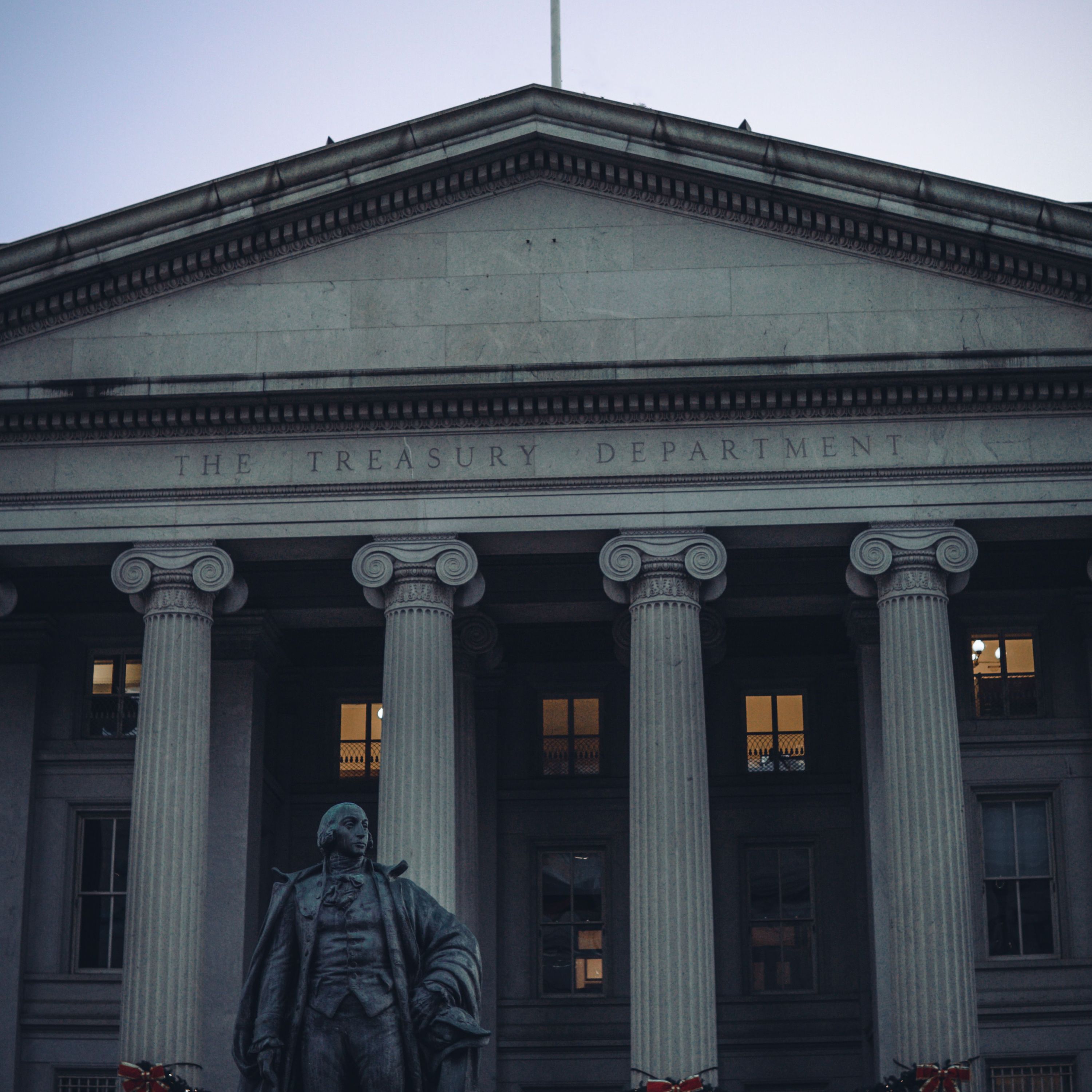
c/o: Blue Arauz, via Pexels
Hosted by Simplecast, an AdsWizz company. See pcm.adswizz.com for information about our collection and use of personal data for advertising.
Get every episode summarized
Each time The Brian Lehrer Show publishes, we email you a written briefing from the transcript — the topics, who appeared, and any specific claims, with the ad reads skipped.
Email me new episodesFree for 3 shows. No card needed.
Hosts & guests
Transcript ready
459 searchable segments. Every word is indexed and playable.
Full transcript
The Brian Lehrer Show — What Rising Global Bond Yields Mean for the Economy, and Your Money. Machine-transcribed; use the interactive transcript above to jump the player to any line.
It's the Brian Lairshow on WNYC. I'm Kusha, Navidar, Phylian for Brian. Now we're turning our attention to the Bond market, specifically the US Treasury Bond market. It's not the flashiest topic, not nearly as glamorous as it's cousin the stock market, but it is without a doubt the most important financial market in the world. It affects our pension funds, global interest rates, the health of the stock market, and here's what makes it super interesting right now. The Bond market has been looking a little odd. The yield rates on bonds are going up. That means if you loan money to the government, that's basically what a bond is, the government has to pay you back at a higher rate. And for some of these longer term loans, like the 30 year Treasury bonds, that yield rate
has climbed higher than we've seen at climb since 2008. There are a lot of reasons for that yield rate going up, but to give a sense of the bigger picture, it's important to understand that the biggest lenders, the banks, the foreign countries and pension funds, have traditionally seen the US Treasury market as a safe, stable, relatively low interest place to store money. But recently these Treasury bonds have become a less attractive option, and there's a lot of reasons behind that that we'll get into. There's inflation, expensive wars, more borrowing to pay for things through the government. All of these things have made the US Treasury bonds less attractive to lenders, and we need those lenders. The only way to make them more attractive is for yield rates to go up. Now that might seem a little sticky, but today we're going to make Treasury bonds action packed. You're going to be dropping the words bond yield rates at dinner parties for weeks to come.
So joining me now to make that possible for both of us is Mary Childs. You may know her from Planet Money where she used to be a co-host or from her book, The Bond King. Now she's got her own podcast called Mary's in America. Mary, welcome back to WNYC. Thank you for having me. And listeners, we want to hear from you. We're taking your questions on all things, bonds and debt. Are you following the bond rates lately? How is it impacting you? Maybe you've made changes to your investments. Do you have a question for Mary? Give us a call or send us a text. We're at 212-433-9692. That's 212-433-WNYC. And just to make a quick correction there, it is just Mary in America, the name of your podcast. Just one of me. That's right. Before we dig into the current news cycle, can you paint a picture of the bond market for us? What's a Treasury Bond? Why are Treasury bonds so important to the global economy? I just want to say these are my favorite questions and I'm so excited to be here. It's never a good sign when I get to talk about bonds, but I do love it.
And I will say, I think it's really glamorous. I just had to put that forward. So a Treasury Bond, as you said, it's simply when investors, institutions, people, anybody with money, it could be you or me. It could be a pension fund. It could be an insurance company in Japan. They lend money to the US government. The US government has a gap between how much money is coming in in revenue and it wants to spend more. So there's that gap and that gap needs to be financed in the markets. And so they need to borrow from people like you and me or Japanese pension funds and insurance companies or whoever it may be or the Central Bank of China. And to do so, they go to the bond market. They borrow from these groups and pay a little interest for that borrowing. And then at the end of the life of the bond, you know, we agree it'll be 10 years. It'll be 30 years. It'll be seven years, whatever it may be. And at the end of the life of that bond, they pay back that amount that they borrowed and the investor walks away happy because they got that interest along the way and they got their money back. And that's the fundamental promise. And the interest rate is set not through any kind of magic or science, but through this
sort of art of knowing what investors feel about, I think about six different types of things. There's like, how is the government looking today? How do I feel about the deficit levels and the spending levels of the government? Do I think that the government is going in a good direction? Do I think that the economy is going in a good direction? Do I feel like the global marketplace is giving me better opportunities for, you know, lower risk and higher yields? That's, you know, always what you want more money for less risk. That's impossible to come by. It's always more money for more risk. So, so they're always making these, these trade-offs. It becomes a little difficult to disentangle exactly what thing is bothering investors or making them happy in any given day. But the bond market is this kind of beautiful stew of human emotion and animal spirits, as they say, which is kind of whether we feel brave and confident and want to go, you know, start doing new, exciting things and want to bet on growth and all those things show up in treasury yields, in bond yields. So is it safe for me to say that a bond is like an IOU?
100% yes. Plus a little interest. Plus a little interest. And where does that interest come from? Well, part of it's like kind of like vibes I'm hearing you say and part of it's like alternatives. Like can I get my money from elsewhere? The way, yeah. Exactly right. The way we choose, you know, if I'm an investor, I'm choosing who to lend to. And so if I'm choosing between you, the US government, but I'm also choosing, there are tons of other entities that borrow every day. And that might be, you know, meta coming to market and saying, I'm building this new data center and I'm going to do so much AI and I as an investor might find that really attractive. And I'm getting a little bit more than I might get from a treasury. So I might choose to lend to meta instead, which means the US government is competing with all of those other entities. So Mary, help me understand why this is such a problem because the rates are going up. But I don't know. If I didn't know more about bonds, I would say, I'm buying a 30 year bond. I can get a pretty high rate around 5%. It's a bond. It's guaranteed money and interest.
Those are good, safe returns. What's the problem? Yeah, what's the big deal? So it is sort of a double edge sword. The way that the economy works is that these interest rates trickle through. They kind of spread diffuse around the economy and show up in different ways. So yeah, it's really great as the investor, as the lender to the government if you're getting a higher rate. But if you're a borrower in any capacity, this affects you. If you are looking to get a new mortgage, say you're looking in the market for a 30 year mortgage, you too are competing against the US government and other entities for that loan, right? Those lenders are still making the same choice and you're just entering the marketplace as the same as anybody else asking to be able to borrow money. And if the US government is paying more, well, then they're going to be more attractive than you're a 30 year mortgage. So you're going to end up paying more on your mortgage when you come to market. And that actually adds up so substantially. And so you start just, I mean, as anyone knows who's been looking at the housing market
for six years has been trying to get into the housing market, it's just getting higher and higher and more and more expensive to take out that mortgage. And that is not fun. So I think a key thing that I'm hearing from you is that we, like individuals me and you, everyone listening, we are in many cases, we are borrowers and we are lenders. We have money in our 401ks or whatever retirement vehicle we want. But we also want to buy a house, want to get a mortgage. And what I'm hearing you say is that on the lender part of our identities, this might be a good deal. 5% is great. But when we want to buy a house, this is where it's really going to, it could harm us, make it harder. Yes, exactly right. And this is sort of, you know, treasuries are so crucially important, just foundationally important to the entire global financial system. So this affects us, but it affects everyone else in the world too. So there's just, we're so interlocked around this rate. This was known as the risk-free rate, which is sort of funny because like, what is that? Are you sure it's risk-free? Okay. If you don't want to look at it, then I don't want to look at it.
That's fine. But it is sort of this, everyone benchmarks everything else off the rate of treasuries, because that is seen as, well, it's never going to be a problem. I don't have to think about this rate. The US government would never default. They're always going to make good on these obligations. And therefore, this is the rate that we will use throughout the financial global system to price every other single thing. So it's you, me, it's our student loans, it's our car loans, it's our mortgage rates. All of this is sort of going to move together in this weird ecosystem. We talked about some of them, but can you tell me what factors are steering these major financial institutions away from buying treasury bonds? Why do we need these higher yields as an incentive? Right. So there are a couple factors. I picked six, but it's sort of like, there are ways that things that make interest rates go up in general. And one of the things that makes a higher interest rate is if you borrow for longer, that makes your rate higher. Because the US government is always borrowing it every single amount of time you can do in
the market. So the reasons that are salient to us right now is risk. That's the most fundamental one that's the way that people are thinking about what they need to get compensated for is if there's increased risk. So the risk you're the entity, the more you want to get paid in interest to lend to that entity. And that can be, okay, I'm looking at this borrow or this potential borrower, and they have too much debt. They have too much risk in here. How are they going to pay all of this debt down? That's one consideration. And that can show up in the US in our fiscal deficit. In saying, you know, the total amount of US debt recently reached $40 trillion. And I think people just don't like that round number and kind of freaked out a little bit about that. Just having reached that threshold. Right. Because like, what's different from 40 to 30? Literally. I know. I started sweating at like 37 or 38. And I'll just say for the record that like 7 trillion of that is debt that we owe more or less, that the government owes more or less to itself to, you know, pension obligations that it made to employees, et cetera.
And so worse comes to worse, they could just cancel that. Let's not think about that. But that's sort of, you know, you're thinking more about the 33 trillion. So we still have a little bit more room. If you only worry about 40, you can, you can rest easy for another minute if you'd like. Yeah. But sorry, I interrupted you. You were saying, risk, higher risk, you need more incentive. One of those. Higher risk, you need more incentive. Greater the more debt a borrower has under basically all circumstances, the more you're going to get charged, they're going to get charged in the market. And the one that's a little confusing is bond investors are like a grumpy crew. They're a little bit, they're known to be pessimistic and just, they're always a little skeptical, right? They're like, they're finding ways to be uncomfortable and anxious. And one way that they can be uncomfortable and anxious is if growth is too good. So this is a little bit confusing because if economic growth is too strong, it can push prices up. We felt this in the aftermath of the COVID pandemic. We saw a lot of inflation as things came roaring back. And there were sort of exogenous reasons.
But basically, if prices start to go up, that is terrible for bond investors. That's what they hate the most. It's corrosive to those bonds because you already made a promise. You already said, I will lend you this money for 5%. You were happy with 5% then. But if there's tomorrow inflation, suddenly your 5% is getting eaten away as the value, it just like corrodes the value of that payment stream. And so you're like, we also not only is that worth less tomorrow because of inflation, I also, if I had just waited 10 minutes, I could have gotten 6% or 7% because rates go up in tandem. And so this is sort of an upside down world thought. But if the economy is too strong, that is bad for bond investors. And so they have to start charging more in the market in interest rates. And I think an interesting clarification here, early something that popped into my mind is when you said the economy is growing too much. It's too strong. Not everyone would be feeling that way right now. Exactly. Stocks would be so, oh, well, it's an interesting, weird time because we've had kind of a recovery
labor market. It's like looking okay. We've had so much excitement around AI, especially among institutional investors and the people that buy and sell these things where they see this enormous potential growth in productivity. And that company is going to be so profitable. We have this whole new sector. It's very capital intensive. So there's been a lot of boring. It's just doing all of the things that kind of light up the financial markets. And you and I as regular people might feel a little bit more, we might have mixed feelings about AI. But in the institutional sphere, in the investing sphere, it's kind of everyone's just so excited about it. And that has us thinking that there's going to be a lot of future growth. And if there's future growth, it could get too good. And it seems like the AI hyper scale build out is a huge part of what's happening right now with these interest rates yields rates going up, right? Exactly. So as I mentioned, you have meta competing alongside the US government for borrowing.
And those companies are necessarily going to pay more than the US government. They have a lot more, they just are more risky and therefore pay more. But at the same time, investors looking at meta and the other hyper scalers, they're like, well, I don't know much risky. They've been around for a long time. I trust that they will still exist. I'm reading the indentures, the promises they're making in these bond documents. And I'm like, this is probably going to work out fine. There is a big debate in investing right now as to whether the hyper scalers are going to end up over building and there will be excess capacity and defaults and bad news bears down the road. But right now, the general consensus is this is looking fine and I would rather lend to meta than I would to the US government. There are so many competitors in the field. It's not just US Treasury bond markets. I think that is a key thing. Let's go to Tom in Bronxville. Hey, Tom, welcome to the show. Yeah, I, how are you doing? Great. Thanks. Go ahead. Thank you for this show. I guess it's fantastic.
One thing I just wanted to say was that when bond rates go up, if I'm already a bond older, if I already own bonds, then the value of my bonds goes down because my bonds are not as attracted to the new bonds that are coming out. So I just wanted to point that that's why when rates go up, the bond market gets cranky. Thank you, Tom. Mary, go ahead. Is, is Tom right there? Tom's absolutely right. Yeah. The value goes down and that if you're a bond holder, if you bought directly US Treasury bonds from the US Treasury and they're, you know, 10, or 30 or whatever, you don't have to worry about it in a real sense. Your money is still going to come in. The interest you were promised will still come in. But if you are holding a bond fund where people are trading where your fund manager might be trading that bond in the secondary market, those prices, it's true. Those prices will go down because yields have gone up. And so that's just to what I was saying about the inflation being corrosive, it's sort of the manifestation of that in prices. And as Tom points out, prices in yields move inversely.
One goes up, the other goes down. It's just the way they kind of are interlinked. This brings up an interesting point because Treasury bonds are thought of as kind of the gold standard of a safe way to store your money. You probably won't make a ton of money there, but you're guaranteed not to lose any. Does it feel like that assumption is actually slipping away? Do people still trust these bonds in the long run? I think people do still trust the bonds in the long run. I think that it's one of those things where it takes a lot to shake that trust. There were definitely have been moments of raised eyebrows. And after a quote, liberation day, it was clear that the Trump administration is working to upend the global world economic order and do something new. And for Treasury bondholders, that's like, oh, I don't want that. I don't like it. Would you mind not doing that? And so that is. I give reject. There is this uncertainty, this institutional uncertainty that the Trump administration has brought in intentionally, right? And I think that that can be helpful in some ways in macroeconomic situations, but for
Treasury investors, it's something that like, it's too large to confront. And if we cannot have the idea that Treasury's are not safe and that they may have risks to them, I think it's probably true that the US government will make good on its obligations. And I don't think we need to consider a US default or anything similar. But the fact that we're talking about it is a pretty big change. Yeah. We have a text from a listener that says, please ask the guest. The bond market is bigger than the stock market, right? Correct. And more cool. The stock market is, I think of it as sort of like the area where, you know, you get to kind of party. It's like fun. You get to think about growth expectations. You're thinking about the story of the future and future profits and what's going to be big. And that's super fun. The bond world is, it's just where reality is shaped. It's where rubber meets road. It's like this company or this government or this entity. This is the cash flow that they have promised me. I know what's coming in the door. And the best case scenario truly is that I will just get my money back at the end and
the interest rate I was promised. And yes, there's capital appreciation in the market. If the price of the bonds go up and you enjoy selling in the secondary market and trading with your friends, but you don't have to do that. You can just take your coupons and go home. And so there's this kind of stability that's expected of the bond market. I think this is where the idea that it's boring comes from because it's supposed to be stable. It's supposed to be the place where you don't have to worry about something going to zero really. These are companies that are real companies with cash flows that are making promises to you. And it's very stable. It's very state. And people need to rely on it. It's kind of like, I imagine this is probably a bad metaphor, but it sounds foundational to everything. And like, if you put your ear to the ground, you can hear the rumblings that will affect all of the other financial institutions, the big trees, the mangroves, everything that kind of like go up from that ground. Is that a dumb analogy or am I not something? It's perfect. I love that I feel like I have spread my contagion to you. Thank you. That's exactly right. And if you get really bond-filled, you'll be walking around and look at like your post
office and the highways and be like, oh, bonds, bond-filled credit borrowing, built all of this around me. Yeah. There's protein maxing, there's fiber maxing, and I'm angry, there's bond maxing. I love that. Actually, there's a question there about that because we are not financial advisors, but we're seeing a bunch of texts come in that say, for instance, here's one that says, I have a balanced asset allocation for my retirement and personal accounts. I know that timing, the market is a mistake, but is this the time to move from bonds to cash? That's from Eric and Brooklyn, Eric. Thank you for that. I don't think we're in the business of telling you what to do with your money at all, but this is something that I'm sure you're running into a lot, Mary. How do you think about questions like this? I mean, it's tough. Yeah, not an investment advisor. And if I were qualified to answer this question, I would be so much richer. I do think it's worth. It's good to keep an eye on. It's good to think about. I don't think that, again, I don't think that a default is really on the table. I don't think we're going to be massively upending the global order any time very soon, but it is a longer term question.
And the fact that people are nervous, investors are nervous, central banks are buying more gold, are trying to inch away from treasuries. The fact that this is a consideration, it's sort of a secular, it's a tectonic shift. I was trying to make it some less worrying. Yeah, right, right, right. Yeah, it's something to keep an eye on. I don't think you have to do anything today. And I think you're completely right that trying to time the market is never, never a good idea. But it's something to be aware of and maybe think about what you would want to, what your lines are, what you would want to see, what would make you actually need to move your money. Yeah. And I guess tectonic is appropriate if we're saying it's foundational. Like it is something that is affecting everything else. We did have a caller who unfortunately had to hop off, but I wanted to bring this up. We had a financial advisor has folks reaching out to him with questions about bond funds that they hold. And some people seeing negative amounts in bond funds because they held him. He thinks it's a good time to sell, but it's not, this isn't meant to be financial advice.
It is just showing that like this is something that a lot of people are struggling with right now, thinking about it is affecting in a lot of ways. And of course, this is far reaching because we also have to talk about the country dealing with a lot of inflation and how the president is, well, not the president necessarily, but the president, the federal reserve are all responding to this. In a lot of times, you would see a cup pack on government spending, although that's less popular, you definitely would see a raise in interest rates. But both of these seem pretty far off based for how Trump is reacting. He's really averse to raising interest rates. And it doesn't seem like we're going to stop military conflict spending any time soon. So in lieu of following traditional wisdom on this, what strategies is Trump pushing for to stabilize the Treasury bond market? Yeah, there have been a number of initiatives that basically have been in search of lowering interest rates, lowering that, you know, the way that that's filtering through the economy.
So they essentially, all of these have more or less evaporated, which is disheartening, I guess, especially if you're the administration. But in service of the end goal of lowering interest rates, the government, the administration told Fannie Freddy the mortgage giants to buy more mortgage-backed securities, which should, you know, lower that interest rate, especially directly in that mortgage market that, you know, affects you and me. Treasury also bought a bunch of Japanese yen. That is basically because Japan is the biggest holder of U.S. Treasuries and they're in a bit of a pinch. So if they started to sell those treasuries, we would start to see that price effect in the market. So if you see yields go up, interest rates go up, that's not what we want. So there was a little bit of support from Treasury in the Japanese currency. And then also Treasury up to the amount of treasuries they were going to buy in the market. Not by a ton. There's not, it's not like in the financial crisis, Ben Bernanke was talking about needing a bazooka. This was not that. This is not, we're not talking big guns at any, by any stretch here. But it's just, it's a signal that the, that they're taking it really seriously.
They're exploring what avenues are available to them and they are interested in experimenting more with those tools. All right, well, we'll have to leave it there for today. Mary Childs is a financial journalist and the host of the new podcast Mary in America. She's also the author of the Bond King, how one man made a market, built an empire and lost it all. And Mary's also the former co-host of Planet Money on NPR. Mary, thanks so much for joining us. Really appreciate it. Thank you for having me. So fun.
More episodes
More from The Brian Lehrer Show

Tuesday Morning Politics: State of Iran War; Home Stretch to Midterms
The Brian Lehrer Show

The CDC and Measles Deaths
The Brian Lehrer Show

History of the War on Terror
The Brian Lehrer Show

Labor Day: Working Class; White Collar Unions; Supermarkets; Summer Songs
The Brian Lehrer Show