About this episode
Caitlin Moscatello, author and contributor to New York Magazine, talks about the expense of youth sports and the investors who profit.
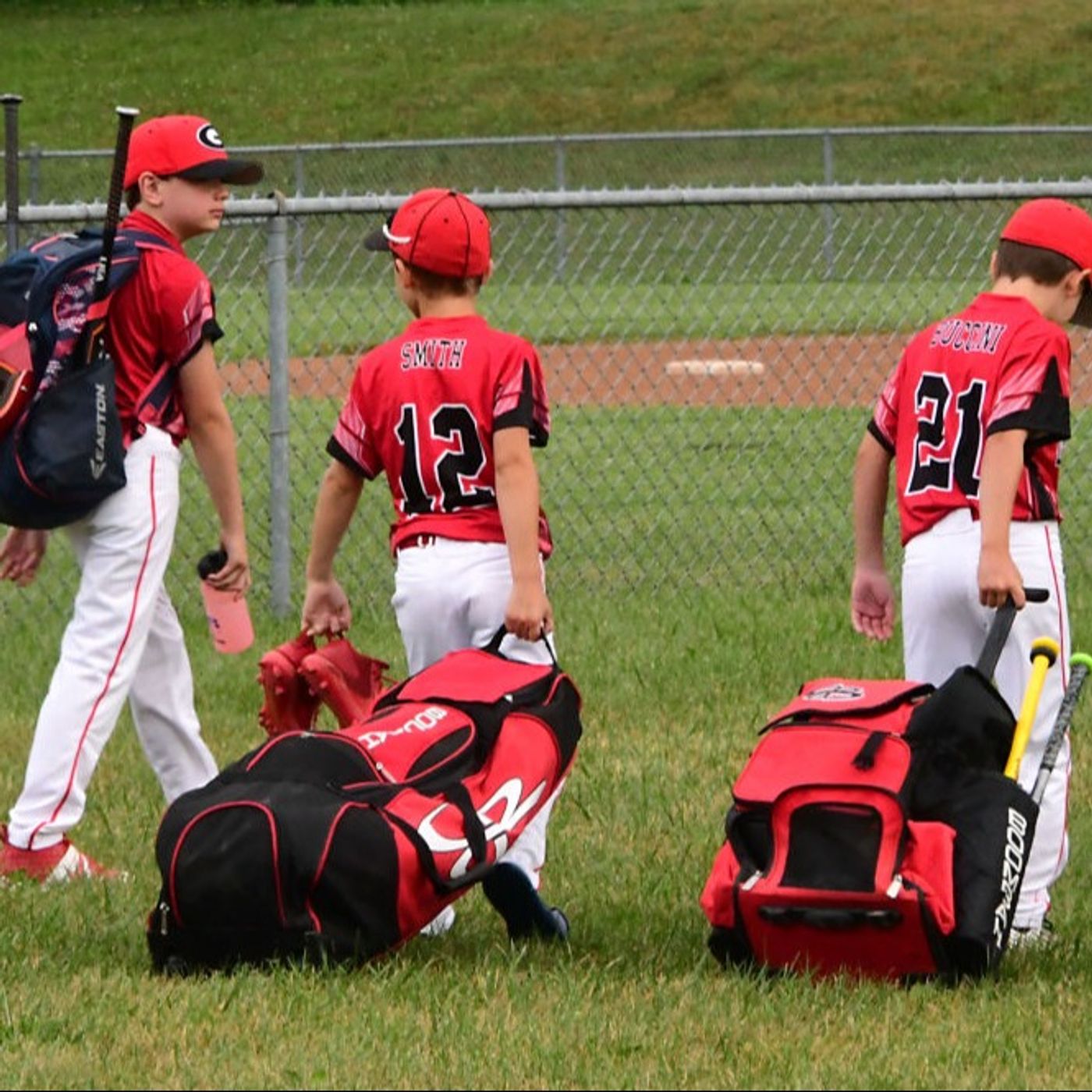
Photo: Members of the Guilderland travel team arrive to play a home game against Queensbury as Guilderland Youth Baseball starts up using safety procedures at Keenholts Park on Wednesday, July 8, 2020 in Altamont, N.Y. (Lori Van Buren/Albany Times Union via Getty Images)
Hosted by Simplecast, an AdsWizz company. See pcm.adswizz.com for information about our collection and use of personal data for advertising.
Get every episode summarized
Each time The Brian Lehrer Show publishes, we email you a written briefing from the transcript — the topics, who appeared, and any specific claims, with the ad reads skipped.
Email me new episodesFree for 3 shows. No card needed.
Hosts & guests
Transcript ready
328 searchable segments. Every word is indexed and playable.
Full transcript
The Brian Lehrer Show — Who's Winning at Kids Sports?. Machine-transcribed; use the interactive transcript above to jump the player to any line.
I'm Kusha Navidar, filling in for Brian today here on WNYC. So when I was a kid, I played a lot of travel soccer from about 8 years old to all the kids in our town who wanted a more competitive environment would try out for the traveling team and my mom and I would drive to and from practices or tournaments almost every night. I played with the same group of boys from 8 to 18 and I think it was pretty expensive for my family but it was formative, positive and I am very grateful for it. Today travel sports are way more consuming and even more expensive. Private leagues cost thousands of dollars a year, can demand expensive international travel and many foster a hyper competitive environment. Despite all that, according to Project Play as reported by my next guest, family spent 46% more on primary youth sport in 2024 than in 2019.
An industry has emerged of investors who see big potential profits in youth sports and now families are in a tough bind because they want to give children the benefits of sports but discover a sports ecosystem that is paid to play and with a potentially toxic culture. Caitlin Muscatelo is a contributing writer at New York Magazine. Related to article is titled The Pay to Play Childhood. Caitlin, welcome back to the show. Hi, thanks for having me. So how are travel teams different today than what they might have been 20 or even 10 years ago? Yeah, I mean travel teams have been around for a while, as you mentioned. So it's not that travel teams themselves are new but they used to be for the truly exceptional young athlete and they're increasingly becoming the norm. You start to see about a decade ago, a lot of private capital is being funneled into the youth sports sector and then like so many things during the pandemic, that really accelerates. During the pandemic, you had wreck programs, a lot of them, the budgets were cut, hark shut
down and private leagues were able to swoop in much quicker and then get back up and running and it's really just taken off from there and also with you see the money is also coming in much quicker. Listeners, we want to hear from you. I'm sure there are a lot of parents out there. Maybe there even some athletes out there who are in younger than 18 or around 18 that are in travel sports. What's the experience been like for you? I'd be especially interested to hear from anyone who's experienced travel traveler club sports over the past 10 years. Have the costs and culture changed dramatically in your experience. Give us a call or send us a text. We're at 212433WNYC 2124339692. So, Caitlin, you spoke to a parent, Elizabeth, whose son switched from a town soccer team to a $5,000 a year club program and you opened your piece with this. What was the switch like for her and her family? Yeah, so Elizabeth had grown up in the 90s and played rec soccer, had a great experience
and then naturally, as we know when she became a mom, she wanted that for her kids too. So her son, she signed them up for the local rec program. They were having a good experience. But what started to happen, and really this is a distinction to quite early. So private leagues and clubs and travel teams are really attracting families now, even in first grade, second grade. I've spoken to families where there were triodes in kindergarten. So I do want to make that distinction also in terms of what's changed and what's a bit different. But anyway, so this started to happen in her son's league. He's on the town team and around second grade kids start to leave. By third grade, the program is really diluted. The level of play is lower. Her son is starting to get a bit bored and it's not just parents who really notice the difference. Kids, even really young kids notice it too. And he was aware that there were this private club and he had friends who were joining. And that was attracted to him and he wanted to do it.
And ultimately, even though she struggled with the inequity of it, because she knew, well, this is something we can afford to do, but we're going to be leaving behind our friends on the team who can't. She ultimately did decide to sign her son up and let him try out and he's in the program. Because she wants, you know, as I have two kids, I totally get this. I know she wants the best for him and she was able to provide it. But really when she got into the program and they were in that private club, there were things that she didn't necessarily love either. So it wasn't just like they got in and everything was great. There was really a mix. And ultimately, like so many parents, she's just trying to do the best she can for her kid. A point that stuck out to me with what you just said was with Elizabeth's experience, the alternative place for her son to play sports was diluted. Like all of the kids were leaving. So it was almost as if in her experience, she had to go to that more expensive option
to give her son an option to play, is that fair to say? Yeah, I mean, this was a sentiment. I interviewed dozens of parents from around the country who have kids participating in all different sports. And this was a sentiment that came up not just with Elizabeth, but also with other parents. There was this bit of a feeling that she wanted her son to have a good experience. She wanted to continue to want to play. And he was starting to complain. He was starting to get bored and was interested in this other option. It is a critical mass issue, right? If kids stay in the rec program, the best kids, the kids in the middle, the kids who are just there having a good time, it stays fun, but it also stays competitive. And her experience, about a third of the kids left by third grade. So now really then, the level of play gets lower. You have fewer parent volunteers. And so the whole experience just, you know, for her son and for her family wasn't as strong. We have a text, my son plays travel baseball and it can border on the absurd.
We recently went to South Carolina, flight and hotels for a tournament, only to play mostly other teams from Long Island. Why with many exclamation and question marks following? We've got a caller, Jack from the East Village. Hey, Jack, welcome to the show. Hey, thank you. First, let me say I'm not a parent and my little league day is your way behind me. But I have a lot of, you know, not these kids that play this, this, and I'm not bored at all. First, I think it's sold to the parents in an ego-driven way more than it's sold to the kids themselves. Secondly, I think that it limits the range of sports that the kids will play. They tend to focus on one sport and not even explore other sports that they could be playing. My third point is I see a lot of burnout in kids. By the time they're 12 or 13, they're tired of doing this, what is, in essence, a job
that they have to do a traveling job. So they get burnout. And do you want all these points at once? Or do you want me to slow down and react to them? No, Jack, I appreciate that. Thanks for calling the three points that you mentioned. It's almost like you read the article. I really appreciate it. And so, Caitlin, I want to, we're going to touch on all of them. So thank you, Jack. Let's go to that burnout piece because I think that was Jack's four point super important. Talk to me about the impact this is having on kids. Yeah, so what's happened now is that kids are being pushed into this hyper competitive, really specialized, in many cases, year round sports environment when they're really young. Like, it's again, first grade, second grade. And so by the time they're in middle school, a lot of these kids are burning out. And that's not the only psychological effect. It's also their stress and pressure and anxiety. There's a young, you know, a young athlete I mentioned in the piece who started having panic
attacks on the soccer field when she was nine years old. Because what's happened is the, all the money that's being poured into youth sports has also created this environment that's very commercialized. It has this like faux professional feel. It makes the stakes feel really artificially high. And so the kids feel that. And the child psychologist that I spoke with, you know, they mentioned that they're seeing kids, parents are calling in younger and younger. One of the psychologists I spoke with from the Cleveland clinic, he actually had to put a minimum age on his practice. He now only sees patients ages 12 and older because he was getting so many calls from parents of children younger than that. Listeners, it's the Brian Laershow on WNYC. I'm Kushan Avidar, feeling in for Brian today. And we're talking with Caitlin Muscatello who wrote an article about the changing nature of travel sports and club sports in the United States. We would love to hear from an athlete right now who is in club sports or travel sports.
So if that is you, give us a call or send us a text at 2124339692. That's 212433WNYC. So I want to bring up the point, Caitlin, that in my experience, at least stress, competition, they have always been some part of sports is the case that today it is different. It is harder. It is taking more of a psychological effect or is it that it is affecting more people because of this upward pressure to join these club teams or something different? Tell me about that. It's a bit of all of that. You know, like so many things, it's not like there's just one cause or one factor that's playing into this ecosystem. Like Jack the Collar had said, there's parents do play a role in this too. So there's a lot of different things going on. But I do think that the fact that kids are starting so early, this is an age where kids
are really forming their identity. And so if you are playing hockey lacrosse soccer, you know, fill in the blank, 10 to 12 months out of the year, tournaments, games every weekend, and practices multiple days a week, what I was hearing from young athletes I spoke with, who in that case were, you know, teenagers by now, is that this was really how they saw themselves. Like if I'm not a hockey player, if I'm not a soccer player, what am I? And so I do think that the fact that this is happening, this specialization and this hyper competitive environment is happening so early that can really, you know, play a role and potentially cause harm. Of course, there are people who are having good experiences within this ecosystem. It's just kind of pulling out though and looking at the broader picture. We have a text here regarding travel teams. My son was interested in basketball and started gravitating towards the private travel teams after time on local teams. I found the whole scene sleazy with the coaches praying on vulnerable parents and kids and dangling
unrealistic dreams of playing on the NBA in front of them. I found that the families could not afford it, but they were being sold a bill of goods that if their child has NBA aspirations, they must stay. We did it for about six months and got out because we found the whole thing gross and disturbing. And I want to take this opportunity here to talk about the supply side of the service, I guess. There is a lot more private equity, money, investment, profit, margin, seeking behavior. That was my understanding from your article, Caitlin. Did I read that right? Yes, you did. Yes. So youth sports is now about a $40 billion industry to put that into perspective. That's twice as much as the NFL. So, and this is growing. So, some market projections even put it at a $60 billion industry by 2030. And the consumers are families. Like this is parents and kids. There's investors have looked at this as a market and a reliable one at that.
If parents are going to spend money on anything, it's their children. And even in times of economic uncertainty and everything else, parents have proven to be really reliable consumers. And there's a lot of different channels or buckets, if you will, that investors can put money to put money into or and then hopefully, you know, and there hopefully for them or I guess with their goals, make money off of. And so some of that is tech and software. So there's the apps, for instance, that families must download because that's the app that that legal team uses and that's where they get all of their practice schedules or stats or standings. Then there's, you know, they might have a financial stake in the apparel company and families are required to buy gear and uniforms through that company. They might have a stake in, even the venues themselves. Another part of this market that investors are pouring money into is what they call premium experiences and charging thousands of dollars for special tournaments or weekends.
And that's when you really start to see two parents having to pour money, not just into their kid playing, but the whole family getting on a plane and you know, traveling to a different state, even a different country. Yeah. Let's go to Leah in the Bronx. Hi, Leah, welcome to the show. Thank you. I just wanted to say that the most important thing that stands out to me, my daughter played sports many years ago, so I don't have a child that's involved currently. But to me, it's a wonderful place. Sports is a wonderful place for people from different backgrounds, from kids with different economic backgrounds, ethnic backgrounds, to meet each other, make friends, get to know somebody that's from a different area of life. And it totally wipes it out unless a poorer person is willing to put their family at jeopardy for being able to afford such a joining club like this. Yeah, Leah, thank you so much for that call. I want to move from there and we're going to touch on that in a second.
And I want to tie this into just an experience of somebody who's son, play soccer, Jeremiah and Yonkers. Hi, Jeremiah. Welcome to the show. Hey, everybody. How you doing? I'm having the, yeah, my sons play, I have two sons, they play soccer and one of the things that we've found with our kids playing is that we're so the future, you know, you have MLS, the potential potentially playing as a professional player. You have college scholarships and everyone is like, you have to play cup or you play travel and there's a potential possibility of a scout being at one of those games. So you invest money, time, traveling, you know, we go all over for our sons playing sports and the whole thing for them is, you know, we want to see, and them see their dreams and also have a potential, you know, maybe that might get them into college or maybe further, maybe they may become professionals. So that's, that's kind of where we land it with, with soccer and that's where we're going to start out yet.
Jeremiah, we hear you breaking up, but I totally hear you and just make sure that listeners hear it as well. We just had two collars there, one of them saying diversity and meeting people from all different backgrounds was a great part of sports and then we just had a father who's saying there are these promises that they make about getting scouted in these leagues and going pro and they're not sure how to navigate that. And Caitlin, I want to turn it back to you just to kind of like take a step back, what do you think is lost from sports when we have this new exacerbated design? Yeah, I mean, as the first color there had mentioned, I mean, this does create real inequity in, you know, sports are supposed to be a meritocracy. They're sort of designed and you see this in other parts of the world. They're really designed that, you know, the, the, the, everyone should be in it to have fun and, you know, all that. And then eventually it does get more competitive and the most talented or exceptional athletes that maybe they do go on to play in college or even go pro.
I found that parents were, they were well aware that the odds were against their family for that to happen. Only 2% of young athletes will go on to play division 1 sports 0.05% will go on to play professionally. So nobody should be playing sports necessarily with this idea that this is sort of a big pathway to the future. Like, you know, the, the idea for kids is keep it fun, keep it, you know, let them develop, let them play multiple sports year round. Sports are good. I mean, I, that's something that's worth saying. Parents know sports are good. I think I played sports growing up. You mentioned you played sports growing up. There's a lot of positives there and the research has shown that for a long time. So everything from better long term health outcomes to higher levels of academic achievement, better self confidence. Like there's a lot of good here that we should be wanting for all kids. And what's happening is that the kids who can afford to play or whose families can afford to play are getting more opportunities.
You also have families who are kind of in the middle economically who are really stretching to afford these private leagues. I talked to one mom who was pet sitting on the side to, you know, she was a single mom trying to afford her son's ice hockey program. There's go fun. Me's set up for 6, 7, 8 year olds to play different sports. So that's happening. And then, you know, kids from homes with lower incomes are less likely to play sports now than they were years ago. So there is real disparity happening there and it is being exacerbated by the increasing costs of these private leagues. What sport did you play? I was, well, growing up, I played a bunch of sports. So I did soccer, the usual suspects, softball, soccer, a little bit of basketball wasn't very good at that. And then I ran track and cross country in high school. Oh, we have something in common. I'm not very good at basketball either. We have a text here that I think is super important to. The big debate for the future of improving US soccer is how to make sure the best talented
kids get to go up the ranks and be noticed. But the pay to play system are eliminating economically disadvantaged kids from playing soccer in the quote system and possibly making it difficult for the US men's national team from becoming better internationally by not finding the most talented kids. So Caitlin, we got about a minute left. I'm just wondering from your perspective as a person who has had sports be a part of their life, you've asked all of these questions to different families. Is there a model of something being done better or something that you would like to see change? Yeah, well, I was curious about this in my reporting. And even, I mean, a broad yes, of course, like in the soccer system in Europe, the idea is that everyone can play. It's really accessible, affordable, and then ultimately around 12, 13, the most talented players are kind of plucked out of that and they're put into private teams and academies and some of those players go on to play professionally. But here in the US, actually, we have a really good model with Minnesota Isaki.
So Minnesota Isaki is a non-profit statewide program. And the core of it is 250 public ice skating rinks. Family spend $200 to $400 on average for their kids to play. And if they can't afford that, they find a way. It's funded mostly through gambling games. I think they called it Cardboard Crack at bars and restaurants in the state. And it's community driven kids play for, you know, in the area where they live, they're able to compete within their state, high levels of competition there, but also plenty of games and leagues and opportunity for the kids who just want to have fun. And it really has, it has results. So when you make sports accessible and affordable for everyone and you keep it competitive at the same time, you can sort of see through Minnesota Isaki what's happened. They produce more division one women's and men's Isaki players in this country than any other state.
Wow. We'll have to leave it there with my guest, Caitlin Moskotello, who is a contributing writer at New York Magazine. Thanks, Caitlin. Thank you so much.
More episodes
More from The Brian Lehrer Show

Tuesday Morning Politics: State of Iran War; Home Stretch to Midterms
The Brian Lehrer Show

The CDC and Measles Deaths
The Brian Lehrer Show

History of the War on Terror
The Brian Lehrer Show

Labor Day: Working Class; White Collar Unions; Supermarkets; Summer Songs
The Brian Lehrer Show