Get every episode summarized
Each time The Brian Lehrer Show publishes, we email you a written briefing from the transcript — the topics, who appeared, and any specific claims, with the ad reads skipped.
Email me new episodesFree for 3 shows. No card needed.
About this episode
“When you buy business software from lots of vendors, the cost's at up and it gets complicated and confusing. It's a single company that sells a suite of enterprise apps that handles everything from accounting to inventory to sales.”From the transcript
Jack Arpey, New York State politics reporter for Spectrum News 1 New York, talks about the issue of utility rates in New York State and what Gov. Kathy Hochul and her Republican challenger Bruce Blakeman are promising to do to lower costs.
"As politicians squabble over utility rates, how much power does a governor have?" (Spectrum News 1 New York, Sept 17)
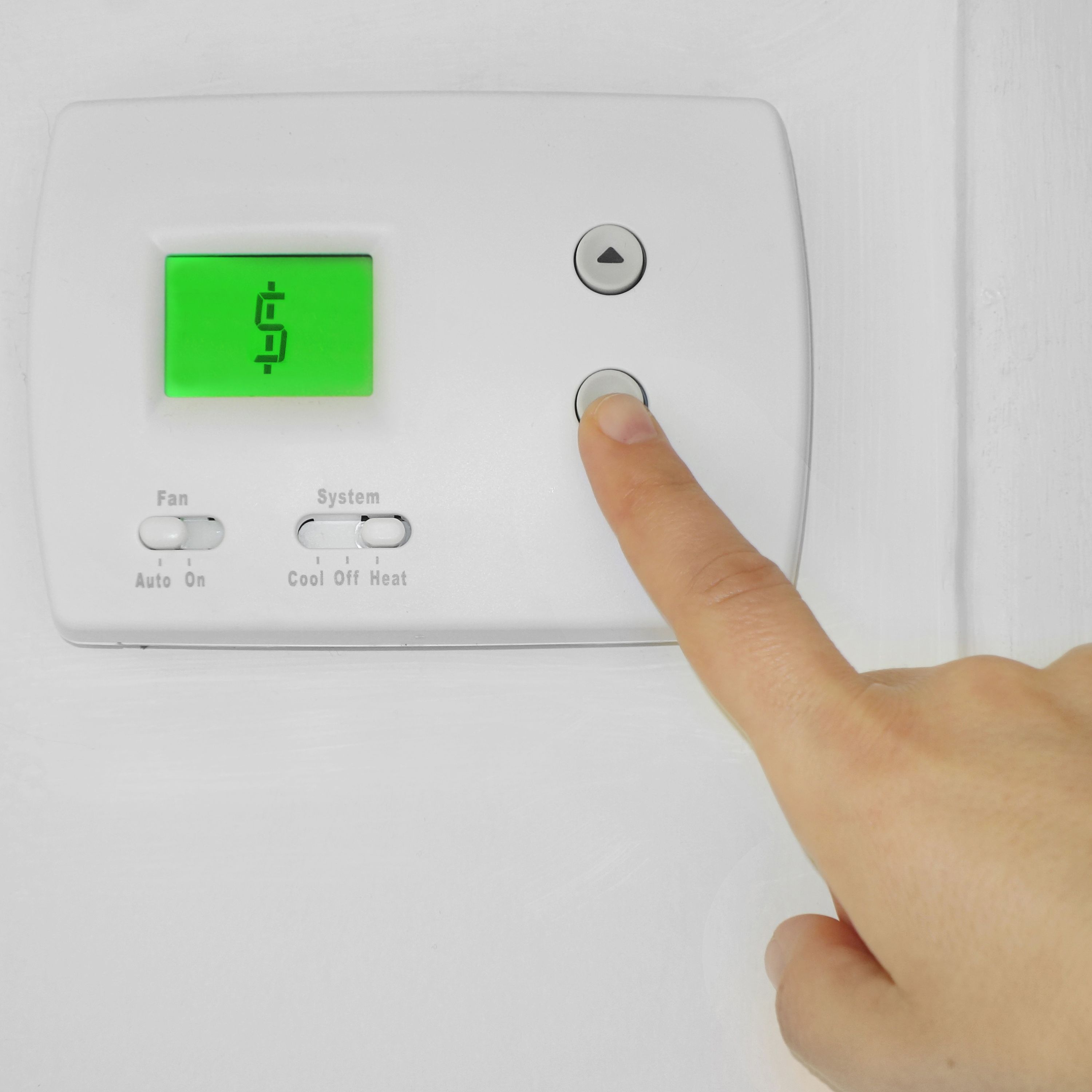
Photo: Person adjusting a wall thermostat with dollar sign symbol on the display (Stock image by Zimmytws via iStock / Getty Images Plus)
Hosted by Simplecast, an AdsWizz company. See pcm.adswizz.com for information about our collection and use of personal data for advertising.
Get every episode summarized
Each time The Brian Lehrer Show publishes, we email you a written briefing from the transcript — the topics, who appeared, and any specific claims, with the ad reads skipped.
Email me new episodesFree for 3 shows. No card needed.
Hosts & guests
Transcript ready
515 searchable segments. Every word is indexed and playable.
Full transcript
The Brian Lehrer Show — 30 Issues in 30 Days: NYS Utility Costs. Machine-transcribed; use the interactive transcript above to jump the player to any line.
WNYC Studios is supported by ODO. When you buy business software from lots of vendors, the cost's at up and it gets complicated and confusing. ODO solves this. It's a single company that sells a suite of enterprise apps that handles everything from accounting to inventory to sales. ODO is all connected on a single platform in a simple and affordable way. You can save money without missing out on the features you need. Check out ODO at odo.com. That's odo.com. [♪ OUTRO MUSIC PLAYING [♪ It's Brian Lair show on WNYC. Good morning, everyone. We are 30 issues and 30 days election series that other media focus only on the polls and personalities. We are choosing an issue a day for 30 straight shows to help you be as informed of ODO as you can be in our local swing districts for Congress and the New York State Governor's Race.
Well, there are latest two governor's race issues today and tomorrow. So here we go with 30 issues and 30 days issue number eight. Who'd be the better governor for controlling your surging utility bills? Governor Kathy Hoko, the Democratic incumbent or Nassau County Executive Bruce Blakeman, her Republican challenger. According to an analysis this summer by the Empire Center think tank, New York has the fifth highest utility rates in the nation with monthly bills 63% above the U.S. average. The state's price per kilowatt hour rose 14% over the last year alone they say. And it says only Hawaii, California, Maine and Massachusetts had higher average residential electricity prices than New York as of July. One item both candidates are talking about in their campaigns, Hoko and the state legislature approved utility bill rebate checks being sent to many households of up to $200 right around now.
Here's Blakeman criticizing that program. So Kathy Hoko came up with a scam where she'll give us between $100 and $200 rebate. Well, here's the deal. She's taken between $700 and $1,000 every year. And here's Hoko defending it last month under York one. Listen, I have to keep governing. Yes, there's an election, but I cannot stop listening to New Yorkers. And if I can give them relief from something that is frustrating them, show that we care that we're listening. And this is a continuation of what I've done for years. My first year in office we cut middle class tax cuts. We had the largest middle class tax rate cut in 70 years. We also gave inflation rebates. People criticized me wildly for inflation rebates a couple of years ago. Well, when I see an opportunity to put money back in those pockets, I'm going to take it. Other issues include types of energy production, the state or the Trump administration allow, Hoko's data center, moratorium, which Blakeman opposes,
and more will hear more from each candidate as we go. But how much power does any governor have over utility rates? That's in the title of a spectrum news story on the race. It's called as politician squabble over utility rates. How much power does any governor have with us now is the reporter on that story. Jack RP, political journalist based in Albany for the spectrum news show capital tonight. Jack, welcome to WNMC and thanks for joining 30 issues in 30 days. Thanks for having me, Brian. Happy to be here. First, how do utility rates get set in New York state? Like whether it's Con Ed in New York City in Westchester, PSA in GM on Island, New York state, electric and gas in much of upstate, and there are others. They can't just set prices on their own like a typical company can if they own a store or something, right? That's correct. Part of it's kind of controlled by the market. That's the supply side where much of the fight is currently happening, is over the delivery side and that's made up of a bunch of different things that you see on your bill. Yes, it's actually physically delivering whatever the form of energy is to the individual,
but then there's also taxes and things like that. And so that's where you actually are able to see some degree of change and that's also where the utility companies have some degree of flexibility in how they change rates and that gets back to the central question of how much power does a governor have? Those rate changes on that side have to go through the Public Service Commission appointed by the governor, confirmed by the Senate. And so that is one of the small areas where the governor does have a degree of power over the situation, but it is only a small part of a big puzzle. So obviously in an election season, I think a lot of people, especially when they're looking at these bills and how high they are hoping that there's just a simple answer. One candidate can say I'm going to pull over here or I'm going to pull over here and make it all better, but it's such a complicated process that it's more, you can only really tweak small things here and there. So you have to look at who has the better proposal for what small things they're going to tweak and why.
Right, but it sounds like there's a state entity called the New York State Public Service Commission which has to approve rate requests from the utility companies and the governor appoints who's on that commission. So that sounds like a lot of power. Yeah, the governor has a lot of power to appoint those commissioners and also as we learned in this past budget cycle, some degree of power over how those commissioners actually approve and set rates. And I think that that's one of the places where people see that there is room for change and kind of strengthening some of the guardrails on how and when those commissioners can actually make changes, but yes, when it comes to what a governor can actually sit down and do, appointing those commissioners is one of the top items. But they're certainly running on this and we'll keep going down ways that they're running on this and how they seem to have different approaches. Your article says the state budget approved this year included new restrictions and requirements
surrounding the rate setting process at the Public Service Commission. And that was interesting to me partly because your article also quoted a group called Power Lines who said New York State's rate setting process is antiquated and needs reforms. So how so in their opinion? Well, they're saying that many as is the case across New York State law so much of this was set decades ago and so much of it is so deeply set in statute that you know you can't just turn around and change the way that things are done. So we're they're saying basically we're in an unprecedented situation right now when it comes to affordability and these systems just were not built for the types of problems that that we're facing when it comes to utility rates. And so yes, the governor and the legislature did make some small changes this past year to how those processes work. But they're saying you know this needs to be an even deeper effort. You know, somebody needs to really get under the hood and and take a whole sale
approach to reforming this. So well, what the governor and the legislature did this past year is certainly along the lines of what they're recommending. I think that they're saying this came from a playbook that they actually published for governors across the country talking about what we're talking about today. And the fact that small tweaks aren't going to cut it here. These systems are decades old and they're just built for a completely different scenario than the types of rates that we're facing today. Interesting and you wrote as far as the reforms that the state did in at this year, among other provisions, utilities will be required to submit a budget constrained proposal when seeking rate increases with added scrutiny around executive compensation as one of those budget constraints rates of return. That is how much profit there allowed to make and how some costs are passed on to customers, which of course relates to that balance between profits for the companies and charges for the consumers. Listeners by further
way of background, according to an article on New York focus last year, some key reasons for the rate hikes in recent years in New York include aging infrastructure and rising costs for things like labor and materials, also higher interest rates, also tariffs, plus expanding grid capacity, which they're trying to do and repairs from major storms of recent years. And that New York focus story last summer said more than a million households at that time were at least two months behind on payments, owing utilities close to $2 billion and record numbers of households had their electricity or gas shut off last spring, including more than $61,000 in may alone the highest number of the public utility law project a decades old consumer advocacy group has ever seen. So that brings us to the rebate checks that we played the clips about. Jack, who gets these checks? Well, like many of the governor's initiatives these go out to individuals who fall under a certain
tax bracket making less than $100,000. And I think that the biggest question that many people have about this, which was demonstrated in the clips that you played before, is the question of should, it's coming from a pot of a billion dollars. So you have to ask the question, would that building in dollar has to be better spent on something that would offer more long term relief? Or do you create a situation where as the governor mentioned, at least people feel like something is being done in this moment in the short term to address the pain that they're feeling. And I got to ask that depends on how the recipient feels about it, but the not kind executive Blakeman seems to fall on the side that this money should be going towards something, you know, more long term. Listeners, we can definitely take your calls on this as we do in our 30 issues and 30 days segments. As we do most of the time, 212433 WNYC 212433 9692. What policies would you like to see the state
implement for reducing your utility bills? You could tell us how high utility bills are getting how quickly. And whether you more like the Blakeman approach, what you know of it or the local approach or what you know of it, or ask our guest, Jack Arpe from Spectrum News and Albany 212, a question, 212433 WNYC, caller text 212433 9692. So we heard, as we heard in the clip, of Blakeman, he criticized the checks and the timing of their delivery, which began in September, obviously during election season. He criticized it as a campaign scam. Hocal and Blakeman are both running on this issue and both running ads and social media posts on it. Here first is a Kathy Hocal post from the governor's Facebook page announcing an expansion
of another form of assistance to consumers, the state's energy assistance program. That's different from the rebate checks. It's means-tested utility bill subsidies for some New Yorkers based on income. If you've opened up your energy bill and just sort of wins, we all do. Now is the time go to ny.gov slash EAP or call your utility and find out what you can do. I said middle class families are filling the pressure too. So let's open up this program to millions and millions of more New Yorkers who are now eligible. So today, half of all households in the state of New York are eligible for extra help with their energy bills. All right. Do you happen to know the cutoff we looked a little further into the rebate checks cutoffs and these $200 go to joint filers with incomes under $150,000 and $150 less than the $200 to joint filers with incomes
between $150,000 and $300,000. Single filers with incomes under $150,000 will receive $100 rebate checks and apparently they're going out between September and December. Some of that would be before the election. Some of that would be after the election. So just a little more detail on that folks as to whether you should be expecting one of those checks in the mail based on your income. How about the energy assistance program? Do we know? Is it easy to say who qualifies for that? I realize what I just gave there on the rebate checks was a lot of numbers. Yeah, it's a lot of numbers and I think that this is complicated as well. I don't know exactly off the top of my head. I think I want to say it's below the median income. But when it comes to, you know, from an election standpoint, I think that this is one of the key differences between, you know, what the governor can put forward versus what county executive Blakeman can put forward. You know, when you've been in office for five years, you've been, had the levers of power.
You know, your best strategy is going to be to try to explain to voters, you know, what you've done so far to bring these rates down. And a lot of what the governor can point to is these initiatives, whether it be the rebate checks or the supportability program to say to New Yorkers, you know, this is a complicated subject, but these are some actual things that we've agreed on with the legislature that we hope are going to bring some relief Blakeman. I don't want to say it's necessarily in an easier position, but it's certainly a different position to be able to lay out a group of things that you're going to do that you have ideas for as opposed to the governor who's kind of constrained to explaining what she has done and how that tactic is going to continue to play out should she be reelected. Listener, right, my con Ed Bill started going up almost astronomically last year in January. They put me on some kind of average per month thing and told me I had requested it. I had not. Right, that listener. Another one has this question, Jack. I don't
know if you know the answer, but it says I live in a co-op and we don't have individual meters in our apartments. The electricity is charged for the entire building. How will the rebates work in such a situation? I believe it's a rebate that largely tied to your individual tax filing status. And so assuming that you have file that could be wrong on that, I think that you should be able to access those independent of your specific situation, but again, I would have to double-check to make sure. But much of this because it is in the form of a tax rebate, it is connected to your filing status. All right, we just played a Kathy Hocal clip, touting the Energy Assistance Program. Here's a Bruce Blakeman campaign ad from his Facebook that delivers a central campaign argument of his that Hocal is making the state more expensive through taxes and utility costs. Kathy Hocal has made New York unaffordable. Taxing your paycheck, increasing transportation costs
21 times and 48 utility rate hikes. New Yorkers pay 70% more utility bills than the rest of the country. That Hocal is teamed up with Mandami to pass a massive new tax increase to fund their socialist agenda. As governor, our lower taxes cut utility bills and provide property tax relief. Time for a change. Bruce Blakeman for a better New York. So Jack Blakeman states he will bring down utility costs in that ad. What are the main ways he says he'll do that if he gets specific? He has multiple times that he would cut utility bills in half. That kind of goes back to what I was saying a little earlier on that it when you're running as the challenger, I think that it might be a little bit easier to make claims like that because you could ask the governor if you've been in office for five years, why haven't you done that yet? So he has that opportunity to kind of come out and say that when you peel back the layers a little bit, it's a more complicated story. He said that
he's going to do that by rolling back the state's green energy mandates and cutting out some of those line items that I mentioned in the delivery costs. It's worth noting that I believe the state has estimated that green energy. It depends based on where you're located and who your provider is, but I believe that the state has estimated about 10% for clean energy initiatives. So that certainly wouldn't make up the entire 50%. But what you really have to keep in mind when you're talking about anything relating to the promises that Bruce Blakeman is making is that a lot of this would require cooperation from the legislature and at least based on current polling and expectations, Blakeman would likely be facing democratic majorities in both houses, potentially significant democratic majorities and would have to do a lot of these things that require legislative approval through negotiation. And that might seem like an insurmountable challenge, but we have to remember that he's talking about these green energy mandates. One of the reasons that the state budget this year took so long to complete was because Governor Hockle proposed her own set of rollbacks to
the state's stringent climate law, which the legislature at first was vehemently opposed to, but the fact that they were so opposed and the governor ultimately did win at least some of what she asked for, really most of what she asked for, demonstrates that some things that you might think are not possible, including quite a few things that the governor has pushed through in the budget in recent years with a democratic legislature can be accomplished through just the sheer executive power that the governor in New York state has over the budget process. So anytime you go to Blakeman and say, yeah, you know, that sounds great, but how are you going to do that with the democratic legislature? That's always his answer. The Democrats have something that they want that I don't like and I have something that I want that the Democrats aren't going to like. So we're going to have to sit down at the table and we're going to have to negotiate. So it obviously it's a different situation between Senate Majority Leader Andres, Stuart Cousins and Carl Hacy who are both Democrats sitting down in a room with Governor Kathy Hoke, even if they disagree, they're all friends. I have to imagine that those two sitting down sitting down with Bruce Blakeman would be a little bit
more tense and a little bit less amicable, but it's interesting that the governor herself has proved that there are things that are possible with this democratic legislature that you wouldn't think are. Is it enough to decrease utility bills by 50 percent? That's a different question entirely. But part of the rest of his kind of list of promises, he wants to lift the fracking ban in New York, which goes back to 2014 in an effort to expand natural gas production. I think that's one area where the governor and Bruce Blakeman do have something in common that they both feel that increasing that supply is a key way of getting this done, obviously, through different avenues. But so much of Blakeman's proposal comes from kind of trying to find ways to bring down those items on the delivery cost. On the Public Service Commission, the state entity with the members appointed by the governor, which approves utility rate requests, Sal and Buffalo has a question.
Sal, you're on WNYC, thank you for calling in. Yes, thank you very much for taking my phone call. I used to live in Bronson, was a long time listener. Question I have for your guests. First of all, there were a couple of subjects came out while I was waiting for the call. No governor can change any rate. Let's just establish that. I don't care which one is telling which one. The commissioners that they are being elected by him, I want to ask your guests and that's what I call. How many of these commissioners since Pataki? Because now I live in Buffalo for past eight years. We had Niagara Mohawk, which was sold to another company, then was sold to another company, was sold to another company. And no commissioner were ever rejected those things because they were all coming from utility industries. So I don't understand why we are talking about rate. The rate went up because once your venture capitalists, during Pataki and Como took over all electrical infrastructure in New York, we had access to Canada. No more we get that from them.
10%. So I have no idea a guy from NASA County, which is talking like Trump promises that doesn't even have any power to do it. And about striking. Hang on, we're going to get to fracking. You put a lot on the table, Salam. I'm going to leave it there. But great call with really interesting points and really interesting questions. So to the first thing that he raised, Jack, if you know how many of the commissioners on the public service commission, which has to approve utility company rate hike requests, have come from the utilities themselves. He said since Pataki. So that goes back to the 90s and early 2000s. But over any period of time, or how many are from the utility companies today on the public service commission, if you know. I do not know off the top of my head,
but that just goes back to the fact that the fact that these are appointed positions is certainly one of the places where the governor does have the most power and where there is an effort to change how those appointments are made. Back to the rebate checks for a minute and the timing of them being sent out largely at the height of campaign season here. Listen to rights. When Trump pays people off before elections, Democrats howl and Republicans support it. When Hocal does the same, Republicans howl and Democrats support it, it's all political theater and does little beyond buying votes for the election itself. So I wonder on the comparison that the listener is making there. Jack, I'm sure you heard about the the Trump thing a couple of weeks ago where he basically offered Americans $5,000 checks if Republicans hold Congress in the midterms and Democrats did howl that that was a bribe and
maybe illegal. Has the governor been asked how is this different from that? I'm not sure if the governor has been asked directly. I did actually ask a New York Democratic party share Jay Jacobs this question myself and I think that the way that the president proposed this does give anybody who's on the governor's side here, you know, a little bit a little bit of leeway just because you can at least make the argument that these rebate checks were sure. You had to have agreed to this during the election you're knowing that the election was coming but there is a little bit of a shroud over it even if that was your intention to influence the election. It was agreed to with the legislature as part of the state budget. It went through a whole government process to be approved granted, you know, the people who were approving it were also Democrats but there's at least, you know, the you can look at it as the governor was in office. She said, I'm going to do this. This is something that I'm going to do with my power as governor. Here you go as opposed to the president
going out and saying, if you vote for me, if you vote for me, I will do this not connected, you know, necessarily to any specific that that's the thing about the governor's to checks that that have been sent out over the past two years is she was able to justify the first one by saying that state tax receipts were larger than usual because of inflation over the past few years. So we're giving you that money back. Your utility bills were too high because of x, y, and z. So we're going to give you some of that money back. You can at least, like I said, tie it to a policy decision as opposed to if you vote. So sure, could you argue that the appearance of this in an election year is at least, you know, something that someone in a room somewhere could have said, this is a good strategy, of course, but it's I don't think it's hard to make the argument from the Democrats perspective that the president going out and saying, I'll do this if you vote for me is the same thing as a negotiated state policy. Yeah. And the president says the money will also come from policies, his policies,
the many billions of dollars that he says the government is taking in from his tariffs. But of course, if you look at the overall federal budget, it's running a big deficit that is there's a lot less money coming in than they're spending. So there's not really a surplus there, even if he frames it that way. A New York Post editorial critical of Hocal, and this get back gets back to the relationship between climate policy and energy costs, says Hocal and ex-governor Andrew Cuomo rushed to close fossil fuels and nuclear plants before renewables were online and ban natural gas pipelines and fracking. Also, they imposed a climate change bill that cost billions, much of that passed on to the public and boosted demand for electricity through electric only mandates. Here's Hocal, after Spectrums Eriluas asked about the fracking ban. I'm looking at all forms of energy. I'm looking at nuclear, renewable energy. We had a pipeline
that was approved here. That was meant our DEC standards. So that was that's online now. And I can't offset the fact that we lost 25% of New York City's power with Indian point shutdown. That's something that was unforeseen. Nobody had a plan B. What do you supposed to do for power the next day? I cannot have the lights go off in New York City or the state of New York. I have to be vigilant and protected, but hydro fracking is a legal under state law. I plan on following state laws. And Jack, your story notes that the state budget this year, and you mentioned it a minute ago, did loosen some requirements under the state's landmark 2019 climate law. Can you say a little more about how? And if that's a statement by the governor and democratic legislature that maybe we went too far? I think aspects of it were the governor throughout the budget process continued to say that the catalyst for this was the fact that the state had to basically put together and release regulations for the mechanisms by which they were going to get
to this massive emissions reduction by the the finished date of 2050 by 2024. When they didn't do that, a group of climate activists sued the state and basically one thing led to another through the litigation process. And the governor, the governor was trying to make was that if we don't move the deadline for that, then the state is basically immediately going to have to do all of this stuff to make sure that it's its in compliance with the climate law. That was kind of the leverage that she was able to use with the legislature, but behind underneath that, there were more things that she wanted such as adjusting some of the other timelines as well as changing the way that the state counts its emissions to something that she claimed was more similar to what other states were doing. So again, a lot of that was due to the governor's leverage over the budget process. At the beginning of that, you the government, she attempted to do this in 2023, a very similar proposal that was short-lived and was knocked out of budget negotiations, I think within a week or so. This time around,
she kind of had a ramp up over a few months where it was very clear that this was something that that she was intent on doing and was going to be successful at. And when you just looked at it face value, Republicans in New York have been pushing for rollback to the climate law for some time. It just seemed like another one of those things that just wasn't going to happen, but the fact that everyone was able to agree to it and the fact that she was able to make the case for some of those other tweaks has to be seen as something of an admission that things had to change, but she's really stressed that she's not turning her back on the goals. Just the unforeseen circumstances, as she has put it around the COVID-19 pandemic around inflation, some of the delays that have taken place in actually getting some of the renewable infrastructure up and running. She's blamed the Trump administration's opposition to offshore winds in saying that while she's completely behind the state reaching the submission's goal by 2050, there's going to have to be a change in
the pathway to how we get there. So that's how the governor's framed it. I think Blakeman is taking something closer to New York lawmakers approach, if just saying, this has got to go. We got to get this. So he'd be for lifting the fracking ban, for example? Blakeman is certainly in favor of lifting the fracking ban. And I think that that I may have mentioned earlier is one place where the governor and Blakeman may have something in common, not on fracking, but on the fact that they both see and all of the above approach to energy as the way out of this, of increasing supply, of increasing the different ways that we have access to energy you mentioned earlier. On the governor's side, that would be expanding nuclear on Blakeman's side. That would be fracking, obviously, apples to oranges in terms of the actual method of expanding energy, but both of them are things that certainly have a significant degree of opposition. Well, on this idea of all of the above energy, we were just talking about some of the things that
maybe Hocal has to answer for, depending on one's point of view. But as your story also notes, Hocal has clashed with President Trump over his opposition to some of New York's wind power projects. So that sets up a question for Blakeman, which is, is he separating himself from Trump at all on that energy source for New Yorkers? When you ask him about these things, as many Republicans in New York do, doesn't rule out renewables. I think he probably falls closer to the President on that one in particular, but that really is the all of the above approach. The difference is a lot of Republicans are in favor of keeping, not just keeping natural gas infrastructure, but expanding natural gas infrastructure with renewables taking a smaller share of that. And one thing that he's really spoken out against is solar on farmland, for example. So I think that while Republicans in New York like to say quite often that, you know, we aren't opposed to
renewables, there's certainly, it's very easy to see that there's less of an initiative on their part to develop those forms of energy. And the governor is kind of dueling with the President on this is just an interesting factor in this election in and of itself, just because Blakeman has on occasion had the answer for the fact that President Trump does not have, you know, the most difficult relationship with either governor, local or mayor, Mondani. And you know, that's something, it was something that plagued Representative Elise Daphonic when she was considering running, and it's something that Blakeman has inherited after that governor, local and President Trump, while they certainly trade barbs in public, do get on the phone and make some sort of an effort to negotiate some of these policies. And the governor did get a couple of wins in there when it comes to offshore wind. So she has tried to prove herself as an effective negotiator with the White House when necessary, and somebody who can go get on the phone and, you know, talk to the President when there's something that she feels as a direct threat to her
policies here in New York. No, obviously, I think it's fair to say that Bruce Blakeman could also get on the phone with President Trump if he was governor and have his ear pretty quickly as the governor of New York and won from the same party, but it has certainly created an interesting optics situation for Blakeman that his foes have these interesting occasional pleasant moments with the President. Right, including the President saying about Mamdoni after their meeting, that Gracie mentioned that he had the potential to be a great mayor. That if Blakeman is for trashing the entire 2050 goal for reducing greenhouse gas emissions by a lot, which I think you said he's for trashing the whole thing, tell me if I overinterpreted that. Is he a climate denier? I don't know that that's fair to say. I think that it's a lot easier for Republicans, as I mentioned, especially in a position of opposition here in New York to kind
of thread the needle as best they can to. He certainly isn't as outspoken about it as some, but I think that he as a Republican in New York has that ability in the opposition party to kind of thread the needle. I don't know that he would, I think what a lot of New York Republicans want to see is not something like what Governor Hogan proposed of tweaking this metric here, that metric there. A lot of times they're actually disappointed. If you go back to the debate over the state's discovery last two years ago, a lot of Republicans were like, oh, finally, somebody's doing something about this. They were in favor of the governor rolling back those reforms from 2019, but by the time it actually reaches the legislature and it goes through the negotiation process and we're two months later because the budget is late. It doesn't look as much like the proposal from the governor that gave these Republicans hope that a moderate governor is
going to come in and at least do something to their liking. So I think if it was in Republicans hands, well, you might not get rid of everything in the climate law. It would certainly, they would prefer something closer to a ground up approach to rebuilding whatever it is that the state is going to do to address this issue because you can't do nothing. But I don't think that if they had the levers of power in Albany, it would look like what today's climate law looks like. Here's Jerry on Long Island who has a question about another utility bill that's also regulated by the state's public service commission, Jerry around WNYC. Hi. Thanks for taking my call. Jerry in center for Long Island. My question is about the water bill. We've all seen our bills go up for natural gas, for example, which I have for heating and electric DSG. But lately I've seen my water bill go up astronomically. And I've also seen a lot of people on social media really, really upset about this. Outrageous numbers like, hey, last month, I got
like an $800 bill and things like that. So I was just wondering if you can comment on how like, for example, stuff accounting water authority is monitored basically by the hopefully administration. Thanks so much. Thank you, Jerry. Anything on that, Jack? That's not necessarily an area that I have looked too deep into. I think that water supplies is definitely something that is a little bit more localized. I think the utilities, obviously, there's an element of utilities that are local. Yeah, even though I do public service commission approves the water rate hikes, I don't know if it's under, you know, if they're being affected by the same pressures, all the things we've been talking about and that a lot of people know about that are pushing up the electric prices. The state approves that. I think that there's definitely more variation across the state as to how exactly that works. But it speaks to the issue of across
the board affordability and be an opportunity for somebody who's running to tap into an area that I definitely haven't heard as much about as the utility rates. But as you mentioned, Brian, there are definitely similarities to the regulation. But it would be, I think it would be tough to draw as concrete of conclusions as you can with utilities just because it's a different system. All right. It's our 30 issues and 30 days election series. Listeners, we're just joining us. Day 8 today, an issue 8 is utility bills as an issue in the New York State Governor's race. We'll get to the major issue of Hoco's big data center moratorium right after this. Brian Lerner on WNIC and day 8 of our 30 issues and 30 days election series, issue 8 utility bills as an issue in the New York State Governor's race with Jack Arpie who's written about this for a spectrum news. He's a spectrum news political reporter. In Albany, another big bone of contention
between Hoco and Blakeman is Hoco's one year moratorium on building big data centers in the state. Here's Blakeman speaking to reporters recently. She doesn't know that AI is coming. We have to compete with the rest of the country and the rest of the world for economic development. Figure out a way to do it where local governments will buy into it and where business leaders will create incentives. But here's Hoco from her Facebook page. Kathy Hoco passed the first moratorium on new data centers in the country and Bruce Blakeman wasn't happy. The moratorium's crazy. What's crazy is wanting higher electric bills and contaminated water instead of standing up for New York. And here's Hoco last week on Bridget Bergens, new WNIC show who's running this place. That's Thursdays at 1 o'clock by the way and today's Thursday. So Bridget will have episode two of who's running this place this afternoon. But she had Governor Hoco on her show last week.
And in this answer, explaining that it's just a one year moratorium and arguing that that's in everybody's interest. I was very clear that this is a moratorium on data centers for the next year while we work on policies to make sure that we get it right. I have said all along. We are the first in the nation to have a moratorium on continued building. But I also, more importantly, me is to be first in getting it right. So we have already put out a community investment framework. The communities that want these data centers to come and it is their choice. But many of them are smaller and don't have the resources and the staff to be able to negotiate the best deals for their residents if they want this. So that answer was very interesting to me when I heard it as I was listening live to Bridget show last week. Jack, the part of that clip that said we have already put out a community investment framework. The communities that want these data centers to come and it is
their choice. So just that little bit, if it's out of context, you tell me, but it sounds like this one year moratorium, it's not like the fracking ban. It's not like we don't want to ever do this in New York, is it? No, definitely not. And I think the governor, if you listen to her talk, she clearly has an opinion on data centers and the energy use issue. But the point that they're the state and the governor is making here is that we want to step back. We want to take some time to actually figure out what goes into this, figure out what concerns communities have, what concerns that we think communities should have as their meeting with potential prospective companies, what questions, they put out a guide for communities to ask certain questions to developers. So I think that she's made it pretty clear that this is an intention, this is an intent effort to make sure that the right questions are being asked over the course of this time, rather than
a wholesale ban, I think is the clip from Blakeman mentioned. His point is, he says you're a little too late, like this is something that you should have been doing all along, whether or not that's is another question. So what would Blakeman do about data centers, just let them build wherever the market bears and localities allow? We've eaten a lot of it to localities and he's clearly concerned about the economic impact of taking time to figure this out. He's, as he's said in the clip, is thinking about other states, other countries moving ahead quicker than we are. But this is an interesting one because it does seem like the polling is on the governor's side here, obviously the president and some of Blakeman's allies aren't, but the polling seems to show that there is some support for at least taking a pause and taking into consideration how these things are going to develop over time. And I wonder if the unpopularity of data centers is more sort of generally global,
you know, that is their impact on the climate and their impact on energy demand, electricity demand, which contributes to pushing up rates, as opposed to we don't want them in our backyard. So why does Hocal say she shouldn't just leave it to the local communities to decide at the local level? I think because the concerns are so broad and there are those environmental concerns that some folks have, but I think that the governor more broadly wants to not necessarily be in control of this, but she wants an intentional approach. And so I think it's something that she takes very seriously. It's clearly a big concern of hers, but she's been very vocal about not backing away from AI finding places where AI can be of assistance to the state or to municipalities or individuals, but do so in a way where you're taking baby steps, so to speak, and not necessarily
even as slow as many of her allies in the legislature would like to see. Well, have either of them taken the approach that I've heard bandied a battle lot and advocated for a lot, that data centers, if they're going to build a full local communities, want them in their communities, the data centers have to fund the expansion of the grid that would supply the large amounts of extra electricity that they're going to need so that they don't push up the electric rates for everybody else, requiring data centers to pay to supply their own additional electricity. Is Hocal saying that? Is Blake been saying that? They built with R2 a certain extent saying that at least, and that's one thing, to Blakeman's credit that he's not saying you should be able to build and do whatever you want, he has come out and said that he thinks that there should be some regulation in place to ensure that developers are providing the power and contributing to the grid improvements that are going
to be required to deal with this massive amount of power and resources that this would use. It's not to say that there wouldn't be any sort of regulation, just it's think it's safe to say that it wouldn't be as much as what the governor would like to see. One more caller, Jackie and Rockland County, around WNYC. Hi, Jackie. Hi, thank you for this opportunity to speak. I wanted to go back to the subsidies and nuclear power. I don't know if everyone's aware that the PS, by the way, I'm with Alliance for Nuclear Free New York and Food and Water Watch, but I'm just speaking, you know, also as an individual. Governor Hoko and the PSC have already approved between $28 billion and $33 billion subsidy to keep the four nuclear power plants upstate in New York going. New Yorkers are still paying for Governor Cuomo's subsidy of $7.6 billion, I think it was, and the people out in Long Island
are still paying for sure them. And this new subsidy is going to go to mid-century. And I don't know that people are aware of this because this is going to fall on rate payers and tax payers. I also want to say that Indian point, when Entry G sold it, they could not comply with the coastal laws. There were 24 baffled bolts that were either missing or found rattling around in the reactor. They were not supplying 25% of New York's energy for New York City. They were only applying, I don't know, generally from six to maybe 15% of the most. New York started to slow down buying energy from Entry G because it was too expensive. Most of the energy was sold to other states. Jackie, let me ask you one follow a question. Because as somebody who's with a campaign for nuclear-free New York, do you feel like you're suddenly on the losing side of what was a winning issue for a long time in the state and around the country? And the governor
and one of the clips we played said, yeah, one of the things she had to compensate for was the shutting down of Indy in point. Where was the extra electricity going to come from and did it put supply and demand into a different balance that pushed the rates up? Now you have a lot of Democrats suddenly taking a second look at nuclear power, a more favorable look, four climate purposes because it's clean energy in that respect, as well as the need just to have more supply. How do you feel this has changed? Do you feel like you're on the losing side of what was a winning issue? Actually, I don't feel that I'm on the losing side. The state had tonn plenty of years to put forward a real policy and an actual goal that they could reach by instituting a plan which they didn't do under the CLCPA. They just made this big thing but they didn't have a plan to actually reach the goals. And I will also say that the
money that could be used that's going towards nuclear in such a massive way that will be on the ratepayers and taxpayers, if probably one sort of that was going to renewables, they would be scaled up and working within a year and we wouldn't need nuclear at all. And nuclear also has a lot of radiation that is known to cause cancer, also that women, pregnant women, children and especially little girls are at seven times more risk of getting cancer from nuclear power plants. And I don't know why the governor is putting everyone's health at risk and creating even more social injustice community with her plan. Jackie, thank you very much for your call. And you know what, that's going to be the last word in today's 30 issues and 30 days election series. Day 8, an issue 8 utility bills as an issue in the New York State Governor's race.
We thank Jack Arpe, political reporter for spectrum news and Albany, Jackie, Jack, thank you so much for joining us. We really appreciate all the context you gave us. Thanks again for having me, Brian. WNYC Studios is supported by AT&T. We all love to connect via video calls or texts. Right now at AT&T you can get the new iPhone 18 Pro for $0. It has the ultimate pro camera system and big leap in battery life so you can turn this deal into a long-lasting connection. Learn how you can trade in your iPhone for the new iPhone 18 Pro. Requires trade-in of iPhone 14 or higher excluding iPhone 16E and eligible plan. Terms and restrictions apply subject to change. Visit an AT&T store for details.
More episodes
More from The Brian Lehrer Show

Who's Running This Place: Agita over AI in NY
The Brian Lehrer Show

On AI, Trump Calls for 'Self-Regulation'
The Brian Lehrer Show

Title IX Discrimination and Women's Sports
The Brian Lehrer Show

Talking to Kids About the Cornell Case
The Brian Lehrer Show