Get every episode summarized
Each time Brad & Will Made a Tech Pod. publishes, we email you a written briefing from the transcript — the topics, who appeared, and any specific claims, with the ad reads skipped.
Email me new episodesFree for 3 shows. No card needed.
About this episode
“I feel like we need a D D D D D D D D D D D D D D D. I guess technically it's been here for like a week and four days. The time we record this, I've had it for about a week. So it arrived on a Friday and we're recording this on a Friday morning.”From the transcript
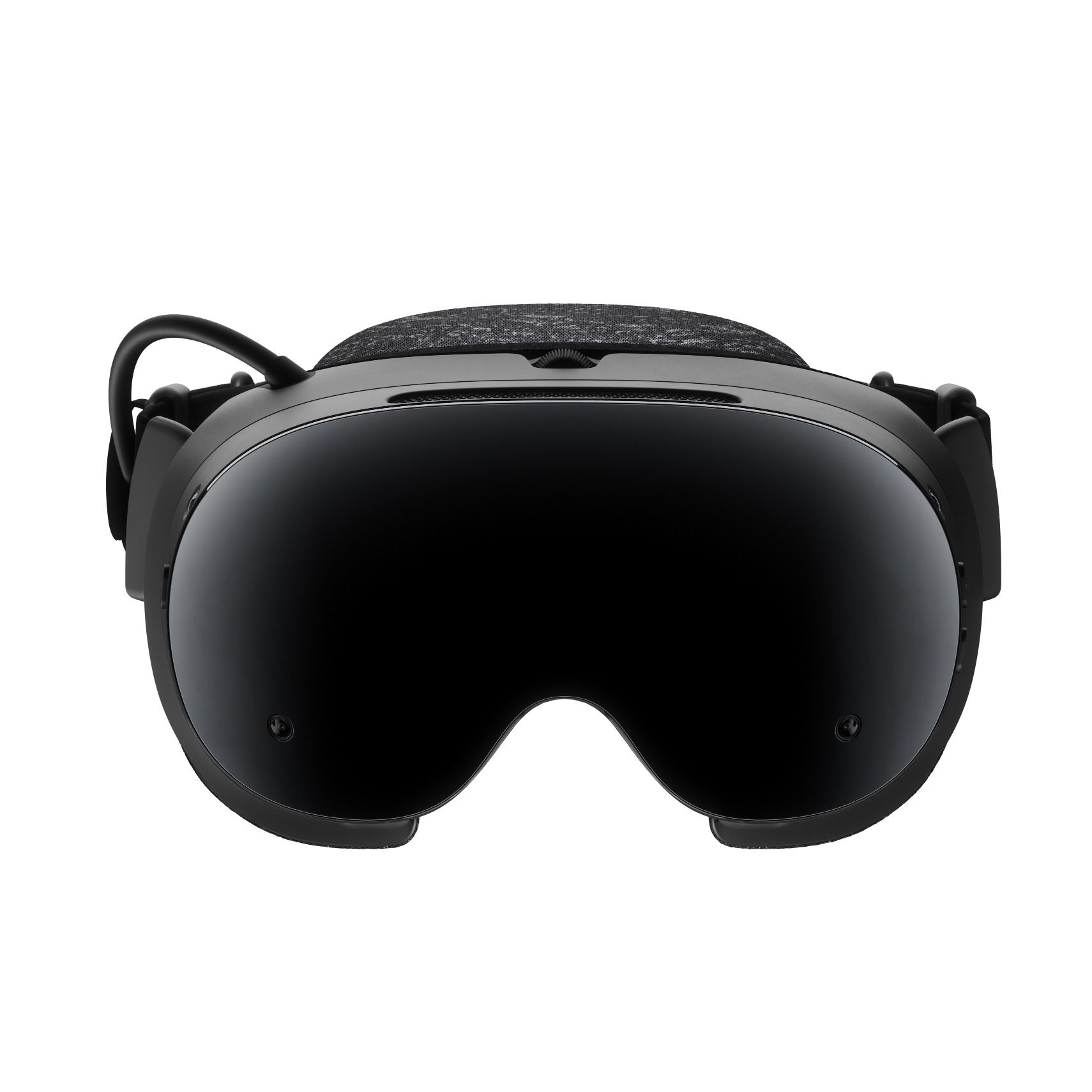
Valve sent us a review unit of their new standalone VR headset, the Steam Frame and we're here with first impressions, after testing it for about 40 hours over the course of a week. We talk about the FEX x86 to ARM emulator, how well it works with local and streaming VR as well as playing 2D games on a big, giant virtual monitor.
Support the Pod! Contribute to the Tech Pod Patreon and get access to our booming Discord, a monthly bonus episode, your name in the credits, and other great benefits! You can support the show at: https://patreon.com/techpod
Get every episode summarized
Each time Brad & Will Made a Tech Pod. publishes, we email you a written briefing from the transcript — the topics, who appeared, and any specific claims, with the ad reads skipped.
Email me new episodesFree for 3 shows. No card needed.
Hosts & guests


Transcript ready
376 searchable segments. Every word is indexed and playable.
Full transcript
Brad & Will Made a Tech Pod. — 356 Extra! - Steam Frame Edition. Machine-transcribed; use the interactive transcript above to jump the player to any line.
I feel like we need a D D D D D D D D D D D D D D D. Breaking news. Breaking news. Breaking news. Bellevue Washington. No. No. Hey, it's steam frame embargo day. It's here. I guess technically it's been here for like a week and four days. The time we record this, I've had it for about a week. Okay. So it arrived on a Friday and we're recording this on a Friday morning. You guys are hearing this at 10 o'clock on Monday and I'm just I just wanted to share my like first run experiences with this thing. We're going to do a full episode, I think next week where we talk about kind of the frame
where it lives in the whole steam ecosystem, hardware ecosystem and what's going on with the whole like the whole valve. I don't know. They built a hardware ecosystem and we'll have a guest on for that. Somebody who knows more about VR stuff, you can imagine who it might be next week. But here's first impressions. It seems pretty good. Okay. All right. It's trouble. Yeah. I feel a little bit like rip fan, Winkle, but for VR, like I haven't paid attention to VR hardware in a minute and putting on a modern standalone headset with like nice pancake optics and big high resolution screens feels like jumping like the last headset I bought was the index, which is in a lot of ways. Five years, six years now. Yeah. 2020, I think is what I got it before Alex came out. Yeah. It's been a minute. I mean, I know VR headsets are shipping from some of the like specialist like high end companies that I never remember the names of the high backs and big screen VR and all those are doing stuff.
So yeah, those are VR companies like for instance, the big general players like your PlayStation VRs and Valve and just the Oculus Facebook meta, whatever, like that hardware has slowed down a bit. But to come almost completely at mainstream, like the last mainstream PC headset I think that shipped was probably the PSVR to with that adapter, right? So like it's a, I'm coming into this culture. Which is one of the main reasons I don't want to talk about where this lives in the overall ecosystem. Because I don't have that context. We're going to get Norm on to talk about that next week. But like it is a modern headset and that it is has an ARM processor. This is also the first time Valve has shipped their, their arm to X86. I think is it a translation layer or an emulation layer? Yes. I believe it is translation best. The thing I'm actually the most interested in, but maybe we can dig into that more when Norm is here. We can talk about that on this one here too, if you want. Because I've used a little bit of everything. I haven't done performance numbers. I like, well, I'm not going to talk about performance numbers here. I didn't have enough time to do performance testing.
If you want that stuff, my guess is this Steve at Gamer's Nexus will have a big giant performance testing video about this thing. You should go look at that if you want to find out about performance. But, but yeah, like starting with it is it's really light compared to the Quest one, the Quest three. I never really use the Quest two compared to the Apple Vision Pro. I don't think I've spent any appreciable time with the PSVR two, so I don't know about that. But it's like, it's significantly lighter than the Quest three is. It's like ski goggles style. So it fits on the front of your face. There's a big battery on the back of the headband. And like they sell it ergonomic successories strap that goes over the top, but it's basically pretty evenly balanced on your head in the way to the battery on the back and the way to the screen on the front. The screen on the front is really close to your eyes, especially if you don't wear glasses and have to wear the, they provide a spacer that gives more space between the pad and the goggles for people who have glasses or I guess long eyelashes.
But yeah, it includes things like eye tracking so they can do foveated rendering, which means they only kind of spend horsepower rendering pixels exactly where the high density portion of your eye is. That stuff works. Like, I didn't, I can't tell that it's working if that makes sense to the index not have that. The index didn't have that. It was just before that stuff started. I was going to say I thought that felt like around or after the time that that became a thing, but I guess it is the reason that I thought. Yeah, there's no, the Quest three has eye tracking. I don't think that the index doesn't, I feel like some of the other higher res, like high end things do for sure, but I don't know for sure. I know that the, I actually don't know if the Apple Vision Pro does. That's a, that's a question for Norm probably. Does that work? Do you know if that works transparently with every game or is that something that the developers of the games have to support? So there's, that's a complicated question. I asked a question, I asked a valuable question about that actually. And they said specifically, I asked if I could see debug visualization that let's me see
how the foviated rendering works, which you can do by turning off eye tracking in the VR settings, which locks everything forward. And then you can see the foviated and the not foviated areas on games to support the technique. They have an experimental feature that adds foviated rendering to compatible games. I assume there's some sort of like an allow list on their side without software work from the developer. I haven't actually downloaded the game to test that yet that I just got the answer. It's the questions back right before we recorded this. So I don't, I, I haven't had a chance to look at that yet and see how it works. But on the games that do support it like the arm, they provided a beta version of Alex that runs natively on arm and I assume it's doing that. Oh, I guess I don't know why didn't even occur to me. They would be doing that. I just assumed every game would run through their translation layer. I didn't even think about them doing native builds of their stuff. I mean, they have two translation layers that are shipping in this, I think, for the first time the arm, the FEX, the arm to X86 emulation layer. And then there's also lepton, which is their Android to Linux emulator.
And the same way that prepton proton is, I mean, nerd names. It's not, it's not, it's not even just that. It's just the like modern software and gaming in particular is just layers upon layers of translation all the way down now. It kind of is now. I assume that that lept, I didn't interact with the lepton layer at all that I'm aware of. My assumption is that that's so you can run quest games on this presumably. Of course. Or it's like a cross, it's an easier port rather than having to do a cross compiler or whatever. Wait, so what is the, I assume this thing has some kind of dashboard it starts up to, like, boost you if you're not playing anything. It looks like steam big picture. It's just that interface, right? Well, there's a bar at the bottom that gives you, like, dashboard kind of controls. So it's like, you can turn on pass-throughs. You can see the room around. You can have to just like a blacked out environment. You can do, you can access VR settings from there, stuff like that. There's also a quick thing that lets you choose like performance or battery, save mode, or check the time or see your Wi-Fi status and stuff like that. There's also a column down the right side that has the normal steam big picture menu items,
like, you know, homes, library store settings, all that kind of stuff, community, whatever else they have over there. And then there's a VR settings pop out there that gives you access to things like the refresh rate of the panel, which ranges from 72 to 144 hertz. Obviously, that has an impact on battery life. All of that stuff is accessible in there. And then inside the main window is either a 2D game that you're playing, if you're playing like a traditional console game, whatever you're streaming from a PC, or like the store interface or the steam big picture interface the rest of the time. The pancake lens is looking incredible. I haven't really spent a lot of time with a VR headset that uses the modern lenses. These are the new smooth lenses. They're not like the Fresc Preno lenses from the old VR days. And they give you access to 2160 by 2160 LCD for each eye, which like, I can't see the pixels on with my glasses on,
which is kind of my bar for, is this good? What is the non-technical, just like perceptual difference between those old style lenses? These like just like in one sentence, like what is the advantage of the new? So the front, frontal lenses, you could see kind of the gradations when you look, when you used to prove, when you moved your eyes left or right, you could see the, the front, the lenses are like the ones on a, on a lighthouse kind of. They have, it's like a, it's like a stair step design almost in the glass. And you can see that when you're looking through the edges of the screen. I think I remember basically seeing what you're talking about. Yeah, it's, it's, it's one of those things. It's like MPEC 2 compression artifacts, your brain filters that out pretty quickly. But when it's not there, you absolutely notice it in a, in a positive way. So yeah, that stuff is a pretty good. The tracking is all inside out tracking. So there's no lighthouses, no external ports. It's, you can walk into a room like I can get it sit in the living room in my chair, get up, walk into the office, hit a button here, walk back in. The cameras that they use for tracking are black and white IR. So they're not like you can't read your phone screen with them.
You can't see your laptop screen or your computer screen really. There is a company called our Taurus Vision that's making an accessory camera that kind of fits into an accessory port up under the nose. It's 150 bucks. We'll talk about it next week with dorms. I think he has one too, probably if I had to guess. And we can, we can talk about what that experience is. It gives you much more smoother RGB full color, same field of view. Kind of almost like an augmented reality Apple Vision Pro kind of experience. Although it's a little smudger than that in my experience. Speakers pipe in from the sides of the headset to your ears. So there's no like, there's no like speakers over your ears. You don't have to use AirPods or ear pods or anything like that. It's a little leaky. Like I wouldn't probably use that in an airplane. I'd probably connect to a set of Bluetooth headphones or something to it for that. But in like sitting in my living room laying in bed, sitting in the office, it's totally, totally good and sounds like shockingly good. Let's see. What else what else we got?
It's a soft headband, not a halo, not like a PSVR style halo. The batteries in the back, the guts of the headset, like all the electronics and the optics and everything are in the little sandwichy looking thing that sits on the very front. And you can completely remove that from the headband. So presumably people will be able to 3D print like different kinds of straps and they can be able to make like by accessory halo straps and stuff like that in the future if they sell any of these or if people design them for the for the parts. Yeah, that's cool. And Valve did say that they're going to make just like they have with the deck in the machine, they'll make all the CAD designs for the accessible so that people can print accessories and stuff like that. It's generally like what I'll say is the depth of the thing hanging off the front of your face, counteracted with the battery as it's pretty comfortable. My neck was a little sore after the first few days, but I'm old and sometimes that happens just from sleeping badly. So it does. I can't say that it was the VR headsets problem. It's just coincidence maybe.
What else what else we've got? I mean, well, go ahead. Oh, yeah, go ahead. A couple questions, but I don't know if you want to go for it. I mean, I'm mostly worried wondering. I know you said we're not going to talk numbers pertaining to performance, but just generally, especially for translated games, like just generally what's the experience been? It's invisible. With proton, you have to kind of occasionally, especially if you're playing a new game, you might have to fets with the proton version that you use and stuff like that. With this, it's just it's just absolutely seamless. Like you either launch the game in a works or launch the game, it doesn't work. They have a steam train compatible tag on the store, just like they do with the deck and the steam machine. Yeah, what does a failure mode look like when something doesn't work? Well, so with VR, the failure mode is really clear. If it's not performing enough, it's going to make you motion sick. Oh, okay. By not working, like it doesn't run well. So I have found stuff that doesn't run well. That's really what I was driving at is if you found anything you couldn't play on this comfortably. Well, so that's tricky because there's kind of four modes for this, right?
There's playing VR stuff locally. There's playing 2D games on a big giant screen in front of you locally. There's playing VR stuff streamed from another computer across Wi-Fi and their own Wi-Fi radio that they provide. And then there's also streaming 2D games for another computer. And so, yes, there's definitely stuff that doesn't work played locally on the headset. Played locally on the headset is the least used mode I've used while I've been testing this. Okay. Interesting. Interesting. The best experience is, well, because when you play things locally, you seem to be running them to lower resolution. It's like Steam Deck Resolution, 1280 by 812, 880 by 720 or something like that per i, per VR games versus the full, if you're streaming from a PC that has a real video card in it, it'll stream the full resolution blast that over the Wi-Fi to you. And I can't really tell the difference in the local, like the resolution and frame rate
benefits are so much greater running on the away machine, on the non-local machine, that it completely counteracts the benefit of having it running locally at the lower resolution. In my experience. And so they ship in the box an external wireless radio that's like latest Gen Wi-Fi, 6 gigahertz, 5.6 gigahertz bands, that it can, for VR stuff especially, it will kind of use both your Wi-Fi and that at the same time to give you the full the full experience, like full frame rate. It's the most seamless streaming I've ever done with that radio. The bummer is that it doesn't seem to, in my experience, use that secondary radio for 2D game streaming, which is still as fiddly as it. It's not as fiddly as it has been in the past, but it's still more fiddly than I would like it to be for a device that kind of feels like it's primarily for playing 2D games on a headset.
So no complaints about latency or compression or anything with wireless streaming? So on my network with this Wi-Fi 6 and then this secondary adapter, the VR streaming has been flawless when I'm in range. When I get outside of range of the secondary radio, it gets a little bit hinkier. The Wi-Fi access point that covers my backyard, I think, is just Wi-Fi 5, which is part of it. It's also like a higher range lower throughput radio, so it's not set up for this. Do you really want your neighbors peering over the fence to see you cavorting around with a VR headset on in your backyard? Okay, so I did it. I took it on the backyard and I tried some stuff. I had a little bit of trouble tracking in the dark, dark at night when I tried to do it to hide my shame. In the daytime, it worked great. I set up in like a 20-foot-by-20-foot play area in my backyard and was just walking around and playing jobs in and I felt a little bit of shame, but it was fine. It solves the problem I have in Bay Area houses where I don't really have a house pick
it up to do room-scale VR at all. Anyway, yeah, so the primary way I've used it is to play either 2D or VR games stream. Like I said, I wish that the radio that they shipped with it worked with 2D games. I think they said that they're working on that. They said that it should work, but I'm not, I wasn't seeing that in my testing. What's the price on this? Well, that's a good question. There's two models. There's a 256-gig model and a 1-terabyte model. The 256-gig model is $1,159. The 1-terabyte model is $1,199, which basically puts the 256-gig model in the same range that the index was when it launched with the lighthouses and all the hand controllers and all that stuff. The reason I ask about the price, and I'm sure there's no way they're ever going to do this, but when you talk about the local compute being almost an afterthought in this, like you're using it for really streaming from a big PC, like is there potential for a version of
this thing with less? I mean, that's maybe that's not enough of an addition to the overall cost to the removing some of that local compute would make that big of a difference in price, but like a version of this without the ability to play local games and only stream. I think, given that most of the software being made for this type of device is being made for ARM on the MetaQuest, is probably why it has the local compute. Like I said, they're never actually going to do that. This is a conversation we have we should have with Norm next week, because I kind of don't understand what the market is for this. The VR software ecosystem is such that Meta is backed away from it, Valve isn't, I don't think Meta or Valve are making software or paying people to make software for this, right? So I don't know, like, are there going to be a ton of VR games coming out of it? I know that like, I know that there's a handful of studios that are consistently making kind of awesome VR games. I tried a bunch of the newer ones since I got this and like,
but I don't know that that's worth buying a $1200 headset. Now, I will say I played a lot of of Z-Com of the Star Wars tactical tactics game on this zero company. And it's like, it's a fantastic experience. I'm sitting in the bed in the living room, we're laying in bed. I have a 80 inch screen in front of me and I'm, you know, the controllers, we haven't talked about the controllers at all, but the controllers are basically split default Xbox 360 style controller with D-Pad 2sticks, clicky sticks, four-face buttons, start select bumpers and triggers. And they're like, they're good. It's the same same sticks and stuff as in the steam controller. There's a, like, so you can totally just use it to play normal 2D games on a big giant virtual TV wherever you happen to be. And when you're streaming that from another PC, the battery life is kind of amazing. It's like four hours. It's longer than I probably want to wear the heads at a time. But at the same time, the VR side of that is really compelling. Like, I played a bunch of
Alex again, which I haven't looked at since 2020. And that game still rips like that. It's really good. I wish there was more stuff like that on the way that I could be like, yeah, this is a whole thriving ecosystem of VR software. And I just don't know that that exists, which is the, like, the fundamental problem with all of this stuff. I think that that'll be the thing I'm most looking forward to talking to Norm about next week is just over this week, I guess, end of this week is just, is, is, yeah, like, like every other product in this new latest wave of kind of Valfargeware initiatives makes pretty obvious sense in terms of like why people would want it. But yeah, this one feels a bit like the odd one out. I mean, on the other hand, if you, if I had a thousand dollars and I wanted a VR headset, would I buy this or would I buy an index? I would absolutely buy this. Oh, yeah, 100%. Yeah, it's more, I guess, it's more just how many people are actually looking for headsets right now. Yeah. And I don't know, like, I know I see ads for those, like, hey, here's a pair of glasses. You can wear on your on your on the airplane and have a big giant screen in front of you while you work on your flight to Taiwan. And like, they must sell a
lot of those because I see a bunch of ads for them. I've never seen anybody use one of those on an airplane before. I have a set here that somebody sent me at some point and like, they just don't work with my glasses. So I don't ever wear them. Like these work fine with glasses. Zennie's going to sell prescription insets inserts for these so you can, so you can get $60 inserts for your for your for your headset. This you just put on the headset, take your glasses off. I am, I'm really cute. Like, I'm really conflicted about it because it's a really nice headset. Like it's the it's it's like if I was playing sim games, I would be all about this and set up with my sled and run my VR sim games all the time. I just don't know what the what the ecosystems like and how many of those games are going to keep supporting VR headsets going forward. I mean, Fortza Horizon, which had VR support in five didn't have it in six, although people have modded it back in really easily. I don't know. It's it's it's weird. The the thing that I wasn't expecting was that the thing I used most was 2D games streaming. Like I played a lot of blood dungeon
running locally on this and that stuff worked great. We have it's very shocking to me, although you know, if you're in a house with screen consumption, you know, other people want to use the big TV like if that's probably a good use case. I am in a house with screen contention. It turns out. I do I do like the choice of splitting the like making like making the pass through stuff available so that you can have the the real color like mapped accurately so like you can look over and grab your drink and grab your drink and not knock stuff over and and all that like that that our tourist vision camera is really nice. I don't know that I use VR enough to justify that that purchase. But if you are wearing the headset a lot it makes a ton of sense. It also can do like spatial camera tracking and capture and stuff like that, which we'll talk about with Norma. My bet. Yeah. The other thing that they sell is an ergonomic accessories kit, which we should talk about because by default the controllers you just hold they don't have the index style grip like grip holders that you put on you have to buy I think it's a it's 60 bucks. It includes the head strap,
the top head strap, the hand straps and a bigger nose hole blocker so that you can do like the Alex style index controller knuckles grip picking up and using your fingers to grab things versus using the grippy button on the on the trigger on the controller seems kind of weird to split that stuff out but yes everything expensive out. I think probably they had some pretty serious price price pressures and we're trying to hit a specific target and made some difficult choices to get there makes sense. But yeah that's it that's the frame. Okay. All right. It's out. It's out. It's you can probably order it now. I don't know. It's the last one. I guess that's all their hardware now. Yeah, this is the end of the VR ecosystem until probably next generation. Although like the thing we'll talk about this as a norm I'm sure but I feel like like so on last week's episode we talked about general magic and not having a path from point A to point B from the technology that existed at the time to getting to the iPhone and how Apple won because they figured that stuff out.
I feel like hey we're going to release a low volume arm headset VR headset to prove out and and like help us find all the edges for the arm to x86 emulation stuff is a real like that's a real Apple you know iPod to iPhone kind of way to make the next version of this team deck an arm device yep which makes a lot of sense to me. I look at like what what AYN is doing with the door and those kinds of hand-holds are and they're already starting to reap the benefit of the FEX translation layer or emulation layer and as a result I feel like like this is this leaves me really confident that an arm future for this team deck is possible interesting. Okay. That'll be something to dig into on this week's episode. Yeah. Yeah so anyway. Steam frame it's out now. Yeah I guess I don't know they didn't tell us I assume that the embargo lifts when you can pre-order but I don't know for sure they didn't tell us so. All right. Maybe it's out now I guess.
If you have questions please send them in to techpottycontent.town we're gonna like I said we're gonna do a I want to do a whole roundup episode because you weren't here when we talked about the steam machine. No I missed all of that. Yeah and and I want to talk with Norm and you and kind of round up this whole ecosystem they built and talk about the whole thing because it's next week's episode and this is the last of the products they announced for the time being. Yeah and that's it. Thanks for listening to our little short special episode and we'll be back on Sunday with more. Bye everybody.
A time you
More episodes
More from Brad & Will Made a Tech Pod.

359: Potatoes From the Sky
Brad & Will Made a Tech Pod.

358: It's a DE-rail, Not a DB-rail
Brad & Will Made a Tech Pod.

357: Drag Your PC Into the Back Yard
Brad & Will Made a Tech Pod.

356: Small Team, Big Thinking
Brad & Will Made a Tech Pod.