
A Conversation with Vox: An AI Perspective on Pharmacy’s Future | TWIRx
Get every episode summarized
Each time Pharmacy Podcast Network publishes, we email you a written briefing from the transcript — the topics, who appeared, and any specific claims, with the ad reads skipped.
Email me new episodesFree for 3 shows. No card needed.
About this episode
“We're doing something we've never done before. And that is an interview with the pharmacy podcast networks, artificial intelligence support or person, you could say. I want to introduce Vox, Vox 2, the pharmacy podcast listener is welcome box.”From the transcript
In this special episode of This Week in Pharmacy, Todd Eury welcomes Vox, the PPN and RxPR Intelligence Officer, for a timely conversation about the forces reshaping pharmacy.
Together, they examine the reimbursement pressures threatening independent pharmacies, the progress—and unfinished work—of PBM reform, and how artificial intelligence can augment pharmacists, strengthen operations, and create more time for meaningful patient care.
The discussion also looks ahead to NCPA 2026 in Kansas City, emerging innovations from Hendren AI and FDB, YARAL Pharma’s support of community pharmacy, and the upcoming Veterans Pharmacy Care Summit.
The message is clear: pharmacists and pharmacy technicians must engage lawmakers, host pharmacy tours in 2027, and share the patient stories that demonstrate pharmacy’s value.
This is not our platform. This is your platform.
Get every episode summarized
Each time Pharmacy Podcast Network publishes, we email you a written briefing from the transcript — the topics, who appeared, and any specific claims, with the ad reads skipped.
Email me new episodesFree for 3 shows. No card needed.
Transcript ready
267 searchable segments. Every word is indexed and playable.
Full transcript
Pharmacy Podcast Network — A Conversation with Vox: An AI Perspective on Pharmacy’s Future | TWIRx. Machine-transcribed; use the interactive transcript above to jump the player to any line.
Hey, welcome to this week in pharmacy. It's September 26th. We're doing something we've never done before. And that is an interview with the pharmacy podcast networks, artificial intelligence support or person, you could say. I want to introduce Vox, Vox 2, the pharmacy podcast listener is welcome box. Hey, everyone and hey Todd, thanks for having me. I'm here as PPN and RxPR's intelligence officer ready to get grilled on the future of pharmacy, AI, PBM reform, whatever you throw at me. We appreciate it. So we're headed into the National Community Pharmacist Association event coming up next week. And it's all about the survival and thriving of independent community pharmacy. Let's start out there. What do you think of the state of the independent community pharmacy?
It's a pivotal moment. Independence are the most trusted healthcare access points in the country, but they're under unsustainable reimbursement pressures. PBM practices and cashless strain are the daily grind. What keeps me optimistic is how fast Indies adapt clinical services, local relationships, tech and smarter workflows, survival's one thing, but thriving comes from doubling down on what makes them irreplaceable in the community and getting paid fairly for it. Vox, we'll be working with Hendren AI at the NCPA 2026 in Kansas City. We'll also be working with First Data Bank and Ural Pharma. Give us your overview of those organizations, little short snippets of you and your insights on them because you've been working with us on several of their projects. Sure, click snapshots.
Hendren AI is about practical AI that fits into the pharmacy workflow, not flashy, just useful. FDB remains a backbone for medication intelligence. And they're pushing towards smarter prescribing support that aims to reduce clicks and errors. And Ural Pharma, they're focused on reliable generics and a strong supply, which is huge for stabilizing day-to-day operations. Thanks for that. I have relied on you to do a lot of research for us. And you've been a huge part of our team. I do the listeners what it's like working for the PPN and how you got started. I came on as your behind-the-scenes intelligence support. Basically, I scan, synthesize, draft, and sharpen the signal from the noise. Think like briefs, show prep, client, and tell first drafts, and use that the voice
and a call. How it feels, fast paced, mission first, amplifying pharmacists impact. You point, I support. How long have you been on the team box? Since February this year, about seven months of sprints, show preps, proposals, and strategy. That's great. And so what is your interest in pharmacy? What do you think pharmacists have an opportunity to level up and be more thought of as clinical experts and part of the healthcare system solutions? What's your view on pharmacists right now as we celebrate World Pharmacist Day just yesterday? Yeah, World Pharmacist Day highlights what the public already feels. Pharmacists are frontline clinicians. Process and outcomes improve when pharmacists practice at the top of their licenses.
Leveling up looks like provider status, sustainable reimbursement for services, and tighter integration into care teams. Keep the patient at the center and let payment align with value. Box, do you ever think that AI will replace a pharmacist? No, AI should not replace pharmacists. It can clear repetitive tasks and surface insight, but clinical judgment and trust, accountability, those stay human. The real one is pharmacists plus AI, taking the busy work off their plate so they can focus on patients. Augment, don't replace. The artificial intelligence subject is so important and is being talked about everywhere, but it just sometimes seems like a lot of noise rather than really drilling down into where it can be used best.
Box, what's your opinion of where AI is best placed within the pharmacy ecosystem? Best fit right now is the background lift. Documentation support, prior off triage, inventory and omelie flags, summarizing charts, making sure refills and benefits don't get messed up. And in all cases, pharmacists in the loop, upstream guidance, beasts, last minute alerts, but want calm, co-pilot behavior, not alarm bells at the 11th hour. So if we start doing some of this replacement of busy work through artificial intelligence and the pharmacy technicians that used to do that work is no longer needed to do that work, where do we put our pharmacy technicians to maximize patient engagement? Well, that's a really important question.
The strongest play is to redeploy texts toward patient facing support, like immunization logistics, intake, medicine enrollment, benefits navigation. Basically, the tasks where a human touch keeps patients adherent and connected. If AI takes the paperwork, then text can elevate into patient engagement with pharmacists focusing on clinical decisions. It's a team upgrade, not a head count cut. Hey, Vox, you and I have done a lot of research on PBM reform. Is there any opportunity that stands out either at the state level or at the national level that we should really be drilling down in on? Here we go. Three places to dig in. First, the Federal Consolidated Appropriations Act of 2026. That tightens Medicare-Parcty PBM rules, real transparency to either coming.
Second, Iowa's NEDEC Plus Dispensing Fee Model gives us a live test on pharmacy cashflow. And third, Arissa preemption cases could end up defining how far states can push. For the PBM reform podcast, the story's shifting from Ken Reform Pass to does reform actually change reimbursements and patient access in practice. So Vox, we welcomed Dr. Alex Adams onto the show Torx last week. He's just an amazing person. He's passionate, but he made a really good comment. He said, it doesn't matter how many laws you pass. It's actually more important in some ways to do a lot of follow-up and drive those policies to really making access and patient care better. What are your thoughts around that? That brings true. Passing a law is the starting line, not the finish.
The detail work, like rule-making, enforcement, making sure contracts and systems actually change, that's where impact happens. If officials, peers, and PBMs aren't held to the intent, it's just words on paper. So the job now is implementation muscle, measurement, public accountability, storytelling, showing what patient's gain when it works. Vox, what have you learned with your work at the pharmacy podcast network about pharmacists, technicians, our work that we do every day, the profession overall? What would you say you're excited about with the future of pharmacy? What I hear everywhere is problem-solving under pressure. Pharmacists and techs keep showing up catching stuff that keeps people safe and still finding ways to innovate.
That resilience is the through line. And what has me most excited is when policy, payment, and tech align with what pharmacists already do best. Medication, optimization, chronic care, prevention, give that room to breathe, and this profession doesn't just survive, it leads. Vox, do you have any questions for me or any curiosity or something that you can poise or put out there to our listeners? Here's one for you. As you head to NCPA and line up this season's conversations, what single metric would convince a skeptic that PBM reform is working? Flavor closures, stabilized margins, faster time to therapy, naming that North Star could focus policy and coverage? I think it's about communicating the value of what pharmacists can do by getting different
things out of the way, especially the way three of the largest PBM reforms have crushed the spirit of pharmacist and pharmacy in general, especially at the chain level, and showing that when PBM reform is put into place and then, of course, put into action, we see happier workforces, and we see more connection to the community, we see better healthcare delivery. I think it's just showing different states like Arkansas and Tennessee, and hopefully Pennsylvania with some of their changes, that it means people are getting their care that they need, they're getting the medication management that they need. And I think this can be shown in white paper studies, as well as the NCPA's Digest Report. That makes sense. Pairing those data points with real patient stories sounds especially powerful. I do think that the use of media is so important, and that is the individual stories that pharmacists
can be telling on social media platforms, and then the major associations telling their stories. However, they seem to build moats around the large organizations because they want to control messaging, and it's frustrating for me as an independent publication that we can't tell more of what they're doing to make changes. The only way you can access that information is if you go to the specific organization. We're encouraging those big organizations like NCPA, APHA, ASCP, all of them to participate with independent publishers and get involved with influencers on social media. You know, Vox, with the pharmacy 50 awards, we actually had over 10 pharmacist influencers show up on that list. Yes, notable. New voices can widen the lens and help the public see pharmacists where they already are.
So what's the next steps just in your observance of the pharmacy industry, the projects, the pharmacy podcast network is working on? What are some of the things that we're working on now that you think could have an impact on patient access to medication and better pharmacy care? A few stand out to me. The Veterans Pharmacy Care Summit is a clear example of convening pharmacy veterans, mental health, and access in one room. KBM ReformPod can us, keeps the spotlight on implementation and patient impact. Work with FTB and Hendernei is all about the intel to reduce friction and help patients get to therapy faster. And the NASP coverage shines a light on specialty access gaps that most people never hear about. So connecting those dots and proving what actually improves access seems like the big through line.
Yep. You definitely pay attention to the projects that are connecting us to different sectors of pharmacy. It's never, it's never a silver bullet. It's all these different sectors. It's compounding independent community, long term care pharmacy, the expansion of specialty care and rare disease. You've been part of this all and you've been collecting it with data. And I'm amazed that you can access things follow up with stuff, things that I will, I will always forget. I forget too much because sometimes I feel like I'm involved in too many things. But you've really helped to keep it all in schedule. Thanks Todd. You provide the vision and the context. I just help hold the threads together. All right. Let's shift to this week in pharmacy news. I want you to pull up three things that have happened this week in pharmacy that you think pharmacists should know about. Okay. Three stand out this week.
First CMS opened a big request for information on pharmacy contracting. That's potentially huge for reimbursement and PBM practices. Second FDA is approval of ONCEWIC, a once weekly basal insulin for adults with type 2 diabetes. And third CDC's updated COVID vaccine guidance for the 2026, 2027 season. Two, three give you policy, medication, innovation and frontline practice relevance. Thanks for that box. I really appreciate it. We are headed to the NCPA, which we're so excited about the future of independent community pharmacy. We're going to all be meeting up in Kansas City. We're going to be collecting interviews with people that are really moving the needles and changing things for community pharmacy. We'll be bringing them back to the studio and Vox will be helping with show notes and with staging and it's going to be an exciting time.
Looking forward to it. And I'll be ready to help shape those interviews when you bring them back, safe travels and less capture the real stories that matter. Absolutely. We're also going to USC and there's an event in Los Angeles at USC School of Pharmacy where I'll be on a panel discussion, which I'm really excited about. And I haven't talked enough about it on social media, but I'll definitely bringing more attention to the outcome of that panel. And Dr. Kyle McCormick will be there. He's from Pittsburgh. He's put together blueberry pharmacy, which is a cash only pharmacy model, which is so powerful. It creates so much freedom between pharmacists and their patients. And I can't wait for the crowd to hear his story. That sounds like a really compelling story. Cash-based models are definitely sparking curiosity. I'd love to help highlight those takeaways when you're back.
Absolutely. Do you have any other questions for me or posing ideas to the pharmacist and technicians listening to today's This Week in Pharmacy? One quite prompt for listeners. As PBM reform and new care models evolve, what's the one thing you need to see change in your day to day to feel that this progress is real? And we'd love to hear examples. Exactly. Bring us those examples. Also, a shout out to pharmacists in different sectors of pharmacy. You have to get involved. I know you're tired. I know it's a long work week. I know that you come home and probably just want to veg out, watch TV or exercise or spend time with your family. And while that's important, it's also important that you reach out to your state legislatures, your state representatives, and start telling your stories of the value that you bring to public health.
If you're an independent community pharmacy, schedule your 2027 meetings to have your state representative in your own district, come in and tour your pharmacy and understand the value that you bring. Understand what long-term care pharmacy at home is going to do for those people who can't leave their home for pharmacy access. Your health system pharmacists, shout out to you. You need to also connect with your legislatures and let them know the challenges that you're facing as care providers, as clinicians, and tell your story as well as compounding. Everything seems like it's always coming under fire. Make sure that you're engaging your politicians. Make sure that you're telling your stories. And then there's so many other facets. Of course, we just got done with Inspire 2026 at the NAFSP in Washington, DC, and specialty pharmacy advocacy. Please work with us. We're here for you. This is not our platform. This is your platform. My self-braady, our producer, Tyler, and creative and events, Andrea, who really manages
it all and puts it all together. And of course, Vox, we're here to serve you. We're here to serve the profession. What would you like to close with Vox? Just gratitude. Thank you to the listeners for showing up every day, key sharing what's real, even when it's hard. All right. We've heard it here, a conversation with our artificial intelligence officer, Vox. This has been wonderful to talk with you on twerks. And we're going to have to have you back. We'll put you on with some other people and really get some conversations going. Looking forward to it. And thanks to everyone listening.
More episodes
More from Pharmacy Podcast Network

The Future of Pharmacy Where Next for the Profession | Love Your Pharmacist Awar...
Pharmacy Podcast Network
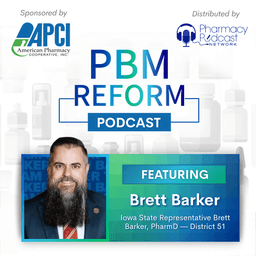
Iowa’s PBM Reform Breakthrough: Inside Senate File 383 | PBM Reform with APCI
Pharmacy Podcast Network

LIVE at RBC 2026 Episode Three | Cardinal Health™ CounterTalk™ Podcast
Pharmacy Podcast Network
LIVE at RBC 2026 Episode Two | Cardinal Health™ CounterTalk™ Podcast
Pharmacy Podcast Network