Get every episode summarized
Each time Unpacking Peanuts publishes, we email you a written briefing from the transcript — the topics, who appeared, and any specific claims, with the ad reads skipped.
Email me new episodesFree for 3 shows. No card needed.
About this episode
“The podcasts were three cartoonists take an in-depth look at the greatest comic strip of all time. This is Unpacking P-Nuts and I'm your host Jimmy Gowneley. I'm also a cartoonist and you can preorder.”From the transcript
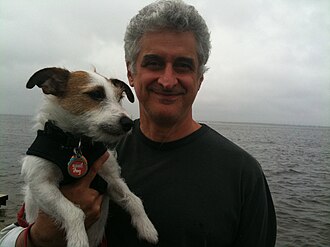
World-renowned creator of Mutts, Patrick McDonnell, returns to the show to discuss the subtleties and eccentricities of Schulz’s use of body language, gesture and acting. All of Patrick's books are available at Mutts.com.
Transcript available at UnpackingPeanuts.com
Jimmy’s, Michael’s, and Harold’s books are available at UnpackingPeanuts.com/store.
Unpacking Peanuts is copyright Jimmy Gownley, Michael Cohen, Harold Buchholz, and Liz Sumner. Produced and edited by Liz Sumner. Music by Michael Cohen. Additional voiceover by Aziza Shukralla Clark.
For more from the show follow @unpackpeanuts on Instagram and Threads, and @unpackingpeanuts on Facebook, Blue Sky, and YouTube. For more about Jimmy, Michael, and Harold, visit unpackingpeanuts.com.
Thanks for listening.
Get every episode summarized
Each time Unpacking Peanuts publishes, we email you a written briefing from the transcript — the topics, who appeared, and any specific claims, with the ad reads skipped.
Email me new episodesFree for 3 shows. No card needed.
Know when Patrick McDonnell turns up
Follow Patrick McDonnell and once a week we email you every new episode they appeared on — including guest spots the show notes never mention, because we read the transcript.
Follow Patrick McDonnellFree. Pick your own day and time.
Hosts & guests
Transcript ready
1,301 searchable segments. Every word is indexed and playable.
Full transcript
Unpacking Peanuts — Acting! With Patrick McDonnell. Machine-transcribed; use the interactive transcript above to jump the player to any line.
Welcome to Unpacking P-Nuts. The podcasts were three cartoonists take an in-depth look at the greatest comic strip of all time. P-Nuts by Charles M. Schultz. Hey everybody, welcome back to the show. This is Unpacking P-Nuts and I'm your host Jimmy Gowneley. Hey, guess what? I'm also a cartoonist and you can preorder. Not one, but two of my books right now over on gvillcomics.substac.com. It's in the Real Dark Knight book one and the first new Amelia Rules comic book in 14 years. And joining me is always on my pals co-host and fellow cartoonists. He's a playwright and a composer both of the band complicated people as well as for this very podcast. He's the co-creator of the original comic book price guide. The original editor for Amelia Rules and the creator of such great strips, the strange attractors, the gathering of spells and tangled river. It's Michael Cohen, say hey, and he's the executive producer and writer of Mystery Science
Theatre 3000, a former vice president of Archicomix, and the creator of the Instagram sensation, Swedish beasts, tarot buckholz, hello, and making sure everything runs smooth and keeping us out of trouble is our producer and editor, Liv Sumner. Howdy. Well guys, it's a special day here in unpacking peanuts land. We have a repeat guest. One of the best cartoonists in the whole wide world is visiting us today. He has a new book coming out right now collecting all his Sunday comic strips from the early years of months. And he's here to talk with us about our favorite cartoonists, Charles Schultz. Please welcome to unpacking peanuts, Patrick MacDonald. Happy to be here. It's always a pleasure to talk to you guys about one of my favorite topics, peanuts. Well, it's a pleasure for us to have one of our favorite guests. Yes. So this is for the one of the reasons we wanted to have you back. First off, we'd have you back every week just because we love how you work.
But you have a new project that has is coming out around now. What can you tell us a little bit about that? Yeah, I'm really excited by this and very happy with it. And Abrams books is going to start like the the much library of Sunday pages. It's called the much Sunday funnies. And the first two volumes are coming out this October, volume one and volume two, which is the first four years of months. Actually the first four and a half years of months, much started in September 94. So it's the first four and a half years worth of a much Sunday pages. But it's I have to say it's the best looking books I've ever done, the design of a march is really gorgeous. There are like five inches by 12 inches. So they're like long thin harzottled hardcover books. And each when with each two volumes, there's going to also be a box set. So you can get these really nice looking little boxes at the first two volumes going. Oh my gosh.
Yeah, it's just and the other thing I've been wanting to do it for a long time at my editor, Charlie Kochman, I insisted on it. But you know, those throw away title panels I do, I always yeah. You know, would base it on some famous painting or book cover or you know, and so there's a tribute guide. Oh wow. Perfect. Actually, know what each title panel was based on. And I have to say it was a lot of work because I didn't keep records and I had to like, look at these things and try to remember what the heck was that for. And some of them are, some of them were pretty obscure like Japanese book covers and old album covers from the 50s. But I think there was only one or two I couldn't identify and admit it to it. But yeah, but these these books, you know, are the start. I'm already got it. They're going to come out every six months and I'm already working on right now. I'm working on volumes five and six.
Now I tried to visualize this. You said it's five inches tall. Yeah, five inches tall, 12 inches wide like in horizontal hardcover book. So when those are printing and these are Sundays, right? Yeah. Well, how is that broken out for enough in such a wide format? It's it's broken out the way they appear. That's why I really like the format of the home man idle panel and then the strip follows it in the horizontal. Mm hmm. You know, so it really looks like the way my originals look and how they were printed in the newspaper for the papers that printed the title panels. And you work fairly fairly small. Yeah, I do. So they're smaller than the original's for sure. I just think they it looks really nice. Actually, it was inspired by in France, a French publisher did these books that way, but they did they just took random strips. These are chronological, you know, it starts from the start. So the last one and knock on when we'll we'll do all 30 years of them.
Oh, amazing. Well, and for those of you out there listening to whom his papers maybe didn't have those first panels of the Sunday strips, they are really beautiful. And so, you know, as we talk about on the podcast all the time, Schultz would have the top tier that it would have to be removed. And at some point, I guess it seems like it's somehow connected to Bill Watterson and his sabbatical or whatever. At some point, someone came up with the idea to be able to have the unbroken strip on the right and the title panel on the left. The first strip I ever remember seeing that was yours. Do you do you remember how that decision was made? Well, you know, actually it was a format that was proposed to me and I jumped on it because you know, unlike Sparky, you know, the format Sparky had a most cartoonist had, you know, there's those panels that weren't used in some papers. Oh, yeah. And also, you know, that stopped you from doing, you know, what I liked about the format
I picked was that the area that this strip was going to be in, I could do anything. I could do a one panel or I could do circles. I could, you know, it was more like crazy cat in the sense that the design was totally open. I was enforced to get rid of a panel. So that's right. When I saw I could do that, that made me very excited about doing Sunday pages. I think, you know, what Sparky had to do, I think it was great at it. Yeah, I made it a little tricky. Yeah. Yeah. Yeah. To be able to, so basically what Schultz was up against was that not only was the top potentially going away, but he had to create that little mosaic of panels so that it could be stacked vertically, it could be done horizontally. And so he had a real puzzle and the genius of what you got, you got to work with then is you have that, you have that image on the left, which is its own thing.
And then you got the block of the strip to the right. And as you were saying, that's never going to be broken up or rearranged. So you can do, you could do a full page image. You could break it up however you pleased, which I think is great. I mean, I, I feel for Schultz that he had this kind of put upon him and it never generally didn't get to take away for a while. I mean, he did some of those single panels Sunday's later. Yeah. And, but you know, he was, it worked for his trip. I mean, he was just good at that. And his storytelling was more direct, you know, what I like about that, and especially now, you know, putting these books together. And I knew I didn't get to play with this space. You know, there's some single panel things, things tilted. It just was, it was, it was, there was a lot of freedom in that format, which, you know, and I started months, I didn't know you could do that. And I was really encouraged that I was going to have that ability. I played with it as much as I could.
I got a free merchandising idea for you. You can take this to the bank. Those through the title panels, you pick five or six of your favorite ones of those that are parodies of really, like I think you did a Meet the Beatles one and stuff like that. Those are t-shirt designs, my friends. Those would be amazing. I would wear them anyway. I don't know. Have any of those been turned into merchandise on their own? You know on our website, they sell things. And I think we've done different items using some of the title panels. And actually, you know, now that these books are coming out, they were talking about maybe, you know, doing some things based on the title panels, because it's a big part of the book. I mean, the covers are really nice. And the part of the cover is one of my favorite title panels is on the cover. So we're really promoting the idea of the title panels, because you know, when I look back, I put a crazy idea. Those things took me as long as I could. Yeah. I bet. You're like setting yourself up for now an entirely separate challenge.
You have to now come up with this entirely other thing, which is not a comic strip event. It's a clever visual, you know, pun or or trick or whatever it is. So every single week that's completely out, it's almost like you're doing a bonus bar side or something once a week just for the heck of it. And it was fun. I mean, the way I did it is I would write the joke in the strip first and then try to think, you know, whatever joke was about like what classic you know, might add to that and relate to it. And but I tell you the tough part was, you know, a lot of them were like based on famous paintings by Ren Warr. Yeah. Oh, wow. But, um, the tough part was trying to figure out how to get, look like the paintings used in, you know, comic books. And it really made me a much better colorist because trying to figure out how to get fades and how to make something look like a beautiful color wall, you know, oil painting in comics
was a challenge. And I really, it really told me what you can do with the, yeah, Christian, I was a big admirer of the old guys and the winter McKay Sunday pages color wise, yeah, gorgeous. And it's really almost impossible to do. Now, even, even though we've advanced so much in technology, it's actually not necessarily means it got better. Well, I think you're one of the best colorists of all time. Your coloring is what attracted me to the strip to begin with. Can you talk a little bit about, is there some sort of a technical process of taking these strips that were created, you know, 25, 30 years ago, and it did with a different, you know, process, a totally different technology at work. How is there an issue in now getting those into today's modern printed hardcover books? Oh, no, they're, they're able to, you know, these books were better than ever in my life. But, so there's no problem with that. But it was a different process.
I didn't, you know, there wasn't people who use computers now, but, you know, back then you had a guide of each color had a number. What I did was I, you know, made a Xerox of the black and white Sunday, and then I would water color it, but then I would add the numbers for the printer to see what I was doing. And, you know, again, there was different ways you can explain that you wanted a fade, you know, so it would save some dark red to a light red or an entirely different color. Well, you're one of a few artists at that period, I think, that had success using those blends and gradients. A lot of really big strips that I love, it's somehow in the 90s when they found out they could do gradients, it just started going, and it was any two colors, they would blend, you know, and it really doesn't work. But where do you get your color sense? Like, was that from art school, was that from your illustration background?
What's that all about? Probably a combination of everything, and, you know, and again, probably looking at the old comic strips, you know, they just looked gorgeous, and I think that's what I was really trying to do and just keep in my finger. I mean, you know, it's funny when you did it back then, it was just all numbers, and like every Sunday morning when I would pick up the paper, I would just keep all my fingers crossed. Right. You had no idea what it was going to look like until you actually saw it printed. So, you know, it was a lot of guesswork there, but after a while, you know, you knew what a thing looked like based on an old strip. So I always, I kept all my guides, and when I colored, I always looked at old things to see what worked and what didn't work. And, you know, it took quite a while, but then I got fairly good at it. Well, that's fantastic. That sounds amazing. This, these books. You know, so I think when you were talking about fades not looking good in the late 90s or whatever, but I think that part of that was, I noticed that when people started using
the computers, the color of their stuff, everyone got really ambitious and started, you know, overusing it. And they just, a lot of those strips came out really dark and kind of smudgy looking. And I think that was because they were using a new tool that printing wasn't working as what I was. Wasn't taking advantage of the purity of the CMYK. Yes, CMY colors. Yeah, you know, putting black in the colors, things can start going sideways. Yeah, that seems to have disappeared. So I guess people have figured out how to do that. So, but tell us a little bit. You picked both the topic for this episode and the strips we're going to discuss. Tell us what made you go for this topic and what we're going to be doing today. You know, the topic I picked was the acting in peanuts and also with that, just the idea of drawing funny pictures. And I think drawing funny pictures has a lot to do with how the characters act.
And the more I look at peanuts and study shields, I just feel like it was probably the absolute best out of that than any cartoonists who ever lived. I mean, I think the reason those characters are so alive on the pages, they were just great actors. You know, I think I might have mentioned this in the last show, but having written two plays based on books, I realized that theater and comic strips are really close and has the cartoonist, you're the director and you're also the stage manager and you do the set design and you write the script. So it's, it is like a little play on paper. And just like in theater, it really makes a difference who's the actor, you know, how good your actors are. And shows was just able to get the most. I mean, when I've done the gift of nothing and my me Jane book has plays at the Kennedy
Senator years ago and watching the director, you know, direct the actor and actresses was just so mind blowing how we could get so much out of somebody, you know, they would do it and he says, no, no, why don't you think of this one? You say it and you would see a completely different performance. And I feel like that's what cartoonists do. And you know, when you look at the cast, I mean, Lucy Linus, I mean, how we drew him with the body language and the expressions, they really help tell his jokes, you know, and I think that's what really made peanuts among everything else that he was great at. But I think one of the things that really stands out after, you know, my years of looking at it is that, you know, not only are they well designed characters, he knows how to let them tell the punch line and the setups better than any. Did your experience and in translating this into theater come back around in any way
and to in how you were telling stories through either your story books or through through the comics that didn't inform anything the other way around? Well, that's a good question. I'm sure it did, but right off the top of the head, I think I think what I was fascinated by was just how close comics and theater is, you know, as far as how literally you need to have on stage to give a sense of place. And you see that with peanuts, I mean, there's like, you know, one little blade of grass in a tree in the background and you know where you are. You know, you don't have to draw much to show someone in Charlie Brown's house. You know, it's like a chair and, you know, maybe there's a frame on the wall. And just like the theater that you don't, they can get away with just a table and a chair on the set. You get a feeling of we're in the lighting, you get a feeling of place. Yeah, that's interesting. And Jimmy, you did a with kind of the three of us were involved in one way or another
when you made a milieu a musical. I don't know. All Michael did that. All of that. I just watched it. Are you guys relating to what Patrick's saying, having been through that yourselves? Well, yeah. And I mean, it's one person cannot do a musical. Usually, you know, you have all these tech people and lighting people and all that. Yeah, I mean, what's so appealing about comics is you're everything. And you know, you have to be as good as you are. And if an editor doesn't budding, it's, it's your show. Total control. Yeah. Well, you control for ex out there. Well, you know, it's funny. Someone where he was talking to us about the lack of funny comic books as opposed to comic strips. Like, why aren't there more funny comic books? One of the reasons I think it might be is to be a funny cartoonist, you really have
to do all of it. I think it's very difficult to make a comic work if there's a, that's funny. If there's a script writer and a pencil and then like a different letterer, because they're all taking a chance, an opportunity to tell that joke. And they can't thought they're not all going to be on the same page. And unless there is someone like a director, like you're saying, who's sculpting it with intent, it's going to come out. However, it comes out and nine times out of ten. I don't think that's going to be funny. Yeah. So Patrick, let me ask you this, when you were writing your jokes, did you, did you have a process by which when you were working on it, ever it would happen that, well, this is a really funny idea. And I think there's a really funny punch line. But as I'm drawing it, it's not translating to be as funny. And what would happen if you got in that scenario? Would you work at the drawing until it became funny? Or would you go to something else? That's interesting.
You know, I mean, the way I work, and I'm very visual. So I would get my sketchbook. I used to walk, there was a park next to me a garden, and I would just sit in that park and wait a few hours until I had at least ten jokes. And I would, you know, it goes back to the other part of the topic today is funny drawings. I mean, I usually started with funny drawings, you know, like sketching mouche and you think of where he might be or what he might be doing. And then just try to make it as funny as possible. And I wouldn't go to a finish unless I knew the joke worked. Right. Okay. So it would be in the sketchbook that you could say, oh, that's not working. And you start sketching or else? Would you ever capture something in that sketchbook that took you to the humorous place? And then you were like, I have to recreate what is in that little tiny rough sketch. Oh, my God. And you just can't, you can't quite relive it. I mean, will you take a rough sketch and actually blow it up and try to trace it or whatever
because you know, the every little nuance of that is just works and you have to, you have to be as true to it as possible. Or do you just redraw it? Yeah, no, that's, that's one of my, I don't, miseries of comic pictures. I feel like the sketchbooks are old. I mean, that's why in the art of nothing in my first book with Abrams, the comic art of Mutt, but the art of nothing in particular, I included a lot of sketchbook drawings because the sketches are always that spontaneity and intimacy is always more exciting to me. And, you know, so, and I could see it with, I mean, especially these first four Mutt's book, some putting out for the Sundays is, well, I, I, a lot, a lot of, back then I sometimes didn't pencil anything to those are spontaneous drawings because I don't know why it is, but when the idea is just magically happened, you usually can capture it, you
know, if you work on labor on something, it usually doesn't work. Yeah. So I do very loose pencils and kind of hope for that spontaneity. If my children's books, they're all done, it's spontaneous. I'll do 500 drawings and pick the one I like the best. Oh, wow. I don't, you know, pen, I don't pencil sketch first. It's a little different with, you know, I mean, what's nice about children's books is, you know, they're more freeform where with a dally, you know, you have a certain plate, you have the dialogue, you have a space, it's certain size. So it's a little harder to, not to get you out some of the things. So it fits in the space correctly. Okay. So we are going to get into talking about some of these funny drawings by our pal, Mr. Schultz. But before we do that, Patrick, you have something you wanted to talk about one of our previous episodes. You have something to say. Yeah.
I was listening to your latest episode that was about the tributes, the cartoonist data after Sparky passed away. And I thought you might be interested in some of the background on that. Oh, absolutely. Please. I'll tell you how that really started. So, you know, the cartoonists have their Rubens awards every year. And right before Sparky passed away, they announced that they were going to give Sparky the Milton Kniff award, which is the lifetime achievement award at the next Rubens. So I thought it would be a great idea if all the cartoonists did a tribute to Sparky so that that would appear the day he got the award in time. But I thought, how great if he woke up that morning and the whole news. And there was that Rubens was at the World Trade Center in New York. Oh, yeah, yeah. And I just thought if he picked up the daily news that morning and who wouldn't and
read the paper that he would see every cartoon was a tribute to him, the night he was going to win the Milton Kniff award. Wow. That's where the idea initially started. But then as we know, Sparky passed away. And but we thought that and you know, that idea, probably we were talking about it in November or December because, you know, cartoonists worked so far ahead. We had to let the cartoonist out, it was going to appear in May. So we had to let people know sooner than later to get started on it. So people wouldn't miss the deadline. But then when he passed away, we thought it was still a nice tribute to Dylan. That's how it happened. Oh, that's amazing. Well, I had no idea that you were the Spark that started that. What an incredible tribute. It would have been beautiful for him to be able to see this. Don't you think? I mean, I think, you know, Sparky had such a great life, probably be hard to surprise
him with something. I think that might have made his day. Absolutely. Because what could matter more to him in the newspaper comic strip page and other cartoonists, right? Yeah. Well, this is personal. I mean, you don't have to necessarily answer. When you think back to that time when he was sick, were you aware or were people around him where this is probably going to be the end sooner rather than later? You know, you actually saw him pretty soon, pretty, you know, before he passed away, but like maybe a week or two before. Oh, I mean, you're trying not to think of that, but he kind of talked like that. I think I don't know if I mentioned this in the last show. When I, the last time I saw him, you could tell that he was, you know, sad. Yeah. You actually was, you know, told me how he really, and he was, you know, breaking up a little
bit when he told me, but he was really disappointed that Charlie Brown never kicked the football. And he was telling me that he was, he had done that. Oh, yeah. Yeah. And then, you know, it's funny. I, you know, I finally freed my chain dog, guard dog in my strip a year ago. And I was promising people for like 20 years that I have guard dog, go free. And it's were a whole bunch of reasons I didn't do it until recently. Well, when I finally freed him, I, I felt like I was free. And it really was a special moment for me. And I think of Sparky, I Charlie Brown kicked the football. If he felt like me, if I would have been a pretty, pretty special day farm, if he ever did do that. And he had the power to do it. And I understand why he didn't, but he did have some regrets that he didn't. That's wild. Yeah. And as someone who has never created anything remotely, like either of your examples,
yours are his. I think that you both handled it exactly right for your particular situations. Yeah. Do you know what I mean? Yeah, you're probably right. And even when he was telling me that I was wondering, he probably wouldn't have done it. Right. Yeah. Yeah. Or you didn't write it. Yeah. Like, because yours is a fulfillment. And his would have been a reputation or something. I don't know that makes all of it. No, no, you're absolutely right. It is two different things. But, but I still think if he did it, he would have really enjoyed that Charlie Brown got to do that. I would have, I'm sure he would have gave him some satisfaction. Well, here's my exact, here's what I think. But do you remember in early, I guess 1990 or 91, I guess, Charlie Brown hit a home run? A year later, he retcons it so that it wasn't really a home run. The girl just let him hit it. Because. And I said, I don't never met the guy, anything like that.
But I pictured him for 364 days gone. I've made a horrible mistake. I have to wait till next baseball season to fix this. I think you're right. Well, thank you so much for letting us know that inside baseball on, on how those tributes happen. That's just amazing. And I'm so thrilled that you were able to do that. Too bad he didn't get to see it, but I'm so glad we did. That's just so cool. All right. So before we go into these strips, how about we take a little break and then we come right back with more Patrick McDonald. Hi, everyone. We love it when you write or call to tell us how much you enjoy the show. But don't just tell us, tell your friends, tell complete strangers, share your appreciation and a review. It doesn't have to be on Apple podcasts. 60% of you listen on other apps. Some of those apps have review sections. Think of all the poor peanuts fans out there who haven't found us yet. There are review instructions on our website at unpacking peanuts.com slash spread the word.
And we're back. I hope you didn't miss us too badly. Patrick, tell us about how you picked these strips and what made you decide that you wanted to focus on this topic in general. Well, I decided to pick these strips based on the acting. And also funny pictures, you know, Charles Schultz always said what is the real job was to draw funny pictures and how everyone loved funny pictures. And matter of fact, that was how we ended every phone call he had with me. And I guess they probably said the same thing to other cartoonists, but he would always end the phone call with during those funny pictures. Amazing. That was the end line. And you know, he was, he was the best at it. Yeah. One thing we were talking about before we started recording is Patrick picked these strips. And then I just picked a few in case we needed some more to talk about. But out of 17,897 strips, we both picked the same Lucy strip as one that just defined
good acting and funny drawing. And here it is. August 15th, 1954. It's a Sunday. Violet and Patty are sitting out in the curb and Violet says to Patty, did you know that Lucy was going to dancing school? And Patty says, uh-huh, it's just one more way for her mother to get her out of the house. And Lucy's walking down the street with a big ridiculous grin on her face. And Violet says to Patty, ask her to do a few steps for us. As Lucy passes, Patty says, how's dancing school Lucy? Fine, says Lucy. Patty asks, how about showing us what you've learned? And Lucy says, well, I'm not sure I can remember everything, but and then we have one, two, three, four, five, six, six panels of just gloriously silly Lucy doing her dance steps. As she sort of, you know, shakes one foot in the air, then she shakes the other foot in the air. As she points to the left, she points to the right, she does a little shuffle, ends with the flourish and then says to Patty and Violet, we're sitting there completely stone-faced.
That cost my dad $12. Yes. Well, I think. Yes. So, I mean, I picked this for many reasons, but again, when you look at those six panels of her dancing, all the dancing, I mean, they're just perfect. Like the lame bendicks before the sign fell. Yes, exactly. But, you know, just again, acting like it's just so funny. And then the punchline, my god, like, if he does nothing, that it closed your dad $12,000. And the way she says that would be the biggest smile on her face. So proud. And like we said, even, you know, the Violet just, you know, with stone-faced with it, you know, it's like, yes, he just knows how to set up jokes and the characters play their parts so well. And then, you know, the funny drawings, I mean, those dance drawings of Lucille are just perfect
and funny, you know, funny little trend. I'm sure he enjoyed doing that strip, you know. Oh absolutely. Very proud at the end of the day that he did those silly drawings. And for me personally, my wife went to college and majored in modern dance. And she would just say like her dad would come and not understand. He'd be like, actually, when she was in dancing, he'd sit in the audience and read his newspaper stuff. I get this one's a little personal for me. My wife lived through that. It's so funny. Now Michael, this made your top five when we selected it. Oh, what do you, what do you say about it at this point? Yep, just brilliant cartooning. Surprisingly early in his career. I mean, a lot of his classic strips were in the mid-50s. Before he introduced a lot of the more popular characters later on. Yeah, it's brilliant. It's funny.
It's beautiful. And it's totally true. I mean, it's a she's younger than them. A little kid can't do anything. Right. Yeah, you know, you know what else I noticed when you were reading it? Boy, that opening panel, that's a really funny kind of nut peanuts remark, where she says, oh, oh, one more way for her mother to get her out of it. Yeah, I get out of that. That's like a really honest, funny statement. And I guess all those kids when you're thinking about it, yeah, doesn't happen today anymore. But the fact that kids would spend the whole day by themselves outside, like, it's oh, yeah. Yeah. And we've been talking about mean girls for the series that we just recorded. And with Patty and Violet, you know that they're thinking about making fun of her when they say ask her to do a few steps before it. Yeah, yeah. Yeah, but they don't pick on Lucy very much. She was not a target. She's younger. I mean, she's still a little kid to them.
Yeah, right. When I had twin daughters and when they were like four years old, they took ballet classes. And I remember once watching and there was just a room full of kids just spinning around on their butts and you're like, all right. So we're doing today. Okay. And you talk to us, Patrick, a little bit about, you know, you talked about Violet and Patty and they're sitting their stone face. How important is it to get not just the reactions and the acting that you want in the person delivering the joke, but also, you know, the supporting characters or the people who are there as the straight man, all that sort of stuff. Yeah, I mean, that world would mix the joke. I mean, when you think about the great comedians, Abbot and Costello and Burns and Allen and you know, the straight man was as important as the guy making the joke, you know, how they did how they how they react to it, you know, and the Lucy says something and how Charlie Brown takes it or Linus takes it.
I meant that interplay is a little part of the magic of the joke. Yeah, yeah. Showing no reaction is actually a very strong reaction. Yeah, yeah. You would add a doubt. Yeah. Well, Patrick, you have a real subtlety often in how you show characters. You'll wear another carnage cartoonist might really play something big. You'll go small. Do you have any theories on comedy, on how maybe doing it less in terms of the reader is actually benefiting you as the one time the joke? Have you thought about that? Yeah, no, I do that a lot with much a lot of times. I'll show the back of their heads and I think it's partly that you have the reader participate, you know, that instead of like hitting them over the head with the character acting really silly or flamm, you know, it's part of cartoonies. You go overboard and make big smiles and big laugh and big gestures. But I think that was one of Schultz's innovations to him and how quiet his trip was in house intimate the characters were.
And I definitely played that up in lots. You know, I don't do too many big smiles or big frowns. You know, I keep it a little subtle and I think that helps tell the sense of humor that I do. And it feels like draws the reader in and becomes more intimate when it's that way. Yeah. I agree. I mean, do you feel like if you do it bigger and it's not necessarily where the reader is in the moment, especially if they're maybe they're just zipping across the strip, right? They drink coffee and read the newspaper that it almost pushes them back. Yeah. Away from the strip when the characters are bigger than say what the reader is when they're reading it. Mm-hmm. Yeah, I agree with that. Yeah, because I, and it seems like, you know, making it intimate and pulling people in is, is gotta be a huge part of why we love these characters so much. We're drawn, we're drawn to them.
And there are a lot of other cartoons where you don't feel drawn in at all. Yeah, I mean, there's some cartoons where they're just cartoons and you might enjoy the joke wherever but you never feel close to them or you know, you don't, you don't, you don't have to miss one of your own. Where again, I think reason peanuts is big as it is. He was able to make you feel like you knew all those characters and they were alive and you felt like you knew them. And on I think part of that is that he kept them really, didn't go too far, too far out. Moving on to February 16th, 1958. Oh, it's a classic setup. Another Sunday we have Shrouda at the Panna, Lucy in her classic position leaning against the Panna and Snoopy atop the piano with a violin. And we have five, six, seven wordless panels of Shrouda, Pound and Ointes, keys and Snoopy playing the violin.
And you really need to look at this to get the full effect. But you know, his ears are up, up and he's alert as he's getting into the piece. And then he's smoothly proceeding. But then towards the end of the next tier, he can no longer contain himself and he just starts rocking out, doing a little bit of the happy dance for two panels before coming right back in to finish up the piece. And then Lucy says, but is it art? By the way, I just want to say before we talk about this, Snoopy, this is a shocking strip. He is fully nude throughout this entire strip. There is no dog collar at all on him. That's right. And it's really weird in me out. You know, you're right about that. And I'm wondering if this because the violin was under his neck. I think that is it. Yes. It really is weird. Very weird, right? Of course, I've seen this 5,000 time and this is probably the first time I've noticed that. But you know,
you know, what else is weird? It's the long Snoopy, which is different than where Snoopy was going to end up. And I know Schulters made comments sometimes. You wonder where what he was thinking. But it's almost a different character. But I think there's something I like about the long Snoopy too, even though he's so different looking. He's still a great looking character. Oh, yeah. It is a great looking character. And I just love all the various periods. It seemed like he was always able to get the Snoopy he needed for the moment he was in. Isn't it funny? I think we talked about it last time. But I'm going to speak for a spark in me or I shouldn't. But it's not something you plan. It just happens. Right. Like when I look at Luch over the years, it's like, yeah, he definitely changed. But I'd never sat down and said, oh, he needs to be chubby or just, it just happens. Yeah. What do you think of Big Jaloocee in this era? Where her jaw is way out further than her nose?
Do you like that? Does it make it funny? You were. Yeah, you know, I guess you're right because I'm looking at my book with these strips in them. And yeah, she did have a big jaw back then. Yeah, we were really looking this era, this like late 50s. He was going through a period where everybody has those big jaws, except Charlie Brown. I mean, if you look at Schroeder, he has a big glass panel, especially his skin is flat. Like the bottom of his jaw line is completely 90 degrees. Yeah. And Snoopy too. Yeah. Well, you know, the snout there is really long. Yeah, I don't know who knows. But like you said, each period has its own, you know, I love these. I don't know if they're like favorite look, but they're a good look. Absolutely. Now, do you have a favorite of these panels showing Snoopy doing all this great action? Do you have a favorite? Something that really trips your trigger?
I like the last two. I like when he turns his back and gets serious. Yeah, when you think of, I can. He's just so funny. If you, you know, if this was a live action thing and that, you know, some actor was doing these, they're just great motions. And also, I like that he starts serious and then he has his little tongue sticking out. And then he, he's enjoying his music so much he goes into. And my God, you know, that was the year he had Snoopy do a lot of happy dancing. Just such great drawings of the dog being happy. But then when he turns his back to loose and gets really serious, that his face and that one, that's my favorite drawing. Yeah. You know, I just, this is Steve Martin, the rip this entire thing. Yeah, you're right. Right. You're absolutely right. And you know, happy feet and then he'd go back to being serious, you know, in quotes for a second. Yeah.
That's a great, by the way, if you're going to rip stuff off, ripping off from a different medium is the way the connection at all. And you'll again, go back to funny drawings. The whole premise is funny. I'm sure when he came up with that, he made them self-ref. I mean, Snoopy on the top of a piano playing a violin. I mean, he's never, I don't think he's ever done it. Has he ever done it again? Right. And we don't even question that. Of course, you're also violinist as well. Yeah. I love that very first piano player. Stroder is waiting in anticipation. First violin is going to tell him when to begin. Yeah. Yeah. You're like, it's a normal thing. It is when you stop and think, because we just accept all of the stuff that peanuts made just part of the culture is just part of it. But it is very strange at almost every bend.
You know, every chance he gets to add something that you've never seen before, you know, he'll do it. And if it's a dog playing a violin on top of a toy piano, then sure. We're going to go there. Yeah. And any, I mean, he worked out a strip where it was like real that you identified with the kids, but then we're throwing total surrealism and, and feel like it's still part of this trip. Yeah. He, he told me it, maybe he also sent this in interviews, but a lot of that, he said he got permission for that from Popeye. And because Popeye had really surreal moments and they still worked in this story that he was telling. And I think he said that Popeye gave him the permission to do all this crazy stuff. Do you have any idea what makes those instances work? You know, there aren't that many examples of someone who can pull off fights of fancy and still keep you emotionally connected to the characters.
I mean, do you have a secret sauce that allows for that type of thing? Because it seems like a lot of times when you're pushing for something that's a bit more creative or a fancy fault, you're by default going to distance the reader. But, but when you don't, that's a real magic. Yeah. That's the magic of peanuts. And I guess when you think about it, it was really snoopy. Yeah, so weird. You know, the kids didn't go to the moon. Right, right. But snoopy went to the moon and I think he had that magic character. I snoopy was really able. And I guess the whole idea was that you know, snoopy's, you know, imagining talking and imagining being part of it. So I guess it was just the dog as imagination that he could imagine anything. February 22nd, 1959. It's another Sunday and Paddy and Lucy are hanging around outside in the yard and Lucy's holding one of Charlie Brown's t-shirts. And Paddy says, where did you find it?
Lucy says, he left it at our house one day last summer when we were all playing under the sprinkler. And Violet comes up and Paddy says, can you get it over your head? And Lucy says, if he can, I can. And then Paddy says to Violet, Lucy's putting on one of Charlie Brown's t-shirts and sure enough, that's just what she does. And there's Lucy wearing the shirt. And she says, look, I'm Charlie Brown. Now she's acting like Charlie Brown. Nobody likes me. Everybody hates me. Poor me. And the girls start cracking up in the background. And Lucy continues, I wish I had a friend. Everybody hates me. Nobody likes me. Paddy and Violet are clutching each other. They are laughing so hard at this performance. And then off the panel, Violet sees someone coming. She says, hey, here comes Charlie Brown himself. Oh boy, just wait till he sees Lucy. And then Paddy says, this ought to be good. And then Charlie Brown walks up, looks at Lucy, who is dressed just like him.
And he says, well, hello there, Charlie Brown. You blockhead. And then he continues on his way. The girls utterly collapse in the background and leaving Lucy to stand their alone saying, sighing to herself, much like Charlie Brown. Another classic. Beautiful looking comic strip. Oh, yeah. And I picked this because in particular, when you look at the two panels where she's making believe she's Charlie Brown, what's amazing to me is that he's drawing the Charlie Brown frown face in the first one. And then the other one too, just that no one likes her. But even though it's the same face, the way he drew it, you know, he's exaggerating that face. You know that Lucy's not sad there. That Lucy is making believe she's trying to like, how does that possible that you could
draw the Charlie Brown face? But it's like an exaggeration of an exaggeration. Right. And he somehow makes it look like a cartoonist. A different cartoonist is drawing the character than himself. Like it almost looks like a Melinda's animator doing a Lucy face. Yeah, that's he's drawing something that when you know the person's not really experienced that feeling, but exactly creating and making fun of that feeling. I don't know how you can do that, but he did it. You know, amazing work of art that those two panels are like, wow. Yeah. Yeah, I've never even really thought about it. And it's just fun that he's making fun of his own character that he, you know, widdles down Charlie Brown just that nobody lights me every way. It's right. Right. Yeah, it's a lot of good acting in this one. I love Lucy putting on the shirt that's a great panel. And I just love the lettering. I love the ha ha's in the panel.
I love the colors of it. It all looks so pop art and just so friendly and fun. You know, not that looking at it again though. Another interesting panel is the one where, because he, I don't know if he's done this too often, but that panel work patty and out, violet are up close and Lucy's in the background. He doesn't do that too often. Almost never. Almost never. And I love that she's acting still in the background even though she doesn't have an audience even she's just mad at it. And they're instantly so proud of herself, which Charlie Brown shows up. Just great. And you know, deciding to have Charlie Brown just walk away again with no expression. Yeah. Yeah. You know, he could have had a big smile like he got over on her. But the fact that he just didn't walk away just makes it so much better. Uh-huh. I think his blank expressions are one of the real aces up his sleeve because
when he can't, when he does that, it almost always somehow makes it funnier. Yep. Yeah. That Charlie Brown's not walking away annoyed or proud of himself or anything. He's just walking away. Yeah. In the in the third to last panel, what do you think of the exclamation point in the balloon with Charlie Brown's showing really no expression, but we love that. I don't know. He would have done that in later years. What do you think about that? That's an interesting point. Yeah, I don't know. Because he's got he's got violet coming up with the question mark in the second panel. And does I don't know if he needs it or not. I'm guessing in later years he would have thought I don't need that. But I think I think you're right. It's a little cold school cartoony. Yeah. Yeah, I love it because yeah, it's just I use them all the time. Oh, yeah, they just graphically look cool when you can do it. They do. Yeah. And it balances out the panel too. It does. But the other question or the other part about it is that it's it's showing that he is acting still.
But internally, he is shocked. Yeah. You know, it is two different emotions that we're seeing and he's being good at concealing it in this movie. Yeah. June 26, 1959. Okay, now this is a daily and this is a middle of a sequence where Snoopy is dressed as a baby. I don't remember the specifics of why he's dressed as a baby. Oh, no, the premise was great. Charlie Brown Sally was born. Right. And you know, Charlie Brown, you know, being a new brother was like Olsen getting some status in the neighborhood. Worst Lucy had a put him down. So she wanted her own new baby. So she picked up Snoopy to be her baby to make him through it. Yeah, good. Great idea. Well, here we are. And June 26, Charlie Brown is getting annoyed by this whole thing. And he's holding Snoopy in his arms.
But not like a dog. Snoopy just laying out flat like he does on top of the doghouse, but with the baby on it. And he says to Lucy, look, this is your baby. Not mine. I have my own baby sister at home. And then he puts Snoopy down and pushes him towards Lucy and says, you were the one who put the bonded on him. Now you take care of him. Lucy walks away, say, I'm not interested anymore. I have other things to do. And Charlie Brown has left the loan holding that his puppy slash baby's paw. And he yells to Lucy, you're a poor excuse for a mother. A distraught Snoopy says to himself, Mama, talk about weirdness that we just accept. Holy cow. Well, one of the things that we read because we're old is that bonnet. Yeah. I don't think babies wear bonnets. And if I haven't happened for 30 years and why I have no idea.
And wear her ears. I'll get that bonnet. I mean, I picked this one again for the funny drawing aspect. Then what the funny premise to that, Lucy was going to make the dog into her own babies is just a funny idea. And I mean, just I'm sure when again, when Sparky drew that little bonnet on Snoopy, when he had something. And for whatever reason, like he said, that first panel, life Snoopy is like so flat and so rigid. This makes for such a funny drawing. I don't think that it's a great idea. Maybe he could have been cuddly more like a baby, but he's just a old lady rigid on Charlie Brown. Yeah, it's like you sleep on top of the dog. Yeah. Yes, with the bottom. Every, every drawing of Snoopy here is classic. I mean, Yeah, that last face with mama. And then I think that's one of these things.
When you, you know, we've done over 200 episodes looking at the work of one artist, but the closer you look at it, the more there is to appreciate. I mean, like we were saying here, just the bonnet is funny. The drawing is funny. The premise is funny. The punch line is funny. It's crazy that you, it's like fractal. Any part you look at it has qualities that kind of imbue the whole thing. It's amazing. Well, it also it fits his personality because he's actually role-playing Yes, a baby. He's actually into it. Yeah, he was happy to do it. Yeah, yeah, yeah. This is like the role of a lifetime, right? And he's got the smile in panel two and then when she's not interested, his face, his face falls. Yeah, yeah. And the ink line on Snoopy on panels two and three is just gorgeous. Yeah, well, for me, the late 50s or early 60s was him at his, oh my god,
everyone was a masterpiece. And every, in every way, the drawing, the writing, the premises, he was just on a roll. Well, when I look at that panel three of Snoopy, I think of you in much. Well, you know, how could it not happen? I mean, when you draw comics, all the stuff you look at as a kid, you can't help but it appears somewhere in the strip. Sure, yeah. It took me a little while to realize, but if you look at Butchie, the Butcher and Lutz, the Delhi owner, you know, his elbows are dentist to menace elbows. And realize it until like a year of doing on that. Oh, yeah, that's where I got those elbows. So is there anything from Little Orphan any that you feel? The aspects of it that inspired you in terms of shading or? Yeah, that's funny. You should mention that. I mean, with Little Orphan any, you know, the fact that he didn't give her pupils, you know, was part of that thing of letting the reader do some of the work.
Mike, I, yeah, he inspired that. Actually, in the beginning, sometimes Earl and Moch did have like, eyes that didn't have pupils that I was still feeling them out in the beginning. And, you know, I think again, showing them from the back of their heads was part of the little. That's great. March 17, 1960. Charlie Brown just out for casual walk by himself when suddenly he's confronted by his own dog, speeding at him upside down in the air, propelled by his spinning ears. The helis Snoopy spins around Charlie Brown a few times, doing a fly by. The Snoopy looking ridiculously happy about it. And then he goes see flies away leaving Charlie Brown to just yell out after him. Now you cut that out. And that was a week of Snoopy being a helicopter,
which again, just funny drawings. I'm sure when Shilts did that in his sketchbook and made him laugh. He thought he had at least a week's worth of jokes with that. Such a funny little premise and just drawn so nicely. That third panel with the Snoopy coming right towards us. So cute. And that gimmick cartoon is you said like one head but looking in three different directions. Before I die, I want to do that well once. It's not easy. It's not. No. No. It's so abstract, would you think about it? Yeah. Yeah, and you have to really let yourself lean into that abstraction, I think. And don't think too much about it. Yeah. And it's also nice how readers just take it. Yeah. There's like a language to comics, not based in reality, but you know what you're trying to convey. Absolutely. Yeah. And I love that with this particular
strip, he does allow Snoopy to have the most pure gigantic smile looking straight at us. But I can think of in the history of the strip. He's been it. It's I'm sure it's because he's so clearly enjoying this himself. Yeah. You know, I'm going to have to go back and look because I wonder what the first day was. You know, like, well, I did Snoopy. No, we could do that. Yeah. I'm going to go back and have to reach, you know, relook at that. I picked this one, but I forgot how he started that. I mean, so made and become a Alec. And it's so worked so worked so nicely when he's still doing the kind of the peanut head version of Snoopy. Yeah. Like you're saying, like each era lends itself to its own humor because of the look of the character. If he was drawing Snoopy from 1990, I don't know if he could get there. Yeah. I think you're right. I think you're right. Well, he'd need bigger propellers because Snoopy was a lot chonky in those last years. And his years got fatter and smaller rather than walk up.
Yeah. Yeah. So he probably couldn't be a helicopter. You're right. October 10th, 1961. Lucy is doing some pure science and medicine right here. Because she's standing in there and she has Linus lying on the ground on his stomach. And she says, all right. Now, cough and Linus coughs three times. Cough cough cough. And Lucy stomps where Linus has coughed on the ground. Stop, stop, stop, stop. This shocks the heck out of Linus. His hair goes shooting straight up. And Lucy says there's a batch of cold germs that will never bother anyone again. And Linus looks out at us or at least off panel saying what underth is happening here. You know, again, it's the funny, funny picture of the idea. I'm sure again, when he sketched that out, he knew he had something. Just how funny Linus looks lay in there and being forced to cough.
And then he was stamping out the club germs with your feet. Oh, God. I was silly. And it was a whole week of it and everybody had to do it. Roller had to lay on his stomach and cough and pig pen and trolley around just so she could stop out germs. She's sort of doing some of her moves from the dancing school. Oh, Mr. Miyagi karate kid situation. Yeah. A nice lettering again to I like the cough lettering and I love the double outline stomps. So what do you think of the way he chooses to? I don't know any other cartoonist that would have chosen to draw a character lying on their stomach where their arm is straight back to the ground is chin's off the ground. And it's just this stomach and his tips of his feet. It's it's so stiff. It's kind of like when Snoopy was being held by Charlie Brown.
You know, so I'm making it if looking character hilarious. Wouldn't you know you realize that that's not a position we probably ever drew a minute can. It's a strange. Yeah, yeah. It's a strange position for peanuts, but it's still drawn in such a funny matter. Like you said, like his arms aren't even on the ground. They're just like straight back. I think it's a yoga move. Yeah. That's a lot. Amazing core strength for Linus. So Patrick, let me let me ask you this. If you were to draw this, would you have kept it with because he could have either had Linus on the left and Lucy on the right or the way he did it here? So why do you think he chooses to have Lucy on the left and Linus on the right to sell this joke? What? You're making me think. That's an interesting thing because you would think you read left to right.
So maybe I would have had him in the opposite position. So why does this work? Maybe it's because I'm just thinking because it obviously, when I saw it, it was like, well, it could have been the other way around. Does he just want to have Linus had the last say in terms of the response? Yeah. Maybe. Or because the cough cough in the second panel is kind of out of order in a way. But maybe not because she's got her foot ready. Yeah, she's rear as she's not ready to go. Right. So it's just anticipation for the cough. Yeah, sometimes he'll make a choice that I don't think is maybe the choice I would have first made. But then the more Laura I look at it as like, no, he was right. And I think when I think you came up with the answer that the punchline is going to be the reaction of the guy doing the cough. So you want that to be the last image because yeah, I think that's the answer.
Well, that's what we're all about here and I'm packing peanuts. Getting to the heart of these pressing issues. Like this one from September 10th, 1963. So Lucy has her little beanie on and her little overcoat and she's carrying a book under her arm and Snoopy's in front of her just dancing away. She passes by him saying stupid dog. He's still dancing and then he dances up to Linus who also looks similarly, similarly attire. And then in the last panel, Lucy says to Linus, that's his ha ha. You have to go to school and I don't dance. And again, it's just the joy of the way Snoopy dances. Steve Martin happy feet now. I'm going to always think when I see that, but in particular, that last panel, I mean, Snoopy's face. I mean, kind of the same smile he's doing throughout, but you really see that he's teasing him,
you know, and that to able to capture that, again, that's what made Sparky so great. We had good jokes, but they really worked because his character sold his jokes better than anybody, you know. And they really said that the joke wouldn't be as funny if another cartoon is had a chore of dog with that expression. And not too many cartoons work all over. And think that to me, this has always been the magic of cartooning. You know, we're talking about expressions and feelings. And it's like three lines of pen, you know, it's not, he's not Da Vinci drawing Mona Lisa's smile. You know, it's like happy that I still don't understand. I don't know how I do it. I don't know how he did it. But to be able to convey human emotion with just three simple lines and it's a funny looking dog. It's not even a human and you know what he's thinking. Well, it's such an interesting point is like when you put it down a paper and it's what you're
feeling for the character. And then also it's, oh my gosh, that nails it. Yeah. How do you know? And how do you know it's going to communicate to a million other people, given how subtle these little lines are? And how little space, you know, like you make that eye a little different and you lost it, you know, yeah, or you make the smile a little too big and you lost it. Yeah. Now, do you ever, especially I imagine back in the earlier days, when you were doing something more subtle or that relied on, you know, an expression or a particular pose really selling the strip, were you worried about the reproduction and the size and all that sort of stuff? I mean, you know, that's a real, it's not just doing this stuff and having it on a wall, you know, you're drawing it for reproduction. How much does that play, you know, a factor on to your thinking when you're doing it? I had faith. I didn't think of that. I mean, I thought about trying to capture it correctly and making sure it worked. But, you know, I made me because
of reading cartoons my whole life. I mean, I didn't, you know, Snoopy always looked good to me and I was keeping my fingers crossed that mutual look. Well, he does. It looks great. It worked out real well for you. You know, it's, it's really fun doing this with you guys because, you know, I'm really now really looking at the thing. You know what else is strange about this? And it might have been the years. God, look at the first panel. Snoopy's maybe bigger than Luke's. Yeah. Yeah. It's gigantic. Yeah. Yeah. And in all of these Snoopy cycle really big. Yeah. Oh, when you start looking at it at this detail, you start going nuts and you start thinking to yourself like, all right, that first panel, if someone had no understanding of comics, you know, never saw cartoon or whatever you're going to go, that's a dog. I would say you can know that's a dog. You know, on your, all right, I guess it's a dog, you know, but not only do we know it's a dog, we know like his inner realities and his hopes and dreams. Yeah. Right. Yeah. I mean, and you even look at the choices he
makes in that first panel of where the multiple versions of the tail are. Yeah. And it's like somehow the tail is curved, it's dropping as if his butt's dropping, but it's not. But it looks, it looks best. So he just does it, you know, and that's, that's the permission that I always get when I look very closely at shulks is if, if something looks great design wise and it's not quite right, go for the design. That's, that's so true. It's, you always go for it and you're going for more of a feeling than accuracy for sure. You know, and if something works and it doesn't might maybe look right, but it works, that's, that's what you go with. Yeah. It's like just the fact that Snoopy, like you said, is bigger in that first panel. It's like emotionally, that's right. Yeah. And, and I would feel, oh my gosh, I made it too big if I'm working in anything electronic. It's so easy to shrink something down or whatever they lost. You lost the feeling. And he, he would go with the feeling. And, and he was so right. I mean, that's just, I think,
is amazing. And to me, art, art is about making mistakes, making the right mistakes. Right. Who was it that said that our mistakes are what define our style? Yeah. Yeah. Yeah. January 9th, 1966. So it's the World War I flying ace, very exciting. Snoopy shows up at the airfield, aka his doghouse and, and his World War I get up and he says, good morning, ground crew. I have another important mission to fly today, but I dare say they are all important day. What? He says to nobody. And then he gets up tough to doghouse and he goes, contact. And it begins, here I am in my sock with camel flying high over France. I scan the air carefully searching for the red marion. I must bring him down and Snoopy glances down around two o'clock. And he says, aha, there he is. In the battle commences. This time I've got you red marion,
this time your mind is teeth are gritted as he flies and fires at the red marion. And he continues, take that and that and that and that and, and then suddenly we see Snoopy's stop with camel. The doghouse is riddled with bullets. Then it's, the engine is apparently smoking because black-fillowing clouds are pouring out of the doghouse. And Snoopy walks away from the wreckage saying, I hate that red marion. I picked that one because, you know, we take it for grand. I mean, that's such an iconic character that, you know, it's just Snoopy is the flying world or one ace. But I think about the first day he sketched that and got what a smile he must have had on his face. And I know interviews he talked about he knew he was onto something. But, you know, it's the crazy little things that you end up doing in a strip that you, you know, you don't really plan for it. They kind of just happened. But I mean, I'm sure if you would have
told him in 1950, you were not. But I was Snoopy as well when I used to fly in his doghouse, he would have said, you are nuts. But, you know, there it is. I got how great it looked and health just the premise is funny. But again, he had a character that you, that it worked, you know, that you believed Snoopy was on that doghouse fight world or one. It's like an amazing feat. And and in this one in particular, I mean, just how great he looks on that doghouse and that one power is gritting his teeth. And the whole thing is so silly and fun. Well, you know, and the other thing that like that sort of makes it because he has this surrealism which is like beyond the pale, this is the strip. I think Mort Walker said he saw this one and said he realized he didn't know anything about comics. But it's peanuts because the super advanced fantasy
that this character has is about him failing. He gets shot down by the river every time. Only Schultz would think of that, I think. What imaginative, wonderful character, fantasizes about losing all the time. But that is such a good point. Well, yeah. And Snoopy too has such a positive personality, you would think the simple way to go is that he becomes a world one flying ace hero who saves the world. Right. Yeah. Yeah. Good point. Yeah. Let's let's himself be world famous this and that. But but there's often that failure. I love that second to last panel of where he's breaking the rules on himself again, where he has he's got these goggles that you can't see. They're always blacked out until the second last panel, you have to see his expression. And then you see the two little little eyeballs inside the goggles. It works so well. Oh my god. And that's another example of these like there's like three dots there is two eyes
and there's nose and there's so much aggression. It's amazing. And this is one where the language is as important as the drawings that the script is and it really gets the character across. I totally agree. The one thing that struck me and this is just my own personal thing. I don't want to put anything in someone else's head. You can totally disagree with me. But since Snoopy never spoke in the animated specials, we don't know if he put on an air to the voice of Snoopy as the you know, as this character, but that one little panel where he's doing the, I dare say they are all important A what all of a sudden he's doing Ronald Coleman. And I'd never heard that in my head for him. But now it's like, oh that's great. I love that. That's a nice idea that he would change his voice for these different characters. Yeah, and that's something they were never, because Shultz was I guess adamant against them showing
Snoopy or having any kind of dialogue for Snoopy in the animation because they couldn't crack and that's a bold move. What a bold move that is. You've limited what you can do an animation by it. Huge margin and he stuck with it. You know. May 27th, 1979. Rappin up here with a baseball strip. Lucy's out in the outfield, but she also has a sheet of paper she's perusing and then she starts walking towards the pitching man. And we see Charlie Brown, of course, the top demand. He lets fly the old fastball and of course it comes right back at him. Not getting all those clothes off. And he lands back on the pitcher's mount with his socks attached to his ears somehow. And then Lucy says to him, hey manager, I'm working on a special project. I'm trying to write an article about some of the funny things that happened in baseball games. Charlie Brown just sitting there with the ears covered by socks. And then Lucy says,
if you can think of anything funny, let me know. And then Charlie Brown sitting there in just his shorts and with his socks on his ears says, I doubt that I'll come up with a thing. And I picked that one for the classic, you know, baseball shot of him, you know, getting almost hit with a baseball and all those clothes come up. Yeah. Yeah. Yeah. I mean, we take that for Granacats. It happens all the time. But I'm sure the first time he thought it out like, that's just a fun thing. You know, what he said, keep drawing those funny pictures. And like, kid losing all his clothes and shoes because of the face. It shouldn't work, but it works. I don't think I could do that. I don't think I could do that. And much have Aussie dodge something and all those clothes. And it is this one in particular. The fact that the two socks. The ears is just a funny picture. And you know, it also pertains to what we were talking
about. When you look at the panel where Lucy comes back, you know, he's got like a silly face with a little star going over his head, but that's not where near as funny as the second to the last panel. Right. Great. These would suck on his ears. Yeah. They're funny. You're drawing the other one. And it's just dead pan. Yeah. That's so interesting. Yeah. We see that that classic panel in the middle there of the baseball removing all those clothes. And I read an article recently about Saturday Night Live. And the guy was talking about how certain areas of Saturday Night Live that sticking people's minds or that seem as the classic errors are actually the ones where they had recurring bits. So whether or not like you just liked Wayne's world, whether or not Wayne's world that week was particularly funny, it got it got bonus points just because it was Wayne's world.
And when they don't have recurring characters, somewhat like the current error, they don't have a lot of that. People generally don't write think of it as being as funny. And it's partly because this guy's theory is they're not getting the dopamine hit of seeing the recurring thing. Yep. Yep. And I think Charles Schultz really was able to do that in that. Here's the recurring thing. You're going to get it, but it's always going to be fresh and it's always going to be different. And I don't know if that's harder, but it's certainly another level to why I think it's successful. It's that whether or not this punchline was funny, I was going to be happy to see this in the paper because I like the baseball strips where he gets knocked over by the line drive. Good point. It's funny. She meant I'm good friends with Tom Campbell. Do you guys know Tom Campbell? I don't know, but I sure know who he is. Yes. So, you know, he's a comedy writer, worked for every great comedy show that ever existed. He was a writer on the early days of Star Knight Light. And though we were talking about how Tom's a big, big comic fan. And
it's especially Nancy, as a matter of fact, he's doing a play in October about Ernie Bushmel at all being in Broadway. So, look that up. I mean, I'm ordering in Brooklyn. And anyway, he was telling me that a lot of his concepts, I think other writers' concepts came from comics and cartoons. They were doing the live versions of Slatsick and the comedy that they were reading in the comic strips and the comic books. And now when I look at those kits, I feel like, yeah, they are like comic strips, you know? That's interesting. Well, I have to say Patrick, one of the most lovely surreal moments in my life was being in the Billy Ireland Museum at the end of the National Cartoonist Society event in a gallery looking at Bill Warterson's Covenant Hobbes originals in the same room as Patrick McDonald and Tom Gamm. That is, that is. How did I get this lovely?
Patrick, thank you so much for taking time to come talk to us again. You're just one of our favorite cartoonists. And to hear you talk about peanuts this way, it just means the whole world to couldn't sleep last night. It was like, it's true. So, thanks again. You know, I live a very quiet life and usually just drawing and I don't have too many long conversations. But you guys make it so much fun. I really enjoy spending the time with you. So, anytime you want to talk about peanuts, give me a call. All right, we'll call you tomorrow. And where can people find Sunday Funnies? Again, it's coming out October 6th and it should be in all your bookstores or you could the best way to get it is probably to go to muts.com and you can get an autograph first. And it's volume and October 6th, two books. It'll be volume one and volume two and you can combine both together in a box set. And stores everywhere and muts.com.
And if you're a young person who's interested in making comics, take it for me. You want to buy those books. Their master classes in cartooning and like I said, the color blows me away. So, you got to buy those. Patrick, thanks again for coming. And that's it for this week. Come back next time when we're going to be talking about what, let me check my notes. Peanuts by Charles M. Schultz. For Michael Harold and Liz and this week Patrick, be a good cheer. Yes. Yes. Be a good cheer. Yeah. Be a good cheer. Yeah. Hey, yeah. Unpacking peanuts is copyright. Jimmy Gownley, Michael Cohen, Harold Buckholz, and Liz Sumner. Produced and edited by Liz Sumner. Music by Michael Cohen. Additional voice over by Aziza Shakrala Clark. For more from the show, follow Unpacked Peanuts on Instagram and Threads. Unpacking Peanuts on Facebook, Blue Sky, and YouTube. For more about Jimmy Michael and Harold, visit UnpackingPenuts.com. Have a wonderful day and thanks for listening.
Keep drawing those funny pictures.
More episodes
More from Unpacking Peanuts

Mean Girls 3 - Now 33% Meaner
Unpacking Peanuts

Mean Girls 2 - How Much is Mean and How Much is Just Life?
Unpacking Peanuts

Mean Girls 1 - Patty and Violet: Conformity Police
Unpacking Peanuts
Cartoonists’ Salute to Schulz!
Unpacking Peanuts