Get every episode summarized
Each time Big Take Asia publishes, we email you a written briefing from the transcript — the topics, who appeared, and any specific claims, with the ad reads skipped.
Email me new episodesFree for 3 shows. No card needed.
About this episode
Big Take Asia is made possible by:
“Some people treat Chachy PT like some kind of smart search engine, and some use it to get work done.”From the transcript
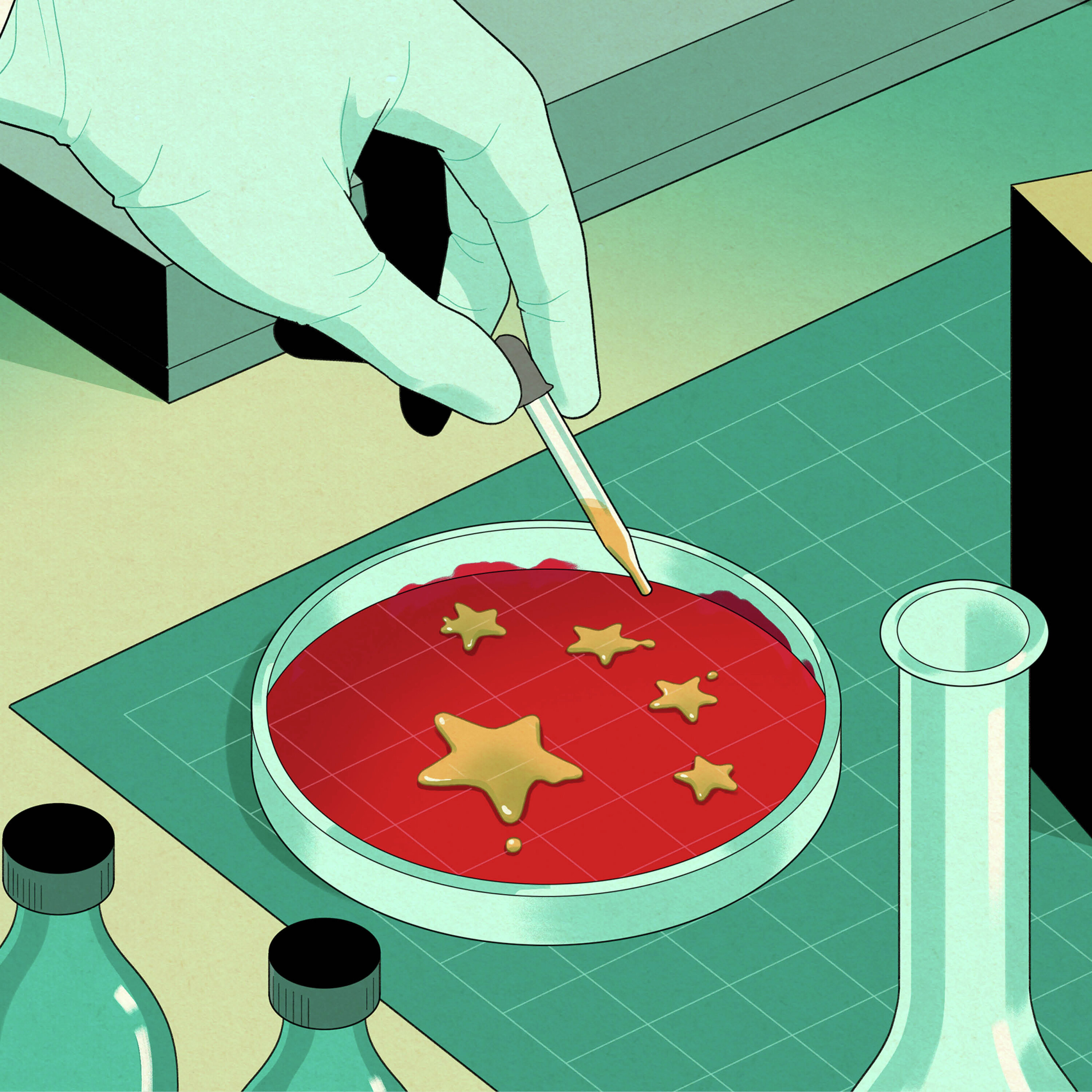
American pharma giants are increasingly turning to Chinese labs to discover, test and develop cutting-edge drugs.
On today’s Big Take Asia podcast, Bloomberg’s Amber Tong and Robert Langreth join Oanh Ha to break down why global drugmakers are sourcing their next big breakthroughs from China — and what that means for US biotech dominance.
Read more: Big Pharma Is Hooked on Chinese Licensing Deals
Hosted by K. Oanh Ha; Produced by Naomi Ng and David Fox; Guests: Amber Tong and Robert Langreth; Edited by Paddy Hirsch and Crispina Robert.
Fact-checking by Brunella Tipismana Urbano; Engineering by Alex Suguira.
Senior Producer: Naomi Shavin; Deputy Executive Producer: Julia Weaver. Executive Producer: Nicole Beemsterboer.
See omnystudio.com/listener for privacy information.
Get every episode summarized
Each time Big Take Asia publishes, we email you a written briefing from the transcript — the topics, who appeared, and any specific claims, with the ad reads skipped.
Email me new episodesFree for 3 shows. No card needed.
Know when Amber Tong turns up
Follow Amber Tong and once a week we email you every new episode they appeared on — including guest spots the show notes never mention, because we read the transcript.
Follow Amber TongFree. Pick your own day and time.
Hosts & guests
Transcript ready
248 searchable segments. Every word is indexed and playable.
Full transcript
Big Take Asia — Big Pharma Needs New Drugs. China Has Them. Machine-transcribed; use the interactive transcript above to jump the player to any line.
Some people treat Chachy PT like some kind of smart search engine, and some use it to get work done. Chachy PT work is a new way of working in Chachy PT that can take action across your apps and files, stay with a project for hours if needed, and turn a goal into finished work. It's designed to help you move from a chaotic starting point to a reviewable first version. So all the source materials, briefs, and scattered information that you have to grind through to turn into something useful can just become something useful. Put Chachy PT to work on your most ambitious ideas and projects. Get started at chachypt.com by selecting Work Mode, available on plus and pro plans. This is Robert Smith from Business History. If you're listening to this, there's a good chance you're a small business owner. And like every small business owner, you started with a dream to do what you love and watch it grow. What you probably didn't dream about, keeping up with cyber threats. That's where MasterCard can help, with access to tools that help identify cyber threats to better protect your business.
Building a dream business? Priceless. For cybersecurity in a changing world, there's MasterCard. Learn more at mastercard.com slash small business. If you listen to financial news, you know a lot of time to spend thinking about what's next. The next opportunity, the next investment, the next move. But sometimes what matters most is being ready for what you never saw coming. For more than 75 years, Cincinnati Insurance has worked with independent agents to help protect businesses, homes, valuables, and more. Because planning for the future isn't only about knowing what's next. It's about making sure you're ready for what you can't predict. Let Cincinnati Insurance make your bad day better. Find an independent agent at cianfian.com Bloomberg Audio Studios. Podcasts, radio, news. Every summer, doctors, researchers, and drug executives from around the world descend on Chicago
to attend an important medical conference. This is like the world's biggest cancer conference with 20 or 30,000 people in attendance. That's Bloomberg Senior Reporter Robert Lankrith. He's been covering biotech and health care for 30 years. It's called ASCO and this is one of the biggest forums for new drug studies to come out and cancer. This year, one of the most talked about drugs came from the American pharmacian, Merck. It already makes the world's best-selling cancer treatment. And the drug company has a new product in development that it thinks could become one of its most important cancer medicines yet. It's called SAC-TMT. That drug has become one of the cornerstone drugs that's testing. It's testing in 17 late-stage trials and lung cancer and breast cancer and other tumors. Merck is betting that SAC-TMT could treat a range of different types of cancer. But there's something unusual about it. Merck didn't discover the drug. A Chinese company did.
Merck licensed SAC-TMT from a Chinese company called Sutron Co-In Biotech. And this is a drug that is already approved in China. In fact, one of the reasons why Merck was so excited about it is because of all these clinical data that they already saw come out of China, that they believed offered evidence that the drug does work and is safe. Amber Tong covers Asia's bio-farmate industry for Bloomberg. She and Robert say China's become one of the hottest places in the world for finding promising new medicines. Novel drugs from Chinese companies now make up around a third of the development pipeline globally. Think of some of the big US drug companies. They're sort of like Netflix. They're kind of insatiable need for new content. And they found in recent years that China is a great place to go to to buy early-stage drugs at a lower price. And a lot quicker too. What one of the drug-comap executives said to reporters at one point is that they said literally,
you can go twice as fast at half the cost in China. This is the big tick Asia from Bloomberg News. I'm Wanha. Every week we take you inside some of the world's biggest and most powerful economies in the markets, tech hoons, and businesses that drive this ever-shifting region. Today in the show, why an explosion of new drugs are being developed in China? And what this could mean for the US's dominance in biotech? Merck's experimental cancer medicine, SAC-TMT, isn't the first breakthrough to come out of China. In 2024, a Chinese biopharma company called Akiso surprised the world with a new lung cancer medication. In a Chinese trial, it outperformed one of the most successful and profitable drugs on
the market. Merck's key true to treatment. And Robert says, at the big cancer convention this year, the innovation's Chinese biotech companies are making were front and center. For one of the first times, a drug exclusively tested in China in a phase three trial was one of the featured presentations there. There's a drug from some of their therapeutics that was licensed from a company in China called Akiso. And so the exploding number of drugs coming out of China was just a very big focus and topic of conversation at the conference this year. For decades, the biggest breakthroughs in medicine largely came from drug makers in the US and Europe. Chinese pharmaceutical companies were better known for making generic medicines and supplying ingredients for larger firms overseas. But Robert and Amber say that's changing. The companies there, historically, not too many years ago, working on generic drugs, been working on like they call it API active pharmaceutical ingredients. The raw chemicals
that go into some of the finished products, they wait on the value chain. But China is rapidly moving up the value chain. If we look at the whole universe of experimental drugs that are being developed around the world, depending on how you count between a third to a half of the pipeline came from China. So there's just a lot of innovation going on. There's a lot to choose from. Amber says the biggest turning point for China's biopharma industry came in 2015. China essentially overhauled its regulatory system for drugs and aligned China's standards more closely with international standards, streamlined drug reviews and kind of enforced quality control to really level the playing field for local drug developers. Around the same time, Beijing ramped up support for the biopharma industry. It pushed companies away from lower margin generic drugs and toward innovation. The authorities reformed the national insurance system to incentivize
innovative drugs and really squeeze the profit margin of generics. And that also kind of pushed even the older guard farmer companies in China to focus on innovative drugs because frankly, they could no longer make money on generics. But China's rise is only half of the story. The other half is what's happening inside the biopharma industry worldwide. Pharmaceutical companies are facing a so-called patent cliff where they will lose patent protection over the next few years and that would expose really important sources of revenue to generic competition. It's part of the reason pharmac giants like Merck are constantly on the hunt for new medications. Patents expire at different times depending on the country. An exclusivity can expire years before a patent does. Kichudo merks best selling cancer drug that we mentioned earlier, loses its US patent protection in 2028. That's potentially good news for patients, bad news for Merck, which saw more than $31 billion in sales from the drug last year.
So they have an urgency to kind of buy a lot of promising treatments with the hope that some of them will become top sellers that can plug the revenue gap. At any big pharma company, there's always a mix of what they call it, like in-house or internal innovation and external innovation. And decades ago might be a little more common for pharma companies to rely on their own drug discovery, drug development teams. But over the past decades, we've also seen big companies kind of rely more on smaller companies to kind of fill their pipelines. One of the most common ways they do that is through licensing deals. That's where a pharmaceutical company pays for the rights to develop and sell a drug discovered by another company. So that means they are getting the intellectual property. The seller would transfer the formula for the drug and all the related data
to the buyer. And then the buyer with all this know how can start to plan their own trials and manufacture them in their own facilities. And eventually if the drug gets approved, the buyer will be able to sell that drug under their brand name. The COVID vaccine sold by Pfizer, for example, came from a licensing and development partnership with Germany's buy-in tech. Another draw for big pharma is the structure of licensing deals themselves. Maybe only a small percentage of that money is paid up front, so it's much cheaper, and that makes a cost effective for the big pharma company. So they're very happy to pay. If you have an early stage draw, a license that for 500 million, pay, but it works for every type of cancer, sure we're going to pay you 10 billion years down the road. Today, a closer look at those deals shows China's outsized influence in developing new drugs. Last year, nearly half of global pharmaceutical licensing deals involve Chinese companies. That's up from just 16% in 2022. These deals have been done with Chinese companies rapid fire. So in May, Bristol buyers signed a collaboration. It was worth
as much as 15.2 billion with Hengrui pharmaceuticals co. Then just weeks later, Pfizer had its own deal with a different Chinese company, worth as much as 10.5 billion developed cancer drugs. And in that deal, Chinese companies also in charge of conducting initial trials. So there's increasingly, it's becoming like an early stage research arm of the US drug industry. That's one way that you could think of it. So why China? A big part of it is speed. China can move drugs through early development faster because it is huge patient pools and large research hospitals that can fast track this work. It's also found ways to streamline the regulatory processes that mirror the US food and drug administration's rules. US companies still need to conduct their own trials involving US patients under FDA scrutiny. But China's advantages help companies recruit patients and gather critical clinical trial data much faster than in the US or Europe. That means even drugs that might
be similar to what's being developed elsewhere. You can get the clinical data faster and that means you can potentially bring it to market faster. And for the drug industry, time is kind of money. Faster trials can make drug development cheaper. And pharmaceutical companies say China's often a cheaper place to acquire drug assets too. But in the race to secure the next blockbuster treatment, our American companies actually undermining their dominance of the biopharma industry. That's after the break. So there's a lot of noise about AI, but times too tight for more promises. So let's talk about results. At IBM, we work with our employees to integrate technology right into the systems they need. Now, a global workforce of 300,000 can use AI to fill their HR questions, resolving 94 percent of common questions. Not noise. Proof of how we can help companies get smarter by putting
AI where it actually pays off. Deep in the work that moves the business. Let's create small to business. IBM. A business gift is never just a gift. It's a thank you, a milestone, a moment of appreciation. It's a message about how much someone matters and what your brand stands for. At 4imprint, you'll find thousands of customizable options like premium apparel, branded drinkware, tech, totes and more, each chose and not just for function, but for meaning. You can tailor every detail, your logo, your message, your presentation, so your gift feels personal and on brand. And with expert support, dependable service and thousands without a setup fee, creating something thoughtful doesn't mean making it complicated. Every order is backed by 4imprint's 360 degree guarantee, so you can be 4imprint certain, it'll arrive exactly as expected on time and with the care your brand deserves. Because when the moment matters, the right gift speaks volumes, and the right partner makes it easy. Explore gifting with purpose and certainty at 4imprint.com.
4imprint. For certain. Let's talk about healthcare for a second. It doesn't always work the way people expect it to. If you've ever waited on a prescription refill or had a hard time getting the care you needed, you know the feeling. The system should just work better for everyone. That's exactly what the people at Optum are trying to do every day. They're a healthcare company linking patient care and pharmacy services and using data and technology to drive the whole system, so care is connected, not complicated, for patients and providers. Things like making it easier to get care that looks at the whole person from primary care doctors to mental health support and even in-home care, and then using technology to make sure they all work together. Technology designed to help doctors spend less time on busy work and more time with their patients. In those prescriptions, Optum is working to bring costs down, save patients money, and make it easier to get refills. Little by little, Optum is helping make healthcare work as one for everyone. Head to business.optum.com to see how.
US and Chinese drug makers have struck at least 32 licensing deals so far this year through July. That puts 2026 on track to surpass last year's record of 45. That's according to data from Bloomberg Intelligence. For many Chinese biotic firms, these deals offer something valuable. Here's Bloomberg's Amber Tom. The US is the biggest market for pharmaceuticals in the world, and if these Chinese companies, their drugs have the potential to be sold in the US that can become a really important and promising source of revenue. The Chinese biotic industry overall is still very young, and they lack the capability, experience, sophistication, what have you to enter the US or European markets by themselves. Take Sichuan Khorloon biotech, which we mentioned earlier. The company that developed the experimental cancer drug, Merck, is now testing. Just a decade ago, Khorloon's parent
company was best known for manufacturing IV fluids. But the US market isn't just about money or expertise. It's about access to something more valuable. Deals with Western companies, particularly with large multinational companies, help give validation for Chinese biotech companies, because the deals essentially serve as an endorsement of the ability of these Chinese companies to innovate. The American companies are paying real money to license their drugs, and that is for a lot of the Chinese companies a very important batch of honor to show their investors, to show the world that their innovation has passed the rigorous vetting of some of the largest and most premier companies in the world. And while Chinese and American biopharma companies see these partnerships as a win-win, some industry observers and lawmakers see the development
as a threat. Here's Bloomberg's Robert Lankriss again. The US drug industry, the US biotech industry, it's a world-leading industry. This is an area we've historically had a competitive advantage. My perception is basically a worry that the US industry will eventually be disadvantaged if they give away too much of their expertise and Chinese companies learn from them and then in the future, you know, don't have to license them to the US companies, they could just sell them themselves. I think that's the basic worry that there'll be Chinese drug giants, you know, making most of the money from these things in the future and not doing the deals, and then we could be trained them. For US drug makers, it could mean a slow erosion of their dominance. That could be bad news for investors in those companies, as more profits from blockbuster drugs made in Chinese labs could flow to Chinese firms. And then there's the question for lawmakers. What happens if an industry that's been the driver of biotech innovation and behind hundreds of billions in revenue becomes dependent on a geopolitical rival? As more and more high value
portions of the drug development chain go to China, the worry is if there's any geopolitical conflict, you know, we'll lose access to that crucial parts of the drug development chain, such as all important human clinical trials. And the early stages of those are increasingly being done in China and some of these deals. A big question that people are raising is what this all means for US biotech dominance and future access to medications. And this is a big if because we're really not there yet, but if the world becomes reliant on China to come up with breakthrough medical innovation, what does it mean for countries that don't have the best relationship with China, for example? These questions are hypothetical right now, but they're already making their way to Washington. Over the summer, members of both the Senate and US House of Representatives introduced bills that would subject biotech investments in China to greater government scrutiny.
If passed, that would put the biotech sector in the same category as other strategic sensitive technologies like semiconductors and AI. But even among lawmakers who viewed China as a growing threat, there's little agreement on what should happen next. I talked to a senator, a senator to young, said, hey, this is a threat is glowing red. But like what to do about all these deals, even among the China hawks, that's a subject could debate. And the counter argument against any kind of restrictions or review is that if a company in China invents a cure for a variant cancer, well, don't you want American patients to have access to it? So it's a tricky proposition because it would just like restrict or put some kind of restrictions on deals in US companies and Chinese companies. Well, the Chinese companies might just go to our European rivals and license it to like a company in Europe. So it's the intense debate right now and no one's quite figured out what the right answer should be. The geopolitical implications may not feel urgent yet. Drugs discovered by Chinese companies accounted for just 4% of FDA approvals over the past five years.
But more can Stanley projects that figure could rise to 35% by 2040. And it raises a more fundamental question. If a drug saves lives, should we care where it came from? In an ideal world, the only common enemy is the disease. Doesn't matter where the drug comes from. If it cures cancer, if it cures cardiovascular disease, if it saves people's lives, it's a good drug. And I believe that's what the scientists and the doctors are striving for. That being said, we unfortunately live in an imperfect world. And unfortunately, this topic has become almost politically sensitive. But ultimately, if I am a patient, I think at the end of the day, I just want a drug that works.
This is The Big Take Asia from Bloomberg News. I'm Juan Ha. To get more from The Big Take and unlimited access to all of Bloomberg.com, subscribe today at Bloomberg.com slash podcast offer. If you liked the episode, make sure to subscribe and review The Big Take Asia wherever you listen to podcasts. It really helps people find the show. Thanks for listening. See you next time. Why is the smart way to manage the currencies you need around the globe? When you send money abroad using your bank, you could get hit with hidden fees and exchange rate markups. Here's a better way. Try wise. Why is use the exchange rate you'd usually find on Google with no unwelcome surprises? Plus, most transfers happen in under 20 seconds, which means your money arrives in less time than you've been listening to me. It's simple and free to sign up when you
download the Wise app. Be smart. Get wise. Tees and sees apply. A business gift should do more than check a box. It should reflect your brand and show someone they're appreciated, recognized and truly seen. Four imprint offers thousands of high quality, customizable products like premium apparel, drinkware, tech and more, making it easy to create a gift that feels meaningful and on brand. And with four imprint experts support in their 360 degree guarantee, you can be four imprint certain your order will arrive exactly as intended. Explore gifting with confidence at fore imprint.com. Four imprint. Four certain. If you listen to financial news, you know a lot of time to spend thinking about what's next. The next opportunity, the next investment, the next move. But sometimes what matters most is being ready for what you never saw coming. For more than 75 years, Cincinnati insurance has worked with independent agents to help protect businesses, homes, valuables and more. Because planning for the future isn't only about
knowing what's next. It's about making sure you're ready for what you can't predict. Let Cincinnati insurance make your bad day better. Find an independent agent at CINFIN.com.
More episodes
More from Big Take Asia

Japan Hikes Rates, Reshaping Carry Trade
Big Take Asia

Is the US AI Reckoning an Opportunity for China?
Big Take Asia

How India Is Training the Robots of the Future
Big Take Asia

Deadly Flooding in Nepal Highlights Asia’s Climate Vulnerability
Big Take Asia