Get every episode summarized
Each time Fresh Air publishes, we email you a written briefing from the transcript — the topics, who appeared, and any specific claims, with the ad reads skipped.
Email me new episodesFree for 3 shows. No card needed.
About this episode
Fresh Air is made possible by:
“This message comes from a whole foods market where fall flavors await. Kozy picks all through the store like freshly baked pumpkin, turmeric bread and 365 brand cinnamon spice coffee and pumpkin spice creamer.”From the transcript
Ccritic at large John Powers reviews the new novel The Disappearers by Marlon James, which has been described as a masterpiece.
See pcm.adswizz.com for information about our collection and use of personal data for sponsorship and to manage your podcast sponsorship preferences.
NPR Privacy Policy
Get every episode summarized
Each time Fresh Air publishes, we email you a written briefing from the transcript — the topics, who appeared, and any specific claims, with the ad reads skipped.
Email me new episodesFree for 3 shows. No card needed.
Hosts & guests

Transcript ready
520 searchable segments. Every word is indexed and playable.
Full transcript
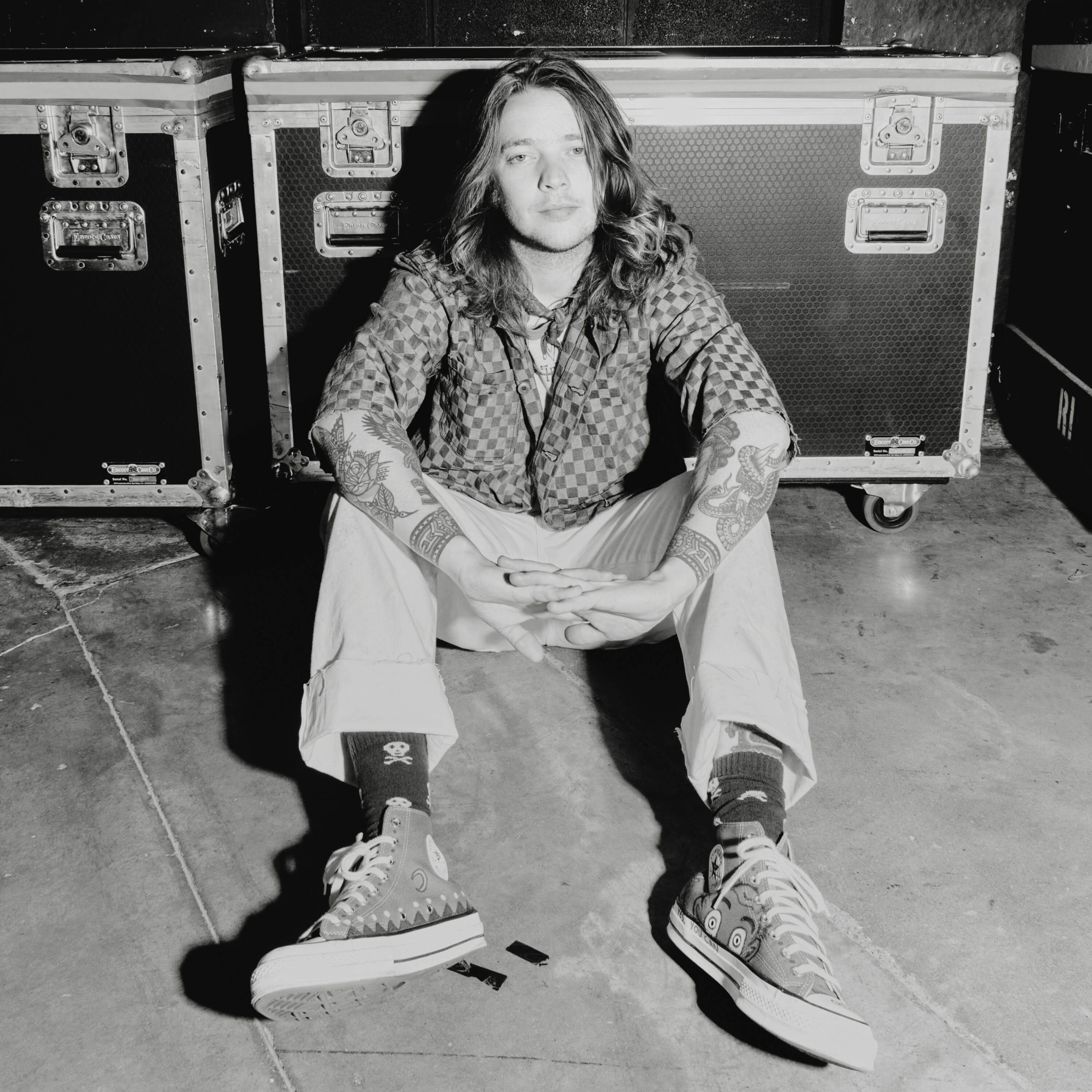
Fresh Air — Bluegrass virtuoso Billy Strings. Machine-transcribed; use the interactive transcript above to jump the player to any line.
This message comes from a whole foods market where fall flavors await. Kozy picks all through the store like freshly baked pumpkin, turmeric bread and 365 brand cinnamon spice coffee and pumpkin spice creamer. Spice Up Fall at Whole Foods Market. This is Fresh Air. I'm David Bean Cooley. Today, singer, songwriter and guitarist Billy Strings. He's one of the younger generation of musicians carrying the torch for traditional acoustic bluegrass. Even as his music incorporates exploratory improvisational jams and the occasional heavy metal guitar riff. He's been celebrated by both audiences and the music industry. His concerts fill huge arenas and he's won three Grammys. Highway prayers, released in 2024, is the first bluegrass album in over 20 years to reach number one on Billboard's All Genre Top 100 album sales chart. That album showcases the songwriting of Billy Strings and his terrific band.
He has a new album inspired by the death of his mother last year from an overdose. It's titled So Much For Good Buys. Here's the song Still I Crash, which he wrote about her. And my supposed to go on without you. Mother, where have you flown to? Come home so I can hold you. I'm learning to walk on on my own again. And I am still your one true friend.
Last year, Billy Strings released a live album with another ace bluegrass guitarist, Brian Sutton, called Live at the Legion. The duo performed in a more intimate setting than the arenas at which Strings usually plays. The American Legion posed 82 in East Nashville, playing a lot of music associated with Doc Watson. Billy Strings spoke with fresh air's Sam Brigger last year after that album was released. Let's hear the lead-off track from Live at the Legion, Nashville Blues, originally by the Delmore Brothers. These people here, they treat me fine. These people here, they treat me fine.
They'll feed me beer, they'll feed me wine. And I've got the blues. Those Nashville Blues. I've got the blues, those Nashville Blues. I ain't got no hair, ain't got no shoes. That's Billy Strings and Brian Sutton on the new album Live at the Legion. Billy Strings, welcome to fresh air. Hey, thank you so much. Could it be here? So, how did the idea for this show and album come about? Well, we did a live record. I don't know how long ago it was now, but we did one of our shows, you know, of our big jamgrass stuff in the arenas. It's just a different kind of energy, big psychedelic jams and big screaming audiences. A lot of my favorite live recordings are
tiny little small crowds where you can hear somebody knock over a beer bottle or you can hear the crowd what they're saying. Yeah, we just kind of pulled up into the Legion hall and they were really cool to let us do that. And we had a small crowd there and we played a bunch of music that we love. And Brian Sutton is, he's been one of my good friends for quite a few years now and mentors and heroes and he is one of the greatest guitar players ever. Yeah, he's a, he's like a generation older than you, but he's, I think he's perhaps like the go-to bluegrass session guitar player in Nashville these days. And so there's a long tradition of bluegrass guitar duos. There's of course Doc Watson and his son Merle. There's Norman Blake and Tony Rice and Tony Rice and his brother Wyatt. It seems like kind of like a no-brainer, just two people playing guitar together, but it's actually like a little tricky. Your instruments are right in
the same range, obviously. You're playing a lot of open strings. There's a lot of fast notes. It can, it can get a little muddy. Like what do you do so you're making sure you're not stepping on the other person? You just try to listen, you know, if he's down low, I'll go high or you know, there's things like that. You can do a lot of, a lot of these tunes too. A beautiful thing about Doc and Merle and T Michael Coleman. With those three instruments, they could make a big fat chord, you know. Like when they ended a song and they played a chord, it was just this huge chord because it's almost like hitting a piano in a couple different spots. You get these guitars to open up and sound big. A lot of this material comes from Doc Watson, like some of these songs or songs that are part of his repertoire. You said that most everything you do comes from Doc Watson. Can you talk about his influence on you? Yeah, he's like the ground upon which I stand, you know.
My dad played his music all around the house, growing up and by the time I could play guitar, you know, five, six years old, I was learning those tunes too. I might have been able to play some of them before. I knew how to tie my shoes or something. You know, it was like I was learning how to speak and talk and walk and I was learning all these Doc Watson tunes at the same time and it was just like a religion in my house. You know, his music is just, it's the best. I can hear some of his guitar playing in your playing. But what about his singing? Was that also influential? Like he didn't have a big range, but he was expressive and he is singing. I always think of his very crisp. I mean, I think his range was really kind of something to be told when you think about it. He had this great low baritone and he could also yodel and get up into that really high falsetto. But with Doc, it was always just spoken. It was always the information of the song
came through and the conversation of it. People like him, people like Willie Nelson, people like Dolly Parton, these really great storytellers. When they're singing, if you see Dolly Parton on TV singing and you press mute, it just looks like she's talking to you because she is. She's telling the story. That's one big thing that one of my vocal coaches that I've been working with. One of the big things that I took from some of those lessons was just give me the information. I get on stage and I sing and I'm so worried about the pitch. Is it in my singing good? Is the tone good? Am I singing right? How's my timing? It's like taking the kids to the park and you're scared to let them go down the slide because you don't want them to get hurt. It's like, geez, let them play. If you focus on the story and telling the words, it's just like, I know where the pitch is, I just need to tell the story. So you're doing that more?
Trying to. It's easier said than done. All this stuff, all the music, kind of zen, mindful stuff that I've been getting into. It's kind of the inner game stuff. You know, I mean, I'm high strong. I got a lot of anxiety and stress and I'm moving around a lot. I've been really busy the last several years and I got a lot of my own personal stuff that just haunts me on a daily basis and I try to do everything I can to just be cool and get my nervous system to chill, but it just seems like I don't know what I can do to calm it. I do the best I can and I'm doing okay, but it's a daily struggle to just stay on the ground. Does playing guitar helpers playing guitar caught up in all of that stuff because that's what you do for a living? It depends on what kind of playing guitar. If I'm on stage, that's where the joy is.
That's where the fun is. If I kind of ride myself pretty hard about practice off stage, well, let's talk about that. I noticed on social media a year ago or so, you were popping up endorsing this online guitar program and talking about how you felt like you'd reach the plateau and you wanted to get better and get out of that. So what was going on? The more I play shows, the more shows I play in a row, the more you can drive yourself back into these old default kind of almost like a rut of playing licks you always play or playing. You almost get sick of hearing yourself play the same thing and you're just going, oh, this is I'm not impressed. I'm not impressed with myself. I think there's something really honest about you talking about that because here you are you're playing for tens of thousands of people. You're an incredible guitar player and yet you still
want to improve and you care about your craft and you're willing to talk about. I imagine there's people who are famous guitar players too who take lessons but they probably wouldn't talk about it. I don't know. What do you want me to say? I've always thought I sort of sucked because I'm me. I'm going to be my own worst critic always but I'm just, yeah, of course I'm going to talk about it. I mean, it's kind of interesting. It's like I never really took lessons. I just learned how to play from hanging out with my dad and listening to him play with my old Brad Lasco, my uncle Brad and and I kind of just was seeped in this Monroe and Stanley brothers and flat and scrugs and Larry Sparks and Jimmy Martin and Osborne brothers and you know, of course mainly Doc Watson and I was kind of just soaked in that and marinated in that since I was a little kid and that's how I
just heard everything. It's kind of how I hear music but I never I never took any lesson. I still don't know what a harmonic minor is. I don't know what the word like diatonic means. I have no freaking idea. Bala Fleck says, hey come play on my record and I'm sitting in a room with Bala Fleck and Edgar Meyer and Chris Theley and they're saying, oh yeah, it's just, you know, this is in they're counting with all these numbers and letters and hieroglyphs and all sorts of stuff and I'm just like, man, I don't even know what any of this means. I just know the song goes, duck, a duck, a duck, a down, down, duck, a duck, a duck, a bow, duck, a down, down, down, down, down, down, down, down, down, down, down, down. That's how the song goes to me. I couldn't tell you at a math equation. Well, Bill, if you would wouldn't mind doing another song for us that's one of your favorites. I could do a... I told you on a way over here. I was listening to that bear's sonic journals. Doc and Merle, team Michael and man they were sounding good and they were doing this
number here. It's called the Brownthrae Blues. I could do a lot of the Brownthrae Blues. Hard but perfect, you can do 10, you don't think you can have the correct load load. I could do a lot of the Brownthrae Blues. Take a look and take a look at it. You can walk a block and take a look at it. I could do a lot of the Brownthrae Blues.
I could do a lot of the Brownthrae Blues. I could do a lot of the Brownthrae Blues. Say you learn a little collute that a hook and a got his foot. No load load, a got his Brownthrae Blues. Hard luck pops, 10 and a man in the world was corn. You couldn't buy grain load load, a got his Brownthrae Blues. Walk around and see if he goes and his foot is fever and he goes. No load load, a got his Brownthrae Blues.
So, Billy, last year you came out with your album, Highway Prayers. I wanted to play the second song from the album in the clear. This song is in the long tradition of happy sounding up tempo bluegrass songs with really depressing lyrics. Can you talk about writing it? Yeah, I mean, I don't know. I think this one was one that I wrote with my buddy Aaron Allen. He's a frequent collaborator. Me and him and John Wiseberger get together a lot of times and we've written quite a few songs together now. But as soon as I started reading some of the words, I could hear it in my head. It happens like that a lot of times. Even if I write something down, I'm thinking of the music as I'm writing it. It's like I write with the melody. This is a second song from the album in the clear. Why don't we hear this?
I'm supposed to go through it. I'm a songwriter now before I'm in the clear. That's the song in the clear from our guest Billy Strings 2024 album, Highway Prayers. And this is with the band that you've been with for a while now. It's Billy Failing on Banjo, Jared Walker on Mandolin, Royal Masat on bass and a newer member Alex Hardgraves on Fiddle. Well, Billy, if some of your songs deal with some pretty heavy subjects that you've dealt with in your life, including losing friends to suicide, family and friends who are dealing with addiction, feeling neglect when you were a kid, when you write songs about that stuff,
is it helping you process those experiences? Is it easy to sing about that stuff once you've written the songs? Sometimes it's hard. Sometimes it is definitely a... That's how I felt when I was sitting on stage the night my mom died. It was cathartic. It's cathartic. I've had songs that I've written about something totally different that I didn't realize I wrote for myself until a month later. I write these words thinking that I'm giving some information to some people that might could hear it. Really, I'm the one that needs to hear it. I wrote that for myself so that I could heal. Now I go sing it on stage. There's also been songs, stratosphere blues, and I believe in you. The other night I was singing that on stage.
Like I said, I wrote that before my mom had died. Now singing it after is just different. It's like I knew something or something. I'm sorry about your mom passing away. She died this last June. Would you mind singing a verse of that? I could try. Let's see. Come on out from under and just take it day by day. It's true. I believe in you. Took a walk to wonder and I wandered on a thorn. It's kind of hard to get through all the
things we haven't been taught. It's true. But I believe in you. After all the years of medication, it feels good to get your life on track. Long as you live, I'm sorry to tell you. You never get that monkey off your back. Yeah, something like that anyways. That's a beautiful song. Thank you for playing that. No problem, yeah. Singer, songwriter and guitarist Billy Strings speaking with Fresh Air Sam Brigger last year. Strings has a new album so much for goodbyes inspired by the death of his mother last year. We'll hear more after a break and critic at large John Powers reviews the new novel The Disappearers,
which has been described as a masterpiece. I'm David being coolly and this is Fresh Air. We'll break open until it remains. This message comes from Granger. This is the story of the one. As a procurement manager for a hospital system, she keeps every facility in her network stocked and ready. That's why she counts on Granger to be her single source for thousands of products from disinfectants to lighting, air filters, and more. And with fast, dependable delivery, Granger helps her keep every facility stocked, save, and running smoothly. Call 1-800-Grainjer, click Granger.com or just stop by. Granger for the ones who get it done. This message comes from BetterHelp. Imagine carrying a backpack every day. Inside it, every conversation, every mistake, every expectation. It is easy not to notice how heavy
it is until someone asks if you want to put it down. Sometimes feeling better starts exactly like that. Better isn't one size fits all. Better as personal. It's therapy tailored to the individual to help lighten what you carry. Match with a therapist who truly understands. Visit BetterHelp.com slash NPR. This message comes from NPR sponsor Charles Schwab. Financial decisions can be tricky. Your biases can lead you astray. Financial decoder and original podcasts from Charles Schwab can help. Download the latest episode and subscribe at Schwab.com slash financial decoder. This is Fresh Air. I'm TV critic David B. Inkouli. Let's get back to Fresh Air's Sam Briggers interview with Grammy Award-winning singer, songwriter, and guitarist, Billy Strings. He's both an innovator in the world of bluegrass and someone with a great knowledge and respect for that music's history. That mix of innovation and tradition in his music
is one of the reasons he's got such a large fan base from bluegrass traditionalists to heavy metal fans and folks you see at a grateful dead show. He has a new album titled So Much for Goodbye's inspired by the death of his mother last year from an overdose. Well, Billy, when your mom died this last June, I think you heard in the morning and you had a gig that night you decided to play it. You got on stage and you made a, obviously, emotional announcement about it and you said that your mom would have wanted you to go on. She wouldn't have wanted you to cancel the show. Why is that? The only reason she died is so she could space travel and be there. She was at all the shows. She was always in the mix right up front. She'd show up in New Orleans or Seattle or somewhere and I wouldn't even know she was coming. She freaking hitchhiked there. She walks in my green room. What the hell? You didn't even tell me
you're coming. She was just a wild one and she was really living her best life in this last little bit. She had become quite involved with a lot of my friends and fans that go to every show and in the lot and stuff and she became really close to a lot of these people. I was always had mixed feelings about that. What do you mean? Well, I wanted her to go have fun and be doing whatever she wanted to be doing but I worried about her running into the wrong people or she's been an addict my whole life and had short stints where she was doing pretty good. I love to see her out there and hanging with all the fans but at the same time I was a leery of them. I would go over to visit my parents house and there would be the fans there that I see in the front row of my concerts all the time. People you knew or did it or just knew as fans? Mostly I just recognized them from the crowd
and then I get to know them because they're hanging out with my parents or something but you know and what am I supposed to say? Like don't do that. I don't know they're growing people but I don't know. She was getting older and I kind of just had this vision of her in my head that I wanted which is stupid. It's not realistic to try to come up with somebody else's life in your brain but like I just wanted her to have a garden and my dad 70 years old she was 64. I was like man, you guys should be settling down. Don't you think? Instead of raring and tearing and going and eating all these rooms and going all these concerts and then she did get wrapped up in the wrong stuff and that's why she's not here anymore. This might be too personal. Did she overdose? Was that? Yeah. I'm sorry. Yeah and it's messed with me in my whole life and now it's going to mess with me for the rest of it. You know I have complex post-traumatic stress and I have
anxiety and depression and I have for years tried to deal with this stuff just that happened to me when I was a kid. You know it wasn't just being neglected and they're not being food in the house and you know my parents being strung out and I miss them even though they're sitting right in front of me and it's like while they were partying and you know stuff like that I was around the corner being molested you know before I was 10 years old and all that stuff you know and I've had to deal with that you know and it's it's a really hard thing because there's such beautiful people and they taught me so much about music but yeah their addiction has been really hard on me for my whole life and and it still is and really triggering to lose her in this manner you know. One-sorry I hope talking about it is not triggering any hard feelings for you right now. I got to talk about it because it's like my whole life I've had to keep a secret in order to try
to not make them look bad you know like even when I was in high school I spoke to a counselor one time I mean I was I was in 10th grade but I was couch surfing I didn't live with them you know I moved out when I was like 13 because the house was no longer a home they were strung out and it's a wonder if I was even going to school and one time I got pulled into a counselor instead of the principal's office you know and and they said what's going on you know and I finally just they told me anything I say is between them and it won't leave the room and I said yeah my parents are on meth and I don't even live there and my house got rated right after that you know that same day five state cops came up rated the house I almost sent my mom to prison because I opened my mouth and from then on I never said to anybody about anything I've just it hurts me but what hurts me is I've always just been worried about them you know and I've always wanted them to be good and when I say be good I mean to be well and happy and and have some sunshine in their life you
know a few years ago I was able to buy them a home my parents and stuff was good for a while but you know it it just yeah it really breaks my heart that that it went back to this and now she's gone and so I think my duty here is to continue doing what I'm doing for one thing use all that beautiful energy that I get from her that crazy wild streak I got to use that and you know honor her in that way and I feel a great kind of duty as far as just writing down these words making these songs for people to heal from and also you know who knows maybe someday I'll actually be able to help kids that are in the situation that I was in maybe I'll be able to help their parents you know like open a rehab or something or something like that to just to help combat this because it's it's really hard you know yeah are you taking some time for yourself it right now like are you are you able to
take some time off the road and you have a young family now that's also that's a yeah they're with me on the road oh they go with you on the road yeah man so so yeah I got the whole the whole gang and and we're out there traveling and it's it's really cool it's awesome and so yeah I've just been leaning into that leaning on my my family you know my band let's hear one of your songs from highway prayers which is all about being on the road leaning on a traveling song and this starts out with some great bluegrass harmonies and also some really terrific fiddles playing together so let's hear that where the air is clear and road is straight all the choices have been made I'll keep rolling right along leaning on a traveling song
you see effects I'm just don't thank you let me wear That's leaning on a traveling song from Billy Strings from his album, Highway Prayers. We'll hear more of his interview with Fresh Air Sam Brigger after a break. This is Fresh Air. This message comes from Granger. This is the story of the one. As a maintenance supervisor at a manufacturing facility, he knows keeping the line up and running is a top priority. That's why he chooses Granger. When a drive belt gets damaged, Granger makes it easy to find the exact specs for the replacement product he needs. And next day delivery helps ensure he'll have everything in place and running like clockwork.
Call 1-800-GRanger. Click Granger.com or just stop by. Granger for the ones who get it done. This message comes from Total Wine and More. Getting excited for football season? Let Total Wine and More become a part of your game day routine. Put the cooler ready with your favorite beers or ready to drink cocktails. Pick up enough for everybody and always score the lowest prices. This season make Total Wine and More part of your game day tradition. Spirits are not sold in Virginia and North Carolina. Drink responsibly, B-21. This is Fresh Air. Let's get back to Fresh Air Sam Brigger and his interview from last year with singer, songwriter and guitarist Billy Strings. He has a new album titled So Much For Good Buies. We already talked about Doc Watson and I wanted to ask if you play a tune that maybe was one of the earlier songs that you learned as a kid. Yeah, when I was a kid I mostly just played rhythm.
So I'll give an example of that. My dad, he would play this. That's the fiddle tune Beaumont-rag. Yeah, and so I would play. That's how I started and that's what I did for the first few years of playing. I was my dad's rhythm player and that gave me a chance to listen to how the songs worked, to just stay there in the bass notes and listen to the melodies and listen to the harmonies,
how the vocals work together. That bluegrass harmony just seeped into my ears. But around I got an electric guitar, a little mini squire strat and a Pignos amp for Christmas one year. I think I was probably nine or ten or so. And that was my first time really trying to play solos and stuff like that. But it was more, I was getting into Hendrix and I was playing more. You know, guitar center stuff. When I got into middle school I wanted to play with people that were my age. I'd always played with my dad and his friends and some of them were much older. And I just wanted to play music with people that were into the same stuff as I was, like skateboarding and video games, whatever. And so the only thing that was really going on in my middle school at the time was heavy metal. And I went to a couple of shows and I just hated it at first. It was like, this is not music. You know, I don't know what this is, but it ain't music.
But I just, I fell into that friend group and then next thing you know, I started, I acquired a taste for this music and then I fell in love with it. But after my bands kept breaking up and falling apart, I kind of got back into Doc Watson at this time and just bluegrass in general. This would have been around the time that stuff was really rough around the house. I remember specifically stealing my mom's old chevelle one day. How old were you? 14, 15. You know, because I'd go over to my parents' house and hang out with them and stay there and party and it's not like I just totally left and disowned them. I just, once I realized stuff wasn't going to change, I mean, I didn't end up really moving back there, but I'd go there for a weekend and hung out there a bunch, but I didn't. It wasn't like my home. And so yeah, I stole my mom's car one day when I was just sitting around getting drunk by myself and that's how bored I was and that's how kind of there was nothing to do in this town. There's 600 people that live here.
There's nothing to do. So I was just getting drunk during the day and I stole my mom's car and I went down Hayes Road, this old country road with cornfields on either side. And man, I put the pedal to the floor and I just, I was gone and that corn was just a blur on either side. And there was a tape sticking halfway out of the deck and I pushed it in and I'm like, I wonder what my mom's listening to, right? And then this is what came on. I was in those heavy metal bands and all this stuff and I hadn't really been listening to Bluegrass pretty much, but I was kind of heartbroken at the way my life was at the time. And when I heard... You know, Rank Stranger came on, that's what my mom had in her tape deck.
And I just started slowing that old car down until I came to a complete stop and I just pulled over on the side of the road and I started crying. And I was drunk, you know, but this song hit me right in my heart. In that moment I was like, what am I even doing in these heavy metal bands? Bluegrass is where my heart is. It's, this is the music I should be playing. And at that time I just, I started hunting for an acoustic guitar, you know, and my friend Zach had one and one of the first tunes I learned how to actually pick. How to play the lead on and stuff is to think called nothing to it and goes like this.
Is that one of those licks that you're now tired of or are you still like it? Oh, I love it. I mean, yeah, it's still the best. I mean, any of that Doc Watts and stuff. You decided at some point that like playing guitar was your way out, was kind of like your salvation and a way to get out of the kind of life that your mom and dad were leading. But what point though did you sort of realize like this could, I could make a living doing this. I could really get somewhere or hopefully get that wasn't until I was about 18 years old or so. Well, when I graduated high school, I was kind of in this situation where it was like, okay, I need to get out of Ionia because nothing's happening here and I'm just going to end up going down a bad road if I stay here. I'm going to end up OD'd or in prison or you know, it's just, it did not look good.
The way I felt is in Ionia it was black and white gray. And I moved up to Traverse City, Michigan, a friend of mine, Brendan Lauer, blesses beautiful little heart. He had a room and he said, hey man, you want to come stay up in Traverse City? We need a roommate. Hell yeah. I went up to Traverse City man and all of a sudden it was like technical or it was like beaches and there was like micro breweries and art galleries and people like singer songwriters and there was like coffee shops and people were into like art and stuff. So I started doing a couple open mic nights up there just messing around because this is when I was studying Doc Watson kind of heavy again. I had, I got acoustic guitar and I was just sitting at home posting myself with no shirt on freaking YouTube or whatever. You know, I'm trying to show off my new tattoo. But I went and did some open mic nights up there and man I played black mountain rag or something and I got a standing ovation and I go, whoa, holy crap.
It's like, he's either love Doc Watson or they've never heard anything like this before. Your dad taught you how to play guitar. Have you picked out a guitar for your son yet? Do you plan to teach him the way your dad taught you? He's already got one that he just bangs on the floor. I gave him this Martin Dreadnot Jr. used to be my guitar. I just practiced on the bus and stuff and I took tape and I covered up all the Pokey parts on where the strings are on top and I wrapped them real good so he can't poke himself on that. Yeah. He's just banging on it. But I sing for him all the time. It's always the best. I remember that first night when we got home, the night of my 30 second birthday, the first time I was able to be at home with my son and I held him and I sang this little song. I'll sing a bit of it for you. He went to sleep in my arms when I was singing this to him and it's probably the best moment of my entire life.
Besides maybe just the moment he was born. But there's this little lullaby. And I sang that to him and he fell asleep.
That was like the best. So Billy Strings, I want to thank you so much for coming on Fresh Air today. I thank you for having me. The new Billy Strings album is called So Much For Goodbye's and was inspired by the death of his mother last year. He spoke with Fresh Air Sam Brigger in 2025. Special thanks to Brian McGlin at Audio Productions in Nashville. Coming up, Criticat Large John Powers reviews The Disappearers, which has been described as a masterpiece. This is Fresh Air. This message comes from Granger. This is the story of the one. As a maintenance supervisor at a manufacturing facility, he knows keeping the line up and running is a top priority. That's why he chooses Granger. Because when a drive belt gets damaged, Granger makes it easy to find the exact specs for the replacement product he needs. And next day delivery helps ensure he'll have everything in place and running like clockwork. Go to www.GrainJour.com or just stop by.
Granger for the ones who get it done. This message comes from Total Line and More. Getting excited for football season? Let Total Line and More become a part of your game day routine. Get the cooler ready with your favorite beers or ready to drink cocktails. Pick up enough for everybody and always score the lowest prices. This season make Total Line and More part of your game day tradition. This are not sold in Virginia and North Carolina. Drink responsibly. B21. This is Fresh Air. In his new novel The Disappearers, the Booker Prize-winning author Marlon James chronicles the events surrounding a vicious anti-gay attack in Jamaica in the late 1980s. The New York Times book critic Dwight Garner declared the book a masterpiece, calling it the novel of the decade and possibly the century thus far. Our critic at large, John Powers, says that the Disappearers shows James to be one of those writers you just have to read.
The fantasy of Jamaica is of an outpost of pleasure. With shimmering white beaches, James bonds seducing sexy women in mountain resorts, and Bob Marley singing his gorgeous songs of unity and love. But if you're gay, you know that Jamaica has long been known as probably the most dangerously homophobic country on earth. That reality forms the backdrop to the Disappearers. The blazing new novel by Marlon James, the gay Jamaican writer who won the 2015 Booker Prize for a brief history of seven killings, and will probably win again for this one. Giving us, as one character says, the Jamaica underneath the Jamaica we know, this fiercely personal book doesn't merely tell a story. It carries you off like a title wave. Starting with passion and ideas, history and wit, graphic sex and graphic violence, the book howls with so much pain and anger that it says if James wrote it with his own bodily
fluids. Spending the age-shadowed years from 1988 to 2005, the Disappearers is tricky to describe because it's divided into five parts, each with a different tone and central figure. It begins in high spirits with the diary of Eddie Portius, a white-skinned, biracial student who lands a role in the production of an openly queer play. There he meets the three other key characters, handsome Matt Chin, a mysterious soul whom Eddie fancies, the velvet jacked head have locked Titus, the worldly older man who's directing the play, and above all Jordan Brown, a cynical would-be sexual outlaw who's been thrown out of his home and lives by hustling. All their lives change when a rehearsal is set upon by a gay hating mob that's led by a famous reggae singer and includes guys trying to exorcise their own homosexual feelings. These louts batter the cast and crew with billy clubs and tire irons, gouging out one victim's
eyes and murdering another, sexually desecrating his body. When the survivors get taken to the hospital, they're treated coldly by medical personnel who believe they deserve their wounds for being baddy boys, as gay men are insultingly calm there. While this vicious assault is only a tiny part of the book, James makes it indelible, and far from gratuitous, like such towering modern novelists as Gabriel Garcia Marquez, Tony Morrison, Roberto Bologno, and Eleanor Feronte, James uses physical violence to explore social violence, the structures of oppression that its victims must fight to survive. Indeed the majority of the disappears follows the main characters as they try to cope with what's befallen them, often tying themselves in emotional knots, some like Matt simply vanish with Eddie and Jordan trying to find him, but the others disappear in different ways, lying low, going into exile, getting aides, making a protective heterosexual marriage,
sinking into madness, or setting out on a secret path of dragon tattoo style vengeance. Jordan, who says he wants to kill the bleeping world, has a searing encounter with one of the men who brutalised him. But disappears makes you feel in your gut how scary and isolating it was to be gay in 80s Jamaica, a land so homophobic that parents demonize their own children and crowds cheered on the cops who beat them. Yet if James's main achievement was to simply show this bigotry, or to suggest it is wrong, his novel would be no greater than an article in the Atlantic, or an earnest Sundance movie. In fact, what makes the book unforgettable is the raw energy of James's storytelling, his ability to conjure up all the many textures of lived experience, including hope. He takes readers deep inside his characters and deep into their world, from the local nuances of skin colour and class, to the way that fear can actually heighten sexual
pleasure. James evokes the precise atmosphere of a Kingston gay bar, the luxuriously debauched layer of a pedophile gay diplomat, and the post-apocalyptic vibe of the gully, the underground drainage ditches where queer youth in demonic Mad Max garb take refuge after being thrown out of their homes. Now, at times, James feels his story so intensely that some sections go on a bit too long. But I don't mind that in a book whose epic ambition carries this from Kingston, to 60s London, to 21st century Miami, and back again to Jamaica. The disappears plunges us into darkness, and makes us feel how it is to live and to love within it. At one point the director have-lock addresses himself to an imaginary audience of first world gays. Your biggest fear, he says, is that you will be rejected. My biggest fear is that I will be burned to death.
John Powers reviewed The Disappearers, the new novel by Marlon James. On Monday show, actor Kyle McGlockland, he launched his career with the starring role in David Lynch's Dune and a multi-picture deal. Dune flopped, the deal was canceled, but McGlockland became a star with his leading roles in Lynch's Blue Velvet and Twin Peaks, and they became lifelong friends. He has a new memoir, join us. For Carrie Gross and Tonya Mosley, I'm David B. Euclid. This message comes from Instacart. Instacart knows not all bananas are created equal. Some want them green, some ripe, some want them ready right now. With Instacart's preference picker available at most retailers, you can choose preferences like avocado ripeness or deli thickness before your shopper starts. So instead of hoping for the best, you get groceries picked the way you would pick them. Download the app and get bananas just how you like with Instacart.
This is Ira Glass. On this American life, we tell stories about when things change. Like for this guy David, whose entire life took a sharp, unexpected, and very unpleasant term. And it did take me a while to realize that this is basically because the monkey pressed the button. That's right, because the monkey pressed the button. So surprising stories every week, wherever you get your podcasts.
More episodes
More from Fresh Air

Best Of: Rhiannon Giddens / Investigating Diddy’s Rise & Fall
Fresh Air

Investigating the system that protected Sean “Diddy” Combs
Fresh Air

Global power, rivalry, and A.I.; a preview of the U.S./China summit
Fresh Air

Inside the 'modern slavery' where cyber scammers are victims themselves
Fresh Air