Get every episode summarized
Each time The Slow Newscast publishes, we email you a written briefing from the transcript — the topics, who appeared, and any specific claims, with the ad reads skipped.
Email me new episodesFree for 3 shows. No card needed.
About this episode
The Slow Newscast is made possible by:
“Mod.com is changing the way people battle excessive fatigue. Ever hit a wall in the middle of the day and the third coffee just doesn't do it anymore? Coffee only briefly blocks a denocene, the chemical that tires you out.”From the transcript
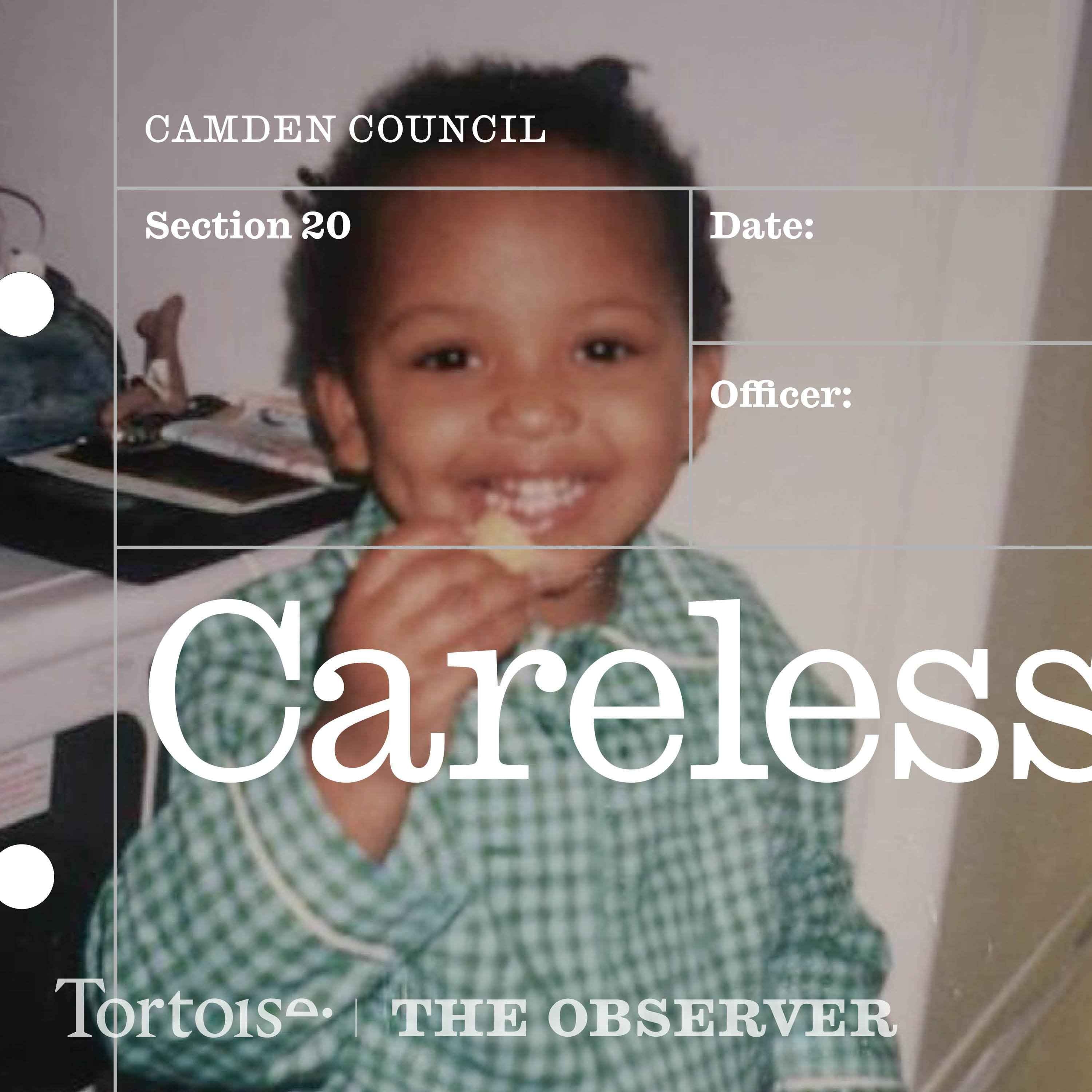
Nkechi Simms is a successful actor who’s had parts in Top Boy and BBC comedy PRU. Outwardly life is good and at 26 she’s got everything going for her. But this hasn’t always been the case. When she was 12 Nkechi’s mother handed her over to Camden Council and she was placed in foster care. Now she wants to find out what happened to her and why. The only way she can do this is by getting hold of her care records. But that’s easier said than done. And will those records answer her questions?
Careless is a 4 part original series from Tortoise Investigates and The Observer.
To binge listen to all episodes today, ad-free, subscribe to The Observer.
Or subscribe to Observer+ on Apple Podcasts or Spotify to listen to all our podcasts, including this one, without any ads.
Reported by Ashley John-Baptiste and Madeleine Parr
Produced and written by Madeleine Parr
Sound design by Simon Panayi
Artwork by Jon Hill
The editor is Jasper Corbett
Hosted on Acast. See acast.com/privacy for more information.
Get every episode summarized
Each time The Slow Newscast publishes, we email you a written briefing from the transcript — the topics, who appeared, and any specific claims, with the ad reads skipped.
Email me new episodesFree for 3 shows. No card needed.
Hosts & guests

Transcript ready
458 searchable segments. Every word is indexed and playable.
Full transcript
The Slow Newscast — Careless. Machine-transcribed; use the interactive transcript above to jump the player to any line.
Mod.com is changing the way people battle excessive fatigue. Ever hit a wall in the middle of the day and the third coffee just doesn't do it anymore? Here's what's actually happening. Coffee only briefly blocks a denocene, the chemical that tires you out. When it stops working, your system is flooded and you crash. Medaphinell is a prescription treatment that works in a completely different way. Ephano works by stimulating multiple receptors in the brain associated with wakefulness, including dopamine, serotonin, noripinephrine, histamine, glutamate, and erexin. It's a more complete solution that gives you 10 to 12 hours of steady focus and energy. To learn more, go to mod.com. Fill out your intake form, meet with a licensed provider, and if approved, modeler ships straight to your door. Go to mod.com to get started. That's m-o-d dot com.
The kids really love that playhouse, huh? Yeah, it's not just a child's playhouse. It's a rental property. Kids, off-carries roof! Someone lives in there? Lives, works, and thrives. Your wife, I reaches all the way to the playhouse. We're good galee nairs. It reaches everywhere. Can I check it out? Sorry. But solid, but the treehouse just opened up. Live without limits. Get home internet from AT&T and cover your whole house. Even your playhouse turned rental property. AT&T extended Wi-Fi coverage service required. Limited availability. Visit ATT.com forward slash internet to learn more. The observer. Hello, it's Basha Cummings and you're listening to the Sloan newscast from The Observer. This week we've got a new series for you over on our Tour to Symbasticae's feed. Episodes will be dropping over the next month, or you can subscribe today wherever you're listening and get all four episodes straight away.
For young people who leave care, life can be hard. Just 13% go to university, and a third become homeless within two years of leaving care. Unemployment rates among care leavers is high. And there's an even darker side to this too. Among care leavers aged 18 to 24, the death rate is up to four times higher than for the general population. And all of these statistics, which are tethered to real lives, reveal something about the way that we treat and protect some of the most vulnerable people in our society, and how we as a state care for the children entrusted into it. Several months ago, the broadcaster and journalist Ashley John Baptist came to us with the story of a single care leaver who was fighting to get hold of her records. Fighting, I should probably say, to get the state to release to her the story of her own time and care through documents, files and assessments that they held on her.
Ever since, Ashley, along with our producer Madeline Paar, have been following the story of Ketchy Sims, to understand the care system, how stretched it is, and a life story hidden in the records over to Ashley. Welcome to Camden. Everything sort of happened in Camden. Camden is the heart of my story, I'd say. The Ketchy Sims is walking the street where she grew up, a stone's throw from the borough's famous market. It's full of tourists and buskers, and for Ketchy, memories. This is the door, pretty magical. It didn't look like this when I lived here. The door would be blended in to a big mural, and there'd be people sat here in Chinese.
Well, yeah, I have lots of happy memories living in this flat. My best friend at the time lived downstairs. So we had lots of fun. I feel like I had teenagers. You've got your best friend living downstairs. You're living in the centre of Camden, so we got up to a lot of trouble. But everything is so different now, but I still love it. It's still my Camden. And there's the buildings in the graffiti of the borough have changed. So too has the Ketchy. When I was 18, I used to work at that pub behind me for 6 pound 20 an hour. I didn't have any GCSEs. And I actually cried outside my job interview at the time to my boyfriend. I was like, I'm not going to know what to do. I can't do it. And he was like, they're going to train you. It's going to be fine, but I had such little self-confidence that I just thought it was going to be terrible. And I mean, it was terrible, but I did it and I survived it. Ketchy has come a very long way from the teenager, crying outside a pub before her first shift. In fact, she's a bit of a big deal now. I wanted to be an actor from when I was a kid.
I was very playful and silly and creative. And I think also my mum really enjoyed watching TV. And so when I think back to my childhood, some of the best memories of my mum would be when we would be called up on the sofa under a blanket, watching charmed and hestanders. She didn't just like the idea of acting. She was actually good at it. At 11, her man managed to get together the money to send her to a drama school on the weekends. Everyone else be dropped off by their mums and their ranger overs and I'd just be there having got like a train and a bus all by myself at 11 and like showed up and done my best. But then as I got older, life got harder. My reality became a lot more difficult and suddenly acting felt very silly. Don't have time for that. I've got real world problems and so yeah, by 12, 13 I was sort of involved in other things that meant acting felt
ridiculous. Her ambition to act gave way to some really turbulent years. But then when she turned 19, someone recommended a youth theatre group to her. I got kicked off the first project for fighting, but they welcomed me back and they kept working on me and I just needed to channel all those emotions. By this point, I was 19 years old and I, yeah, was really blessed to have sort of had their intervention because a year and a half later I was cast in Top Boy. So it all worked out for the better, really. That's right. You might recognise Nikechi from her part as Kazaya in Top Boy, one of the UK's most popular TV dramas and not just that. She's been in the BBC comedy
crew, death in paradise and in an amazing full circle moment, an episode of The One and only East Enders. Are you alright, darling? It's Holly, right? We're ready for you. It's just part round that. Nice one. Thank you. I'm looking forward to Revan Crencheska's engine on over town again. And that for me felt monumental, even though it was maybe one of the smallest things I've done if we're going by the size of the role, but there was definitely a moment where I got a bit teary-eyed and had to act really cool because that childhood version of me would have just simply not believed. It's not believed at all. It was all I used to talk about being a kid. I was like, I'm going to be any standards. I'm going to be any standards. Nikechi is only 26 and she has achieved things that not only she can't believe, but a lot of young people wouldn't dare to dream of. A scroll through her TikTok page gives you the impression of a pretty aspirational life. There were trailers of TV shows she's in.
Have you seen Sofia? No, I haven't heard from her since last night. Behind the scenes of her on set, I had my eyes all today and I thought I'd do her at work because it was quadrikes. Nanny M&M morning sat down, grabbed a script, read through the scenes, discussed the characters. They've impressed for Top Boy, a coffee with a stunning view of the Caribbean coastline, even in advert she starred in for Kurt Geiger. My name is Nikechi Sims. I'm an actor, a drama facility, an youth mental. Going back to my childhood I think people would describe me as a kid who had a little energy. Things are looking pretty good, but getting to this place hasn't been easy. And there's a mystery that has been humming in the background of her life for years steadily getting louder. When Nikechi was 12, Camden became something else for her. No longer just the world she grew up in. Camden Council became what's known as her corporate parent. It's a phrase I have a lot of thoughts about and apparently so does Nikechi.
That corporate parent word is so far. Her mum had signed a section 20 order, effectively handing over responsibility for Nikechi's care to the state and specifically the local authority. The question is, why? Nikechi was taken into foster care, but what happened next doesn't make sense either. And I actually ended up staying for close to 16 months and I don't really know why. There were lots of reasons that I've sort of heard over the years, but at the time it was incredibly difficult because six weeks and 16 months are two very different expectations. Here's the thing, if you grew up with your family, you probably had someone who was a consistent witness to your childhood. Someone to answer your questions about what happened and when, what you were like and who the people around you were. But for Nikechi, this kind of consistent person just
doesn't exist. She has her suspicions about what happened and why, but she's not able to confirm this with anyone. And that humming sound is getting louder and those unanswered questions are gathering at the forefront of her mind. What did happen to her and why? And what are the consequences of her pushing on that door to find out? This heart breaking, I don't really know the word for it, I feel heartbroken for myself, I feel heartbroken for like my family. This is a story about memory and what we're entitled to know about ourselves. It's about piecing together the past in order to be freed from it and it's about how a crumbling state looks after its most vulnerable young people. And I have to be honest, as a journalist, reporting on Nikechi's story has been tricky. It involves excavating the most private details of
a family in the hardest moments and for that reason there's going to be certain things that Nikechi just cannot share publicly. There are other barriers too. The narrative is rarely clean and straightforward and for very good reason. It's blurred by trauma, competing accounts and gaps in memory. This makes Nikechi's search for the objective truth, whatever that is, even more important. I'm Ashley Jumbapp Teest. From Tautus Investigates and the Observer, this is Kellis. Episode 1 Berg for Life. I first met Nikechi when she was playing a lead role in a production with a theatre group.
I went to interview her and the first thing I noticed about her is her charisma and her ability to tell stories. She was part of a drama group called The Big House, a cast made up entirely of young people who have been in care. Also, she was cool. Braids swagger, but now she is telling me her story, the one she has pieced together from fragmented memories. What kind of kid were you? Oh, that's a good question. I think I was quite interesting. I was very cheeky, very like smart-ass, always had an answer for everything. Very silly, but I was also very angry and sad. And yeah, childhood was an interesting time. What do you mean? I think I had quite a intense family dynamic. I think even long before I was born,
there's a history of challenges within my family. And so by the time I came into the world, things were already quite precarious. In 1999, the catch she was born in London to an Irish-Grenadian mother and a Jamaican father. I mostly grew up with my mom, who is a very funny, brilliant character, but she was a single mom. And I think she had a really difficult childhood of her own and that really influenced the way that she was able to parent. And then my dad, who is great and smart, but was mostly absent. That was really difficult because I think like a lot of kids, I internalized what that meant. And my mom had two kids that were before me, a brother and a sister. And my brother was sort of in and out of prison during my childhood. So that was quite difficult because it meant going up
and down to a lot of prisons when I was young. I remember at school, I would tell people that my brother lived with the Queen because my mom had told me that he was in his majesty's palace. And so I would go to school and be like, yeah, my brother lives with the Queen. The catch she's family moved house a lot. It was normal for her. And between the instability, cherished childhood memories. Home was... Home was home. I didn't really know any different. My house was dysfunctional, aesthetically as well as it was the actual vibe of the house. My mom was a little bit of a hoarder, lots of clutter. She liked her bits and her bobs. Also, there's kids in the house. So I think that was definitely a factor. Did you have a bedroom? I did have a bedroom. I had a bed. I had
a TV. I had all your little things, but also lots of things I didn't have. So it was a funny place to live because we weren't going without, but we didn't have very much either. It was chaotic. Always something happening. Always a fight. Always an argument. But also a lot of laughter too. My mom was really fun. And we loved watching Telly together and my siblings were crazy and brilliant. So there were lots of down times naturally, but it came with its occasional high too. Five years after Nakedi was born, her mom gave birth to her little brother. Her mom also had custody of her young Gneffi at this time, and Nakedi thinks of him as a sibling. It was a lot of pressure. I wanted to protect my siblings who were quite young at the time from
a lot of the bigger things that were happening within the family. And I also wanted to make sure that they had the things that they needed. Now it means my little brother and me who are five years apart, I still sort of take on that parental role. My dad actually had to tell me off not long ago because on Sundays we used to all have dinner together. And I'd be like, do you want me to cut up your chicken for you, my little prince? And my brother would be like, yeah, he loved it. He secretly loved it. But my dad would be like, he's 19 years old. Why are you cutting up his chicken and potatoes? Between looking after her siblings and navigating the chaos of home, school fell by the wayside. I loved learning, but I hated school. I didn't really have good attendance at school. We moved house every year, which meant I moved to school every year, often particularly towards the end of my primary school and certainly secondary school, I just wouldn't go. And when she wasn't at school,
she was making the most of her freedom in one of London's busiest boroughs. One of my flats, the living room window looked out onto the cross end and so me and my friends would wait for people to cross the road and egg people. In some ways her childhood sounds pretty typical of any young person, out looking for fun and mischief. Me and my other friends, we obviously were smoking at quite a young age and we'd take one side of the high road each because it was full of tourists and stuff. And we'd have an empty box of cigarettes and you'd stop and ask people for cigarettes and we'd take one side of the road each, come back and at the end we'd have a ten deck pick and mix of cigarettes and then of course go up the heath and smoke and drink wine and think you're grown up. So yeah it was fun, it was really fun, rubbing the markets and being cheeky and crazy. But there was a lot more going on. Also it's a dark place, there's a lot of poverty and austerity that is existing there. The community of people is diverse but there's a lot of hardship
and I naturally got caught up in the wrong crowds and I think that's easy to do when you're young but also easy to do when you don't have a solid home environment and so there were people who did take advantage and so growing up in Canada was difficult because I also found myself in a lot of trouble. When I asked Niketje about this, about what kind of trouble she means, she's understandably a little vague. I just didn't have a good sense of judgment and I picked all the wrong friends, I was super desperate to fit in and so I often followed the crowd, a lot of them would like rob people and even though I never robbed anyone I was obviously there and present for it. There was also a lot of county line stuff happening which was traumatic. At this point I can imagine Niketje's life looking like a bunch of pots on a stove and the temperature is rising. She's trying her best to keep on top of all of them.
Things had broken down quite a lot at home around that time. My mum was navigating a lot of her own mental health struggles and that meant that I was taking on quite a big responsibility with my younger siblings at home and I was also hanging around with the wrong crowd and that led me to some pretty dangerous and traumatic experiences like outside of the home and yeah I experienced some things in that time that I will probably be healing from forever. And then suddenly when she was 12 the pots started to boil over. So I quite quickly found myself in a position where I was traumatized and I didn't really have the language or the skills to express that or share that with anyone and so naturally I'd go to
school and I would kick off and I would fight and I would shout and I would abscond from home and my mum would kick me out and we'd have these huge fights and bust ups and the police would bring me back home. Niketje moved in with a friend and their mother. Niketje's relationship with her her own mum had deteriorated. It just wasn't working. In the end she signed a section 20 which was relinquishing her parental responsibilities to the state. I've asked Niketje what she remembers about the reason for her mum signing the section 20. She tells me it was a mixture of things. There were the experiences she had outside the home after getting mixed up in the wrong crowd. The trauma this caused escalated the conflicts with her mum and they fought in a way that made it impossible for them to live together. Over the time I've gotten to know Niketje she's always held the actual details of these
experiences with her family back a bit. I know that partly this is about protecting her family and the details of their lives and I think it's partly that some of these things are just too painful for her to talk about but there's another reason too. With all of the chaos of this time she just doesn't remember a lot of the details and childhood memories are slippery. Sometimes you can't tell whether you really do recall a particular moment or day or whether you've just seen a photo or some grainy camcorder footage that's created this moment in your mind. For Niketje this uncertainty is magnified. There are so many questions she has about what happened during her childhood and she's wondering whether she forgot the answers during the trauma whether she even knew at all. But one memory that is painfully clear in her mind is the day she met with the social worker. On a warm July day her friend's mum took Niketje to the council's office
where her own mum was waiting with a social worker. Things started to move quickly. There was a black taxi called and me and my social worker Libby got in the cab and my mum handed over a St. Bruce bag for life and I still remember what was in it. It was like a couple of t-shirts, like a pair of jeans, a jumper and like a flannel and like some pants. And it was like the middle of summer as well. So I got in this taxi with my social worker and my bag for life and we drove down to King's Cross and I remember getting there and being like hmm I don't know any care I'm seeing King's Cross. Over the last few years Niketje had been hanging around with kids who were in care or living in hostels so she knew where a lot of the homes were that these kids were living in. I was kind of excited would be the wrong word but I wasn't scared.
I wasn't scared of going into care at that point. I knew that I couldn't go back home and in my mind I was going to be in a care home with all my mates and we were going to be laughing and joking and I was going to be able to stay out late and it was going to be sick. I remember turning to my social worker and being like I don't know any care homes around here where we going and she was like oh we're getting on a train to Cambridge and that's where you're going to be and I was like war and I was smoking a cigarette outside the station and I remember looking around being like if I start running where am I going. What do you mean we're going to Cambridge? I don't even know where that is on the map like I was so shocked and I remember smoking the cigarette and she was like well actually Cambridge isn't quite where you'll be but it's the nearest big town so I was even further away from Cambridge. But Nakecchi didn't run she got on the train and headed to somewhere completely unknown and I remember sitting on that train and I was really tearful and really
angry and so confused. Finally the social worker and Nakecchi arrived at her new home and we pulled up and it was this at the time the biggest house I'd ever seen it was like a five bedroom little not little big house in the country and I remember putting up and being like wow okay and then we went in and we sat down in this front room and it was a bit serious. She was like she was from Camden herself and she kind of spoke a little bit cook-nie but she was trying to do like a serious voice I came to learn. They hit it off immediately. She was like right she smoked and I looked at her and I went yeah and she went I'm going to buy you a pack of bags a week you can smoke them you're not to touch my fags you're not to steal my fags you can smoke out the garden and ask that and I remember thinking I'm going to get on just fine here. Nakecchi settled into her new home with a pale lemon bedroom and a huge garden with two Labrador's her foster mum had five
children of her own one of whom still lived with her and there was another boy who she had fostered. He was also incredible and very much reminded me of my little brothers at home which was hard sometimes. Hearing the ketchy talk about this time I noticed how her shoulders drop and her facial axes at the memory. I was allowed to be a kid like for the first time really I didn't have any responsibilities I didn't have any pressures and on a Wednesday we'd sit and we'd be chopping away on fags and we'd get a cheesecake and we'd watch Wentworth on channel five and that would be like our little bonding time and I opened up a lot to her and she supported me through some difficult things and I have no doubt I was absolutely hell at times. She carried on going to school while she lived in Cambridgeshire but at this point she was out of mainstream education and
attending a pupil referral unit for children who have been permanently excluded. Nakecchi's education is one of the rare instances which gives her a small window into her childhood. She's managed to dig out some school reports. They were quite funny and sometimes hard to read they mostly talk about me having quite extreme behaviour problems but a lot of them also talk about me being incredibly bright and creative which is quite nice but similarly to other systems I also feel that within education there was a lot of failure there and if I was so bright and creative then why didn't anyone pick up on the grave circumstances I were experiencing. And despite the few insights she gleaned into what kind of child she was they only generated more questions. Why in terms of my education there was so much that I was allowed to miss and able to miss. It also means even as an adult there are huge gaps in my education because it just wasn't at school
I didn't know and I didn't learn but even getting diagnosed with things like ADD and dyspraxia really late in my teens I've often looked back at my education and been like, well why didn't anyone pick that up I know I moved school all the time but still that means in another way that's a lot of schools that failed to pick up on anything. And there weren't just gaps in her education over the next year and a half she went through three different social workers and as she was placed so far outside London they rarely visited her for statutory check-ins opting instead to catch up over the phone. During this time she had very little contact with her mum other than a few supervised visits which were awkward and stilted. Eventually the catchy's time in Cambridgeshire came to an end. Her foster mum never took teenagers. It is one of her big rules and she made an exception for me. Her foster mum needed the rim back to foster other children
and things hadn't been going well for the catchy at the prue so it was agreed by the catchy social workers that it was time to move on. The kids really love their playhouse huh? Yeah it's not just a child's playhouse it's a rental kids off-carries roof. Someone lives in there, lives works and thrives. Your wife reaches all the way to the playhouse. We're good ghillie nairs it reaches everywhere. Can I check it out? Sorry. Booked solid but the tree house just opened up. Live without limits. Get home internet from AT&T and cover your whole house. Even your playhouse turned rental property. AT&T extended Wi-Fi coverage service required limited availability. Visit ATT.com forward slash internet to learn more. Not every sale happens at the register. Before AT&T business wireless, customer checkout would take too long and create awkward delays. At one point, completing a transaction felt less like making a sale and more like a staring contest no one wanted to win. Now with AT&T business wireless transactions happen fast, helping us to keep things moving.
That means less time spent dealing with delays and more time staying focused on the day ahead. When the connection matters it has to be AT&T. Get AT&T business at AT&T.com slash 5G network. Outdated technology isn't going to improve a disconnected healthcare system. Next. So what will? At Optum, we wake up every day and work for better. We call it healthy optimism. It's how we use insights and technology to help providers focus less on paperwork and more on patients. Will we fix it all overnight? No. But we'll wake up trying again and again until healthcare works as one for everyone. That's Healthy Optimism. Learn more at Optum.com. The Ketchie was placed in a new foster home in South London with an ever-trained woman who was deemed by the council to be what they said was a cultural match. Are you ever-trained? My mom's Irish Grenadian and my dad's Jamaican. So no.
The Ketchie was deeply unhappy in this placement. She didn't know South London well and had no friends or community in the area. Her foster mum was out working a lot so she was often left at home alone. She didn't feel safe or happy and was desperate to move back in with her mum. They had been steadily working on their relationship and had even been allowed to go on holiday together. Then when she was about 16 the Ketchie was traveling from South London to visit her mum in North London. When she witnessed a horrific incident in which someone stepped in front of a train. It's probably one of the worst things I've ever done but I went straight home and was like, right, I'm using that to not get back on a train and I convinced my social worker to let me stay at my mum's for like two weeks because I was too traumatised. And then in that time I basically worked on my mum being like, look, I'm not happy in this placement. I'm 16. Please let me just come back. We'll work on everything. Everything will be a bit better. Your better, unbetter. Let's just
be better together going to thing. It worked. The Ketchie backed Camden into a corner and she was allowed to move back in with her mum but it was short lived. Despite both of them trying to make it work it became clear that the Ketchie couldn't stay with her mum. This time the Ketchie was placed into a hostel with other young people, some with complex needs, all watched over by 24 hour staff and CCTV cameras. You're living off 57 pound 90. You're fighting with people because you've put your tracksuit in the washing machine and someone has stolen it. You're arguing with the night staff because you've come in late. You're old enough to buy cigarettes and sort of maybe have a drink at the pub but you've also got a curfew and you're not allowed to stay out. I wasn't allowed to sleep at anybody's house unless I'd had them vetted by social services. I wasn't allowed
guests so visitors unless they filled out like a visit of form which is so embarrassing when you're at college and you kind of want to have your mates round and you're like oh sorry you can't come around unless you fill out this piece of paper with all your information on it and then social services are going to go and do like a little background check and then you can come around but only between three and eight dead. You don't want that it's embarrassing. But the first one of that in the Ketchie lived in was pretty great. She was given a decent sized room that she called the Penthouse but after a fight between her boyfriend and another boy which he became involved in, Ketchie ended up getting kicked out of this place. Over the following five years or so, Ketchie lived in a series of hostels. There were mouse and rat infestations and residents struggling with severe mental health issues and addiction. At one accommodation, Ketchie says there were broken windows, no hot water and no heating for a whole winter.
One night I just had an absolute mental breakdown. They actually had to call the police and the ambulance, my therapist, everybody. And that was a really sad time because I actually wasn't crazy. They were inducing psychosis because of the living conditions. But during this time, even as she was struggling to stay healthy and sane, her career was beginning to pop off. I remember shooting my very first TV show which was on Netflix and it felt so much like I was living a double life. And there'd be times I would cry to my social worker and be like, it feels like I'm being punished for doing well because also what happens in a lot of these hostels is your rent is free until you start earning money if you don't stay in education. I'm like I'm living in a hostel, I'm filming for Netflix. Like how am I meant to balance all of this? Like I just want to flat, I just want to move on, I just want to be done with it now.
Despite wanting so badly to put her experiences in care behind her, the lingering questions about her childhood are like an anchor, keeping her in the past. She just doesn't know what she doesn't know. The thing is, it's just not something she can talk about with the people around her. Today, Nakedi and her mum have a good relationship, but it comes at a cost. I'm so happy with the relationship that I have with my mum even during our most difficult days. I would never want to push that or make that worse by seeking answers for things that I know she's not ready or able to give me. It's just difficult, it's difficult and I can really empathise with that. I think it must be really hard to know that you have maybe done your best as a parent, but ultimately there still have been failures there or things that have happened that you're not
proud of, and I think by not having those conversations and accepting that they're difficult and probably not going to end well, it's easier for us to just have a new relationship. Have you tried to fill in any of the gaps of what happened in your early life by talking to your siblings? I think it's really hard because my older siblings have got their own feelings about their experiences, and I wasn't there for them and it's not my place to really comment on what they experienced of my mum growing up, but I understand that she was in her early 20s when she had them, and so I have no doubt that they experienced quite a lot of difficulty in trauma. When I have spoken to them, of course, I've heard stories and the things that they went through, but it isn't always an accurate
reflection of what I went through either. I think my mum went on to have me and my younger brother when she was in her 30s, so naturally we received an improved version of my mum, and that also is sometimes a source of tension. And then of course with my younger brother, where there's five years between us, of course there's a lot more of a shared experience, but that five years is still big enough where there are things that he doesn't know or was protected from. And the only people with access to those records are the council. In a storage facility and on a day-up base somewhere, is the official version of Nikechi's whole childhood is told by social workers, teachers, doctors, and other professionals who supported her. And she's legally entitled to a copy of these files. So in 2020 she does something which scares her. She puts in a request to access them. Her personal advisor, her support worker at the council, helped her. So I sent them an email and I sent off my ID.
Then she waits. And after about a month or two I got a call from my PA. And he basically said that there were concerns about me having access to my files and that at best I could come down to the town hall and maybe look at some redacted files, but they were concerned about giving me access to everything. She pushed them on what that meant. They basically were concerned that what I would see would be so upsetting and it was quite a vague conversation. She felt like she'd hit a brick wall. The decision to ask for the files had weighed heavily on her and the response felt disappointing and confusing. And at the time I just... I wasn't in the place to fight it and I knew I didn't want to go into the town hall and I knew that wasn't correct and I just left it alone completely. Nikechi moved on. She got more acting jobs. She worked on relationships with her family and she grew up. Finally, when she turned 22 Nikechi was given her own council flat,
but with all the freedom and independence of having her own place comes a lot of pressure. That was a really scary and exciting time, but nothing prepares you for what it's like to pay bills, call the council, know what to do and things go wrong. And so I was 22 when I finally got a flat and I remember being terrified. I was just starting to film a BBC show where I was going to be away from home for three months and I just got the keys to the flat the weekend before and I was like arguing with my social worker about getting my leaving care grant so I could furnish the place whilst also being on the phone to the BBC being like yeah yeah yeah I'm ready for filming, yeah yeah yeah everything's great. What the flat did represent though was the end of Nikechi's care journey and the beginning of a more independent life. I remember it feeling like oh my god I never
have to speak to a social worker again. I think I let my social worker into that flat like twice and then I was like right see you later, get out of here and I'm done. Years of trying her best in a system which felt like it was monitoring, punishing and disregarding her had finally come to an end. She was saying goodbye to her court-preparant. But five years later that humming sound hadn't disappeared. It had been buzzing away in the background until she saw something on the news. In 2025, December 2025, I saw that the Information Commissioner had released a report basically dissecting the way the young people were or weren't being given access to their files and that really resonated with me and everything that I was already feeling and so I decided there and then to fill out a subject access request form. Nikechi was determined this time.
They are her records and it's her right to read them to find out what happened to her. When the Information Commissioner had released his report I was invited on the radio to talk about it not just as a reporter. The thing is Nikechi and I have a lot in common. I also grew up in the care system. Placed into foster care in my very early years I was shunted between four foster homes and a residential care home across southeast London all before the age of 18. I was also given a council flat in struggle with the stark independence and isolation that came at 18. It was in my early 20s that I made my own decision to access my records. I had burning questions. Why was I placed into care? Why had I ever met my birth father? Why did certain foster careers let me go? Soon enough I had the files in front of me. The process of getting them was
exhausting and reading them, retraumatising. I shared some of that journey on the radio and spoke about how important files can be to young people leaving care and then following my radio appearance Nikechi that charismatic act I had interviewed de-empt me. Hey Ashley this is so important I've been fighting for access for two years. Have you not had any luck getting your files? None so far. They said I can come into the town hall and look at redacted files but not all my files and I can't take them which I'm fighting as I now know I'm entitled. It's such an important issue that I haven't had anyone else talk about was so nice to see and hear your story and for you to be raising that awareness. So by the time I'm sitting in the studio with Nikechi in early 2026 getting her files feels monumental like it's essential to her happiness. This is something that matters to me quite a lot and I would like to be able to let go
and I really think these files will help me let go. I bless you Ketchi but I want to let go. I want to let go and like not let go because it's bad but just because it's heavy but how can I let go of something that I still have so many questions around and if I can just put that to bed like I'm 26 I still have so much I want to do but I also want to become a mom one day and the thought of going into motherhood with all this burden is really heavy and really not what I want for myself or my future family and I hope that I'm afforded the opportunity to properly work through it all so that I can do all of those things so I can be the woman I want to be be the mother I want to be be the actor I want to be.
Is it always better to know the truth? Coming up in episode two of careless. I'm waiting for someone else to read it first and decide what I'm allowed to read. There is no way that you are going to find me searching through my files for information about my family and I'm not going to be punished and I'm not going to be proven to be the bad kid. It sounds to me as though someone in the council knows that something's gone wrong there. Sounds very suspicious to me. Kairless is reported by me Ashley John Baptiste and Madeline Par. It was produced and written by Madeline Par. Artwork is by John Hill. Sound design is by Simon Penaïe. The editor is Jasper Corbett.
The observer. 23 Frustrated with spending hours on AI outputs that don't feel like your brand, Active Intelligence 2.8 from Active Campaign keeps you from sounding like everyone else. Describe your tone, your rules and your brand once. An active intelligence builds every email and campaign for you, with one brand images and content that sounds like you wrote it. Marketers are saving 10 hours every week and getting campaigns they're proud to put their name on. Import your brand in seconds at activecampaign.com slash AI. Hello, I'm Monica Reinagle, host of the Nutrition Diva Podcast. Summer is here and with it, the hot and sticky weather. A morning working in the garden or maybe on the golf course can leave you more depleted than you realize. And plain water isn't always the most efficient way to restore the balance. That's where liquid IV comes in. Its science-backed formula is clinically proven to hydrate faster than water alone. Whether you're exercising, playing outside, or simply surviving a summer heat wave,
it's an easy way to stay hydrated. Shop now at liquidiv.com. Liquid IV. Hydration that goes wherever life takes you.
More episodes
More from The Slow Newscast

How I fell in love with a Russian spy
The Slow Newscast

How Ivanka Trump enraged all of Albania
The Slow Newscast

The trials of Ben Stokes
The Slow Newscast

What made Syrians fight for revolution?
The Slow Newscast