Get every episode summarized
Each time The Interview publishes, we email you a written briefing from the transcript — the topics, who appeared, and any specific claims, with the ad reads skipped.
Email me new episodesFree for 3 shows. No card needed.
About this episode
“If you're a parent of a teen or have teens in your life, it can be hard to figure out the right way to approach social media and technology. Ultimately, if you feel like your teens are ready, there are tools to help.”From the transcript
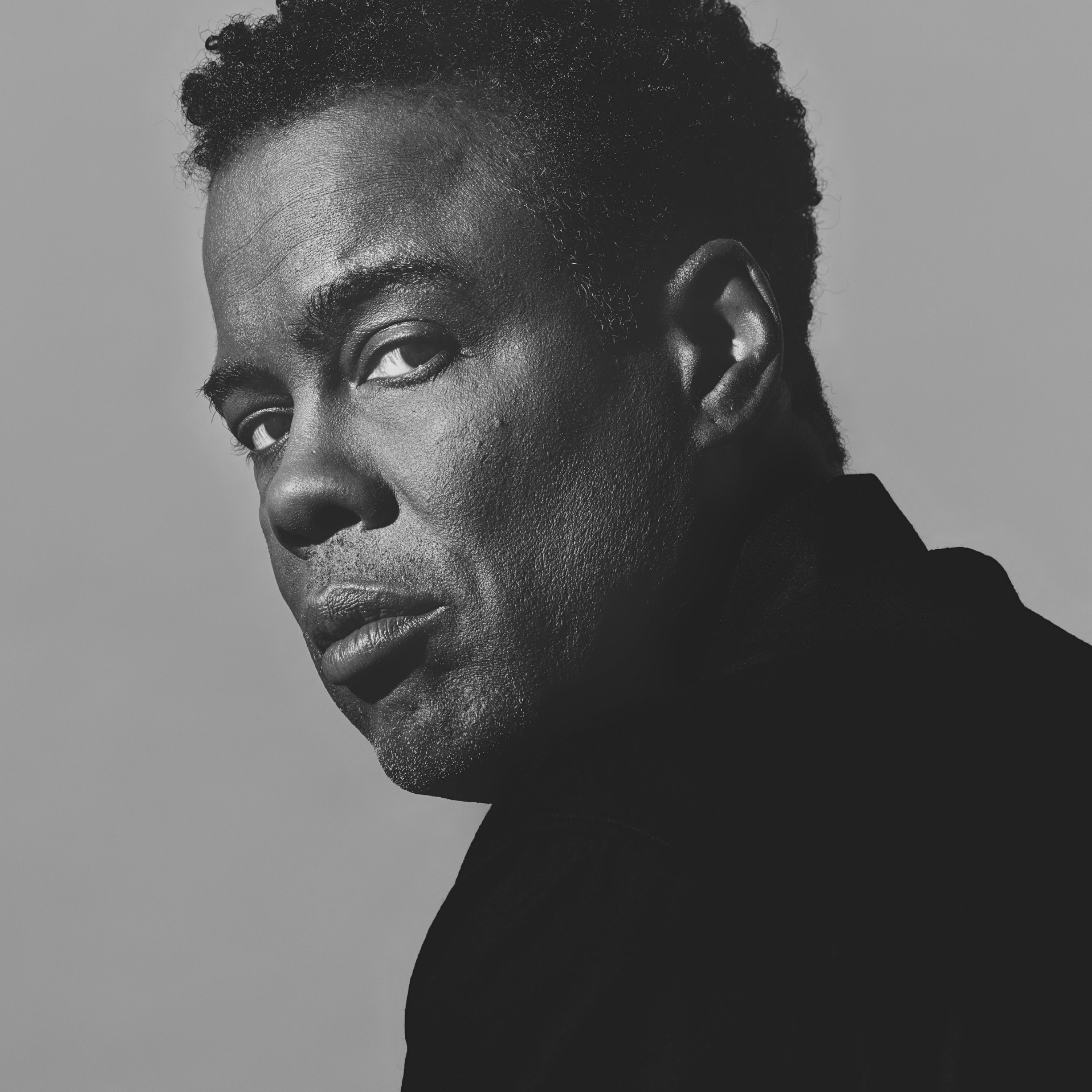
The comedian and filmmaker on what real friendship looks like, what keeps him up at night and his new movie, "Misty Green."
- Thoughts? Email us at [email protected]
- Watch our show on YouTube: youtube.com/@TheInterviewPodcast
- For transcripts and more, visit: nytimes.com/theinterview
Hosted by Simplecast, an AdsWizz company. See pcm.adswizz.com for information about our collection and use of personal data for advertising.
Get every episode summarized
Each time The Interview publishes, we email you a written briefing from the transcript — the topics, who appeared, and any specific claims, with the ad reads skipped.
Email me new episodesFree for 3 shows. No card needed.
Hosts & guests

Transcript ready
1,176 searchable segments. Every word is indexed and playable.
Full transcript
The Interview — Chris Rock Has Been Thinking About Forgiveness. Machine-transcribed; use the interactive transcript above to jump the player to any line.
If you're a parent of a teen or have teens in your life, it can be hard to figure out the right way to approach social media and technology. Ultimately, if you feel like your teens are ready, there are tools to help. Instagram teen accounts have automatic protections for what your teens see and who can contact them, plus time management tools like daily time limits and sleep mode. An Instagram will continue adding built-in safety features to help create age-appropriate experiences. Learn more about teen accounts and Instagram's ongoing work to protect teens online at Instagram.com slash teen accounts. That's Instagram.com slash teen accounts. We live in a world where either you order shit or you deliver shit and you really don't want to deliver shit. I'm David Marquesy and today I'm interviewing Chris Rock. It's like sex, I always say. Unless you played that arena twice, it didn't happen. His comedy specials in the 90s and 2000s not only made him a household name,
they were touchstone cultural events, full of brilliant and profane commentary on gender, We're gonna get to have platonic friends. Race. If you black Americans like to uncle that page away through college, but molested you. And the biggest news stories of the day. What the f*** they clit in dude, that was charging him with shit I didn't even know was crime. More recently, Rock has reflected on his own life in his work, including his 2016 divorce and the unbelievable moment when Will Smith slapped him live on stage at the Oscars. Will Smith played Muhammad Ali in a movie. You think I audition for that part? Beyond stand up, Rock has built a successful Hollywood career acting and directing feature films, including 2014's critically acclaimed top five. Now Rock is back with the movie Misty Green, which he both wrote and directed about a struggling actress played by Rosalind Elazar, who gives a star making performance. Hello! I would like to finish my audition if it isn't too much trouble.
Alright! I wanted to do a movie about Hollywood, I wanted to do a movie about the exploration dates we all have. Here's my conversation with Chris Rock. But first, a quick message. If you're not a subscriber, we have some news for you. You can now explore the times for free without paywalls during your first month in the New York Times app. Just download the app and we hope you enjoy it. Okay, on to the interview. Ready to go? Yeah. Chris, thank you very much. What do you got from me man? What do you want? So I want to start with a question about the new movie. Misty Green. Misty Green. Misty Green. Which, you know, to me the movie, it's thematically very rich. There's a lot going on, but one of the themes for me was really status. You know, who has it, who loses it when it comes to success, money relationships. And I wanted to know when do you feel insecure about your status? When do I, I mean I've been doing a lot of therapy the last few years, like post-COVID.
In a lot of it's about not feeling insecure. A lot of it is about your enough. You are enough sir. But, yeah, I don't ever really feel insecure about my status per se. Occasionally I'll meet people that are obviously working harder than me. And that'll make me feel insecure. You know, Adam Sandler, Rick Rubin, you're like, what? What are you doing? How many things are you doing right now? So that can make me a little insecure. Some people are better with their kids than me. I think I'm a good dad. You kept them off the pole. I've kept them off the pole, but they're on only fans. No. Sometimes you see like a loving relationship and you get like insecure.
You like, you ever been single and you see like a homeless couple? They got it. One thing that was interesting to me about the movie was that, you know, it's a movie that both makes Hollywood feel very appealing because of, you know, the talent that you see and the love that people have for doing what they do, but also makes Hollywood seem awful. Like truly, truly racist, sexist, you know, sort of chips away at your soul constantly. And you know what I'm talking about, right? And has your experience of Hollywood sort of inhabited both those spaces where on the one hand, you're obviously have had an incredible career. On the other hand, it seems like very hard not to kind of go through that career kind of unscathed. I mean, you're not going to get how bad Hollywood is soliloquy from me.
I always say every generation laughs at their children's racism. So my kids are like, this is where I'm like, and what I would call racist, my mother would laugh at, you know what I mean? Are there bad parts about Hollywood? Yes. But it's still better than a normal job by a lot. Okay, by a ton, man, I wouldn't change it for anything. I, you know, I've said before I used to work at a lobster. I used to work at a home for autistic, severely autistic mid-adults. I had like the night shift and you had to like make the food. It was kind of like being a big brother because I'm like the oldest of seven. And you make the food. Sometimes you have to change a diaper or whatever of a grown kind of man.
Like, so what if I can't get a sketch on? So what if somebody's not, you know, doesn't respond to my script? I used to wipe people's asses, dude. But the question of compromises comes up throughout the film. This compromises in everything, right? So what are compromises that you've had to make in your career? I mean, honestly, I came up in cable television. I could kind of say what I want. Well, life is catching up to Jeff. Shit, if you live in a whole project, new jail ain't that bad. You know what I mean? Like, honestly, there's more, I don't know if I could do bring the pain today. I'd have to compromise. But in 96, I did pretty much whatever I wanted. So I haven't had to compromise myself as a standup.
I've been able to make some weird movies, dude, I made Poodie Tang. You know what I mean? Like, you know, I got my own things that I've directed and I got side-prone. I've been very fortunate, Spike Lee, Eddie Murphy, you know, Denzel, all these great people kind of opened up a door. And I've been able to have a really weird, sometimes bad, but definitely like no one will ever say he didn't try. You know, I did a documentary about hair shows, dude. You know what I mean? So I'm the last guy to complain. A second ago, you said, you know, I don't know if I'd be able to make a, I don't know if I'd be able to bring the pain today. And that's kind of a sentiment that I see a lot, you know, people, comedians or even just artists saying, yeah, I don't know if I'd be able to make
whatever it was they made, you know, 30 years ago today. And I wondered, do you really think that's true? Because I look around at comedy and the culture, I'm like, I see any of them. I see any of them. Here's a different one. The difference is, you're right. Two things can be true. I'd be able to make it. It would be huge. I'm not a fact, you know what? I'll go even further. Bring the pain would be bigger today. There you go. You know what? It would be bigger today. Because you wouldn't be able to report on it. What do you mean? You wouldn't be able to say it was great. The New York Times wouldn't be able to say it. It wouldn't be on Netflix. It wouldn't be on any normal thing. So it would be like, like the Shane Gillis thing, which would actually elevate it. You know what I mean? Like, I, you know, the New York Times got a weird thing with comedy. I would go for it. Not even with comedy.
It's just like, I mean, you know, the Times, the journal, they ignore the nuance. So they like something really could say, you know, it's like, okay. This is a manosphere conservative thing or this is a really kind of wokey woke thing. And all the people in the middle, they kind of ignore. I remember a couple of years ago, I don't know, five years ago, ten years ago, Bill Burr sold out Madison Square Garden. Yeah. First night, you saw it in that square garden. In the history of Madison Square Garden, it's probably more now. But at that point, I don't know, eight comedians had sold out Madison Square Garden. You know, and by the way, sell out arenas, it's like, it's like sex, I always say. How so? Unless you've done it, unless you played that arena twice, it didn't happen.
Okay. If you didn't have sex with her twice, to her, it never happened. So, and that's what playing an arena is, right? Anyway, Bill Burr plays Madison Square Garden. I wake up the next day. I want to read the review. There's no review. There's no review. Because Bill Burr is this guy that walks a crazy line. Is he conservative? Maybe he's conservative. Wait a minute. He's got a black wife. Oh, he's sexist. I hate him in it. There's a lot of women here. You guys only cover an extra. You're not fucking with that middle. So anyway, bring the pain because it would be actually less lauded would be bigger today. Because it would have some sort of taboo. It would have a taboo to it where before when I did it, I got all these accolades.
But do you think there's something in comedy that happened? I think since Trump got elected the first time where it seems like the comedians, a lot of comedians, you know, infinitely more than about comedy than I do in a belt of love. But where comedians feel like they have to subtly or overtly signal what their politics are, like sort of wink to the audience so that the audience kind of knows where to put them, even if the place they're putting them is guy who can see both sides. And I feel like audiences are looking for now in comedians. Maybe. Maybe. I mean, I'm trying to decide if I'm going to go back out now. I'm just like, do I want to do I want to jump in this bed? I don't know. I'm loving directing actually. I'm actually like, oh, maybe I should like do a run of pictures. But I don't know. We used to only talk to the best of the best.
We used to only talk to the person singing. We used to not even talk to the producer. Now everybody's got to say something. And you know, some of it's boring. A lot of it's boring. Can I just ask now a question about Rosalind, Elazar, and her performance in Misty Green? Really, you know, I knew her work from Slow Horses. That's where I'd seen her before. But it kind of an incredible performance. Sing amazingly. One night only. You'll be the only one. The different emotional levels she's able to bring to the character. But can you talk about what she brought to Misty that wasn't in the script initially? She just brought a humanity to it. I mean, here's what I say when I'm directing. It's my movie. It's your part. You know what I mean? And it was hers, man. She, you know what, put it just the way.
I met Rosalind about a month ago. I never, but for the months where shooting Misty, there was only Misty. You know what I mean? So she was Misty when she came in on the audition. She was Misty through the whole filming process. She never asked me one question that didn't have to do with character. So she's, we will work again. And there's a scene in the film where her character, this is not a spoiler at all. But there's a scene in the film where her character is performing a kind of a nightclub. And she, like she just is an incredible singer also, which is something that you didn't realize up to that point in the movie. And when I saw that I was thinking about how in the performing arts, the amount of just pure talent that's out there that is not, you know, these people are not necessarily household names. They're just trying to try to make a living. It's really staggering to think about.
It's a lot of talent. And do you feel like you understand who makes it and who doesn't? Like talent must have so little to do with it ultimately. It's not that it has so little to do with it. I mean, there's a lot that goes into it. I mean, right place, right time. Hey, what kind of friend are you? Which goes a long, long way. Like I even now, if I look over my career, you know, probably half of my gigs are just somebody going, oh, he's cool. You know what I mean? Like you got to, you got to, you got to be a good friend. You have to be considerate. You have to ask people how they're doing. There's all these other parts. I mean, I know myself. And a lot of artists were just so fucking self-centered. So I don't know to answer your question. Yes, there's a lot of talent out there.
And a lot of us just right time, right place. And yeah, someone just has no rhyme or reason. I mean, sometimes you're like on a subway and you see a guy playing the fucking violin. Like, you know what I mean? Like they should be at the Met or something. You're like, what the fuck? Who's someone who you worked with or whose work you know that you thought was incredibly talented? But whether because like maybe Misty, they were self-destructive or they just never got a break. Well, I can't say that. I wish I could say that off camera. There's a bunch of people to self-destructive thing. That self-destructive thing is a really sad thing. Or just someone whose... Oh, it's my last success. The thing about self-destructive too, it's like people don't realize. People are okay, the year's 365 days, right? And if I want a party who cares. If I...
What I'm trying to say is a self-destructive person is basically a person that makes six bad decisions a year. You know what I mean? It seems like a little... I mean, that's 359 days of... They were doing fine. Of being fine. Those six bad decisions a year will fuck up your whole life. So, you know... How many bad decisions a year do you have? I don't know. I mean, you know, show business. It's like the Olympics. And in the Olympics, the difference between first and last can be less than a second sometimes. You know? Less than a second. I want to ask something about the movie. Another thing I have a question about the movie. Mr. Green. So, 824. Do you think that there were ideas that you had about women
or men and women that you had to examine or think through in order to credibly create the character of Mr. Green? And I ask because, you know, in a lot of your comedy, you make distinctions between men and women. But the distinctions, I think, in my reading, they're coming from the male point of view. And Mr. Green is so much about... Oh, it's her story. ...woman's story. Was it hard for you or did it take any excavation to... to be able to do what you wanted to do with the character? Um... Let me... Well, those, uh... start, you know, saying there's start differences between men and women is a perfect device for comedy. It doesn't work in a drama.
I'll say this. Uh... Part of, you know, all this therapy and all this stuff, it's developing an empathy and really being able to get inside of another character. So, you know, last four or five years, I'm like a way more empathetic person. Um... Misty, it also helps that my, like, my daughters are like, grown-ups kind of. So I've experienced, I really watch women, you know, around my house, their friends, uh... and my daughters just, you know, they don't forgive my sins, but they give me an education that I wouldn't normally have. Um... I want to go back to directing. You said... You still go back to directing.
You said, you know, you're into directing now. I'd like to do more of it. It was, what, 12 years between movies you directed, between, uh, take five and... Top five? Top five, I'm sorry. Um... What took so long? What took so long? Uh, life, uh, COVID, uh, I got divorced, uh... which means, which meant I had to make, like, real money. Um... Maybe I had some other scripts that just didn't, you know, the market didn't respond to. Uh... You know, it's a lot of stuff. I did other movies and it's not like I was sitting around for that time, but, uh... You know, COVID was like... I don't know, you got to... It's like a time to like, okay, what am I doing with my life? Well, you know, in other shit, I don't feel like talking about it. I had a lot of stuff going.
Um, last 12 years. Did you come up with answers to the... What should I be doing with my life? Questions that COVID, uh, I should be directing small movies. Uh, character driven pieces. It's kind of... I can do that. Um... Maybe I'm not in the movie as much as I used to. Used to be. Uh... Some in writing a lot more. She working on a book. Working on a book of essays. We'll see where that goes. Um... But are any of those things that you don't want to talk about? Could we talk about them? I mean, what do you want to talk about? What do you want to talk about? I mean, I'm a big black and answer stuff. Cool-y or not answer them, whatever. Um... What do you want to know, man? Is there more to say about this slap than what you said in the last special? I wish everyone well. I wish everyone well.
I've moved on with my life. Do you forgive what happened? I'm not gonna, like, get into clickbait things. Like, I'm not... I don't think I'm gonna be, but I don't... You know what I mean? There's no... You know, I'm done. I'm done. Um... But... I know I keep doing this, but let's go back to the movie again. Because there's thematic things in the movie that I think are interesting to dig into. But it was... I was slightly surprised to hear you say that, you know, you don't really have anything that bad to say about Hollywood, given the content of the film, which to me was really about, like, on one level, just how hard and hurtful to an artist's soul Hollywood can be. But what for you were the main ideas and themes that you were interested in exploring? In Misty Green? I mean, I'm really into exploration dates.
I have a lot of friends were in their fifties or whatever. And there's this thing... Everybody tells you you can do art forever, you know what I mean? And that's just not true. And a lot of show business has, like, you got to reach certain plateaus by a certain time or else you're going to be in trouble. So... Yeah, Misty is, you know, turning 40 and... Mmm! Mmm, it's a kind of a little bit of an exploration date happening here. But yeah, I wanted to do a movie about Hollywood. I wanted to do a movie about the exploration dates we all have. I wanted to do a movie about LA. And it is like this tale of two cities. It is sunshine and palm trees. But we're constantly walking over homeless people.
You know what I mean? The most liberal people in the world. This place that, you know, the fact that road-dale drive and skid row are in the same city, probably 8, 10 miles apart. So I... In a lot of ways, America's like that. You know, very rich, very poor. It's like we're... We live in a world where either you order shit or you deliver shit. And you really don't want to deliver shit. What should our response to that disparity be? Like when you experience the inequality disparity, disparity that you're describing, like what do you think you should act differently or do something about it? So the title, the running title of the book I'm writing right now, it's called, When the Homeless Know Your Name. Because when the Homeless Know Your Name, it's a whole nother...
Like you feel that shit, dude. You mean because you're famous? But they know your fucking name, dude. So when somebody asks you for money on the street, they just ask you for money. When they ask me, they say, Yo Chris. So that shit, you know, I don't know what I should do. First of all, who the hell carries cash anymore for the most part, right? You know, you give what you can, you give to this charity, that charity, what you can. I want to dig into that feeling a little bit more. When the Homeless Know Your Name, hey Chris, what do you do with that feeling? What does it make you feel? I mean, put it say, I'm usually up now, I get up around seven. I'm out of my, I'm literally getting coffee by about 7-15. I go to my supermarket, get some fruit, right?
And inevitably there's always like a bunch of guys packing, like, setting up for the day. And I don't know, you ever see like 12 years of slave or any slave movie with a free slave? And the slaves look at, you know, at Chiuatel, and he's like, he's dressed all cool, and he's got his hat, and they're just looking at him like, how the fuck did this happen? We're the same. That's me at the supermarket in the morning. Did I even look at him as a famous person? It's like, who's this brother, buying mango at like in 7-25 in the morning? Because, you know, if you're in Soho, if you're in, you know, there's no black dudes living down there. I don't even know what I'm doing. I'm answering your question. Yeah, you're seeing behind the veil. Yeah, it's like, yeah.
And they're looking at me, I'm looking at them. Because I know I could be that. I know if I don't walk in a comedy club in 84 or 83, I probably have a normal job. I'm not, you know, I probably have a normal job. Do you have a lovely life, by the way? I'm not one of these guys. That's, I thought I didn't find comedy. I'd be in jail. No. I work for Amazon or something. And I'd have a wife and some kids. And I'd be okay. It's interesting that you're writing this book because I remember probably, it was probably, I think it was pre-pandemic, maybe right before the pandemic, there was an announcement that you were working on a book. I was working on a book. About interracial relationships. And you even, I think on Facebook, or maybe had a website where you were asking people to send in stories. And I was getting all these stories in. And what has happened there? You know what? Well, that book never showed up. I'm not, I'm not trying to be like a gangster or anything. I didn't like,
there was just, just me and the publisher. Because when you write something about race, especially in this era of everybody taking everything out of context, I just didn't feel like everything I was saying to the publisher, I was getting, you know, they were listening to everything I said. And I was like, I don't trust these people I'm working with. So I gave the money back. Oh really? Yeah. How much was that that you gave back? It was a significant, more than I'm making today. Yeah. More than I'm making for this interview. I'll make this checkout later. Yeah. The, the, do you think that taking things out of context is like an ongoing problem for, for having things taken out of context is an ongoing problem for artists and comedians now because it feels like there's so much discussion about,
you know, whether somebody said something offensive or who's allowed to make what, what joke? And, and I just feel like I never know how, how real that is. It's, I mean, I hate to say it's just bullshit. It's like, it's just nerd bullies. It's like, you know how easy it is to go, what, what did you mean by that? It's so easy to go, what did you mean by that? Before you elect to be angry at something, it is so easy to ask somebody, hey man, could you not say that thing? I mean, I just felt a certain way when you said that. And then if you're ignored, yes, reply with anger. But it is so easy to pause and just go, hey, hey man, what did you mean? But it's so easy. So, I don't know, I don't know who I was having this argument with.
People are like, oh, people are so sensitive. I'm like, not a not sensitive. They're mean. And they can't stop being mean. They can't, oh, this is my opportunity to be mean. So you think it's all about meanness? I'm just saying meanness is the new kale. It is on the platter. Okay. It's like, oh, did you got any mean here? Nothing is going to make me mean. What did that mean? Real quick. Nothing's going to make meanness seem less cool than comparing it to the new kale. It's a new kale, man. It's so easy to go. Okay. What did you say? It's so easy. Like, the fuck, I'm no genius. I like, like, what did that take? When is offense justified? I mean, people are entitled to their feelings. Don't get me wrong. I mean, we're all entitled to our feelings. We're all entitled to be offended.
Don't get me wrong. So don't, you know, take me out of contact. Context does matter, though. But people, a lot of people are ignoring context because it prevents them from being mean. This morning when you came in, you said, I don't think I've been here since I filmed in top five. There's a scene in the time center. And you said with the canceled all stars, Scott Rudin and Charlie Rose. And I listened to a podcast interview you did with David Spade and Dana Carvey. I think earlier this year, and you used the phrase, the canceled all stars in that Carvey Spade interview to talk about, I think Louis CK and maybe Kanye, all people that you're, but okay. But how do you, like, how do you think about the question of, like, this actually relates to the movie in a way too,
and the question of forgiveness and who gets forgiven and why? Public figures I'm talking about. Public figures. Hey, man. I'm black. What does that mean? When you're black, white people believe every accusation is a conviction. I grew up 619 to K the street between Howard and Sarah Tolga. If you go on your phone and punch up Roger Logan exonerated a guy named Roger Logan, who I grew up with, and it was very, his one of my best friend's brothers went to jail for 19 years for a murder he didn't commit. And here's the weird thing. His brother used to plead with me to pay for a lawyer for Roger, and I never did it.
I always had like a no lawyer thing because the lawyer is like an open-ended thing. Like, I'll pay your mortgage, I'll put whatever. There's a bunch of shit I've paid for, education, all sorts of shit. I always stay out of lawyers because it's so open-ended. I'm still fucks with me. I was like, I had the means to help him, and I didn't. And I don't know if we could have got him out or not, but still. So all that to say is I'm black. Black men get accusers shit they didn't do all the time. Every day in the paper, we let black men out of jail. We go whoops. Oh, that black guy just did 30 years. Too bad. So I don't know, to answer your question when there's a convict, you know, like all this rumour shit. You know, I'm not.
Hey, hopefully I don't get accused of anything, but you know what I mean? Like, I'm handling it from a real place. You know, this shit's real when people get accused of things. And you better be real sure they did it. You know, that my making sense. You're making sense. You know, I think you're describing a kind of lived empathy that you... And I'll go even further. My grandfather, Alan Rock, he killed a man. You can look this up. I don't know if it's, you know, maybe Amsterdam News or something. I don't, you know, legend has it. He thought the guy was sleeping with my grandmother. The guy lived next door. He told the guy, if you take another step in my yard, I'm going to shoot you. The guy took one step and my grandfather blew him away, right? My grandfather went to jail and my grandfather was a preacher.
And he gets out of jail. I don't know if he gets out of jail on a Wednesday. By Friday, he was picking us up from school. And within a year or two years, he was the reverend of that church again. So, hey, if you're accused of... Wait, he was the reverend... When he shot the guy? Yeah. Well... So, my brother shot a guy. My brother, Charles, his government name is Charles, but he's a 5% of his name is Shabazz. So, I say that all to say, my grandfather went to jail. He got out of jail. He did his time. So, hey, if you're going to accuse somebody, make sure they did it. And be when people do things, there's a fucking time limit in the real world. I'm a spoiled mother fucker and I went to private school. And you know, yeah, in your world, you just shun people. But in the real world, we kind of have to live with each other.
So, yeah, all that to say... It's up to the victims to forgive, I guess. And two things can be true. My brother shot a guy, right? I love my brother. Do I think that just because I love my brother, does that mean I think the person should have gotten shot? No. The last thing I'll say to you, when I was a kid, you know, two, three times I was in police lineups. You know, you know, Howard Avenue. Stay away from Howard Avenue, right? Howard Indicator, right? And you have what your friends, me, Darren Bos, whatever, right? I'm in Bedstie. In Bedstie. And you're minding your business and you get swooped up. And now you're in a police lineup.
And you've seen enough fucking cop movies to know that behind that window is probably a person... Probably a woman could be a man, but probably a woman, right? And if they point at you, your whole life's over. Now, here's what's fucked up. Like, and you guys, you guys are like the media. You're supposed to be in charge of the nuance of it all. Okay, I'm Chris. Chris has been on the stoop for fucking four hours. Chris didn't rob this woman, right? If she points at me, she's wrong. She's, but she's not lying. What do you mean she's not lying? You didn't do anything. She's traumatized. And when you're traumatized, you try to wrap shit up. You know, and for whatever reason, I grew up, you know, my dad drove a newspaper truck
and I've been reading the paper since I was a kid. The news has taken all nuance out of everything's black and white. Everything's black and white, man. What you were talking about just now with your family story that... It seemed like that was really coming from a lot of personal empathy, but how did you... It's two questions. One, how does one consciously learn to be more empathetic? And then he's being more empathetic, good for a comedian. I guess it has to be, it better be. Or I'm in trouble. I don't know if I've learned to be empathetic. I got a friend of mine told me I had Asperger's, a few years back, and I got it checked out. It wasn't Asperger's, it was a thing called NVLD, nonverbal learning disorder. So, you know, it requires its own level of therapy.
It's... What are the effects of that? The effects are I'm really bad with reading nonverbal signals. Most communication is nonverbal. I catastrophize. I have black and white thinking. Both things that are great for being a comedian. I was going to say, yeah. But bad in personal life. In personal life, in real relationships. So, I've been learning, like I have to see a woman once a week and go for my week. And we'll see what... You know what, Misty Green would be the first piece of art that I've done since my diagnosis, my first real piece of art. But wait, you said earlier part of what you're talking about in therapy is feeling like you're enough. Like, when do you have like self-esteem questions or...?
I mean, oh! Artists have self-esteem questions. You know, especially the good ones. I hope maybe I'm good. Not going to steal. You know, most artists are... What is it? It's an Eagle maniac with an inferiority complex. Yes, and I would absolutely fall into that. I am great! I hope they notice. You know what I mean? So, yeah, I can feel that way. But, so, you know, that I think also, any Murphy makes me feel like... Well, of course. Still, in the presence of Eddie Murphy, I can get a little like... Insecure. Yeah. You know, I... He was on this show about maybe two years ago. And just even in his stillest moments, just the charisma and the...
Like, comedic ingenuity that just flows from that guy. It's like, yeah, there's a reason he's Eddie Murphy. Yeah. Also, you know, not to name drop. Like, one of my biggest regrets in life is I could never relax around Prince. And he kind of want it to be friends. You know what I mean? Like, call him in whatever and hang it out. I couldn't not be like, oh shit. Prince is drinking iced tea. You know. Was he normal with you? Did you feel like you ever got to a place where he's just being a guy? I think it was normal. I think it was, yeah, I think it was really normal. I mean, it was a normal rock star. You know what I mean? Like, those degrees of normal are so different than your... You know what I mean? There's a great Prince story in... It's in Bono's... I think it's in Bono's memoir where he says he's in some club and like, Prince comes in and makes his exit by like...
walking across the tables out of the club. But out of the corner of Bono's eye, he can see that some of Prince's handlers were like holding the bottom of the table to make sure that he wasn't going to fall. So maintain the illusion. I think, maintain the illusion. I remember I might have told a story before. I'm at Prince's house, I'm in Minneapolis. I'd just done some shows. He had a party for me after at Paisley Park and is like... whatever. He's playing. I'm literally in the vault. Okay? The vault was as big as this room, right? And he's playing new music and there's lots of people there. Lots of people, men and women, whatever, right? And his wife called. I think he's married to my tie at the time. And he was like, everybody, everybody be quiet. Be quiet. I got to make that call. I guess he called her. He's like, be quiet. So it's like, whatever, 100 people, 200 people.
My tie called. It's him picking up the phone. Hey, nothing. Nah, I'm just chilling. Yeah, I'd probably go to bed a couple hours. I like it too. Even Prince. And then the party started right. And then it was like, again, off. It's like right away. Even Prince has to make people. Even Prince had to check in. Do you think about what you want the rest of your career to look like? Because I know you said that you want to direct more films. But you also talked about the idea of an expiration date. And I really think it's hard for comedians. It can be hard for comedians to get older. It can be definitely hard for comedians to get older. It's hard for them to stay as edgy in the same ways. The thing that he stays edgy, you become the establishment.
You just, you know, it comes early in your career. It's your performance. It's whatever you're doing. But it's also the promise of who you are. So the public's like investing in this thing, like the stock. But later on, you know, you're like LeBron. It's all like, it's all results. And we'll give you a one year deal. As long as you play like LeBron. You know what I mean? Like, so right now, I got a deal with the audience where it's like, if it's good, we'll see it, Chris. I don't know. I mean, I've seen careers people change. And I mean, Steve Martin's the king of like, reinvention. I just, you know, hearing you mention Steve Martin, again, this spurs an idea for me about maybe changes in comedy. Or if you listen to a Steve Martin album, or you watch old footage of him,
because of the style of comedy he's doing, which is so sort of absurdist and whimsical, you're never asking yourself, does he really believe that? But now, I think there's really, it's almost like a litmus test where audiences are asking whether they're saying it explicitly or not. Does the comedian really believe what they're saying? Do you have, when you're on stage telling jokes about real life things, about, you know, things in the news or cultural things, are we supposed to understand that you believe what you're saying, or you're just saying what you need to say to make the bit work? I mean, like, where is there a distinction there that matters? I mean, jokes tend to work better when there's some truth in them. You know, when they, you know, when you're not just making up stuff, I think the audience can tell who's fake. Yeah. You know, I just, they can tell. You know, they can tell, if you're married, they can tell if you got a kid,
they can tell if you worked, they can tell. You can't fake anything. The thing about comedians, there's no mystique. You are who you are. You know what I mean? There's no, there's no Ziggy star dust of comedians. You know what I mean? Like, you just kind of are who you are. So, you know, I think, you know, and either, you know, they're rolling with you or not. Do you think you are who you are in your film work? I think so. What does Misty say about you? Sometimes I am. But I am in my film work. I think Misty is a good, baromative me right now. Like anything I write, I'm, I'm Misty. You know what I mean? Like, I'm like every character in the movie I've been on some level. Hopefully not the Adam Driver character. Like a guy who procures, procures prostitutes for Saudi princes.
There was nothing different between the Adam Driver character in my movie and the Jack Limon character in the apartment. Yeah. It's just an outfit in some hairstyles and the drugs. Like, like Jack, what the fuck? Because the alcohol is the biggest drug in the world. What are you talking about? See, you are leaving out your nuance. It's true. You literally are making my point in front of me. You conveniently made yourself stupid to make a point. Well, I never conveniently made myself stupid. I just have, I just have five fucking cameras here. You just did it. Also, I'm really too. You just did it. You're so much smarter than that. If people are like, oh, David left out the nuance of what, uh, what drug Jack Limon was using in the apartment. And I'll, I'll, I'll die. I heard you that Jack Limon was basically the same character. And you have this fucking love for the apartment,
which is deserved just one of the best movies ever. But that's what he was. He was a fucking pimped. Yeah. Yeah. I guess you're right. Um, I don't know where to go from that. So fucking Jack Limon is a pimped. A P-I-M-P in the apartment. He's a lovable pimped. He's a charming pimped. But a pimped nonetheless. But a pimped nonetheless. Um, in so many ways we all are. Or a hose. Mostly a hose. Chris, I, you know, I really appreciate you taking all the time to talk with me today. Hey, Colleen in three weeks. Hey, is this the one when you think they do a follow-up? Yeah, if that's okay. Yeah, yeah, okay. I'll play by the rules. Starting now. Okay. Thank you very much. Thank you. On the interview, we talked to our guest twice. So a couple weeks later, I spoke with Rock again. And he shared his thoughts on the so-called Woke 1.0 era. If you're a parent of a teen or have teens in your life,
it can be hard to figure out the right way to approach social media and technology. Ultimately, if you feel like your teens are ready, there are tools to help. Instagram teen accounts have automatic protections for what your teens see and who can contact them. Plus, time management tools like daily time limits and sleep mode. An Instagram will continue adding built-in safety features to help create age-appropriate experiences. Learn more about teen accounts and Instagram's ongoing work to protect teens online at Instagram.com slash teen accounts. That's Instagram.com slash teen accounts. Hey, what's up, guys? It's Hayley Bailey. Okay, I need to tell you about something. I just got YouTube Premium. It's got tons of awesome features like offline downloads so I can download my favorite videos before I travel and watch them whenever I don't have Wi-Fi. Because we all know airplane Wi-Fi is the worst. I get to add free, I get back room play, and there's like a ton more in there. You should try it. If you like YouTube, you'll love YouTube Premium. Try it now for two months free at youtube.com slash premium.
If you like YouTube, you'll love YouTube Premium. Hi, I'm Sean Evans from Hot Ones and I want to tell you about YouTube Premium. It has offline downloads, so you can watch without Wi-Fi. Background play. So you can lock your phone and it still plays, baby. Oh, and it is completely add free. Yes, I said it, add free. Try YouTube Premium for two months free at youtube.com slash premium. Trial eligibility varies, terms apply, cancel anytime. Chris, thank you for taking the time to speak with me again. I appreciate it. Sure. And I might sort of pinball around a little bit because I got a lot of stuff I want to ask you about. You know, before we spoke initially, I had asked if you could send over the names of some films that were kind of influential on Misty Green. Right. And you sent over a list that included Cabaret, of course the great Bob Fossy film, Bad Lutentent, The Abel for Our Movie, Clute, the great Jane Fonda performance in that.
Can you tell me a little bit about what those films in particular, how they helped you shape your vision for your movie? I mean, there's a great line and husbands and wives. What do you have in film? Well, he's playing a professor. He's playing a writing professor. And the line is something to do with, you can't teach people to write. All you can do is expose them to great writing and hope they pick up on it. You know, and it's just kind of the same thing with film. You know, you can't teach a person really to make a good movie. You just got to show them some good movies and hope that they run with it. All of those movies, especially the Fossy stuff, you know, I mean, I said Cabaret and Misty Green is like, what's the lies? Like what's her?
Saliboles. Yeah, there's a lot of Saliboles in that, it doesn't rude, tell me to watch Cabaret. But also, there's a lot of Lenny. In Misty Green. Bob Fossy's Lenny Bruce Pio Pick, starting Dustin Hoffman. Yeah, with Dustin Hoffman, like there's a lot of Lenny in Misty Green. You know, all I can say is I love those movies. And, you know, if you love them enough, you know, if they feed my mother would always say, if you feed a kid long enough, he starts to look like you, you know. And if you love movies hard enough, you'll eventually make that kind of movie. You know what I mean? But it's also direct star 80. Yes, it's a lot. Star 80 is my go to. That also has some, like just in terms of an LA Hollywood movie. Yes, I'm forgetting star 80. Yeah, it's a lot of, how could I forget star 80? It's so star 80.
So, yeah, the Fossy stuff more than anything, I would say, has been an influence. There's a line in the movie that I wanted to ask you about. Which is sort of just a, it's said almost offhand in the film. But it's actually kind of a heavy line where I think it's the character that you play in the film says to me. True love starts with forgiveness. Yes. Is that your experience of forgiveness? Well, okay. I think, yeah, you don't, it's, put us away. You don't really realize if you love somebody until you have to forgive them, I can enjoy myself with just about anybody. You know, I really can. You know, I absolutely a thousand percent can. It's like, you want to go see Brutal Mars. It's hard to have a bad time if you're a decent person.
It's when somebody tests you, when somebody betrays you, when somebody lets you down, and you still want to be around them. And maybe you see, maybe you see what they're doing. Maybe what they were being faced with. That's now, you know, and if you elect to proceed, now that's love. I have a friend that's going to be nameless, that, you know, might have gotten counseled or whatever, right? And another friend of mine, it's like, well, how can you be friends with that person? It's like, well, if you're only friends with your friends when they're good, they're not your friends, you know, if you got a bunch of people that are only going to be there when you're good, you have no friends. Okay? And that doesn't mean, you know, condoning, you know, abusive behavior,
because you can reprimand your friends. You can go up to one of your friends and go, hey, motherfucker, what are you doing? That's also part of friendship. But we all have a line, right? Just through it. You and I live in different worlds, dude. I got friends that are in jail. I got friends that are drugged out. I don't live like you. You don't know that. I can tell. I can listen. I can totally tell. I mean, do you happen to be right? And by the way, I'm not, I'm not being dismissive of a ego. I'm just saying you just, you know, I've had a lot of people, I've had, you know, I've had, you know, my friends have tested me more than yours. And maybe I've tested them. Who knows, you know? But, you know, I don't know. I'm not religious, but I'm, you know, I'm a Christian. And God forgives. That's what it's all about. The problem with, you know, quote unquote, wokeness.
And don't get me wrong. It is great that marginalized people have a voice. It is great to advocate for anybody that feels marginalized. This is great. But the problem with wokeness is we're in the Old Testament right now. Okay. And the Old Testament has no forgiveness. The Old Testament didn't work. So they had to write a remix called the New Testament. There's been this discussion lately about how the woken 1.0 era, which I think refers to sort of the immediate post George Floyd era was, you know, crazy. People say, you know, woken 1.0 was, was crazy. Like, you know, AOC distancing herself from that and other democratic politicians doing the same thing. And I just wondered, do you, like, do you see that moment in time? Is just like that was just a crazy moment in time? Or was there anything redeeming about it?
I think I just answered it, you know. Again, it's great to help those that need help. That is an amazing, you know, we need more of that. The problem is, is when you institutionalize it. You know, that's the problem, you know, so my half a joke. The Salem witch hunts. I'm sure, you know, the first three witches they caught were actually fucking witches. But then you open up a witch office and now you got to start lying. Now you got to fucking make shit up because you got overhead. You have to justify paying the witch hunters. Yeah, you got to justify it of which hunters fucking pensions and shit. So, yeah, man, it's all good. I'm glad. I'm glad that all of this stuff happened. It needed to happen, you know.
And because it happened, maybe I've heard some voices that I probably wouldn't have heard otherwise. Let me, let me switch gears and ask a comedy question if that's okay. Sure. Before you visit, because I keep saying how bad my friends are. I have some amazing friends too. I have some genius friends who are on problematic. Unproblematic, most progressive, most, some of the greatest artists that have ever lived. Some that you know of and don't are my friends. So on the record, some of the Chris Rocks friends are perfectly fine people. Yeah, just perfectly fine people. All right, so one thing I always wanted to ask a great comedian is, do you think you understand what the purpose of laughter is? Like, why do we laugh at stuff? Why do we need comedy? I never thought about it that hard.
Here's what I do know. Yeah. The greatest feelings in life are sex and laughter. And we break up with people that we have great sex with all the time. We don't break up with anybody that makes us laugh. Okay? We try, we figure that shit out if somebody makes us laugh. And the ability to laugh at oneself is probably the highest form of intelligence. And the inability to laugh at oneself is a sure sign you're dealing with an idiot. Chris, what just either professionally or personally, like what keeps you up at night right now? What do you mean? Like what do you go to bed worrying about? I don't worry about anything. Everyone worries about something. I'm not worried about nothing, dude. I worry about my kids that they're, you know,
especially my oldest doesn't live with me. So I worry about my kids, but the world? The world is the world, dude. The world is exactly what it wants to be. It's sad, where it's sad, it's happy, where it's happy. But this is what people want. Wait, what do you mean this is what people want? This is what people want. People have the America they want. You know, if they want to change it, we'll see. Do you like it? Is it the America you want? You know, no. I've been here a while. I have a long sample size. You know, Martin Luther King was shot in 1968. Black people pretty much live where black people lived in 1968, especially in New York City. You know, maybe A neighborhood or two is gentrified that wasn't. Maybe Beyonce has more points on her deal than a wreath of Franklin.
But that is for the most part, you know, the real, real, real, real change. You know, people are nicer people, you know, blatant disrespect in the streets. Doesn't happen like it did in 1968. But, you know, the distribution of wealth, the access to education, the access to healthcare is pretty much where it was when Dr. King got shot. And I could say that about other places in the world too. And let me try and ask the hopefully more. And somehow I got out of it. But, you know, Louis Armstrong was the most famous singer in the world in the 30s and 40s. So, black entertainers have always, you know, kind of gotten off the Titanic before everybody else.
And let me try and end with what is intended to be sort of a more hopeful ending. It's a flip side to the what. Hey, Mr. Green October 9th is sexy movie. Let me ask a question. It's a flip side 24. Those guys are great. No oppression there. Wait, let me ask the question. You know, I just asked sort of what keeps you up at night. What gets you up in the morning? What are you most excited about? You know, I'm, you know, I'm excited every morning. It's my favorite time of the day. It's my favorite time to get up and take my walk and get my fruit. You know, listen to the news a little bit. You know, because every day can be great. You never know what's going to happen. Even when you know what's going to happen, you don't know what's going to happen. I wake up pretty happy, man.
I wake up pretty optimistic on most days. And I'm very fortunate. I'm not going to sit here and act like my experience is everybody's. I really appreciate you taking all the time to speak with me, Chris. And I enjoyed it a lot. So I especially enjoyed it when you pushed back at me. So thank you for that. Oh, man. This is, that's all, that's always where the good stuff is. I'll leave you on this like a friend of mine. And I hope I didn't tell you this. A friend of mine called me up. She was a work it on her special. And she said, I've had a hard time writing material. And I said, well, you have this podcast. And then what I need you to do is go to your podcast. And every hard episode, that's where the material is. Everyone you thought was a hard time. That's where the good shit is. So if I've given you a hard time. This is the good shit. All right. Thank you very much.
Thank you. Take it easy. Thank you. That's Chris Rock. His new movie, Misty Green, will be in theaters on October 9th. To watch this interview and many others, subscribe to our YouTube channel at youtube.com slash at symbol the interview podcast. This conversation was produced by Paola Newdorf. It was edited by Alice in Benedict, mixing by Sophia Landman. Original music by Dan Powell, Rowan Nemisto, and Marion Luzano. The rest of the team is Priya Matthew, Seth Kelly, Joe Bill Munoz, Wyatt Orm, Jeremy Rocklin, Gavvy Contreras, and Catalina Bryan. Our executive producer is Alice in Benedict. I'm David Marquezee, and this is the interview from The New York Times. This podcast is supported by Viking, committed to exploring the world in comfort. Journey through the heart of Europe on an elegant Viking longship, with thoughtful service, destination focused dining, and cultural enrichment on board and on shore. And every Viking voyage is all inclusive with no children and no casinos.
Discover more at Viking.com.
More episodes
More from The Interview

Sylvester Stallone Hid His Struggles for Decades. Now He’s Coming Clean.
The Interview

Aaron Sorkin Goes Off Script
The Interview

Naomi Klein and Astra Taylor Say the End of the World is Now on the Table
The Interview

Ina Garten Says You Can Either Get on Her Train or Get Out of the Way
The Interview