Get every episode summarized
Each time The "What is Money?" Show publishes, we email you a written briefing from the transcript — the topics, who appeared, and any specific claims, with the ad reads skipped.
Email me new episodesFree for 3 shows. No card needed.
About this episode
“There's a lot of things in Bitcoin where what you think was always true turns out to be exactly opposite. And I felt like when I was getting into researching about these compounds, like I was having another one of those.”From the transcript
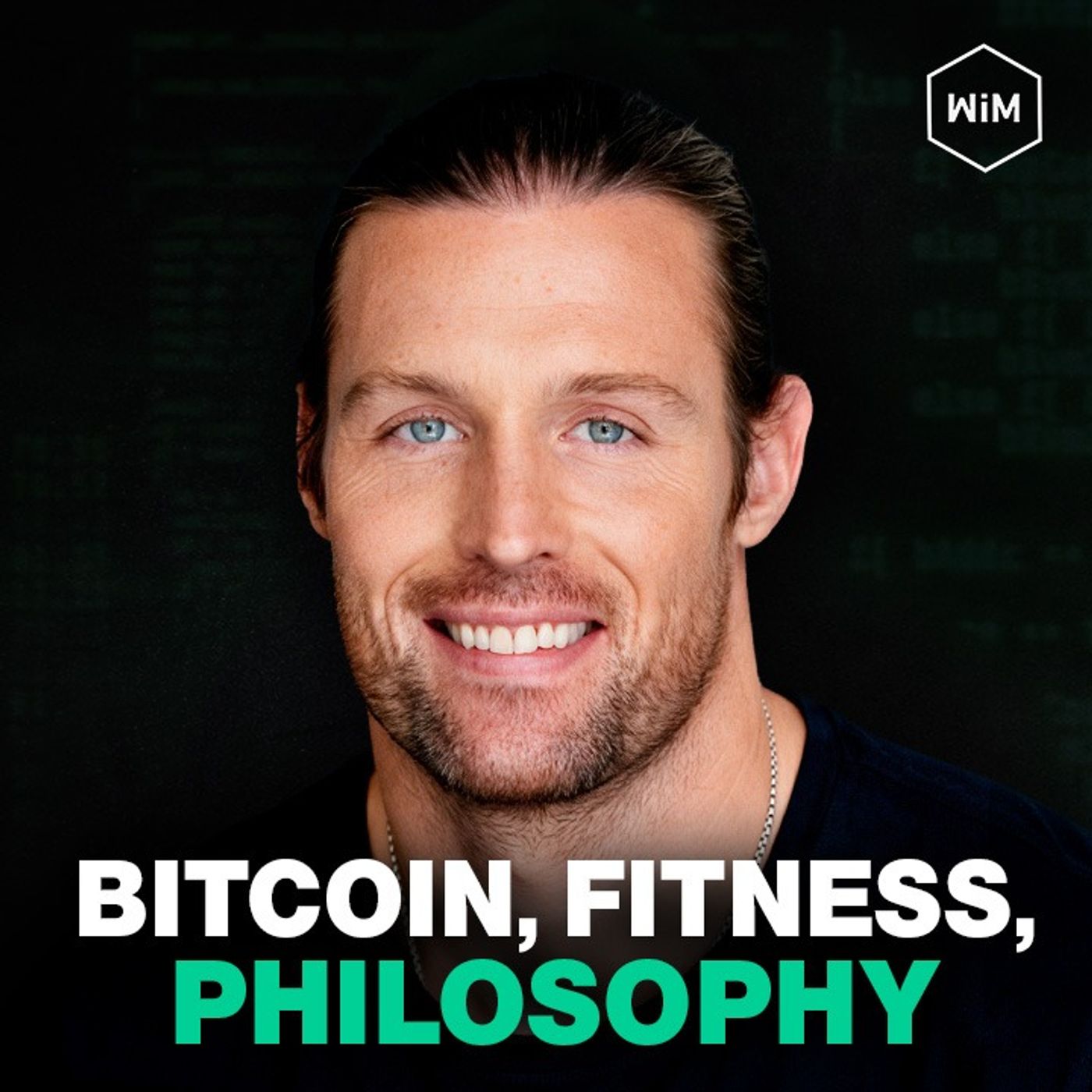
Robert Breedlove joins Martin Silva to discuss blending Bitcoin, fitness, and philosophy into a personal brand, and the ups and downs of his health and fitness journey.
They cover how the Bitcoin rabbit hole taught him to question conventional wisdom, his path through leaky gut, veganism, keto, and carnivore, why peptides and anabolics will likely go mainstream, how to explain Bitcoin and inflation to a 10-year-old, and the books that shaped his thinking.
// SPONSORS //
Blockware Solutions: https://mining.blockwaresolutions.com/breedlove
Mind Lab Pro: https://mindlabpro.com/products/mind-lab-pro/breedlove
// GUEST //
X: https://x.com/silvafitness1
Instagram: https://www.instagram.com/martinsilvafitness/
Website: https://optimiseyourbody.com
// PRODUCTS I ENDORSE //
Protect your mobile phone from SIM swap attacks: https://www.efani.com/breedlove
Lineage Provisions (use discount code BREEDLOVE): https://lineageprovisions.com/?ref=breedlove_22
// UNLOCK THE WISDOM OF THE WORLD'S BEST NON-FICTION BOOKS //
https://course.breedlove.io/
// JOIN THE COMMUNITY //
Telegram: https://t.me/TheWiMCommunity
// TIMESTAMPS //
0:00:00 - Intro
0:01:06 - From Bitcoin Twitter to the What is Money Podcast
0:07:18 - Combining Bitcoin, Fitness, and Philosophy
0:11:10 - The Training Journey, Olympic Weightlifting to Bodybuilding
0:19:24 - Moving to Miami, Biohacking, Leaky Gut, and Taking Testosterone
0:24:58 - Sponsor: Blockware Solutions
0:26:23 - Bitcoin Lessons Applied to Health, Conventional Wisdom Turned Upside Down
0:34:51 - Gut Health, Autoimmune Condition, Veganism, Keto, and Carnivore
0:40:32 - Sponsor: Mind Lab Pro
0:41:26 - Peptides and Microbiome Rehab Heal the Gut
0:45:06 - Training Natural vs. Enhanced, Recovery and Benefits
0:51:27 - Explaining Bitcoin and Money Printing To a 10 Year Old
1:00:26 - You Don't Own What Your Money, Equities, and Stocks
1:02:18 - Why All Non Bitcoin Crypto Coins Are Shitcoins
1:07:27 - Books That Shaped Robert's Thinking
1:11:19 - Unlock the Wisdom of the Best Non-Fiction Books
// PODCAST //
Podcast Website: https://whatismoneypodcast.com/
Apple Podcast: https://podcasts.apple.com/us/podcast/the-what-is-money-show/id1541404400
Spotify: https://open.spotify.com/show/25LPvm8EewBGyfQQ1abIsE
RSS Feed: https://feeds.simplecast.com/MLdpYXYI
// SUPPORT THIS CHANNEL //
Bitcoin: 3D1gfxKZKMtfWaD1bkwiR6JsDzu6e9bZQ7
Sats via Strike: https://strike.me/breedlove22
Paypal: https://www.paypal.com/paypalme/RBreedlove
Venmo: https://account.venmo.com/u/Robert-Breedlove-2
// SOCIAL //
Breedlove X: https://x.com/Breedlove22
WiM? X: https://x.com/WhatisMoneyShow
Linkedin: https://www.linkedin.com/in/breedlove22/
Instagram: https://www.instagram.com/breedlove_22/
TikTok: https://www.tiktok.com/@breedlove22
Substack: https://breedlove22.substack.com/
All My Current Work: https://linktr.ee/robertbreedlove
Get every episode summarized
Each time The "What is Money?" Show publishes, we email you a written briefing from the transcript — the topics, who appeared, and any specific claims, with the ad reads skipped.
Email me new episodesFree for 3 shows. No card needed.
Hosts & guests
Transcript ready
936 searchable segments. Every word is indexed and playable.
Full transcript
The "What is Money?" Show — Conventional Wisdom Is A Scam w/ Martin Silva. Machine-transcribed; use the interactive transcript above to jump the player to any line.
There's a lot of things in Bitcoin where what you think was always true turns out to be exactly opposite. And I felt like when I was getting into researching about these compounds, like I was having another one of those. I was diagnosed with this condition and mainstream medicine told me, this is a disease you have for life. All you can do is manage the symptoms. Those answers don't work for me. That's not going to work for me. There's got to be more to this story. Even low-tastolstrom puts you at way higher risk. Yeah. Lots of different diseases. Way higher. So why would you want to risk it? People that just say, oh, steroids equals bad. That's such a broad category. Well, the guy on TV said 2% inflation is good. So I guess 2% inflation is good. Without asking themselves the more funding for questions, it's like, why would price increases ever be a good thing? Within 12 weeks of that, I'm eating whatever carbs I want. That was just a big turning point in my life. Take us back to where the kind of get rich smart and rip philosophy started, man. Ladies and gents, I've got Robert Bredlov here today.
And it's great to have you on, brother. What's up, Martin? Thank you for having me. Absolutely pleasure, man. Absolutely pleasure. So we just chopped it up on Robert's podcast recently. Shout out to the What is Money Podcast? If you haven't checked that out, then, you know, you've been sleeping under a rock. It's an awesome job you've done there, mate with that. I love for you, my man, to take us back to where the kind of, you know, get rich, kind of smart and rip philosophy started, man. Well, that's a good question. You know, I've been, I got my start in Bitcoin world. So if I rewind the clock to like 2016, I had zero social media presence. I had 300 followers on Twitter. And I started tweeting just about what I was learning as I was getting, I was getting into Bitcoin and obviously as you get into Bitcoin,
the line of questioning is something like, what is Bitcoin? Bitcoin is money. Okay, well, what is money? I'm going to get into that question. It's like, oh, wow, there's a whole lot of things here. You're in, you know, fields as disparate as technology and psychology and history and physics and anthropology. Like there's all obviously economics. And so you're in all these different interdisciplinary fields trying to figure out what this thing is. And so I was just tweeting about that basically as the books that I'm reading and a lot of it has to do with Austrian economics and libertarian philosophy that explains sound money and what it is. And so, you know, start with 300 Twitter followers in 2016. I think by 2018, maybe it's 2019, I had like, I didn't want 1000X, you know, my Twitter following is up to 300,000 something like that. Just tweeting out ideas I've been publishing long form essays.
Yeah, I think this maybe it was longer than that 2019, 2020, the years are melting together for me. So that was like my beginning in social media world. It was just, but it just ideas, you know, just words basically wasn't me. Wasn't my lifestyle, wasn't fitness, wasn't any of that. And then eventually I started getting invited on the podcast to talk about my written works and my podcast appearances became popular. And then eventually after enough of that feedback, I decided, okay, I should probably start one of these podcasts because they're very popular, very low-barreored entry. I was inspired actually by something Jordan Peterson had said. He said that with the advent of YouTube, that the spoken word now had the reach and permanence of the written word. So you could go online and record, you know, a conversation for 10 hours and publish it for near zero cost.
And that was a big deal because pre-internet, pre-social media to get 10 hours broadcast would have cost you, you know, millions of dollars, you know, via like a mainstream news outlet or documentary, something like that. And so my kind of connection was, okay, the Bitcoin rabbit hole is this huge space of ideas. There's just infinite things to talk about. There's no bottom to the rabbit hole. It goes on and on and on forever. Okay, well, that's a match made in heaven with this idea of near zero bandwidth cost for publishing information ideas, conversations. So I'm like, oh, let me just do that. You know, we'll talk about what money is and we'll go deep on it. And we'll just talk as long as we need to talk, you know, if it needs, I'll talk to one guy for 10 hours and we'll chop it into 10 episodes or whatever the thing is. So that's what we started doing. And I was very fortunate. So I'm searing dip at us at the time. I was about to start the podcast.
This is in mid 2020. I get a DM from a guy named Michael sailor. And he's like, hey, thanks for your work. You know, we really appreciate it. And then my company just bought $250 million in Bitcoin. And here's the announcement. And I got this message and I'm like, what is this fake? Obviously. Yeah, of course. Start reading the news headline that he sent. And I was like, oh, no, this is legit. And I just invited him on. I just said, well, you know, here's this idea for the podcast I'm doing. So, you know, do you want to be the first guest? I had no idea. He was as eloquent. Or, you know, he's the, anyone that's hurting talk. He's like the most brilliant fucking ambassador for Bitcoin. There's ever been. So I had no idea. He was just the guy that bought Bitcoin to me and had a news headline. I had never heard him speak. I think we had one call before we did our podcast. And so he ended up being my first guest. That was wildly successful. Not through any credit of my own.
I just basically hit record and said, hey, let's go deep on this question. And then he was just the perfect guest, basically, for that type of format. And so that became wildly popular. And that made me more because I'm on video now. So now it's like, I'm getting my face is getting more popular than just my words. And it just kept snowballing, you know, like the, the podcast grew. We grew to 250,000 YouTube subscribers. Twitter following, which is now X has grown to like 450,000. And then Instagram has grown to like 130,000 something like it. So it started out with ideas. And then it became more like about me and people as I get my face more out there. People are like, okay, well, what do you do? What do you train? How do you eat? You know, asking all these kind of lifestyle questions. So we started to lean into that more. And so to get to the answer to your question, I've reached this point where I'm like,
how do I combine these things? You know, I'm trying to now. It was a very significant mental reframing for me. One time a guy asked me, he's like, what is your brand? And I was like, I've never thought about that question in my life. I have never looked at myself like a brand. I was just a guy online posting my ideas. You know, I didn't think what's my brand. I'm like, here's just some stuff that I thought was interesting. And, you know, even when I started the podcast, it was focused on the nature and history of money. But what is money show? It's not me. And then his point was like, no, no, no, like in doing all of this, you are becoming a brand. Like you are a personal brand. So what is that? And I had no answer. I'm like, I have no fucking idea. So the question was like, how do I combine all of these things? Like, well, I'm really into Bitcoin, nature and history of money. With that also comes like, it's the Bitcoin rabbit hole. Again, you're into psychology, you're into philosophy, you're into technology, you're into all these like deep esoteric fields and topics.
And then there's also, you know, I've been an athlete my whole life. I've been into fitness. I started sport when I was 11 years old. I started Olympic weightlifting when I was 13. I've competed. I've been a competitive athlete my whole life. My early 20s I switched into like, you know, just aesthetic training for aesthetics, lifestyle bodybuilding, what a term you want to use. So all of that was a big feature of my life as well. And so in trying to figure out how to combine all these things. Which we're not done with. I think I'm about to do another rebrand. It's like, this was the first attempt basically I trying to combine Bitcoin, fitness and philosophy. And so we called it, you know, hard money, which is what Bitcoin is. Hard facts, which is all the Bitcoin rabbit hole content. And then hard body, which was like the fitness component. And now I don't, I'm not crazy about that branding. The reason we're going to redo it is because people don't know what hard money is.
You know, it's like they don't, it's just not a common thing basically. Hard facts, hard, hard body. Okay, maybe people can understand. Okay, this guy's like trying to suss out some truth or something and then he's into fitness. Okay. But, but it's a little bit too, uh, opaque, I guess still. And so, hopefully in the next iteration, which I'm working with a guy now, a personal brand consultant and doing a bunch of other stuff. We're going to try to make it a little more clear. And, um, yeah, I guess I'll leave it at that because we had it fully formed what that is yet. We've got a good idea. But, um, yeah, that'll be, I guess the next phase of the evolution is coming. So, but just like in general general, it's like, I'm just, I like to work out. I like to nerd out. You know, I'm a deep thinker. I like to read. And so it's just figuring out how to.
Put all that online in a way that's valuable to other people. So the lessons I've learned in life, how do I share those with other people such that they can implement them into their lives. And, um, that's what we're trying to do. Yeah, I love it, man. I'm going to give you credit for, uh, for what you've done and what you built because it's not easy. You know, I mean, like to get to that many YouTube's as pro is within itself is, is brutal. It's interesting that you started off with the long form, right, which is really where it's at, right? Because it's kind of, yeah. We were just saying off air, I know you're trying to do more of the short form stuff and everything else, but long form is really where people are digesting hours and hours and hours of view and your compositions and everything else. And they really get to know you. It's, it's just, I love it. But I want to start today. I guess let's start with the fitness and the health stuff. Yeah. So I know your four, how do you know you 40? 40, yeah. 40 now, yeah. And I know you've been very honest about your journey. You were lifting weights like you say you've been an athlete your whole life.
What was it? Almost 20 years prior to doing anything like those kind of things. Close to close to 30 is like 27 years. Close to 30 years prior to even doing that, right? So you've done everything anyway. You've done everything like the natural way anyway, right? And you brought this into optimize all this stuff, which I want to want to pick your brain on. But talk us through firstly your journey with training nutrition over that kind of like, I don't know, from 20 to 40, let's just say give or take. And then you said you got into your early 20s. You start again, focus on the aesthetic stuff. That was kind of my journey as well. And then fast forward to now, what kind of happened in that in that kind of, I don't know, 10, 20 years with food. Nutrition, like the evolution of Robert B. Lup in that, in that realm, if you like, because it kind of, it's interesting. Now it starts off when you already 20 is just so focused on the aesthetics. I knew it's like you could build muscle on this exciting. And then as you get older, it's almost like you get more in tune with how you feel and the health and the performances. Yeah, for sure. For sure.
Yeah. So if I go back to, you know, on age 17, this was the peak of my Olympic lifting career. So I was, I mean, what did I wait? I weighed like 105 kilos. I competed the, so that's 230 pound weight class. I was snatching. And these are the two competitive lifts. There's the snatch and the clean and jerk. The snatch is one explosive overhead movement. You move the barbell overhead in one movement. Clean and jerk, you do it in two movements, basically. And I snatched at a body weight of 230. I snatched 325 and I clean and jerked 402. Those were like my big lifts. I'm tall on six foot four. So like it's actually not a tall man sport because the taller you are, the higher you have to move the weight. And so there's it's disadvantageous actually two taller athletes typically long the levers as well. And exactly. So shorter guys tend to out compete the taller guys.
So I got kind of, you know, I reached this point in the sport where I was on the edge of, you know, being one of the great, not one of the greats necessarily trying to really the next goal was make the Olympic team. You know, it's like I had done international competitions. I had won those. I had American records for a period. And so like the next leg up would have been go to the Olympics basically. It's extremely difficult. It's extremely difficult for first of all, Americans aren't as good as some of these other countries because a lot of these other countries will train kids from birth more or less, you know, to be Olympic weightlifters. So, you know, and countries like the Russian, yeah, yeah, yeah, they'll identify them in it as a, you know, maybe not birth, but like as a toddler and be like, oh, this kid has the right. Physiomechanics to be a really good Olympic athlete in only the thing. I was working a groom him for that. Obviously, I didn't have that advantage. You know, I was just a 13 year old kid that picked it up and I was tall. And so I, my physique at the time was I had no aesthetic training at all.
I was all, I was an Olympic weightlifter. That was my sport. That's all I trained for. It's all I optimized for. Huge quads, huge butt, huge back and no upper body. No arms, you know, shoulders aren't very big. No chest. Chess is like my weakest part. And so I just, you know, looked a little funny in a way, but I'm a huge kid. I'm 17 years old. Again, I weighed 230. I got heavier after that when I stopped competing. And basically decided, am I going to do Olympic lifting anymore? Let me go over here and try to just get jacked. Basically, you know, I wanted to look good. I wanted to be big. I wanted to be strong. And so I kind of started training like a competitive power lifter in a way. Like I never did powerlifting competitions, but I would max out on deadlift. I would max out on bench press. I would max out on squat. And then I would also do the bodybuilding movements. And so at this point, I'm just trying to get big, strong jacked, you know, is bigger like, is bigger than I can get.
And when I made that transition, I got up to like 260 pounds. Again, not a low body fat. I'm probably 18, 20%. You know, like, not, I'm not ripped. But I'm big and I'm strong. And so I do that. And then I get into college. Same thing as I'm trying to improve the aesthetics. I actually did two cycles of antibiotics in college. So I did like five weeks of testosterone when I was 20 or 21, 2021. And then I did what I thought at the time was trend five weeks of trend. I still don't know if I either did it wrong incorrectly or the product was bad or something, but it destroyed my libido. Like I could not feel my dick for like six weeks. And so I had this like freak out moment as a young man. I'm like, did I just ruin my dick for the rest of my life? And so I did gain a lot of weight. I did get in shape and all that doing
a antibiotic compounds, but I had this very severe side effect. And it basically I was literally praying to God, my God, just please let my dick come back. And I swear I'll never do these things again. Like, fortunately it came, you know, I stopped taking them and like, you're my hormone systems reset or whatever. And I got back to normal. And from that point on, I was like, I'm just going to be natural. And so that's what I did. So from age, you know, that's 21 until 39, let's say, I just trained naturally. I didn't obviously took supplements and I pushed it hard on the diet. I pushed it hard on the training. But I really try to push myself as much as I could without using any quote unquote performance enhancing drugs. Or compounds. Then I get to age. And I, you know, I've documented some of this online. I'll try to show more of it as I go, but like you can see I made a lot of progress.
I went from this kind of soft looking Olympic lifting physique that was, you know, basically optimized for the sport of putting heavy weights over your head. That's the thing is no one cares about abs today. When is, you know, when you try to get as strong as possible as the other end of the trying. You know, I'm saying that's right after, but yeah, especially as a heavy weight, you know, like it doesn't your, you know, if you're in a lower weight class, those guys need to keep you going to keep your weight in check. Yeah, exactly. But the heavier weight classes, like there's a little more leeway like guys. Of course, I just got to get much muscle, much weight on you as possible is strong. Exactly. Yeah. Just a mutant. Yeah. And so I changed up my training. You know, like I said, I went more into get strong plus lifestyle bodybuilding also started adding things like yoga and Pilates and swimming like I and kettlebells like I kept adding these modes of training over the years to try and improve my physique.
I was very fortunate when I lived in Las Vegas. There was a guy there that ran a hot yoga was a hot yoga plus Pilates plus kettlebells plus T. R. Actives like an all in one sort of fitness studio. And he was in super good shape. And I just trained religiously under him for like four or five years and made major transformations in my physique. I went from just kind of like your normal looking big dude to like actually having defined torso, you know, abs and whatnot. And so that was a big big improvement. And then I kept doing that basically all the way up until my late 30s. And then when I moved to Miami, I was getting more into the biohacking stuff. I I won't go into this part of the story. I've shared it separately. I was dealing with leaky gut for a long time. And so part of the solution to leaky gut was figuring out peptides. And so I was getting my blood work done and I was doing these peptides. I ended up healing the leaky gut with basically peptides and microbiome rehab.
And then when I was testing my doing my blood work at one point, my testosterone had always been good. You know, every time I had done it over the years. And at age 39 for the first time, it was my free tea was low. And they're like, well, your free tea is low. You know, could be this could be that. You know, but you're you're a candidate. Essentially, you could do TRT, you know, based on this. And in the back of my mind, I was like, you know, I'd sworn off an apocalypse. I'm never going to do them again. Yeah. After that experience when you're in life. Yeah. And I started to feel myself kind of going over the peak, so to speak. You know, you're late and kind of mid to late 30s are probably like peak. Athleticism, you know, like I just felt like everything was just in slow decline, you know, just the recovery. You feel the little things right. Exactly. Recovery from work. Energy levels. Yeah. Yeah. And so I was like, okay, I'm open to doing this again at age 40. And but I'm going to do it under very strict clinical supervision.
You know, like very I want the best of the best. These guys monitoring my blood work, making sure I'm doing it right. Don't let me do it myself again because clearly I had fucked that up. I did it in early 20s. And so that was basically it. Yeah, I started trying testosterone initially. I tried both an oral form at first, which is like a dissolvable tablet. And then I tried an injectable form. And then the next compound I tried was anavore, which is like a hardening. Yeah. I remember. Well, I used to compete. And I never I never did I used to compete in like non-tested federations like the BFF and I FBB. I never took anything. But I was the one that they always talk about right to harden you. Yes. I kept it that I wasn't tempted. Obviously, that's another conversation. Obviously, I was the most tempted. I've been when I'm competing on state. I'm glad I never now anyway, what was I was younger, but yeah, go ahead to anavore. Yeah. So that's what I mean for test. And then you went on to the injections.
Well, so initially the first time. So I was like, okay, I'm doing these compounds now. Yeah. My goal was I want to get because again, I still have this like heavy set physique. I'm just kind of built like a bear like it's hard for me to get lean and ripped. I have a very big appetite. And so whatever that is, combination of genetics plus my athletic past is like a heavy lift. I'm just like a big burly guy. So it's hard for me to get that very ripped. What did you what do we call them last time? Dick's skin apps. Yeah, Dick's skin apps. The skin on your stomach is like the skin on your dick basically. So send your rip. Very like I had gotten as far as I could naturally. And it wasn't I still wasn't at that level. So my goal initial goal was when I started taking the testosterone. I'm like, well, let me take this stuff and look try to actually get my physique. Maximized from an aesthetic standpoint. My whole life I've been trying to train for these aesthetics and looking good.
I've hit the ceiling that I know of naturally. And now I'm doing this nonnaturally. So let me try to push it. And so the first combination was the oral testosterone plus the anivar plus terzepitat, which that is a healthy one. It's a healthy one. And so 12 weeks of that. And I got down. I was lean man. I was probably 99 kilos. So like 225 pounds. Wait, is that okay? No, no, no, no, 20 to 18, 218 pounds. Yeah, that's still quite heavy. But then again, you are six foot four. The line you're right to this. But I'm typically walking around like 242, 45. Yeah, but you're like single digit body fat numbers at this point, right? When you're down to 99 kilos, which is the audience of America. So in pounds, what was that about with two 18s of my life? Yeah. Yeah. So 218 pounds roughly. I'm probably nine or 10% body fat. And like I look, there's photos. I mean, like I'm lean. But I look like a fucking fitness model. Basically, right? Like I'm very lean and chiseled.
And so that was like, oh, that's cool. And so I did that. And then coming off of it, I learned, well, one of my first of many lessons of peptides. I stopped taking the chisepatide cold turkey. And you know, it suppresses your appetite when you're on it. When you come off of it, my appetite just completely rebounded the other way. Like I was eating double what I normally eat. And so, and a lot of people report this experience and people add, you know, they regain a lot of the weight that they lose. Once they stop. And so I was sort of similar. Like I didn't just completely balloon up and get fat. I was still training and all that. And I lost a lot of the leanness that I had achieved basically. Would you rather have one Bitcoin today or two Bitcoin a few years from now? Bitcoin mining is a tried and true strategy for accumulating Bitcoin. Over a two to four year time frame, successful miners have consistently accumulated more Bitcoin than the otherwise would with a traditional dollar cost average strategy.
Blockware mining as a service enables you to start mining Bitcoin from your laptop. Blockware handles everything from securing the miners to sourcing low cost power to configuring the mining pool. They do it all. Plus, with blockware is one of a kind mining marketplace, you can buy and sell live Bitcoin miners with just a few key strokes. In this marketplace buyers get to purchase live machines at vetted facilities, enabling them to mine with zero lead time. And sellers get the opportunity to liquidate their machines and hosting contracts at will. This means you can mine Bitcoin with zero long term commitment and high liquidity on your mining rigs. Blockware will even cover your energy bill for one week per mining rig when you sign up at mining dot blockware solutions dot com slash breed love. Again, that's one free week of Bitcoin mining at mining dot blockware solutions dot com slash breed love. And on top of this offer, you can also use code breed love to get $100 off your first mining rig with blockware solutions.
And so I went to that and then. Yeah, I don't know. I guess I got back into it. You know, just into the biohacking, into the tracking, following my blood work. And, you know, I kind of start to get to this point of realization where there's a lot of things in Bitcoin where you learn what you think was always true, like the conventional wisdom turns out to be exactly false, like exactly opposites. People think, you know, the dollar is pegged to gold and it's the most secure currency in the world and it's, you know, good for us and, you know, we must protect our dollar and like all this kind of like the old mighty dolly. Yeah, that's what they used to call it. Isn't they? They can't call that exactly. That's just a joke. And then the reality is, you know, when you really get beneath the surface is like, oh, wait, this is the biggest scam in human history. Like the whole thing is a pyramid scheme designed to rob you, like whatever dollars you hold, you're getting your purchasing power stolen all the time by money printing, like you're just getting fucked over all the time.
And so, you know, the, the disconnect between these two realities, like the one that people think is true. Like the dollar is the safe asset and you know, it's the most desired asset. If I have more dollars and I'm better off versus the reality reality, which is like, no, it's a complete scam. Like even if the number of dollars in your account go up, if the purchasing power per dollar goes down, well, then you've lost your net poorer. You might take your richer like it's all a number of dollars go up. But if it, if those same number of dollars buy you less gold or buy you less stake, then you are actually poorer than you were. So there's a lot of those types of realizations you have going to the big one rabbit hole. And I felt like when I was getting into the antibiotics, the peptides and like researching about these compounds, like I was having another one of those where like people tend to say, oh, if you take testosterone, it's going to make your heart explode and you're just going to be dead by the time you're 40. You know, like these crazy sort of indictments.
I think in general, like people that just say, oh steroids equals bad. It's like, well, first of all, that's such a broad category. It's like saying supplements are bad. It's like, well, okay, I mean, which supplements? There's so many, there's so many different effects, so many different categories, different dosages, different use cases, you know, it's just like such a what it's too low resolution of an indictment. You know, if I just say supplements are bad, it's like, well, I'm basically saying nothing at all. Like you're going to throw out the whole category. And it's like, well, okay, what is where do you even draw the line between food and supplement? First of all, and then you're just going to say, oh, don't take any supplements at all. It's like, well, that seems ridiculous. And that was like the conventional wisdom surrounding antibiotics. It's like, oh, steroids equals bad. You know, people say things like, oh, you're cheating. It's like cheating or what? Like, is it are there rules that we signed up for here? Like a game that we're, you know, I'm not supposed to do a thing, like unless you're in a competitive sport or you're doing something for money.
And we've signed a contract and was like, hey, we're going to get in the UFC ring and fight. And we both agree not to use testosterone, for instance. If you use testosterone in those circumstances, then you are cheating. But in life, you know, just your own health, that doesn't exist. Right. Those rules don't exist. So when people say you're cheating or it's bad, I think it's just a very small-minded reaction to what these compounds are. And so the reality is, you know, antibiotics have been around for many decades, you know, some more, some longer than others. But testosterone, for instance, the most common one. This has been administered for, I think like 70 plus years. You know, so there's a ton of anecdotal data. There's a lot of research done around it. If it's administered properly, it tends to be quite safe, actually. You know, like anything, it can be abused. You can take too much of it. You can, there are trade-offs, there are side effects. If you don't manage them.
If you don't listen to the body and the biofeedback, then of course you can take too much. You can go off the rails. You can have all these issues. But if you take it properly, right, and you monitor the side effects and you manage them, then like many other compounds, it's just another tool, basically. And so I think, I mean, the way I guess where I'm at currently is like sort of like with Bitcoin. When I was a proponent of Bitcoin 10 years ago, every quote unquote smart money guy in the world was literally were the laughing stock of Wall Street, where the laughing stock of anyone who considered themselves to be a professional money manager or capital allocator, right. They thought Bitcoin is a complete scam. It's tulip, you know, they call it digital tulips and all these derogatory things. And 10 years later, you know, BlackRockones Bitcoin.
It's like it's so mainstream now that we're just, you know, Bitcoin is 10 years ahead of the curve on all these guys just said, look, we can see. The asset has a superior value proposition that you guys just don't see yet. But we bet our ass, literally bet our ass, we bet our livelihood that you are going to see it and you are going to buy it at some point. And that's exactly what happened right Bitcoin goes from under $1,000 to over $80,000 today in less than 10 years. All right. So that is the expression of that thesis playing out. It's like some people saw where the puck was going and they skated to where it was going. And other people are just now arriving and getting to the puck. And so I think something similar, we're going to go through something similar right now with peptides and anabolic. Okay. That everyone in the world, well, conventional wisdom is like, oh no, it's dangerous. Don't touch it. You know, I think a lot of it has to do with this unconscious needle fear, you know, people say, oh, if you inject a thing, it's like, isn't that like heroin or like they automatically think it's some terrible substance.
But with peptides getting a little more mainstream and people overcoming some of that needle fear. And then the reality of how efficacious these compounds can be when properly administered. I think that's going to start dawning on people. And my prediction is in the next 10 or 20 years, these things are much more mainstream. It'll be very normal for a guy to take testosterone and peptides and maybe even some other antibiotics in a clinical setting to manage and optimize his health. Like I don't think, you know, there's of course, there's trade offs. I'm not saying there's no risk. There's no trade offs. These things all exist. But there's also a lot of benefits. A lot of benefits. I would dare to say any hard charging type A guy, you know, that's 40 plus. And he's working in a competitive field and he's succeeding. I would venture to say there's a very high probability he is at least on testosterone. You know, probably some other things and problems.
So all these things are demonized and people like high and they don't disclose what they're doing. And there's all this like stigma. The reality is they're very effective compounds and they're very safe if you use properly. So I know that's a controversial take. But again, I think in 10 or 20 years. Yeah, the thing is, it's weird though with the stigma because it's becoming less controversial now, right? Because we got the research out there now and we've got all the information. Even low testosterone, for example, right? Put you at way higher risk. Lots of different diseases. Way higher. So why would you want to risk it? When you think about that, I know there's more nuance and metabolic health. You've got to do the fundamentals. We always we all know that. But I've completely shifted my way of thinking about it as well. You know what I mean? That's the thing. That's kind of like a thing for me as well. Because I kind of pride of myself on being the natural guy. Probably like yourself as well, right? Because you were in really good Nick without a real right. So you kind of, it becomes part of your identity. But now as I'm learning more about it, I'm like, well, it makes sense for a lot of guys to take HRT, to take testosterone replacement therapy if they want optimal health.
Right? It's just like simple as that as you get older. I look to know in terms of nutrition, you did switch over to you to carnivore and keto because you had some issues with your guts and you had to do some gut test in. Yeah. What was your experience like with that man? So a lot of people who listen to this, they've, they've, I think they found me for a lot of those conversations in that space with carnivore, keto and stuff, you know? And I know you recently brought in Carbohydrate back in and stuff quite recently anyway, right? Yeah, I did, I did. Yeah. So as I mentioned with the leaky gut, I was diagnosed with an autoimmune condition at the age of 29 called Lycan Plannus. Okay. And I didn't know at the time, but I was also having food sensitivities. So car sensitive to carbs and having an inflammation response to a lot of different foods, fried foods, spicy foods, things like that. I didn't know these two things were connected. It took me some learning over the years that autoimmune is often connected to gut health.
And I tried, you know, and trying to just resolve the leaky gut issue, which when I, you know, I was diagnosed with this condition and mainstream medicine told me a few things, none of which I found acceptable. I said, one, this is a disease you have for life. You know, autoimmune conditions are incurable to all you can do is manage the symptoms. Right? There's literally nothing you can do to cure it. So all you can do is address the symptoms. The symptoms three, we have no idea what causes autoimmune conditions. Like it's just completely random. We have no clue what causes it. And I was like, those answers don't work for me. Like that's just not going to work for me. There's got to be more to this story. And so as it turns out, you know, you dig into it a little bit outside of mainstream medical literature and it's abundantly clear that gut health and autoimmune conditions are very closely linked. So to say, from mainstream medicine to say, we have no idea what causes it is just completely ridiculous in my estimation.
And then two, you don't just have to manage the symptoms. Like you can actually get into your metabolic health and clean things up and get, you know, maybe you won't heal it, but you can put the thing into remission, right, which I've been fortunate enough to do. Like my ear autoimmune symptoms have been largely in remission after making some of these changes over the years. Now there's still things like if I fly, if I do a lot of long haul flights, which I discovered this over the past few years, it triggers my symptoms. Like I'll have these lesions. What I get is lesions on the tongue and in the mouth. Let me get very painful to talk or to eat. Like very painful. And so obviously talking and eating matter a lot. So, you know, if I have those for seven to 10 days, it really fucks up my life. It's very disruptive. And so again, I've gotten those symptoms under control, but I know that if I go and fly,
you know, 15 hour flights back to back, month over month, that I can trigger those symptoms again. And so, I learned about this condition. I started to start making, but again, not connecting autoimmune to gut health. I'm just trying to focus on gut health. And I'm trying different things. You know, I'm living in Los Angeles at the time. One of the first things I tried was veganism, which was just like the worst thing I could have possibly done. It just made everything worse. Yeah, I started to look like a zombie. I mean, my skin was pale. I was weak. I was getting sicker. I was just feeling like, six weeks of veganism, I really thought I was one foot in the grave and one foot on a banana peel. It was super horrible. And then, okay, with that data point in mind, I'm like, OK, well, that seemed to be the exact wrong thing to do. So what is the opposite of veganism?
Let me try that. So I went towards keto, basically, which is much... You know, it's an animal-based diet largely tends to be very low in carbohydrates and... High fat. And large, 70% fat. Usually 75 to 85% fat in it. So... Yeah. Yeah. Yeah. Yeah. I don't know if I was that high, but yeah, I was largely fat in protein and low fat. Yeah. Basically. Yeah. Maybe I'm like, you know, 45, 45 fat protein in like 10 colonnobr, or something like that. Maybe dip it in an ab, keep those. Yeah. But also, we move at all the protein. And that's how it works. That's how it works. All the way, right? That's right. That's right. There's an elimination diet going on in parallel with this. And so one of the things, and again, I hadn't made this connection, but I had this like sharp pain in my hip. And I had it for many months. I had no idea it was connected to my gut health. I thought it was an injury from lifting.
And it was like, it wasn't... I was still able to train on it. I can move on it. But it was like, kind of this annoying... If I walked in a certain direction or changed directions too quickly, I would feel this like sharp pain in my right hip. And it had been with me for months. And then I found when I switched to keto, a sort of cleaning of the diet, my symptoms for my gut health improved significantly. So I stopped having the inflammation or response. I started feeling better, less irritability, all these things. And then my hip randomly just healed, and completely felt amazing again. And I was like, oh, that's strange. Like, you know, I hadn't made that connection. That I... What I thought was a lifting injury turns out to... Apparently have been like a gut, you know, gut-related symptom. One of my highest health priorities is keeping my brain in top shape. To take care of my brain power, I do many things, such as striving to read, write, exercise, and meditate daily. One of the latest tools in my brain power toolkit is Mind Lab Pro. Mind Lab Pro is a neutropic supplement
that is scientifically proven to enhance your brain power. When I take Mind Lab Pro, my mind feels like it has a better grip on the world. My thinking is more lucid, and the articulation of my speech is radically improved. Mind Lab Pro has been tested in rigorous, double-blind, placebo-controlled human trials, and has been proven to enhance brain power for users in every age group. Mind Lab Pro is an advanced formulation of 11 neutropic ingredients and is backed by research from over 1,400 human trials conducted over the past 32 years. So if you're looking to enhance your brain power, Mind Lab Pro is an excellent solution. Go to mindlabpro.com slashbreedlove to start enhancing your brain power today. Again, that's mindlabpro.com slashbreedlove. That resolves, and then... You know, I guess... So that was keto was successful, and then eventually, you know, actually I have Bitcoiners to thank.
There were a lot of guys in the Bitcoin community going full carnivore. And they're like, look, you can just eat meat 24-7. And it can help with a lot of... You know, people are putting autoimmune conditions into remission. They're doing this, they're doing that, you know, solving all kinds of things. Not that it has to be a forever... There's a lot of guys that do it forever. They just live carnivore. But some people use it as like a stopgap measure to, you know, address some of these issues you're dealing with. It's like an elimination diet again, right? You're cutting out everything that the body struggles with, and you just give it... Yeah. You know, basic food. Yeah, so you're kind of all... Basically, you're removing pretty much all food groups, and you're just keeping in the essential nutrients, right? So there's no wonder that it works. I think it's one of the best carnivore in particular. It's got to be the best elimination diet for most people. But the thing with carnivore, with those diets, is like you said, there's some people that do it year round. But it's rare to find people and follow it 365 days a year, you know? And then when they come off it, they come off it big all the time,
and then they end up rebounding, you know? That's the problem. You know what I mean? Yeah, yeah, yeah, yeah. So that was me, basically, that helped heal you gut then, essentially. Yeah, so the carnivore, keto... Yeah, and then eventually I did go... I, you know, did go full carnivore, and I did stay there for a couple of years, and it, you know, this whole journey's been like a lot of different kinds of symptoms. It resolved almost all of my symptoms. So I do have to give credit carnivore. I think it is very effective for people that are desperate, you know? To try to kill... Yeah, and for a new condition, man. Yeah, 100%. If you get all the immune issues, a lot of it can be cured. Yeah. At least temporarily. Yeah. So it helped me, it helped me on a lot of those fronts. However, I was, by the end of it, I still had my carbohydrate intolerance. And actually, I don't even know if these things may have been related. Like someone had suggested, oh, when you don't eat carbs for so long, your body stops producing the enzymes to digest carbs. So you could have actually made this worse. Yeah. And so I, you know, I don't know if that was the case,
because for me, you know, as I'm reintroducing carbs, I'm still having the inflammation response. And that was like my last symptom that I couldn't figure out how to fix. And then when I added the peptides, and I did the closed stack, and I did a microbiome rehab, that seemed to heal the leaky gut or whatever the condition was. And then within 12 weeks of that, which I posted about this online, that was September 25, I started with a microbiome rehab plus the peptide closed stack. By December 2025, I'm eating whatever carbs I want. And dude, it was such like a, I wanted to just cry. And then in a way, I was like so emotional because when you can't eat carbs, you're just brutal. And I mean, when I say nice carbs, like I couldn't eat the leg off of a gummy bear without having an inflammation response. That's savage, man. And then now all of a sudden, I can eat sweet potatoes. And I can eat don't, yeah, whatever. He was eating donuts. Like it didn't matter. Obviously, like, I'm not saying that I didn't just like throw the diet to the wind,
but like I was able to eat these things without feeling horrible immediately. And so that was just a big turning point in my life. Awesome, man. Hey, what about you know, train and natural versus training kind of now? Let's just say in hands or whatever, take in testosterone, behalve, and vulgarization, and then some of the peptides and whatnot. What would you say is change in terms of your training and recovery? What have you noticed in the gym? Maybe ability to handle more intensity, energy levels, you know, because it's all tied together right, because you can easily over train and thank you, energy, you know what I'm saying? Yeah, yeah. Yeah, it's an interesting one because, well, I would almost tend to say I actually had more strength and endurance and intensity in the gym when I was natural. And the reason I say this is because when I went, I started adding testosterone, the anivore, and these other things. I was cutting.
I was using them to cut based on cutting phases. And so as you know, many consecutive weeks in a calorie deficit, you're training just, you got to bring down the training basically. Yeah, keep pushing it at 100%. When you're a deficit, you know, definitely just don't look. So my initial, my initial foray into anabolic and peptides is like, I was in that calorie deficit for many weeks. So actually, my training intensity was getting lower. Although you do get definitely some benefits in terms of like neural drive, they call it. So you feel, you know, more hungry for the weight training. There's like an intensity. Of course, this depends on the compound selection. It depends on your dosage. It depends on your bio individuality. But there are noticeable, I would say, psychological benefits in the gym from some of these compounds. The main thing that I really appreciated about exogenous testosterone. I didn't even know this was an issue for me until I started taking it.
Is that my desire for work, not working out work, like getting on the computer and, you know, building business and doing all that, was actually lower than it had been in the past. Like when I was a younger man, I had more. Cortisol, probably. You know, you know, the C-Saw though, as well, a testosterone and cortisol, they work on a C-Saw. So they work antagonistically. So basically, it could be related to that. You know, I'd say cortisol, they're adrenaline through the roof when you were natural. You know, just grinding and getting used to that. And that feeling gives you energy as well. You know what I mean? So maybe it kind of banishes you here for the better. Maybe. But go on, continue. That's interesting. I thought you were going to say the opposite. But that kind of makes sense, maybe. Well, well, I noticed that when I started the exogenous testosterone, I just became very hungry for business building and work. Like I just, I wake up with a, and again, I did, it's like so subtle that I didn't even notice that it had faded until I re, you know, when I reintroduced the testosterone,
all of a sudden I feel like I'm a 30 year old guy working again. And I hadn't realized that, oh, my desire for work had faded a little bit until. Oh, sorry, man. I thought you were saying that when you actually bought the testosterone in, you drive to work was less. You're saying it was more. No, it went up. Yes. Yes. It went up. I got that wrong. Yeah. That makes sense. That makes more sense. Yeah. Okay. Yeah. Yeah. So you didn't realize that in terms of in your 30s, you just kind of like thought it was normal. Then it's like you took it and you were like, wow, I've got this desire to work harder and longer. Yeah. I just, you know, like maybe you could relate to the feeling where there's some days you go to work. You're like, I fuck, I just got to do this, you know, like you're going to drag in yourself into it. Yeah. Yeah. I'm 100%. I was having more of those, I was having those days more frequently as I aged. And then when I added the testosterone, it felt like I'm having a lot less of those days. Like I'm waking up excited to do it. And, you know, I'm just into it. That was the number one psychological benefit from antibiotics for me, which I know sounds a little weird.
It's like not even a gym thing. I guess there's some carry over to the gym. But I never had that issue in the gym. I always like to walk out. Oh, it's like my vice. Yeah. There's never a day. I mean, very few days, am I dragging myself to the gym? Like almost, you know, they're, they know anything more recovery in terms of like so on us or being able to recover faster from workouts or not really. Yeah. I think, no, no, I think so. Yeah. Again, it's hard. So what I still haven't done is taking antibiotics and been in a consistent caloric surplus and try to like put on weight. You know, so like, I haven't done it. No, I have an interest in project. I think I'm going to try it. Yeah. So I might have, you know, a different perspective on it after going through that. And so, yeah, of course. But, you know, I just, I don't know. I had most of my experience with antibiotics at this point. I've only taken them for a year. Have been in caloric restriction cutting. And then when I'm not cutting, I was on like a maintenance dose of TRT, which is like, you know, very, I was like 210 milligrams a week of testosterone.
Which for me feels like normal. It's like almost like you're not taking anything at that point. Again, maybe there's some of these slight benefits like the increased goal orientation for work and such. But from my like gym standpoint, 210 milligrams of testosterone feels like me being not on testosterone. You know, I feel like the same as I would feel if I were natural. Yeah, I get, but recovery, you know, the other thing about recovery, I think the peptides help a lot with the recovery. I mentioned the close stack, but you know, it's got the BPC 157 in it and whatnot. I've just noticed that when I do have, especially like little strains or tweaks in my body, the site specific BPC 157 injections have been remarkable. You know, I was a little bit over you, trying to hold on. Yeah. Yeah, three to seven days of just injecting BPC straight into it. We'll just first of all of it.
And so that's been amazing from a recovery standpoint. And I think, yeah, probably I was more sore, naturally than I am unnaturally. Like the body's interested. Reco, more quickly. Interesting. I just want to pick your brain as well. Obviously on your wheelhouse, right? Bitcoin. If you were to explain what Bitcoin is, you know, to, I don't know, a 10 year old. How would you explain to them what Bitcoin is versus money? And by the way, I don't know much at all. I own like 20% of a whole Bitcoin. And I'm saying it's not much some Ethereum and stuff as well, but 50% of my portfolio is Bitcoin. But yeah, and obviously it explained it to me because even though I've read the book, the book that you had on your stack, actually, on your, I looked on one of your links. I got it here. I read some of it. I didn't read it all the man. The Bitcoin standard. I need to, I need to finish reading it and learn a bit more just so I can communicate a bit easier. But yeah, go ahead, man. Yeah, I think that is the best book for anyone that wants to learn more about Bitcoin.
That's really the one that like finalized the orange pill for me. I was studying Bitcoin. And then when I read, I read Bitcoin standard the weekend it came out in 2018, April, 2018. And that was it. I was like, oh, this is, this is the answer. So it's the best, it's the best book in Bitcoin. I think for people that don't want to understand it. Explaining it to a 10 year old. So thought about this a number of ways. And, you know, I guess this, it's like if someone understands that money printing is bad. And they like you can tell not everyone does. Like if someone gets that, then Bitcoin is just money that cannot be printed. Right. So yeah, and people don't get that though. I don't understand how people don't get that though. Printing money, right. It's naturally not going to be a good thing, right? Because obviously there's not a fine. It's unlimited inflation. Naturally, we've been seeing it skyrocket. Right. It's not like you don't see it.
You see it when you buy it here. I'm saying like is. Yeah. So I still find it weird that people don't understand that. Go ahead. Sorry, man. Yeah. Well, well, I think it's, it's a siop basically, you know, the people have been conditioned inside of universities that all the economists said that 2% inflation is healthy. And so, and they've made this the whole domain of economics very opaque and nonsensical. So people just start trusting the experts essentially. Like, well, the guy on TV said 2% inflation is good. So I guess 2% inflation is good without asking themselves the more fundamental question. It's like, why in the fuck would to why would price inflation be good? What is a price? The price is an estimate of how expensive it is for us to solve a problem. So if the price of a chair is $100, okay. Well, the solving the problem of sitting cost you $100. If I can sell you the same chair at $50, well, then I've solved that problem more efficiently. That's what an economy does. Right. It's all about efficient cost effective problem solving.
And so what you actually want in a natural free market economy is for the broad price level to decline over time. That is a signal that we're making things better faster, cheaper smarter. Right. So, but somehow people have been brainwashed and manipulated into believing it. No, we need the prices to go up over time because that's somehow healthy. And it's just if I may be so bold, it's fucking retarded. It is fucking retarded. If you think about economics from a first principle standpoint, why would price increases ever be a good thing? It makes zero sense. Yeah, it's a good point. So if here's the example I like to use, maybe I don't know the 10 year old would get this with, okay. Yeah, that was pretty. There's a hundred people trying to understand the news. Even if it's just for someone who doesn't really, because people now most people have heard a bit coin, right? It's becoming more mainstream now, but it's still no, you know, because it's like 6% of the world or something. So nearly like 6% of the world actually own Bitcoin or something like that, maybe 5% or 6%. So most people are still not, you know what I'm saying? They're still not buying it the best majority of the world.
So, so here's what you need to get, right? It's like, if you can get someone to understand the money printing bad, then it's very easy to understand Bitcoin good. Yeah, again, caveman speech, right? Yeah, if you if money printing bad, then money that nobody can print good, right? Yeah. So now the trick is how do you get people to this realization that money printing is bad? Okay, here's the example I like to use. Imagine there are 100 Babe Ruth rookie baseball cards in the world. You know, and now whatever we choose whatever athlete you want, I go with Babe Ruth, maybe I've heard of it. I've heard of it. If I had to pick Messi or something, then he's going to be now that I go ahead because most of the audience are married, so they would they would have heard of him. Right. So whoever your favorite athlete is Tiger Woods, I don't know, whatever. Like this is say there are there are 100 rookie cards of this athlete in the world. Right. And so the total the value of each one of those cards is say $10,000.
Right. So 10,000 times 100 means there's a million dollars worth of these cards in the world. Okay. Each one's worth 10,000 and there's 100 of them. Okay. Great. Now, let's say someone discovers, oh, I just found another 100 of these cards over here in a shoe box. And now that million dollars that was spread across 100 cards, value to $10,000 each, well now that same level of demand is spread across 200 cards. So now each card is worth half as much, right. It would be worth $5,000. Yep. That is inflation. Right. If you have the same demand chasing more units, then the price per unit goes down. Right. It's the same with goods as it is with money. So as you print money, you're just increasing the units without increasing the demand for money. So it's you're just whoever's printing the money is stealing value from those who are not printing the money. And it's just that. So I don't that maybe not this.
No, but then if you put that, I'll ask you to wait to frame it because then if you flip it on Bitcoin, there's a finite amount. That's what made me kind of delve deeper into it as well when I understood there's a finite amount of Bitcoin, Bitcoin's right. If they got any more that they're going to enter the harvest or something, is there one more or was it all done now? No, so Bitcoin is fixed at 21 million. That's 21 million ever change. The last Bitcoin, the 21 millionth Bitcoin will be mined in the year 2140. 2140. So it's only what 40 the whole so 2140. So it's a long time to get there. Yeah. But again, if you think in terms of 21 million, it's just it's a supply that doesn't change. Yeah. That is the value proposition. Yeah. And so the other way that I like this described was there was a guy, whatever, he's a politician, I hate politicians, but he just took a jar of or a glass of beer and a glass of water. And he said, this is beer. This is water. You know, when I pour water into the beer, I dilute the beer.
This is a principle that's so simple, a three year old could understand it. And this is the exact same principle behind inflation. You're just diluting the money. You're just making the money. You're watering down the money. Yeah. So that kind of sums it up. And if you say it's digital gold, for example, right? Because that's what some people say. You know, it's basically like digital gold. It's valuable stuff. It's a valuable type of currency that you could actually purchase stuff with as well. Or just hold on to it like you were on any other investment. You know, and the way it's going now because like you've mentioned before, the Bitcoin rabbit hole, right? People go down the rabbit hole and then more people get interested in buying it and then obviously, and that's the thing with Bitcoin in there. It's not as kind of complex, I guess, as buying a property is kind of like the demand goes up. The value goes up really people more people buy the value goes up more people sell the value goes down. Right? So in that sense, it's kind of simple, isn't it? Yeah. Well, a way of saying that is like, you know, when the price goes up for any other commodity in the world, there's an incentive for producers of that commodity to produce more.
Right? And to inflate the supply and the way we just described the difference with Bitcoin is that it's impossible to produce anymore. So every, every increase and demand registered for Bitcoin can only be expressed through its price because you can't increase the supply. So anytime someone wants more Bitcoin, it has to be has to put up a pressure on the price because you can't increase the supply basically. And so that's the, you know, novelty and supremacy of a fixed supply asset, it just cannot be competed with. And then the other thing that's very important is just the nature of ownership itself. People think that, oh, I own these dollars in the bank or I own these stocks in my portfolio. It's like, well, when you open a history book and you see that when the banks are in crisis, they just suspend redeem ability, right? They just close with the draw windows. They don't let's call a bank run, right? People all run to the bank to get their money out, but the bank stops giving them their money. Okay. So you don't have money in the bank.
You have a promise from the bank that they will give you money. And as a wise man once said, all promises are made to be broken. Right. The same is true with equities and stocks. You don't own any of that shit. You have a promise in the US. What's, you have a promise from what's called the DTCC, which is the centralized owner of all stocks. And then they give it, they give you credit as the user or the indirect owner of that stock to protect the stock. They can't participate in its financial gains associated with its market appreciation. However, they legally own it. They can take it at any time, just like your bank take your money at any time. So like you don't have, you don't own any of that shit. You just have a bunch of promises. What's going on with Bitcoin or holding physical gold is that you hold the actual asset in your possession. It's not a promise. Right. You, you possess the asset. You hold the physical asset in your hand or in your safe or in your, on your laptop or in your mind, you know, wherever you store these things. And so that is a fundamental difference in terms of being able to secure your livelihood.
So that's why you're a big part of your economic vitality against the promises and predations of other people. Yeah, interesting. And what would you say to someone, let's say they're thinking about it, right? Because a lot of people kind of sitting on the fence. I go, you know, I want to invest my money into crypto and the Bitcoin or whatever and, you know, diversify my portfolio. Obviously, there's a lot of net is so funny in it. How you see, you know, Raoul Powell. Yeah, pretty good. Yeah, of course. Yeah. Yeah. So I follow a lot of these massive. What's that? What's that massive shit corner? Yeah. What do you want? What do you want? A shit corner? Yeah. What does it? What does that mean? Yeah. So all non Bitcoin crypto is what we call shit coins. They're all decent, they're all decentralized and namely. So they're all centralized. So they're all controllable. So they're all scams. Now this is a very admittedly strong perspective of Bitcoin, but it's correct. It's been proven correct for decade or over a decade. And when you dig into how these assets actually work,
there's only one that's decentralized and that's Bitcoin. So everything else is a joke, basically. Yeah, yeah. And it's a, you know, it takes people a while to get there and whatever, like they need to go through the pain and learn firsthand that all these shit coins are scams. I get all that. But it's a one way street. People only go towards Bitcoin, Maximilism, never away from it. Yeah. So with obviously a lot of people are scared and you know, you see when it crashes, everyone gets involved with it, right? And they start panicking. They go, that was a terrible idea. Then it goes back up and everyone wants to get involved. What would you say? Because my thing is I'm just going to buy hold it. I actually sold some and then bought back. I'm never going to do that again. I'm like, just going to hold it. What would you say to anyone I was thinking again into it and seems like advice? I just suggest that people study Bitcoin and that takes you into the nature and history of money. And if you actually do the research and you read and you listen to podcasts and you study that deeply, I think you'll come to the same conclusion that all these other super smart, autistic,
disagreeable bit coiners have come to, which is it's only Bitcoin. You know, there's only one internet. There's only one zero based mathematics. There's only one chess. There's only one English language. You know, these are all open source protocols that converge on one. And so I think Bitcoin is the same. And all of these other non Bitcoin cryptos are just scams. And you know, you know, there's a thing. There's a saying you learn in Bitcoin too that no man can be trusted to talk anything other than his own book. So your guy, Raoul Powell, I mean, he runs a shit coin marketing firm. So his whole firm is the marketing budget for all these shit coin projects. So don't be surprised by that. He may like to sell all these. Yeah. Yeah. Yeah. Of course, he's just he creates digital media to promote the innovation theater surrounding these projects that is used as marketing to sell these tokens to ignorant investors to then use those ignorant investors as exit liquidity for the rug pool.
It's a giant fucking pump and dump scam all of it. All of it. All of it to the core. So it's no surprise that the guy Raoul Powell has this very sophisticated view of enthesis of a crypto dominated future with all these millions of tokens everywhere. You know, whatever whatever his view is like it's bullshit. None of us decentralized. They're all scams and Raoul Powell has that thesis and perspective because he's incentivized to do so. No man can be trusted to talk anything other than his own book. People will now take that criticism and point it right back at Bitcoiners and say, oh, well, that applies to you too, Mr. Bitcoin maximalist. You're only a proponent of Bitcoin because you own a lot of Bitcoin. And now while that is partially correct, what it fails to account for is the fact that Bitcoin is actually open source software. It's actually decentralized. It is an open book. So why whereas yes, as Bitcoiners to our guilty of talking our own book, you shouldn't trust us past that.
You can actually do the homework yourself. You can go and read that open book and investigate what it is. And you will see that it serves. It optimally serves the self interest of its individual users in a way that no other shit coin does every other shit coin has asymmetry built into it. It's based on promises from people that you hope won't rug pull you and that you hope will make good on all the innovation theater promises that they put forth. And the reality is that never happens like they always just take the money and run and you know consumers are left with holding the bag so to speak. Bitcoin is the opposite of all that bullshit. Bitcoin is actual open source global digital non-state cash. And that is what makes it fundamentally different than all shit coins. So Bitcoin over over shit coins. I want to kind of finish this off with the coin not shit coin. That is the mantra. Bitcoin not shit coin with the reading learning thing and kind of books that shaped you man. What comes to mind in terms of all the knowledge you've acquired over the years in these areas.
Oh boy. I know you've actually got a link we can send you. You've got a you've got a course or something. Yeah. So that you had all of your stuff you really kind of put into a. Yeah, we have a course that like summarizes a lot of my favorite nonfiction books. So you can like instead of reading the book that would take you whatever 50 hours. You could do spend one hour doing the course on the book and getting the summary of it. Do you have that that course is on offer. I'll just name a there's so many books but I'll try to do a few that I think are. Yeah, like if if top three or top five to the mind. Yeah. I'm going to assume people don't know a lot about money or Bitcoin. Given that we're not on like a money or Bitcoin focused show. Yeah, that's probably going to be the case. There's a great book by. There's a book called Honest Money by Gary North. Late Great Libertarian philosopher Christian guy.
And he explains the nature of money and the nature of banking through. First of all, the way he writes is just very simple and accessible. He's explaining very complex topics but in a very simple language. He then explains all of the nature of money and banking through a Christian lens. So he's explaining. Kind of like the moral implications of corrupt money and how it works. And what it does to people and like all of these things. So like the very it's just an excellent book. It's a free PDF online or you can order it. Obviously. I think it's a great great place to start. If you want something more in depth along the same lines. You could check out books like the ethics of money production by Holsman. You could check out. I mean, so this book is the. I don't know what should I recommend it. It's called Human Action by Measus.
You can't even think about. It's about what you're talking about. He's like an economic. So this will teach you about everything. Related Austrian economics and proxyology, which is the Science of Human Action. Very difficult book though. So like I would say that one. Save that one for. After you've cut your teeth on some of the easier books. Getting outside of direct Austrian economics, I think a book like. Anti-fragile by to love is excellent. optionality and how markets work and he blends in a lot of ancient philosophy. So I really, it's one of the few books I've read twice. You know, I read human action twice, I read anti-fragile twice. Just excellent, excellent book. Yeah, there's a book, I'll go completely out of left field here, but there's a book by philosopher and Christian Murti called Think on These Things. And I've, well, I won't spoil any of it. I just found it to be a very profound book. I cried multiple times reading it. I just a brilliant, brilliant
philosopher explaining like the essentials of human nature. And you know, that's very useful for understanding how you work and how the world works and how the two interrelate it. I think it'll serve you in every domain, no matter what you do. Think on these things, yeah, that last one you mentioned. Think on these things, yeah. Awesome. Awesome, brother. Look, man, we covered a lot of ground there. I think that was really valuable for the audience and I really appreciate you coming on my man. Thanks for jumping on. Thanks for having me, Murti. Good to see you again. For the past 25 years, I've been reading roughly one book per week, almost entirely difficult nonfiction books, the kind that really shift your thinking. Books on physics, money, power, psychology, spirituality, and philosophy, the real stuff. But I get it. Most people don't have time to read 50 books per year. So
I hand selected my favorite nonfiction books and distilled each one of them into a course that you can take in 50 to 100 times faster than it would take you to read the entire book. Each course gives you the key insights, mental models, and frameworks that matter. We launched with 15 book courses and we are building toward a library of 100 by the end of year one. So if you are a seeker of truth, wisdom, and personal growth, then my book course is for you. To sign up, go to course dot breed love dot I.O. Again, that's course dot breed love dot I.O. Thanks for watching. If you enjoyed this episode, click here to find more just like it and here to find our most recent episode. Also, make sure to like this video to help shine light on the corruption of money and be sure to subscribe to this channel to stay connected.
More episodes
More from The "What is Money?" Show

Money Through the Lens of Scripture w/ Matthieu Pageau
The "What is Money?" Show

The Most Important Question in the World Today | Episode 16
The "What is Money?" Show

The 3 Hidden Languages That Control Reality w/ Neal Flesher
The "What is Money?" Show

Why Health Is the Original Form of Wealth w/ Martin Silva
The "What is Money?" Show