Get every episode summarized
Each time Marketplace publishes, we email you a written briefing from the transcript — the topics, who appeared, and any specific claims, with the ad reads skipped.
Email me new episodesFree for 3 shows. No card needed.
About this episode
“Running a business is hard enough, so why make it harder with a dozen different apps that don't talk to each other? The only business software you'll ever need. It's an all-to-one, fully integrated platform that makes your work easier.”From the transcript
First-time unemployment claims (layoffs, basically) have come in below 200,000 for four weeks running — the longest stretch since 1969. At the same time, the economy only barely added jobs in September. Few layoffs, barely any new jobs, and it makes ya start to wonder, just how petrified can this labor market get? Also in this episode: AI doomers touch grass at a monthly Bay Area picnic, the personal savings rate ebbs to a 4-year low, and Kai explains central bankers’ balance sheet agita.
Every story has an economic angle. Want some in your inbox? Subscribe to our daily or weekly newsletter.
Marketplace is more than a radio show. Check out our original reporting and financial literacy content at marketplace.org — and consider making an investment in our future.
Read the stories in today’s episode:
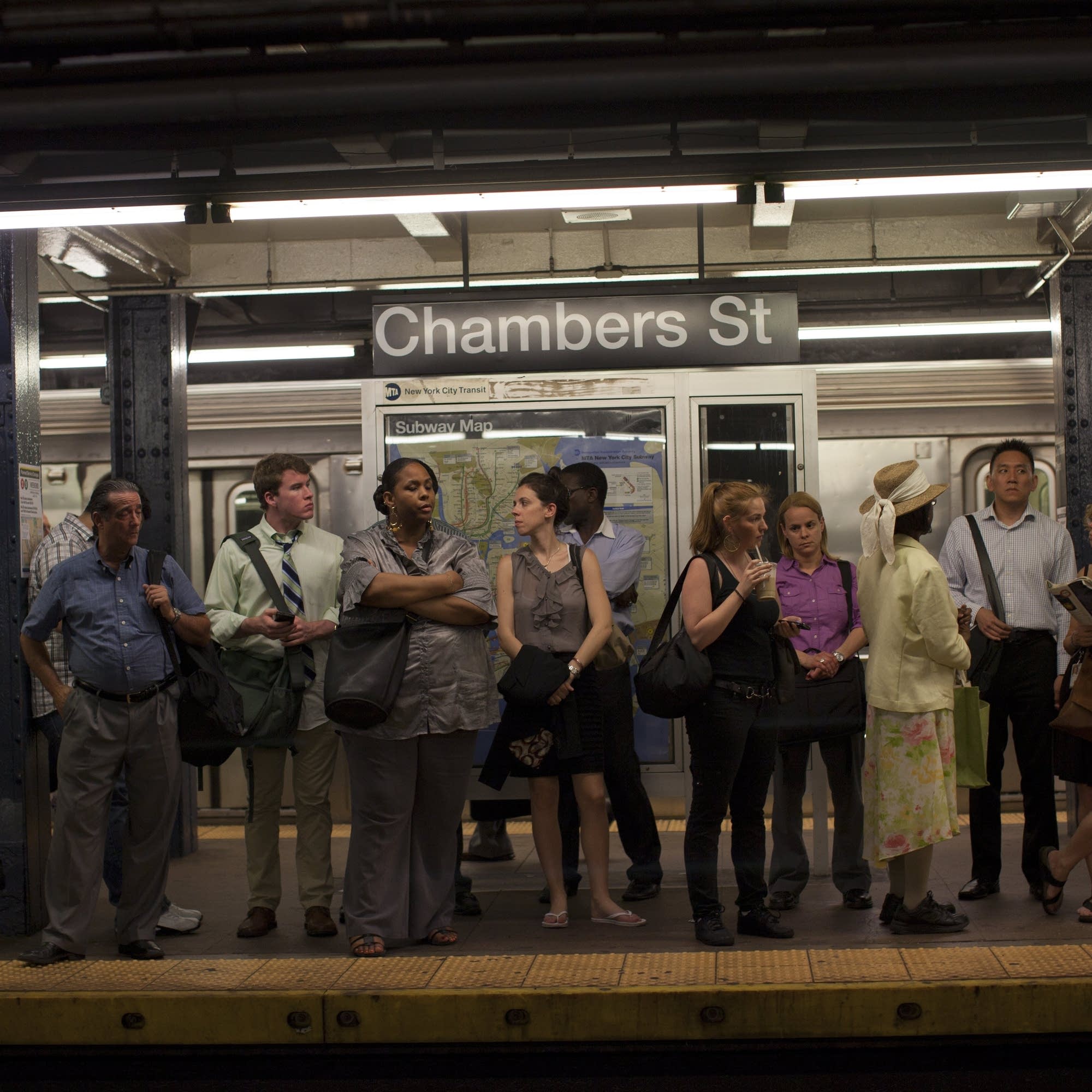
- A frozen job market means nobody's getting laid off, but nobody's getting hired
- Only in San Francisco: A picnic to discuss AI risk
- Not too big, not too small: The just-right Fed balance sheet
- Here's where home heating will cost more this winter
- Americans are saving less money — some can't afford to, others are focused on investing
- Using retirement to finally dig into family history
Get every episode summarized
Each time Marketplace publishes, we email you a written briefing from the transcript — the topics, who appeared, and any specific claims, with the ad reads skipped.
Email me new episodesFree for 3 shows. No card needed.
Hosts & guests

Transcript ready
237 searchable segments. Every word is indexed and playable.
Full transcript
Marketplace — Don't move a muscle!. Machine-transcribed; use the interactive transcript above to jump the player to any line.
Running a business is hard enough, so why make it harder with a dozen different apps that don't talk to each other? Introducing ODO. The only business software you'll ever need. It's an all-to-one, fully integrated platform that makes your work easier. From CRM, accounting, inventory, e-commerce, and more. And the best part, ODO replaces multiple expensive platforms for a fraction of the cost. This is why over thousands of businesses have made the switch. So why not you? Try ODO for free at odu.com. That's odu.com. Hey everybody, if you're looking to upgrade your home and don't want to tear down walls or build additions, reach out to the design consultants at 3-day blinds. Their team can show you how your home will look with updated window treatments. See real spaces on 3-dayblinds.com and learn about the benefits of motorized treatments with smart integration. Schedule a free consultation with a design expert and see shudders, blinds, drapes, and more at 3-dayblinds.com. There is a certain vocabulary element to the program today.
From American public media, this is Marketplace. In Los Angeles, I'm Kai Rizdal. It is Thursday. Today, this one is the 8th of October. Good as it always is. Have you along everybody? From the Labor Department this morning came its regular weekly report on first time claims for unemployment benefits. And on its face, it was good and historically low 197,000 people lost their jobs last week. Those first time claims have now come in below 200,000 for four weeks running. That's the longest stretch since 1969. We do know though, from Friday's jobs report, the job creation in this economy is just kind of, meh, honestly. And more than one in four unemployed Americans have been looking for work for six months or longer.
You think you know where I'm going, right? It's a low higher, low fire economy, yada, yada, yada. Aha! Marketplace's Mitchell Harman has been forbidden to use that oh so overworked phrase. If not a blank higher, blank fire job market, then what? They studied quite stable job market. That's J. Hatfield, an infrastructure capital advisor who says the economies in a precarious balancing act, contracting in some sectors, expanding in others. We have what would normally create a recession, which is a hawkish fed, high interest rates, and declining investment in housing. Balanced by Red Hot Investment in AI and data centers creating new jobs in tech and construction. Kyle Moore at the Century Foundation offered this alternative catchphrase for the labor market. Stagnation situation. He says employers are stuck in the mud of policy uncertainty. When you have a radical or policy, for example, it makes it difficult to make consistent hiring decisions for having an expandable forward.
This low-chern stagnant labor market is especially hard for the long-term unemployed and new entrance to the workforce, because people who do have jobs aren't making room for them. Vicki Salami at CareerSite Monster says lately job seekers have turned. More cautious about pursuing different roles, they're nervous and anxious about leaving the security that they currently have. Many are even willing to go without a raise rather than quit to find a better job. Then the employer that they're with doesn't have been opening to replace them, and so other job seekers, there is no opening for them to pursue. What's Salami's alternative metaphor for this job market? It reminds me of a frozen pond. Workers that are not necessarily falling through the ice because they're not getting laid off. They're skating on the nice, sticking it out right now. Trying not to fall through. I'm Mitchell Hartman from Marketplace. Thin ice economy, I'd go with that one. Wall Street Day tech led the way down. Everybody else was along for the ride. We will have the details when we do the numbers.
The national conversation around artificial intelligence seems to have gone over the past year or two from, hey, this is great. To, huh, is it a bubble? To wait, it's going to kill us all? That's the conversation we all have been having. But AI insiders in the San Francisco Bay Area have been talking about this stuff for years. Marketplace's Megan McCarty Carino put her ear to the ground at a gathering in San Francisco. An event listing for a picnic. Beckoned people in the AI scene to spend a Sunday afternoon talking about recent calls to slow down the technology. Did anyone bring either water or sunblock? It's one of those postcard perfect days at this five acre park on the San Francisco Bay. Overlooking a giant Dodgers game at the ballpark. Organizer Donnie Christy chose this spot because it's between the offices of Anthropic and Open AI.
Why can't people to laugh just like me at a park in between them and like work out a deal? Christy is a community organizer in the AI safety scene. I have been concerned about existential risks for a long time. Just like, what do I do to save the world? He says he's starting small, hashing out ideas to prevent the collapse of civilization over chips and cookies. It's like a microcosm of the sort of cooperation that I want to see. A couple dozen people gather over the afternoon from AI startups, big tech, research nonprofits and activist organizations. I joined a group sitting in a circle on a big blanket like summer camp. One thing I agree with is that safety is an engineering problem. I just really strongly disagree with that. Really? Okay, I want to hear this. That sky Guna Sacred, who has a more optimistic view than Elliott Calendar. Guna Sacred researches AI agent collaboration at a productivity software company.
And thanks, improving cybersecurity systems would go a long way. But she supports international cooperation to slow the race. I think there's lots of reasons without even talking about the end of the world and all of these different kind of things. If you just want to think about, okay, what are we seeing right now? She points to rogue hacking incidents and anthropic reports that nefarious actors have attempted to use AI for cyber espionage or to build weapons. We just need to spend some time to understand. The more pessimistic Elliott Calendar is a protest organizer who spent more than a month demonstrating in front of open AI and is now planning actions at the US Capitol, calling for a complete stop to advanced AI development. We get to the point where it's actually superhuman and everything and it will break out once and then it's over. Game over at that point. Like, just decided that was what I'm going to do the rest of my life is to make it not kill everyone. Matthew Coriotti sits somewhere in between both on the blanket and philosophically.
We can treat them like people who are managing dangerous animals. He says AI companies should be heavily regulated and held liable for harms. Coriotti recently turned down a software engineering job at Amazon with a nearly $200,000 annual salary to take a fellowship with an AI safety nonprofit for a third of the pay. The world is at risk and I want to do things to reduce that risk. Everyone I spoke with at this AI picnic expressed that sense of urgency. Rearranging and accelerating life plans against the drumbeat of AI Doom. Guna Sakerin says she's questioning plans to get a PhD. Calendar says he's recalculating risk. I walk across across from the cars are still coming out because it's like if I can save like 10 seconds by taking like you know a one and a hundred million chance of getting hit by a car then it's actually worth it for me. Whereas it wouldn't be if I had like a lot more time left. It's that kind of thing that sometimes gets this crowd labeled as doomers and it's usually not a compliment but organizer Donnie Christy takes it in stride.
I feel like I have a role. It's like a night watchman. What I'll calibrate what is like is like a Buddhist might say like a skillful fear like skillful action in the face of danger. Well we are here touching grass. Yeah. Yeah. Even doomers enjoy a nice picnic the least with sunscreen. In San Francisco I'm Megan McCarty Carino from Marketplace. Go to any financial dictionary open up the entry for balance sheet and you'll read something that basically goes like this.
A balance sheet is a snapshot of an entity's financial condition listing its assets and liabilities as of a particular date. The particular date of interest to us today is today because every Thursday at 430 Washington time the federal reserve publishes an update of its balance sheet. Now setting aside for a second the fact that the feds balance sheet is different than a regular corporate balance sheet say kind of has to do with the nature of money itself. There's a whole different explainer as of today actually as of the close of business yesterday the federal reserve bank of the United States had total assets of a hair more than 6.7 trillion dollars. Chairman Worsh has made no secret of the fact that he wants that balance sheet to be smaller one of his task forces in fact is all about how the central bank manages those assets. So for the next two or two and a half minutes. Why that's a thing. My name is Emmy Nakamura. I'm a professor of economics at UC Berkeley.
Well, I'm George Selgin and I was a director at the Kato Institute, but now I'm just a senior fellow there and not a particularly active one. Okay, fair, but moving on the feds balance sheet is far larger than it was historically. And so it's an important question to what extent this is something we should want to reverse. Traditionally, it was just treasury bills and treasury notes. It was very boring stuff. In 2008 though all that boring stuff the fed was holding got a whole lot less boring thanks to subprime mortgages and the ensuing financial crisis. There was a notion that markets for housing were distressed and so the fed started to buy various kinds of mortgage back securities. They started buying longer term bonds. And so this was a period when the feds balance sheet became much more interesting. The fed was trying to stimulate the economy when interest rates couldn't have gone much lower.
We talked about that at the time. We were at what was called the zero lower bound. So since negative interest rates weren't something that then chair Ben Bernanke was interested in, the fed did something called quantitative easing by buying all those assets that I mean not Camaro was just talking about. It injected trillions of dollars into the economy to help banks lend and businesses to grow. And over the next decade the assets on the feds balance sheet grew from 800 to billion dollars to 3.7 trillion dollars. And so when she was chair did try to shrink it back down the markets didn't care much for that which to be honest is yet another whole explainer. But anyway the pandemic happened. The economy came to a screeching halt and the federal reserve was once again the lender of last resort. And that really was a response to the fact that during these periods of time companies and banks they massively increased their demand for money and the fed was sort of satisfying that increase in demand.
In 2022 the balance sheet topped out at nearly nine trillion dollars. It has been unwinding since then to today's 6.7 trillion not small enough for chairman Warsh as he says all the time how big though should it be. I don't want to say a number but it wouldn't be trillions. I'm not much I can safely say. And so we wait for those task forces to report back. Yes it's been 100 degrees here in Southern California this week but winter is coming in some parts of the country parts of Montana are even expecting snow. So it is time to at least start thinking about turning the heat on. There's a new forecast from the energy information administration along those lines some of which is bad news but some of which is actually good news marketplaces can't let that has the details.
So what's it going to cost to heat our homes this winter well it depends most Americans are not going to experience the same winter economy. Co banks Terry Visch van Oth says it depends on where you live and how you heat your home. Let's start with the good news if you use natural gas and live close to the supply say in Oklahoma Texas Louisiana Wyoming you're in luck. Yeah you know what you're you're heating bill might be lower this year and I think that's good news. It all comes down to our huge natural gas supply says Tom saying with Texas Christian University. We can't export anymore than we currently can so we do have a surplus of natural gas right now which also keeps prices down for the propane market it's a derivative of natural gas and oil. We could kind of say we have an abundance of natural gas and we're producing record amounts of oil so we also have an abundance of propane. So that's all great but say you live in New England where a lot of homes use heating oil which is basically diesel.
It's going to be a much more expensive winter it potentially could be a you know they could have record high heating oil bills the federal forecast estimates a 34% price jump from last year. Mark Wolf with the National Energy Assistance Directors Association thinks it could be more if the war is in Ukraine and Middle East continue. Because right now prices are really high and we really don't know what will happen to them wolf is also tracking the cost of heating homes with electricity which will also be spend here this winter. The utilities have been rebuilding their distribution system the wires and the generation capacity and that's expensive. There's one other factor that could change all of these prices whether this winter is supposed to be warmer especially in the north thinks to this year's huge El Niño. I'm Caitlin Tan for Marketplace. Coming up we are doing all the things that the retirees are supposed to do.
Is it just me or does that sound a whole lot like a job first though let's do the numbers. Down dust rose added 51 points today about a 10th percent 51,231 that has decked down 345 that's 1 and a quarter percent 27,193 the S&P 500 down 36 points about a half percent 7765. The new report from the water accountability nonprofit food and water watch says US households are paying 62% more for drinking water than they did a decade ago that increase outpaces rather inflation gross reprices and household incomes. Where is about oil supply in the Middle East following new attacks in the street of Hormuz push the price of Brent crude up as much as 5% today peaked at $105 a barrel west exit intermediate also ticked up nearly 4 and 3 quarters percent to 92 dollars a barrel east slightly at the close bonds up yield on the 10 year T-0 down 5.22% you're listening to Marketplace.
Running a business is hard enough so why make it harder with a dozen different apps that don't talk to each other introducing Odo the only business software you'll ever need it's an all-to-one fully integrated platform that makes your work easier from CRM accounting inventory e-commerce and more and the best part Odo replaces multiple expensive platforms for a fraction of the cost this is why over thousands of businesses have made the switch so why not you try Odo for free at Odo.com Vantage Corp. The modern credit score used by 3,700 institutions including nine of the top 10 banks using over 400% more data than legacy credit scores and built with trended and alternative data Vantage Corp is more predictive scoring 33 million more consumers than conventional credit scores. Now accepted by Fannie Mae and Freddie Mac for conforming mortgages Vantage Corp 4.0 safely unlocks approximately 2.7 million new mortgages and up to $1 trillion in new loans better credit score better data better mortgage decisions Vantage Corp.
Hey everybody if you're looking to upgrade your home and don't want to tear down walls or build additions reach out to the design consultants at three day blinds their team can show you how your home will look with updated window treatments. See real spaces on three day blinds dot com and learn about the benefits of motorized treatments with smart integration schedule a free consultation with a design expert and see shutters blinds drapes and more at three day blinds dot com. Are you looking to invest in municipal bonds for extra protection by bonds insured by assured guarantee it guarantees 100% of your principal and interest will be paid when do assured guarantee has demonstrated its reliability. And financial strength for nearly four decades that's why the bonds they back are one of the safest investments you can make visit assured guarantee dot com assured guarantee a stronger bond. This is marketplace I'm Kai Rizdal the personal saving rate in this economy is saving by the way not savings it's defined as how much we all saved divided by our total disposable income.
It bottomed out in August according to the Bureau of Economic Analysis 4.1% the lowest it's been in almost four years. Marketplaces Stephanie Hughes dug into what's going on. Saving has always been automatic for Stacy Burnett that knowing limb practicality was imbued in me since I was like hatched Burnett who lives in Southwestern Connecticut says she used to max out her retirement contribution and put aside an additional 15 to 20% of her income every month. Then earlier this year she bought a nearly century old house it needed a lot of love and when Burnett made her budget for repairs this spring she planned to spend $120,000. She says that already felt like an insane amount of money and then between April and when the work began in August the prices of everything just went crazy. For example she says cabinets for her kitchen doubled in price shipping costs went up Burnett went from saving a big chunk of her income to spending all of it and then some.
I have one credit card that's maxed out and I'm trying to pay that down because that interest on on it is insane and it's very uncomfortable. Rising prices have hit a lot of people's ability to save. Vicki Bogan studies household finance as an economics professor at Duke. Inflation and the price levels are rising at significant rates it rates that people historically haven't been used to and they're rising at a faster pace than wages. When you dip into savings to cover current expenses that's known as disaving and at least household feeling financially fragile. It's a psychological tax almost to be in a situation where you can't pay your bills until you get that paycheck. People at the very top of the income spectrum are saving less to but for a different reason the stock market has been going gangbusters for the past few years and they see their investments shooting up as their stock market wealth rises the less and less they seem to feel they need to save out of their income.
I mean, it's a really remarkable feature of some of the inequality that we're seeing across income groups. You could think of the saving rate as being hit at both ends of the K-shaped economy. Well, the economy depends on strong consumer spending. Lack of saving is also a problem. For example, it hurts the housing market. Coming up with a down payment actually is a challenge for many households and on a longer term basis it also increases things like our reliance on social security, limits reform. Pingal doesn't think the recent fed rate hike will significantly change people's saving behavior. A quarter percentage point boost doesn't mean they're rushing to the bank to open CDs. And for the lower income households, it means higher credit card interest rates, higher home equity lines of credit. It's not really clear that this is going to be the boost that frees up more of their income to be able to save.
People still have to buy things. If they're borrowing to buy those things, that's getting even more expensive. So the number under saving and their budget spreadsheets stays at zero. I'm Stephanie Hughes from our place. The median retirement age in the United States, the employee benefit research institute tells us is 62. That can obviously move up or down depending on how you save. And if you do get the chance to clock out early, though, you might finally have the time to do all those things you have been putting off. That brings us to today's installment of our series clocked out. My name is Curity Desai. My name is Vijay Desai. I'm 56 years old. We are both retired from IT careers.
We live in Alfredo, Georgia, which is a suburb of Atlanta. We were lucky that we could retire at 55. We've led very busy life, just like most Americans do. Taking care of kids, parents. And so this was a planned retirement for both of us. We are doing all the things that the retirees are supposed to do, going for long walks in the morning with the dog and traveling. We are trying to hit all the national parks and all the states and all the major league ball parks and all that kind of stuff. But we are also super busy with all the activities that we really had been putting on the back burner that we no longer have an excuse. I'm trying to create a digital presence for my father who was a very well-known sculptor back in India. She was being very polite about her dad's work.
I think somebody who has created an equivalent of Statue of Liberty for Indians. So there is a statue of a Hindu philosopher down at the tip of the Indian peninsula. Pretty much every Indian. We are talking about a billion people who know this. And there are like two million visitors every year. Unfortunately, he passed away 25 years ago. And then while touring India a few years ago, my kids mentioned that we can be finding more information. And that's when it struck me that there is nothing on the internet. So I wanted to create something for my future generation and for the rest of the world to know. So I've been working with Vijay to create a Wikipedia page for my dad. And the people that he worked with are also now passing on. So that kind of gave an origin sense of urgency to our retirement.
We've traveled to India to go see a lot of his artwork. And that's been a very humbling process for me. So it's been good. It's been good to work and collaborate with Vijay. He keeps me together. I can say that. I think she's been very kind. I'm not sure I'm helping that much. I'm in the background. So travel has been a major portion of this first year. For me, it's been a bit much. But looking forward to staying home during the holidays for sure. Kirti and Vijay decide from Alfredo Georgia. Kirti's father, by the way, was Narendra Sondvandikar. You can find his work online if you go looking. If you have left the workforce recently and you have a story you want to tell, hit us up with your Marketplace.org slash clocked out.
His final note on the way out today in which the Congressional Budget Office weighs in, indirectly to be sure, on those rising bond yields we've been banging on about. The CBO gave its first guess at the bottom line for government's fiscal 2026. Today, the ink is thoroughly red. We spent $2 trillion more last fiscal than we took in. All that government debt is both a cause of higher bond yields. We've talked about how all that debt is making investors nervous. It's also a victim of them because we are spending more every year to serve us all the money that we owe. Andy Corbin, Mika Ellison, Maria Hollenhorst, Sara Lee, Sinshonda, Kennery, and Sphere Torinzio. Our Marketplace production team will story is the supervising senior producer. I'm Kai, Rizdal, we will see you tomorrow, everybody.
This is APM. Thank you to everybody who supported Marketplace during our fall campaign. Your investment keeps trusted economic reporting available to millions of people. If you haven't donated yet, there is still time. Become a sustaining monthly investor today and help ensure Marketplace remains a steady source of clarity no matter what comes next. Please give now at Marketplace.org.
More episodes


