Get every episode summarized
Each time LSP's Ear to the Ground publishes, we email you a written briefing from the transcript — the topics, who appeared, and any specific claims, with the ad reads skipped.
Email me new episodesFree for 3 shows. No card needed.
About this episode
“It might be one of the most powerful evenings I've ever participated in. I mean that sounds hyperbolic but it was, it was insane. It was just so, you said sit in on this meeting but I wasn't sitting.”From the transcript
When a federal immigration crackdown came to rural Minnesota, farmer Bridget Lux knew she had to do something. When she walked into a community meeting, she realized she wasn’t the only one looking to take action.
More Information:
• Contact Information for LSP Organizer Nick Olson
Get every episode summarized
Each time LSP's Ear to the Ground publishes, we email you a written briefing from the transcript — the topics, who appeared, and any specific claims, with the ad reads skipped.
Email me new episodesFree for 3 shows. No card needed.
Hosts & guests
Transcript ready
471 searchable segments. Every word is indexed and playable.
Full transcript
LSP's Ear to the Ground — Ear to the Ground 408: Civic Spark. Machine-transcribed; use the interactive transcript above to jump the player to any line.
It might be one of the most powerful evenings I've ever participated in. I mean that sounds hyperbolic but it was, it was insane. It was just so, you said sit in on this meeting but I wasn't sitting. I was standing because we were packed like cigars, you know, and this tiny little room and to just feel so much commonality. So much community. Welcome to the 408th installment of Ear to the Ground, the Land Stewardship Projects podcast on family farming, regenerative agriculture, community food systems, and local democracy. I'm Brian DeVore, editor of the Land Stewardship Letter. Last spring when I pulled up to Zion Lutheran Church in the central Minnesota Farm Town of Litchfield, it was a hive of activity. Meals were being prepared for seniors and preschoolers as part of a partnership with Lutheran
Social Services. A daycare was full of dozens of kids and on that particular day a rummage sale was taking place. It's clear this church is one of those places in a rural community that serves as an epicenter of public involvement. Over the past year or so, venues like this church have become important gathering places for rural folks looking to take concrete action around how to support their immigrant neighbors. That support is needed now more than ever, as a false narrative is being propagated that the majority of immigrants are here to do harm to our communities. Here in Minnesota, this war on immigrants came to a head earlier this year when some 3000 federal agents working for US immigration and customs enforcement, otherwise known as ICE, swept into the Twin Cities and arrested hundreds of people. The campaign termed Operation Metro Surge became at times violent. In fact, two Twin Cities residents who were present during ICE actions to monitor the activity were shot to death. In general, the flurry of ICE activity in Minneapolis and other
cities has oftentimes been characterized by the suspension of basic constitutional rights, such as the right to be brought before a judge to determine if someone's detention is legally valid. Immigrants with no criminal records are being labeled as violent offenders and shipped off to countries they're not native to. The ICE agents are often masked and recordings show them refusing to identify their official capacity. Not surprisingly, the ICE activity in the Twin Cities has received national and even international news coverage, but ICE activity in rural parts of Minnesota has had a devastating impact as well. Over the years, many agricultural communities have seen an influx of immigrants who come to work in food processing facilities, as well as on farms, construction sites, and other aspects of the economy. In those communities, just as in the Twin Cities, ICE agents have been undertaking an aggressive campaign that too often violates the basic civil rights of immigrants, as well as native foreign residents. The result has been the creation of a culture of fear,
where immigrants are afraid to leave their homes to go to work or buy basic necessities such as food. And as I'm recording this podcast, it's emerged recently that the federal government recently purchased a shuttered private prison in the Western Minnesota community of Appleton, with the intention of turning it into an ICE detention center. It's clear rural America is in the middle of the fraught immigration issue, whether it likes it or not. At the Land Stewardship Project, we center our work around our shared values of stewardship, justice, fairness, democracy, health, and community. The kind of world we're trying to create is one in which all people, no matter their age, race, gender, or immigration status, can live safe and productive lives and contribute to their communities. As a rural organization working toward our mission of promoting an ethic of stewardship for farmland, sustainable agriculture, and healthy communities, it's important that LSP speak up on immigration issues. We depend upon immigrants to contribute to
a robust food and agriculture economy in this country. As our latest long-range plan makes clear, we will not have a sustainable farm and food system until it's sustainable for everyone. That's why LSP is working closely with partners who are on the ground in immigrant communities. We're one of the dozens of Minnesota groups that, in 2024, formed the immigrant defense network, with the aim of protecting the rights of immigrants, empowering immigrant communities, and ensuring accurate information is being circulated in those communities. LSP co-facilitates the greater Minnesota caucus of the immigrant defense network. And as part of our involvement with this issue, we've been helping coordinate constitutional observer trainings in rural communities. These trainings provide participants the tools to observe and document law enforcement interactions with immigrants and to inform the detainees of their civil rights during the interactions, as well as to provide them resources, such as contact information for legal services. Since August of 2025,
Nick Olson, a farmer in Central Minnesota who has long worked as an organizer with our farm beginnings program, has been facilitating constitutional observer trainings at community centers, churches, and other venues throughout rural Minnesota. And people have been turning out for those meetings in droves. He estimates that so far at least 900 people have undergone LSP lead trainings throughout Western and Central Minnesota alone. Bridget Lux is one of the people who took part in a constitutional training led by LSP. Her family has been involved with dairy farming for three decades, and currently they milk around 100 cows in Central Minnesota. Bridget also works as a church administrator for Zion Lutheran. Like others who underwent the training, she found it to be a stepping off point for her to get involved in supporting her immigrant neighbors in other ways. For example, Bridget helps spearhead a mutual aid effort based at her church to provide deliveries of food and other needed items to immigrants who felt trapped in their homes. She says the constitutional observer training she participated in gave her the impetus to finally do something
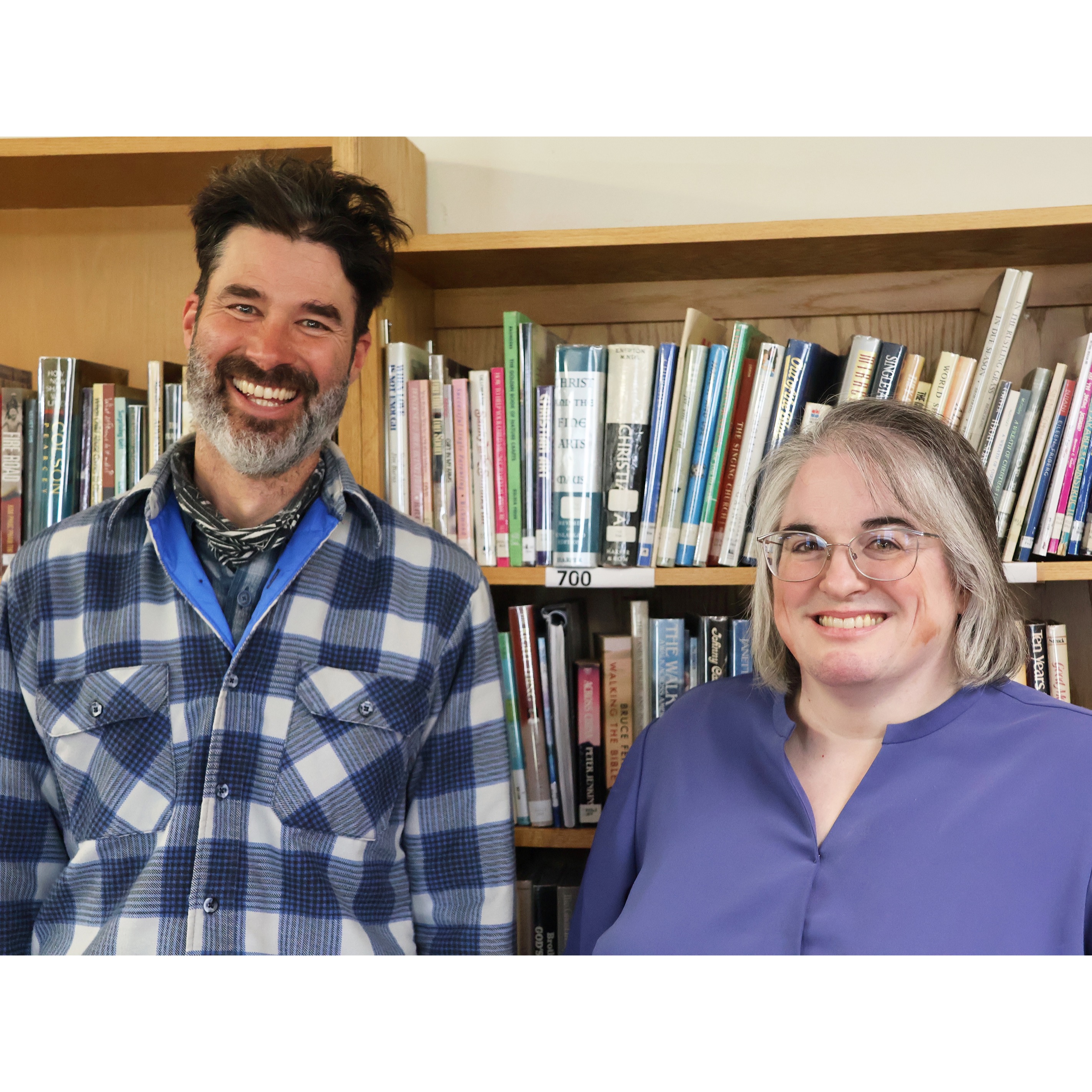
about the injustice she was seen in her community. It also helped her realize she wasn't alone in her concerns about what's going on when it comes to fair treatment of immigrants and others. Back on that busy day last spring, I met with Bridget and Nick in the small library of Zion Lutheran to talk about how something as simple as a community meeting can help spark wider civic action, as well as the power of being in a room with folks who care and how standing up for social justice may look a little different in downtown Listfield than it does on the streets of Minneapolis. Nick started our conversation describing why LSP is involved in something like constitutional observer trainings and how such gatherings can often be a foot in the door for further positive community involvement. In land stewardship projects mission which hasn't changed that much, at least in the 18 years that I've been here, maybe even in the 40 years that we've been in organization, there's a portion of our mission that that states healthy rural communities. Front and center loud and clear, it's never been kind of like hidden, it's there. As a sustainable
ag organization, we believe that agriculture is a huge part of sustainable rural communities. But we also recognize that it's not just agriculture, right? There's a lot of people, especially as the years go on, that are actually less involved in agriculture, but still have that identity of a rural community member. So, land stewardship project has adapted and been very well aware of that. So, these constitutional observer trainings, which essentially were helping community members and support their immigrant neighbors by being trained in how to observe interactions with federal agents. One thing that a lot of people were surprised about during the surge of federal immigration in the state of Minnesota is that it went far beyond the metro. So, we heard a lot about things going on the metro, which was legitimate. And in terms of volume, yes, there was a lot more activity happening in the Twin Seas, but our rural communities were greatly impacted as well. And if you think about a town like Lichfield, that's 6,000 people, the day that we had 14
ICE agents roaming around town, that's a significant impact on the town of 6,000 people. So, it became very apparent to land stewardship project that these constitutional observer trainings were needed in our rural communities so that our rural communities could step up and help keep their members safe as well. So, we actually started these back in August. We started constitutional observer trainings back in August of 2025. And this was just a way, I will say the constitutional observer trainings, I was really impressed. They were a training, but they were also in organizing strategy. So, a training brought people in the door. A meeting might not always bring people in the door, but a training brings people in the door. They've learned new skills early on. The constitutional of trainings were kind of hypothetical. If this might happen, we went to Los Angeles with a delegation from the IDN because they were doing these trainings and Los Angeles, they were doing the trainings because it was needed because there was a surge of federal immigration enforcement there. Here, it was still sort of hypothetical, but we were
anticipating Minnesota to be a target of this administration. So, with that, we started doing these trainings in August. I think the first one that I did was in Montevideo. IDN was doing others throughout the state. A lot of our IDN partners are metro focused, so they were focusing on training folks up in the Twin Cities area. And then, as word got out, people started contacting us and saying, like, hey, this is important for us and our community. So, I'll sit and done from August until just a couple of weeks ago, when Stuartshire Project was engaged in a lot of constitutional observer trainings all throughout Greater Minnesota, we ended up training over 900 people in rural Minnesota through our constitutional observer trainings. But then, as that enforcement started to ramp up in our rural spaces, those trains became almost a necessity. Communities were asking, like, hey, we need this. We have people in our community who are vulnerable and we have federal immigration enforcement in our communities. Not theoretical anymore. It's not theoretical. And when that jumped from theoretical to action, like, that's when we saw the volume just explode of who was
showing up. But again, people were showing up for what I mentioned before. Like, it was an opportunity to engage the community. So, when I think about the training that we did in Lichfield, the community, the constitutional observer training that we did in Lichfield, which was a little late to the game. And part of that is because it's hard to organize in your own community. Bridget and I have talked about this. Yeah, I mean, sometimes it is easier, right? To be, I'll go support Montevideo, Granite Falls Glencoe, but like, when it's your own community, one, you have more skin in the game. But two, it just feels, I don't know, there's a little more pressure. There's a little more pressure. And I'll be honest, I kind of like, I made a list of people that I wanted to invite to a constitutional observer training the week before Christmas in Lichfield. And I sat on that list. And then I sat on that list. And then I showed up in Lichfield on a Saturday. And I engaged that list. I sent a text to 12 people and said, you should invite your friends to this training. And I rented a room in the library that helped 40 and 110 people showed
up. Well, many people that I didn't know. Bridget was there. It was great. Bridget was on my original list. At that thing, we did a constitutional observer training, but it was really apparent that there were so many other needs that folks wanted to lead in and not just absorbing ice. So we had a group immediately identify food and food delivery. It was like, key. So folks just took that and ran. Mutual aid was this thing. People were like, we need to make sure that there's money available for people in our community for whatever that they need. And Bridget grabbed that and took that right away. There was a group that was like, hey, we need to make sure our kids are safe at the schools and all that. A group grabbed that right away. So it was really amazing to just see folks come together, grab those spaces. And we're still meeting on a regular basis. And still continuing those things to move forward. And that was happening in every community. So that was happening in Brenner. That was happening in Morris. That was happening in Alexandria, Glencoe. And what we've done now is we've really connected those communities. Because when Bridget said, I'll do the mutual aid stuff. And then I think you asked me, how do I do the mutual aid stuff? I said, I have no idea. But I know someone in this community who they started that last week,
let's connect. And then Bridget was able to help the Glencoe folks out because they started later than we did to say, like, hey, here's how we can support that. So we started to really lean into each other as rural communities. Because we realized like what we were doing was different than what was needed in the Twin Cities. So we had to figure out some of those things on our own with support from all over. And that I think really built this sense of community and solidarity. And we're actually going to do a leadership assembly for folks from Central, West Central, Minnesota at the end of May to just bring together folks to continue to say, hey, what can we do with this? Where do we want to keep this going? Where do we fall short? Where do we do really well and build that out together so we can keep building for our communities? I think that's a really good point. And the issue you brought up of it's it's almost harder to organize in your own community is interesting. Also in the Twin Cities that was such the epicenter what was going on, it's where all the media attention was and that type of thing what I saw was because it's so much more densely populated getting people together was I think fairly easy. Like you know the you can
do it you can say block by block or whatever but here you know it's not as densely populated that type of thing. And I also wonder that it's good to hear that you're doing this leadership assembly and connecting other communities because the big challenge is once the the intense threat is passed and maybe we're more in a low level situation people tend to how many people do we have out of the last minute? Exactly. You go from 140 down to 20. I mean last minute was yeah. So yeah that's exactly right. Yeah. So finding ways to keep folks engaged and again it probably doesn't need to be that intense level. Like people still are recovering from that intense level but we do need to keep folks engaged for whatever snacks right. We all want to build better communities period. Right. So keeping folks engaged in that process is one of the one of the big questions and desires that we want to figure out. Do you have a sense of how big the presence of the immigrant community is
here in Lichfield? Like percentage wise and so forth. Yeah. I don't and it was actually interesting to hear folks kind of well one is we've we all met a lot of new people in this process right. From my understanding in Lichfield is there's a lot of families that have been here way longer than I have that are part of the Latino community right and and then there's newcomers right. So there's also that kind of build out there as well. So one thing I think that and this is this happened in a lot of rural communities but happened here particularly I was like we had some good liaisons of folks that like have been here for a while that are part of the Latino community that then could engage with folks who are newer here that weren't going to show up at the library because that you know they'd probably didn't hear about the meeting or I think it's just a second language all those things. So we had a lot of folks being able to do those bridges and I think that that really made the work that we were able to do here strong. So Bridget you took part in one of these initial trainings here in Lichfield. So what was your original motivation or what got you interested
in? Well I guess it depends off our back we want to start that answer. I'll go with the shorter version is just you know probably ever since this administration began their term. In the back of my head I've always like well Bridget wanted you to do something about it. When are you going to do something right it's easy just to lament the news and to wake up and and be horrified you know everything but there was something that didn't even feel like a decision I guess maybe when I moved Minnesota I just thought we have to do something and I made two phone calls and it was one of them you know I mean and these are some foundations that we had built years ago and and said what are we going to do? And Nick says funny I was just going to text you we have this meeting you know we'll do it next week. So I think there's something really really powerful about being able to do something and and that was just the underlying emotion that I think that we were feeling and hearing in the room that night of the library and then for the next month just people just so grateful to be able to do something and whatever version fit their lives you know everyone's got different skill sets and time frames and and the in the connections I mean I'm just going to bet you know
to read from what Nick was saying that creating new relationships and this opportunity to meet parts of your community that you've never met before just feels bigger than any of the horror maybe so yeah but I'm gonna put Nick on the spot and ask him if you remember when we first did we did a whole lot of small group racial justice stuff years ago and I just feel like this was a really solid foundation for maybe some of the core parts of this group and with that process but I'll let you go. I want to say it was either in 2014 or 2015 Land Stewardship Project started to do these racial justice cohorts with our members yeah and that spun off of a lot of work we have been doing over the past we worked with a couple really strong partners to do these racial justice cohorts and they were they were geared for rural folks and they were geared towards farmers and we were bringing people together and we were mostly meeting up in the Twin Cities to meet with some of our partners and I want to say we did those cohorts for three or four years but then a couple of us
had this idea of just like why am I always making people come to Minneapolis right like we're engaging like there are issues there are things happening in rural communities so we piloted a rural racial justice cohort in Lichfield at the Rosemary House which is a community space just down the road from here and I think there was about 10 or 12 of us from the community and that was the first time I really had met like Bridget and I talked before but that was the first time where we kind of went and depth and we did we did a we did a in-person cohort that met I want to say five or six times to really start to unpack some of these these issues and how white rural folks in particular can show up the challenges all of those things but when I think about what Bridget's saying is like a handful of those folks dove right in during this past January when we had ice presence in our community and we needed to like build in so that foundation was being built yeah and I when I think about a lot of the other folks who had participated in these racial justice cohorts through LSB starting back in 2014ish
those folks were also engaged in their rural communities because I'm still in communication with a lot of those right and when when the ice search hit some of them reached out to me what can we do some of them share things hey here's what we're doing so I really feel like we were able to respond well in some of these rural communities because we had been laying that foundation for for a long time yeah and having those hard conversations with people in rural communities grappling with some of these things trying to figure that out um but even Bridget and I reflected like like yeah we did that x amount of years ago but we didn't we kind of sat with that and we like I don't think I can say and then we did these four things in the community of Litchfield over that time but now I can say we did right like we were when when this came down in in January of 2026 we were ready we were engaged and I think that foundation really helped us get to where we're at and what's going to push us to keep going yeah well Bridget was it Nick was talking about if you just said we're going to have a meeting but the fact that he said we're going to have a training it was that was that kind of a draw for you because you're like you I want to do something and maybe a meeting is a little bit too
you know we're just going to talk about how bad things are yeah right right I think there's truth in that and I heard that from a lot of people in the community to even after the meeting like oh I'm so I'm sorry I missed that is he going to do another one you know I mean that training piece was huge and even the training itself like just opens itself up to more conversation or lets people feel empowered in different ways I think outside of the immediate impact of ice right now so yeah he's on to something with the training thing yeah so what was when you actually sat in on the meeting what was I guess some eye-opener for you or what was it that really struck you and it couldn't it doesn't have to be just about what you learned about being a constitutional observer but just in general what did you it sounds like you found it to be an experience it was worthwhile for you no man you know what struck you it might be one of the most powerful evenings I've ever participated in I I mean that sounds hyperbolic but it was it was insane it was just so
you said sit in on this meeting but I wasn't sitting it was standing because we were packed like the guards you know it's a tiny little room and to just feel so much commonality so much community I mean I looked across the room and I think I maybe knew 15 people wow that's pretty cool yeah I mean I mean that in a good way and yeah it's not the people you expect to see there right the majority it was other people yeah so that was my biggest takeaway I mean I talked about that meeting in general terms for a long time in safe spaces I guess but and it just led the foundation you know we or I I guess I just feel like we've created relationships that there's there's connections here that are not going to go away in whatever the future may hold to in this community and that feels invaluable yeah yeah where there's some people there that you're like well I didn't know they cared about something like this wow yeah and as and as the meetings progressed I would say there was more of them and that was and I've
had the same experience I think I can say this here at church at Zion you know like I can be kind of cynical right about the political differences and the splits that feel obnoxious but yeah the people who feel the same that has been just refreshing and heartwarming and I mean I think if Nick and I went back to those early 2015-20 20 years we would feel say that we felt kind of like a minority or pretty alone yeah and I don't quite feel so much that way anymore maybe some if I get out to my neighborhood so talk about what what happened after that it sounds like you were you were able to put into action some of the stuff you discussed at the meeting and learned about it to me but talk a little bit about the what happened afterwards well Nick referenced him but you know he had some I mutually was sort of the you know the area that I decided I could focus on or another woman and I focused on together and Nick had the resources of other communities that had done it well and we're
a way to start and you know a shout out to Zion's leadership that let us use the infrastructure here so we and because I really felt like this had to be done quickly like we had to take advantage of this moment when people were impassioned about it and wanted to give money and when were you when it was early January early January okay so yeah thanks were yeah it did feel like we're behind yes we're we're trying to catch up so yeah and I think within 10 days right we had a mutual aid set up and go on you know I was really I was adamant with you know every level of like you know Zion leadership and like you got to make this decision in this email two day you know I think that that's an important point people get overwhelmed there's so much to do what do I do I got to do everything right so like you you said I can focus on I did yeah and I think that was key I'm Nick is a great organizer so he divided us into subgroups and and that made it doable for everybody and there was people I mean people with just great skill sets on each of those categories you know my store store spreadsheet makers or signal users or people like me who just happened
of access to the right infrastructure to just keep moving things forward and I think when you have momentum right and you can keep the momentum going that's that's how you create success too so that just happened to be my piece of it yeah what I had to offer it but I will say being part of the larger group and hearing the stories and the anecdotal pieces of what other people were doing the people who were doing the constitutional observers training or watching it gave me useful stories like actual stories right like so when we talk about conversations back in our families and in our communities when you have a story of somebody who was impacted by it that's different than something that's abstract and Minneapolis yeah and that was really really valuable to me in conversation where people had maybe observed a situation with ice or something like that yeah and you know to hear stories of specific families who hadn't been out of their apartment in a month you know whose savings that they had so carefully accumulated it were just disintegrating in front of their eyes just to buy groceries yeah so to be able to tell those stories right those
are that's that's human interaction that everybody can relate to yeah and so that's the secondary piece of it even if I wasn't involved in the delivery of those groceries you know you're hearing those stories and and I think yeah that was critical so tell me about how you set up the mutual what was the actual logistics or what what were you doing what are all your deliveries all that I think so much of this whole process was predicated by trust and by nimbleness right like we didn't we chose not to bury ourselves in a whole lot of guidelines a whole lot of paperwork and just that well if we have to change later on we will or if we have to figure out later we will so that was key you know Zion had electronic like electronic giving structure we could use a website that we could use as a you know so we had the links we had a check in a coat that I was thinking I had thought I was going to close next week so instead we just allocated it to this type of thing and then just a central point in the community right when people needed to come pick up a check or needed a place to be this is an easy place that's accessible to be at I guess um so the literal community raised
like nine thousand dollars between January 15th and and now it's you know it's obviously kind of come to a kind of a stencil at the moment but and we distributed over six thousand of that really fast mostly in terms of rent and utilities groceries it just doesn't add up as fast and all based on somebody who knew somebody who needed something and made the ask so we chose not to know names you know right we it was just that network of community were you surprised that the people really stepped up in that there was this you were able to make an impact so quickly no no I think people want to help their fellow people when they see and hear a need I really do I mean that's yeah but I think it that's human nature that it had to be immediate so to go back to that again so I wanted to talk a little bit about how so part of this is trying to create more dialogue to use that word you know that's so popular but it to basically have conversations with folks
that maybe you don't agree with don't see things the way you do or some of the stuff that you've been involved with don't quite understand you know maybe this honestly it's like I don't understand why why this you know why people are involved with this and that type of thing did you that this spark any conversations in the community that maybe we're uncomfortable but yeah that kind of where you were able to maybe felt like you were in a better place to maybe explain yeah this is why it's important to be involved with something like this it's too cited right in the beginning we were really concerned about security keeping people safe and so it felt like something that I wasn't that I didn't talk about right even in the language when we were inviting people to contribute to it we kept it kind of vague like if you knew you knew right and if you don't want to know then I don't want to hear about it you know and I don't know if that's I mean so that's like the antithesis what you're saying but that was the necessity then so I think now is the time when there's stories to be told and I am just such a firm believer that when it's stories about people
it's not stories about theoretical policy or about you know some imaginary bad person somewhere else these are just our neighbors who work in the business down the street that's where it's been useful really really useful to me to have what what hit home for me is when I did a food delivery to a family and I was like oh wait there's someone who lives right in my town who's too afraid to leave their home to get groceries and they have kiddos inside that house that's not okay like nobody nobody would think that that's okay right and that's when it really drove home of just like here's the humanitarian piece of this right like again that didn't then lead me to go to the bar and be like hey let's talk about policy in this country right but like if I could share that story like everybody in my community would say yeah you're right that's not okay it's not okay that there's a family it doesn't matter who that family is it's not okay that there's a family who is afraid to come out of their house and therefore like they're struggling to like put food on the table right so I
think those are the pieces and like Bridget said like these are our neighbors these aren't like these theoretical people who live somewhere else like these are these are the people who send their kids to our school these are the people that help make this community tick and we need to look out for each other right and we would do the same in another situation whether it was a natural disaster or whatever that would be you would hope your community would step up in that space so I think in thinking about the language that can bridge the gaps versus polarize us I think Bridget's exactly right those stories those localized hey these are community these are folks you know that your kids go to school with those types of things that does start to resonate with people it doesn't mean that they're not going to hit back with like the the canned rhetoric but again I think having some of those spaces to have those conversations does make a difference and you know I think having a place also like Zion that's a pillar of this community it's right in the center town it's been here for a long time there's lots of folks involved like it also gives that some
validity too of just like there are people in this community that that are a part of that so anyway I think all in all but I think Bridget's right I think there's still like I don't want to paint a rosy picture there's still plenty of people like we'll we'll look at their election results and like it'll paint a different picture but how do we start having those conversations or not start how do we continue having those conversations and maybe how do we have more of those conversations I think that might be something that we really want to think about as well within the community it is a question about how to get braver I mean it really is I think about it at home a lot forever and ever I've always made treats for the barn there's always brownies and cookies in the barn right and I will say a lot of my employees and a lot of my neighbors and friends that come to that barn and eat those cookies and come tell me how good they are you know proceed to have a conversation or say things not a conversation say things that I don't want to hear right like I don't want to know that about them but I've always chosen to think that the commonality of food or the commonality of being neighbors or whatever it is is bigger than those differences I mean just
to repeat it this just I just feel like this just gave me this tool this like workable thing that I could actually have a conversation about when before I was never willing to have a theoretical conversation with them to debate the issue right you know so you had some of those conversations sorry to make a bad man well I remember early on Bridget when we were doing those cohorts again X amount of years ago Brian's showing the blanks for us with your your great knowledge but these are some of the exact same things we were saying which how do we talk to the neighbor how do we talk to the in-law how do we talk to like some of our friends when we would rather talk about cookies the weather and crops you know but we have to be brave we have to figure but we also have to be strategic right like there's bravery but there's also being smart about it right because we know the types of things that can be said I can slam that door shut right away so what are the ways to get your foot wedged in the door and just wedge it a little further each time you're engaged with those folks
and still figuring it out but I think we do have some more stories we have some more like personal experiences now that maybe we didn't have a few years ago that we can bring into those conversations that I think will help folks relate understand a little bit more well so that brings up another issue that kind of connects to this is you know the big popular mantra out there is the urban world divide I guess I'd be interested in you folks's thoughts on here we are in a rural area where people maybe are in the minority as far as their view of immigrant rights or some of these issues and frankly people in their urban areas tend to dismiss the rural and say oh they're just so close minded and they're not this I think to me gives me a lot of hope that there is there's folks like you out there and you're but you you also you can't isolate yourselves here you
have to work with other folks who are maybe think differently and frankly in the urban areas people can kind of cut themselves off in certain communities or just go to certain or businesses that type of thing here you you don't have that you don't have that luxury if I use that word you have to interact with folks you have to live with folks they may be the one that pulls you out of the ditch in the middle of a snowstorm even though you don't agree with them on certain issues does this help with that a little bit or also I guess I just say you know are you a little bit proud that you're going against the type the the general the stereotype they have to urban folks have of what rural people think that kind of thing yeah it's it's because a lot to the polarity of the times right now all of that right in both directions in every way I mean I we had a meeting here a week ago and the conversation came up that the cities is a big scary place to go because you know
you're gonna get mugged and your car windows are gonna get broken right I mean so it goes in my direction and and I like what you're saying about the I think there's a beauty in having to live in a place where you cannot be polarized what we are but you know we're forced out of it and that goes to my point about when I said earlier on like it's hard to organize a girl community right because when Bridget and myself and 150 other people put themselves out there like even if it was sort of on the down low people knew right like oh you're that guy or you know oh you're the one doing that like again that's that that was a little the trepidation of like all right we're gonna expose ourselves and we're gonna be building the strong community which was the end result which is way more powerful than like the the potential of having a negative interaction in the line at the grocery store but you can't avoid it so because it is a small town like I'm I'm going to run into people and sometimes I think your mind plays tricks on you too it's like
I don't remember where I was but I was like oh that's I found out I helped facilitate this meeting and now he's given me the stink I at the lumberyard you know probably not true at all right like you probably had indigestion because you ate a bad lunch um but like you start to run a few of those things in your head but at the same time did have people kind of that I wasn't expecting to to come in or ask questions and it gave me a sense of hope you know like Benjamin said I've been here for 15 years now and when I looked across that room at the library same thing I was like I don't know the majority of these people are and now I do you know now I have a new barber and I you know just like all these fun things that have come out of that how do we keep that moving forward how do we double that triple that quadruple that and then deal with the nuances that come with it because there's a lot of them so yeah I guess that brings us to talk about I mean do you have any I know you you guys aren't the experts on you know any of this but you have have have been involved you've
taken action you see in Nick has been involved with us for a long time but you you rigid you and I think this is so normal people they go wow I gotta do something I gotta do something and you did you know you you have been doing something but any advice to folks who maybe are in the same situation what and it could be any issue but an issue is like well I'm following it in the news I'm seeing this I'm hearing rumors all this what do I do I had a friend of mine here at Zine who's an older lady and she said I can't do much but you know she was talking about things like I want to make her and her daughter had done it in a different community I want to make soup for every rapid responder or every community constitutional observer so I guess what I'm going with that is to say just do small things right like it doesn't have to be huge or glorious one little thing at a time you probably have a better way to answer that no I think you exactly I think we get stuck on it has to be the big thing yeah like getting this goes into unfortunately the the
way in which information is shared now and folks like if you're not doing the thing then you're not doing anything right but what we found out is like we needed a lot of people to be doing a lot of small things to then build up yeah they're not as glorious you're probably not going to put them on social media right but they're so needed so I think we also have to move out of that mentality that like if it's not the biggest coolest newest thing then well then I just it's not worth me doing whereas like you said this person's like I can make soup yeah I talk to a friend who made bread you know just like those types of things all added up into feeling like people were in it together for each other and that's what we need and bring bring bring what you got bring the skills and talents that you got but how do we get folks to hop off the couch and do that or you know come into that and again we had a moment where it felt so urgent that it just flung people off the couches right there just like but what do we do now when when it's it is less urgent but yet we still have all these same needs in our community so and I think part of that is just keeping folks
engaged I think part of it is being creative and making some things feel new and fresh every once in a while so that you can reengage folks but again it really has built I think a really strong foundation for us that I don't want to say wasn't here before because all these these aren't new people these are just people who came together right so how do we build on the networks that they have that maybe didn't come in for this particular piece but could come in for another piece because essentially what we want is we want stronger healthier rural communities and we have the people now set up to really kind of move some of those things forward Bridget what's been the most surprising thing for you out of this experience that you were like oh you know you always go into some ideas of maybe how this is going to go or what you're going to get out of it what's surprised you I think the the things that have remained the issues that have remained in our local group that have driven people some healthy policies in the school system or community governance surprise me I didn't anticipate I don't they weren't my issues right so I didn't need to maybe they surprise me I didn't know that that's what would be the probably the two biggest things that are
driving people through this work and this happened in that library meeting as like these groups kind of emerged for like emerging issues and and one of them was was with the school and making sure that kids felt safe that kids had access to the different resources that they need so there's been a fair amount of people from our group mostly who are parents of kids in the school not exclusively that have been working on steps to make our school a better place for the kids in that school so that's been meeting with administrators that's been going to school board meetings to the level of and this has also been happening kind of at a city council and county commissioner level to the point where like some people have said hey I might want to run for school or I might want to run for city council or so those are some kind of interesting things that have not interesting those are great things that are much like that's a leadership path forward so we've been learning a lot about local governance and where elections are and you know how to file and those types of things so I think that that is something that will have a lasting impact as well
and that will also allow other issues that could lead to community improvement have a space for as well as those things come up for folks we're just taking care of each other right taking care of people and taking care of humanity and and my support of land stewardship or interest in land stewardship always was from more that perspective than as a farmer honestly was just this group's ability to see the bigger picture right and and name it and help us muddle through it as well here in this moment in time I just think this is what will carry us through in whatever form that looks like is our ability as communities to take care of each other and all of us this fall Nicholson and LSP will be working with the immigrant defense network to do a round of trainings in rural communities focused on protecting people's democratic rights during the 2026
elections for information on those trainings and other work LSP is doing around immigrant rights issues see the podcast page for either ground episode 408 at landstuorshipproject.org if you have comments or suggestions about this podcast contact Brian DeVore at beativore at landstuorshipproject.org or you can call 612 816 9342 we'd like to note that this episode just like all your the ground podcast is the product of work done by real humans generative artificial intelligence also known as generative AI plays no part in the recording or editing of these shows it helps us greatly if you can give your to the ground or rating on whatever podcast platform you utilize and word of mouth is the best way to spread the news about our podcast if you like what you hear tell at least one person about LSP's ear to the ground thanks to lower borgandale western minnesota musician
for ear to the ground steam music and a special thank you to all of landstuorshipprojects members who make initiatives such as this podcast possible if you're not a member visit landstuorshipproject.org to learn how you can support lsp thanks for listening you
More episodes
More from LSP's Ear to the Ground

Ear to the Ground 407: Dairy Dilemma
LSP's Ear to the Ground

Ear to the Ground 406: Pasture Peers
LSP's Ear to the Ground

Ear to the Ground 405: High Voltage
LSP's Ear to the Ground

Ear to the Ground 404: Closing the Loop
LSP's Ear to the Ground