Emily St. John Mandel and John Boyne alongside a Booker-longlisted debut
Get every episode summarized
Each time The Bookshelf publishes, we email you a written briefing from the transcript — the topics, who appeared, and any specific claims, with the ad reads skipped.
Email me new episodesFree for 3 shows. No card needed.
About this episode
“ABC Listen, podcasts, radio, news, music and more. Listen to the book show or the book show for, hey, why not both? Then we want to find out more about you. Tell us what you're reading, how you choose your next great read, and what book podcasts you listen to.”From the transcript
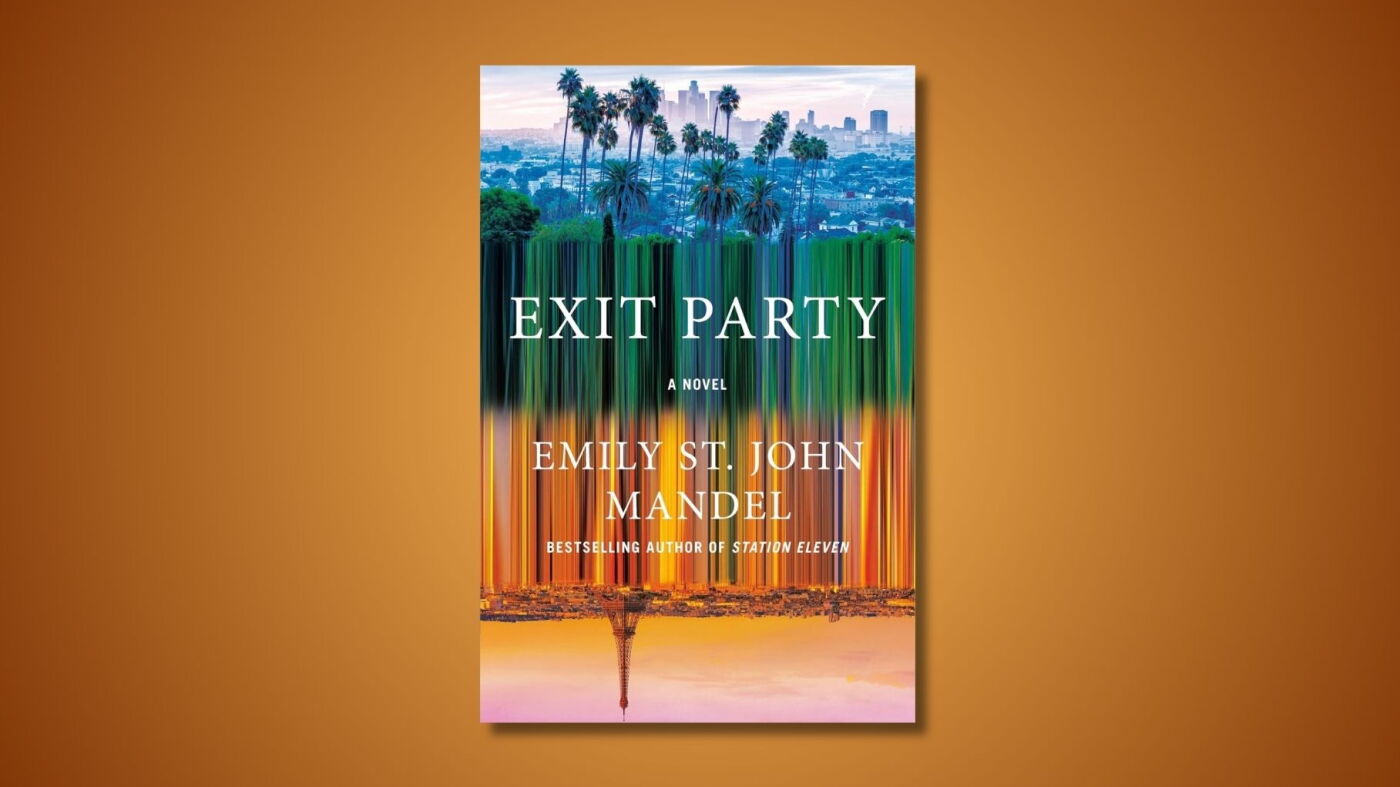
Kate and Cassie take a look at bestselling author Emily St. John Mandel's latest, Exit Party, an epic that follows a doppelgänger and a man who disappears from a Los Angeles party in 2031, leading to a journey across parallel worlds and fractured timelines. Internationally-bestselling crime writer Michael Robotham is in to discuss The Weight of Angels by John Boyne; and Graham Akhurst, novelist, academic and Director of Indigenous Studies at the University of Technology on Turkish writer Kenan Orhan's Booker Longlisted novel The Renovation; and historian and author Anna Clark is in to share her Top 100 picks.
Books featured
- Emily St John Mandel, Exit Party, Picador
- John Boyne, The Weight of Angels, Doubleday
- Kenan Orhan, The Renovation, Hamish Hamilton
Anna Clark's Top 100 picks
- Raimond Gaita, Romulus, My Father
- Gay'wu Group of Women, Songspirals: Sharing Women’s Wisdom of Country through Songlines
- Billy Griffiths, Deep Time Dreaming: Uncovering Ancient Australia
- The Macquarie Dictionary, first edition published 1981
- Ken Simpson and Nicolas Day, Field Guide to the Birds of Australia, first edition published in 1984
Other books mentioned
- Gabriel Garcia Marquez, One Hundred Years of Solitude
- James Joyce, Ulysses
- Alexis Wright, PraiseworthyChina Miéville, The City & the City
- Claire G. Coleman, works
- Curtis Sittenfeld, Rodham
- Peter Carey, Illywhacker
- Steve Toltz, A Fraction of the Whole
- Alexis Wright, Carpentaria
- Kim Scott, Benang: From the Heart
We want to know what you think of Radio National's book podcasts (The Book Show and The Bookshelf). Help us understand what's working, what's not, and how we can make our book programs even more useful, relevant and unmissable. Please take this quick survey.
Get every episode summarized
Each time The Bookshelf publishes, we email you a written briefing from the transcript — the topics, who appeared, and any specific claims, with the ad reads skipped.
Email me new episodesFree for 3 shows. No card needed.
Hosts & guests
Transcript ready
956 searchable segments. Every word is indexed and playable.
Full transcript
The Bookshelf — Emily St. John Mandel and John Boyne alongside a Booker-longlisted debut. Machine-transcribed; use the interactive transcript above to jump the player to any line.
ABC Listen, podcasts, radio, news, music and more. Love books? Listen to the book show or the book show for, hey, why not both? Then we want to find out more about you. Tell us what you're reading, how you choose your next great read, and what book podcasts you listen to. Whether you read one book a year or one a week, your feedback will help us make better programs for you and your mates. So tell us about your reading life. Find the link to our short survey in the show notes for the book show or the book shelf. Hello and welcome to ABC Radio Nationals, the book shelf, where you hear about notable new fiction releases, uncatements. And I'm Cassie McCullough and that's right, we do the hard work for you. All you have to do is run your finger along the shelf at your local bookshop or library.
And in the library you might want to keep going back and back and back for older books as well, because remember we are talking top 100 Australian books as well. If you've got no time to search for the voting details, just text the word bookworm 20418-226-576 and we, that's you and I, Cassie McCullough, we will send you a link to the voting page. And if you have no idea what Kate Evans just said, that was not her personal phone number. That is the ABC Radio National Textline, 0418-226-576. And we're talking about the top 100 countdown of the best Australian books of all time. The clock is ticking when do the slew skates come down? At the end of the day on the 1st of October. And if you don't know what to vote for, well, we've got history and an o'clock later in the program giving her selection. So some clues there. And also our reviewers today, Michael Robotham and Graham
Akhurst, will bug them for a few recommendations too. But today what we're doing, I think, is we're talking about what fiction does best, which is to remake the world. What if, for example, the playwright and wit Oscar Wilde didn't take part in a famous libel trial, didn't die in Penuri in 1900, and instead lived for decades longer? That's in the latest novel from John Boyn. And another what if, just say you're doing a bathroom renovation in your flat in Italy. Wouldn't that be nice to have a flat in Italy? But not so great to be doing a bathroom renovation. But instead the builders create a Turkish prison cell that actually connects this flat to a political prison in Turkey. Now that's not going to be an architectural digest anytime soon, I don't think, Kate. No, but that is the story in Kenan Orhan's book a long-listed novel, The Renovation. But first to America in 2031.
And the latest from Emily St. John Mandel. And it heads up that death by suicide comes up in some of the books discussed today. MUSIC Emily St. John Mandel is a Canadian writer who now lives in the United States. She's an essayist, she's a short story writer and a novelist, best known for her fourth novel, Sation 11, which came out in 2014. I mentioned that date because Station 11 is a really terrific post-apocalyptic novel in which the world is irrevocably changed because of a terrible influenza pandemic. And yes, she really did write it Cassie years and years before COVID. Well, that is alarming because in this next novel we see another future that of 2031. And so, yes, now we're moving on to her seventh novel. It's called Exit Party. As you say, it starts in the year 2031.
And I thought as an opening page of a novel there was so much going on and it said itself up really well because we discover that we're in the first spring after the collapse of the United States. This country has fallen apart for some reason and the woman called Ari has been in prison for 18 years and she's our way into this new world. That is, in all sorts of upheaval, there are militias. It's stayed on state. There's resistance fighters, there's border skirmishes, there's giant conversions of football stadiums into displaced persons camp. I mean, this is an epic scale fantasy of those who predict the worst about the Trump Presidencies long-term future effects. Side by side with that, there's this woman who's looking at the world with fresh eyes and noticing Jacaranda trees
and that one of the things that she's missed is rain on city streets. So there's a sort of a sense of being in the world and enjoying it. Yeah, that Jacaranda image was beautiful, wasn't it? There was one line I'd written down from. Prison was a wasteland of sensory deprivation and now the city was overwhelming. She's in a way, newborn and fresh out of prison. We don't know exactly what she did. We don't really know what she endured. We learned she had a prison girlfriend and other things happened. Eighteen years is a big stretch. But she's still a relatively young woman. She's somehow optimistic. There's a real energy about her, even though this world has changed terribly. She's living in an apartment with a woman called Gloria and she wants to go out. There's a party that night that a friend of Gloria is having. Gloria is more scared of the world because she'd been at another party where a bomb had gone off. So she's much more fearful. But they do head out to this party.
And actually this was the interesting line that I noted down because it's very early on, it's only on page six. After spending most of her adult life in prison, Ari wasn't particularly intimidated by the social intricacies of a party in Silver Lake. But Ari had been beset all her life by premonitions and she felt pulled toward that party by an invisible thread. Now, that is a big clue. But we can't explain why I would take about 24 hours to explain exactly why. Except the thing about this party is that it is the pivotal moment in the whole novel, from which everything changes. And so Ari is at a party and another woman called Soraya calls her by a different name, calls her Ibari, which is actually the name on her birth certificate. Ibari, yeah. But nobody ever calls her that. And then she looks up and there's another woman who looks the same as Soraya.
And then there appears to be two versions of Gloria. Gloria. And so there's something a little bit strange and then there's all these really interesting little personal ordinary interactions. So Ari talks to a woman called James who says, oh, who knew that, you know, the end of the world and this living through a world changing moment would be so boring and that everybody just wants to talk about what's happened to them. But I like James. But the guy who's hosting the party, Kareem, he disappears. Yeah, he's there one minute and kind of not the next. And it's really isn't clear why that is. So there's these doubling going on. There's something kind of wrong. And Ari with her antenna up is feeling there's something off to because she's got that ability. So a mystery is set up immediately, as well as the fact that we are in a both familiar and entirely changed and dangerous world.
And then within a couple of pages, just in one paragraph, five years go by. And we're very close to Ari and her world view. But she has had to move to another state because California, where the story begins, is one of the stable states, which means people like her cannot afford to live there. So she has to work as a dishwasher and she does whatever job she can. And then she sort of falls into working with an arms dealer. And there's a sense that Ari is always on the edge of and drawn to criminality, detective work. There's something that she's drawn to and where then entering more and more into this strange world, in her work as a detective. Who does she see one day? Well, she thinks she sees Gloria. But Gloria's got a very different haircut and she's got a different vibe about her. And in fact her name is Nico. So she is one of these doppelgangers.
Who she encountered at this party. So this sense that there are doubles is something that the novel leans into. Now, she's made her way across the US and she gets to New York. And so we get this great sort of collecting of time, as you say, but also an image of entirely dysfunctional future America with little glimpses of the way people are getting by. You know, where's the food coming from? Where's the fuel coming from? People are walking places instead of driving cars because it's just impossible expensive or they don't have them anymore. And there's local militia. There's some altruism in these camps for displaced people. But yeah, it's a really fascinating picture. And there's also a strong sense of danger. And particularly for somebody like Ari who is treading a very fine line between it. And so at one point she has to leave. So she goes to Paris.
And so we've got this entire world and systems that are set up for about what the first half of the book, hmm. This is kind of exciting too. Paris is under a gigantic dome. But it's not a single dome. It's more like a shower bubble. I think she describes them. So it's a series of bubbles under which a historic city of Paris has been preserved to a degree. I think actually at one point one of the characters remarks that the weather's lovely. I think they programmed 1996. Or was it 1997 for under the dome? And she's kind of tragic. In this story, Sydney is going to have a dome as well. So there's that sort of sense of a climate collapse happening all around the world. So there's always upheaval and civil disturbance and people demonstrating. So it's a very volatile world that she's living in.
And then there are some other undercurrents. So at that party there was a painting. Oh yeah, I mentioned. Yes. So the painting. Now this is one of the genius bits of this book. And I must say it's very fresh and exciting to read. So at this party there's this quite extraordinary painting on the wall wonderfully described painting. And for a lot of the novel I was thinking, how would I paint that actually if I, you know, as a Sunday dabble, I hate. And it's a square which is mainly deep blues. And in the top corner are some feet disappearing as if diving into a deep, deep ocean. But yeah. So this gets stolen from this party. In the same party where Kareem disappeared, it surfaces later on in Paris where Gloria has it, but not for long. Another 24 hours would pass if we had to explain that. Yeah, except that I guess it's one of the things that I think Emily St John Mandel is interested in.
It's not just upheaval and politics and the surveillance stage. She's interested in the role of art in it. And that played a role in Station 11, her sort of breakout book as well. That was art and theatre and music. So the role of this painting that appears and disappears and is stolen and travels the world is an important plot point. But it's also possibly a premonition of an event to happen. It's also possibly a, what's the word, like a portal? A key to a portal to alternative realities. So this is a high concept novel. And this high concept means, you know, sort of complicated sci-fi. That's what we mean, really. Yeah, and playing around with reality in a way that means you have to read more than one idea at the same time and try to keep track of it. But something that she does, I think, to help us through it
is on the contents page, because you've got part one, a side, that homeland, Paris, conversations after an explosion, the birthday present, Paris again, that takes us to about page 170, at which point or in part two, B side. And so we're given a clue that we've got another version of the story coming our way. With a very analog 90s record illusion there. So I don't think we're giving too much to the story away to say that we do enter. To be hard. Even if we did try to explain what happens in this, you would have no idea what we were talking about. And even when you read the book, you would not have any idea what it was about. But that doesn't mean it's not a brilliant and exciting book. Well, and for me, the second half is where all the sort of the politics and the commentary and the sense of surveillance
and fear and the role of the state is ramped up even more. Mm-hmm. Just zooming back and a big picture question for you, Kate. I did find myself noting down things quite obsessively when I was reading this, because I felt like I was being given clues, grip points to hold on to the reality that was being created. But it was quite hard work. And I felt like I was doing all this work to keep up. It was rewarding. But what do you think about that as an authorial choice? Because we've read a number of books like that recently. Should we be working that hard? For me, this one was worth it, because I thought she was very adroit in the way that she did it. And although there were characters we had to keep track of, there weren't too many of them. And just when you thought, hang on, where does that person fit in? Then we returned to a backstory. So I thought the way that she played with both plot and timing
kept us in, shall I say, the loop? Mm-hmm. But if you drop a few of those details, and you can't remember which character turned up where and what they were doing, and did they have the knowledge or they didn't, or were they evil, good, then you were quite destabilised. I think when it's done really well, it does create suspense and curiosity, and you start to figure it out, and you want to see if your theory is proved true. When it's not as skillful as this novel, then it can be a mess. Yeah. But for me, she got away with it. I found it very satisfying. Yeah. It's going to be big. It's called exit party, and it's by Emily St John Mandel. Well, let's say, today's reviewers on the bookshelf, Michael Robotham, the internationally bestselling crime writer, his latest, tell me something true,
is about to be released, and Graham accursed writer and academic director of Indigenous studies at the University of Technology Sydney. His novel Borderland was published in 2024. Hi, thanks for being here, both of you. Thanks, Cassie and Kate. Pleasure to be here again. Look, guys, Kate and I were just talking about this new novel by Emily St John Mandel. It's a really solid book. But it's one of a string of books lately that I've found myself taking notes just so I can remember who's who, what's what, when's when. I feel a bit like either, I mean, I love crosswords. I love Sudoku. I love quizzes. I love that. I'm not scared of good retaining information. But I feel like I'm back in Year 12, English exam doing, you know, the Scarlet Letter or whatever it is. You might need a holiday, Cassie. You think so? You think too overload? Or if this is sort of starting to feel like homework. But you know, you write this stuff all the time, Michael. Where's the sort of sweet spot
with laying out information and possibly clues and just bombarding the reader? I love, I think it, this depends. I mean, there are certain books and I always go back to Garrel Garcia Marquez, you know, in 100 years of solitude. And it's a book that I think you almost have to read in one sitting because if you put it down for any more than a couple of days, you have forgotten the characters, you know, the cast is so enormous. And they're all at the same name? Yes. And so there are some books that I think you say for your holidays because you can read them in a solid block. At pace. At pace. And you can keep it all in your mind at the time. And there are other books that, you know, you can pick up and put down even five, ten, two weeks later and you suddenly, you're back into the story and you know where you are. Yeah, I'm not saying that I want it served up to me easy. Like, I don't want that either. But do you find this grammar is just really me? It's okay if it is just me. No, I understand where you're coming from. It sort of reminds me of my undergrad reading days and trying to nut out your lissies by Joyce
from Modernist Literature Class and writing essay on it, which is back then, I've matured now as a reader as well. Well, that is an Everest. Yeah, that's right. But you read a lot and I think I read a lot of literary fiction and it's usually character driven. So it doesn't come up as much in my books that I've been reading lately. I've been reading tackling praiseworthy by Alexis Wright, which is 800 pages or so. And I think I've had a two-month gap on that. But as soon as I pick it up, I know exactly where I am. And I'm back in that world. I wish I could give you some advice. No, that's great. I also think it's one of those things that it's what you're in the mood for. It's like when you're picking out to watch on TV and sometimes you're in the mood for a rom-com. You are Michael. Often. Often. You know, my wife's a huge mother of a...
I was just watching it because my wife wanted to... She loves animals. Oh, animals. Disney animations. I mean, they're going to... We really have to watch Finding Nemo again. You know, but it's a happy place. And I think there are times that you want, you know, to sit through the Odyssey. And there are other times when you want something that's only going to last an hour and 20 minutes. And it's going to be light and frothy and fun. Well, and, you know, you talked about the time that it takes to read a book. And I was in the good fortune with Emily St. John Mandel's exit party where I could pretty much read it in one sitting across a day. And so, as an immersive pacing novel, it worked for me. I don't know what would have happened if I had to sort of stop and start and move away and keep track of it because it's a very, sort of, high-concept novel. As I think all of the books we've read together today are. And so, you sort of have to get your head into it. And Chyna Mi'avol's, The City and The City, did something similar
where you sort of had to hold your nerve and go, I think this is going to make sense. And then it suddenly did. And before that, you just sort of had to trust them. Well, I think there's a balance. I mean, I feel sometimes there's a lot being asked of me and I wanted to sit back and go along for the right. And I love your point, actually. Graeme about character driven novels where you don't forget details of a well-described character. That's right. Okay. Well, the books we're talking about, John Boyne, the weight of angels and Kenan Orhan, the renovation. Now, John Boyne is an Irish novelist. He writes both for young adults, the boy in the Stripe pajamas. You might have heard about that. The terrible thing that happened to Barnaby Brockett, among others. And also for adults. The house of special purpose, the hearts in visible furies, also enormously popular, and all the broken places. The weight of angels is his latest.
It's an alternative life of the Irish writer Oscar Wilde. Famous for many things. The picture of Dorian Gray. He was a playwright, Lady Windomy's fan. The importance of being earnest. I played Lady Gwendolyn Fairfax, the high school play. Do you allude me? Anyway, he also had a great tragic life. He wrote about that in the ballad of Reading Jail. Also, he's an essayist, Deeper Fundus, but more on that in a moment. Yeah, and he was also a wit. He was forever being quoted for his famous lines. And he was also a celebrity, a public figure. And he was a married man with two children, who was, of course, equally famously, a gay man. Of his many relationships, it was his love for this young aristocrat, who hasn't had one of those, named Lord Alfred Douglas, also known as Boise, that led to his downfall. Boise's father publicly accused Wilde of being a son of aite,
although I think he said, Sondermite. Yes, he just felt like this is hilarious. Opposing Sondermite. Opposing Sondermite. Oh, dear. I mean, it's funny with a hundred years on, but certainly wasn't at the time. And the case, the libel case, led to really his downfall. So these are the facts of Wilde's life. What has John Boyne done with the fictionalisation of this story? Well, John Boyne, who it must be said is another Irish gay man, has written an alternative life for Oscar Wilde. So what he's done is he's pivoted the whole story on the question of what would have happened if Wilde hadn't pursued that famous libel case? You know, as you say, it ruined him. So Oscar Wilde, the real Oscar Wilde, died in the year 1900. In this fictional version, a 600-page novel, he has five more decades of life.
He's involved in both public life, in literary life, and it all sort of hinges on a decision that he makes in the first couple of pages, Michael Robotham. So in order to write this alternative history, he sort of has to establish the man, doesn't he, the figure, and to take us into this world. I mean, how well does he do that as the book opens? He does it very well, because as you say, Wilde was a celebrity, which is unusual for any sort of writer and artist to be as big a celebrity as Oscar Wilde was. And I guess probably the first quarter of this book is based when Wilde is still alive, and he's stealing, and Boyne is drawing on materials that are there. And so I actually went and Googled many of the beautiful wild sort of witticisms and whatnot, and I Googled them, and they were actually lifted from Wilde's letters or Wilde's plays. And so he captures the voice beautifully. It's obviously for the next three quarters of the book, in real life, Wilde died when he was 46.
So all of those wonderful witticisms and those wonderful one-liners, Boyne has to create, and I think he does it quite brilliantly. But so much of it depends, as you say, on that set up. Yes, the sort of the arch voice, the life that's being lived very publicly, sort of outrageously. There's an extraordinary amount of champagne being drunk, and he surrounds himself by beautiful young men. But this character of Bo C, with whom he is enamored and with his dreadful father, the Markwess of Coinsbury, instead of putting the character of Oscar Wilde through this awful court case, it's Bo C, who ends up on trial. He's been found in bed with two young men. And so what happens to this figure of Bo C? I mean, in a sense, what he's done, his boy and his, Bo C lives those final years that Oscar Wilde lived in real life. Bo C is disgrace, Bo C goes to jail, Bo C writes the ballad of Reading Jail,
rather than Oscar Wilde writing it. And he dies penniless and consumptive in a Parisian hotel room, which is exactly what happened to Oscar. So all of that now happens to Bo C in this new reworking or reimagining of history. And so this is the hinge, and it's about 60 pages into this novel, and it's the hinge on which the fiction changes, which is an interesting thing to do, and to sort of set him off on this sort of fantasy life in a way that has to do so many different things. I mean, where does it take us and did it work for you? To me, I thought this was a remarkable book. I completely bought into it. I laughed out loud. I mean, you have Oscar Wilde at this imagining, I mean, he lives to the age of 98. He meets everyone from, you know, Kipling to Dini to Winston Churchill to Wallace Simpson to Virginia Woolf, you know, Charlie Chaplin, Catherine Hepburn.
I mean, and all of them, their voices are created in letters or conversations with Oscar, and they're all done remarkably well. What I don't know in terms of is whether my admiration for this book is as the admiration of a writer who thinks this is so audacious, is so brilliantly done. But if you stop and think, does the story work? Is it worth 600 pages? Well, readers want to stay with this? And that I'm not so sure of, I thought it was remarkable. I went a little bit up and down on it, and it was partly because as a reader, I was grappling with the fiction and the history at the same time, and trying to assess what I made of all of the name-dropping. But of course, he was a public figure, and he was a celebrity, and he did encounter all of the leading literary figures of the time. And so we can imagine that if he had lived for decades longer, he would have met everybody who's anybody. But at times, I thought, can he just encounter a normal person, just a regular person?
And there are fictional characters in there, in particular, a man who he has a long relationship with, which for me worked really well, because sometimes I thought, stop telling me all of the famous people. No, it's funny. I think the last story works well, but I completely agree. He would have met these people, and it's interesting so often with the people he did meet, that weren't names to me. I would research that person and discover, yes, they were rumored to be having an affair with the Prince of Wales. Yes, Oscar, like Bram Stoker is a classic example. Bram Stoker, famous for Dracula, you know, married a woman that Oscar at once would. There were links, that's what's astonishing piece of research. He doesn't pluck many characters out of the ether, but the love story, I think, is beautiful. His love affair with Gus. I also think what's remarkable is how he's threaded through the next 50 years of Oscar's life, details of things like the suffragette movement, and also the battle to decriminalize homosexuality, because that obviously saw the death of Bocey in this book
and Oscar's own death in the real history. And I love the parallelity drew between those different sort of campaigns. And that was one of the main areas where you could see what John Boyne was doing, which was a sort of fictional fantasy where the lives of men like himself, John Boyne, the lives of characters like Oscar Wilde, are given some sort of legitimacy, because it wasn't until 1967 in Britain that homosexuality was partly decriminalized. But in the fictional world, it happens in the 1950s with a triumphant speech from Oscar Wilde, who is being supported by Winston Churchill. And so that is an elaborate fantasy. That is fun and funny, but also, of course, terribly poignant and politically very pointed. And I guess one of the things that it does make you think about, and I'm curious to see what you think about this Graham,
is it raises the question of what fiction offers history and what the sort of speculation allows us to do. Yeah, that's a big question. And there's been some great work by Hamish Daily, who's an academic in America, but an New Zealand first, but did his PhD at ANU. And he talks about reading historical fiction to get a better sense of history itself, particularly because it opens up the historical discourses for those that might not want to go into the history books, but rather they want to be entertained and have a wonderful story to tell. So in that sense, I think historical fiction is incredibly valuable. But from what I'm hearing about this novel, you do learn a lot about history, even though it's an alternative version of it. So those are the types of things that I think are very empowering when we look at literature and historical fiction.
Yes, the truth is bent, but in this case, we do get many of those figures and they were real figures. That kind of conceit around Oscar Wilde living for a very long time is a very fun and enjoyable thing to think about. But also, he was a gay man. He died because of it. There are deep social and political reasons that historical fiction can shine a light on, and highlight just how deep the historical injustice to those that were marginalized within society at the time. And I've seen that a lot through my Indigenous perspective and reading some great Indigenous writers as well. I was thinking of Claire G. Coleman, and the way that in her work, she plays around with her. I mean, it's a very playful form of speculative history and a rewriting of colonialism. And then Cassie, I think together we might have read Curtis Sittenfeld's Rodham,
which takes the figure of Hillary Rodham Clinton. If she decided to leave that man behind and not stick with him, and she has her own life through American politics. So speculative fiction does something different, I guess, what regular historical fiction does. And he's certainly playing that game here. Technically, what he's done is astonishing. The research, but the voices is... But yeah, at 600 pages, you know, and look, it is, I think, too long. But he wanted to take Oscar through three coronations. He wanted to end it at this point where Oscar meets a young prince Charles as a child. Which is quite funny. Which is a lovely, lovely poignant scene. You know, the 98-year-old meeting this little boy. And it's beautifully done. But to get to that point, it probably has to have Oscar living 15, 20 years longer than maybe the book, you know, should have been, or could have been, in terms of story.
And he does use all of the skills of a writer available to him. So there's a close third person, there's first person, there's letters, there are newspaper reports, there are transcripts of court cases. And he uses all of the different textures in the storytelling, too. Absolutely. I'm in awe of it. I mean, given John Boyne is incredibly prolific. But it's only... I mean, this is a sort of book. If you'd said to me, this took seven or eight years to write, how would have said I can understand that? In fact, it appears to have taken maybe two. And I think that is astonishing. Well, maybe it's a labor of love and a story he's wanted to tell for a long time. It's called The Weight of Angels by John Boyne, and it's published by Double Day. MUSIC You're listening to ABC Radio Nationals, The Bookshelf. I'm Casima Culler. I'm with Kate Evans, as always, and our reviewers today, Crime writer Michael Robotham and novelist and academic Graham Ackhurst.
And we're now turning to a novel on the Booker Prize list, exciting. And it's by the American writer, Kenan Orhan. Now, this novel is called The Renovation, which would send chills down the spines of many people who might have been through a renovation or two, Kate. Well, for very good reason when you see what happens, and because what we have on today's edition of The Bookshelf is novels with really powerful openings. And in this case, we're in an apartment in Italy, but he is how the story begins. I don't know by what accidents the builders had managed it, but instead of a remodeled bathroom attached to my bedroom, they had installed a prison cell. So, so, Graeme, take us into this apartment building and what has happened? So the cell itself mirrors the real life silvery prison, which is a site associated with political imprisonment in modern Turkey. And thus begins the story from the first person perspective
of Delara. I love this book. It's quite incredible. And he asks you in that first moment in the conceit to drop your suspend your disbelief. And once you do that, you're on the ride for the rest of it. It tracks the journey of Delara as a political ex-ol living in Italy from Turkey and her husband, but particularly the relationship with her father who has dementia and is the reason why they have to relocate in the first place. She has this relationship as an exile with the prison and visits it often because of that sense of loss for home and also the sense of loss that she has around her mother dying early. The two major themes that I see in this book is exile and that wanting for home, but also as a caregiver looking after her, ailing father and the memories of their home
that are disappearing in front of her eyes. So, yeah, what did you think? Well, I thought it was extraordinary, particularly because, as you say, this is a novel with all of those ideas about exile and surveillance and the state and being a refugee. But he does it on that very first page by... It's not just that this bathroom renovation looks like a Turkish prison. It is a Turkish prison cell. So, if she pulls aside the tapolin and goes in there, she's inside a Turkish prison. There's a guard passing. She can hear the other prisoners. And so, then we realize that in a place like Turkey where there are more and more political prisoners, prisons need to expand into whatever space they've got. Well, there's a space in this little cupboard of a bathroom in Italy, so we'll expand into that. So, it's a whole... Again, it's a whole conceit.
You have to imagine. Okay, I'm just struggling to picture this. This is not an exercise in making an elderly person feel comfortable because, for some reason, a Turkish prison might remind them of something familiar. This is like a literal prison but through some bending of time and dimensions in space, it's being used as a prison and you can see actual guards walking past. That's right. It has a great literary allegory for political turmoil in Turkey, exile, but also the... It's not necessarily magical realism, but as part of Delar's journey, she becomes more and more enamored with the space of the prison. And this is the sort of ramping up of the tension within the novel is she spends more and more time within that prison. So, we then get to understand through stories from the other prisoners,
through what's happening with the prison guards, what's actually the state of play within modern Turkey at the time, which gives it a really deep sociopolitical bedrock within the world of the novel, and also the idea around memory and nationalism that really is the glue that sticks it all together. And it's really artfully done, I think. So, is it a situation where Delara faces prison if she were back in Turkey, or is it the fact that she sees exile as being like a prison, being exile from Turkey feels like she's in a prison? Probably both. Because we do travel into the past and we discover how she and her husband and her father ended up in Italy. So, her father was an academic, and he was also... He's described as sort of small-time novelist, but because he was quite outspoken, he then became the target of...
Like, he was labeled a political sort of dissident, and anybody in the wider family. She was a child psychologist who worked in a hospital, and so they had to leave. And so, we meet the extended family from what, seven years earlier, and we see... Well, we sort of see and hear this combination of ordinary daily life being lived in Turkey, and this whole political protest going around. But on the first page of this novel, we're asked to imagine that there really is a prison cell there. And so, this sort of surreal moment is something that what's on the whole sort of social, realist novel spins around, which is what makes it, I think, so clever. That's right. I'd like to really pinpoint on the fact that Keenun... It's his first novel. It's a debut. He's decided to render the consciousness of a Turkish woman.
And I think he does it really successfully. And he's dealing with issues in his personal life as well. His grandmother was diagnosed with dementia, and his relationship to his homeland, Turkey, was sort of being fractured through her memory loss as well. And it was a really frustrating process for him from the interviews that I've heard about, where his memories of his home then don't relate to those of his grandmother. But he's sure of what he thinks. There's this sort of temporal fracture within memory and how it plays out within the novel itself through the figure of the father who's going through the same process. And it's also very funny. She's a quirky protagonist. But she's also mourning her mother. And actually, there's this wonderful moment within the book where the father is beginning to lose all scope and memory of the mother.
But before that happens, he believes that Delara is the mother. And she actually plays it up and begins wearing the mother's perfume, doing little ticks that the mother used to do, caring for him in a particular way that the mother used to. That, in a sense, is a bridging of the memory so that she's actually getting a lot out of playing that role and giving herself some kind of semblance of, or bridge towards the memory of her mother that she didn't really know that well because she died when she was young. So, Graeme, what does it sound like? I mean, what's the pros like how would you describe it? Or maybe you might want to read something? I will read something. And I think it's beautiful. A keynum is a beautiful writer as a debut. It sparkles there are lines in it that I think anyone reading through it, anyone reading through this book will probably underline many, many lines just for their sheer beauty and resonance around those core themes of memory and exile.
The section that I'm going to read out to frame it, Delara has been in the prison. Towards the end of the book, she's spending more and more time there. And there's this ecological disaster that happens in Turkey, which is on a lot of fault lines. There's a big bunch of earthquakes that happen. And we see the frantic nature of the other prison mates as the guards begin to relay information that they're seeing off the news about which villages and towns have been affected by the earthquake. I couldn't take it anymore. I went back to my flat in Italy. Well, what did I expect out of tragedy? Exile is an abusive relationship. And even when you leave, when you pack up your duffle bag and take off into the long, long sea, hoping to resurface in some shining world without pain, and instead end up in a place with its own harms and passions and joys and tortures
that is everywhere. And you set up a life again, safeguarded this time, put into a special box your homeland reaches out a cruel hand and injures you again. Even here, even in your haven, because what people don't mention about exile is the hostages it creates. For every exile, there is a family of hostages, a host of lovers, friends, colleagues, rivals, affable greengrocers, lascivious taxi drivers, all left behind in their hostages' bindings. And the country calls out that it misses you. Don't you miss it back? To prove it, it is time for pain. And it kills 50,000 people. And your pain is no greater than that of those back home. It might even be a little less shielded by distance, diluted by time spent adulterously in other lands. But the country wants its blood, wants to see you rye.
To remind you once you've come, what soils your worm-ridden ancestors lie under. Have you become immune to your motherland? It's wounds against you don't bruise or scab over or scar. They each an ache like a phantom limb. Oh, thank you. That was a beautiful reading. This is obviously one you'll be recommending to people. Absolutely, yeah. I think it does so much. And it's such a beautiful little conceit that provides so much context for the core themes of the novel. And it's quite short compared to the 600-page that was referenced before at 240 odd pages. It's a quick read and it's really emotionally resonant. Beautiful description in that passage you just read us. Thanks for that. It's called The Renovation and it's by Kinnon Orhan. Now, just before we let you go, guys, some of your thoughts on Radio Nationals,
top 100 books, count down the best Australian books of all time. Thoughts, thoughts, I think, well, you could have made it at least the best 1000, so I would have been able to actually include a few more. No, it's an amazing, amazing concept. I'm going to choose a book which had an enormous impact on me when I was in my 20s since Iliwack up by Peter Carey. Because I was a huge John Irving fan and had the ability to make me laugh and cry on the same page. And Iliwacker is a wonderful story. It's about 139-year-old narrator, Herbert Badgery, who is an Iliwacker, is a con man and a shyster and a seller of fakes and dubious tonics. And he tells the story of his 139-year life and it is full of laughter. He's a salesman and a seducer and a vagabond. And I love that book. Michael Robotham, that is my favourite Peter Carey as well. And some people connect it back to Joseph Furfie's Such Is Life,
which also has an antique storyteller who is making things up who you don't trust. And who does that whole of life thing that we were talking about with the John Boynall. Yeah, it's remarkable. I've always been a Carey fan but that one will always be my favourite as well. And I don't think it's the first one I read but it's certainly the one that I still pick it up and read it probably once every two years. What else? Oh, I'm trying to think of something that a more modern take. I'm going to do a shout out for a fraction of a whole by Steve Tolts. Again, a very similar style of book. It's a wonderful romp with lots of humour and sadness. And it's the story of Jasper Dean, a son recounting his father's life and his father was a crook and a vagabond and again, and a con man and it just tells this wonderful sweeping story full of incident and outrageous sort of events. Great. Okay. Fraction of a whole by Steve Tolts and Iliwaka by Peter Carey.
What about you, Graham? What would you like to add to the top 100 count down list? Well, I'm glad that Peter, Major, Lists, Peter was my great mentor in New York when I was studying at his MFA at Hunter College. So I spent three years learning from Peter, which was an incredible experience. I envy you. Yeah, it was wonderful. And his Oscar and Lissenda made it to my top 10 list that I just did last night in preparation for coming on and speaking with you good people. The two books I've chosen are Indigenous authored. They talked to the, what I was mentioning before, particularly the first one around historical fiction being such a gateway into sort of highlighting disenfranchisement and historical wrongs through narrative. And it's by Whirlam and Nungar Rider, Kim Scott, and that's Benang from the heart. It's a difficult novel, but it's also incredibly artfully written in a vignette style.
And it sort of tracks the journey of Harley, who's the main protagonist, and is deemed by his grandfather Ernest Solomon Skat, who is a stark advocate of AO Neville, the historical figure, as the first successful white man made through his Eugenics project. So it's an incredibly funny novel, but also an incredibly difficult novel to read, particularly for me when I read it as a young Aboriginal man. But certainly something that I think was deserving of its miles, Franklin win, and something that as time goes on, it will last the test of time as a great Australian novel. And the second is Carpentaria. By one, you write a Alexis Wright Carpentaria is my favorite of Alexis's books, and it's an epic work, considered with country, mining, environmentalism, colonialism, and the cosmology of the Indigenous cosmology of the Gulf of Carpentaria.
Her rendering of the town, desperate, is astonishing. What she does in that novel is incredible, and it really informed the dreaming aspects of my own work, Borderland, in a particular way. These were the first two books that I was initiated into within the Canada of Indigenous Australian Literature, and I read them when I was getting chemotherapy in 2011, I had all this time, so I started reading a lot. And for the first time since I was quite young, and I was just absolutely riveted, and I think both of those books are partly the reason why I went into writing fiction myself, and the sort of journey that I'm on now. So I would highly recommend both, and yeah, they will definitely stand the test of time those two. What a wonderful, powerful reasons for both of you, for turning to these books, and so everybody listening, think just as hard as you vote for your 10 in the top 100 Australian books count down.
Thank you. Graham Michael, what a delight to have this conversation with you. Thank you very much. Thank you guys. Thank you. Pleasure. Michael Robotham, internationally best-selling crime writer, his latest, tell me something true is about to be released. And Graham Ackhurst is a writer and an academic. He's the director of Indigenous Studies at the University of Technology Sydney, and his novel Borderland for young adults was published in 2024. We've been building up quite a selection of recommendations as we head to the top 100 books count down. You've got, till the first of October, to vote, but some more thoughts and recommendations, Cassie. Yes, and you may well have heard, we have been asking writers and historians and thinkers for their suggestions of their favourite books. And today we're going to hear from Anna Clark. Now she's a professor of history at the University of Technology Sydney,
and the author of numerous books, most recently, making Australian history, which is a history of Australian history, and also the catch Australia's love affair with fishing, which is a history of Australian fishing. Now, here's the first on her list, Kate, and it's a very personal story. I'd love to start with a memoir and a biography. If that's okay, I have chosen top of my list, Romulus My Father, by Raymond Gator, which was published in 1998. I think I probably read it in the early 2000s, and I love this story. It's a very beautiful, moving, sad family history that Ray Gator wrote about his father, Romulus, and his mother, Christine, who migrated soon after World War II as part of that big post-war migration programme in Australia. And so I feel like it's a part of Australian history that we don't always get. It's a story, a migration story,
it's a story of place in rural Victoria, it's a story of a family and the importance of place in terms of how that family sought to belong in Australia. But it's also a really poignant, sad story about mental illness, and what happens in families, and for Ray as a young boy growing up, when his mum suffered from mental illness, and she eventually suicides in the book. So to me, it was full of humanity, it was full of sadness, but also it was really full of love. There's a great compassion to Ray's writing that drew me in, and on a personal level, my own dad, so I decided just before I read it, and I just felt like Ray's writing gave me a way to understand the humanity of people's stories and families, and how love can be told as part of that family history, despite sadness. Like all great books, it was able to put into words which had only really been feelings, up until then.
And I'm really, yeah, as well as being just a beautiful snapshot of Australian history, I'm really indebted to Ray Gator's contribution for that. Beautiful. Beautiful. Raymond Gator, Romulus, my father, to a pair of books that seemed to be telling two sides of a similar story. Yeah, so mine's next. I'm a historian, and I'm really interested in the history of Australian history, and at a professional, personal level, I'm fascinated by the way Australian history has sought to be a great writer. I've come more encompassing of First Nations histories, not only the voices of First Nations people, but also the practice of First Nations history, the way the continent is inhabited, the way, you know, every square meter of this continent had been walked on,
history before the Western discipline of history arrived with colonization. And so I'm interested in how the history discipline has increasingly in recent decades taken on this different way of thinking about how we tell the story of humanity on this continent. It doesn't just start with colonization, it doesn't just start with explorers in, you know, the 17th century, or even the Macassans earlier before then, the story, the human history of this continent starts in the deep past, and critically for a discipline like history, it starts in the past where history can't even begin to understand the depth of that time span. I can barely think about the 1980s, let alone the 1780s, let alone 60,000 years ago, like that is just totally mind-blowing to me as a historian. And so these two books, one of them is Song Spirals by the Gay or Group of Women, a Yonu First Nations and Macquarie University collaboration, which seeks to tell some of that First Nations and Yonu conception of land and culture.
And also the ways we tell stories about country. So the ways we might history that country and the ways humans and Yonu people and broader Australians can think about the country on which we live. I wanted to pair that with a non-First Nations history by Billy Griffiths, who wrote Deep Time Dreaming, which is really an account of the slow understanding, and the most belated one might say, understanding and recognition of the depth of Australian history. And I mean depth in a temporal way, you know, this is a story of how do we understand the ancientness of history in Australia. So it's kind of a story about the development of archaeology in Australia and some of the key players in that field. But it's also really a story, I think, about the recognition that history has happened here for a really long time.
And in order to tell that history of Australia, we need to open our minds and probably open our hearts as well and listen to the evidence that is all around us. Both in First Nations oral histories that persist to this day, but also in the archives of the country itself. And he has this wonderful sentence, which I might miss quote, but basically the gist is, you know, when you're walking through Australia, the whole country has this kind of a pulsing presence of First Nations histories on it. It's impossible not to hear that pulse once you are attuned and and hold that depth of human history in your mind. And I just love that idea because it's something that I keenly feel as I am walking through places in Australia. So that's song spirals sharing women's wisdom of country through song lines from 2019 paired with deep time dreaming, understanding ancient Australia by Billy Griffiths from well just a year earlier 2018.
Beautiful reads and a Clark historian is giving us a sense of her favorite Australian books for the top 100 count down. And they're all an nonfiction so far. What else are you going to add? Well, it's more nonfiction if that's okay. My next one, this is going to come out of left field, I suspect. It's not a book that people might include in their top 100, but I bet it's a book that many people turn to regularly. It's certainly a book that I turn to regularly. It's Ken Simpson and Nicholas days field guide to the birds of Australia. Lovely. I love this book. It has everything you need to know. The paintings by Nicholas day, the watercolors are just superb. And you know, I find myself reaching for it when I'm bush walking when I'm sitting in the sun either in Sydney or camping.
Our copy that I have with my partner, Gabb has literally been around Australia in our battered old four wheel drive, which we drove around in 2008. It has had many birds ticked off and many more still to come. It's just a lovely, you know, for me, it's a Bible to Australian, the Australian landscape. And I love this book and well done to those two fantastic authors and illustrators. And one more for us. Yeah, something I think you probably also use on a very regular basis. I do. As someone who writes books, I'm always looking for spelling and I'm always looking for words and meanings and trying to understand the right word. So I'm going to put in the McCory dictionary as my extra little book, but it's a really big book on my list. I'm someone I sort of struggle with really dense writing as a reader.
So I find it hard to read really dense writing. I also love reading Australian writers. I love the language. It's something obviously I've grown up with. It's familiar. It feels like Australian English is our mother tongue. The work of people like Helen Garner, Tim Winton, Tony Birch, I feel like this is the lingo that I listen to and I speak. So I love the fact that I can look up words and use my own language in the writing that I do. And so yeah, shout out to the macker for that. The McCory dictionary of Australian English first published in 1981 and Ken Simpson and Nicholas Days field guide to the birds of Australia published in 1984. The choices of professor of history at a clock. Thank you, Anna. Thanks Cassie. It's been an absolute pleasure. Anna Clark, author and professor of history at the University of Technology Sydney.
So many books and book recommendations and you can find the details of all of them in the bookshelf show notes and you can also find the links for how you can vote too. So many books, so many stories. Join us again next time. Bye for now. You've been listening to an ABC podcast discover more great ABC podcasts live radio and exclusives on the ABC Listen app.
More episodes
More from The Bookshelf

New Fiction: Donal Ryan, Emma Cline, Max Easton and Sebastian Barry
The Bookshelf

New Fiction from Melissa Harrison and Malcolm Knox + Mandy Sayer's Top 3
The Bookshelf

Top 100 Australian Books from Byron Writers Festival
The Bookshelf

Anjet Daanje's extraordinary The Stork and the Dromedary + Liane Moriarty return...
The Bookshelf