Get every episode summarized
Each time Death of an Artist publishes, we email you a written briefing from the transcript — the topics, who appeared, and any specific claims, with the ad reads skipped.
Email me new episodesFree for 3 shows. No card needed.
About this episode
Death of an Artist is made possible by:
“This is Jacob Goldstein from Business History. When the Internet arrived, most people used it to look things up. ChatGPT work goes beyond answering questions.”From the transcript
“I wrestle with: Was it courage, or was it cowardice?”
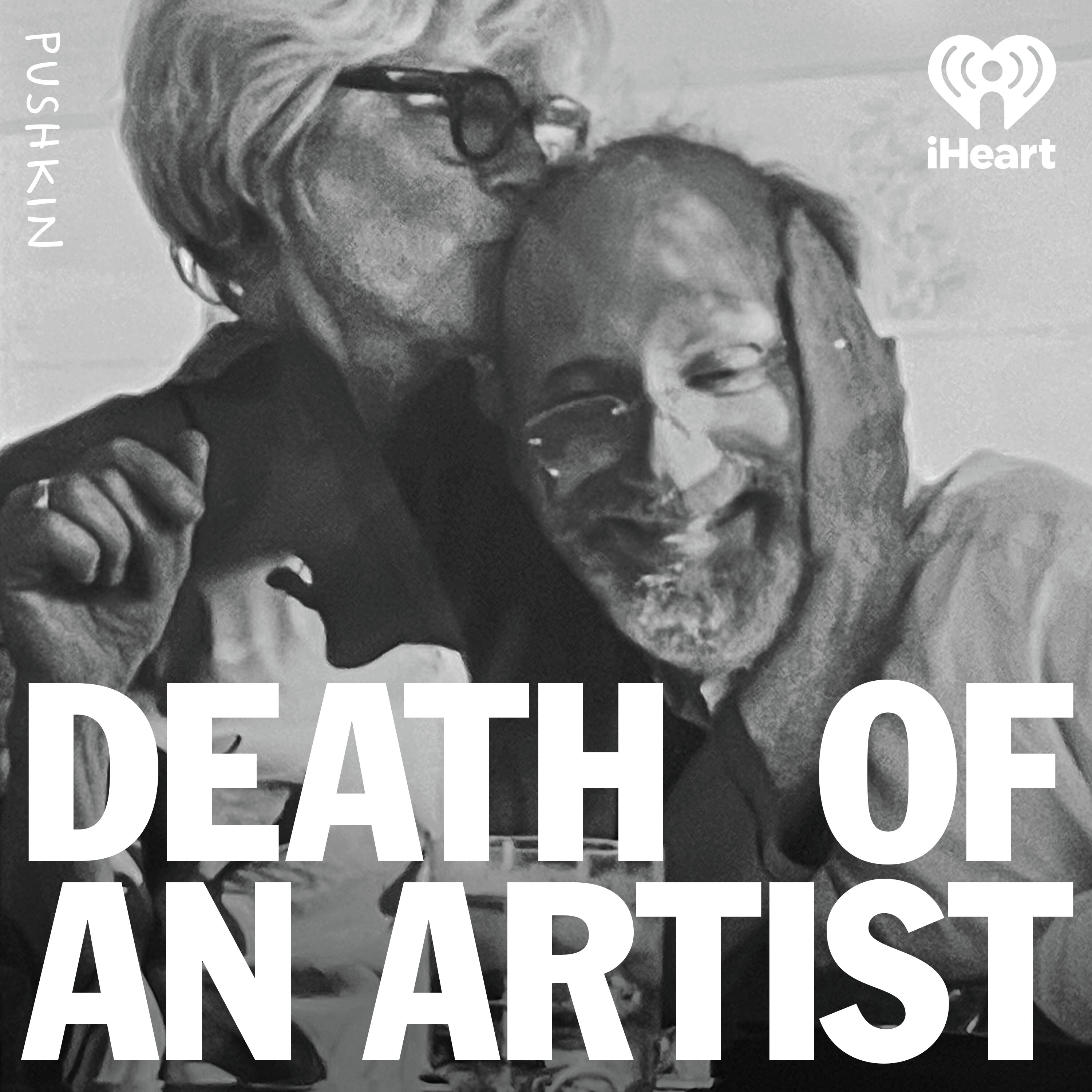
This question animates a memorial service for Michael and Petra, held several months after their death. Alice and Leon want to understand it as well: Was Michael and Petra’s suicide a move toward something, or away from something else? To figure it out, they reach out to Michael and Petra’s families, to find out what examples they had from their own parents’ end-of-life experiences that might have led them to this choice.
See omnystudio.com/listener for privacy information.
Get every episode summarized
Each time Death of an Artist publishes, we email you a written briefing from the transcript — the topics, who appeared, and any specific claims, with the ad reads skipped.
Email me new episodesFree for 3 shows. No card needed.
Hosts & guests
Transcript ready
828 searchable segments. Every word is indexed and playable.
Full transcript
Death of an Artist — Episode 5: We Are Without Fear. Machine-transcribed; use the interactive transcript above to jump the player to any line.
This is an I Heart Podcast. Guaranteed Human. This is Jacob Goldstein from Business History. When the Internet arrived, most people used it to look things up. Others saw what it could really do. The same is true with ChatGPT. ChatGPT work goes beyond answering questions. Give it a goal plus things like notes, files, feedback, data, or project plans and it can help create a brief, analysis, deck outline, tracker, or workflow. You stay in control reviewing the work and choosing the final result. Put ChatGPT to work on your most ambitious ideas and projects. Get started at chatgpt.com by selecting Work Mode, available on plus and pro plans. This is Jacob Goldstein from What's Your Problem. Running a business is hard enough. Don't make it harder with a dozen apps that don't talk to each other. One for sales, another for inventory, a separate one for accounting. That's software overload. Odo is the all-in-one platform that replaces them all.
CRM, accounting, inventory, e-commerce, HR, fully integrated, easy to use, and built to grow with your business. Thousands have already made the switch. Why not you? Try Odo for free at odo.com. That's odo.com. For I don't know how long, maybe 12 or 13 years, I've won a whoop band on my wrist. I started doing it because I met the founder of whoop at a conference. He heard that I was a runner and he said, oh, you'll love this. It's perfect for athletes. And he was right. I've won whenever since. Every time I work out, I see how hard I worked, how long I need to recover. I wake up in the morning and I get a complete picture of how my sleep went, which helps me understand the kinds of things that lead to a bad night, and the kinds of things that lead to a good night. It's sleek, long-lasting battery, and now with AI looking at all my numbers and coaching me. Whoop is a winner. New members can try whoop with a 30-day free trial before committing to a membership.
That's whoop.com for your free month of whoop. Pushkin. Previously on Death of an Artist. I would have gone to Great Lakes, had I known, had I known. What would you have done? Yeah, what would you have done? How would you have done that? What would you have said? I would have screamed. I would have shouted. I would have cried out. I would have protested. I would have given a million reasons to not leave this world. Maybe they knew that. I think they did. I think they must have. Why didn't they tell us? Why didn't they tell us? Episode 5. We are without fear.
There are a lot of people here. Check, check, check, check, check, check, check. So the summer after they died, about six months after they died, we went to Michael and Patrice Memorial. Where was it? It was in Rhode Island just outside of Newport. One of his college friends has it vineyard. And the event itself was kind of in, I don't know what you call it, a room where you make wine. A lot of galvanized steel gizmos. And how many people were there? It was like 20 or 30. It was very Michael's son, Jack I would say. It was mostly his high school friends. Birdie was there, his high school sweetheart. College friends. His family, his sisters, Ursula, and Myra were there. His brother Bill. Since past away. And... It was really like people comparing notes literally. Who got learned it?
Who got learned it? I get it small. Be better calm. Okay. I think now. For me, it just drove home the fact that the suicide and the letters in particular had created this like informal fraternity of people who are mourning them. I mean, it's a very odd thing to have in common with a bunch of people. Being the recipients of a suicide now. So take a look at this. This is a Harvard reunion. In 2018. And we spent about three days together with dancing, having fun, having lunches. And Mike said he did not want to grow old. There was a real sense of decorum, I'd say, at the beginning. It felt like a kind of classic, normal memorial. And Mike was this extraordinary guy who got you to do things. You never knew right behind it. Ever would have done it otherwise. There's quite a lot of discussion of Michael's photography and some discussion of Patre's work.
I've captured it a wonderful series of books about Lottie the Chicken and her friend Herbie. But mostly it was people sharing these kind of gauzy memories and talking about Michael in particular as this amazing athlete, as this rebel. And then someone said something that sort of opened the floodgates and gave permission for everyone to start sharing. Kind of they're more complicated feelings. It was a real before and after moment. You like change of the temperature in the room? And the letters they sent out were, I thought, deceptive and cute-sy. And didn't explain anything about their intent. To be people in the urge, you know, what you think you've got some time. It was selfish, very selfish. I think also the fact that so many of these people were friends of his from high school and college meant that they were the exact same age as him.
So it was like a sort of a referendum on their own lives is what it seemed like to me. Like if these people felt that they were too old or that this was an appropriate time to go, what did you say about that? Yeah. It wasn't spoken, but that was the something I got for sure. And then I finally felt that. How did you feel after? Well, we kind of argued a bit in the car on the way home if I recall. Right. My feeling was we had been witness to a conversation that demonstrated how wrong this decision was. And yet. You felt quite, you felt differently than I did. I felt like I was rational, like coldly rational in a way that I don't think I could do it myself probably, but I admire it and respect it and think it's maybe correct. How so do you think it's rational? At a certain point, I think the good parts that you're hoping to preserve are not as good as the bad parts that you're trying to avoid are bad. Whereas I just feel like any shred of possibility that you can keep enjoying your life is worth the risk.
Right. Well, you're someone who will always try to stay until the end of a party, if possible. I am often the last one to go. It's true. I'm the first one to leave. The idea that they could just leave you high and dry. I say it was so good. Yeah, I died. Just seeing the fact that you just... I wrestle with cars or with calories. Oh, you know... I don't think it was calories. No, it's not that. Well, except they were afraid of what the future was. Hello, Maira.
Hi, Maira. Hello. How are you? Good. How are you? Thanks for doing this. You're welcome. We were trying to figure out how long it had been since we met you at the memorial in Rhode Island. Have you thought back on that very much? Like, did it mean something to you to be there? No, very much so. I enjoyed it immensely. It was nice to see a lot of people I haven't seen in years. When was the last time so many of the members of the family were together? Probably a Thanksgiving. My parents were still alive. That was always a big, big event. Yeah, a lot of fun. I'm not much of a conversationalist. You'll have to excuse me. No, no, you're doing great. Mike and I were very close, so throughout my whole life, he was always there for me. If you've seen any of the baby pictures, he's usually reaching over or looking at me.
He was five years older than you? Is that right? Oh, now you're going to ask me questions like that. No, no, no. You could say roughly, that's all. At least. He was red-headed and burned badly in the summer. He was always... Son of a little bit of a trickster and he was... Everybody loved Mike. That quirky little smile he had. It was wonderful. He was fun. He was unusual. We used to go to my grandmothers and she had donkeys. He'd get up and ride one. Of course, they don't like to be ridden. You always push the envelope a little bit. How did you find out that Mike and Patre had died? Oh, well, I got a clue from their last Christmas card.
He must have seen all those. I don't think we've seen them all. We've seen a few. Oh, they're very, very special. Something meaningful in each one. Yeah, we've seen a few that they shared at the memorial. Oh, okay. I don't know if they showed the last one. But I was not surprised. Do you have any memory of what it was about the card that gave you that feeling? I could get it and tell you exactly what it looks like. Yeah, would you? I'd love that. That would be great. Oh, I guess. My memory is really bad. Where's the Christmas book? All of the cards that I saved for Christmas. I found it. You found it. Sorry about that. I found it. That's way quicker than I would find a Christmas card. Okay. It's a...
It's the ocean. And this is a canoe with earns in it. One larger and one smaller. And it says, navigate the perils of 24. That gave it away. I imagine he sent that out to everybody. So everybody got a clue. Did you have a kind of dark sense of humor? Oh, yeah. Don't we all? Not everybody. No. Would you mind just going through your... Just giving us a list of your siblings in order of age? Bill, Mike, John, me, Ursula. That's pretty much it. I trust that you know that there were six children, not five.
Bill born in 1943. Michael, John, Maira, me, and Anne born in 1965. And Anne's existence, we weren't allowed to discuss. She was whisked away at the age of five days. I was seven. I was told that she had died in childbirth. Wow. And what was her diagnosis? What? What a five-day-old syndrome? She had died. Okay. We also had a congenital heart problem of some sort. My name is Ursula Mathers-Nert. And I am Michael Mathers' younger sister by a significant amount. Did you call him Mike or Michael? Well, I grew up calling him Mike for decades. And then all of a sudden he decided that he was Michael.
So, yeah, we called him Michael. I always had to think before I said it. But, yeah. I liked Mike better. What was the difference between Michael and Mike? As Mike, he was, I felt that he was more playful, I guess. And as Michael, he was even more formal than he was before. Let's just say that we, I don't think he liked me. He was very critical. And I don't take criticism well. I have discovered. You see, did you grow up believing that you had a dead sibling? For a while, yeah. I was treated as the baby of the family. She didn't exist. My mother never talked about her. But what little she did tell me was that if her regular doctor had been on duty and would not be alive.
And then, she was a regular doctor. I knew that my mother was terrified of having a down syndrome child. And my father wanted the family to look perfect. And you can't have a disabled child in a perfect family. This was a long time ago, mind you. It wasn't as acceptable to have down syndrome child in your family. In 2001, my brother John forced our father to let us go meet her. He asked all the siblings, okay, who wants to be in on this? And Michael said, this is wrong. This is not what mummy and daddy wanted. This is just totally wrong. And was apparently very angry about it. And I said, sure, I'd like to meet her. Our family was not really cut out to be warm and fuzzy and loving, which is exactly how Annie is.
She hugs and kisses and is loving and is smiling all the time. And that's not the matter. Not really. Lying about how many kids were in the family for decades really was impacting the entire family. I honestly got it. I don't know how my mother did it. I think daddy forced her to give Annie up. I mean, because anyway, I spoke to a psychiatrist when my mother was in the throes of her dementia. She was acting out. And he said that risk factors for dementia include not having close social contacts. And my mother didn't have any close girlfriends to whom she could really confide. And having some major emotional trauma. And Annie's existence was about as major of an emotional trauma as you can get.
And not being able to talk about it. So I blamed that for contributing to her dementia. Maira, do you think that Mike and Patre had a different outlook on aging than you? No, no, it's very similar. Where do you think you all got that? Watching the parents go through life that way as they get older. Yeah. It's not fun to watch. Getting the same way, getting very forgetful and doing silly things. Do you have to have somebody watch you? That sort of thing. You're having memory issues yourself? Yeah. What's that laugh? Like a lot? Yeah. Yeah. It's hitting me hard.
It's starting higher than that. Can I ask, I hope this doesn't seem too crass, but what does it feel like? I mean, what are the kind of first symptoms of your memory declining that you could feel? Well, simple things. You start with, where did I leave that? And then you start looking all over the house for it. Simple things. Forgetting your friends' names. Somebody asks you a question and you can't even answer it. But then you remember what the answer is a couple of minutes later. There's just a lot of silly little things. But it's very scary. Our brother Bill also had dementia.
He was so adamant about not having anybody help him. It was just incredibly frustrating. And so I think he's up there looking down thinking, say, got down Ursula, I didn't go to assisted living. Will you just explain your parents' end of life experiences? Because it seems like it really spooked a bunch of you. My father, he had Alzheimer's, my mother had vascular dementia. My father being as bright as he was. And just like Bill was exactly the same way. I had the dementia really, really well. But when it came to things like writing checks, took him 40 minutes. So he was fighting it. And I think he suspected it, but he didn't want anybody else to know that he was failing.
And my mother had started failing a little, a little more obviously. And so I think he was earlier than he did. Socially she was fine, but short-term memory was very bad. And she was a really good cook. And she did a lot of things without recipes that there were just second nature to her. And I would go and visit, she'd say, what can I do to help? She'd make the tuna fish. And then she'd stand there. And she had to be told, OK, you open the can. You put the tuna fish in the bowl. You add the mayonnaise, you stir it. She just couldn't put it all together. We ended up putting my father in a nursing home. And that made my mother's dementia worse.
He had been her rock, her center. And all of a sudden her center was gone. And the short-term memory was gone. So you'd have to tell her over and over and over again that daddy was not dead. He was at the nursing home, he was just downtown. And then one day my mother tried to run away. And she had garden sheers in her hand. And the caregiver tried to get her to come back to the house. And she threatened the caregiver with the garden sheers. And I said, OK, that's it. That's all we're done. My father insisted that we move a queen-sized bed into his little tiny apartment and assisted living. And we did. And she came down. And I swear to God, she thought that the man in the apartment was her father. And he was an old man and she was mentally 17, I think.
I think that's where her head went that she was a teenager again or something. We're very, very young. And she didn't know who this old man was. All wrinkled. And he wanted to sleep with her. Can you imagine? Yeah. No, I mean, this is like you're describing like a really, I mean, I know it's. But this is kind of generically how it goes for some people, but to like hear it in its details, it really is just so brookly nightmare. It was awful. It was so undictified. This. Assisted living, called me this and we're going to have to move your mother into the lock dimension unit. She walked down the hall knocking on every single apartment door naked. Sometimes she squeezed the hell out of one of the assistant's arms. Another time she thought that there was a woman in her bed, but it wasn't her room. So she pulled the woman out of the bed and onto the floor and the woman's hip broke.
So my mother was admitted to the psych unit while she was there. The assistant living said, you can't send her back here. So we found another place and she did something there also semi violent. So they sent her back to the acute psych unit. She went to the acute psych unit four times and she was in three different nursing homes setting. She told me over the years I don't ever want to go to a nursing home ever, ever, ever. And here she was in the worst setting possible. And the daddy died in the summer of 2010. And my mother died February 29th of 2012. And did she know that he had died or was it not really? Yeah. Did you know about how a Patre's parents died?
This is Jacob Goldstein from Business History. Imagine Henry Ford trying to create the assembly line. He had factory plans, production schedules, supply information, research, and ideas coming from all directions. His team spent years studying how to make the process work. Now imagine having chat GPT work. Chat GPT work can help with big projects that have lots of steps. You give it the goal along with real information like notes, files, reports, feedback, and project plans. It can use approved apps, connected tools, and files to help turn all of that into something useful. A plan, an analysis, a tracker, a presentation outline, or a workflow you can keep improving. And you stay in control. You give direction, review the work, approve actions, and choose the final result. Would Henry Ford have built the assembly line faster with chat GPT?
We'll never know. Ford didn't have chat GPT. You do. Put chat GPT to work on your most ambitious ideas and projects. Get started at chatgpt.com by selecting work mode available on plus and pro plans. For I don't know how long, maybe 12 or 13 years. I've won a whoop band on my wrist. I started doing it because I met the founder of whoop at a conference. He heard that I was a runner and he said, oh, you'll love this. It's perfect for athletes. And he was right. I've won whenever since. Every time I work out, I see how hard I worked, how long I need to recover. I wake up in the morning and I get a complete picture of how my sleep went, which helps me understand the kinds of things that lead to a bad night, and the kinds of things that lead to a good night. Whoop is no screen. It doesn't need to be recharged every five minutes. It's sleek, handsome, and everywhere I go, I can instantly see who's part of the whoop community. Whoop offers three membership tiers. Power your performance with the lowest price at whoop one.
Improve your health now and for the future with whoop peak, and tap into medical grade health insights with whoop life. Whoop is a winner. New members can try whoop with a 30 day free trial before committing to a membership. That's whoop.com for your free month of whoop. Okay, let's talk about something everyone has an opinion on, health care. Everyone can agree that something this important should work better than it does. Turns out patients aren't the only ones who think that. Optum does too, and it's why they're working day in and day out to improve it. Never heard of Optum? Think of them as the engine of health care. They bring together clinicians, care teams, and the way you get in manager medications. And they use data and technology to help the health systems we all use work better as a whole, not as disconnected pieces. Because they connect all these pieces, Optum can take a more whole person approach to health care, like helping patients connect in mental health support quickly,
and bringing primary care and prescription deliveries straight to their home, and people can stay on top of their health. Those things make a big difference. And they show that Optum really is trying to make health care better, that their clinicians, pharmacists, data scientists, engineers, everyone is putting in the work to improve it every day. See what Optum's up to at Optum.com. I am Gero Gervic. I am Gero Gervic. I am Patron's brother, Patron's half brother. But I don't really feel like a half brother. I am Gervic. I am the swinger. I am Gervic. Patron's sister-in-law. I think about her every day. I just see my name.
My wife had a very intimate relationship with Petra. They were like chicks, as we say in German. The way they would sit together. Petra had always said, we had a wonderful relationship. In the last years, I called Petra on the phone once a month, and we would talk for almost an hour. But then almost an hour. What sort of things did you talk about? About personal things. My relationship with Gero, whether we were getting along, when there was something on our minds we really vented. We also talked about things that upset us that we didn't like. We told each other things. Things I might never tell my husband. I feel like my mother is saying, we know so little about Petra's childhood. What we know mostly comes from her book, Kisses from Rosa, about the little girl Rosa, who goes to live with an aunt in the Black Forest,
when her mother goes to get treatment for tuberculosis. I only really know one thing, which is that my mother was sick and went to the Black Forest to recover. She had a lung illness. Petra's father died, and her mother was often sick. In group homes, because her mother was in a sanatorium, and her father was dead. Then came Mr. Tolens. He was also there at the sanatorium. He was the third husband. He also adopted Petra, and then Petra was always with them. You shared your mother, right? It was your mother that you had in common, Gero? Yes, we have the same mother. Yes, we have the same mother. I was never with her when I was a child. There was a really nasty divorce fight.
In the Nazi period, when parents separated, the kids were given to the father. That was the law. Petra's father is the second man that my mother married. The first time she was married to my father. It is a family in which all my father, Petra's mother, all married three times. And Petra too. Everyone was married three times. It's like an adult fairy tale, three times, you know. I actually didn't meet Petra for the first time until I was 10 years old. My husband was 10. Petra was five years old. Yes, yes, yes, right. She was smaller than younger than I, not much, just five years. Five years, yes. And what was it like as a 10-year-old boy to meet your sister? What are your memories of those early meetings? Yes, I can meet Erinnern as we are in the same family.
I can still remember how Petra picked me up that first time from the train with my mother. I took the train there alone, and then we both stood in front of each other and looked at each other and thought, who were you? We knew who the other was, but we needed some time before we got to know each other. It was, as it always is, when two strangers actually come together. But through playing card games, we got very close. We then met regularly the way one does in divorced families. We had, at the age of the older, when we were told what we were doing. As Petra's parents got older, they put themselves in an old-age home, and Giro and Petra's mother joined an organization that provides help with dying. And Petra supported that. When the time came, they did not take the death assistance medication because it was already too late. They were too frail to take the medication themselves anymore.
So they just refused to eat. The death assistance was not taken anymore, but after four weeks, they both finally fell asleep. First, Petra's adoptive father, and then a day later, Petra and Giro's mother. So the idea that it was possible to take one's life was there because of their parents. But there was contacts. They were sick. Her parents were much older. They were over 90 already, and they felt now is a good time. We're frail. The mind is also giving in. And they were physically no longer in good shape. But Petra and Michael were still... ...spray. Left a full life. They were super healthy. No one expected that.
It was like a blow to the head. I never would have thought it was possible. I was afraid of being in a head of a snake. I was afraid of being in a head of a snake. Ursula, when we spoke last time, you mentioned that you're a horrible person to watch movies with. And I wonder if you could explain what you mean and relate it to Mike and Petra. I mean, people in movies, they're where they're shooting up. They take a bullet to the stomach and they drop completely dead. No, it is so unrealistic. It's like the narrative needs and conventions of movies. The man that people die quicker than they actually do. You're right. Molly would need it to go faster. But there's so much suffering. That's why I don't like to talk about or think rather
about how things went down for Mike and Petra at the very end. I am a retired palliative care physician assistant. And we would deal with patients who have a chronic condition that is ultimately going to be fatal. We help the patients and their families come to terms with this terminal diagnosis and prepare for it, mentally, emotionally, and logistically. So clearly that experience colored how you think about and thought about the way Mike and Petra took their lives. I just, when I think about it, I think, okay, so Michael is going to help Petra die first.
And was Petra all in on this, presumably, yes. But right up until she was dead, was she all in on this? Did he get the doses right? Did he really know what he was doing or did she struggle? Did he put her to sleep first? And then did she trash because she wasn't getting oxygen? And then did he have to hold her down to keep the gas mask on her? That's what I try not to think about. Is those moments of struggle when you're not getting oxygen? And it's terrifying. Did Mike ever seek your advice as an expert in the field of dying? No, not in the field of dying. He did advertise the fact that he was not going to go down like the parents did. And he was clear that he had been stockpiling medications.
He made it crystal clear that he couldn't imagine living without Petra. Maybe he felt the same way as I do. He didn't want to live in a nursing home. And he felt that that was down the road. I don't know. In my case, why I would never take my own life is because how do you decide when you're going to do that? Mike and Petra both had years of artistic and creative ability ahead of them. And they just shortened that significantly. It took it away from the world. I don't have such such grand abilities. But by the time my current self thinks it would be appropriate for me to take myself out because I was becoming a burden. By that time, I wouldn't have the ability. I would be too far gone to do it right. And I would just make a mess of it.
Right. It's like the ultimate existential riddle. It's not solvable. It also makes me think that what you think makes a good life is the life you're currently living. You can't imagine a life that doesn't consist of those same daily rituals, elements, what have you. And I just find it incredibly bracing to hear the story of Annie, who from that perspective is someone who doesn't get to kayak on the Columbia River, doesn't get to have a photography practice, doesn't have what Mike considered makes a life worth living. And yet, lives a joyous life. Yes, yes. Yeah, you make a very interesting point. It's not the choice I would have made, but that's I'm not him. It's is choice, not mine. I just I keep going back to truly, truly hope that Pedro was a thousand percent on board with the plan.
This is Jacob Goldstein from Business History. Imagine Henry Ford trying to create the assembly line. He had factory plans, production schedules, supply information, research, and ideas coming from all directions. His team spent years studying how to make the process work. Now, imagine having chat GPT work. Chat GPT work can help with big projects that have lots of steps. You give it the goal along with real information like notes, files, reports, feedback, and project plans. It can use approved apps, connected tools, and files to help turn all of that into something useful. A plan, an analysis, a tracker, a presentation outline, or a workflow you can keep improving. And you stay in control. You give direction, review the work, approve actions, and choose the final result. Would Henry Ford have built the assembly line faster with chat GPT? We'll never know. Ford didn't have chat GPT. You do. Put chat GPT to work on your most ambitious ideas and projects.
Get started at chatgpt.com by selecting work mode available on plus and pro plans. For I don't know how long, maybe 12 or 13 years, I've won a whoop band on my wrist. I started doing it because I met the founder of whoop at a conference. He heard that I was a runner and he said, oh, you'll love this. It's perfect for athletes. And he was right. I've won whenever since. Every time I work out, I see how hard I worked, how long I need to recover. I wake up in the morning and I get a complete picture of how my sleep went, which helps me understand the kinds of things that lead to a bad night, and the kinds of things that lead to a good night. Whoop is no screen. It doesn't need to be recharged every five minutes. It's sleek, handsome, and everywhere I go, I can instantly see who's part of the whoop community. Whoop offers three membership tiers. Power your performance with the lowest price at whoop one. Improve your health now and for the future with whoop peak, and tap into medical grade health insights with whoop life.
Whoop is a winner. New members can try whoop with a 30 day free trial before committing to a membership. That's whoop.com for your free month of whoop. Okay, let's talk about something everyone has an opinion on. Healthcare. Everyone can agree that something this important should work better than it does. Turns out patients aren't the only ones who think that. Optum does too, and it's why they're working day in and day out to improve it. Never heard of Optum? Think of them as the engine of healthcare. They bring together clinicians, care teams, and the way you get in manager medications. And they use data and technology to help the health systems we all use work better as a whole, not as disconnected pieces. Because they connect all these pieces, Optum can take a more whole person approach to healthcare, like helping patients connect in mental health support quickly, and bringing primary care and prescription deliveries straight to their home so people can stay on top of their health. Those things make a big difference.
And they show that Optum really is trying to make healthcare better, that their clinicians, pharmacists, data scientists, engineers, everyone is putting in the work to improve it every day. See what Optum's up to at Optum.com. Petra had getrung und die Eides, möchte sie auf einer Bank. Petra dreamed that when she was old, she would sit on a bench with her beautiful white hair, and she would have at least two, three grandchildren scurrying around her legs. She told you that? So it's healed. Yes. Petra once said to me that if Michael ever dies, she would come back to Germany. And she was looking forward to a good time with us. Und sie will, sie hat sich dann auf eine Zeit mit uns gefreut. Wow. She seemed... it sounds like she wasn't afraid of getting old then.
I think a lot of people have said that that was part of what motivated them, was that they didn't want to get old and sick. But from what you just said, she had quite a, quite a romantic vision of what it might be like to get older. Yes, sie war eine Träumerin auf jeden Fall. Yes, she was a dreamer, definitely. One day before Michael and Petra's death, Gero wrote him an email for his birthday, and he also answered in, I believe, just three or four words. Yes. And the next day, the letter arrived. Liebeslianchen, Liebergeru, seit Michael und ich zusammen sind, haben wir einen gemeinsamen Abschied von Mutter Erde geplant. Dear Lean, dear Gero, since we've been together, Michael and I have planned a shared departure from Mother Earth. Michael thoroughly researched and pulled together everything that's involved.
We already took care of all the practical matters with the animals, the house, and so on, a while ago with the lawyer. Now I'm writing a few letters to the people who meet a lot to us. Ihr seid mir zu aus dem Herz, gewachsen. You are so dear to me. Even with all those decades of distance, we became closer. No day goes by on which I don't at some point think about you. We have our grave in a gorgeous, quiet cemetery, close to the ocean, have a stone and are together in a carton. A good friend is also there and her son comes often and is a good friend, almost like a son for us. I write this letter already a few months in advance. It makes me calmer to know that you will receive it, and that you believe me that we are without fear and don't believe it is a sin.
Now let's all hug before of us, and whether or not we will see each other again in the beyond. We lived and we loved. Your patron and Michael. We sat in front of the letter and didn't know what to say. We never expected something like that. I was shocked. I was simply shocked. I could never have imagined that one might go willingly into death. It makes me angry that she wrote it months in advance, that she had already worked on the plan for months, even though we were in constant contact. And that's why I can also understand till. It's impossible for him to talk to her now too, so cowardly, to just go that is not like her. I'm just going. I only know one thing, Michael was very possessive.
possessive of Petra. He really didn't like it when she came to Germany. When I look at that picture of Petra over there, I say to myself, she could still be alive if it weren't for Michael. It sounds somewhat macabre, but the first thing I thought was he is afraid to lose her. I thought about it. Was it done early so that he could take her with him? And at the end we not suddenly be left alone? She must have really loved him, otherwise you don't accept so much. Sometimes I wonder when I stand in front of Petra's picture. Did you go freely? I don't know.
What do you make of the fact that some people have a pretty peaceful and harmonious aging process? But the two of them decided it was not worth taking a chance. I agree. I feel the same way. Said I'm not, you know, I don't have the options to do that. I was just going to have to live it out. I would prefer not to. When you say options, do you mean that... Well, like they did. Do you think that's a common feeling? I think we don't talk about it very much. That this is something people wish they could do. No, I think a lot of people don't. They just live through it. But if you end up in a hospital somewhere for the rest of you,
you know, they're 10 or 20 years. I'm sorry if I'm not giving you enough information. Oh, no, Mara. I think we're asking hard questions. And I think you're speaking to this from a very specific perspective, which we don't normally get to hear, which is someone kind of reckoning with the exact thing that maybe Mike and Petra were so scared of. Yes. Do you and your husband talk about kind of what's ahead? No, not really. It'll probably be... It puts me somewhere in a home where they... Or maybe we'll get somebody here to take care of me. That could be convenient. Going through what you're going through now.
What is it about that experience that kind of makes you understand better why Mike and Petra made this choice? I would like to do that for myself, but that's just me. Because I'm losing my mind. I'm going to be very scary. There is no good way to deal with it, unless somebody gives you back your brain. Did you think it was the right choice for them? Yes. Next time on our season finale.
How do you feel about the fact that you did not get a letter? Relieved. That's not very nice. No, it was like, oh, I didn't want to be part of that web. It was a web too, you know. Death of an artist, season three, is reported and produced by me, Alice Gregory. And me, Leon Nefok. Our supervising producer and editor is Diane Hodson. Our producer is Sonia Gerwitt. Our showrunner is Alexandra Gareton. Our executive producer is Jacob Smith. Original music and sound design by Evan Biola. Our fact checker is Anika Robbins. Additional production support by Julian Colet. And our showrunner was designed by Sean Carney. This episode featured interviews with Ursula Mathers-Nert, Myra McNulty, and Leanne and Gareau Garewitt,
with voiceover by Margot Avery and David Carson. Special thanks to Caitlin Rieg, Felix Poon, Bill Wilson, and Sam Gerwitt. Death of an artist is a production of Pushkin Industries. To find more Pushkin podcasts, listen on the iHeart Radio app, Apple Podcasts, or wherever you listen to podcasts. You can hear all episodes of Death of an artist early and ad-free by subscribing to Pushkin Plus. Sign up at the show page for Death of an artist on Apple Podcasts, or at pushkin.fm-plus. Pushkin Plus subscribers can access ad-free episodes, full audio books, and exclusive benches of other narrative podcasts throughout the year. For I don't know how long, maybe 12 or 13 years, I've won a whoop band on my wrist. I started doing it because I met the founder of whoop at a conference. He heard that I was a runner and he said, oh, you'll love this. It's perfect for athletes. And he was right.
I've won whenever since. Every time I work out, I see how hard I worked, how long I need to recover. I wake up in the morning and I get a complete picture of how my sleep went, which helps me understand the kinds of things that lead to a bad night, and the kinds of things that lead to a good night. It's sleek, long-lasting battery, and now with AI looking at all my numbers and coaching me. Whoop is a winner. New members can try whoop with a 30-day free trial before committing to a membership. That's whoop.com for your free month of whoop. Let's talk about something everyone has an opinion on, health care. We all know it should work better than it does. Optum believes that too, and they're trying to improve it. They're helping health care teams and pharmacy services work together, like bringing primary care and prescription drugs straight to your home, so you can stay on top of your health. Optum's also building technology that connects the whole health care system, so it can better take care of the whole person, you.
Optum is making health care work as one for everyone. See what Optum's up to at Optum.com. One last thing before you go. You know that feeling when feedback, notes, and data are coming in from every direction? ChatGPT work can make sense of it all, turning scattered inputs into ready-to-review work. With your permission, work in ChatGPT can gather context from apps and files, summarizing coming messages, rebuild decks, and help finalize high-quality documents for your team or clients. Stay in control as you move from a goal to polished work faster with ChatGPT work. Download the ChatGPT desktop app today and take on your most ambitious work. This is an I Heart Podcast. Guaranteed Human.
More episodes
More from Death of an Artist

Episode 6: By the Time You Get This Letter
Death of an Artist

Episode 4: Bird on a Wire
Death of an Artist

Episode 3: The Train Has Left the Station
Death of an Artist

Episode 2: It’s Lonely Without You, Friends
Death of an Artist