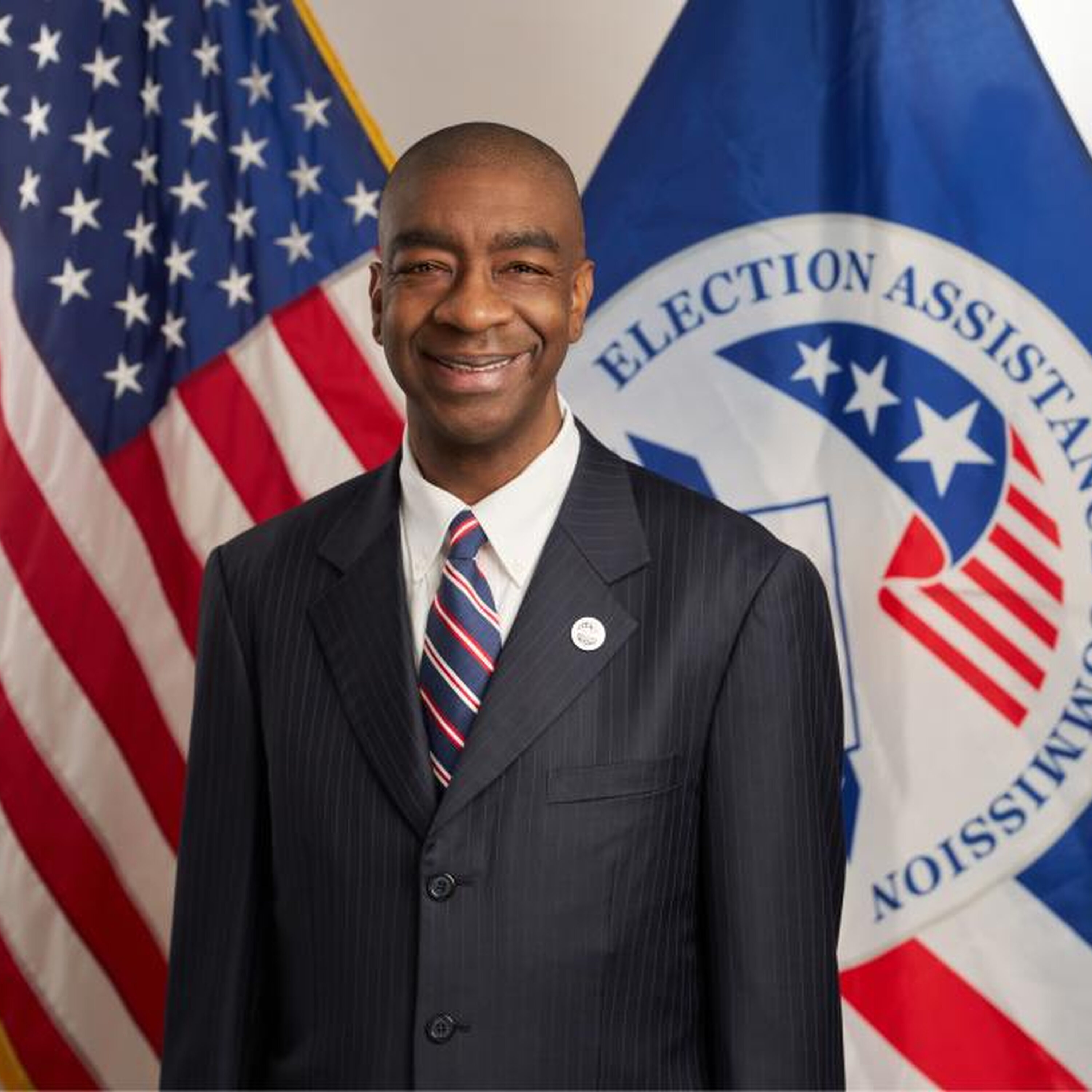
Former EAC Chair Thomas Hicks: WCPT 820 Interview
Get every episode summarized
Each time Chew's Views with Richard Chew (Featured Interviews) publishes, we email you a written briefing from the transcript — the topics, who appeared, and any specific claims, with the ad reads skipped.
Email me new episodesFree for 3 shows. No card needed.
About this episode
“Thomas Hicks is a nationally recognized and award-winning former election official that served our country well.”From the transcript
Richard Chew is joined by Thomas Hicks, former chair of the federal Election Assistance Commission; he was fired on July 9 when President Donald Trump dismissed all three serving commissioners.
Catch "Chew's Views with Richard Chew” weekdays from 6:00 to 8:00 a.m. Central on WCPT (heartlandsignal.com/programs/chews-views).
Follow us:
Website: https://heartlandsignal.com
WCPT Facebook: https://www.facebook.com/WCPT820
Heartland Signal Facebook: https://www.facebook.com/HeartlandSignal
Tiktok: https://www.tiktok.com/@heartlandsignal
Heartland Signal X: https://x.com/HeartlandSignal
WCPT 820 X: https://x.com/WCPT820
Instagram: https://www.instagram.com/heartlandsignal
Threads: threads.com/@heartlandsignal
YouTube: https://www.youtube.com/@heartlandsignal
See omnystudio.com/listener for privacy information.
Get every episode summarized
Each time Chew's Views with Richard Chew (Featured Interviews) publishes, we email you a written briefing from the transcript — the topics, who appeared, and any specific claims, with the ad reads skipped.
Email me new episodesFree for 3 shows. No card needed.
Know when Thomas Hicks turns up
Follow Thomas Hicks and once a week we email you every new episode they appeared on — including guest spots the show notes never mention, because we read the transcript.
Follow Thomas HicksFree. Pick your own day and time.
Hosts & guests
Transcript ready
455 searchable segments. Every word is indexed and playable.
Full transcript
Chew's Views with Richard Chew (Featured Interviews) — Former EAC Chair Thomas Hicks: WCPT 820 Interview. Machine-transcribed; use the interactive transcript above to jump the player to any line.
Richard Chiu, weekday mornings at 6 on WCPT 820. All right guys, welcome back to Chiu's views. If you're just tuning in, I'm Richard Chiu. Thank you so much for being with us this morning. Former chair of the United States election assistance commission is with us this morning. Thomas Hicks is a nationally recognized and award-winning former election official that served our country well. I'm just gonna put it that way. And then when things get tight for the current current administration, they decided that they wanted to find another path. And so I want to welcome to the show this morning, Mr. Thomas Hicks. Good morning, Thomas. Welcome to Chiu's views. Thank you, sir. Thank you for having me here. And when reading through your bio, I noticed that we do have something in common. Oh, we both have seen all 50 states. Yes. You know, so I think that that's absolutely amazing.
And you know, the one thing I would say is that I've gone all across the country and people just are the same in terms of, they want one thing, they want their election to work from function well. They may not trust across the street, but they trust what's going on in their own hometown. What a thing. The other thing is, so I've gone to, with this job, you know, it was basically I've gone to all 50 states and four of the five territories. And only had that one territory left, but it was just amazing that talk to so many folks, so many Americans around the world, basically about their voting experience. Well, first of all, thank you for acknowledging that. That's one of my pride and pride and joy items that I've been to all 50 states. I haven't been to all of the territories, but I can, when I think about something for me that makes me, when I'm, people ask me the question, well, as a black guy in America, you're proud of the country. I'm proud of the country. Sometimes I'm not proud of the country. I'm certainly not proud of certain things that the country does and has done.
And you, and I could talk about that for hours, the point hours, but I'm proud of the fact that I've visited, and my qualified time is three days, and at least in all states, and I've done it. And it does, it did exactly what you said. And I'm a big advocate for people in our country to do that. You should make it one of your bucket list items to go to every single state in America, because you will find what Thomas just said to be true. There are so many things that we have in common, and one of them is we want to be able to have a hand in the process of who we get to have serving for us, who we vote for. And there's some ugly history around that. There's some, you could go into some pockets of our, some of our southern states, and there's still some old isms of people that don't think that certain folks should be able to vote because voting change the arc of this country, and having people be able to vote change the arc of this country.
But the one thing that we haven't heard until recent times, and let's just be honest, the last 10 years of our lives, there has never been a conversation more virulent about voting fraud than during these last 10 years. And that's been at the tip of the tongue of Donald Trump. We have not had, we've got some brilliant people. You were one of them, irrespective of color, culture, and gender that understand how to make this thing work when it comes to elections. And now all these years of elections, there's some pretty awful times when we didn't have the technology and the smarts and all that. We didn't have any issues with voting security in the 60s, when really that, we were very susceptible to it then. We were very susceptible to voting problems after World War II because of the large number of people that were registering to vote after we came out of the hell of World War II. We didn't have it then, but suddenly now in the last 10 years,
we've got voting fraud and we've got all these voting issues that are coming from, really from one person. So talk to us about that stream of time when it comes to voting. Well, there is no voting fraud. It's very small and it's usually just an error, administrative error that occurs. These folks, if they're usually talking about non-citizens voting, if I'm a non-citizen and I want to become an American, the last thing I want to do is do something that's going to, and peril my process of actually becoming a citizen. So why would I put my family at risk? Why would I put my citizenship at risk by voting and something that's not going to really do anything? It's usually been an administrative error and it's really, disheartening to me to hear that, all right, Mr. Trump,
you won in 16 and you won in 24 and you lost in 20. Why are you so still concentrated on 20? Why could you lost? You lost on the same machines that you won on and the same processes that you won on. So let's move forward and talk about the 2026 election, 2028 and get the resources that election officials need in order to make sure that those elections function well. There are so many safeguards that are put in place, for instance, in terms of counting ballots, 98% of the country have some sort of paper trail. So if there's something called in the question, you put that paper aside and you actually count it, as opposed to having it machine counted because people want something, when they do the machine count, that's more of making sure that it's done quickly and accurately. And so that you can get the results out by 10 o'clock on for most places, which are unofficial results, obviously.
But I still say that this country, you were saying earlier, I was never called an American until I left the country. And then coming back and then serve the country for over 30 years in government roles. And I'm not gonna stop because someone says, you can't work at this job for a while. So I'm still having all my options open, but at some point I would like to go back into the federal government. And you've seen the brilliance of our federal government because of the time that you've been there. It hasn't just been a job for you. And even a career, yes, but a passion for you as well, because, and again, Thomas, I'm not putting words in your mouth, but I think that we can understand certain things similar because of our similar backgrounds. You've understood as a black man in America how important voting is to our community, but to the larger community as well as, it's important to somebody that's from, you know,
a predominantly black Hispanic Latino or Appalachian community to be able to have the access to vote and vote without drama. Am I right or wrong here? You are right 100% and you can see when President Trump was trying to attack male and voting, that would affect a lot of people, but it would disproportionately affect white Alaskans to live in every rural areas that wouldn't be able to cast their votes. Somebody who lives in Adak, Alaska, right for those who need a geography lesson. It's hard as hell to get to Central Alaska, to get to a place to vote. But if you can go to the post office and drop it in the mail as a, and making the assumption that that's a Republican area, then that's sort of a community the right way. Right, right. And so it's not, it's the, you're harming your own people, you know, the own folks that you want to vote for you. Right. And then the thing that I've noticed more and more,
the issues that were occurring in the 50s and 60s against black folks, and now occurring in the 2020s against all people, basically putting up barriers to prevent people from casting their votes, threatening to call out police or government agencies or checking, you know, some sort of poll taxes, sort of they'll, in terms of, oh, do you have an ID or something to that degree? As opposed to what's already in place to say, I'm affirming a white saying, I am. And the government officials go back and check that. So it's very disheartening. And, you know, I hope that we can move forward. The bill that started my agency, the Help America Vote Act passed with 357 members of the House and 92 members of the Senate. It's a huge bipartisan piece of legislation. In order to move forward, we need to get back to that sort of thing of saying, hey, some of these things won't benefit my party,
but they'll benefit Americans moving forward. You know, like provisional, balloting or voter registration list and so forth. Those things, you know, a looked at as nonpartisan. And so that's the way that we should be looking at voting overall. And that's what the agency was about of saying, we don't care who wins, but we want to make sure that balls and strikes are called correctly. And what's interesting about that is the agency has never, I was saying this earlier, asked this question. This week I've really been on this partisan versus bipartisan thing this week, Thomas, where I say that I understand the importance of bipartisanship. Sometimes being partisan is required to get to being bipartisan because you've got to draw the line to say, if we don't do this, we don't stand for this, we are never going to get to a point where we can agree on something. And so we have to draw the line. When it comes to voting, you know, there are some people on the political right that are in agreement with the administration
or specifically in agreement with Trump. I don't think we can be bipartisan on disenfranchising people from voting. We have to be partisan and say, this is what our rules and our laws are and the states run the election, not Pennsylvania Avenue. So I believe sometimes being partisan is required to get to having a partisan understanding. And you just denoted that with the numbers that you talked about with the agency. Yeah, it was, you're 100% correct. I think that there are some things that people should not compromise on. And disenfranchisement is one of them. You know, if we're going to say, we don't want this group of people to vote. And so therefore we're going to put these barriers in the place, then we need to stop that some way somehow. And that's one of the things that my fellow commissioner, Democratic commissioner, and I pushed towards with a couple of things that came up in front of us. I'm not saying that the other commissioners were doing anything that they felt was wrong,
but they felt that that was the best thing for them or for the country, but I disagreed with them. And that's what we can do is we can disagree, but at the end of the day, votes matter, votes do matter. They do, they do. Thomas, real quick, before we go to break, and I know this is a real cool one for me because I have this visual. You guys created this pocket size. I'm going to call it cliff notes in terms of voting and just giving folks a little bit more access. And it was designed to reach people with disabilities, people that they, I think you were trying to put together or did you put together a vote? No, there it is. And Braille, is that in my correct? Yeah, so I keep a copy of it in my wallet. That's what it's got. So it's a little card that we have, basically, it was for folks who have disabilities to say what their rights are. You have the right to vote independently
and privately vote in accessible polling place for voters with disabilities. Seek out workers at polling place to help you use the machines or you can bring someone with you to help you vote. For folks who have language issues or site issues or something to that degree, the only thing you couldn't do is bring your boss or your union boss with you. But I keep a copy of that in my wallet and it was done in different aspects as well, allowing for it we had it in large print and we had it in Braille as well. And it's still available at the agency. So folks can go to vac.gov and I request those sorts of things. That's good. We'll probably have you repeat that again before we wrap up. But let's take a quick break. The number is 773-763-9278. I'm Richard Chu. We're talking with Thomas Hicks, former chair of the United States Election Assistance Commission. This is Chu's views and we'll be right back.
All right, guys, welcome back to Chu's views. Thanks for being with us this morning. I am talking with Thomas Hicks, former chair of the United States Election Assistance Commission. And we were saying during the break, Thomas, that this is someone that has clearly been a really good fighter and excited about and passionate about the work that you've done specifically with the AAC and more broadly with the federal government. You're dismissal, if you will. Are there some legal challenges that come into this or is this something that you're going to sit out and wait until there's a change in the structure of our federal administration to sort of re-enter the game? And if you can't talk about what that is and I respect that. Looking to see what possibilities are actually out there and leaving all avenues open. So talking to some of the lawyers to see if there is any sort of thing that we can do or if we should do, you know,
in light of slaughter, but to talk to some folks who are a lot more smart, smarter than I am to figure out these ways of things and, you know, deal with those issues, but not necessarily just to leave it alone. Yeah, and then I know that's itself spot to be answered which is given the passion that you have for the work because at the end of the day, knowing how important voting is to every citizen in the country is obviously a big deal for you. We hear this conversation right now, Thomas, about people, illegal, illegal voting or people that are not citizens voting. And there's a couple that there's a, I'm not trying to split hairs, but help folks understand what that actually is, illegal voting and people that are not citizens voting. Right. And so basically it's, they're lumping that in the same category. Right. So people who, if you are not an American citizen, you do not have the right to vote
in federal elections. And so there are some jurisdictions that allow you to vote on local matters, but not federal matters. So you have to have, you know, those qualifications be an American citizen, be over the age of 18. And states basically determine what those other qualifications are. Some states say that if you are arrested and, you know, still have felony convictions that you cannot vote for a certain amount of time for junior recently got rid of those sorts of things. There is even a couple of states that allow you to vote while you're in jail. So, but, but it lays those things out. But I do want to emphasize that it is so small from the billions of votes that have been cast in this country that, you know, you can basically, it's less than a few hundred. And it's usually a administrative error. So it's basically ends up being a rounding error. So to amplify those sorts
of things is basically basically saying that is fear and fear and gloom and doom basically to say, all these foreigners are taking over our elections process, which is not the case. I mean, like I said earlier, no one wants to, if you are not a citizen and you're trying to become a citizen, you don't want to basically do something that's going to impair your ability to become a citizen later on because these folks do get caught. It's trackable. It's so easy to track. That's exactly. It's easier. It's okay. I sometimes I get fired up about certain things because I go back to my mother and father in common sense. It is so trackable for someone to that illegal evil. It's easier to track somebody for voter fraud than it is for bank fraud. Yeah. 100% 100% and so that's that's and it's the the the incident rate is so much lower. It's like it's not even
comparison of the difference between bank fraud and voter fraud. And to your point, you know, this is where it goes back to the real data, which I know you're a database person, as well as a legal person, there are so many other situations where people who have come when we talk about people coming into the country, people that want to be citizens want to do it the right way. That other line of not breaking the rules are people who were accused of violent crimes or the sort of this meme from the federal government, specifically from the current administration about all these illegals committing all these crimes, people that want to come to this country from wherever they're coming from to the United States to become a citizen, they aren't going to mess with that. Yeah. That's it all. That's it all. It's the overlay into people who are coming here legally voting and people who are mass criminals, the people that want to come here and be here that that are coming as the immigration.
They're not that's not the path they're going down. They're trying to stay on the straight and narrow as the phrase goes. Yeah, exactly. I agree with that 100%. You know, but I still go back to I'm hoping that whoever is in charge of the next Congress, appropriate the funds necessary for the EIC to carry out their job and the get money to the states for the 28 election. Over the last, you know, couple of cycles, it's been, you know, $50 million here, $15 million there. It's not enough to help run the elections process. And if we can give a few billion dollars, things that we shouldn't be involved in right now, we can give a few billion dollars to the states to help run something that we all hold true and that's fair and free elections. There's more people that want to have the right to vote and be able to be a participant in that that wants to be in forever wars.
Because the last time I checked for Iran to really get a nuclear weapon and then to deliver it to have the payload to get it to the United States was really a reach. So we won't drag you into that part of the conversation. Thomas, but I get the big picture of what you were saying about where we're spending our resources. Let me on that point though, I do want to ask you something because this is something that I saw yesterday and I'll probably talk about it over the next couple of days on the show is there are people and I've been one of them that have said that one of the steps, one of the things that this administration may try to do in terms of tampering with the election is to create this sort of a national emergency that is something that they can then layer into and say that the federal government has the authority and now the purview because there's been a threat in terms of state elections that we feel the federal government should step into and that be yet another attempt to try to affect the midterms.
A Senator Alyssa Slotkin talked about this. I believe we was just today or the day before in a presentation. How that's her concern that the next step since these other things aren't working is to try to go down that. What is going on? I'm going to say what are your thoughts there? It terrifies me. I was going to go back and you know since I have a few some more free time on my hands right now. Apparently I was going to go do some research to see how that that happened during the Civil War when martial law was was conducted and some of the things that were thrown out there because I don't know exactly how it can be done. How do you do that over 8,000 jurisdictions or are you calling out the National Guard for each state and you know our governors that don't want to agree with you what are you doing with that. So I'm just terrified on the fact that someone can't take a loss or to
apologize when they've done something wrong. You know let it go, govern the country. Stop looking backwards and look forwards at some of the things that keeps saying to us, let's look forward and get some things done. But I don't know how they can do it. I hope they can't do it. And I hope that one of the things that I've noticed with some of the election officials is that they have done what we call table top exercises. Basically different scenarios. And so I'm sure that some of them have run that sort of scenario in terms of you know trying to go to judges or go to the courts to get restraining orders to stop these things from happening. But but I don't know how they're going to implement those sorts of things. But it does terrify me. Yeah, Marco Lyass has really been one of the voices in that space in terms of you know what he's been trying to do and I am hearing the number of
attorneys that are that are signing up to be part of the quote unquote, you know, protect the elections from the correct sides or standpoint. So I'm with you on that. I hope that that we have enough people that are willing to ready willing and able to fight for this election going the right way. And I don't mean the choice right way, but that there's not the shenanigans that folks like you and me are concerned about and even a list of other slots like and said the same thing. So I'm wondering when do things you did talk about that I think that folks should really heed to is if you can vote early, vote early. Yeah, you know, I've already cast my vote for this November election. You know, I mailed it in and then got a notice for my election officials saying that they've received an encounter. That's the way to go, y'all. I mean, if you can, then get it out of the way and you know, God forbid it's a bad weather day and all those other things that happen in November and et cetera, et cetera. But to that end, I would love to have you back possibly before the election to talk about any updates that you may have seen in the next couple of weeks.
Maybe we get together again later in the month of October and by the way, happy October to you and talk about anything that you've heard or anything that you feel that people need to know about in those last you know, 10 days, 14 days before the election. So if we can do that, I think that would be great and listeners all over the country will benefit from any additional tips that you can you can provide in those last few days before the election. Would that would that be okay? Happy to do it. Happy to do it. I'm still out there trying to travel a little bit still talking to election officials. You know, and folks still want to want to hear some of the things I have to say I still laugh about the fact that before my dad passed and my mom is still here that they basically say you get paid to talk. So get on the road, son. Thomas Hicks, y'all former chair of the United States Election Assistance Commission. Thank you, sir, for being with us this morning. Thanks for your service and your ongoing service and care. I look forward to talking to you in a couple of weeks. Okay.
Same. Thank you, sir. All right. Bye. Talk to you later. Bye. Bye.
More episodes
More from Chew's Views with Richard Chew (Featured Interviews)

Michigan Dems Chair Curtis Hertel: WCPT 820 Interview
Chew's Views with Richard Chew (Featured Interviews)

Dr. Theresa Brooks: WCPT 820 Candidate Interview
Chew's Views with Richard Chew (Featured Interviews)

Donna Miller, La Shawn Ford and Patty Garcia: WCPT 820 Candidate Interview
Chew's Views with Richard Chew (Featured Interviews)

Heather Williams of the DLCC: WCPT 820 Interview
Chew's Views with Richard Chew (Featured Interviews)