Get every episode summarized
Each time On Point with Meghna Chakrabarti publishes, we email you a written briefing from the transcript — the topics, who appeared, and any specific claims, with the ad reads skipped.
Email me new episodesFree for 3 shows. No card needed.
About this episode
On Point with Meghna Chakrabarti is made possible by:
“Like ukulele strings, boy band members, Oh yeah! No fees, no interest, no impact on your credit score, just the flexibility to pay the way that works for you. With Share My Trip from Uber, you can send your live trip location to the ones who matter most.”From the transcript
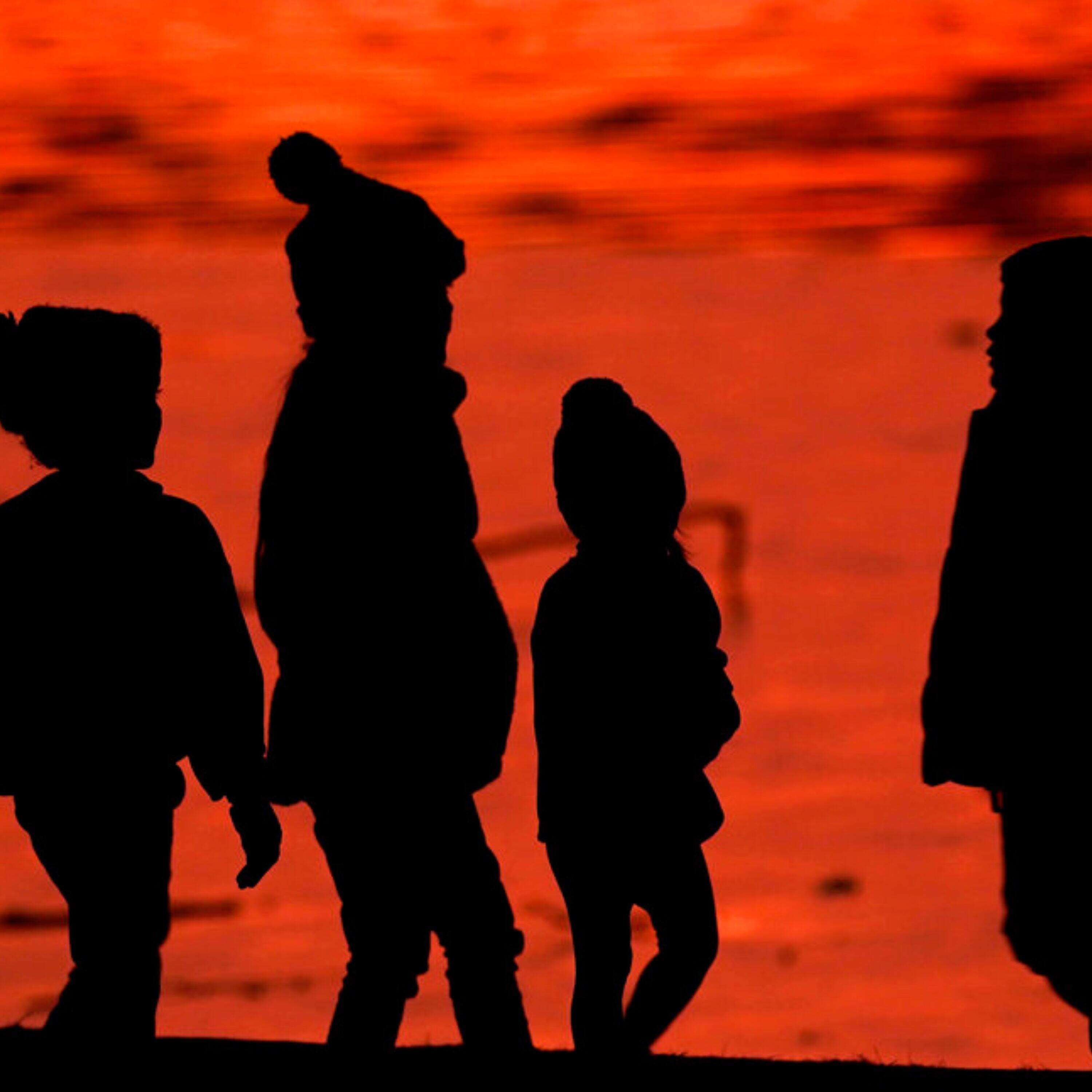
A Virginia mom let her 5-year-old son take a walk alone in her gated community. The authorities found out and now she’s on Virginia's child abuse and neglect registry. Who decides what's in a child's best interest.
*** Thank you for listening. Help power On Point by making a donation here: wbur.org/giveonpoint
Get every episode summarized
Each time On Point with Meghna Chakrabarti publishes, we email you a written briefing from the transcript — the topics, who appeared, and any specific claims, with the ad reads skipped.
Email me new episodesFree for 3 shows. No card needed.
Hosts & guests

Transcript ready
608 searchable segments. Every word is indexed and playable.
Full transcript
On Point with Meghna Chakrabarti — Free range parenting vs. the zero-risk state. Machine-transcribed; use the interactive transcript above to jump the player to any line.
Good things come in force. Like ukulele strings, boy band members, Oh yeah! And PayPal Pay-In-Four. No fees, no interest, no impact on your credit score, just the flexibility to pay the way that works for you. Strument, hum it, pay it in four. Download the PayPal app to get started. Subject to approval. Learn more at paypal.com-pay-in-four. Pay-paling, NMLS 910457. With Share My Trip from Uber, you can send your live trip location to the ones who matter most. Like Dan and Hannah, who always wait up to make sure their daughter gets back to her college dorm room. Or Tiffany, who's running late as usual, and her friends are tracking her trip to make sure she's actually on her way. She's right there. She's three minutes away. Or Sam, who never goes anywhere without her roommate knowing exactly where she is. Some journeys are meant to be shared. Share your ride in real time with Share My Trip on Uber. One more way Uber is putting safety at every turn. Learn more on the Uber app. I get so many headaches every month. It could be chronic migraine
15 or more headache days a month. Each lasting four hours or more. Botox on a botchaline mtoxin A prevents headaches and adults with chronic migraine. It's not for those who have 14 or fewer headache days a month. Prescription Botox is injected by your doctor. Effects of Botox may spread hours to weeks after injection causing serious symptoms. A lurcher doctor right away has difficulty swallowing, speaking, breathing, eye problems, or muscle weakness can be signs of a life-threatening condition. Patients with these conditions before injection are at highest risk. Side effects may include allergic reactions, neck and injection site pain, fatigue, and headache. Allergic reactions can include rash, welts, asthma symptoms, and dizziness. Don't receive Botox if there's a skin infection. Tell your doctor your medical history, muscle or nerve conditions, including ALS Lugeric's disease, myasthenia-gravis, or Lambert Eaton syndrome, and medications, including botchaline mtoxins, as these may increase the risk of serious side effects. Why wait? Ask your doctor. Visit BotoxCronicMigraine.com or call 1-800-444 Botox to learn more. Hey, it's Magna Chakrabardi. Before we get to today's episode,
I want to just take a second to encourage you to join the new on-point club. For just $7 a month, you get first access to the jackpot every week, other exclusive content like behind the scenes with our producers, and you'll be the first to know about special live events. And we have got some great ones coming up. That's all just for $7 a month. This is like a couple of cups of coffee these days. So to join, just click on the link in the episode description you're looking at, and it'll only take a minute to sign up. Okay, here's today's show. WBWAR Podcast. Boston. This is on-point, I'm Magna Chakrabardi. Last month, Carian Parkinson, mother of five, was charged with contributing to the delinquency of a minor. She was convicted in a Virginia court,
and Parkinson was given a six-month suspended jail sentence and is now on the Virginia State Child Abuse and Neglect Registry. Her crime? She let her five-year-old son take a walk in their neighborhood alone. Carian Parkinson joins us now. Welcome to on-point. Hi, Magna. Thanks for having me. Tell me the story of the day that you let your son take a walk. What kind of neighborhood do you live in? We live in a beautiful neighborhood. It's a very large 3,000-home gated community in Williamsburg, which is a very small sleepy town. It's got the colonial area. It's very like a touristy town, but when we don't have any tourists, it's very small. It's a small college town. It's very cute and sweet. And so Sam and I would go for a morning walk all the time. So my other kids were in school and I would just be the two of us. So we went on our three-mile walk that morning. And as we came back, the geese had been molting next to the pond near home. And he was picking them all up and putting them in his backpack.
And then we got home and he asked if he could go back and get more. And I just told him, sure, that's fine. I'm going to go make lunch and you just come on back when you're done. How long was the walk? It's about half a mile from our house. So two or three blocks. But all of the way from my house to that pond was on a protected pathway through our neighborhood. So there'd be this paved path about 10 feet of grass buffer zone and then the 25 mile per hour residential street. And so you had said that Sam is okay if I use his name because you just don't. Oh yeah, okay. That you and he had walked that path frequently. And what about the places where he would have to cross over the road where the cars are going? Yeah, same thing. The first crossing is incidentally where all the kids wait for the bus. So all the kids have to cross the street to go to the bus stop. And then the second crossing would have been on the way to tennis lessons, swim practice, the park, several friends houses. So this is not, it wasn't like he was sort of dropped into the scenario. This is very, very familiar territory.
Okay. And so he goes because he wants to collect more goose feathers, which I think is just such a delightfully five year old thing to want to do. I think it's delightful to you. But did a neighbor see him or was it just the security guard who patrols the gated community? No, it was a neighbor. So when the security guard got to my door, he said a neighbor called and was concerned. That was the story I got. And he brought your son, he brought your son back. Yeah, he'd initially asked Sam to get in his truck and Sam had said, I can't get in your truck. Yeah, then the security guard said, well, then I'm going to walk you home. And so essentially the security guard perp walked him back to my house. And what did he, what did the security guard tell you when you answered the door? He told me that they do not permit children to be alone in the neighborhood, which we had lived there for three years. And I just knew was not true. And so I just said like, which ruler you're referencing? Because I'd love to know if I'm wrong here. And he said, well, if it's not against the rules, then it's against the law,
which was a bold assertion. And he said, so I'm going to call the police. So the police come and child protective services as well. Yeah, so initially it was just one officer. And before the officer got there, you asked Sam what he had gone on. And he recounted to me that the security guard had given him this lecture about you've broken the rules, your mom broke the rules, and had then told him that there were bad people in the neighborhood who could hurt him. So Sam was pretty shaken up by just the walk home. So by the time the police officer arrived, I was very upset for my son. And the police officer says, hey, I got this call from security. They said that your son was alone. And I said, yeah, absolutely, you know, I gave him permission to go. He's within our neighborhood. A place that he's very familiar with. And I'm really not interested in having a conversation about it. And so then he said, well, if you won't talk to me about it, you'll talk to CPS about it. So then he pulled his car in front of my driveway so that I could not leave my home. And then he called for backup to more police officers arrived. And CPS, they talked to us.
I thought it was all over by the time they left my house. But then they sent me a letter two weeks later that said they were opening a formal investigation into our home. And requested a home visit. I had just given birth. And so my attorney called them and said, how about you wait until he's had a minute to take a breath. So they came back on July 2nd. So this all started on June 5th. They did the home visit on July 2nd, while I had masseditis and was recovering for talcour. And then they did not close their investigation until July 23rd is when they sent us their finding that I had in fact neglected my son. And is that what landed you on the state's register? Yes, that one finding. Okay. And then later on you were charged with contributing to the delinquency of a minor and a Virginia judge found you guilty of that and gave you a six month suspended sentence. But you were offered the opportunity to sign a particular form and therefore not be found guilty
of that. Can you tell me a bit about that? It's like a it's called a withheld finding, which is like a plea deal. And so what you do is you admit to the prosecutor and to the judge there was sufficient evidence to find me guilty. So you're making an admission of guilt and entering a guilty plea. And then they do not to prosecute you for a year as long as you keep your nose clean. And I was just absolutely not willing to admit in any way that allowing my son some reasonable independence was a crime first because it's protected by statute the second because it absolutely went against my principles as a mom. And you have how many older kids then Sam three older kids in him, right? These number four and you only a few years ago you moved from Oram, Utah to Virginia, right? And so when your other kids were younger, they had kind of more of an independent outdoor opportunity in Oram. Yeah, we've just always been that way. I mean we are my older two, rode and walked to school. They rode to their friends' houses. They adventureed all around
our neighborhoods. So it was part for the course for our family. I'm interested in the fact that you have this history in Utah and moved to Virginia because Utah was the first state, right? In 2018 that actually passed a reasonable childhood independence law to protect parents from exactly what happened to you. And then in Virginia in 2023, a similar law was passed unanimously. Which is shocking. Nothing happens unanimously in Virginia. In the state legislature. And I understand irony of ironies that you even worked for a time in the office of Virginia State Senator Jill Vogel who co-sponsored this law? Yes, the irony in the story abounds. And it was so funny because I didn't even know that, right? I worked for her law office. I didn't work for her campaign or for her Senate office. Any of that. I just was a little, you know, bebopper attorney interning with her. And so then as this was all happening, I was literally in my house researching when the police were out front my house like Virginia. I knew there was no minimum age. I was like children outside and this law pops up and Jill Vogel co-sponsored like, oh really?
Yeah. And the law I should state says clearly that absent evidence of serious, obvious neglect. The state shouldn't step in and second guess choices that parents make. And that passed unanimously. And it also has really specific language protecting reasonable and independent activities on foot or on bike near home, including walking to school. And Sam was old enough to start kindergarten, but his birthday was the deadline. We held him back a year. So he could have been in kindergarten. And the route he took was the route to get to school. So had he been had his destination been school, the bill would have not just impliedly protected it, but explicitly protected it. Yeah. So the question of what constitutes serious neglect is subject to interpretation though, right? Because because I'm thinking, if you had seen a five year old on on his or her own and also near a body of water, I think the pond is actually kind of an important part here. I mean, would you have kind of, kind of, you know, taken a second look? Sure. I mean, I tend to be that mom. And before all this
happened, I've said to people, if you see a kid who's struggling, please don't be the one who calls CPS be the one who looks for the mom who asked the kid if they're okay. So no, I'm not an alarmist. I wouldn't have fallen apart. I probably just would have said, hey, you doing all right? You know, what are you up to? Okay, cool. You know, just unless I recognize that, are they about to fall in? No. And then one thing I think too that's really important is that we get so worried about kids being afraid. But then you talk to people and you say, is helicopter parenting a problem? Yes. Okay. Well, what does independent childhood look like? And I don't think people have a good idea of what it looks like. And then when they encounter it, it feels alarming because we're not familiar with it. We've like progressively put children indoors over the last 30 years. And so we just need to have a little bit of exposure therapy in our society of like children are actually more capable than what we have gotten used to. You're appealing, the courts ruling. But for as long as you're on the Virginia State Child Abuse and the Gleck Registry, what impact is that going to have on like you? And I don't know, can you volunteer at Sam's school now?
No, but can't volunteer at his school. I haven't tried because I'm not interested in rejection. No, it does restrict my ability to work if I wanted to be a guardian of light. I'm with the court or volunteer at risk use. I would not be permitted to do so. Well, carry on Parkinson. Thank you so much for joining us today. Thank you so much, Magna. Well, we are talking about cases like carry-ins where free range parenting meets the very hard edge of a zero risk state. But there's also a huge great area in between and we'll explore that in a moment. This is on point. Good things coming for us. Like ukulele strings, boy band members, and PayPal paying for. No fees, no interest, no impact on your credit score. Just the flexibility to pay the way that works for you. Strum it, hum it, pay it in four. Download the PayPal app to get
started. Subject to approval. Learn more at PayPal.com slash payin four, PayPal ink, NMLS 910457. On any journey using Uber, it helps to know you're getting into the right car. Pin verification adds an extra step to make sure your ride is your ride. Before the trip begins, your app gives you a unique pin. Just tell it to your driver and they'll enter it in their app before the ride can start. That way you know you're in the right car taking the right trip, and your driver knows you're the right passenger. Make sure your ride is your ride with pin verification from Uber. One more way Uber is putting safety at every turn. Learn more on the Uber app. I get so many headaches every month. It could be chronic migraine. 15 or more headache days a month. Each lasting four hours or more. Botox on a botch alignem talks in A prevents headaches and adults with chronic migraine. It's not for those who have 14 or fewer headache days a month. Prescription Botox is injected by your doctor. Effects of Botox may spread hours to weeks after injection causing serious symptoms. Alerture doctor right away as difficulty swallowing,
speaking, breathing, eye problems or muscle weakness can be signs of a life-threatening condition. Patients with these conditions before injection are at highest risk. Side effects may include allergic reactions, neck and injection site pain, fatigue and headache. allergic reactions can include rash, welts, asthma symptoms, and dizziness. Don't receive Botox if there's a skin infection. Tell your doctor your medical history, muscle or nerve conditions, including ALS Lugeric's disease, myasthenia-gravis or Lambert Eaton syndrome, and medications, including botch alignem toxins, as these may increase the risk of serious side effects. Why wait? Ask your doctor. Visit BotoxCronicMigraine.com or call 1-800-44 Botox to learn more. Let's turn now to Linoar Skinesi. She's president of Let Grow, a non-profit that promotes childhood independence and author of the book Free Range Kids. How parents and teachers can let go and let grow. Linoar, welcome to OnPoint. Well, thanks. Happy to be here, Mignna. Let's stick with the specifics of Kareans experience. It sounds kind of extraordinary when you hear it. I think there are some details worth actually debating about, but how frequent to something like this happen in
the United States is what happened to Karean an outlier? That is a question that I wish I could answer. I can't tell you. I can just give you a couple of statistics and a couple of stories. The statistics are that between the ages of zero and 18, 37% of American children will be the subject of a child abuse or neglect hotline call at some point, which is already outrageous. But if you're a black kid, the percent is 53%. 53% chance. More than half that someone will call child protective services to say, check in on this family. I don't think the parents do it right. And so the significance to you in those numbers is... They're huge. Right? I mean, the numbers keep going up ever since the 70s when we started having the child abuse and neglect hotlines and the idea that all children are under supervised and overly in danger. And then the stories that I've told over the years, a lot of them have gone viral. I'm sure you've heard the case of the Maytees in Silver Spring, Maryland. They let their kids 10 and 6 walk home from a park. They were investigated
like Carianne was for child abuse and neglect. Deborah Harrell and South Carolina. She's working her shift at McDonald's. Her kid wants to spend the time at the park. She's nine years old. There's tons of kids, tons of adults. Somebody calls the cops and says, I've seen this kid here three days in a row, playing. Isn't that awful? And they go and arrest the mom. Deborah Harrell and throw her in jail and take away her kid for 17 days. Nine years old at a park. It's a wonderful thing to be doing in the summer, playing in the sprinklers with your friends and yet the mom was thrown in jail. And these stories spark outrage because most of us still remember a childhood. When we had some freedom to walk to the store, walk to the school, play at the park without this being considered neglect. Well, I'm trying to see here is the point of view of law enforcement or state officials that or even child protective services folks because this idea that you can't take a chance on anything that if you get a call like that, you don't actually know at the beginning if something is wrong or not. I mean, like a kid might tell you everything's okay,
but everything's actually not okay. So in order to protect all children, isn't it better for people in a position of power or protection to not to give the benefit of the doubt until things can get sorted out? Yeah, none of us want kids to be abused. Obviously, that's just horrifying and that's what child protective services is there to protect children from. But I don't see any overlap in a Venn diagram between a child walking to town, a child walking to pick up feathers, a child playing at the park, and then being literally abused or neglected. So what are our reasonable childhood independence laws we're trying to do and do when they're not skirted around as they were in Virginia? They state very clearly that if a child is in serious and obvious danger, yes, go and figure things out. But if a child isn't, if a child is simply walking someplace and you ask them, are they okay? You're allowed to believe that they're okay
without thinking, hmm, they said okay, but they're probably being tortured back home. Let me go see. There just isn't any reason for that trip wire to start. And so the reasonable childhood independence law, you explained it really well. It's to protect parents who take their eyes off their kids. It's just if they're putting their kids in obvious and serious danger that CPS should jump in. But if the kid is fine, no. Yeah. So I just want to tell listeners here that obviously you guys know that I'm a parent of two. So I've gone through this question myself as well. And I a little more like you, I had a free-range childhood grown up in the 80s. I have very actively over the many years kicked my kids out of the house and said, go by yourself. That's where I come from. That's my point of view as a parent. But journalistically, I do want to say that I think a lot of these calls and a lot of the concern that when people see a child walking on their own is not that, oh, they're getting horribly emotionally or physically abused at home, it's that someone is not
looking after them in public in a place where something bad could happen to them. That can be seen as a form of neglect. Like a parent's primary duty is to keep an eye on their kids, even if it's from afar, just to make sure that nothing goes wrong. And in the case of Carianne, what I keep coming back to is there was the pond. Right. And I was reading an article in the Deseret news, which is interesting because there's a lot of articles in Utah about Carianne's case. Utah being interesting state about this. And there was someone who wrote that on the same day that Sam went on his walk, the body of a five-year-old little girl who had autism was found in South Carolina near Myrtle Beach because she had left home also and ended up drowning. There are these inherent risks of young children being on their own, aren't there? Well, there are inherent risks in the fact that we're alive on the earth. And it's horrible what happened to that child with autism. Obviously,
it's just obviously a horrible, horrible tragedy. Carianne knows her son. He does not have autism. She has seen him safely across the street. It's the route to her kid's kindergarten as well as their negated community. So you're allowed to make a calculated decision, a loving decision, about whether you want your kid to stay home or go outside. And we keep seeing the danger of the kid being outside. And we never think about what is happening to an entire generation of kids who are growing up so extremely extraordinarily oversupervised, I would say. And I say that not like you shouldn't care about your kid. But there's this book. I always refer to this wonderful book, a series of child development books from the 80s. And there was one for six-year-olds. Your six-year old loving and defiant. And it has a checklist of everything a neurotypical child should be able to do entering first grade. Okay. Can they tell their left hand from their right hand? Can they stand on
one foot for, I don't know, 10 seconds? Can they walk four to eight blocks in any direction to school, to a store, to the park? So it was normal. It was indeed good. It was appropriate for a child to be walking that far as a six-year-old in living memory. And then there was just a study done this past year by the Institute for Family Studies. They surveyed 24,000 American parents. And they ask, what age do you let your kids off the block? And the majority of parents of 14-year-olds don't let them leave the block. And we wonder why kids are so anxious and so depressed. It's because the 14-year-olds are being treated like babies, like toddlers. And so to say, why is anybody ever letting their child go? Why don't we say, why isn't everybody letting their child go? It's really good for kids to have some independence. In fact, it's an essential part of childhood. It's a nutrient towards a healthy developing child. And to take that away from them, I don't want to call that
abuse. But why are we saying it's abusive or bad or dangerous or suspect when a parent trusts their kid, knows they're ready, and gives them the trust and the ability to go and be part of the world instead of locking them inside? You know what's interesting to me, Lenore, is that I've found, again, just in my own personal experience that no matter what a parent tries, the signals about a child's safety or whether or not they should be, whether they should be supervised are coming to the child even from outside the home. You know, in schools, they're getting constant safety lessons, which is good. I'm not saying they shouldn't. But because, for example, when my kids were younger and my kids would be like, we want this, we want that, I'd give them five bucks and I'd be like, go get it yourself. We live literally two blocks from a grocery store. And I actually had to work on convincing them that they could. Wow. You're saying like, they were getting messages from somewhere. And again, I'm not actually criticizing these messages, but the society was telling them, it's not right and it's not safe.
Even though it's literally, I'm not joking, I can see the grocery store from my living room window. So, let grow is the nonprofit that I founded. And our goal is to make it normal again to give kids back some independence. And one of the things that we do is we have a free program for schools. It's called the Lecturo Experience. And once a month, kids get a homework assignment that says exactly that, Magnet. It says, go home and do something new on your own with your parents' permission, but without your parents. And the goal there is to just re-normalizing the kid at the store. In fact, we heard of one place, a town that had started doing the Lecturo Experience. And a kid, a fourth or fifth grader, came alone to the store and everybody was concerned. Where's the mom? Of course they say mom. You know, kid, what's he doing here? So they asked the kid, why are you here by yourself? And he said, I'm doing my Lecturo Experience. And after that, when other kids started coming in by themselves, they were like, oh, it's a Lecturo kid. It's a Lecturo kid.
So we're trying to re-normalize exactly what you were doing, which is having kids walk near a pond. You're allowed to pass by a pond. You're not going to jump in it. If you know not to jump in it, which Sam knew, you're allowed to cross the street. Once we, our job is to teach our kids to look left, look right, look left again, try to make eye contact with a driver if a driver is passing by. You know, our job is not to keep our kids inside. Our job is to prepare our children for the path. And then let them go. And that's what we're trying to do. Yeah. I want to bring Dr. Katie Donnelly into the conversation. She is an injury prevention advocate with safe kids worldwide and is also a pediatric emergency physician. Dr. Donnelly, welcome to on point. I'm going to thank Thrabbing. I'm so glad you could join us because I, you know, I wanted to be completely transparent about my own sort of parenting views. But I also want to say that I have an enormous amount of sympathy for sort of the trend that we American society has taken over the
past, let's say, 20, 30 years in terms of ramping up concern about child safety. Whether or not we've gone too far, we can continue to debate. But can you give me your view, Dr. Donnelly, about reasons why you see that we should be quite vigilant about about children being, you know, on their own outside? I think the biggest thing I want to stress is kids are not just little adults. And part of that is, as parents, I have a two year old myself, is teaching our kids how to be safe. But we know that a child's brain at 4, 6, 8 is very different from a 15, 16, 17 year old. You might teach your child a million times how to safely cross the street. They see a squirrel or a ball. That impulsivity kicks in and they're off, right? You might say never go in the water, but they see a duckling that's maybe even injured, stuck in a piece of fishing line. And they're in that water
trying to help because they're good kids who want to try to help everyone. They don't recognize risk as easily as we do either. For example, they've done studies looking at, you know, can kids judge the speed of a car coming at them? And we find that six and eight year olds really can't. They have a very hard time judging how fast a car is going to get to them. And would that be safe to cross in front of? You know, as we see more and more phones. And I suspect a lot of parents would love to, if they're going to have their child go out into the world, would love to have a way to communicate with them, if needed. And kids don't recognize the danger of looking at their phone while they're crossing the street. And then finally, our society by and large is not built for little bodies. So children trying to safely cross the street often can't even be seen over parked cars on either side. So it can be very hard for drivers to notice a child who's even doing everything safely.
And that comes into play as well. A lot of the conversation around free-range parenting or one of the criticisms of why we don't let kids out to be on their own more has to do with this long generation, long fear of kids being snatched off the street. Right? But everything that you're bringing up, Dr. Donnelly, is not that. It's not will a stranger harm the child. It's just that a child's own perceptions of the world, which are still developing. You're more concerned about injury and death, right? Oh, definitely. Yeah. I believe that those fears of a child being snatched up at a broad daylight are quite overblown. My biggest concern in the thing I see in our emergency department every day is kids who are unsupervised or undersupervised, who get themselves injured.
Good things come in force. Like ukulele strings, boy band members, yeah. And PayPal payin' for. No fees, no interest, no impact on your credit score, just the flexibility to pay the way that works for you. Strument, hum it, pay it in for. Download the PayPal app to get started. Subject to approval. Learn more at paypal.com-payin-for. Paypalling, NMLS 910457. On any journey using Uber, it helps to know you're getting into the right car. Pin verification adds an extra step to make sure your ride is your ride. Before the trip begins, your app gives you a unique pin. Just tell it to your driver and they'll enter it in their app before the ride can start. Hey, what's your pin? Mm-hmm. 2538. That way you know you're in the right car taking the right trip and your driver knows you're the right passenger. Make sure your ride is your ride, with pin verification from Uber. One more way Uber is putting safety at every turn. Learn more on the Uber app. I get so many headaches every month. It could be chronic migraine,
15 or more headache days a month. Each lasting four hours or more. Boatox, on a botch-align Mtoxin A, prevents headaches and adults with chronic migraine. It's not for those who have 14 or fewer headache days a month. Prescription Boatox is injected by your doctor. Effects of Botox may spread hours to weeks after injection causing serious symptoms. A lurcher doctor right away is difficulty swallowing, speaking, breathing, eye problems or muscle weakness can be signs of a life-threatening condition. Patients with these conditions before injection are at highest risk. Side effects may include allergic reactions, neck and injection site pain, fatigue and headache. A lurchic reactions can include rash, welts, asthma symptoms and dizziness. Don't receive Botox if there's a skin infection. Tell your doctor your medical history, muscle or nerve conditions, including ALS, Lugeric's disease, Myasthenia Gravis or Lambert Eaton Syndrome, and medications, including botch-align Mtoxins, as these may increase the risk of serious side effects. Why wait? Ask your doctor. Visit BotoxCronicMigraine.com or call 1-800-44 Botox to learn more. Both of you please feel free to just jump in and mix it up here with me.
But, Lenore, let me just kind of kick it off with you. I think Dr. Donnelly actually presents quite a persuasive argument when it comes to, you know, not 14-year-olds, as you said earlier, but, you know, in the five to eight range about, you know, the world isn't built for them. They have different perceptions of risk or even how fast cars move. And so these are kids that need some supervision when outside and shouldn't be on their own. I totally agree that it is up to us to try to make our kids safe. While the world wasn't created for a particular size or a particular age, it is the world. And it is beckoning to children. And as Carianne mentioned in the first segment, five year olds are expected to walk to school in her neighborhood, passing the same pond, the same ultra-tempting pond, that Sam passed. And they teach their kids, don't jump in the pond, look both ways before crossing the street. And then they let them go by not letting them do things in their childhood
as this generation has started to do. It's because we only see things in terms of risk. And it's a new way of thinking. I call it worst first thinking. Instead of thinking that Sam's going to go, and as he said, pick up the goose feathers as he's done before and come home, you know, we're imagining the very worst case scenario. There's a duck. The duck is drowning. Sam goes crazy with empathy, runs into the pond and drowns. I mean, that is sad, but it is extremely unlikely to happen. And what's interesting to me is that we come up with these scenarios when we're thinking of a child unsupervised. But we never come up with these scenarios when we think of a child in any other situation. A child getting into a car and the mom driving him to the dentist is far more likely to die. The number one way kids die is as kids, as passengers in cars. And we don't say, mom, please, for the sake of God, do not put your child in a car and drive him to the dentist. Think of all the horrible things could happen. How would you feel if you were tea-boned
by a drunk driver? We don't do that. Somehow we're just obsessed with the idea that I want a child to alone. Child could fall down the stairs in your house. They could slip in the bathroom. They could choke on food. We don't obsess about those. We obsess about a kid going a few blocks in on a sunny day in a quiet neighborhood, picking up some feathers and coming home. I might push back just a little on that in that I personally obsess about all of those things. That's why we have child passenger restraint laws because we know it's safest to be backwards facing in a car seat built for an infant until the age of two. Why we have booster seat recommendations? Why I cut up my child's hot dogs right now? So he, like I know the risky foods for choking. And I am putting the safety measures around him that allow him to be safe. We have gates at the top of our stairs on the bottom of our stairs because he's two and I don't want to, he can't be on those stairs. I think a two-year-old needs constant
supervision. That's what's hard about having a two-year-old, a five-year-old, as we've said before, is expected to walk to kindergarten in that neighborhood. So you're allowed to gradually give your child more independence. And there was an amazing article in the Journal of Pediatrics in 2023 that was a study that showed that over the decades as kids independence has been going down, as they've been allowed less time outside, less time at the park, less time walking to school, as their independence has been going down, their anxiety and their depression and bad things mentally have been going up, up, up. So while there might be some danger in walking along the sidewalk or being in a car, there's also some danger in never doing anything on your own and feeling like you're you're just not trusted by your parents and that the world is too scary and awful. I personally agree that we need to give kids ever more independence in safe ways and
your advocacy work is where we should be focusing both on legislation, right, and making sure that these these laws are enforced in reasonable ways, but also advocating forever, safer, and more child-focused environments, right? We I suspect many of us have seen those those viral videos from Japan where they have the little flags of kids sticking their back on their back and you're that show is going to come up in this conversation. Yeah, and they and so everyone knows that their parent is aware of this journey and they can be seen as they're crossing the street and everyone has just an extra pair of eyes on them because they know they're an unaccompanied child. That is great. That takes a lot of community organizing work to think about how we make our neighborhoods as safe as possible for kids while nurturing that independence. Let me just dump in here because
I think the Japan comparison is really interesting. I'm obsessed with that show, old enough, I've like seen every episode, but I also think it's totally unrealistic for the United States. And by the way, Lenora, you said that the number one cause of death for children is is automobile accident. Car passengers. That's actually not true. Do you know what it is? I thought it was car passengers. I've always quoted that fire. It's firearms. Firearms. So the reason why that's so interesting, tragic and interesting is we know at least since 2020 that the number one thing actually killing children is guns in this country. But the nation and its lawmakers seem to accept that as a perfectly normal form of risk. Have we passed any gun laws to make it harder for children to be in crossfire or handle an unsecured weapon? No, we have not. So on the one hand, this country is totally okay with the form of risk that ends up in the most children dying. But not okay with a kind of risk
where as you've been saying, Lenora might actually be a healthy form of risk. And so with that in mind, Dr. Donald, I want to come back to you because you were talking about creating physical societies that are better to encourage independence in children. What about the legal part here? Because I keep coming back to the fact that Karean, basically a concern neighbor called. And I think that's okay. We want people to be looking after each other's kids. But what the trouble is is the next step once Karean just sort of challenged the security officer was law enforcement and child protective services. We went immediately to that. That's where I think, you know, there's got to be some way to put a buffer in between a parent's decision and immediately presuming that child protective services needs to be called in. Yeah. And right now in America, I am I am not sure that buffer exists. Unfortunately, we have we have the will and force of the state to enact our laws.
But child protective services as it I wish it was was more of a support, you know, a carrot rather than a stick of all right, what's going on here? How can we help you? It seems like you're a very reasonable parent. How can we work with your community, your lawmakers to make this safe? That doesn't exist. And it is something that I think is going to be highly dependent on individual communities to come together and talk about what does raising kids in our gated community look like, right? Are we going to allow them to ride our bikes? If they're riding their bikes and I see them without a helmet on, am I calling their mom, right? Because that was the main reason I wore a helmet as as a kid. One of my uncles was a cop on our hound force. And I knew if any police officer who knew me saw me without my helmet on, they were going to call my mom and tell them, tell on me. And so that's sort of like we have a community of parents and caring adults who is looking out for you is
one, builds a lot of safety and two, makes kids feel seen and cared about. The number of adults in a child's life that they know they can count on and are looking out for them is so critical. Yeah. Lenore, isn't this what you were talking about before about, you know, I love how Dr. Donnelly put it that kids, you know, being being seen and cared for by people who are not your parents. It's so great. Yeah. And I think you were talking about like trying to take steps to rebuild that culture. Right. Well, one of the steps that we've been taking is changing the law so that a kid outside is not automatically assumed to be neglected. And I think exactly what Katie is saying, you know, if you see kids outside, like in her day when she was riding her bike and there were other people around and they would see her, she wearing her helmet or not, that's great. When there's more kids outside, it's more fun for the kids. And everybody realizes that this is not neglect. This is a healthy childhood. So that's what that's what let grow is dedicated to doing.
Just re-normalizing the idea of kids being part of the world. Maybe cases like Kareans are outliers, even if they're sort of frequent outliers. But in order to change the culture in a place where the law is so central, right, like we are still knock on wood living in a rule of law society. Like how do you change the culture amongst the people who, you know, people who work for CPS or or law enforcement or even judges, right? Because ultimately a judge found Karean guilty of, you know, the misdemeanor of contributing to the delinquency of a minor. We don't know exactly what happened in court since it involves a juvenile. There's no transcripts that we could get a hold of. But how do you change the legal culture as well? Well, the legal culture is part of the regular culture too. I mean, once again, once we get kids outside, then the idea of somebody coming into court and saying this lady, let her child go outside, it's going to not be a case, right? But right now there's a law that's been introduced in Congress by, once again, bipartisan sponsors. Blake
Moore from Utah, he's a Republican and Jennifer McClellan, actually from Virginia. She helped pass the the reasonable childhood independence law there. And now she's in Congress. And they have the restoring childhood resilience and independence act of 2026. And that encourages all the states to look at independence as something that they should be valorizing as opposed to criminalizing. This is something that's good that accidentally got evaporated from our culture to the point where 14-year-olds aren't leaving their block. And back to, you know, kids zooming around on their bikes, with their helmets, KDI agree, with their helmets. Yeah, well, so helmets are actually good example because Dr. Donnelly, you know, there are a lot of parents listening right now or grandparents or aunts and uncles, what have you, anyone who cares for a child. And I think this, the concern about anxiety and wanting to build a sense of mindful independence in kids is growing in this country. But I keep hearing your very clear call that we also have to keep kids physically safe.
So, I mean, how would you advise people listening now? Like, is that, you know, what approach would you take? Is there, is there, what are sort of age-appropriate ways to encourage independence while also, you know, wearing a proverbial helmet in terms of, of keeping safe? Yeah. So I think this involves one knowing your child and having a lot of conversations with your child and teaching them safety, right? I'm going to recommend HealthyChildren.org by the AAP, which has lots of different topics on how you can keep your child safe in a variety of settings as well as Safe Kids Worldwide website where you know the science behind it of when a kid's brain is changing and what can you reasonably expect them to do on a, on a good day? And then also have those conversations with your neighbors, right? Like, if you see my kid out on the street, I know that's okay, right?
Because he's going in the right direction and he's got his, his backpack or his grocery sack, like, let's go. And then I think you also use those parents as your own safety net, right? How do I deal with this anxiety of letting my child out the door? Exactly. It can be paralyzing, right? And knowing that those eyes are on your kids and then knowing of like, can I have a gut check? I feel like this is safe, but I'm not sure is also a great resource to have and having those kind of norms in your community is great. Rebuild in community, exactly. Well, Dr. Katie Donnelly with Safe Kids Worldwide, thank you so much for joining us today. Thank you for having me. Lenore Scanese, president of Let Grow, a nonprofit that promotes childhood independence. It was great to have you on Lenore. Thank you so much. Thank you, Magna. And thanks, Katie. I'm Magna Chakrabardi. This is on point. Top AI leaders are calling for an AI slowdown. It's not like we're just rolling the dice.
If we build in the right way, I think the probability of something bad happening is very low. If we build in the wrong way, the probability of something bad happening is very high. But what would building in the right way look like and how would that be enforced? That's on the next on point. On any journey using Uber, it helps to know you're getting into the right car. Pin verification adds an extra step to make sure your ride is your ride. Before the trip begins, your app gives you a unique pin. Just tell it to your driver and they'll enter it in their app before the ride can start. Hey, what's your pin? Mm-hmm. 2538. That way you know you're in the right car taking the right trip and your driver knows you're the right passenger. Make sure your ride is your ride with pin verification from Uber. One more way Uber is putting safety at every turn. Learn more on the Uber app. Fall has never looked or tasted this good. Sweet Greens fall harvest menu is back with seasonal
favorites dressed to impress and made to be devoured. Warm roasted sweet potatoes, crisp apples, maple glazed Brussels and crave worthy flavors in the autumn harvest bowl, maple glazed salmon plate and roasted bacon Brussels side. The season's most desirable menu has returned to sweet green. Featuring falls best dressed. Make your move. Order on the sweet green app. When fall comes back around, there's a sense of a reset. And new pieces from Lululemon's fall drop are an inspiration to push your goals and elevate your routines. As your calendar fills, easy to layer styles meet the demands of your day. And as you challenge yourself to try even more, versatile sets transition with you. The Lululemon fall lineup brings new levels of comfort and confidence, whether you're starting something fresh or starting something over. Check out the latest arrivals in store at on Lululemon.com now.
More episodes
More from On Point with Meghna Chakrabarti

The secret lives of snow leopards
On Point with Meghna Chakrabarti

What's at stake in the race for AI dominance
On Point with Meghna Chakrabarti

Trump's war on mail-in ballots
On Point with Meghna Chakrabarti

'A climate of fear' at the Pentagon
On Point with Meghna Chakrabarti