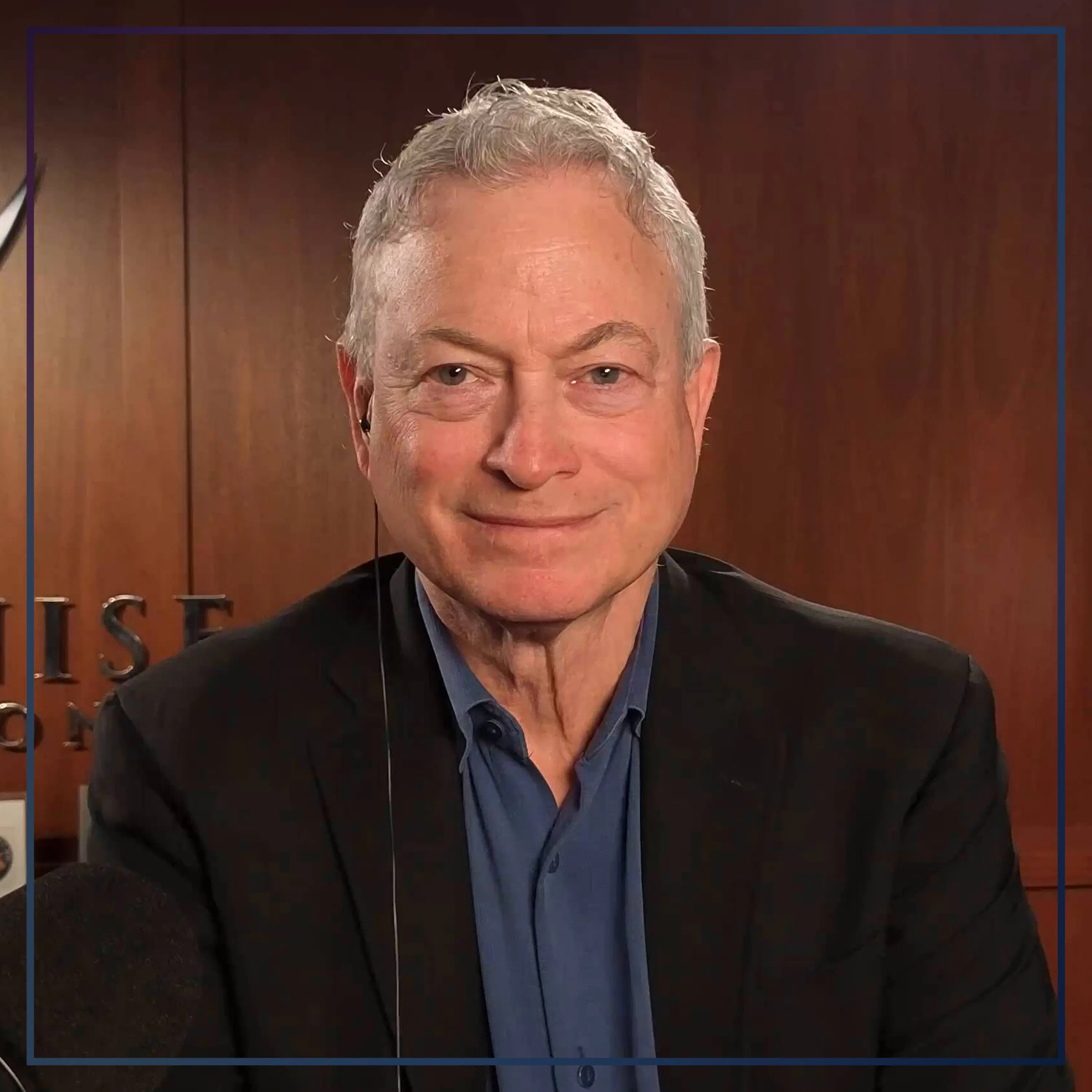
Gary Sinise: ‘The Hole In The Heart Is Always There’
Get every episode summarized
Each time All There Is with Anderson Cooper publishes, we email you a written briefing from the transcript — the topics, who appeared, and any specific claims, with the ad reads skipped.
Email me new episodesFree for 3 shows. No card needed.
About this episode
“Saturday, September 26, two of combat sports most dangerous strikers collide, Bear Knuckle. Liverpool's own down in the Gorilla Till goes to Moore with Cuban Powerhouse, Joel Soldier of God Romero.”From the transcript
Get every episode summarized
Each time All There Is with Anderson Cooper publishes, we email you a written briefing from the transcript — the topics, who appeared, and any specific claims, with the ad reads skipped.
Email me new episodesFree for 3 shows. No card needed.
Know when Gary Sinise turns up
Follow Gary Sinise and once a week we email you every new episode they appeared on — including guest spots the show notes never mention, because we read the transcript.
Follow Gary SiniseFree. Pick your own day and time.
Hosts & guests


Transcript ready
241 searchable segments. Every word is indexed and playable.
Full transcript
All There Is with Anderson Cooper — Gary Sinise: ‘The Hole In The Heart Is Always There’. Machine-transcribed; use the interactive transcript above to jump the player to any line.
Saturday, September 26, two of combat sports most dangerous strikers collide, Bear Knuckle. Liverpool's own down in the Gorilla Till goes to Moore with Cuban Powerhouse, Joel Soldier of God Romero. Plus the Bear Knuckle Midowicz Championship of the world is on the line when the rating champ Dave Veredeck Mundell defends against undefeated British challenger Jack Demeek Cleaver-Colin, BKFC 94, Till versus Romero. Watch it live only on his own. SonupNowAtTheZone.com Welcome to all there is, where we are in the world and in your grief, I'm glad you're here. My guest today is award-winning actor and philanthropist Gary Sinise. You likely known from CSI New York or Apollo 13 or Forest Gump. He's also a musician and in 2011 he established the Gary Sinise Foundation to help support and advocate for veterans. Gary's son, McKenna Anthony Sinise, who was also known as Mac, was an avid drummer and worked with Gary at the Foundation. Mac was diagnosed with a rare cancer called Cordoma in 2018.
The same year the Gary's wife, Moira Harris, was diagnosed with stage 3 breast cancer. After treatment, Moira went into remission and remains cancer-free, but Mac's cancer spread. In 2023 he started working on some music he'd written in college but never finished. And over the following months those efforts became an entire album called Resurrection and Revival featuring Mac on Harmonica with members of Gary's band, the Lieutenant Dan Band. Mac died at the beginning of 2024 on January 5th. The same week his album went to press. He was just 33 years old. I spoke with Gary from his Foundation Headquarters in Nashville in April. Thank you so much for doing this. It's a pleasure to talk to you. It is my absolute pleasure. How has grief been for you? It's over two years now since we lost our son. It was a very, very difficult battle where he became more and more disabled. The cancer that he had was called Cordoma. It's something that's very, very rare.
It's a spine cancer. It will start in the base of the spine or the skull base right up here at the top of the spine. And it's a tumor that grows there. It's very possible that that tumor was there when he was born. And it grew very, very slowly. He was diagnosed when he was 27. But he was having pain in his tailbone for two or three years before that. You were actually with your wife meeting with doctors because she had staged three breast cancer. And she'd been going through chemotreatments and radiation treatments. And you asked the doctor to take a look at your son because he was having some pain in his tailbone. I asked her spine surgeon if he would take a look at Mac. And he put him in the scanner and he tells me Mac has a tumor. Wow. And I'm sitting there with my wife talking about her chemo and now Mac has a tumor. And it was very, very difficult.
He had the first surgery in September of 2018. And then we were told that the cancer had come back and started to spread. And grief changes as time goes on. I don't think that little phrase, time heals all wounds is really appropriate because it doesn't really heal the wounds. What happens is you just learn to manage them a little bit better as time goes on. The whole in the heart is always there. Right? The missing loved one is forever there. And Mac is, for both my wife and I, he's just with us every minute of the day. Where things were very, very fresh in the beginning. And it was just, you know, you couldn't contain your emotions. Now it's, it's those emotions will kind of jump up and surprise you. I was in church the other day and all of a sudden bang. I just was picturing him sitting right next to me and it just overwhelmed me.
And that's the type of thing that happens, isn't it? We just, we carry them with us always and they jump out and surprise us every once in a while. Do you feel Mac? Yes, yes, very, very present. Because for me, I have continued to press on and do all kinds of things that are related to my son. The music that I'd sent to you, all that music is very present because I continue to work on it. So for me, it's a little bit different because I'm kind of living with these various projects every day that are related to my son. What an incredible blessing though to have all the videos that you have and all the music you have and have rediscovered. Can you talk a little bit about you were going through his phone and stumble across a whole trove of recordings, messages to you, videos, I understand that he actually made for you talking to the camera late at night in the hospital that you came across.
I mean, that's incredible. I had no idea what I was going to discover but after he died, you know, I just wanted to connect to him so badly that I don't even know what I was looking for necessarily. I just looked through like his text messages and so I found messages from people that had been sending him messages on the day he died. Then I went into his photos and I found videos. He was very disabled by the cancer. He was confined to a hospital bed at home and late at night he just started recording things and they were messages or just thoughts that he was having. And you know Anderson, intellectually you know how serious everything is and you're watching the cancer destroy his ability to do a lot of things, paralyzed him and it was getting worse.
But for me, I'm the dad who was the fighter next to him fighting every minute to try to figure out what we could do next trying my best to find drugs and find doctors who might have another idea and all these different things. And so I never wanted to have that sort of conversation with him where well Mac, if it goes like this, what do you want me to do about that? I didn't want to be thinking about the final days with him because I was always hopeful that we were going to find something and I thought if I had that conversation with him, it would might signal to him that I was giving up or something. And I never wanted to do that and I didn't give up until the night before he died. I was still hopeful that we would find something. And so him leaving messages on his phone of things that he had been thinking that he didn't necessarily have that talk discuss with me was, it was profound.
And those messages was, was he talking about his death? He did not head on. He was practical and realistic about the fight that he was in and he started thinking quite a bit about that, especially about 14 months before he died. He went into the hospital and he had to go into the ICU for 10 days. And so the doctors were talking to him very seriously when he was in the ICU about his body failing and they had talked to Mac privately. I was not there when they talked to him about this. And I think that God is attention because I found something that he written and I found a videotape that he made where he talked about the time in the ICU when he thought that was the end. From that moment on he started writing and making these videotape messages. Do you regret not having more conversations with him?
It's interesting that you ask me that. Some part of me wishes that I had in those last couple of days I had had a deeper conversation with him. You know, was he scared? Did he know what was happening? Had he come to terms with everything? And then there's a part of me that is okay with it because that last night it got to the point where he didn't want to take his medication, he didn't want to eat anything and he wasn't really able to talk. And he died the next day. And I think about that quite a bit. You know, gosh. You know, you get emotional about it. When I do think about wanting to talk to him and just to have a little more time with him to see how he was feeling, but I know he was accepting.
Mac was accepting of where things were and the last year of his life was pretty remarkable in so many ways of what he accomplished. You'd mentioned once that there was a time toward the end when he was in the hospital and he was silent and you asked him what he was thinking about. Yeah, and it was after his fifth spine surgery that he was laying there in the hospital bed. And I said, what are you thinking about, Mac? And this is the only time he said anything like this to me. And he said, I'm thinking about death, dead. And that sort of knocked me for a loop because I was not going to go there. I'm in the fight with him. And we are going to beat this. And I could see that after five spine surgeries and radiation and cancer drugs and things, he was starting to feel like he was in a battle that maybe he couldn't win.
And he was thinking about that. And I just told him no more, no more of that kind of thinking. We're going to, we're going to get this. We're going to beat it. And we never talked about that again. He died on January 5th. 2024. Yeah. My dad actually died January 5th, 1978. Oh my gosh. Yeah. And that day, excuse me. I find that day on the calendar has always been very, very difficult. And I'm sorry that that day may be difficult for you now. It's, it's a difficult day. It's also my parents anniversary. You're kidding really. Yeah. It's weird anniversaries, isn't it? I remember the first anniversary for Max death. And we were getting a ton of messages from people who were very supportive through everything.
And they remembered it was like they remembered what we were going through on that day. My dad died when I was 10 years old. So it's been decades. And so I'm the only one kind of in my life who remembers that day on the calendar as this significant day. So I no longer get those reach outs of like, hey, thinking about you today, which is totally understandable. And I don't expect it. But it's, it's weird to have these days. And I think everybody who's listening this probably has these days on their calendar, which have huge significance for them. And yet other people in their life have no idea that there's this sort of secret history on this day that that has any kind of meaning. For me, I work on New Year's Eve because I've always hated New Year's Eve because I remember being 10 years old on New Year's Eve right before 1978 began. And I remember watching the ball drop and it being this very kind of ominous feeling of I knew something terrible was going to happen.
My dad was in the hospital. I didn't really understand it. And he died five days later. And so New Year's Eve has always been sort of this strange night of kind of sadness almost for me. And I'm wondering does New Year's feel different to you in any way because January 5th is looming? A bit because I had to call the ambulance on December 30th. Oh wow. So I was with him in the hospital on New Year's Eve. And when you get to December 30th, I started retracing every single minute of that day, you know, the year prior and what had happened. And my wife had not been feeling well at all. She had been really struggling with her own health. But on that day, December 30th, all of a sudden she woke up and she was feeling really good. And she hadn't been going out, doing anything. And so she said she wanted to go to our daughter's house that day. And once we got home, Max Nurse said she was concerned.
And so I didn't hesitate and called 911 right away. And they put him in the ambulance on the 30th and I followed the ambulance. So I was with him, you know, on December 31st, New Year's Eve. It was pretty neat, Anderson, because that final year of 2023 was in some way as one of the great years for Max. And so, as in early 2023, he had this idea to go back and finish a piece of music that he'd written years ago in college. And one thing about music at all, because he was fighting cancer and all of a sudden he's kind of motivated by trying to put this music together. And Max, he couldn't play drums anymore. So he taught himself how to play harmonica. And two weeks before he died, that album went to press and he finished it. And he said to me, Dad, I think I want to make 100 vinyl records.
And so just so I can give him to pals, there it is right here. So that is resurrection and revival. That's a picture of my grandfather and Max, great, great grandfather training in Yuma, Arizona to go to World War One. This picture was taken in that's incredible. 1970's and he's about 17 years old there. And he designed that album cover. And it went to press the week that he went into the hospital. So he never actually got to hold this, but he got to hear everything and he got to see all the videos. And so it gave him such amazing joy. I want to play amazing grace because my dad loved amazing grace and literally would cry every time amazing grace play. We were in a restaurant in Mississippi once, he was from Mississippi. And there was a waitress going through the restaurant singing amazing grace.
And my dad just started weeping at the table. And I was like, eight, I was like, Dad, what is going on? But this is just a little bit of Mac on the harmonica. Beautiful. We'll be right back with more from Gary.
Thank you. I love that. He's paralyzed from the chest down kind of here. He could still move his arms. He couldn't move the fingers on his right hand like this. After that fifth spine surgery, it did some damage, but he had the fingers.
So he could kind of hold the harmonica and he taught himself how to play. And amazing grace was one of the first pieces. As a dad, I have a four year old and a six year old, and my face lights up every time I think about my kids. Your entire face lights up when you talk about your son and the music and all he has given to you and also to the world through the music. Like literally you can see it in your face, your love for your son. It's so nice. Oh my gosh, yeah, I couldn't. Couldn't, couldn't love him more. There were so many amazing blessings in that last year, even though there were a lot of difficult things happening that year. Throughout all of it, he was working on this music and it was lighting him up. There's a video on his YouTube channel where he's actually interviewed during one of the recording sessions.
Well, I actually want to play that. I want people to hear Mac talking to his Mac. There were certain parts of this whole journey that I didn't think I was going to survive through even remotely resembling creativity or music or anything. Little did I kind of know that I was just through pushing through a certain stage. I could realize, oh, I actually am capable of music. So it just goes to show me that I have to just keep moving forward because I never know what I'm capable of doing until I just actually try it.
Yeah, that's... You hope make that possible for anymore. That's Mac, yeah. And that was, like I said, Anderson, that was the whole experience for him that last year. I mean, we didn't know it was going to be his last year, but things were not improving. But the whole experience of working on this music that year was so beautiful in so many ways. It's a sad year because it was his final year, but we were blessed. And he felt like he really did something special, you know. And he did because it led to two more records after the first one, because I started finding all this stuff. Is there something you've learned in your grief that would be helpful for others?
The blessings, it's very easy to think about the pain and the sadness and the loss, because there's no escape from those memories and all of that. But there's always the silver linings and there's always the blessings through the battle. We're all battle in every day, something, right? Everybody. If we keep our eye on the silver linings and the blessings that we all have that are there, and Mac was able to do that, and our family was able to do that. Even while watching him get very, very sick, I mean, you saw him there. He's got that thing on his nose. That's a big tumor. That's a big cordoma on his nose. He had another one here, he had another one here. I mean, they were popping out everywhere. And you couldn't avoid that. You couldn't avoid seeing that, and you couldn't avoid the pain of feeling what it must be like for Mac to go through that. Yet there were a lot of things to be thankful for, and to be grateful for, and those blessings, they keep you going.
You got to hang on to those, and you got to keep it in perspective. Through this veteran's work that I do at the Gary Senees Foundation. Which is extraordinary what you've done. We haven't talked about it, but it's extraordinary. Thank you. Well, through all that, I have met so many broken families, right? And so many grieving fallen hero families. You're never prepared, you know, because you don't want to accept. But in some ways, I was seasoned, maybe, having watched so many families go through grief and loss and difficulties, and trying to help them through, and recognize that they are not alone, and they're being remembered and not forgotten. And that I learned quite a bit, and it's helped me quite a lot, having been around so many extraordinary families over the years.
I think that is one of the blessings I have learned through grief is that none of us is alone in it. It is this extraordinary bond, which all of us share, sadly, either will share or do share. And that helps me to know that I am not alone on this road, and nor are you or anybody else. I met a lot of fathers over the years who've lost sons and daughters. And, you know, you never think that you would go through that yourself, but it's all possible, you know, just for human beings, and this is what happens. It's funny you said that this is what happens to humans. I have said that to myself over and over again the last couple of years, and I find it comforting to know that what is happening to me has happened to every human that has ever lived, and will happen to every human as long as humans live and as long as humans die. And that pain or that sadness or that loss or that longing to see that person again, that never goes away.
You do manage it a bit better as time goes on. I think I manage it pretty well, but again, like you and I were talking at the beginning of this conversation, they will jump out at you. At any moment, then you won't know it's coming, and there it is. In the beginning, our family was all crying together at the same time, all the time. And then as time went on, each one of us would have our moment. You know, you just grab each other and help each other through it, and that's what we got to do. Gary, thank you so much, and for talking to us and for sharing Mac with us and sharing his music as well. And on January 5th, from now on, I will think of you and your family and think of Mac and say, prayer. And I'll thank you for your dad. Thank you. Thanks so much for having me, Anderson. If you have thoughts you'd like to share about my conversation with Gary, you can leave us a comment on our grief community page at cnn.com, all there is. And if there's something you've learned in grief that would be helpful for others, we'd love to hear from you.
Leave us a voice mail at 404-827-1805. On Thursday, September 24th, I hope you join me at 9.15pm for my streaming show, All There Is Live. It's on every other Thursday. You can watch new episodes live on cn.com slash all there is. And it's free on our community page there for a week after it airs. Thanks so much for listening.
More episodes
More from All There Is with Anderson Cooper

NASCAR's Kurt Busch Remembers His Brother Kyle
All There Is with Anderson Cooper

Travis Barker: The ‘Wound That Almost Never Heals’
All There Is with Anderson Cooper

Grief Is Not A Problem To Be Solved
All There Is with Anderson Cooper

Nicole Avant on ‘Standing in Faith’ After Mom's Murder
All There Is with Anderson Cooper