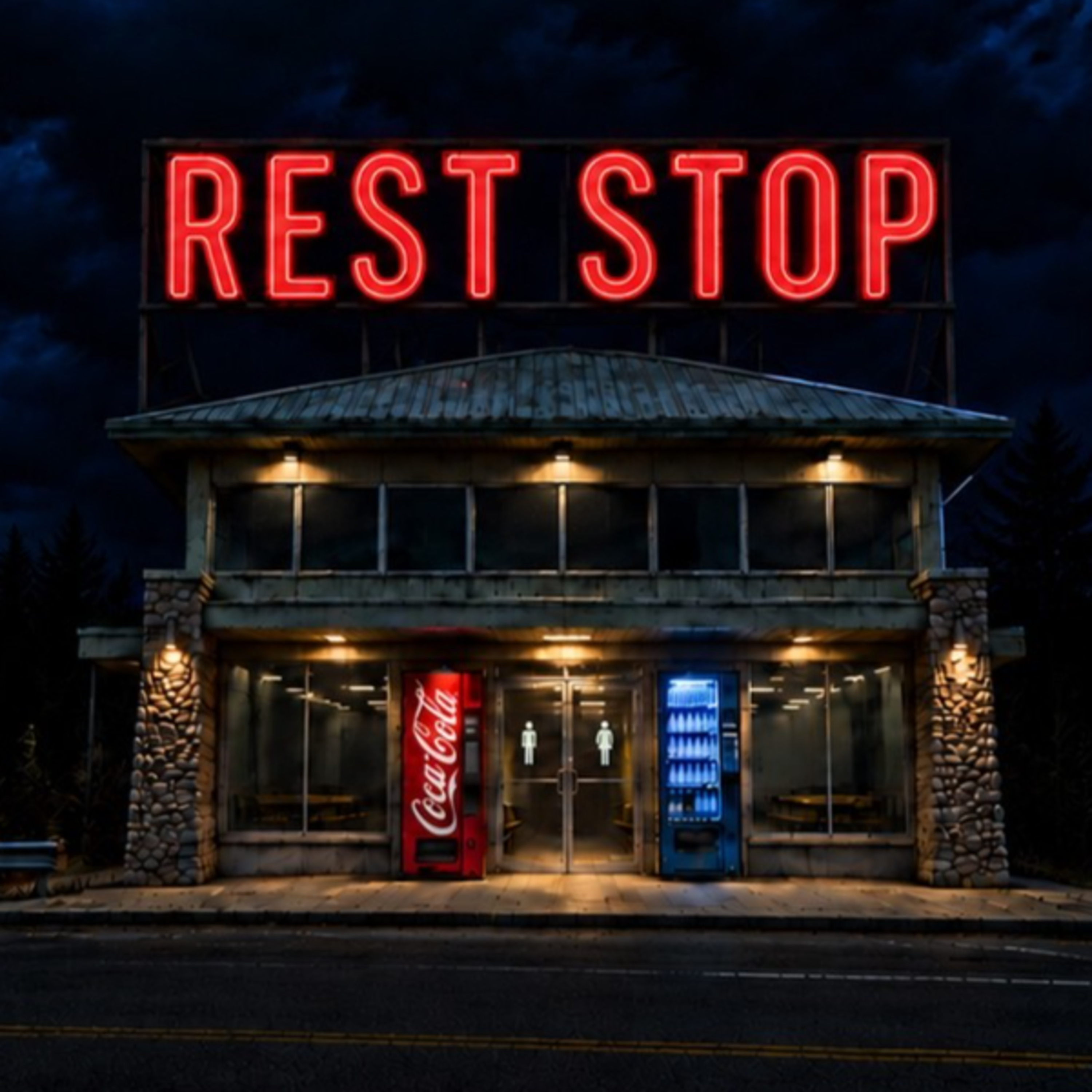
I Work at a Highway Rest Stop. We have 6 STRANGE RULES
Get every episode summarized
Each time Lighthouse Horror Podcast publishes, we email you a written briefing from the transcript — the topics, who appeared, and any specific claims, with the ad reads skipped.
Email me new episodesFree for 3 shows. No card needed.
About this episode
“My name is Curtis Rocco and I work the night shift at a highway rest stop in West Virginia. It's a small place just off the turnpike with six pumps, a storm, and a counter where we serve hot food.”From the transcript
Join Lighthouse Horror on Patreon: Lighthouse Horror | Patreon
New Merch out! https://hauntedstuff.com/
Art & Credits: ninerioarts
Music by Lucas King, Myuu, Kevin MacLeod & Darren Curtis
Original YouTube link: I Work at a Highway Rest Stop. We have 6 STRANGE RULES.
Copyright © 2025 Lighthouse Horror. All rights reserved
Thank you for listening to this scary story! If you enjoyed this story, please check out some of my other horror stories. We'll be uploading new episodes every week, featuring ghost stories, haunted encounters, mysteries, true stories, creepypasta, and anything supernatural and paranormal. Don't miss out on the thrill and suspense that await you in each episode!
Get every episode summarized
Each time Lighthouse Horror Podcast publishes, we email you a written briefing from the transcript — the topics, who appeared, and any specific claims, with the ad reads skipped.
Email me new episodesFree for 3 shows. No card needed.
Hosts & guests
Transcript ready
686 searchable segments. Every word is indexed and playable.
Full transcript
Lighthouse Horror Podcast — I Work at a Highway Rest Stop. We have 6 STRANGE RULES. Machine-transcribed; use the interactive transcript above to jump the player to any line.
My name is Curtis Rocco and I work the night shift at a highway rest stop in West Virginia. It's a small place just off the turnpike with six pumps, a storm, and a counter where we serve hot food. The Appalachian Hills rise behind the building and the nearest town is a few miles away. If you've driven the West Virginia turnpike late at night, you might have stopped there. You might have bought a cup of coffee from Maine or bathed where the bathrooms were. We get truck drivers, families, and people who want something hot to drink before getting back on the road. I started working there last spring. I pulled in for gas one evening and noticed a help wanted sign taped to the door. At the time I was driving 40 minutes each way to a hardware store, the rest stop was 10 minutes from my house. I wrote down the number, called when I got home, and left a message. The manager called me the next afternoon. His name is Wesley, and he sounded like a man who'd been answering the same questions for a long time.
He wanted somebody you could work nights, handle the register, and show up on time. I had done all three before. We arranged to meet at 9.00 a.m. I arrived 10 minutes early. I recognized the turn from the road and the two white posts beside the entrance, but beyond them was a patch of bare ground. No store, no gas pumps, no parking lot. I sat in my car, looking from the post to the empty clearing, trying to work out where I'd gone wrong. Wesley was parked on a strip of gravel beside the entrance. When he saw me, he'd get out and waved me over. I parked beside him and got out. He was a broad man with thinning gray hair and a red workshop. His name was stitched above the pocket. He shook my hand, checked his watch, and told me we had a few minutes to wave. At 9.00 the rest stop just appeared. I was looking directly at the clearing when it happened. One moment I could see the weeds at the foot of the hill, and the next I was looking at
a brick building with lit windows. A white roof stood over the pumps. Beyond it were painted parking spaces, trash cans, and a picnic table. Wesley waited while I walked a few steps down the gravel and looked again. He seemed to expect that. When he took a folded, rich shirt from his car, and explained that the job was a little different from the one in the advertisement. The rest stop opens at 9.00 every night. At sunrise, the whole property beyond those white post disappears. The entrance road in our gravel parking space remained where they are. Employees leave their cars on that gravel, and everybody has to be off the property before morning. It gave me time to leave. I stayed here the rest, because I just watched a building appear out of nowhere, and he was the only person there who could explain it. He told me about the customers, the uniform, and the six rules I need to follow. The shirt, he said, would keep the dangerous customers from hurting me.
Before we went inside, he made sure I had it on. Wesley stayed beside me for that first shift. He showed me where to stand when something came through the door, and which customers needed watching. By morning, I'd help them get a family safely back to their car. I understood why he wanted another person there. I've been there eight months now. The work itself is ordinary enough. I make coffee, serve food, wipe tables, and ring up people who are tired of driving. Wesley handles most of the cooking and paperwork. Between us, we keep an eye on the parking lot, and try to get our customers safely back under the road. Some of the customers aren't human. They buy things and use the bathrooms, just like anybody else. But they sometimes need reminding what they're allowed to eat. A few travelers recognize them. Others assume they're looking at masks and costumes. I've seen a man complain about somebody's horns blocking the television without once asking whether the horns were real.
Now I could quit. I think about it now and then. But I know how to do the job, and I know what happens when a frightened customer looks around and can't find anyone to help. I'm still a man behind the counter. Wesley keeps the six rules pinned beside the register. Each one has a story behind it. These incidents happened on different shifts. Some customers listened when I warned him. Others needed a little help before they understood what sort of place they'd stopped at. Number one. Always keep the vending machines stocked. Our vending machines stand in a row beside the hallway to the bathrooms. We have three of them. A red one, a blue one, and a white one with a light that Wesley has been meaning to replace since before has started. They hold candy bars, little bags of sweets, and enough snacks to get an ordinary person across several states. Our other customers get through it a lot faster. The demons are particularly fond of snickers and skittles.
I don't know why. I wasn't expecting that to be part of the job, either. You could feed a schoolroom of children with what we keep in the stock room. The boxes reach almost to the ceiling, and most contain candy. The machines are what keeps certain customers coming back. Once the machines are empty, those customers tend to look for something else. One walking past with a sandwich can start looking a lot more interesting than a sandwich. One busy evening. I pulled every row before the first customers arrived. I put spare boxes under the counter and checked that all three machines took coins. Wesley was warming the grill when two cars pulled up outside. A couple came in for coffee. An older man in a red cap bought a piece of pie and carried it to the table near the window. Our first demon arrived behind him. It wore a yellow raincoat with a hood drawn low over its face. It was large enough that people moved their chairs without being asked.
You could see its hands, which looked swollen and much too smooth. In an occasional flash of teeth inside the hood. The rest was hidden. I was grateful for that. It stood in front of the red machine and bought six snickers, one after another. Each time a bar dropped, it reached into the tray and lifted it beneath the hood. One, two. It said as it kept counting to six, looking around with a big smile. The wrapper went in with a candy. I could hear the plastic tearing as it chewed. Yum yum. The man eating pie watched for a while, then looked toward the counter. He seemed amused. I could tell he wanted to know what event the costume was for. Fortunately, his pie was good enough to keep him in his chair. More customers arrived. Most bought gas or used the bathrooms.
Three things in dark coats gathered around the blue machines and began feeding coins into it. They started with the skittles, emptied the blue machine, then moved to the white one. One held a shopping bag beneath the tray while the others pressed buttons. I could hear them talking to each other. I weren't skittles. I were on stittles, too. The other said. I kept refilling the rows between sales. Should have been enough. That night though, they were eating almost as quickly as I could stock. Before I went back to the counter, I could hear more candy eating the trays behind me. Then the card reader froze while the woman was paying for gas. I had to call Wesley out to help. He stayed with her while I got more candy. I was halfway across the store when I noticed how quiet the machines had become. The three customers and dark coats were leaving. The one in the yellow raincoat remained at the red machine, holding its hand inside the
empty tray. In the glass, the metal spirals were bare. I looked along the other two machines and saw the same thing. It pulled the sand out very slowly. Then it turned toward the tables. The older man had finished his pie. He was taking a tablet from his bag, settling in for a little break from the road. He didn't notice the raincoat moving toward him, until it stopped right beside his table. The man smiled and said, oh hello there. Nice weather we're having, huh? The thing leaned over him, blocking his view of the counter. It spread one hand across the tabletop. Its fingers left pale, dense, and the hard surface, as if the table were made of dough. I set the box down and called the customer in the raincoat back to the machines. It didn't turn. The man in the chair stopped smiling. He was staring into the hood now, and his hand had tightened around the edge of his
tablet. I pulled the snickers from the box, toward open, and held it where the thing could see it. Its head moved slightly. I was close enough to hear it breathing. A deep, wet sound that grew faster, whenever the man shifted in his chair. Hey, I got plenty more, I said. I put the bar on top of the red machine, and stepped back. The thing remained beside the table for a moment. Then it straightened, and came toward the candy. I folded back the box flaps as it passed me, giving it a clear view of everything inside. It ate the first bar while I loaded the machine. The man at the table sat perfectly still. Wesley went over and stood beside his table, making a quiet excuse about needing to clean that section. The demon bought another snickers. It had accepted the loose one from me. But now was putting coins in as though nothing unusual had happened. A quarter fell from its hand and rolled under the machine.
It stood waiting while I got down to retrieve it. I gave it back. Keeping a customer happy was still a part of the job, but I just had a very clear reminder of what an unhappy one looked like. After it left, I checked the table, and those marks were still there. The man had been sitting with his back against the wall, and that large body had filled the only space he could have used to get away. Rule 2. Never remove your uniform. The red shirts are what make the work possible. Mine has Curtis above the pocket. Wesley's has. Wesley? And the creatures can't hurt us while we're wearing them. The protection covers our whole bodies. We can put coats over the shirts and cold weather, but the shirts stay on until we're safely off the property. They are issued to us by the company. Each belongs to the person named on it. Giving mine to a traveler would leave us with one unprotected traveler and a red shirt,
and one unprotected employee wondering why he'd done something so stupid. Wesley is firm about that. We keep our own shirts on, stay close to anyone in trouble, and get them away from whatever is bothering them. Most of our strange customers understand what the shirts mean. They leave us alone. Some still try, either because they're hungry enough to forget, or because they hope something has changed since their last visit. At a quiet Monday shift, a man in a long black coat came through the front door. He carried a small leather case and wore round dark glasses, even under the bright store lights. His skin was gray. There was a thin line running from the corner of his mouth down beneath his collar. He stopped by the coffee machine and waited until a customer moved away. Then he laid his case on the counter and opened it. Inside were several small cloth bundles. He lifted one out and unfolded the corners with great care.
I couldn't see what it held from the register, but a woman drinking coffee leaned closer for a look. The man said something to her and she smiled. He had the calm matter of someone showing a family photograph. I went over before she could get any closer, and the bundle held a human tooth. It was much larger than it should have been, with a long root that curved up out of the cloth. He was offering it to her. As she reached for the bundle, his free hand moved towards hers. The man closed his case when he saw my shirt. I asked him to put the tooth away. He tucked the corners of a cloth over it, then reached across the coffee counter toward my wrist. His hand stopped before it touched me. The fingers bent inward, trying to close around something they couldn't reach. I watched the nails turn white with effort. He pressed hard enough that his sleeve began to tremble. The line was side his mouth opened.
I saw wet teeth inside it, running down the side of his jaw and continuing beneath his collar. The woman set her cup down very slowly. I didn't pull away, keeping his attention on me and gave her time to move behind Wesley, who'd come out of the kitchen. The man kept pressing his hand toward my arm. Um, sir, you need to put that away, I said. She looked at my uniform then, and his fingers loosened. The woman left shortly after that. Wesley watched her reach her car, then stayed by the door until she was out of the parking lot. I kept wiping the counter. Eventually the man walked outside. He passed the pumps and went around the side of the building. When I checked through the window, he was standing at the edge of the woods with a case held against his chest. He remained there for nearly an hour. Now I knew that as long as I followed the rules he couldn't hurt me, but I still watched him very carefully.
Rule 3. Pump 6 is for vampires. Now Pump 6 stands by itself near the far corner of the lot. The other pumps take cards and sell regular gas or diesel. Six is a squat red machine with a black hose, a coin slot, and a metal sign that says it isn't for gasoline. We keep a light over it so people can read the sign before they get out of their cars. There is blood in the tank beneath it. Put in a quarter, and the pump runs for half a minute. The vampires who come here use it because they can't hunt anymore. They're too old, too weak, or both. Some have trouble crossing the parking lot without stopping to rest. Our uniforms let us get close safely, but Wesley doesn't want us encouraging ordinary customers to do the same. If someone sees me steady a vampire on the curb, they might try it themselves, but they wouldn't have the protection that I do.
I give the vampires space. They come in, ask for change, and take their coins out to the pump. A few are polite enough to return the little cups we put the quarters in. Others just leave them on the ground. Very rude. Well one cold evening, an old vampire arrived in a small white car and parked near six. He took several minutes to get out. He eased one leg through the open door, then used both hands to move the other. When he finally stood, he rested against the car until it could walk. He wore a brown suit and carried a cane with a rubber tip. His hair was thin and neatly parted. He passed beneath a light outside our door, and I saw the dark patches beneath his eyes. His face had a sunken look of somebody who had not eaten in a very long time. He laid a ten dollar bill on the counter and said, Hey, go boy. It was folded into a little square.
I smoothed against the counter before putting it in the drawer. He watched me and said, I'd like my change. All in quarters, please. Quarter as it is, I replied. I counted the coins into two cups and set them where he could reach them. He took them very carefully and that he worked his way back through the door. His cane tucked under one arm. A woman waiting for her husband to finish getting gas watched him go. She had a paper bag of food and a bottle of water. When I glanced outside again, she was following him across the lot. I called after her, but the door had already closed. So I went outside. The old vampire was at the pump, one hand on its red housing. He put his cane down against it and was feeling in his pocket for a quarter. The woman reached him first. She set her bag on a concrete base and picked up the cane.
I heard her ask if he needed help. He smiled then and turned his head toward her very slowly. I stepped up quickly and got in between them. Yeah, hi. I work here. I'll take care of him. I told her. But she stayed where she was. Sometimes people don't like being sent away when they're trying to help. The vampire didn't speak. He watched her wrist as she moved. A thin string of clear fluid hung from his lower lip. He wiped it with the back of his hand, without taking his eyes off her. Finally, she went back across a lot. The old man followed her with his eyes until she was beyond his reach. Then he looked at the cane in my hand, as though he was considering what to do with it. I leaned the cane against the pump. He said both cups on top of it and took a quarter from one of them. The pump began to hum when the coin dropped.
He lifted the nozzle, opened his mouth, and pushed it right between his teeth. Blood spilled over his lower lip before he got a proper grip on it. He swallowed hard, holding the nozzle with both hands. I looked back toward the woman's car. She was watching from the passenger's seat in complete horror. The pump shot off after 30 seconds. He put in another quarter himself. This time though, his hand found the slot without searching for it. When he raised the nozzle again, he didn't need both hands. I stayed until the woman's car had left. By then, the old man had stopped leaning against the pump. The hollow places in his face were filling out, and there was a faint pink color in his ears. He wiped his chin with a handkerchief, and tucked it neatly back into his pocket. He kept watching the store while he drank. Whenever someone came through the door, his eyes followed them all the way to their car.
I left him to finish his coins, and he was there for over 20 minutes. The next time I went outside, he was hanging the nozzle on its hook. He carried his cane to the car instead of using it. Before he got in, he looked toward the pumps where the woman had been. He stood watching that empty space with his cane held loosely at his side. Then he folded himself into the driver's seat, and left. I picked up the empty cups, he'd left on the pump, and I wiped the blood off the handle. Rule four. No sleeping in the parking lot. After midnight, we spent more time checking the park cars. Cars get tired, and a bright building with clean bathrooms feels like a safe place to take a nap. There are signs telling them not to, but a tired person can talk himself out of reading just about anything. The trouble comes down from the woods.
There are dead people up in those hills. I don't know where they were buried, or how long they've been walking around. I call them zombies, because that's the simplest word for them. They come out between the trees, walk through the lot, and stop beside cars where somebody has fallen asleep. They don't knock or call for help. They look through the windows, and try the doors. If the doors are locked, they keep trying. Given enough time, they find a way inside. Our job is to notice them before they do. Now some of them are easy to spot. Cars have enough clothing left, that you might mistake one for a customer until it turns toward the light. There's a man in a tan jacket, who still has reading glasses hanging from a cord around his neck. I've watched him press his face against a windshield. One Thursday night, I found him beside a blue pickup. The truck had arrived while I was helping Wesley put a delivery away.
Its driver had parked beneath a light near the front of the lot, close enough to the building that he probably thought we could see him. He'd covered himself with a coat, and leaned back against the headrest. The zombie man in the tan jacket was standing by the passenger door. His glasses hung against the window. One hand rested on the handle, lifting it gently every few seconds. The skin over his knuckles had worn away, leaving the joints pale against the metal. There was somebody else on the driver's side, mostly hidden by the truck. I went out with a flashlight and walked around the front. A zombie woman in a stained blue dress was crouched beneath the driver's window. She had both hands on the edge of the lowered glass. He'd left the window down a few inches. Her fingers were inside the cab. She was slowly drawing herself upward, bringing her face toward the gap. I could see a patch of the seat cover between her wrist.
A little farther in was the driver's hand. I put the flashlight beam on the ceiling of the cab and I knocked hard on the door. The driver shifted in his seat. The woman lifted her head toward the light, and I saw that most of one cheek was gone. Her teeth showed through the opening. Sir, wake up. You need to close your window, I said. I knocked again. I was standing close enough for the zombie woman to reach me, but she kept her hands on the truck. The red shirt made me the one warm body in the parking lot that she couldn't do anything with. The driver finally opened his eyes and stared at the patch of light overhead. He looked towards me and said, why, man, I'm just taking a nap. I lowered the beam to the ignition and pointed. He pushed the coat away from his chest. Then he noticed the fingers curled over his window and all the sleep went right out of
his face. He reached toward the door handle. I shook my head and held my palm against the outside of the glass. He stopped, looked at me and finally turned the key. The engine started. I pointed at the window switch and he pressed it. The glass rose against the woman's fingers. She held on for a moment, her hands bending upward with it and then pulled them free one at a time. On the other side of the cab, the zombie man in the tan jacket was still lifting the passenger handle. Each time he released it, I could hear the little click through the engine noise. I stepped back far enough for the driver to see the way out. He put the truck in gear and rolled forward. The woman stayed crouched beside the space where his door had been. The man in the truck drove quickly and crossed a lot. Then he faced the road and kept going. I stood beneath the light until I saw his tail lights turned out of the highway.
Both zombies remained in the parking space. The woman turned her face toward the patch of black top the truck had covered. She pressed one hand flat against it as though she was trying to find where the warmth had gone. I had to walk past her to check the rest of the lot. She lifted her head when my shoes came close and I caught myself holding my breath. The shirt would protect me but knowing that didn't make it pleasant to see her looking at my ankle. There were two other vehicles. The people inside were awake. I asked them to leave and waited while one driver finished a long phone call. Then I went back to the pickups empty space and found that the zombies had started back toward the woods. The zombie man in the tan jacket walked with his head down. He seemed defeated. His reading glasses tapped against the buttons of his coat. Back inside, Wesley had put a sandwich aside for me.
I took it to the front counter and I watched the lot as I ate. Rule 5. Never get in Henry's car. One Sunday night I was cleaning the counter when a pale green car turned in the lot. It was an old sedan polished bright enough to reflect the lights above the pumps. The driver parked beside the store, opened his door, and took a moment to brush something off his sleeve. I set the cloth aside and told Wesley that Henry was here. Henry lays. Perhaps you've heard of him. He was one of the worst serial killers this country ever had. His victims were women who accepted a ride or agreed to go somewhere with him or simply stopped to talk to a well-dressed stranger. He's been dead for decades. Cop shot him square in the head when they finally found him. When Henry still comes in, several times a week.
He looks exactly like the old newspaper photograph Wesley keeps beneath the register. His hair is still part of the same white. And he still has that same little smile. He doesn't look a day older. It's a useful photograph to keep nearby when you start thinking he seems like a decent enough guy. Henry behaves like a gentleman. He takes his hat off indoors. He holds doors for people. If someone drops a glove, he will be the first to pick it up. I'll tell you. He looks directly at you when you're talking. With the kind of interest that makes you keep saying things you hadn't planned to say. And with women, it goes much further than that. I've watched him speak to a woman for less than five minutes I timed it and have her look at him as though she'd been in love with him for years. Oh, Henry. She'll say. So forget the food she ordered. She'll ignore her phone. Eventually he'll glance toward his car and she will go right with him.
Some weeks I have to stop it twice. I don't know what he does to these women's heads, okay? I do know they hate having it interrupted and for a few minutes I'm usually the least popular man in the parking lot. Well, that night, Henry bought coffee in a packet of mint. He paid with exact change. Thanked me by name and said, looking good tonight, Curtis. Looking real good, buddy. Hey, I think you're going to get a girlfriend any day now. I really do. Let me know if you want any advice, okay? I watched him take a table near the door. And I noticed the woman sitting one table over. Her red wool coat hung over her chair and a road map lay beside her food. Her phone was charging from a socket beneath the window. Henry set his cup down and said, where he headed, beautiful.
She gave him a brief polite smile. He stated his own table, letting her decide whether to continue. A moment later, she turned the map so he could see it. He leaned over without moving his chair. He pointed to his spot on the paper, said a few words, and she laughed. I had to serve two people at the register, and each time I looked back, she'd moved her chair a little closer to his. I carried a cloth over and wiped the empty table beside him. He was already clean. I wanted her to look at somebody other than Henry for a few seconds. When she finally did, I asked her if I could speak to her at the counter. She followed me, but she kept looking back. I showed her the newspaper photograph, and I told her Henry's name. I explained that he'd killed women who'd gone with him. She looked from the photograph to Henry. Then pushed the paper back toward me. He was sitting quietly, hands folded around his cup, making no effort to interrupt us.
He gave her a small wink. She smiled back at Henry. Ignored me and walked right back to him. Well, I knew he had a problem, so I called over to my boss Wesley. I pointed toward Henry, and neat took my place at the register. By then, the woman had unplugged her phone, and Henry was holding her coat while she put her arms through the sleeves. I followed them outside. Her car was near pump three, but they walked past it. She was talking quickly. He was sitting up at him. He listened with his head bent toward hers, and one hand resting lightly on her back. He opened the passenger door of the green sedan. She put her bag on the seat, and began to climb in. I caught her arm and pulled her away from the opening. And she looked back at me and discussed and said, ugh, leave me alone, creep. She tried to get her arm free, but I held tight. Lady?
I know he has nice eyes, but he's literally going to kill you. Henry stood by the open door, granddadder, and said, now my mother raised me good. I ain't no liar. Curtis is right, baby. I am going to kill you. But I do promise you, it'll be fun. And so helped me. The woman smiled back at him. I'd had enough. I reached in the car, and I took her bag off the seat. I could see a little bunch of flowers laying on the dashboard. Then I looked closer at the inside of the car. Both handles were gone. There was a bare metal stub where the window crank belonged, and a smooth plate over the place you'd expect to find the inside door handle. Around the plate, the paint was scratched down to metal. I pulled her out of the car, pushed her bag into her lap, and pointed. And for a moment I thought she'd understood.
And then she turned toward Henry again, waiting for him to explain why everything was perfectly fine. He reached for her hand, and I stepped between them, and his fingers stopped just short of my chest. He couldn't get past me without moving me, and the uniform wouldn't let him do that. I could feel the woman's sleeve brushing my elbow as she tried to pull past me. Lady, enough, I said. I kept my eyes on him as I pulled her away. And Henry stayed beside the pump. The woman complained the whole way to pump three, telling me she could talk to anyone she wanted. I agreed that her evening was her business, but she wouldn't be getting trapped into little pieces on my watch. By the time we reached her car, her voice had grown quieter. She searched for her keys, found him, and stood looking down at them. When she glanced toward Henry, she no longer seemed quite as eager to go back.
Maybe it was the distance I don't know. It was like she partially snapped out of it. She got into her own car. Wesley came outside and waited beside him while she started the engine, and I stood where I could watch Henry. When she drove out, she kept both hands on the wheel and looked straight ahead. I have no idea what she remembered afterward. She might still tell people about the awful employee who spoiled her evening, and I am willing to live with that review. Rule 6. Get every human out before sunrise. We begin getting people ready to leave long before the sun comes up. We post the sunrise time beside the register at the start of every shift. On a shift near the end of December, that time was 738. We plan to have the building empty by 715. The uniform doesn't help with this rule. It keeps the creatures from hurting us, but it won't keep us here when the property disappears.
Wesley has made that clear from the beginning. At closing time, his own car stays on the safe side at the white post, just like mine. By 630, the kitchen was shut. We were still selling coffee and packaged food, but nobody could order something that required waiting. I wiped the tables while Wesley counted the drawer. Every time the door opened, one of us told the new customer we'd be closing shoreline. At 7, I started the final walk through the building. I checked the bathroom's first. Every stall had to be open so I could see that it was empty. Then I checked the hallway, the tables, and the little space beside the vending machines where people sometimes sat to charge their phones. Wesley checked the kitchen and stockroom. We met at the front counter, compared what we'd found, and went outside. There were only two cars left. One was pulling away from a pump. The other was a grey station wagon parked beside the store. Its driver had the hood open.
I recognized him from the coffee counter. He'd been cheerful when he came in, holding up a travel mug to show me he'd brought his own. Now he was standing over the engine with both hands in his pockets. The car wouldn't start. He'd called for a tow, and they couldn't get there until 8. He explained this as though it solved the problem. He was going to sit inside with his coffee until the truck arrived. Wesley brought out our jump pack. It didn't help. We offered to push the car out to the gravel, but the gear lever wouldn't come out of park. The driver had already tried the manual release beside it. Wesley tried too, then shook his head and looked at me. We had about 20 minutes left. The sky over the hills was getting lighter, and I could see the tops of the bare trees beyond the lot. There was time to get the man out. There wasn't time to keep working on his car. I told him to take anything he needed and come with us. He looked at the hood, then at the building.
He seemed to think we were worried about him stealing something after we left. No, I don't know. A wait right here. He said. I told him the car, the building, and anyone left in either would be gone at sunrise. He listened, watching my face for a sign that I was joking. And then he looked at the store again. He just bought coffee there. Nothing about it looked as though it could disappear. Wesley told him he could wait on the gravel outside the entrance. We weren't asking him to leave the road or go into the woods. His tow driver could still meet him there. All he had to do was walk past the white post. The man looked toward them. They were close enough that he could keep his car and sight from the gravel. And he finally seemed to understand how little we were asking him to do, even if our reason made no sense to him. He really fetched a bag from the back seat and took his coffee from the cup holder. Our waited while he checked the glove box and locked the doors.
Wesley went inside for the shift book. Then locked the store's front door. We walked toward the entrance together. The man stopped beside his car one last time. Then followed me through the post. I pointed out a place beside our vehicles where he could set his bag. And from there, we had a clear view of the entire lot. Wesley hooked a chain between the post to keep anyone else from driving in. He stayed beside it while we waited, watching the road. It would have been easy to look at the lights and assume we were still open. The man called the tow driver again to explain where we'd be waiting. And while he spoke, I looked at every window in the building. I checked the rooms myself. I found myself hoping I hadn't missed somebody bend over tying a shoe or sitting quietly behind a door. The man finished his call and took the phone away. At 738, sunlight reached the clearing. And the rest stop disappeared.
The white roof above the pumps, the brick building, and the gray car were there. And then they were gone. Their ground stretched from the post to the trees. We could see a fallen branch where the station wagon had been parked. The man stepped over the chain and walked into the clearing. He turned around slowly, holding his travel mug. Then he looked at me, waiting for somebody to say something that would make it all ordinary again. I couldn't. I could only tell him that we'd never had a customer's car come back with the building. Well, I still work there. Last evenings I parked beside Wesley, put my coat over the red shirt, and wait for the lights to appear. Then we go inside and start getting things ready. There are plenty of quiet shifts when the biggest problem is somebody wanting fresh coffee before the pot has finished brewing. And those are my favorite shifts.
I like serving people or glad to find somewhere open. I like handing over a hot sandwich and watching somebody's shoulder settle as they sit down to eat. We really do provide a useful service, even if our customer list makes it difficult to put that in an advertisement. Near the end of December, the company sent Wesley a notice about our safety record. Only 103 people had gone missing that year. The notice said that previous years had been way worse. This was a new company record. They printed the number in green and put a little smiling face beside it. The notice came with a voucher for donuts. Wesley pinned it up in the staff room. He's proud of the improvement. I think about the people from those different nights. The man with his tablet, the woman Henry nearly took, an attire driver who woke up just in time, surrounded by zombies. And I'm glad we were there for them.
Only 103 people missing last year. That's pretty good.
More episodes
More from Lighthouse Horror Podcast

I Work as a Locksmith. These are my SCARIEST Stories
Lighthouse Horror Podcast

I Work at a 24 Hour Storage Facility. These Are My SCARIEST Stories
Lighthouse Horror Podcast
I Install Home Security Cameras. These are my SCARIEST Stories
Lighthouse Horror Podcast

I Work at a Television Station that closed in 1999. We Have 5 STRANGE Rules
Lighthouse Horror Podcast