Introducing Kilo Desktop: Where the AI Dev Factory Begins
Get every episode summarized
Each time The Good Tech Companies publishes, we email you a written briefing from the transcript — the topics, who appeared, and any specific claims, with the ad reads skipped.
Email me new episodesFree for 3 shows. No card needed.
About this episode
“This audio is presented by Hacker Noon, where anyone can learn anything about any technology. Where the AI Dev Factory begins by Kilo. Agents write most new code at the companies we talked to, and the tools that made that possible are excellent at it.”From the transcript
This story was originally published on HackerNoon at: https://hackernoon.com/introducing-kilo-desktop-where-the-ai-dev-factory-begins.
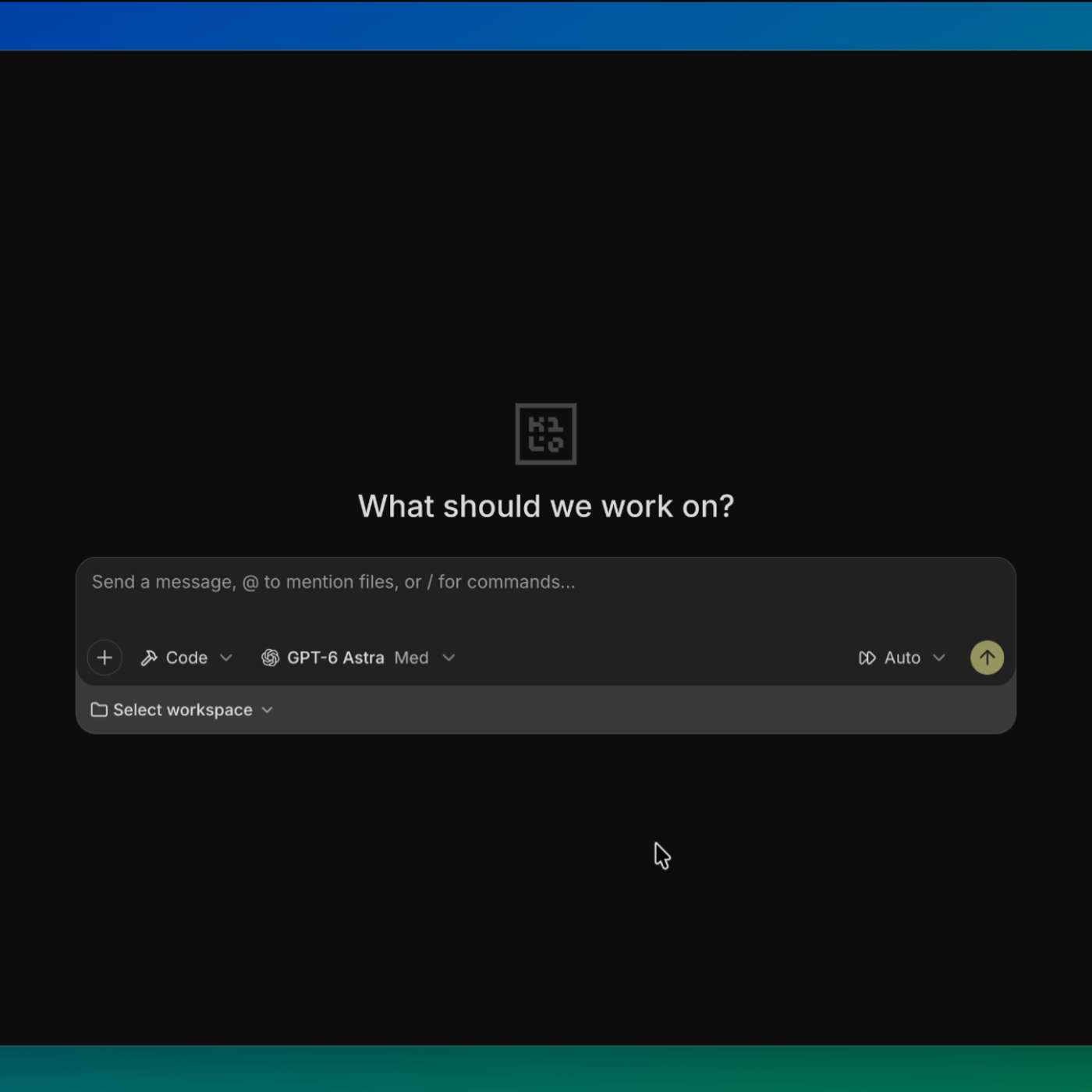
Kilo Desktop brings 500+ models, agent planning, live notebook editing, conda environments, and built-in governance into one app. Here's why we built it.
Check more stories related to undefined at: https://hackernoon.com/c/undefined.
You can also check exclusive content about #ai, #kilo-code, #ai-agents, #agentic-workflows, #ai-coding, #kilo-desktop-launch, #how-to-use-kilo-desktop, #good-company, and more.
This story was written by: @kilocode. Learn more about this writer by checking @kilocode's about page,
and for more stories, please visit hackernoon.com.
Agentic coding tools made writing code fast, but they confined the job to code on one vendor's models. Kilo Desktop, out today, puts the whole job in one app: 500+ frontier, open-weight, and local models with cost-based routing; agents that plan before they build; notebooks the agent edits live; conda environments drawn from 19,000+ vetted packages; and admin controls over which models, agents, and MCP servers anyone can use. It is the entry point to the rest of the Anaconda Platform, where the same vetted artifacts flow into Metaflow workflows, FastBakery images, and autonomous red-teaming before production.
Get every episode summarized
Each time The Good Tech Companies publishes, we email you a written briefing from the transcript — the topics, who appeared, and any specific claims, with the ad reads skipped.
Email me new episodesFree for 3 shows. No card needed.
Hosts & guests
Transcript ready
76 searchable segments. Every word is indexed and playable.
Full transcript
The Good Tech Companies — Introducing Kilo Desktop: Where the AI Dev Factory Begins. Machine-transcribed; use the interactive transcript above to jump the player to any line.
This audio is presented by Hacker Noon, where anyone can learn anything about any technology. Introducing Kilo Desktop. Where the AI Dev Factory begins by Kilo. Agents write most new code at the companies we talked to, and the tools that made that possible are excellent at it. Robert Bjorn, product owner at Interphone, told us his team, went from being blocked by two decades of backlog to running out of tickets, with Kilo, and in our survey of AI Native Builders, 63% said they are moving toward agent swarms in some form. Writing code stopped being the constraint a while ago. What those tools did was narrow the job to code and tie it to one lab's models. The actual work of an AI Native Builder is wider than that. It includes the notebook where the analysis lives, the Konda environment, the notebook and the service both depend on, the open weight model that would do the routine work audit 10th of the cost. The local model required for data that cannot leave the building, and the security policy that decides what any agent is allowed to touch. Greater than each of those lives in a separate tool today,
with its own login, its own greater than permissions, and its own gap for context to fall through. Today we are releasing Kilo Desktop, the newest surface in AI workspaces, to bring all of it into one app. It is also the entry point to the rest of Konda Stack, which carries the work from idea to deployment. What Kilo Desktop does differently? Across Anaconda's acquisitions of Kilo code, and Crypt AI, and Outer Bounds, weck up hearing the same four requirements from teams whose agents had outgrown their tools. Each shaped Kilo Desktop, the model is a choice, not a vendor frontier labs such as OpenAI, Anthropic, and Google Build Remarkable models, and teams want them for their hardest problems. Each lab's agent harness, however, runs only that lab's models, which turns a technical decision into a procurement decision. If an open-weight model from Nvidia, Moonshot, Minimax, or ZAI would do a routine refactor at a fraction of the cost, you should be able to use it without installing a second tool and asking security to review it. Kilo Desktop gives you native
access to more than 500 models through one interface, and you can switch per task. When you would rather not choose, Auto-Officiant checks each request against Kilo Bench, our own coding benchmark, and roots it to the cheapest model that has proven capable of that kind of work. Models you host are subscribed to elsewhere plug in through a custom endpoint with your own key. For work that must never leave the machine, a built-in local model server runs open models directly on your hardware, with one setting that decides whether those requests carry the full agent toolkit or run light without it. Sign in with Chad GPT, another new feature of Kilo, opens every Kilo Surface Towsers who have existing OpenAI plans without extra logins or token costs. Directing an agent means planning before building an agent that writes whole services performs better when it has a plan. Kilo Desktop's plan agent reads your project and returns a step-by-step implementation plan without touching a line, and only after you approve it does the code agent split the plan into sub-tasks and run them in parallel with sub-agents. The Ask Agent answers
questions without changing anything, debug finds what broke and fixes it, and custom agents cover whatever those four do not. Parallel sub-agents on the desktop are a smaller instance of the agent swarms where also bringing to VS Code today through Kilo, where several agents build in parallel, share context, and keep token costs down. Bjorn describes the shift as, turning what one developer does in a day into what a small team does. Data science is development until now, agentic coding tools have largely left the notebook alone, and getting help with one still means pasting cells into a chat and pasting answers back. In Kilo Desktop, the agent edits the notebook directly while you watch its cursor move through the cell with the data loaded. The environment the notebook runs in as part of the app too. Kilo Desktop creates and manages condo environments and draws from our catalog of more than 19,000 vetted packages. Soath agent has its dependencies before the first prompt and each of them has passed our review. Workspaces follow from the same conclusion.
Real work rarely lives in one folder, so a Kilo Desktop workspace is a named group of folders from your machine, which lets the agent read an analysis in one repository while it writes the service that depends on it in another. Chats, notebooks, diffs, and terminals open as tabs you arrange however the review demands, and any of them pops out onto a second monitor and snaps back when you finish. Governance belongs in the tool an agent that can call any tool and read any data set as a security surface, and THE numbers say so. Our encrypt AI team scanned 268,210 agent tools across 25,264 MCP servers over four months and found vulnerabilities in 73% of them. A policy document cannot keep up with that. The environment has to enforce the policy itself. In Kilo Desktop, your administrators decide which models and providers people can use and from which geographies, what each agent may do, and which skills and MCP servers it can install, with the new Anaconda MCP extending the same vetting to agent tool calls. The developer sees the full landscape and works
inside the boundaries you drew. Beyond the laptop, Kilo Desktop is where work starts, and we built the rest of the Anaconda platform so that what starts there arrives in production on change. The Samovetted packages, 13,000 of them newly added this release, and the same curated models flow from the desktop into Metaflow workflows, and Fast Bakery turns the resulting dependency set, native libraries included, into reproducible container images that pip-only tooling cannot produce. Before anything ships, our autonomous red teaming attacks models, agents, and MCPs across more than 300 attack categories and adapts as the target hardens, and guardrails approve, modify, or block risky behavior at runtime. We also published the agent incident registry, a verified, source-backed record of publicly reported agent incidents. We think buyers should be able to check security claims against evidence, including our claims, and until now there was nowhere to do that. The paradigm, stated plainly, agentic coding was the first step. The AI Native Development
environment is the whole job in one place. A person directing agents that write, analyze, and test, with any model a drop down away, note books and environments as native as source files, and the security team's policy running inside the tool. We built Kilo Desktop to be that place, and we built the platform behind it so the work survives the trip to production. Kilo Desktop is available to download today. The rest of the release is on our launch page, and we will show all of it live at Anaconda Scale on October 15th. Registration is open. Download Kilo Desktop Thank You for listening to this Hackernoon story, read by artificial intelligence. Visit Hackernoon.com to read, write, learn, and publish.
More episodes
More from The Good Tech Companies

ALLOX TGE Nears With 363K Eligible Claimants and Coinbase-Owned Sonar Sale
The Good Tech Companies

How David Bratslavsky Is Helping Commercial Real Estate Operators Use AI to Win...
The Good Tech Companies

The Lawyer Who's Building His Own Version Of Legal AI
The Good Tech Companies

When Peer-To-Peer Crypto Transfers Beat Exchanges
The Good Tech Companies