IS WATCHING INAPPROPRIATE MEDIA CHEATING? HERE’S WHAT YOU NEED TO KNOW
Get every episode summarized
Each time Betrayal Trauma Recovery publishes, we email you a written briefing from the transcript — the topics, who appeared, and any specific claims, with the ad reads skipped.
Email me new episodesFree for 3 shows. No card needed.
About this episode
“If you're like the majority of my listeners, your husband has lied to you. Not just the discovery of the lies, but trying to process all of the lies over the years.”From the transcript
If you searched “is watching inappropriate media cheating” you’re probably looking for clarity. For a woman who has just discovered what her husband has been secretly doing with his time, it feels like a betrayal because it is. It’s a betrayal if her husband is sharing his energy, attention, and loyalty with other women (thousands of them online). This episode is a two-part conversation with experts from the National Center on Sexual Exploitation.
This article answers the question: is watching inappropriate media cheating? But it also answers the question underneath it: “Why does my husband’s use of inappropriate media hurt me so much… even if apparently all men do it.”
QUICK ANSWER: IS WATCHING INAPPROPRIATE MEDIA CHEATING?
In marriage, yes. Because it meets the basic definition of cheating: He is engaging in sexual activities and directing sexual energy toward other people, often in secret, while expecting ongoing intimate access to his wife’s trust, body, and partnership.
And your gut response to think that he’s cheating is logical. In fact, it’s how most women feel. I’ve interviewed over 200 women who told me how terrible it felt to find out about all his lies, including his lies about how he’s been spending his time online. Over the last almost two decades, my team has helped over 8,000 women thrive after betrayal. So here’s what we know:
IS WATCHING INAPPROPRIATE MEDIA CHEATING? YES, HERE’S WHY
Below is the “wife-brain” list, the one that finally puts words to what you already know.
1) CHEATING IS NOT LIMITED TO PHYSICAL CONTACT WITH ANOTHER PERSON
If your husband is pursuing stimulation from searching for and viewing other women online, he’s still directing intimate attention outside the marriage. He may argue “that it doesn’t mean anything” because there’s no physical contact.
But your marriage is real and your natural reaction to his choice to pursue arousal with other women is healthy and real.
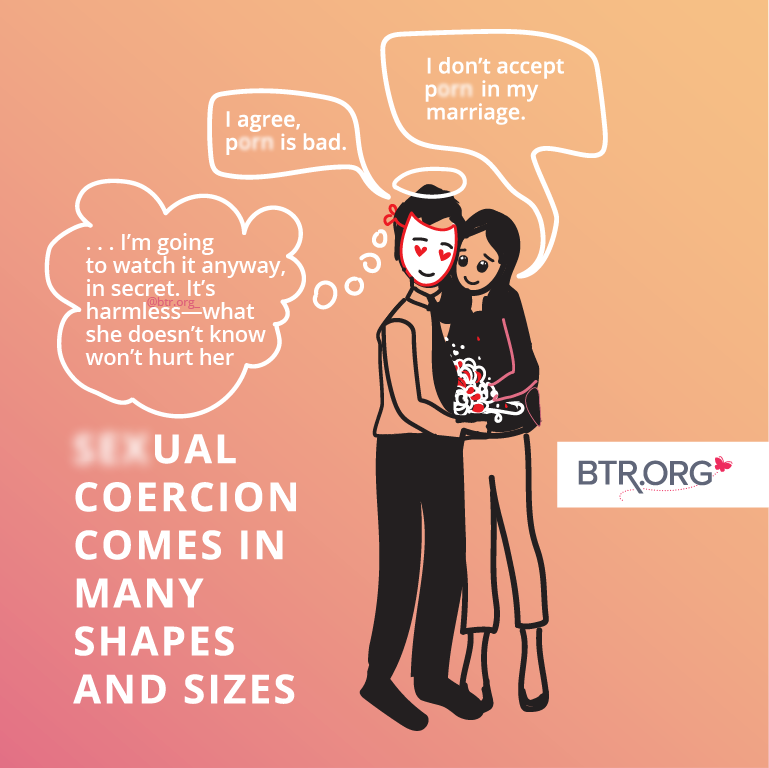
2) IT’S ALMOST ALWAYS BUILT ON SECRECY AND SECRECY IS BETRAYAL
I interviewed Christen Price, an attorney at The NCOSE and we talked about how the strongest tactic of coercive control is lying to maintain power and a preferred narrative.
If your husband has a pattern of using hidden or secret apps, unusual password protected accounts, and deflection, anger, or mockery when confronted, that isn’t him just needing “privacy.” He’s engaging deception, which is an obvious marker when asking, “is watching inappropriate media cheating?”
3) IT UNDERMINES INFORMED CONSENT INSIDE YOUR MARRIAGE
Women generally consent to a marriage based on a certain set of sexual boundaries that they expect both partners share.
If he’s not staying inside those boundaries (and lying about it), she’s not able to consent, either to the relationship itself or to intimacy in the relationship.
She’s being kept in the dark so he can keep living a double life. Because he wants to keep the benefits of the relationship, without staying within the boundaries. That’s not partnership. That’s exploitation.
4) IT’S NOT “JUST CONTENT.” IT’S ACTUALLY EVIDENCE OF ABUSE
in my interview, Christen defines image-based sexual abuse (IBSA) as the creation, threat, sharing, or use of sexual images/videos without consent or for exploitation.
And then she lists what falls under that umbrella:
- sextortion
- non-consensual sharing (often called “revenge porn”)
- hidden-camera recordings (locker rooms, showers, bedrooms, hotel rooms)
- “upskirting/downblousing”
- AI-generated or manipulated sexual images made from real photos
- harassment using sexual content
Here’s the gut-punch for wives: Her husband is watching other women being abused.
When a husband says, “I would never do anything to hurt you,” he may believe that he’s not harming anyone because he’s just looking at “images.” But the inappropriate media industry involves the abuse and objectification of women, and by choosing to engage with it, he’s supporting it.
5) IT’S RELATIONAL INFIDELITY WHEN HE’S BONDING SEXUALLY WITH SOMEONE ELSE
Even if he has no emotional “relationship” with the person he’s aroused by on a screen, if his wife is left with distance, disconnection, and feeling like she’s competing with strangers, that’s infidelity.
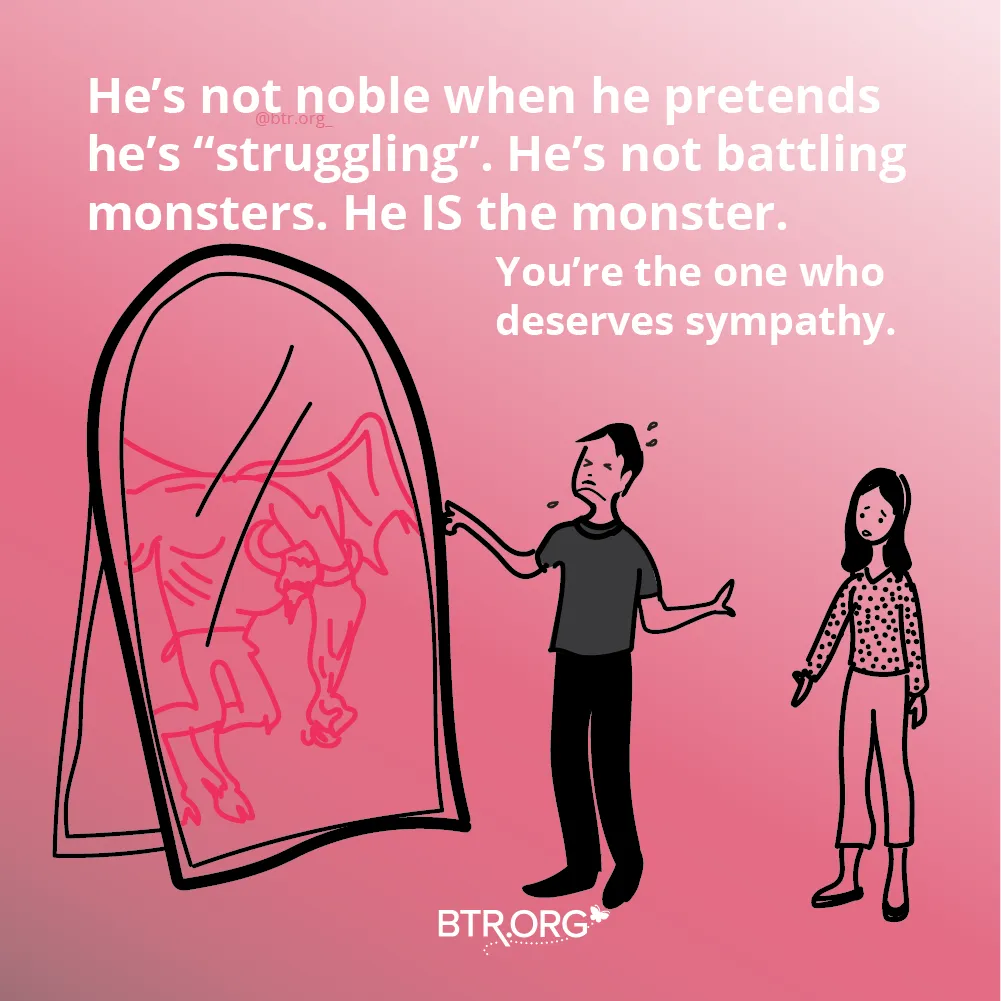
6) IT OFTEN COMES WITH GASLIGHTING: “YOU’RE THE PROBLEM”
Of course a husband using inappropriate media wants to maintain the narrative “I’m a good guy.” That’s why he lies about it.
So when women are hurt by these lies, she gets labeled:
- insecure
- controlling
- prudish
- too sensitive
- the reason he does it
That type of gaslighting is emotional abuse. To learn more and to see if you’re experiencing this type of emotional abuse, take my free emotional abuse test.
7) IT PUTS WIVES AT REAL RISK, SOMETIMES CRIMINAL RISK
In helping women face this type of betrayal for almost two decades, I’ve heard some chillingly specific stories of husbands secretly recording wives in showers or during sex and posting it for financial gain. This is non-consensual recording and distribution. Even if you’re husband isn’t doing this, if he’s watching it, that’s what motivating other men to harm their wives or girlfriends.
8) IT TEACHES MEN THAT THEY’RE ENTITLED TO SEX WITHOUT INTIMACY
Even if something is common or deemed acceptable by some people, that doesn’t make it healthy. Melea describes why industries like this resist regulation: they don’t want their profits to decrease. When consumption of inappropriate media is easy, private, and constant, it creates a culture where:
- women exist for sexualization
- male arousal is a “need”
- women’s bodies are commodities
Wives often experience the effects of this cultural acceptance as:
- increased pressure to compete sexually
- decreased empathy and emotional presence
- an unwillingness to acknowledge and repair harm
And all of these erode the foundation of safety and intimacy that marriage is supposed to be built on.
9) IT IMPACTS KIDS, DIRECTLY AND INDIRECTLY
Even the most tech savvy husband who thinks he’s keeping it “private,” can’t guarantee that curious kids, with devices on shared Wi-Fi, won’t be impacted his browsing history.
He’s not just risking damage to a marriage. He’s risking the emotional safety of your children.
Melea Stevens, board member at The National Center on Sexual Exploitation, talks about a “filter bill”, which creates default safety settings on phones/tablets.
WHAT TO KNOW WHEN SEARCHING “IS WATCHING INAPPROPRIATE MEDIA CHEATING”
Most women search because they feel betrayed, and they don’t realize it’s exploitation.
- It’s not just cheating, he’s participating in the real exploitation of women and girls.
- Thinking “it doesn’t hurt anyone” dismisses the real harm done to real people and relationships.
If your husband is consuming it, hiding it, minimizing it, and expecting you to live with the consequences of that lie, yes, it’s cheating. And it’s actually so much more. Christen Price and Melea Stevens from the National Center on Sexual Exploitation are on the Betrayal Trauma Recovery Podcast to clearly articulate why watching it is so harmful to women.

TRANSCRIPT: IS WATCHING INAPPROPRIATE MEDIA CHEATING? HERE’S WHAT YOU NEED TO KNOW
Anne: I have Christen Price and Melea Stevens on today’s episode. Christen serves as Senior Legal Counsel for the National Center on Exploitation Law Center.
She engages in legal advocacy to end impunity for all forms of sexual exploitation. In her role at NCOSE Christen works to influence courts and legislatures. Toward protecting human dignity and equality on behalf of exploitation survivors, as well as resources to stop human trafficking. Through legislative advocacy, litigation, and support for other attorneys. Particularly in terms of trafficking, prostitution, child abuse, and image based abuse.
Malea is on the board of the National Center for Exploitation.
Welcome Christen.
Christen: Thank you so much for having me.
Anne: I met Christen in person a while back. She impressed me with her passion for protecting victims. I want to jump straight into talking about image-based abuse. What is image based abuse?
FORMS OF IMAGE-BASED ABUSE
Christen: Image based abuse is a broad term. That includes a wide range of harmful experiences involving the weaponization of explicit images or videos. IBSA involves creating, threatening to share, sharing, or using recordings without the consent of the person in them or for exploitation purposes.
So sometimes people call one form of this revenge posting of intimate media, but at NCOSE we try to avoid this term because it implies that the person victimized by it did something wrong to the perpetrator, and that this is some kind of punishment payback. But the reality is that men do this to women for any reason or for absolutely no reason at all.
Anne: Right! I’ve spoken to human trafficking survivors who share their experiences with this. When you say men do this to women. This podcast is specifically for women, victims of exploitation perpetrated by men. And so all of our listeners are women. Well, my intent is to help women.We do have some men listeners, but when you say that, does it ever happen the other way around?
Christen: It definitely happens the other way around. And also women can victimize other women, men can victimize other men. But the victims are disproportionately women, and the perpetrators are disproportionately men. And I think the figures vary somewhat.
In a 2017 US survey conducted with 3, 000 or so participants, one in eight people were targets of distribution. Or threat of distribution of intimate images without consent. Women were roughly twice as likely to be targets of this abuse. Compared to the men in that particular survey.
NEWS HIGHLIGHTS
Christen: But there was another survey by the Cyber Civil Rights Initiative. And in their survey, over 90 percent of the victims were women, mostly between 18 and 30 years old. So there’s some variation there, of course. That IBSA affects women and girls disproportionately isn’t in dispute.
Anne: Because I advocate for women, I appreciate those statistics. And letting people know that this is a woman’s health issue. It’s important to women, especially my listeners. Are there news stories that highlight this issue?
Christen: So there is one. It’s significant because it shows the level of impunity people at least think they have when they perpetrate this. They arrested the mayor of a town in Maryland, called Cambridge, late last year. It’s maybe an hour and a half outside of DC where I am. They charged him with 50 counts of non consensual distribution.
The CEO and the COO of —-hub, or MindGeek, the company that controls it, have resigned. You know, this is in the wake of years of reporting, but especially over the last two years. Of how their flagship site facilitates and profits from image-based abuse in the United States. In all of its various forms.
Anne: When Christen says image based abuse, what I want you to think in your mind is pornography. This is what we are talking about. So husbands who are constantly on their phone looking at this stuff. Would you say all of it, or most of it, is image based abuse? For our listeners who are so traumatized by their husband’s use?
IMAGE-BASED ABUSE IS HAPPENING
Christen: So one thing that might be helpful would be to go down the list of the different things that fall under this category. And then you realize, wow, this is what is on sites and drives traffic to these sites. The whole industry, because it is an industry, is a profitable enterprise to exploit other people in this way. This obviously has implications, even for people who don’t end up portrayed on the websites.
There’s a sense that exploitative materials use is abusive to people in general, especially women and girls. Because it’s incompatible with their full equality in society. If this is a way they can be portrayed with impunity. It has implications for everyone.
Christen: But just to go down the list of the different things that fall under image based abuse (IBSA). One is sextortion, which uses inappropriate images or materials that the perpetrator blackmails the victim. Or coerces them to produce increasingly inappropriate content. So that in exchange, the initial content is not released. So that’s sextortion.
Then, this is the one I think most people think of when they hear the term image based abuse. Non-consensual sharing of images. Which is sometimes accompanied by doxxing, which is you share the content. But then you add the person’s name, their address, or other identifying or locating information.
Anne: Many women in our community have had their husbands secretly video them in the shower or while they were in their bedroom. This kind of behavior is also what marital coercion is. They did not know. And then he posts that online, and other people watch it as “pornography.” Not knowing that they’re actually viewing abuse. That happens frequently to women in our community.
NON-CONSENSUAL RECORDINGS & HARASSMENT
Christen: Yeah, that’s actually the next one I was going to say, which is non-consensual collecting. Swapping and posting of these types of images in groups or in third party platforms. As you noted, if IBSA is used, absolutely. I mean, they didn’t have consent to take the image, let alone to distribute it. Non-consensual recordings of images or videos of other types of activities, they’re not doing anything intimate.
They expect they’re in a private context, like showering in the gym or even in their home or hotel room. So restrooms or locker rooms people put surveillance cameras. We call that downblousing or upskirting. Another form it takes is harassment or assault in virtual or augmented reality. So harassment through direct messaging or assault of somebody’s avatar. Like in a virtual context.
Sending unsolicited material, also called cyber flashing. Identity theft, where people take someone’s images to make artificial or photoshopped videos. It’s intended to portray them as though they’re really in it. We call that cheap fake or deep fake. And then pressuring or harassing someone to self generate or share inappropriate images.
So it’s quite a variety of offenses that fall under this category. And much of it makes its way onto massive public sites.
THE ABUSIVE NATURE OF ONLINE EXPLOITATIVE MATERIAL
Anne: I would say the average user has no idea that it is abusive. In fact, when you educate them about it, they dismiss it. They’re like, whatever. In our experience, listeners of this podcast, you’re hurting our family and marriage. You’re also just flat out watching abuse, and it’s like, no, that’s not how it is.
Christen: Do you think people who say that read the tags for the material they’re watching? Because sometimes they tag it as spycam or locker room or something like that. There will be clear indications that it’s not consensual. I’m not saying that’s always the case. But that’s a thing that they to drive traffic. They categorize things.
Anne: What I’m saying is they’re like, yeah, it’s a spy cam, but she doesn’t know. And she doesn’t even know it’s online. So why is it hurting her? One thing I have learned about abusers is they do not want to admit they are abusive. They don’t want to call it abuse. They want to call it anything else, because they want to continue to justify their behavior.
People call this stuff out there spy cam material, not abusive spy cam material. It’s disconnected. In fact, this was fascinating. I talked to a convicted offender. He was like, wow, his mind was blown. He never thought of himself as an abuser, even though he was a convicted offender.
Christen: Wow.
Anne: How prevalent is image based abuse, IBSA and who is the most affected by it?
IS WATCHING INAPPROPRIATE MEDIA CHEATING? YES, AND IT’S ACTUALLY SO MUCH MORE
Christen: It’s impossible to know what percentage of it falls under this, which is one of the big dangers. Because someone tags it in a certain way. But it’s not necessarily going to be apparent that someone is watching abusive content. Once you put together the fact that this includes CSAM Which is rife on the internet.
Anne: When you say CSAM. Our community commonly refers to that for our listeners who don’t know, as CSAM. I appreciate that NCOSE and many advocates are trying to change that language.
Christen: No, thanks for saying that. I meant to include that. It is still called in the law in most places. So that’s an important distinction.
It includes extremely violent and dangerous content. Which is pretty obviously harmful, regardless of whether they obtained consent. It includes the type of spy cam and other types of surreptitious recording or non consensually distributed content. So all that is abusive. All of that is exploitative, most of it is illegal in many jurisdictions. Much of what seems to drive traffic to some of these sites is this type of content.
A subreddit on Reddit, I think it’s called wife pic, has 250, 000 members. The abuse is prevalent and rampant. It’s a massive risk. Anyone who consumes it chooses to consume someone’s abuse. A Human Being Is Always Objectified
IMAGE BASED EXPLOITATION IS ABUSIVE
Anne: We take the stance at Betrayal Trauma Recovery, people disagree with me, and I don’t care. That all use is abusive, period. It’s abusive to someone, somehow. Someone’s coerced, lied to, manipulated and harmed. That is our stance. So when you’re talking specifically about image based abuse. I think you’re also specifically talking about criminal things. People are arrested for those things.
Christen: Yes, or at least sued, in some cases.
Anne: With our listeners, the abuse they’re experiencing, the emotional and psychological abuse, is not a “crime.” So they have a difficult time figuring out how to get help. But it is good for them to know that anyone consuming this type of material. Or producing it will have some danger to you.
Christen: Yes, there’s no exploitative material in which a human being is not objectified. That’s always present. So much of it is extremely violent and degrading, especially to women. Thinking it’s unharmful shifts the norms and expectations for all women. It’s like basically a form of propaganda. It conditions women to submit to violence rather than resist it, among other things.
Women and girls are most affected by it, disproportionately. So especially younger women and girls.
Anne: Yeah, here at Betrayal Trauma Recovery, even if the wives aren’t the ones filmed, our husbands use continues to affect us. When we think about the victims in image based abuse, and these degrading acts being visible to other people. Where do people generally post them?
IBSA IS POSTED ANYWHERE YOU CAN POST
Christen: They’re posted anywhere you can post things. Google will index searches for this type of content. I mean, it is everywhere. Some sites specifically devote themselves to sharing non-consensually distributed content. Really all over chat groups and texts.
Anne: It’s alarming to think about.
Christen: It really is.
Anne: Apps, anywhere you can find anything, you can find it. But I would say the public is not. When you’re trying to explain to people why exploitative material is abusive, what arguments have you found useful?
Christen: Thinking about how it works as a tactic, and also thinking about the impact, I make it clear that’s the right category for it. Taking the standard definition of abuse, it’s typically a set of tactics. Usually it’s systematic or calculated. That one person uses to gain and maintain coercive control over another.
And it can be physical, emotional, financial or spiritual. Image based abuse fits squarely within that. It’s ultimately about maintaining coercive control over another person. Men have posted things because women wouldn’t go out with them, or because they broke up with them. And when we look at what effect it has on the victims, that also very much tracks with what we understand abuse to be.
Anne: Coercive control is the main theme. When it comes to the husbands. They’re doing the same thing, but it’s in a different way. So they’re using coercive control to manipulate, lie, to gaslight to hide their use. So they’re lying to them about their whereabouts.
EXPLOITATIVE ONLINE IMAGES ARE ABUSIVE: LIES & HYPOCRISY
Anne: They’re lying about their use of time or why they’re angry about something. Or they’re trying to gaslight to make sure their wife doesn’t know the types of things they’re doing. Because they want their wife to live in a different reality. But he wants his wife to think he’s a good guy.
That he’s a churchgoer, that he’s an upstanding member of society. So it’s that same coercive control to maintain the narrative. I’m a good guy. I’m a good husband. You, wife, you’ve got some problems. And if you would cook better, or if you would be more respectful of me, or if you would appreciate my job more. Then maybe our marriage would be good.
That gaslighting happens all the time. And that is why I want to hit home to the addiction recovery community. Or other communities that these men are abusers. They’re not just users. They are abusive to their wives. And it’s important for people to understand. That we’re talking about a specific type of trauma to the women being filmed.
Anne: Why is it so important to recognize that this is trauma? And people actually document it and then post it?
Christen: Yes, I think it’s exactly what you just said. Their trauma is posted. If I were to sum it up, I would say probably for the three reasons that it’s a really prevalent form of trauma.
TRAUMA & ITS MANIFESTATIONS
Christen: Going back to the statistics from earlier, it’s extremely destructive. People usually commit it with impunity. Impunity just means you’re getting away with it. You’re getting away with the thing in a way that is so clear and obvious, you have no reason to stop doing it. Other people watching what’s happening don’t have a reason to not do the same thing themselves.
Anne: Oh, this is happening in people’s families too. It’s amazing, the parallels between the two, the impunity with the divorce, or they’re still getting child custody.
Christen: Some ways the trauma manifests for the people depicted include high levels of anxiety, PTSD, depression, shame and humiliation, loss of trust and agency.
The risk of suicide is very, very high. Some 51 percent of people responding to one survey said they had contemplated suicide due to their experience with image based abuse. It’s also important to note that this is a form of abuse that never ends. Someone else can always share or upload the images. It may never fully go away.
It’s an abusive situation, a person may never fully exit. Survivors shared with us that their reputations are completely lost. They’ve lost jobs or had to leave jobs because of the level of harassment directed at them. When people realized it was them in the videos. They’re constantly anxious in social situations, wondering if someone has seen the content.
They’ve had family and other relationships destroyed because of this, so it, it really manifests. Like other forms of trauma.
Anne: The federal government passed a law against revenge —ography.
FEDERAL LAW AGAINST REVENGE MATERIAL
Anne: Can you tell us about the law?
Christen: It provides victims with the right to sue for non-consensually distributed content. If the person who disclosed it knew or recklessly disregarded the depicted person’s lack of consent. So when it allows people to sue for damages, it allows them to potentially get a temporary restraining order. Or an injunction, basically ordering the perpetrator to stop displaying or disclosing the image.
There are some exceptions that I think are a bit concerning about who can bring an action under this law. So basically, there’s an exception called matters of public concern or interest. In my view, it is vague and appears to exclude any possible cause of action if something is deemed to fall within that category. And my perspective on that is famous or well known women shouldn’t be public property either.
It doesn’t address the rights of a person if someone is not well known. There was no public interest in appearing in content alongside someone who was. That’s one exception that raises a flag for me. And then there’s another exception related to commercial content.
Basically, it means content with people who appear under 30 if force does not produce it, fraud, misrepresentation, or coercion. They would accept that kind of content. In some ways, it means that the websites most likely to be exempt are ones most likely to have people under 30 exploiting younger people.
It also exempts the websites and people likely to profit from the display of the content. So if someone ran his own website with younger looking people. He couldn’t be sued by his wife or ex girlfriend for non-consensually posting her images on it. As long as she isn’t coerced to make the video.
IMAGE BASED EXPLOITATION USE IS ABUSIVE: THE ISSUE OF CONSENT
Christen: To me, these are exceptions that are worrisome, and ultimately I think make the law incomplete. But I think it can be useful for some victims to have legal recourse.
Anne: When you say consent, that word is just fraught in our community. Because women give their consent to marry, for example. They’re giving their consent to be in a relationship, but that doesn’t mean they give their consent to be abused. When you say, yeah, they consented to participate. But they’re not consenting to be manipulated or gaslit. This law is a he said, she said. Is the consent issue clear when it comes to this law? Or does it get caught in the same kind of rape/domestic violence problems? Where you can’t ever prove it.
Christen: It’s a good question. It’s hard to say right now, because no one has tried to use the law yet. I think a lot depends on how judges interpret it, and how it’s actually used. This type of law is not covered in the federal trafficking law, which covers it. The standard for whether something meets the definition of trafficking is whether it features a minor? Or was it produced through force, fraud, or coercion?
So in a sense, consent is arguably not a defense if people mean agreement. People can coerce you into agreeing to something. You can be deceived into agreeing to something. If either of those two things are present, the crime is still committed. So I think it remains to be seen if this specific law will take a similar view.
LEGAL RECOURSE & COERCION
Christen: It seems to anticipate that people may produce content through coercion and deception. That’s included in the law. It wouldn’t necessarily let you sue a commercial website, but it would let you sue the person who posted it. So they seem to anticipate coercion as possible in this context, but I think a lot will depend on how things end up being interpreted.
Anne: We’ve spent a lot of time talking about this. I know some of you listening are victims of this. Like your own husband has posted things of you, or you’re a victim of revenge ___ography. You’re a victim of abuse in this way. Many of you, I personally talked to you, and you have been afraid to press charges. Number one, because you’re not sure if you want a divorce, you’re not sure if things will work out with your husband.
I want to encourage you to do something. The best hope for your husband not to be abusive is to actually account for his crime. Even if you think there’s some chance it will work out. I still think if he were truly changed, truly repentant, truly non abusive, he would take accountability for what he’s done.
And so reporting it is an important step. So I know that reporting domestic violence, especially if it is your husband or your boyfriend, is important. It’s a safety issue, so I want to acknowledge that.
RESOURCES FOR VICTIMS
Anne: At the same time, there are resources available.
Christen: Yes, one of the main resources we recommend is the Cyber Civil Rights Initiative. It’s specifically helpful for victims in the United States. They have a crisis helpline, and the number is (844) 878-2274, and you can talk to a counselor 24 hours a day, 7 days a week. They also have an online removal guide. Which walks people through instructions for how to address content they found on Facebook, Instagram, Twitter, Tumblr, Google, Snapchat, and other sites.
And then they also have some international resources for people in Australia, Brazil, Israel, Palestine, Pakistan, South Korea, Taiwan, and the United Kingdom. Our main recommendation is definitely to contact them. Listeners are also welcome to contact the NCOSE Law Center. We do have a number of lawsuits addressing image-based abuse. Although at the moment, almost all concern child abuse victims. Adults who were minors when their content was posted.
We have lawsuits against big suppliers
Anne: Many of our listeners actually might be victims and might not know it at all. We are here for you. NCOSE is here for you. And the resources she just talked about are here for you.
If you’re a concerned woman and you want to advocate to make this world safer. You need to check out NCOSE at endsexualexploitation.org.
ADVOCACY & PUBLIC AWARENESS
Christen: Speaking broadly, there is a market for this kind of content on —-hub and all these other sites. Demand drives markets. So the first thing a regular person can do, especially men and boys, is not consume the abuse. This is a profitable industry. It is driven by the fact that people want to see this stuff.
I would also say if you’re in one of the two states that currently don’t have a law against this type of content. Definitely advocate with your local leaders for such a law. I think there’s a need to educate boys and men and the public about this issue in a way that puts the responsibility for it where it belongs.
I think that in many ways, as a society, the way we talk about assault has changed for the better. We’re not just telling women to watch out or blame them for not fighting back. You know, we recognize that it’s on men not to perpetrate, and I think the same applies with this issue.
We can’t just tell women and girls to watch out or be more careful. We need to teach men and boys not to perpetrate. Part of the importance of this abuse framing is doing that. It’s calling this thing by its right name, calling it by the term that shows how seriously wrong it is. And how seriously abusive to human rights.
THE IMPORTANCE OF SAFE HOMES
Christen: And I think that’s a big part of what any person can do with any type of gendered violence or abuse. To call the thing by its right name. I think so often men’s violence against women, abuse of women and girls, is disappeared by how we talk about it. Or the fact that we don’t talk about it. So I think that’s a big thing that any person can do.
Anne: I’m reminded of the Jackson Katz quote. “We talk about how many women were raped last year, not how many men raped women.” For our listeners, since they’re not men and boys, the number one thing you can do is get to safety in your own home. The number one thing you can do is learn how to get to safety yourself, and how to ensure your own home is safe. That’s number one.
When your own home is safe, the number two thing you can do if you want to get involved is check out the NCOSE Website. They have many campaigns there. You can get on their email list. I’m on their email list. I love it when I get their emails. Things like, sign this petition or send an email to your Senator. And they give you a template of things that you can do. So at least, that gives you some scaffolding to start making some progress.
If you want to do something, but you don’t know where to start. The NCOSE website, and they have a summit every year, and getting involved that way is a good way to start making change in the world.
PERSONAL REFLECTIONS ON ABUSE
Anne: I want to say for me personally, when I was in my abusive relationship. I was so focused on addiction recovery, I didn’t understand it was abuse. So I went down the wrong road for a while. And I was also involved with NCOSE which was awesome. And I loved it, but I spent a lot of time trying to solve the world’s problems.
Not at that time to actually get to safety myself. And I have found that I am much more effective in making the world safer when my own home is safe. And it’s impossible to make the world safer, so that your home is safe. It’s much easier to make your home safe first, and then help the world, than the other way around. You can actually literally, within a few years, three to six years, actually make your home a safe place. It takes a long time.
It’s hard to learn boundaries. It’s hard to learn these skills, but it is possible. The fight and exploitation that we are all involved in, it’s like a worldwide battle that will take a long time. And so don’t wait for that. Don’t think, okay, well, when, the US passes a law that it’s illegal and my husband can’t watch it anymore, then I’ll be safe.
Please do not wait for that. Get to safety now. There is a peaceful and safe place.
THE SYSTEMIC NATURE OF ABUSE
Christen: One final thing from me, it’s just a broader point that I think reflects some of the things we’ve talked about I think the way people often perceive it can follow this pattern. Of the way that the invisibility of various forms of violence and abuse against women is invisible. Whether the abuser is a pimp, a husband, a boss, or a film producer.
Violence and abuse are not seen as political, systemic, as an attack against women as a class. And I think it’s important that we identify this as the sort of systemic thing that it is. Because it’s incompatible with gender equality in a society.
Anne: It is systemic, because when our listeners try to get out, they go to a therapist, they go to clergy, and they get like, oh, it’s a communication issue, or, oh, you’re just not having it enough. They don’t get, oh, he’s abusive. I went to therapy for seven years with an emotional and psychological abuser who also coerced me. I did addiction recovery for seven years. No one told me I was abused. It is insane.
I go to a church with an on the books doctrine and policy that no abuse will be tolerated. And all my clergy were like, oh, he’s such a good guy. They didn’t know it was abuse. I didn’t know it was abuse. Because of that misunderstanding and not labeling it for what it is. Women are continually harmed. And men continually abuse with impunity. And it is absolutely systemic and dangerous, not just for women, but also for men.
THE NEED FOR HEALTHY RELATIONSHIPS
Anne: Because they can’t have a healthy relationship or have a peaceful, healthy life if they’re abusive. So, the answer for everyone is healthy, non-abusive interactions with other people, and non-exploitative interactions. So thank you for all your work again. I cannot stress enough how important their work is. Please visit their website, endsexualexploitation.org.
Anne: Christen, thank you so much for coming on today’s episode.
Christen: Thank you so much for having me.
Anne: Okay, Melea, you got involved with NCOSE, because you’ve seen young children addicted to online inappropriate material for over 23 years, thanks for talking with me today.
Melea: Thank you for having me
Anne: Melea lives in Alabama. She’s currently working on passing a bill in her state. We’ll also talk about how you can help protect children online in your location. Can you tell us about what’s going on in Alabama right now?
Melea: We worked to pass what we call a filter bill. It’s a bill that would require tablets and smartphones to have the filters defaulted on. One of the names it had was the default to safety bill. We had different names at different points, but a similar bill passed in Utah a few years ago. And we wanted to pass it in Alabama. Several other states are interested in introducing it.
One reason we wanted to promote this bill is that we know 47 percent of young children have their first unwanted early exposure on smartphones and tablets. It’s just a common sense protection to have pre-existing filters already on smartphones and tablets defaulted on. Versus putting the burden on caregivers and parents to try to go through 30 some odd steps on many devices to figure out how to activate existing content filters.
DETAILS OF THE FILTER BILL
Melea: We have Supreme Court precedent that says it is preferable for protections to come at the filter level on devices. We know this bill would be upheld in court. And we’re confident it would be very enforceable. And all it is simply doing is asking that three major companies, Amazon with the Kindle, the Apple products and Google with their products, have smartphones and tablets.
That a software update would happen, which is a very simple fix. We’ve talked to software experts who work closely with device manufacturers. They would just do a very simple update that would allow phones activated in Alabama to have the default on instead of off with the content filter. And it automatically has broad based protections for young children, so they’re less likely to stumble across online inappropriate material at an early age.
People would say kids will find ways to get around it, obviously, but we were talking about very young children who aren’t even thinking about it that stumble upon this content. And it Is very traumatic to them to not understand what they’re looking at and the way it affects their brain. This gives them extra years of innocence, safety, and protection. I had the honor of speaking to different parent groups.
And have spoken to schools and churches in areas where kids don’t have involved parents. And those children, child on child, harmful behavior is rampant in those communities. Parents just hand children devices. They need resources to stop human trafficking and this behavior. No one’s looking for them, and they can become addicted to online inappropriate material and they act out what they see. That’s what children do. They copy what they see.
CHALLENGES & OPPOSITION
Melea: Then there’s a cycle of abuse happening and a cycle of trauma. So I especially think about those children when I think about this bill. We’ve been excited. We had a great response and had 67 bipartisan co sponsors in the House, and it passed through committee with bipartisan support. We got to the Senate, it passed through committee with bipartisan support. There are people working hard to stop human trafficking and help with this effort.
It was poised to be passed through the Senate. But we had one person in the Senate, who refused to allow it on the calendar. It only takes one or two people to set the calendar. They blocked it because a lot of opposition turned up to fight along the way. And that’s been true in every other state. Big tech has been our opposition. And telecommunications companies have also shown up at all our hearings with their lobbyists.
Even though our bill has zero to do with companies like AT&T or Verizon. They’re not held liable. It’s explicitly stated in our bill. They would show up, because unfortunately, big tech and telecommunications companies and the industry will sometimes fight common sense browsing protections for kids. And it’s really sad. But that’s one of the things we dealt with. Unfortunately, this gentleman blocked it. We assume there was pressure from lobbyists and one company in particular.
IT’S NOT JUST CHEATING, IT’S EXPLOITATION
Anne: They’ll say all kinds of reasons that aren’t real. What’s the reason they don’t want to do it? Is it just simply money, this type of exploitation is sadly about money.
Melea: Money is a big factor. We know that historically, Google, AT&T or Verizon, do they get back general profits from online explicit material?
Melea: They do, and they have. There is potentially a loss of revenue. Big tech hates regulations. They do not want to be restricted in any way, shape, or form. They don’t want to give up an inch. So I think money, power, and resistance to any form of regulation. To me, it’s a safety feature on a on a car or something like requiring that they have proper antilock brakes on a car, something reasonable. And in this case, it’s just a simple software update. All the technology is there.
Anne: I hope this does not sound too political, but I’m a patriot saying, I’m grateful for all the government services we have. We have roads, we have a military, we have things in place to keep us safe. And that’s only something that the government can do, because the government is all of us. So I am so grateful that we have these opportunities to protect us. We need to do that through the government, because nobody’s going to willingly do that.
Although NCOSE has worked well with some companies. So that is exciting. They provide resources to stop human trafficking and are helping this bill to pass.
RESOURCES TO STOP HUMAN TRAFFICKING: THE DIRTY DOZEN LIST
Melea: Absolutely, yeah, there’s opportunity. Companies respond to positive communication and sometimes negative. We have what’s called the dirty dozen list, and name and shame the main promoters of exploitation. We have had tremendous success, because once things are brought to light, it’s been refreshing that several companies have changed their corporate policies and resources to stop trafficking or unwanted exposure to online inappropriate material.
This has been a very tooth and nail fight all along the way. The opposition will say, well, you should just be fighting the online inappropriate material, instead of asking the manufacturers to do this at the device level, which I agree. We are like the National Center on Exploitation, and many of our allies are constantly fighting the industry to make changes there. But I wish our government was stepping up in this issue.
Because the laws on the books on a federal level would prohibit the production and distribution of hardcore online inappropriate material, which is the majority of harmful on the internet. And also our laws prohibit the distribution of all online inappropriate material, whether soft core or hardcore, from our internet. But our department of justice for many years has not been enforcing federal obscenity laws. That leaves us to tackle this issue of illegal content through corporate strategies and legislation.
Through lawsuits, like we have lawsuits against providers that are, we’re winning right now. We’re gutting companies because of lawsuits that we have with survivors. So we’re having to go at it every different angle.

PRACTICAL STEPS & COMMUNITY SUPPORT
Melea: And to everyday citizens that want to make a difference and make an impact when it comes to stopping and resources to stop trafficking and exploitation in general. At NCOSE, we understand that you’ve got to go upstream. I don’t know if you’ve heard the analogy of seeing people floating down the river drowning. You rush in to try to pull out as many as possible, and you’re struggling to get as many to safety as possible.
And you do this for a long time until you’re exhausted, but you’re not able to get to everyone. Eventually you come to this idea of like, I’ve got to go upstream and figure out who’s throwing people in the river. And so you go upstream and find out there’s someone who’s shoving all these people into the river. And in this case, that’s the industry because today’s mainstream online inappropriate material is highly addictive.
It changes their belief system, gives them permission, giving beliefs about consent and buying. People become objects. It’s creating a world of harm. And we know that if we did not have rampant, hardcore material if it was restricted to adult bookstores. Like you had back in the eighties with soft core material. As bad as that was, if we just lived back in that world, that’s what our laws on the book say.
RESOURCES TO STOP HUMAN TRAFFICKING: NCOSE’S ACTION CENTER
Melea: Our world should look like when it comes to online inappropriate material in the United States. There should be nothing on the internet, nothing on cable, or satellite TV. Can you imagine how different our world would be if our children could go through their developmental years without exposure to it around every corner? So that’s what we strive for is a shift in cultural expectations.
But then there are also practical things we’re doing to interrupt the cycles of things feeding trafficking. So we’d love for them to come to our website. It’s endsexualexploitation.org. And if you go to the action center, you can immediately get involved in helping us stop human trafficking and winning these victories.
Anne: I recommend NCOSE because so many people are talking about trafficking these days. And I have a really interesting story that is super alarming. So, one of my friends was on an airplane, and she was sitting next to a man, and they started talking about politics. He said, “I’m voting for this person because of his record on trafficking, because he will protect the children.”
Her ears perked up and she was like, oh, really, tell me more about this. He said, yeah, there’s these people are stealing these kids and we’ve got to stop it. And then she said, what do you do for a living? And guess what he did for a living?
Melea: What?
Anne: He owned a strip club.
Melea: Oh my gosh. You’re kidding.
Anne: No, so here’s a man who is an actual literal trafficker. He owns a strip club. And he’s talking about this nameless faceless group of people who’s like kidnapping kids when we know who they are. It’s him.
GETTING INVOLVED WITH NCOSE
Anne: We know who the exploiters are. It’s obvious. Getting involved with NCOSE is so awesome, because it’s clear what’s happening. So that you can say, okay, this particular Senator, he’s the one blocking this bill. We can write to that particular Senator and ensure that this bill gets passed.
So I love that NCOSE clears out all the confusion, because at least this man who owned the strip club loved saying, oh yeah, we got to stop trafficking to distract from the fact that he was a trafficker. We need the resources to stop human trafficking, which NCOSE has.
Melea: Talk about denial and hypocrisy, or else just a good marketing scheme there, yeah.
Anne: That is scary these days. So I love that NCOSE is a very reputable organization that has been around for a long time.
Melea: They do their research, and they are careful about the details before they speak out. That’s one reason I’m hesitant as a spokeswoman for NCOSE. I want to make sure I do my best to accurately present the facts, because they have such a high standard when it comes to what they share and do.
They’re very intentional and I respect that about them and they will correct themselves if there is something that they find out is inaccurate, but they do things with a lot of integrity and they get a lot done with a very small budget and a small group of people.
Anne: Well, that’s the other thing I love about NCOSE.
NCOSE’S CREDIBILITY & INTEGRITY
Anne: Because so many people talk to me about it, they’ll be like, nobody’s doing anything. And I’m like, every year, NCOSE with their dirty dozen list, they make progress. They have wins. And if you’re on their mailing list, you’ll get messages, and it’s so amazing to be part of that, because you can feel the momentum. And as much as this online stuff is this overarching, exploitative, abusive, systemic problem. It affects every woman who listens to this podcast.
And so many families all over the world, it’s horrific. It needs to be stopped, it’s an abuse issue. The exploiters, they don’t want people to know that progress is being made. They want people to think it’s a lost cause or fine, and what’s your problem? We should just let this go. Or the alternative, which is, there’s nothing you can do.
Melea: They want it to seem that it’s a right and an entitlement, first and foremost. They don’t want people to know that it’s illegal. They want people to feel this is a free speech issue. And it’s not, it’s not protected speech, but you would think that’s the case given everything they do. They have all these organizations that are under misleading names, such as this free speech coalition, various names that make it sound like they’re anti exploitation as well.
They have some groups that sound like they’re anti trafficking, that they’re actually the industry putting up a false front to sound like they’re being benevolent, and they’re doing everything they can to undermine decency in society.
THE BEST RESOURCES TO STOP HUMAN TRAFFICKING
Melea: So you have to do your homework and dig deep when it comes to these issues. A legislator presented this filter bill, just like in our state and in other states. Several groups came in acting like they were, pro family, pro children presenting Trojan horse stills that sounded anti exploitation, and people fell for it. It’s a very sneaky opponent. Thankfully, the law is on our side, science is on our side.
As we educate the public about the harms of it on the brain and relationships in society. And as we educate the public about what the law actually says. They become empowered to push back against this evil industry.
Anne: And so that my listeners are not distracted by actual traffickers who say, Hey, I want to stop trafficking. So you don’t accidentally support a trafficker. NCOSE is the place to get your information to stop human trafficking. They are trustworthy, they’ve been around for so long, and they do their homework. And they know who the specific people are and talk about specific actionable things. That’s what makes it so effective.
Melea: Well, thank you so much. Enjoyed my time with you.
Anne: Yes, you too. Thank you.
Get every episode summarized
Each time Betrayal Trauma Recovery publishes, we email you a written briefing from the transcript — the topics, who appeared, and any specific claims, with the ad reads skipped.
Email me new episodesFree for 3 shows. No card needed.
Hosts & guests

Transcript ready
435 searchable segments. Every word is indexed and playable.
Full transcript
Betrayal Trauma Recovery — IS WATCHING INAPPROPRIATE MEDIA CHEATING? HERE’S WHAT YOU NEED TO KNOW. Machine-transcribed; use the interactive transcript above to jump the player to any line.
Welcome to betrayal trauma recovery, Iman. If you're like the majority of my listeners, your husband has lied to you. That's incredibly traumatizing. Not just the discovery of the lies, but trying to process all of the lies over the years. Many of you have already gone to therapy or clergy for help and the advice you received partially blamed you for his betrayal. It happened in me too. I supported my husband through seven years of addiction recovery and not one of those therapists helped me understand what was really going on. And if you're here, I bet you've had that experience too. That's why I started podcasting. That's why we're here. Now that it's fall, if you need support for you, check out our daily group session schedule at BTR.org slash group. I do a monthly Q&A and the women in our group sessions feel peaceful and validated by our incredible team. A team that shares valuable insights and proven strategies to help you navigate betrayal and feel peace. We'd love to see you in a group session today. And if this podcast is helpful to you and you wish you'd found it sooner, one simple anonymous way to help spread the
word is to click, follow or subscribe. And while you're there, every five-star rating makes this podcast more visible. Your support means I can continue sharing this life-changing information with women throughout the world for free. That being said, if you're able to contribute financially, scroll to the bottom of any page at BTR.org and click support the podcast. Thank you. I couldn't do this without you. If your husband is consuming inappropriate media, hiding it, minimizing it, and that's outside of the boundaries that you would like for your marriage, then yeah, it's cheating. But it's actually so much more. Kristen Price and Malia Stevens from the National Center on Sexual Exploitation are with me today to clearly articulate why inappropriate media is so damaging to women in so many ways. Here's what she said about it. There will be clear indications that it's not consensual, but that's a thing to drive traffic. When a woman wonders, do my husband's online watching habits constitute cheating? She's usually not looking for a debate, but she's looking for clarity. Because to her, this isn't a theoretical question. It feels like
betrayal because it is, but it's also so much more than that. When a husband hides what he watches online, it's rarely just about what's on the screen. He isn't just engaging in intimate behavior with other women outside the marriage and directed toward other women. He's usually lying about it, especially about how he uses his time. And most wives don't just discover inappropriate media use. They discover hidden accounts, explicit texts with other women, and so much more. And that's certainly not harmless. It's extremely painful. And here's the part that almost no one connects. A significant amount of inappropriate online content is created through coercion, hidden cameras, manipulation, exploitation, and non-consensual distribution. So when he says, I'm not hurting anyone, that is not true on so many levels. He may not admit that he's participating in a systemic exploitation of women and girls, but that's why it feels so wrong when he does it. Because it's not just about the fact that he spends hours watching it, and the lies he tells about that. It's also about
what he's watching and how it's made. So the quick answer is yes. Watching inappropriate media online without your wife's consent or without her knowing is definitely cheating. Here are the nine reasons why it's cheating. And my interviews today are going to go into detail about reasons four, seven, and nine. If you want to detail the explanation about the other six reasons, go to btr.org. Click on podcast and you'll find this episode. It goes into a lot of detail about why this is. Number one, it's intimate access to other women. Number two, he usually lies about how he uses time in order to be able to do it. So it's based on secrecy and secrecy is betrayal. Number three, it removes informed consent from the marriage and from your intimate relationship. Number four, it's not just content. It's actually evidence of abuse. And I really do a deep dive into this on this episode. Five, it's relational infidelity because he's emotionally bonding outside the marriage. Number six, it's often accompanied with gaslighting and blame where he says you're the
problem or you're the reason he's doing it, which is not true. Seven, it puts his wife at real risk sometimes even criminal risk. And this will really go into the details of that. Eight, it teaches men entitlement, not intimacy. And number nine, it negatively impacts kids directly and indirectly. And my interview with Malia at the end will talk specifically about why that is. So like I said, I have Kristen Price and Malia Stevens on today's episode. I'm going to start with Kristen Price. Kristen serves as senior legal counsel for the National Center on Sexual Exploitation Law Center. She engages in legal advocacy for all forms of sexual exploitation. In her role at Nicosi, Kristen works to influence courts and legislatures toward protecting human dignity and equality on behalf of exploitation survivors as well as resources to stop human trafficking through legislative advocacy, litigation and support for other attorneys, particularly in terms of trafficking, prostitution, child abuse, and image-based abuse. Malia Stevens is on the board of Nicosi and I'll
interview her after I'm done with Kristen. Welcome, Kristen. Thank you so much for having me. I met Kristen in person a while back and was so impressed with her passion for protecting victims. I want to jump right into talking about image-based sexual abuse. What is image-based sexual abuse? Image-based sexual abuse is a broad term that includes a wide range of harmful experiences involving the weaponization of sexual explicit or sexualized images or videos. IBSA involves creating, threatening to share, sharing or using of recordings of sexual explicit or sexualized materials without the consent of the person in them or for exploitation purposes. So sometimes people call one form of this revenge form, but at Nicosi, we do try to avoid this term because it implies that the person victimized by it did something wrong to the perpetrator and
that this is some kind of payback, but the reality is that not do this to women for any reason or for absolutely no reason at all. When you say men do this to women, does it ever happen the other way around? It definitely happens the other way around and also women can victimize other women, men can victimize other men, but victims are disproportionately women and the perpetrators are disproportionately men and I think the figures very somewhat, but there was a 2017 US survey conducted and had 3,000 or so participants and one in eight people had been the targets distribution, a drug of distribution of sexually graphic images of themselves, you know, without their consent, and women were roughly twice as likely to have been the targets of the subuse compared to the men in that particular survey, but there was another survey by the Cyber Civil Rights Initiative and in their survey, over 90% of the victims were women mostly
between the ages of 18 and 30 years old. So there's some variation there, of course, but that women and girls are disproportionately affected doesn't seem to really be in dispute. Because I advocate for women, I appreciate those statistics and letting people know that this really is a women's health issue and it's important to women, especially my listeners. Are there any news stories that highlight this issue? The mayor of a town in Maryland called Cambridge, we need an hour and a half outside of DC where I am was arrested for perpetrating and charged with I think 50 counts of non-concentral distribution, the CEO and the CEO of PornHub or Mind Geek, the company that controls PornHub, have resigned, you know, this is in the wake of years and years of reporting how their flagship site PornHub facilitates and profits from image-based sexual abuse in all of its various forms. When Kristen says image-based sexual abuse, what I want you to be thinking in your mind is pornography.
This is what we are talking about. Would you say that all pornography or most of it is image-based sexual abuse for our listeners who are so traumatized by their husband's pornography use? So one thing that might be helpful would be to go down the list of the different things that fall under this category and then you realize, wow, this is what is on pornographic sites and it's what drives traffic to these sites, the whole industry because it isn't industry. It's a very profitable enterprise to exploit other people in this way. Obviously has implications even for the people who don't end up being portrayed on the websites. There's a sense in which it really is abusive to people in general, especially women and girls because it's incompatible with their full equality in society. This is a way they can be portrayed within with impunity. It has implications for everyone. But just to go down the list of the different things that fall under image-based sexual abuse, one is sex torsion, which is using sex-based, basic images or sexual
materials that the perpetrator has to blackmail the victim or to coerce them to produce increasingly explicit content in exchange for the initial content not being released, that sex torsion. Then this is the one I think most people think of when they hear the term image-based sexual abuse, non-concentral sharing of sexually explicit or sexualized images, which is sometimes accompanied by doxing, which is you share the content, but then you add the person's name or their address or other identifying or locating information. Many women in our community have had their husbands secretly video them in the shower or rather having sex in their bedroom. They did not know and then posted that online. And other people are watching it as quote unquote pornography, not knowing that they're actually viewing sexual abuse. That has happened to women in our community frequently. Yeah, that's actually the next one I was going to say, which is non-concentral collecting, swapping and posting of these types of images in groups or in third-party platforms. As you
noted, it's absolutely abusive behavior. I mean, they didn't have consent even to take the image, let alone to distribute it. Now, in consensual recordings of images or videos of other types of activity, they're not doing anything sexually expected in a private context like showering in the gym or even in their home or hotel room. So, restrooms are locker rooms people put, surbtitious cameras. It's called downblowsing or upscirting. Another form it takes is sexual harassment or assault in virtual or odd-minute reality, so sexual harassment, who direct messaging or sexual assault of somebody's avatar, like in a virtual context, sending unsolicited material, also called cyber-flashing identity theft, where people take someone's images to make artificial pornography intended to portray them ways though they're really in it. So, it's called cheat fake or deep fake pornography. And then, pressuring harassing someone to self-generate or share. It's actually explicit or
sexualized images. So, it's quite a wide variety of offenses that fall under this category and all of it's abusive and much of it makes its way onto massive public tube sites like porn hub and x videos. I would say the average porn user has no idea that what they're watching is absolutely abusive and in fact, when you educate them about it, they dismiss it. They're like whatever. At least in our experience, the listeners of this podcast, we are hurting our family, you're hurting our marriage, you're also just flat out watching abuse and it's just like, no, that's not how it is. Do you think that people who say that are meeting the tags for the material they're watching? Because sometimes, we'll say something like it'll be tagged as spy cam or locker room or something like that. There will be clear indications that it's not consensual. I'm not saying that's right. Always the case, but that's a thing that
x videos at least does to drive traffic. They categorize things. Yeah. I think people don't want to admit that's abuse. What I'm saying is they're like, yeah, it's a spy cam, but she doesn't know and she doesn't even know it's online. So why is it hurting her? One thing that I have learned about abusers is they do not want to admit that they are abusive. They don't want to call it abuse. They wanted to call it anything else because they want to be able to continue to justify their behavior. This stuff is out there and it's just called spy cam. It's not called abusive spy cam material. It's called spy cam material. There's just this disconnect. In fact, this was really fascinating. I was talking with a convicted sex offender and I was telling him that it was abusive and he was like, wow, his mind was blown. He never had thought of himself as an abuser, even though he was a convicted sex offender. Wow. How prevalent in just average pornography, like people thinking, oh, I'm just
quote unquote watching pornography. How prevalent is image-based sexual abuse, ibsa, and who is the most affected by it? It's kind of impossible to know what percentage of pornography falls under this, which is one of the big dangers because maybe something will be tagged in a certain way. Not necessarily going to be apparent on the face of it that someone is watching abusive content. But once you put together the fact that this includes child sexual abuse material, which is rife on the internet on public websites like Twitter and Lightport have. When you say child sex abuse material, that is commonly referred to for our listeners who don't know as child pornography. And I really appreciate the Nicosi and a lot of advocates out trying to change that language to stop saying child pornography and start using child sex abuse material because that is what it is. So sorry to interrupt, I just wanted to make that clear for you. No, thanks for saying that. I had meant to include that and it is still called child pornography in the law in most places. So
that's an important distinction. But it includes that includes child sexual abuse material or CCM as it's often abbreviated includes advertisements for people who are being sex trafficked for prostitution. It includes extremely violent and dangerous content, which is pretty obviously harmful regardless of whether it was consented to. And it includes the type of spy cam and other types of Serb titious recording or non-consumptionally distributed content. So all of that is abusive. All of that is exploitive. Most of it is illegal in many jurisdictions. And much of what seems to drive the traffic to some of these sites is this type of content. There is a subreddit, unreddit, things called wife pick. And it has 250,000 members. The abuse is so prevalent and so rampant. It's a massive risk that anyone who decides to consume pornography is really choosing to take.
They're going to be consuming somebody else's abuse. We take the stance at BTR and people to agree with me and I don't really care. That all pornography is abusive, period. It's abusive to someone, some way somehow, someone's being coerced, someone's being led to, someone's being manipulated, someone is being harmed. It is abusive regardless. So that is our stance. So when you're talking specifically about image-based sexual abuse, I think you're also specifically talking about things that are criminal, things that they could actually be arrested for. Yes, or at least soup for in some cases. With our listeners, the abuse that they're experiencing, the emotional and psychological abuse is not a quote-unquote crime. And so they have a very difficult time figuring out how to get help. But it is good for them to know that anyone consuming this type of material or producing it is going to have some level of danger to you. Yes, what? There's no pornography in which a human being is not objectified.
It's always present. And so much of it is extremely violent, integrating especially to women to your point about it being broadly abusive, unharmedful. I think it really shifts the norms and expectations for all women. It's basically a form of propaganda. It conditions women to submit to violence rather than to resist it among other beings. Women in girl-germes have left it by it. Yeah, disproportionately so, especially younger women in girls. Yeah, they're at BTR. Even if the wives aren't the ones being filmed, we have been and are continued to be affected by our husband's abuse due to his porn use. When we're thinking about the victims related to image-based sexual abuse and these degrading acts being visible to other people, where are these things generally posted? They're posted anywhere you can post things. General pornography tube sites like porn, hub, and X videos, Twitter, Reddit, especially subreddit, Etsy, Google, well, index searches for this type of content.
I mean, it really is everywhere. There are some sites that are specifically devoted to sharing non-consensually distributed content, really all over chat groups, texts. It's alarming to think about. It really is. Apps. Anywhere you can find anything, you can find it. So our listeners are really familiar that this is abuse, but I would say the general public is not. When you're trying to explain to people like why this is abusive, what arguments have you found to be useful? So thinking about how it works as a tactic and also thinking about the impact. We get pretty clear that that's the right category for it. Taking the standard definition of abuse, it's typically a set of tactics, usually systematic or calculated that one person uses to gain and maintain coercive control over another person, and it can be physical, sexual, emotional, financial, spiritual. And image-based sexual abuse really fits squarely within that. It's ultimately
about maintaining coercive control over another person. Men have posted things because women wouldn't go out with them or because they grew up up with them. And when we look at what effect it has on the people that it's done to, that also very much tracks with what we understand abuse to be. That coercive control is the main theme because when it comes to the wives of these porn users, they're doing the same thing, but it's in a different way. So they're using coercive control to manipulate, to lie, to gaslight in order to hide their porn use. So they're lying to them about their whereabouts. They're lying to them about their use of time or why they're angry about something or they're trying to gaslight in order to make sure their wife doesn't know the types of things they've been doing because they want their wife to live in a different reality. The reality is he is an abusive porn user and he's abusing his wife, but he wants his wife to
think that he's a good guy, that he's a church coer, that he's an upstanding member of society. So that's that same coercive control to maintain the narrative. I'm a good guy. I'm a good husband. You wife, you've got some problems and if you would cook better or if you would be more respectful of me or if you would appreciate my job more, then maybe our marriage would be good. That gaslighting happens all the time. And that is why I really want to hit home to the porn addiction recovery. Community or other communities that these men are abusers. They're not just porn users. They are abusive to their wives. It's really, really important for people to understand that. When we're talking about a specific type of trauma to the women who are being filmed, why is it so important to recognize that this is trauma and it's actually being documented by people and then being posted? Yes, I think it's exactly what you just said. It's trauma and it's posted. If I were to sum it up, I would say probably for the three reasons that it's a really
prevalent form of trauma going back to the statistics from earlier, it's extremely destructive and it's usually committed with impunity. Impunity just means that you're getting away with it, you're getting away with the thing in a way that is so clear and obvious you have no reason to stop doing it. And other people who watch what's happening have no reason not to do the same thing themselves. This is happening in people's families too. It's amazing the parallels between the two with the impunity with the divorce or they're still getting child custody. Some of the ways that the trauma manifests for the people that are depicted includes high levels of anxiety, PTSD, depression, feelings of shame and humiliation, loss of trust, and sexual agency, the risk of suicide is very, very high. It's also important to note that this is a form of abuse that never really ends. It can always be reshared or re-uploaded by someone else and so it may never fully go away. It's an abusive situation. A person may never be able to fully exit and you've had survivors share
with us. They've completely lost their reputation. They've lost jobs or had to leave jobs because of the level of sexual harassment directed at them when people realized it was them in the videos. They're constantly anxious in social situations wondering if someone has seen the content they've had family and other relationships destroyed because of this. So it really manifests like other forms of sexual trauma. So the federal government passed a new law against revenge pornography. Can you tell us about that? It's a law that provides victims a right to sue for content that is non-consensually distributed. If the person who disclosed it knew or recklessly disregarded the depicted person's lack of consent. So when it allows people to sue for DMG's, it allows them to potentially get a temporary straining order or injunction basically ordering the perpetrator to stop displaying or disclosing the image. When you say consent, like that word,
just fraught in our community because women are giving their consent to get married, for example. They're giving their consent to be in a relationship, but that doesn't mean they give their consent to be abused. So when you say, yeah, they consented to be important, but they're not consenting to be manipulated or gassled. Is this like a he said, she said, when it comes to this law, is the consent issue very clear when it comes to this law? Or does it get caught in the same kind of rape, slush, domestic violence problems that we have where you can't ever approve it? It's a really good question. It's hard to say, I think a lot will depend on how it's interpreted, how judges interpret it, how it's actually used. I would say that this kind of law aside, it's worth noting that in the federal sex trafficking law, which does cover pornography, the standard for whether something needs the definition of sex trafficking is whether it features
a minor or was produced through force, fraud or coercion. So in a sense, consent is arguably not really a defense if by consent people mean agreement because you can be coerced into agreeing to something or you can be deceived into agreeing to something. It definitely seems to anticipate that people may produce content through coercion and deception and that that would be included in the law, but it wouldn't necessarily let you see a commercial website like PornHub, but it would let you see the person opposed today. So they do seem to anticipate that coercion is possible in this context, but I think a lot will depend on how things end up being interpreted. We've spent a lot of time talking about this. I know some of you listening are victims of this, like your own husband has posted things of you or your victim of revenge porn, your victim of sexual abuse in this way. Many of you, I have talked to you personally and you have been afraid to press charges. Number one, because you're not sure if you want a divorce,
you're not sure if things are going to work out with your husband. I want to encourage you to do something. The best hope for your husband not to be abusive is to actually stand in account for his crime. Even if you think there's some kind of chance that it will work out, I still think if he were to be truly changed, truly repentant, truly non-abusive, he would take accountability for those things that he's done. And so reporting it is an important step. So I know that reporting domestic violence, especially if it is your husband or your boyfriend is a safety issue. So I want to acknowledge that. At the same time, there are resources available. Yes, one of the mean resources that we recommend is the Cyber Civil Rights Initiative. It's specifically helpful for victims in the United States. They have a crisis helpline and the number is 844-878-2274.
844-878-2274. And you can talk with a counselor 24 hours a day, seven days a week. They also have an online removal guide, which wax people through instructions for how to address content they found on Facebook, Instagram, Twitter, Tumblr, Google, Snapchat, and other sites. And then they also have some international resources for people who are in Australia, Brazil, Israel, Palestine, Pakistan, South Korea, Taiwan, and the United Kingdom. Our main recommendation is definitely to contact them. Wissers are also welcome to contact the Nicosi Law Center. We do have a number of lawsuits addressing image-based sexual abuse, although at the moment almost all of them concern child sexual abuse victims, so people who are minors when their content was posted, we have lawsuits against Hornhub, against X videos, against Twitter. You can find more information about this at sexual exploitationlossets.com. All of the information about Nicosi and the information you hear will all
be in one place on our website. Many of our listeners actually might be victims. I might not know it at all. We are here for you. Nicosi is here for you and the resources that she just talked about are here for you. If you're a concerned woman who knows the harms of pornography due to your husband's abuse and his involvement in it and you want to advocate to make this world a safer place, you really need to check out Nicosi at endsexualexploitation.org. Speaking broadly, there is a market for this kind of content. I'm Hornhub and X videos and all these other sites and markets are driven by demand, so the first thing a regular person can do, especially men and boys, is to not consume the abuse. This is a very profitable industry and it's driven by the fact that people want to see this stuff. There's a real need to educate boys and men in the general public about this issue in a way that puts the responsibility for it where it belongs. I think that in many ways, as a society, the way that we
talk about sexual assault has changed for the better. We're not just telling women to watch out or blame them for not fighting back. We really recognize more than it's on men not to perpetrate. I think the same thing applies with this issue. We can't just be telling women and girls to watch out it to be more careful. We need to teach men and boys not to perpetrate. Part of the importance of this abuse framing is doing that. It's calling this thing by its right name, calling it by the term that shows how serious the wrong is, how serious the human right to abuse is. I think that's a big part of what any person can do. We really, any type of gendered violence or abuse is to call the thing by its right name. I think so often men's violence against women, men's abusive women, and girls is disappeared by the way that we talk about it or the fact that we don't talk about it. So I think that's a big thing that any person can do. It reminds me of the Jackson Katz quote,
we talk about how many women were raped last year, not how many men raped women. For our listeners, since they're not men and boys, the number one thing you can do is get to safety in your own home. The number one thing you can do is learn how to get to safety yourself and learn how to make sure that your own home is safe. That's number one. When your own home is safe, the number two thing you can do if you want to get involved, check out the Nicosi website and sexual exploitation.org. They have a lot of campaigns there. You can get on their email list. I'm on their email list. I love it when I get their emails. Things like, you know, sign this petition or send an email to your senator and then give like a template of things that you can do. So at the very least, that gives you some scaffolding to start making some progress if you want to do something, but you don't know where to start. The Nicosi website, when I was in my abusive relationship, I was so focused on pornography
addiction recovery. I didn't understand it was abuse. So I went down the wrong road for a while. And also, I was really involved in the Kosi and the anti-prinography movement, which was awesome. And I loved it. But I was spending a lot of time trying to solve the world's problems and not able at that time to actually get to safety myself. And I have found that I am much more effective in making the world a safer place when my own home is safe. And it's impossible to make the world a safer place so that your home will be safe. The fight and exploitation that we are all involved in, it's like a worldwide battle that is going to take a long time. And so don't wait for that. Don't think when the US passes a law that pours illegal and my husband can't watch it anymore, then I'll be safe. Please do not wait for that. Get to safety now. There is a very peaceful and safe life that is possible to have now, even if pornography exists. Thank you so much for having me.
Maria, so you got involved with Nicosi because you've seen young children addicted to online material that's very inappropriate for children. And you've been doing this for 23 years. So thank you so much for coming on to talk about this serious issue today. Thank you for having me. Maria lives in Alabama. We'll also talk about how you can get involved in helping out in your location. Can you tell us about Alabama? We worked to pass what we call a filter bill. It's a bill that would require tablets and smartphones to have the filters defaulted on. One of the names that it's had was the default to safety bill. We've had different names. It's a short course, but a similar bill was passed in Utah a few years ago. And we have wanted to pass it in Alabama and several other states are interested in introducing it as well. One reason we wanted to promote this bill is that we know 47% of young children have their first unwanted early exposure to pornography on smartphones and tablets. And it's just a common sense protection to have
pre-existing filters that are already on smartphones and tablets defaulted on versus putting the burden on caregivers and parents to try to go through 30 some odd steps on many devices to try to figure out how to activate existing content filters. We have Supreme Court precedent that says that it is preferable for protections to come at the filter level on devices. So we know this bill would be upheld in court and we're pre-confident that it would be very enforceable. And all it is simply doing is asking that three major companies, which would be Amazon with the Kindle, the Apple products and Google with their products that have smartphones and tablets, that a software update would happen, which is a very simple fix and it automatically has broad-based protections for young children so that they're less likely to stumble across pornography at an early age. And people would say kids are going to find ways to get around it
obviously, but we were talking about very young children who aren't even thinking about pornography that stumble upon this content and it is very traumatic to them to not understand what they're looking at in the way it affects their brain. This gives them extra years of innocence and safety and protection. We had a great response. We had 67 bipartisan co-sponsors in the house and it passed through committee with bipartisan support. We got to the Senate. It passed through committee with bipartisan support. It was poised to be passed through the Senate, but we had one person in the Senate who refused to allow it on the calendar. It really only takes one or two people that set the calendar. They blocked it because there was a lot of opposition that we had to fight along the way and that's been true in every other state. There's been opposition from big tech and telecommunications companies have shown up at all of our hearings with their lobbyist
as well, even though our bill has zero to do with companies like AT&T or Verizon, they're not held liable and it's explicitly stated in our bill, but they would show up because, unfortunately, big tech and telecommunications companies and the pornography industry will sometimes band together to fight common sense protections for kids and it's really sad. What's the real reason they don't want to do it? Is it just simply money? Money is a big factor. We know that historically, Google AT&T or Verizon, do they get back general profits from pornography? They do and they have. There would be potentially a loss of revenue that way, but the big tech hates to be regulated. They do not want to be restricted in any race shape or form. They don't want to give up an inch. So I think money, power, and a resistance to any form of regulation. To me, it's like a safety feature on a car or something like requiring that they have proper anti-lock breaks on a car. Something that's very reasonable. In this case,
it's just a simple software update. All the technology is there. I hope this does not sound too political, but I'm a patriot in saying I'm really grateful for all of the government services that we have. We have roads. We have a military. We have things in place to keep us safe and that's only something that the government can do because the government is all of us. So I am so grateful that we have these opportunities to protect us. We need to do that through the government because nobody's going to willingly do that. All those Nikose has worked well with some companies. So that has been exciting. Absolutely. Yeah, there's opportunity companies respond to positive communication and sometimes negative pressure. We have what's called the Dirty Doesn't List where we name and shame. This is the main promoters of the sexual exploitation. We have had tremendous success because once things are brought to light,
it's been refreshing that several companies have changed their corporate policies to better protect citizens from sex trafficking or from unwanted exposure to pornography. And also our laws prohibit the distribution of all pornography, be it soft court or her core from being on our internet, but our Department of Justice. For many years, I's not been enforcing federal obscenity laws. So that leaves us to tackling this issue of illegal pornography through corporate strategies, through legislation, through lawsuits. Like we have lawsuits against Pornhub that are we're winning right now. We're getting the mind geek and the Pornhub industry because of lawsuits that we have with survivors. So we're having to go at every different angle that Nikosey, we understand that you've got to go upstream. I don't know if you heard the analogy of seeing people floating down the river that are drowning and you rush in to try to pull out as many as you can and you're struggling to get as many to safety as you can.
And you do this for a long time till you're exhausted that you're not able to get to everyone. But eventually you come to this idea of like I've got to go upstream and figure out who's throwing people in the river and say you go upstream and you find out there's someone that's shoving all these people into the river. And in this case, that's the pornography industry because today's mainstream pornography as you know is highly addictive and it changes their belief system. It gives them permission giving beliefs about rape and sex buying people become objects. It's creating a world of harms and we know that if we did not have rampant hardcore pornography, if it was restricted to just the adult bookstores like you had back in the 80s with soft core porn, as bad as that was, if we just live back in that world, that's what are the laws on the book say our world should look like when it comes to pornography in the United States. There should be nothing on the internet, nothing on cable satellite TV. Can you imagine how different our world would be if our children were able to go through
their developmental years without exposed a pornography around every corner? So that's what we strive for is a shift in cultural expectations. But then there are also very practical things we're doing to interrupt the cycles of things that are feeding sex trafficking. So we'd love for them to come to our website at insexualexploitation.org and if you go to the Action Center, you can immediately get involved in helping us win these victories. I really recommend Nicosi because so many people are talking about sex trafficking these days and I have a really interesting story that is super alarming. So one of my friends was on an airplane and she was sitting next to a man and they started talking about politics and he said, I'm voting for this person because of his record on sex trafficking because he is going to protect the children. And her ears perked up and she was like, oh really? Tell me more about this.
And he said, yeah, there's these people, we're stealing these kids and we've got to stop it. And then she said, what do you do for a living? And guess what he did for a living? What? He owned a strip club. I'm like, gosh, you're kidding. No, no. So here's a man who is a actual literal sex trafficker. He owns a strip club. And he's talking about this nameless faceless group of people who's like kidnapping kids when we know who they are. It's pub. We know who the pornographers are. It's very obvious. Getting involved with Nicosia is so awesome because it's very clear what's happening so that you can say, okay, this particular senator, he's the one blocking this bill. So we can write to that particular senator and make sure that this bill gets passed. So I love that Nicosia clears out all the confusion because at least this man who owned the strip club, he was loving saying, oh, yeah, we got to stop sex trafficking as a way to distract from
the fact that he was a sex trafficker. Talk about denial and hypocrisy or else just a really good marketing scheme there. Yeah. That is scary these days. So I love that Nicosia is a very reputable organization that has been around a long time. They're very intangible. And I respect that about them. They do things with a lot of integrity and they get a lot done with a very small budget into a small encrypted people. Well, so many people, when they talk to me about it, they'll be like, nobody's doing anything. And I'm like, every year, Nicosia, with their dirty dozen list, they make progress. They have wins. And if you're on their mailing list, you'll get messages. And it's so amazing to be a part of that because you can feel the momentum, the pornographers and the exploiters. I don't want people to know that progress is being made. They want people to think that it's a lost cause. There's nothing you can do. They wanted to seem that it's a right in its
entitlement. First and foremost, they don't want people to know that it's your legal for pornography is illegal. It's a very sneaky opponent. Thankfully, the law is on our side, science is on our side. And as we educate the public about the harms of pornography to the brain of relationships and society, and as we educate the public about what the law actually says, they're empowered to push back against this people industry. Well, thank you so much. I enjoyed my time with you. Yes, you too. Thank you. I'm so grateful for Kristen and Maria for coming on today to talk about this. And you can see why this is such a bigger issue than is inappropriate media cheating. And I hope that I have established that it is. But it's also so much more. If you've already purchased a copy of my book, Trauma Mama Husband Drama on Amazon, please circle back and give it a five star rating. A lot of women are searching for books to figure out what to do about their husband and rating Trauma Mama will also help them find this podcast, which is
free to everyone. And of course, your donations help keep this podcast going. Go to btr.org, scroll to the bottom and click on support the BTR podcast. Until next week, stay safe out there.
More episodes
More from Betrayal Trauma Recovery

WHEN YOUR EX USES THE KIDS TO HURT YOU – HOW TO DEAL WITH HIS CHAOS
Betrayal Trauma Recovery
HERE’S WHAT MAKES THE BEST EMOTIONAL SUPPORT GROUPS ONLINE
Betrayal Trauma Recovery
HOW TO LISTEN TO A PODCAST AND STAY UNDISCOVERED
Betrayal Trauma Recovery
MARRIAGE THERAPY FOR INFIDELITY? THE RISKS YOU NEED TO KNOW
Betrayal Trauma Recovery