Get every episode summarized
Each time The NPR Politics Podcast publishes, we email you a written briefing from the transcript — the topics, who appeared, and any specific claims, with the ad reads skipped.
Email me new episodesFree for 3 shows. No card needed.
About this episode
The NPR Politics Podcast is made possible by:
“This week on Sources and Methods Defense Secretary Pete Hegseth delivers a state of the force address. We are no longer the woke department or the weak department. What we're hearing from current and former military leaders about Hegseth's message.”From the transcript
This episode: voting correspondents Ashley Lopez and Miles Parks, and politlcal correspondent Jude Joffe-Block.
This podcast was produced and edited by Casey Morell and Bria Suggs.
Our executive producer is Muthoni Muturi.
Support public media with NPR+ and enjoy perks for over 25 podcasts like this one. This show’s perks include bonus episodes and sponsor-free listening. Learn more at plus.npr.org.
See pcm.adswizz.com for information about our collection and use of personal data for sponsorship and to manage your podcast sponsorship preferences.
NPR Privacy Policy
Get every episode summarized
Each time The NPR Politics Podcast publishes, we email you a written briefing from the transcript — the topics, who appeared, and any specific claims, with the ad reads skipped.
Email me new episodesFree for 3 shows. No card needed.
Hosts & guests

Transcript ready
183 searchable segments. Every word is indexed and playable.
Full transcript
The NPR Politics Podcast — It's time for a voting vibe check. Machine-transcribed; use the interactive transcript above to jump the player to any line.
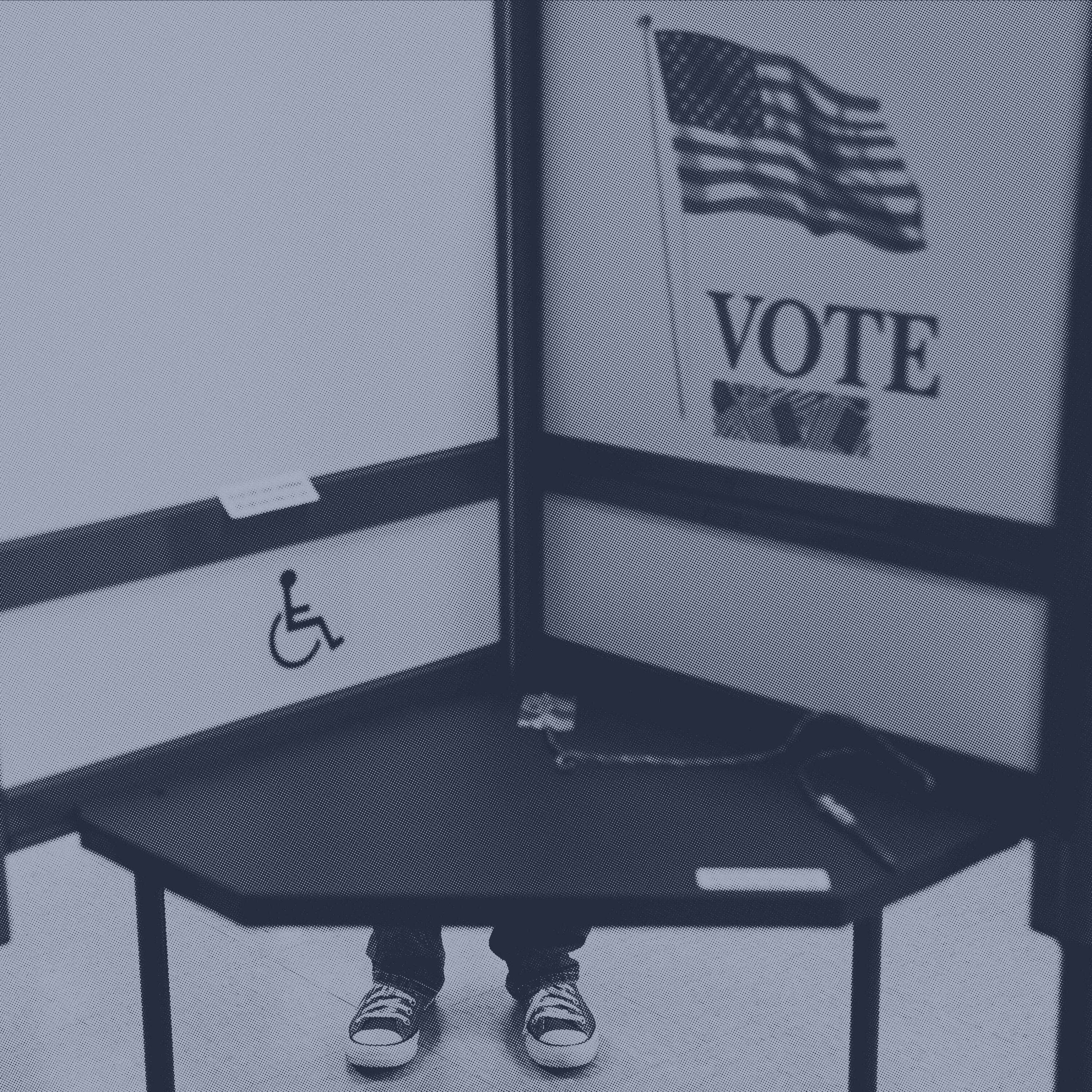
This week on Sources and Methods Defense Secretary Pete Hegseth delivers a state of the force address. We are no longer the woke department or the weak department. What we're hearing from current and former military leaders about Hegseth's message. If anything, the Pentagon is in disarray. Plus, more of the week's big national security news on Sources and Methods for MenPR. The midterm elections are underway. More than half a million general election votes have already been cast. But leading up to voting, there's been some confusion and a fair bit of concern about things like mail-in voting and possible interference from the Trump administration. So let's get into it. It's the NPR Politics Podcast. I'm Ash Lopez. I cover politics. I'm Miles Parks. I cover voting. I'm Jude Jaffee Block. I cover the intersection of government and personal data. All right, Miles. I want to start with how folks are feeling. Obviously, like mail-in ballots have been out in the world early in-person voting is beginning.
Let's start with just a vibe check. How are voters feeling about this election? I mean, the vibes aren't great, Ashley. I'm not going to lie to you. I think that is kind of the overwhelming thing I've been hearing from election officials. Is that in a lot of cases, the rules look very similar to the 2024 election or the 2022 election. But yet, voters are a lot more confused than they were in those elections. In some cases, they're even more scared or more concerned. There's been a lot of polling data that's come out that back this up, this anecdata that I'm kind of mentioning from election officials who hear from these voters. But there's been polling data that backs this up as well. There was a recent survey from UC San Diego that asked about a bunch of different aspects of election confidence. And the key finding was that fewer than 50% of Americans think that the midterm elections will be free in fair elections. So that's initially like a top line kind of a shocking number when you think about it that the majority of people are really concerned that these will be fair elections. I should say when you dig into some of these numbers, the majority of people do trust,
and basically every poll, trust their local and state election official, to run a fair election. I think people are just looking at all of the different headlines that come out seemingly every day about a new change that they don't understand or a new effort from the Trump administration to investigate voters. And they're coming away from that a little bit confused on how to read it. And they just kind of look at the entire portrait of America and they say they're not sure that the entire election will be fair. And then the last thing I'll say is that you can also zoom in on specific concerns. In that same UC San Diego poll, for instance, 40% of people said they were concerned that ICE immigration enforcement would be at polling places in their area. And so that's a very specific concern. One that we have no evidence to support the idea that 40% of polling places in the country will have ICE. And yet people are clearly getting that from somewhere. Yeah. And to be clear, like it is illegal to have armed federal officers at polling locations, but there are folks who are filing lawsuits trying to get ahead of this just in case.
Dude, can you talk to us about that? Yeah. Well, and this came out of the fact that there have been these mixed signals sent by federal officials, both at DHS and FBI, refusing to rule out whether there will be federal officers making suggestions. And then at other times denying. So it's been a very confusing communications landscape on this issue. And so we've seen at this point that there's actually at least three of these federal lawsuits so far, basically trying to get courts to block this from happening or put out orders that would make clear that this shouldn't be happening. One of the suits that's brought by civil rights groups and unions mentions the 1965 Voting Rights Act, which bars people from intimidating voters. And they're making the allegation that the rhetoric around the possibility of ICE having a presence at polling locations is a form of intimidation. Yeah, and I feel like you can almost see that there are two separate issues at play whenever we talk about any of these issues when it comes to elections. There's the issue of what is actually going to be happening.
Right. And in this case, is ICE actually going to be at the polling place? But what I thought was really interesting about one of these lawsuits is it really focuses on the rhetoric as a whole separate issue that the rhetoric in of itself can dampen potentially turnout that are people are already scared. We see this in the polling data. And so I do think it's interesting. All of these issues have two separate parts, the actual question of what's going to happen and then how people are perceiving it. Yeah. Well, I do want to talk about the courts more specifically my favorite court to talk about the Supreme Court. They have been playing a big role in elections and voting laws leading up to these midterm elections. Can you guys walk us through what they've done? Sure. I mean, the biggest headline is that the Supreme Court blocked the Trump administration's. Effort to police mail voting that there was, you know, President Trump released an executive order earlier this year that sought to put pretty huge changes on the mail voting process sought to give. The US Postal Service, for instance, new abilities to decide who to deliver mail ballots to also added new regulations for how those mail ballots should be set up.
All of that has been blocked by the Supreme Court. So again, this goes back to the point I made a second ago where, okay, this effort by the Trump administration has been completely blocked. Mail voting rules are the same as they were previously, but that does not mean that people are feeling warm and fuzzy about using the mail to vote at this point. You know, another data point that we found in our MPR PBS News Maris poll recently was a 13 percentage point drop in voters who expect mail ballots to be delivered on time over just the past two years. And so, you know, we've seen the court step in and block this rule by the Trump administration and yet people are still showing real concern over how USPS is going to work this cycle. Yeah, and I should mention that USPS is a financial supporter of MPR. Jude, there was also a Supreme Court decision this Friday, which could potentially affect elections, maybe not this cycle, but the next cycle. The court revived the save system that had been blocked by a judge prior. Can you tell us about all that?
Yeah, so I mean, the save system, it's this department of Homeland Security data system. It was created 40 years ago, so state and federal agencies could look up non-citizens immigration status to find out if they qualified for public benefits. What does this have to do with voting? Well, last year the Trump administration completely overhauled save really changed what this program could do. They linked save for the first time to social security data, which meant it could look up citizenship data for all Americans, not just foreign-born Americans. And it could do bulk queries. So the Trump administration was encouraging states starting last year to upload their entire voter roles to save to check for non-citizens and deceased voters. And several states took them up on this, but a federal judge in DC back in June had found that the save system had violated multiple federal laws, privacy laws, and also that DHS had overstepped by taking this step.
The case is still being litigated. The government appealed that, but they were asking the Supreme Court, hey, in the meantime, we should be able to use save before this upcoming election while the appeals process goes through. And the Supreme Court said, yes, this program can be used in this period up till the election. Yeah, and like privacy questions aside, I think you've also reported that the system had flagged some actual US citizens, right? Like this isn't a perfect system. Yeah, there are definitely some issues with save that haven't been worked through. So it can't verify everyone who's a citizen and flags some citizens as potential non-citizens. Just yesterday, there were new results that came out of Maricopa County in Arizona, the recorder there used save on the Maricopa County voter list and save flag 60 people as non-citizens who'd previously voted in previous elections.
But when county prosecutors dug into the data, they found that only eight of the 60 actually were non-citizens, the others were citizens. And the eight most had been registered to vote in error when they got their drivers license. I mean, that's been a common story. Juden I have been reporting on the safe system for well over a year now. And every time a state runs their data through save, this is kind of a common story that basically the system spits out a number of non-citizens that are found on these voter rolls. Usually the number is in the hundreds or in the thousands. And then once investigators look into that, it seems like many of those are found to be false positives. And so I think there's kind of two parts this is one that save is not perfect. But the second part of the the save system that I feel like hasn't been discussed all that much is the fact that this is a tool that was completely overhauled by the Trump administration to try to root out this idea of mass non-citizen voting in American elections. And it just hasn't been found every single state.
And Republican states overall that have used save much more than Democratic states at this point, the new save I should say. But they haven't been able to find anything close to the level of non-citizen voting that President Trump has promised. All right. Well, I wanted to get into more about how this could potentially impact voters. But let's take a quick break first more in a moment. We'll be back soon for the following announcements and messages from our sponsors. This week on Shorewave, the internet is obsessed with inflammation. And yeah, it is true. Inflammation is at the heart of nearly every disease in the body. But it's also the body's natural response to danger. So who really needs to be worried about it? Find out on Shorewave, the science podcast from NPR. This is Tony Mosley, co-host of Fresh Air. I spoke with Palestinian activist Makmoud Khalil about the Columbia protests and his 2025 arrest. While an iced attention, he missed the birth of his son and had to listen to his wife give birth over the phone.
I can never forgive those who stripped that moment from me. Listen on the NPR app or wherever you get fresh air. Support for NPR and the following message comes from the Robert Wood Johnson Foundation. RWJF is a national philanthropy working toward a future where health is no longer a privilege, but a right. Learn more at rwjf.org. Welcome back. I want to pick up the save system again. States can use this tool again, but I am curious how could that impact the midterms? Because there are rules about what states and election officials can do this close to an election, right? Yeah, that's a really great point. And it's really central to this whole conversation because there is a law that says that you can't do systematic voter purges in the 90 days before a federal election. The Supreme Court noted that law in their recent decision, allowing save to be used, what the case is still being litigated.
They said save could be used for individual voter investigations and removals. Yeah, and I mean, I should just note if we're talking about this sort of blanket ban on systematic removals in that 90 day window, there's a significant portion of the Republican party that disagrees with that premise. And really has been fighting in a lot of different ways against the law behind it, the NVRA, the National Voter Registration Act, which passed in the early 90s. And so, you know, I think what will be interesting now is the different ways that the Trump administration or potentially Republican states could use now that they can access save again, could potentially use that to push the boundaries on how they can do removals in this period. And the Supreme Court is actually going to look at that exact issue with the 90 day rule, like what exactly can be done in the 90 days that counts as systematic. And that case is going to be heard after the election. But this election is going to be interesting to watch for that.
We did see in 2024 that Virginia was using save in this period before the election was taking voters off. And the Supreme Court did allow that to go forward, which had raised a lot of questions. In Virginia, it was an interesting case because they do have same day registration. So people who were removed, who were eligible voters, did have an opportunity to cast ballots still. So it'll be interesting to watch whether states try to use this opportunity with save to push the boundaries. There's also these efforts in some states from state officials to prosecute people that they suspect of illegal voting, a non-citizen voting. And as it gets closer, I mean, we've seen a couple of examples in Texas and in Florida. I do wonder how all this plays into the sort of feelings around this election. Miles? Yeah, I mean, it's really interesting because we are starting to see it tick up in terms of charges being announced against non-citizens for voting.
And there's also been some reporting, you know, and this is pretty widely known that the Trump administration has really prioritized the idea of prosecuting non-citizen voting. At the Department of Justice. And so we're starting to see the impact of some of that with new charges for a handful of people there, a handful of people here. What's interesting though is that doesn't really change the actual overall narrative, which has always been that a few non-citizens vote in every election. But it's never been shown to like dramatically change outcomes, right? But what I think we're going to start seeing if we see this continue in terms of charges being announced on a daily or semi-daily basis somewhere in the country, it goes back to the initial point of like how scared are people right now voting? And people who are U.S. citizens, there was another finding in that UC San Diego poll that found that non-white voters were significantly more likely than white voters to say that they worried voting this midterms would put them at risk of being questioned by federal officials,
even if they are U.S. citizens. And so I think that's what I think about every time I see a press conference announcing charges against a new person for illegal voting is there's going to be some portion of the population that just decides, it seems like law enforcement is very interested in this right now. I don't even think it's worth it, even if I am a U.S. citizen, to even entangle myself potentially with the government. The Department of Homeland Security did say in a statement that people who are here legally and are not breaking other laws have nothing to fear. But at the same time we have seen an immigration enforcement operations that there are times that U.S. citizens have been improperly detained. And so I think that's helped to fuel the perception among people that they're not sure what to expect. Well, perception is important, right? And you started getting at this a little bit, miles, but like if people are nervous, that could sort of bring down turnout numbers. And that has been a fear from voting rights advocates for a while. I'm curious how you think this could all play out.
I think it's really unclear at this point, because yes, I mean it's the obvious takeaway from any all the different polling numbers that find people are really freaked out right now would be that like they're going to be less likely to vote if they're freaked out. But I think what's interesting is that the political science on this is actually pretty undecided on whether that is the impact because in a lot of cases what you'll see is community groups actually and political parties mobilize on the idea of people don't want you to vote or there are efforts to stop you that should motivate you even more. And so in some cases you will see actually turnout increase as a result of fears. And so that doesn't necessarily mean it's a good thing to have people kind of questioning whether they're going to be disenfranchised or whether they're going to be put at risk of voting. But I do think it makes it a little less simple to just say this is going to be a low turnout election because people are so scared. Yeah. Midterm elections are generally lower turnout than presidential. In fact, like the highest recorded midterm election ever is only around 50% turnout.
And so it would even be possible I think for this to be a record breaking turnout number even with all of these fears. I just think it's a it's kind of an interesting thing to wait through. Yeah. Well, before we go, I do want to dig into very, very quickly on some other piece of voting news that I have been watching with a lot of interest because it's been sort of it's been all over the place. I want to talk about Missouri's congressional maps. What is the latest thing we know that has happened? It's finally over. Yeah. Actually, the the long saga has ended. It's been around. And we talked about this on the pot a couple of weeks ago and then there was another development. Basically, the Supreme Court has now ruled three different times on whether Missouri would use the gerrymander of 2025. That was passed by Republicans at President Trump's request or whether they would be forced to use the previous Congress. It's going back and forth in state court and federal court. But the long and short of it is that this has finally decided by the Supreme Court that the gerrymander will not take effect.
This election cycle and that voters will be using the 2022 version of the Missouri congressional map. Yeah. And I mean, there's basically two different takeaways here. One is just for the voters of Missouri. There's going to be more than a million voters who voted in one district or who were eligible to vote in one district in the primary. Who have now been redistricted into a different district for the general election. That as a concept is pretty unprecedented in modern history. And then there's the political takeaway, right? That basically what this means is one less completely safe for Republican seat in Congress, which is big for Republicans who specifically did these redraws across the country to try to make it less likely they would lose the House. So there's that one seat, a manual cleaver seat in Missouri that seems to be safe. There's also a second seat that was going to be impacted by this gerrymander. Missouri's second district, which is considered potentially flippable. Okay, that's all for today. Before we go, we want to hear from you. We're interested in your politics questions about the midterms and beyond.
We're taking questions about big picture ideas and not so much like the horse race or specific candidates. If you have a question for us, record a voice memo with your name and where you're calling from and send it to NPR politics at NPR.org. We may use it in an upcoming episode. I'm Ashley Lopez. I cover politics. I'm Miles Parks. I cover voting. I'm Chiu Jaffee Black. I cover the intersection of government and personal data. And thank you for listening to the NPR Politics podcast. Stay tuned for the following announcements and messages from our sponsors. Support for NPR and the following message come from Washington Wise. Decisions made in Washington can affect your portfolio every day. Washington Wise from Charles Schwab is an original podcast that unpacks the stories making news in Washington. Listen at Schwab.com slash Washington Wise.
This message comes from NetSuite. AI is changing the way businesses get work done. The questions they ask, the decisions they make, and the routine tasks they can hand off. NetSuite understands. So that's why they put together a free expert guide you need to grab today. Aligning for the agentic era. How AI is changing every day work. Download to see exactly how AI is reshaping work across every part of your organization. And how to make sure you come out ahead. Get your free guide at netsuite.com slash story.
More episodes
More from The NPR Politics Podcast

From the pulpit to the political arena
The NPR Politics Podcast

What's on the Supreme Court docket this term?
The NPR Politics Podcast

A trip to one of the last toss-up districts
The NPR Politics Podcast

What's next for the Freedom Caucus?
The NPR Politics Podcast