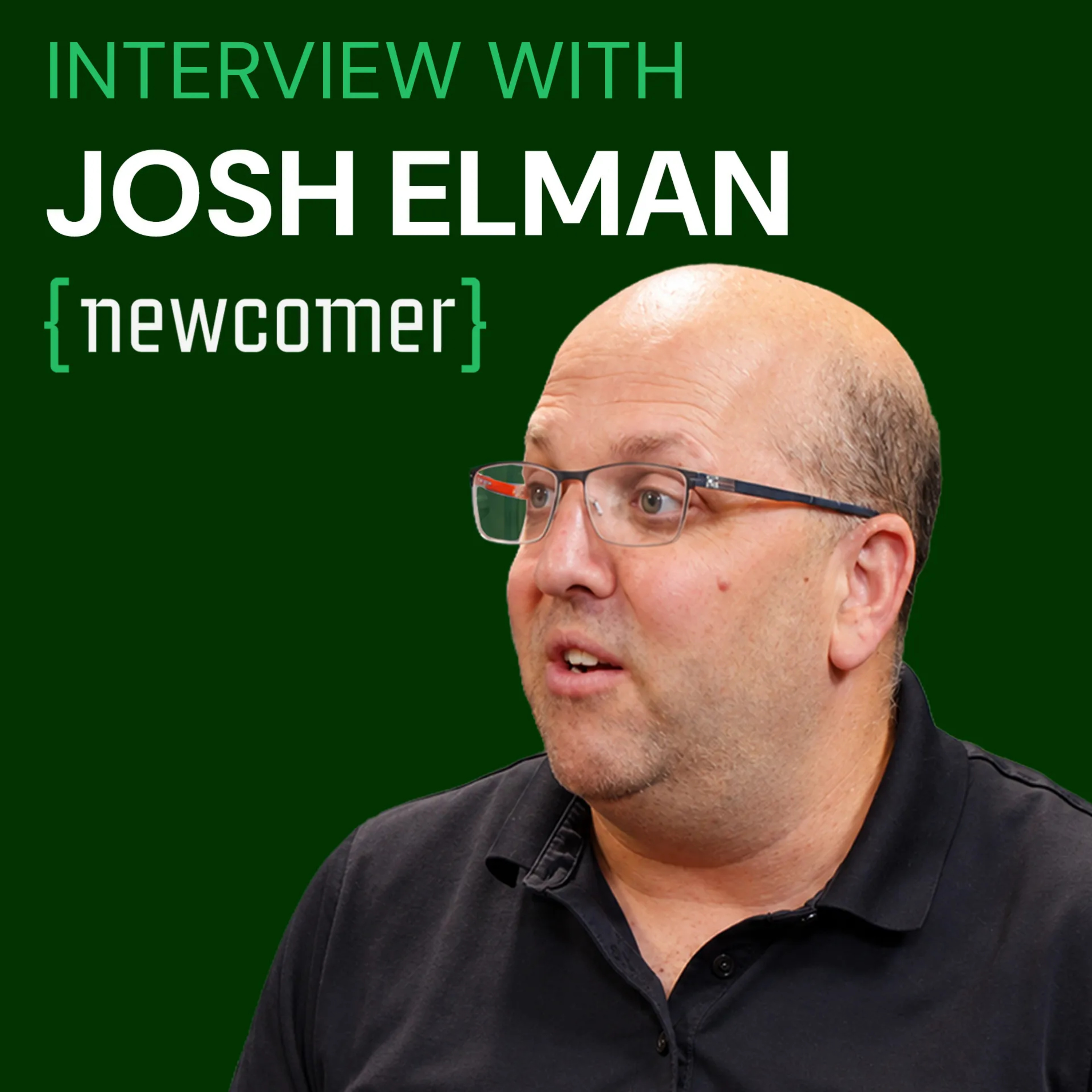
Josh Elman on Apple, AI Agents & Why Startups Can Still Win
Get every episode summarized
Each time The Newcomer Podcast publishes, we email you a written briefing from the transcript — the topics, who appeared, and any specific claims, with the ad reads skipped.
Email me new episodesFree for 3 shows. No card needed.
About this episode
“Are we about to enter a world where everything is recorded and we have a transcript of everything?”From the transcript
Why did Josh Elman leave Apple, and where can AI startups still win against OpenAI? The former Siri and Apple Intelligence team member explains why he’s betting on a new wave of consumer companies.
Josh joins Eric Newcomer to discuss his move to Andreessen Horowitz, what held Siri back, and how Apple can rebuild users’ trust. He shares why OpenClaw changed his thinking about startups and why founders don’t need to build their own AI models to create valuable products.
They also explore personal AI agents, the future of shopping and travel, lessons from Musical.ly and TikTok, AI-generated entertainment, and the opportunities for new AI devices.
In this episode, we discuss working on Siri and Apple Intelligence, why OpenAI and Anthropic won’t be the only AI winners, how OpenClaw helped inspire Josh’s return to venture capital, what personal AI agents could change about everyday life, TikTok, microdramas, and the next consumer platforms, and how to build products people trust and keep using.
Subscribe to Newcomer for conversations with the founders, investors, and technology leaders shaping Silicon Valley.
Get every episode summarized
Each time The Newcomer Podcast publishes, we email you a written briefing from the transcript — the topics, who appeared, and any specific claims, with the ad reads skipped.
Email me new episodesFree for 3 shows. No card needed.
Hosts & guests

Transcript ready
1,296 searchable segments. Every word is indexed and playable.
Full transcript
The Newcomer Podcast — Josh Elman on Apple, AI Agents & Why Startups Can Still Win. Machine-transcribed; use the interactive transcript above to jump the player to any line.
Are we about to enter a world where everything is recorded and we have a transcript of everything? You know, I think we are definitely in a world of building new norms, but these are all norms and trusts that have to get built out and a lot of it's not software, it's humans. Do you think it'll be sort of adversarial where it's like my agent yours and like my spuing lies and yours is like trying to fair it them out? I mean, I tend to think the truth and authenticity win in the end. It doesn't mean we want a lot of gamesmanship and the middle is we're figuring these things out. What's your view on how much this is, you know, open a eyes to lose? I look at this not as open AI and anthropics, game to lose or win. It's they have to do an incredible job continuing to build their businesses, but there's so much more that we're all going to do. Josh Alman, welcome to the newcomer podcast. Eric, thanks so much for having me. Man, we go way back. You were a venture capitalist at Greylock, invested in Discord and Musically, which became TikTok, and then I had a friend who worked at one of your companies, operator, which was an early chatbot company. You were also an investor in sort of the zeitgeist,
you consume your companies at the time and still come value world, house party in Mircad if people remember those. Then you sort of, you know, you go to Robin Hood, you go to Apple, which Apple, you're not really like staying in touch as well. I think the reporters are like, there's a level of safety. And then now you're back at Andrews and Horowitz. So it feels like, oh, I keep saying, welcome back to my world. Like you've come back online and very excited about consumer, which are always fun things to talk about. So great to have you on the podcast. No, thanks so much. It's great for being here. And my whole career has been about trying to make products that people use and bring into their lives. And whether that was in my early career, building products, or becoming a VC, but about eight years ago, I was like, man, the best way I want to go make consumer products is just to go work on them again. And so I went and did that. And I mean, Apple was an incredible place to work, but now I see this edge that consumer products can really come back. And we can build these little startups that are going into these next wave of great companies. And I just couldn't resist the opportunity to go and be part
of this incredible new wave. Yeah. And I might get into the sort of why each decision. But I wanted to just sort of get into the meat of one of the core sort of categories you saw that is now becoming reality, which is just sort of the chatbot. Like what appealed to you about sort of chat-based companies? I don't know how many years ago was it? Like 2014, 2015. Right. Exactly. More than a decade. We just thought, yeah, what was appealing then? Do you think they could have succeeded or really required LM or how would you look back at that period now with the technology that we have? You know, when I think about chatbots, I go almost all the way back to like Eliza, which is like this very old text-based system that you could just talk to and it could figure out with very simple, you know, regular expressions to kind of spit back some text. But it was always this sense of we're humans. We speak in language. How can we naturally use our language to communicate with our product and have it respond to us in a way we understand and then can go back and forth and be really interactive? And we saw this first wave of AI or the beginnings of sort of what could be these chatbots
that were happening in 2014, 2015 with the idea that maybe you could use a little bit of technology and also people on the other side, but simulate a great experience where everything could be done over chat. If you think back to like 2014, 2015, we had moved from a world where SMS was kind of a thing for a long time, but it was like the only way we started communicating. We were so actively communicating. It was like, Messenger was huge, I message was huge, WhatsApp was getting very, very big. And there was this intuition that obviously, we have to meet the customer where they are. If they're odd SMS, try to sort of give them sort of shopping or other experience there. And so Messenger had come out with M that was the idea at Facebook that you could just type something and they had a lot of people behind the scenes that could answer things or AI that was doing it with operator when I met Robin Chan and Garrett Camp that founded that or Peter worked. It was this great idea that we should make every business textible. And the idea was, could we do two things? One is put a business, a phone in the hands of businesses so they would actually have people that could answer your questions
and they could be then build an AI and routing layer on top of it that could actually solve some questions, do some things. We actually ended up even building sort of a human force that could get the questions aggregated, figure out what could be done through software, what needed to be done, what was a human doing the research for you to be able to do it. And it was all just too early. The what the AI could actually do at the time was very, very hard to automate. It really couldn't do much at all. And so we ended up having to more have humans on the other side to be able to do it. And that just completely tips over your economics, what the actual product is, what the network is. And so it ended up not being something that consumers would stick to and pay for. We found this thing with operator, the really fascinating thing, people loved going back and forth with operator to find a really hard to find item. And somebody in the operator team or with the help of their tools would actually be able to go find that item and then they would send the link back to the person. They would say great, will you pay an extra percentage points or whatever to actually help make this purchase? And they'd be like, no. I found it, I'm giving you the answer. I'll go find the cheapest price online.
And so as this early days of figuring out the products, the modality for users and what we could actually convince people that it could actually be a sustainable business. The AI skeptics worry that there's still people behind the scenes answering questions. You have a sense of, obviously there are a number of these apps that are getting started but sort of personal agent, chat-based apps. Do you think there are still people filling in the gaps or they're mostly true, fully LLM answers at this point? I mean, I think the products that we're seeing today are really powered by LLMs, powered even by computer use agents that are actually navigating the web and pulling up web pages and doing things for you. And I think where the technology is now there that it can actually do most of this for you. I think the real question is at what point do you still want an escape hatch to a human? Something goes wrong. When things go right, it's amazing when this happens and it just works. But when things go wrong, are the computers truly able to troubleshoot or do we still need people to help us troubleshoot? And I think that's gonna be one of the very interesting challenges
because at scale, things that can go wrong a little bit can't, percentage points can really add up. And so I do think that that's gonna be a pattern we'll see and learn over time. Yeah, in some ways, the LLMs are more powerful than the humans you've designated now. It's like, oh, they can use your computer in a way that would have been hard to hand over to some customer service agent. On the other hand, yeah, with that power, they can buy plain tickets that you can't refund and burn money on accident. I guess clearly I'm referencing instinct, which is sort of a buzzy Silicon Valley company. Right now, you are invested in talent, which is an enterprise personal agent. What, give us, I guess, the high level read on the personal agent space as you see right now. I mean, this is one of those things when I, part of what actually got me really excited to come back to Venture was when I first saw OpenClaw. And what I saw with OpenClaw was one person who was in, you know, almost, you know, in his living room with some of the story, like wrote this incredible piece of software
that wrapped the models, but did a lot of things for users and on top of what the models can do. And it saved context and it identified skills and it found new things. And it created this paradigm and we could just text it. And you were like, whoa, I'm actually interacting, not with a model, like Chatsy B.T. and other things that taught us what interacting with a model was like. This taught us what interacting with an actual agent that was solving problems and getting things done for you was like. And so now we're seeing this incredible consumerization bringing this both to our work like town, bringing this to people like Muse from Facebook and Instinct that it makes it really easy just to almost send a quick message and have it go take care of something. We're just nascently learning what these things can mean for their lives. And I think we're gonna see every chatbot begin to not just give you answers and have a good conversation but be able to complete tasks for you too. I think it's really important. The real question that I have is, as we're all using these things and getting things done, this tips a lot of things on the marketplace side. We've seen these examples already,
booking reservations, destroying residen. Well, but here's this challenge, which is let's say there's one reservation slot that opens up and five of us want it for that time. Who makes the decision is it first in? Whose agent is first? If we're all using Facebook's Muse or Meta's Muse, which person does it decide is gonna actually get that slot? And if there's five different agents from five different companies and then 10 of us are running it on our own home computers, like is it all just another first in? How is Rezzy gonna manage that? How do limited space get managed? So we're gonna have massive implications. There's a word that I think resolves pricing, you know? Turns out, it's like, oh, you have a lot of people who want the same thing. And right now we're just giving it based on sort of who comes first and they can treat it irresponsibly. Yeah, and so, you know, I mean, obviously a lot of people just propose to be auctions and reverse auctions. I mean, those are always fun, but then that's just the highest bidder. Sometimes you want it to be people who really have reason to be there, you know?
If it's a very special to get you, if you want this restaurant, because it was where you got engaged and you're celebrating your anniversary, a way to actually be able to express something like that and have that be part of the equation too and have that work on the other side. So I think there's so many different mechanics as we move to this world of personal agents where we have, you know, we could always do this ourselves, but I think when you automate it, it can happen at hyper scale. I'm super interested in that intuition. Particularly, you know, I don't know, the journalist and me that likes sort of an honest layer. Like right now with a restaurant, I could claim that it's my anniversary or so, and it might not, but with agents, with potential layers in between, there might be some sort of validator where it's like, yeah, I sort of work for them, but I'm also sort of a neutral layer and I've seen the pictures and this is their anniversary. Like do you think it'll be sort of adversarial where it's like my agent yours and like my spewing lies and yours is like trying to fair them out or there is this middle layer that's trying to adjudicate whether it was my anniversary or not? I tend to think the truth and authenticity win in the end
and in most platforms that actually works, doesn't mean we want to have a lot of gamesmanship and the middle is we're figuring these things out, but I tend to think that that authenticity really works. I mean Airbnb is such a great example. It's an Andreessen Horowitz company, that truly the authenticity makes it able for you to trust somebody in your home, trust that you're using somebody else's home in such an incredible way, and that authenticity will come to all of these things and the agents can very much vouch for that and represent that and rogue agents, ultimately if they are like very good at faking things and using AI to simulate anniversary photos or whatever, those will eventually get figured out, but we might have some mess along the way. Now I think I think about this a lot with ticketing too and Spotify's doing some really cool things where they are helping, you know, tickets, you know, deliver tickets to super fans. You know, if you listen to somebody the most on Spotify, you deserve at some point to be one of the people who gets good access to their tickets for a show versus who can, you know, hit the bots. Man, with first and foremost. Taylor Swift, my wife and I will be like 1% 2% Spotify Taylor Swift listeners.
The gamesmanship that would occur, you already have Swift fans who just, you know, play or music just to support her and drive up the bill or whatever for Spotify. If you actually got rewarded off that, it would be a disaster. But it's a fun situation certainly for less prominent artists. So, can I throw that one? Yeah, and I think, and so I think this idea of authenticity, connection more than just money is how these things will actually play out, but there's so much we have to figure out. And are there companies that represent sort of layers to this that you're optimistic about or? You know, I think it's so early that we're just figuring out, you know, I think the core platforms already like Rezzi and things like that. We'll actually have a lot of opportunity to continue to grow what they do as they become not just sort of a place for booking, but the trusted representative of the restaurants. And, you know, for example, they're very much on the restaurant side. And so, restaurants can rely on them to help them stay full, stay active, make sure to make sure that, you know, the right people are coming. That's a real power that they can have.
And I think we'll see more marketplaces develop that bring in those capabilities over time and then connect very well into agents. You know, this agent to agent network, whether it's connecting people, connecting people to businesses, connecting agents to other agents, maybe even, you know, having money that flows from agent to agent based on the agent's capabilities. There's so much opportunity here and we're just beginning to imagine and sort of tangibly see what that might be. Opening eye and probably on Throbbac 2 don't want to give up this space, say I imagine. You know, Meta is a model company that moves very quickly to it. What's your view on how much this is, you know, opening eyes to lose basically versus something that's an opportunity for startups? I mean, I think we're at a moment where we're getting to redefine so much of how the internet works that this is a massive industry change, economy change, not just a single point for anyone to win. You know, when we look at the, you know, original version of the internet,
there are so many winners, Google, Amazon, you know, Facebook, Meta, you know, Twitter. I mean, so many things got very, very large. When we look at the mobile economy, Uber and Instacard and DoorDash and again, so many companies grew. So I look at this not as opening eye and anthropics game to lose or win. It's they have to do an incredible job continuing to build their businesses. They are the model foundations that so many companies are built on. Many are also now using open source. But that is a platform that they move forward. And the chat to BT is obviously an incredible product used by I think it's like a billion people per week. But there's so much more that we're all going to do. And so there's room for them to be great and winners and there's room for startups to find their wedge and be winners and there's room for companies like Facebook and Meta and Google to continue to move into that world and be very, very relevant to. Are you bullish on personal shopping agents specifically? I mean, coming out of operator. Yeah. I think people debate, it's like,
maybe that's one of the things humans want to do at the end of the day. Everything else has been taken from me. But the thing I want to do is fantasize about my next vacation or whatever. On the other hand, it's a lot of money. It's something that it's nice to, there were travel agents. I don't know. It's not one or the other. But do you have a general sense of how bullish are you on these personal shopping agents? When I think about this category of shopping and travel, it's a combination of the joy is not just in the activity or the purchase, but in the exploration, in the discovery, in the seeing lots of different options, sometimes physically getting to, you know, for clothing, getting to try it on, for travel, getting to explore different places where you might want to go, making all of those trade-offs and starting to figure out which activities you'd want to do. Like the joy is in the entire journey of planning or exploring or shopping. So I very much believe that we're going to have agentic experiences that will help us do these things,
faster and better communicate natural language, get to much more specific things. You know, I would like to stay at a place that has a view of the water and has a kitchen and has all these things. And right now, a lot of the search engines have come back. You have to do so much sifting to get options that even meet your criteria, let alone then picking which one really feels right to you. And if you can express these things better in natural language and then have something actually, you know, uses AI to look at the results and give you back the things that match it, now you have a great option set to pull from. And then you might say, well, I didn't this a little bit, show me some things I wasn't thinking of. And the AI can do a great job giving you more options you hadn't considered. So I think the best shopping, travel type experiences are going to be full of this planning and discovery and very visual and full of, you know, videos or demos and, you know, put myself, you know, and clothing, put myself into this and use AI to imagine myself wearing it and what the fit will be like. And there's so much in that journey.
And you could imagine it like a good, you know, so much of what investors are thinking about right now is service industries that used to be inaccessible now they can access. And so you think of like a great real estate agent or a travel agent, they're like texting you. It's like, here's a cool house, you know, it's not necessarily, it can be spontaneous, it can be where you are and it's sort of a joyful moment that doesn't necessarily say you need to transact right now. And so these agents are going to have all this possibility to make it a more pleasant and sort of ongoing experience. That's right. And it really becomes this constant journey of discovery and learning new things and, you know, we're still humans. We still make our own decisions for our lives. It's just great to have tools that will help us discover new things, get them done faster. And if I know I have a task I just need taking care of, it's great when the agent can do it for me. But if I don't know what I want to get done, the way that AI and the chatbot tools help me explore the space and brainstorm ideas and think about the parameters I should care about is such a change
that you used to only be able to get with the human. Now you can get much further so that when you go to have the human interactions, it's even more powerful. So there's another huge trend. I mean, probably more, the tip more people, which is just TikTok. Obviously you're an investor and musically, which gets acquired by TikTok and helps become the product we know and love today. I mean, it's sort of a lean back experience in some way. So it doesn't, I guess, call for as many VC tweets, but the time spent on it is enormous. I think another dynamic is just, it is, I mean, between Meta and TikTok, they've sort of like gobbled up a lot of the opportunity. And YouTube was short. Right, and YouTube, definitely. But there aren't like new startups to bet on and therefore less sort of energy from the investor class to talk about. I don't know, are they entrenched? Like where is the opportunity for startups? And like, where is this sort of like short video trend headed? I mean, if we had talked in 2015 when we invested musically,
I think we did. You know, everybody was like, well YouTube, YouTube's already so big on the internet. I'm not a fan of failed writer. I'm not a failed. You know, dub smash had come and everybody was making fun videos, but it wasn't sticky. Musically just look like teenagers making little music videos in their bedrooms dancing to a song. And, you know, I have to give real credit to the team and especially Alex, who's one of the co-founders, who painted a vision even then of what TikTok could become, which is this incredible feat of things that were personalized and interesting to you and that as you swipe through one at a time, you were able to kind of be immersed in that moment and get to know it and that there were really going to be creators that have become, you know, these creators and these identities that have become these real rich relationships that you form. We're seeing some of that on YouTube as well, but with musically, he was like, this short form can really help them share their lives in a way that is even more impactful than what we were seeing everywhere else. And that this ability just to like swipe and watch
and the feed learns about you and really delivers personal things to you. To hit that vision all the way back then and in selling to bite dance, was able to really go into the company and realize it. Now we're at a point where between reels and shorts and TikTok and, you know, Doyan, which is in China and, you know, the same from bite dance as well. This is now a foundational paradigm of what people do to spend time. And it's often like, do I want to sit and lean back and watch a big screen TV or just on my phone, watch a few things and have a good moment. It's been so amazing to that. And yeah, I don't think there's room necessarily for I'm going to be another short video network because I think we're very well served by the products that we have. However, there's things that spin off the short video network that are actually, you know, incredible new businesses themselves. I'm not sure how much you've been following micro dramas. Micro dramas, this isn't the sort of, I saw the AI vegetable thing. That's a different trend. I mean, the AI vegetable thing is a small part of it. But there are companies like real shorts, drama fever, drama box that are creating short stories
that are maybe 20, 30, 60 minutes in length, chunked into multiple episodes. And you might on TikTok or on Instagram, real see the first episode or two or the first trailer for this wonderful story. Some of them are like soap operas. Some of them are a little fantasy. Things some of them are mystery and horror. But they kind of get you in. And instead of just kind of, again, flipping one show to the next that sort of becomes this feed of constant attention switching, this is watching a little bit longer. So it might not quite be a eight hour Netflix series that's costing hundreds of millions to produce. But this is a thing that is cheaper to produce but it still requires great storytelling. And are they mostly AI generated? You know, right now, these got big even before the AI wave. So a lot of them were actually just filming people and doing things a little bit on the cheap but were creating real shows that made sense or using animation. We're seeing a lot more of them now use AI in order to do this. And to create these videos, there's like one called Shortacle
that I think is primarily AI generated that is their great stories. Like you go to watch the stories and at least me, I always get hooked and I'm enjoying. You know, just what I'm watching. And again, it's their short, they're easily to consume but you kind of go on the whole narrative arc. And I think with AI, we're democratizing creation of these so much that we're gonna see massive new platforms for storytellers. Not just for a short video that's a little bit gimmicky but a real story. And so we'll still have our TikToks and our YouTube's to kind of watch the kind of clips and the things that we watch there. But when we wanna go through something, that's a little bit more story mode. Maybe instead of Netflix and Hulu, we'll still go watch Game of Thrones on HBO and we'll still go watch, you know, as Squid Game on Netflix. But when you just wanna watch something that's kind of in your zone, in your area and just be able to watch it on your phone and just flip through it, these micro drama platforms, I think you're gonna become so much bigger. They need to be able to sort of build a standalone app
to be sort of venture worthy or do you think a studio model, like if they were just on TikTok, could they? So most of these already are standalone apps because what you'll do is on TikTok, you'll see the beginning of the show or the trailer for your hook. You'll be hooked and be like to go finish this, go download this and they actually all monetize mostly through subscriptions. And so, I mean, there's billions of dollars already flowing into this category. If you go dig into like the data or other things, many of them are actually Chinese companies that have kind of figured out the model and looks a little bit like mobile gaming and they crank through these stories. But I think with AI, we're gonna be able to elevate the storytelling, elevate the creativity and really and create platforms that allow anybody with a story they wanna tell, to be able to put it into one of these platforms. And just like TikTok, let anybody be a creator of a short video. This is like anybody who's a storyteller put something out there that can get a larger and larger audience. Are you optimistic about AI generated feature films? The shorter content you can test it more.
You can see, oh, are people responding to it lean into it, build the next segment? Like do you think we'll have movies that are AI generated? I mean, the long term answer is sure. I tend to think we always try to jump to the end game and what's beautiful about startups and the startup ecosystem and the venture ecosystem is that we don't always need to boil the ocean on day one. We build something that meets today and that can deliver a great experience today, but it may not be the biggest thing. I remember the early days of YouTube, one of the best quotes it was told to me was, we're not, you know, I was like, how are you ever gonna compete with like network TV? And I was like, we're not aiming to beat the best hour of network TV. But, you know, if you still wanna watch an incredible, you know, the Gray's Anatomy was a really popular show at the time, Gray's Anatomy, you should still watch Gray's Anatomy. But we're trying to beat the worst hour at TV. Because if we're more interesting to find things on YouTube than your worst hour of TV, you'll start to spend that hour on YouTube instead of on TV. And so I think that's very much true.
Is again, you don't need to beat Netflix and Hulu today, but you need to beat the, I don't really know what to watch. I'm just kind of surfing around. I wish I had a little bit better story, be that better story. Now you start to fill from the bottom and then as you build new franchises, you build stories, as you build characters, it can move all the way up. I'm curious for your reflections on Miracat House Party and then sort of clubhouse is a different phenomenon. To me, I bucket them and sort of like things that were, they're trying to sort of build energy in a sort of an ecosystem and will them to be, people of, you know, some people wonder of instinct has clubhouse vibes and that, you know, VCs are very excited about it. They're obviously, you know, what, like, four square and Twitter and launched it south by, that sort of had this sort of insider community is gonna willing to be in it. What's your reflection? Like, will there be another, like, the venture community, the Silicon Valley community of insider sort of gets excited in that catapult sit or is that passed or what's your reflection on that? I mean, I think there's two different things because I think with things like Miracat
that was so tied to Twitter and clubhouse that definitely started from a vibe of people who were very much in the tech and Twitter ecosystems and able to grow and they were all about bringing people together live. And I think what both of these companies showed is how magical that moment is, how magical that experience is when we're having live, but also how hard it is to scale when you're only live. Most of the products we've talked about TikTok and Instagram and everything else are very much async. And so how do you combine a product that is async and live to be a large platform? What has turned out is that the platforms that are large in async can add live components and have those work rather than a fully live network becoming the next big thing. And I think that's always been the challenge with some of those companies. To separate your other part of your question, I sense you're talking about kind of the Silicon Valley energy of technology and technologists discovering something new and bringing that to the world. And I actually think the magic's back. Like I think with AI, the beginning people who really understood AI were the tinkerers
were the ones who would not just get chat to be teaming like I can type in what I type into Google, ooh that's a little bit better result. But I can type in really complex incantations and start to get really thoughtful, different responses. You know, remember all those prompts that were shared in the early days of people with chat to be team? Imagine that you're a detective and you're trying to solve this problem. Well here's all the evidence I have. Can you please help me figure out what's going on or what are the three steps that I should do next? You know, with Google, if you ever typed that into Google, it would like throw up. And they're, you know, before they really out of their AI mode. And with chat to be team, it would give you a great answer. And the more and more complex prompts and is technologists were figuring that out and then they were figuring out what they could build on top of these APIs, things like OpenClaw were very much a tech phenomenon. We're discovering things again that reminds me of the very earliest days of the tech ecosystem where technologists, you know, builders, tinkerers, get this first. And now we're at this incredible wave. Part of why I came back to VC is turning from that moment to how do we consumerize this?
How do we truly make it available to most people? And I look at instinct as one of the coolest phenomenon of a startup that is like taking a bunch of this complex technology. As one of the first that really was like, how do I make it super easy? I'll give you folks some credit. They discovered, you know, putting this just through texting, through I message made it so much easier to interact even then going to a complex website and other things. And so we're at this great wave where sure it gets exciting in the tech community, but that's because we've already been tinkering for so long. The rest of the world hasn't been on that journey in the same way. You know, many of them are very heavy users of AI now, chat to BT, other things. There's also a lot of resistance to AI because we're telling such bad narratives about how this could replace all jobs or kill everybody as opposed to enable the next incredible wave of innovation, which I very much believe in. Well, yeah, one of the reasons I'm excited your back is to me and Silicon Valley, you represented like, you were very optimistic. And I feel like my journey as reporter,
it's like, I was more skeptical in the beginning, the information where I really came up was more skeptical than most because, you know, we're in the age of like gadget reporters and all that. And then at some point, you know, while I'm at Bloomberg, Silicon Valley became, or the press and the mood, generally just became sort of oppressively negative. And then by the time I'm launching Newcomer in 2020, I'm like, oh, we should have more optimism. And now we're almost in this world where I'd say the public honestly is the most negative of all. Yeah, I don't know. What, yeah, what do you, I guess to ask directly about the public piece of it? Like, why are people, do you believe that people are so negative about it? I mean, a tech response has been sort of, you know, they're revealed preferences and then, you know, stated preferences. People use TikTok and Instagram all the time, which are algorithmically generated. They like these stories you're talking about, which AI is creating obviously billions of people are using chatbots, but then Americans say
they're very negative on AI. Like, what do you make about that in terms of building the next generation of consumer apps? Yeah, I mean, I think if there's any one thing that I learned from Apple, it's, we have such a responsibility in our industry to be grounded in building technology that benefits humanity. And we have to think about it. And when we think about it from that perspective, we make choices and we focus and we tell our stories about how we try to deliver things to benefit humanity. Whether that's helping our health, I mean, Apple Watch is one of the most incredible health devices that's ever been made and the number of people that has prevented from various, you know, falls or, you know, hard issues or other things, it's, it's extraordinary. But even just the people who rely on their iPhones to get them through their day. And so how do we think about technology from the, the example of benefiting humanity? For some reason, with AI, a lot of the early tech bravado has seemed to be about how this, well, it's gonna be so good, it's gonna eliminate jobs. Well, when I go to anybody outside of the tech industry
and I'm like, eliminate jobs, that is like red alert warning and scary, right? Isn't it, it should be, because that's not the way that we should think about what we're trying to do. It's empower people to do their jobs better. And if there are certain tasks that are less, you know, that are easier to automate, then that helps you move to higher order thinking. And so I think moving from this world where we'll deliver it with proof, we'll deliver it with products that truly benefit people's lives, that's one part. The other part is a lot of the early things people figured out how to do with AI were cheat on homework and create sloppy things that didn't sound like they were human written and just spew them out. And again, if you're gonna put something out, even if you use AI to help you write it, it should stand for you and you should stand behind every word. I certainly use AI to help me write things now and build decks and everything else, but I never put it out if I don't control every single word. And if I decide I like the words that I iterated back and forth with AI, fantastic. And if I don't, I change words here and there
and change sentence phrasing and move paragraphs around. And we just got to a point where people got lazy. And AI should not make you lazy like to cheat on your homework and to spew out something that you didn't take seriously enough, but it should empower you to do better. And I feel like more of that, how we think about it, how we build for it, how we pitch it to people. And then to your point, they'll use it however they want. But there's a start from there. I mean, part of the opportunity, I think, that we see with AI right now is these models are capable of so much that people haven't sort of really defined, built the data around, marketed. And so then people are just shouting AI. And it feels like, you know, sort of like, well, what do you want me to do? And it's like, well, it actually takes time to build the companies and figure out each individual use case, which is some of the exciting opportunity ahead of us, which is, it's almost people yearn for like the storytelling of like, what am I supposed to do with this? And it's too much for like, open AI and anthropic to deliver it all because they just sort of want to be.
It's a swiss army knife. I don't know, figure out what you do with it in some ways. I joke sometimes that giving you a blank open edit field is an incredibly powerful thing, but in fact, sort of the worst thing in the world to use for onboarding and getting to know a product. And we have not built the tools that help the people who really get this, bring other people along on the journey. The product experiences have gotten so simple that you just type in. Now, Google got there. And I'm going to give Google a ton of credit. Over time, people learn to search. And people learn how to search better. And people showed each other. But not every product needs to be Google or certainly not at the beginning when we're doing this. And even if you look at early Google, they used to have a lot more things on their website to teach people. And over time, it got Sparer and Sparer, as people got familiar with it. And I feel like we keep starting there with a lot of these AI products and ask anything, because it can do anything. I don't know what to ask, as opposed to really taking people on a journey. I'd love some reflections from your time at Apple.
On the one hand, it seems like Siri has gotten much better. I'm not like a deep user, but that is, I think, the word. I am an iPhone user. Yeah, getting into voice, but not fully switched over. And then on the other hand, I feel like Apple intelligence has sort of a marketing frame sort of veered from some of what you said, which is, I think, Apple is traditionally good at, what are we doing for you? And who cares what technology we're using for it? It's helpful for you, you should use it. I don't know, what did you learn from your Apple experience? I had such an incredible time getting to work at Apple. Obviously, I was an Apple fanboy, so that was a kid. I edited my high school newspaper on my Macintosh SE. I took a Mac LC2 to college with me. So getting to work at Apple was kind of like living a lifelong dream and getting to go work on Apple and Siri and Apple intelligence. I figured, how do we tell the story of Apple's place
in this AI wave? It was just such a privilege over the last couple of years. And getting to launch Siri AI and kind of this latest version of Apple intelligence, which we announced at WWDC, that happened to be my last week at Apple was kind of going out with that big announcement, was really a dream come true. And now I think it's available for everybody. I'm one of the people recommending update the operating system. Now it's fantastic. Together. To get iOS 27 or Mac OS 27 or iPad OS 27 or the other operating systems, because I think really, you have an incredible work that went into the operating system last year for stability and resilience, but also a ton of work to really make Siri deliver on a lot of the promise that it always did. And I think Siri was never like a chat bot. Siri was always supposed to be an assistant that helps you get things done on your device. Set a calendar appointment, set a reminder, send a text to somebody. But like most of the early things that we were talking about earlier, like Messenger M and other early AI attempts,
you had to basically know the commands to tell it. And if you knew the commands, it worked really well. But if you veered too far in your language or were trying to put things together that didn't quite work or you didn't quite get the statement right, it couldn't deliver on that. And if you asked it questions outside of his domain, it couldn't deliver on that. When Chagy B.T. came out, it obviously showed a whole new paradigm of being able to have the LLM reason over everything, but to reason over everything and then still figure out how to understand all the data on your device, your personal context. And take actions and the exact steps that it needs to do for you was a hard thing even then for the LLM to put together. And so I think the Apple journey was one of like, everybody was like, well, just can't you be chat, TbT and Siri all at once. And it was like, no, it was actually took a lot more time and care and worked to really build it and not just build it to a level that could work sometimes because that was actually not that hard to do. And that was part of when I think some of the initial Siri stuff got announced, things worked and there was a system that could work. But it wasn't at the quality level that Apple needed to be
to bring this really mainstream. And so I think it was really impressive to watch a company not just say, okay, well, that didn't work, shut it down, it was, put your heads down, work harder, figure this out, actually deliver on that promise that you made and now you truly have a Siri that understands information on your device. You can take a number of actions across the apps on your device. You know, I used all the time when somebody texts me their email address, I just say, hold the Siri button and I say, I have that email address to their contact and it just works. You know, when I, how do you teach the user to have confidence again, or the response? I mean, I think this is gonna be a really interesting journey in one that I am probably gonna, or I'm sad to miss out on, but I'm a strongly strong team behind it. How do they go tell those stories again and bring people back to Siri? You know, we, you know, it's called Siri AI to kind of give you the sense that, hey, this is a little bit of a different version of Siri. It's Siri with Apple Intelligence. It actually brings you all this personal context and actions and you can try it again and it's new.
It teaches you a bunch of examples, but I'm sure there's gonna be a huge learning curve and a huge trust curve for people to come back to, but if they do, I think they're gonna have this great experience and then I still think this is a platform, this is an ecosystem. Siri is not gonna be everything to everybody. You'll use chat to be tea for other things or you might use mues or instinct or town for things in your, you know, town on your work life and other personal things because you are still, you know, get to use lots of tools on your device, but you'll have this base level on your device. That's gonna be amazing. Was there some impulse to sort of to AI like as a verb? I mean, I never understood the text summary feature or like that was one that was very visible to me where it's like you'd get a text and Apple AI would say, like, oh, it's like text or short. I don't know. You know, I think one of the really cool things with the operating system is obviously Siri and the assistant is a very important part of it, but there's so many other things you do every day
that AI can help. You know, some of that is sometimes you get 30 notifications and they stack up and actually having a summary that gives you a little bit of a lens and what's in there before you tap and expand can be helpful. You know, text it has to be like 200 characters or more or something before they actually get summarized and if someone sends you a diet tribe, it's sometimes nice to get the quick glance and you can always again tap to expand it. And so I think what Apple did really well with Apple Intelligence was not just was focus on the assistant which took longer than it needed to, but also focus on a supporting cast of other features around the operating system that are just better with AI, whether that's writing tools right in the moment to help you rewrite things, whether that's in the photos app being able to edit your photos or clean them up or expand them now, which just got launched or there's really cool feature around spatial reframing where you can actually tilt the camera a little bit so there's a lot of spatial knowledge that can sort of fill in any gaps even after you took the photo. I've used it to like I left a sign sticking out of my daughter's head and was able to move it around so it didn't look as funny
because otherwise a great picture of her. And so there's so many other things that you want, but it's not AI for the sake of AI. It's AI for the sake of features you always wanted to build that makes life easier and that thing, can fully now that there are these LLM tools we can actually power them. So you've left the device company in the world. You know, there are clearly open AI's working on devices. I think there's startups who are thinking about it. Are you optimistic, I guess if I say optimistic, you're gonna say yes. No, but yes. I don't know, what device category? Do you think we will have new sort of AI devices or do you think existing devices will become imbued with AI powers? Do we earn for a pen or ear pods, whatever we're calling them that are AI native or people have talked about, you know, sort of a portable disk. I don't know, do you have a view on what types of devices lend themselves AI? You know what, I think we are at the dawn
of what's hopefully an incredible explosion of new AI capabilities that are gonna make a lot of these devices a lot more useful. You know, what is really powerful AI? When it senses data and it can get more information in and then we can use that to help compute things and deliver them back to you in a useful way and take the action for you. So a lot of what we're seeing are things that look like more sensors, whether there's always on recording, even the new Apple Watch, can you show that? I know I saw that by that. They're gonna let you sort of just record ambiently. You know, I think it's very much in a privacy safe, very moderated way, but I think that's an incredible feature, but there'll be other devices that will help us do that. There'll be certainly other things that can be on the lookout for us, you know, whether that's eventually coming into smart glasses or things in our ears or things will wear on our shirts. You know, I'm not sure which things will catch. I'm less the perfect creator, but I think the people who are designing these things and building them that have visions, like we can very much, you know, and racing hearts help them amplify those. And this is a moment for new hardware just as much as new software.
And, you know, again, the inputs, you know, it still work to like pull your phone out of your pocket to say something and have it do something, you know, when you're wearing our AirPods and you have Siri there, you can just quickly ask questions or get things out that you don't have to say, pull something out of your pocket. That's the dream of the glasses and you can capture things. I'm going to wear glasses. I'd be happy to have smart glasses. It's like, why not? I mean, I focus on buying the most like, unbreakable and lightest glasses possible. These, I break glasses at the hinge a lot. So these actually have a hinge that I can reset. So like, on one hand, like, but once it's as light and easy as my glasses, I would love it if they were AI. I'm just in here. My daughter is 11 months, she rips off my glasses all the time. So that's the new problem. Are we about to enter a world where everything is recorded? We have a transcript of everything. In some way, I'm not so opposed, but there are a lot of problems with that. Certainly in a business culture, like, are you optimistic that we're just going to like,
ambiently record everything so that all these companies have the data they want to give us, you know, all this value. You know, I think we are definitely in a world of building new norms. And I think, you know, on video calls, it's very easy for people to have both a recorder that's visible to other people and even one that is not. In the world, we still haven't figured out the norms yet of when this is there. If something were to have a camera that could take pictures, being able to trust what the person is actually doing, where they're using it and what our new norms are, like, this is not something that's going to like, be solved overnight. But I do think a world where we have these additive things to help us remember things and keep track of things and hold ourselves accountable to what we said we were going to do and recall cool things we heard about. Like, is a really, really useful pattern? And the right to forget and the right to not remember and not record and have safe spaces is really valuable too. But there's so much trust that goes all, you know, all of it. I mean, the moment you tell someone a secret,
the secret is no longer yours. But you have trust in that person. And so we're going to have to figure out with whatever tools and with whatever people that same level of trust and safety continues to be there. We have much more meetings with like no devices because there's so much ambient recording going on. No device meetings in the sound room. Or if any one of us is recording this, share it with everybody and trust that it's still Chatham House rules or whatever set of rules, you know, and, you know, I have chat groups with people that sure everything's recorded in the chat group. But everybody trusts each other and there is always some risk that one person could burn the chat group and you just have deep trust and deep vetting. You know, and that's why is that, you know, on chat that different than in person. But these are all norms and trusts that have to get built out and a lot of it's not software, it's humans. I'm curious the decision to go to Andrews and Horowitz. And I mean, both to get, there's one decision to get back into venture.
I'd like to hear about that. And then how did you pick the venture for me to, you know, as we talked about this moment last fall of seeing open claw, reminded me for the first time that you can build consumer startups again, where the models are a piece of the puzzle but are not the actual value. And the value is really in the software that's created around it. Before that, while I was working in Apple, I really wanted to make sure that we got Siri back and shipped. I was also had the belief that like to build a great startup right now, you actually need model innovation. And if you don't have researchers on staff, you aren't building a startup that is truly differentiated. But once I saw open claw and then all the things we've seen built since, and even what we were building with Siri, you know, Siri Apple did a great partnership with Google to use some of Google's frontier models, but it still is so much software built in a Siri that is way more complex than the model itself. Reminded me, you can build consumer startups again. So that got me like, you know, as I spend, you know, my 50s, you know, I'd really rather be helping companies.
And I really want to help the startup ecosystem again. And I believe it's possible. And then when I thought about that, you know, I had an incredible experience at Greylock, what a great set of partners. You know, they've decided they're not as focused right now on consumer. And you know, maybe they'll get back into that again, but as I talked to them, that was not their focus. And so I thought of all the firms that I've gotten to know over the years and seen which one did I see really stand by founders always and was really built with a whole different way of supporting founders. And you know, with all the bad things I've seen adventure. And there's a lot of stuff that ends up becoming anti-founder that never gets talked about in the world. What's the firm that I felt really had never crossed those lines and that was Andreessen Horowitz? And so I knew a couple of the folks there and was fortunate enough to kind of pitch them something that I wanted to do and be part of the venture ecosystem and ended up becoming a great match. Like investing or there's another layer to this? You know, I'm doing a combination of supporting investments and helping companies and, you know,
I'll be helping us do new deals, but it's unclear. I'm not necessarily going to lead a whole bunch of deals myself. Interesting. Like you want to sort of like give product advice? Yeah, I mean, give product strategy, growth, advice, and really be part of the team that's helping support companies. So that's really what Andreessen does is it's not just you get one person who you can call sometimes, but you get actually a team of support. And so I'm meeting a ton of founders, new founders. I like to say future founders and existing founders in the portfolio and helping them be great. And as I find new founders, I'll partner with them on getting new investments done with Andreessen Horowitz and we'll get to go build great companies. What is the growth playbook at the moment? I mean, how do you, I mean, I care about this my own business. It's like, oh, for a while, email was a core one. It's so hard to get customers and attention. I mean, Andreessen Horowitz has succeeded in sort of the launch. Like I feel like you guys deliver like launch in a box. I think there's some pushback that, all right,
that playbook has been done. And it like it only sustains if you keep coming up with like, what's the new one that's differentiated? And like, all right, you've got the launch video. That's now a table stakes. What's the next thing? So there's always an arms race no matter like how good you get. But I don't know if you were talking to, yeah, like a consumer seed startup. There's like, I need to get it, you know, a thousand people on this app. Like, is there a platform you're bullish on or what sort of, yeah, what's your advice? It's a great question. And if you'll ask this and it's one of the things that it's not yet clear that there's some new growth distribution vector in AI. There really are the channels we all use to communicate and turn attention on. But I would tell people the first most important thing is have a great product. Have a product that people love, use, come back to, find a place in their life. And use regularly. Now, for somebody like you is doing a newsletter and a set of events, it's have a community that has like, I want to read what Eric is going to say next. Every time I read what Eric has to say, it's smart. It enriches my life so that I want to keep coming back for a product that you use.
It has to have that same experience. I am glad I use the product for this purpose. And I want to keep doing it. I talk a lot about what is the action someone's doing in your product was a purpose of why they're coming to your product. What is the cycle at which you expect them to use your product? You need to deeply understand that. And without that, growth doesn't matter at all. But once you have that, then it's finding ways to tell your story. And there's different channels that depend on the product and who you're trying to reach. If you're trying to reach people in the tech community and the tinkerers and everything else, Twitter's an amazing platform to have conversation. And it's very obvious that as you have good conversations there, they can spread and they can grow. If you're trying to target teens, you need to be using the platforms that they're on and speak to them in a way that is meaningful to them. Whether that's more on Instagram or on TikTok. And we've seen incredible growth that comes from engaging with creators who tell stories themselves about the products that they use. And the creators are getting really, really savvy. Now sometimes they are paid. But even then, they only advocate for things that they believe in.
And some of the best strategies I've heard are, if you want to go talk about something that's health and fitness, don't necessarily go to the health and fitness go-ers. Go to the people who are telling stories about their daily lives, the moms, the young girls or whatever, and introduce the health product to them. And then they'll talk about how it enhances their life. And so now the people who follow them and are interested in them, hear their regular stories of their day and the new products they're using too. As opposed to the health and fitness guru that just keeps pitching another health and fitness product every single week. And so there are so many different ways to take your story and the product and find ways to get it in the right hands of your users. But you fundamentally have to know what the, it has to deliver on that or the loop won't work at all. Josh Alman, thank you so much for coming on the podcast. Eric, thanks so much for having me. That's our episode. This is the new Commer podcast. Thanks for listening. Please like, comment, subscribe, go find us on our substack at newcomer.co. You're hungry for more podcasting. I also have a talk show called The Srevel Valley Show.
We love your comments. Thanks for all your support. And see you next week.
More episodes
More from The Newcomer Podcast

Reid Hoffman on ChatGPT, Data Centers & Why America Needs AI
The Newcomer Podcast

Former SEC Official on FTX, Crypto & Silicon Valley’s Fraud Problem
The Newcomer Podcast

Zavain Dar on Hugging Face, NVIDIA & Why Silicon Valley Should Pay Attention to...
The Newcomer Podcast

Sam Parr on The Hustle, Hampton & Why the OpenAI-TBPN Deal Was a Mistake
The Newcomer Podcast