Get every episode summarized
Each time CR101 Radio - Podcast Network publishes, we email you a written briefing from the transcript — the topics, who appeared, and any specific claims, with the ad reads skipped.
Email me new episodesFree for 3 shows. No card needed.
About this episode
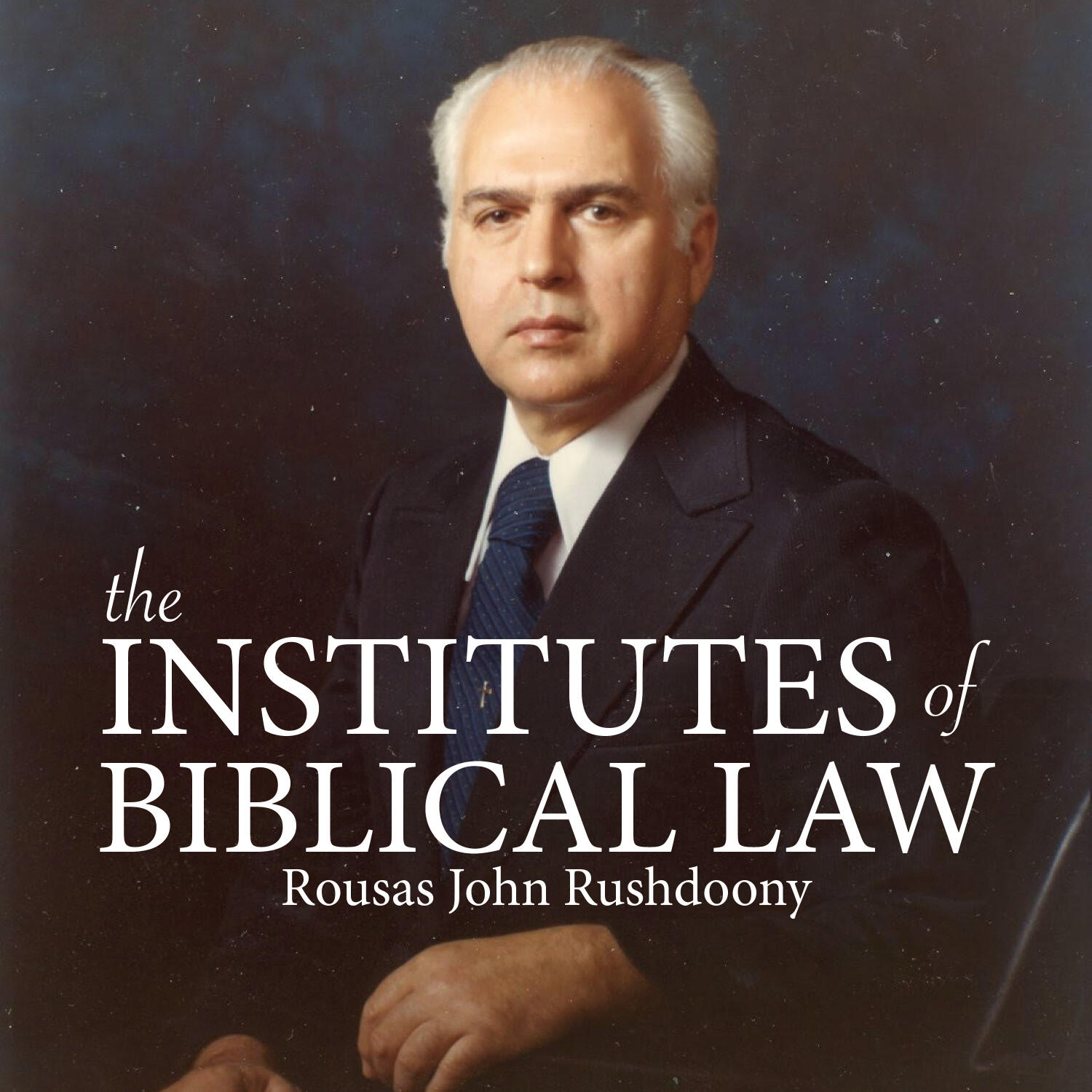
“The Cal State and Foundation presents the Law of the Ties, part four of Arde Rushduny's Lecture Series, the Institutes of Biblical Law, the First Commandment. Even from the days of your fathers, you are gone away from my ordinances and have not kept them.”From the transcript
The French Revolution and the death of the tithe happened together. That's not a coincidence.
The tithe once funded education and welfare without the state. Abandon it, and Leviathan fills the vacuum. Marxists ban tithe-preaching for a reason: it strips the state of its pretensions.
To oppose statism without restoring the tithe is spiritual anarchy.
Get every episode summarized
Each time CR101 Radio - Podcast Network publishes, we email you a written briefing from the transcript — the topics, who appeared, and any specific claims, with the ad reads skipped.
Email me new episodesFree for 3 shows. No card needed.
Hosts & guests
Transcript ready
369 searchable segments. Every word is indexed and playable.
Full transcript
CR101 Radio - Podcast Network — Law of the Tithe (Remastered). Machine-transcribed; use the interactive transcript above to jump the player to any line.
The Cal State and Foundation presents the Law of the Ties, part four of Arde Rushduny's Lecture Series, the Institutes of Biblical Law, the First Commandment. Even from the days of your fathers, you are gone away from my ordinances and have not kept them. Return unto me and I will return unto you, Zathelar to hosts.
But he said, wherein shall we return? Will a man rob God, yet he have robbed me? But he said, wherein have we robbed the in ties and offerings? He art first with a curse for he have robbed me than this whole nation, wring ye all the ties in the storehouse that there may be meat in my house, and proving now herewith Zathelar to hosts. If I will not open you the windows of heaven and pour you out a blessing, that there shall not be room enough to receive it, and I will review the devour for your sakes, and he shall not destroy the fruits of your grounds, neither shall your vine-caster fruit before the time in the fields of Arde Poets. The all-nation shall call you blessed, for ye shall be a delight some van,
Zathelar to hosts. Our subject today is the time. To most people, this is a humdrum subject. But in reality, it is a very explosive one. In the Soviet Union, for example, there is technically a law guaranteeing freedom of worship. And there are a number of churches, a limited number, permitted to operate. But even though the law specifically guarantees freedom of worship, it prohibits pointedly, any discussion of the things that I shall treat this morning. There is a reason for it. While most people in our country have no awareness of the explosive
significance of the time, the mark that's due. The time was one, a requirement of all Christians, from the days of the early church. As a matter of fact, it was through the century paid in produce in farming communities, so that a routine part of the landscape in earlier days was the Thai farm in farming communities, where the farmers brought their Thai. The council of Crenth, as far as the Catholic Church was concerned, required the Thai's on-pain of ex-communication. It was required in fraudulent circles, Lutheran, performed or Calvinist and the Church of England, as well as the Church of Scotland. It was universally required, but towards the end of the 18th century, it began to
be dropped as a requirement. And from the French Revolution on, it has been largely dropped. The very fact that the disappearance of the Thai and the French Revolution tend to coincide in dates should make us sit up and wonder, what is the connection? In this country, it was required in many states by law, and when in 1785, Virginia passed a law, abolishing the requirement of the Thai. George Washington wrote to George Mason expressing his distress at the new legislation. Now to analyze the Thai's first before we go into its significance. The Thai's of course appears very early in Scripture, Abraham's Thai's at the 10th to Melchizedek,
and it was nothing new in his time. So it quite obviously went back to the direct revelation of God to Adam and to Noah. The laws of the Thai appear in Leviticus 27 verses 30 to 33, in numbers 18, 21 to 24, 25 and 26. Deuteronomy 14, 22 through 27, and Deuteronomy 26 verses 12 and 13. There are other references to it. Now there are three kinds of Thai's referred to in the law. The first is the Lord's Thai. This went to the Leivines, who tiled a tenth of it to the priests. Second, there was a festival Thai. This festival Thai was to be spent by the family in rejoicing before the
Lord. The only amount of it that was not spent upon themselves was that which included the Leivine. In that the Leivine in their midst was to receive some portion of it. This depended on the individual. He was to include the Leivine in his rejoicing before the Lord. We would call this a vacation Thai. Except that the significance then was not merely rest and recreation, but a religious rest and recreation. It was not only to be used in pleasure, but pleasure that had a religious overtone. It was to be a means of rejoicing in God's goodness. The third Thai, which was every third
year in a cycle of seven, so that it was the third and the sixth year was to be a poor Thai. To be shared with the local Leivine and in particular, helpless foreigners who were stranded in their midst, orphaned and needy widows. Now as we analyze these Thai's first of all, the Thai set forth God's sovereignty. God is absolute Lord and creator, as landlord, so to speak, of heaven and earth. Required for himself a Thai as his tax on man. Now as the Thai was taken,
God was gracious to man so that a man if he tithed his produce or the fox of his field was to tithe every tenth literally. Thus if he had sixteen cows, he was to run them through the gate or allow them to come through the gate and to mark the tenth one, let us say, with red paint. The tenth one was the Lord's. This meant if he had 19 cows or 11 cows or 10 only one was the Lord's. So that actually it amounted to less than a tenth. If however he decided to make the Thai a monetary one, that is to sell and to give in the form of
money or to retain it and to give the price, then he had to add a fifth to the price. But even then this did not equalize it fully so that God in computing the Thai was generous to the farmer or to the cattle. If it was a monetary tie, it was strictly a tenth. But if the farmer retained it for his use, he added a fifth of the cost of the tenth cow or the tenth bushel or the tenth box afruit. The second tide which was to be used in rejoicing before the Lord actually involved no additional tenth in that it was to be given of the first fruits of the flock. That is the first born of the flock and of the first fruits of the field which were to be consecrated unto God.
And then he was to use them either the produce or the money that came in from it to rejoice before the Lord. The poor Thai as we have seen came every third year of a cycle of seven. The seventh year for the farmer was to be a sabbatical year. There was to be no pruning, no sewing, no gathering. However in the seventh year there could be a gleaning. That is the widows in the orphans could be permitted to go into the field and take what they wanted. But the purpose was that the earth be rested and refreshed. It had an invaluable purpose in self-confirmation and allowing the land to lie valid.
It also is specified as helping the beast of the field so that the birds in the wild animals prospered thereby and the whole balance of nature was furthered and retained. Now tithing meant proportionate giving. As Deuteronomy 1617 says, every man shall give as he is able. Now St. Paul quotes the same verse when he specifies Christian giving. A lot of people have said what you see St. Paul obviously does not want Christians to tie the requirement because he says whatever man give us he is able. But people who say this do not know that St. Paul is quoting the law of the time. The whole point of the tie was that it did not put an undue burden on the rich or on the poor. In other words the tie of 10 was required of all equally.
This meant then that the burden of the law's work did not fall simply upon the rich or upon those who were zealous in giving. In this respect it is significant to look back a couple of centuries to the beginnings of Methodism. John Wesley did not believe in tie. He spoke against it. And he could point with pride to the fact that the average follower of his movement which became after it broke with the Church of England Methodism gave far more than a tie. But what was the consequence and some of the Evan Jocles within the Church of England called attention to it in his own day? It soon meant that those who were zealous and and fallily dedicated were giving far more than a tenth and the burden was falling upon a handful
in each congregation and the rest were not giving their share. So that the burden of giving fell upon a handful of the rich and a handful of the poor. In other words those who had faith richer for. And every time there was a need for funds these were the people who gave and the rest did not give but a very small fraction. This of course meant unfair giving. It meant that the Church was carrying a great number of parasites. And the law of the tie prevented this. It meant proportionate giving. It meant rich and poor gave on a proportionate basis. Get established a fair pattern for all. Moreover the tie, the established a
concrete lawful basis for dealing with God. As Samuel Rudd the Rutherford, one of the great Scottish Churchmen said, I am persuaded that Christ is responsible and law abiding. What does this mean? He declared, I believe that Christ will respond to those who keep His law and He will keep His law in relationship to that. Those who will honor God will not rob Him of His tides and offerings. God says, I will open the windows of heaven and pour you out of blessing that there shall not be room enough to receive it. Again as G. H. Fember an Anglican Rector said some generations ago and I quote, we know generally that the grace of God follows
every act of direct obedience on our part. If we search out even the most minute commands of His law and do them, if we show that we would not have a word uttered by Him fall to the ground, we testify both to ourselves and to others that we do in very deed and not in word only recognize Him as our God and our King. Nor will He on His part be slow in acknowledging us as His subjects, as those who have a claim upon His aid and protection. It is important finally to add this point. The tithe was not regarded by the law as a gift to God. No man could say he was giving a gift to God until he gave above and over the Lord's time.
And these were called free will offerings. The free will offerings there then were only the gifts above and over a tie. Deuteronomy 16, 10 and 11, Exodus 36, verses 3 to 7, Leviticus 22, 21, and other passages refer to free will offerings. And this means more than the tithe. Now why is the tithe such an explosive subject in our incertened countries? Why is it that after guaranteeing technically freedom of religion, they prohibit anything that points to the old biblical tithe? This would be illegal preaching by even the most licensed of the Soviet preachers. It would immediately mean the concentration can. The reason is a very obvious one. Once we recognize
a fundamental principle. The tithe took care of the basic social functions of any society, education and welfare. As long as you had the tithe faithfully observed and required, whether it was in the Old Testament period in the early church, in the colonial period, or in Europe, medieval Europe or reformation Europe, the basic social functions were taken care of without the state having anything to do with it. Education was taken care of by the tithe. Welfare was taken care of by the poor tithe. Every important social function was met by the tithe. And the state therefore had only a limited area of jurisdiction.
And as a result, the tithe, the tacks of the state was so insignificant that it was scarcely theft. Is it any wonder that God in 1 Samuel 8 and speaking to Samuel in Israel said that the tithe which acknowledged his kingship would be replaced when they cast aside his kingship at his tithe with a totalitarian regime. Now God speaking through Malachi says, bring ye the tithe to the stardhouse. So that the law of the tithe places a responsibility upon the people of God. When God says bring the tithe to my stardhouse, he meant literally this, first of all, bring them to the appointed place, whether it be in food and produce or cattle or in
money. That it has to be my stardhouse, it cannot be the stardhouse of bail or fast profits, or those who are not faithful to their responsibility in the use of the tithe. So that the tithe was first of all required and seconded had to go where it would be used for the Lord's work. This placed the responsibility therefore, armed the people who tithe to see that their money went to the Lord's work, to education, to welfare, to various social functions under God. So that they were not tithing therefore if they took it, work was not properly used. It had to be truly God's stardhouse. It is done at time if it is misdirected.
A few generations ago, Lanzdale of the Church of England said that the person who is against the tithe is a spiritual anarchist. This is quite a bold statement, but if we analyze its significance we will see that it is right. He is a spiritual anarchist and a political totalitarian we might add. Today the state has assumed the basic social functions of society, and it is requiring far more than a tithe to maintain them. The state has moved into education and welfare not in order to fulfill a responsibility under God, but in order to use them as stepping stones to power.
And totalitarianism is the result. It is not enough to be against the state's interference in education and welfare. It is not enough to oppose the state's control of these basic social functions. These functions are necessary functions. They are not being discharged by the state. The state is not performing its duty in education. We are having miseducation. It is not producing a true welfare program. It is not helping widows and orphans. It is destroying them. It is creating a pattern whereby the breakdown of character and dependence on the state is the goal. When I was in the past, I saw what welfare was. Those who are independent have nothing but
trouble when through need a widow on orphan is dependent on state welfare, federal welfare. Everything is done to break down those who have character. The preference is for those who are immoral, disillute, totally dependent upon those who will look to the state as their God, not to those who briefly and temporarily want help until somehow they can get on their feet. The basic social functions are not met by the state. And the state has no intention of meeting them. The state is after power. And although it does lead to economic collapse and breakdown ultimately for the state,
there is no answer to the problem other than a continuing social crisis, anarchy, totalitarianism, until the people of God cease to be spiritual anarchists and recognize the basic social functions must be met. God has provided a law whereby they can be met. We must meet them under God and step by step strip the state of its pretensions, of its power, of all its claims until it becomes again what it was intended to be, a ministry of justice, and no more. The law retired therefore is an important one.
It is an area of great neglect and yet of tremendous social consequences, not until the people of God are ready to reconstruct society in terms of a godly pattern. Can we undercut the totalitarian pattern? Let us pray. Our Lord in our God, we give thanks unto thee for the sufficiency of thy salvation, of thy word, and of thy care. Thou hast provided a way for us, teach us to walk there in. Grant that we as thy people may begin day by day by our living and our giving, the reconstruction of things and the conformity to thy word,
that we might strip the present totalitarian regimes that surround us, of their pretensions, of their abgations. And of their power, that we might render thee thy dufries and power, and under thee have a new birth of freedom. Gratis this we beseech thee in Jesus' name, Amen. Are there any questions now? Yes. This is what Malatai says. Yes. Malatai makes it clear that we are robbing God if we do not give him the
time. Now the tide is to be computed on our income. This is the basis of the tide. It is not computed on anything else, not on wealth. This is an important point, because several times the church has misinterpreted the tide. The tide therefore is not to be computed on an inheritance. And inheritance is not a part of our income, you see. A tide was paid if we inherit something from our parents or a relative, they paid a tide on that. There is no inheritance tax on it as it were. That is not a tide. But income is to be tied. Yes.
No, that is not a tide then, because the tide has to go to God's storehouse. In other words, it is not a tide if it doesn't go to the proper place. And you see, this is where the tide puts the power back into the hands of the people. Exactly. You see, in other words, you are maintaining the basic program. Now, it is significant, for example, that when the tide was practiced, most people don't realize how extensively it was practiced until recent years. It was people through their tides who maintained schools from one end of the country to the other, maintained the churches, maintained orphanages through their poor tides. But now, of course, those orphanages have been abolished, supposedly, not conducive to the welfare of the child,
that the purpose has been to destroy the whole of the Christian tide and its social program. And some years ago, I had an opportunity briefly to do a little bit of, to have a little insight into the work of the orphanages, which originally were started with the gifts of Captain Dollar, of the Dollar Steamship Lines. Do you remember that firm? A very fine Christian. He established some orphanages. And these were further maintained with a poor tide of Christian people until not too many years ago. Now, those tides were everything the state regarded as horrible and were ended, finally, as far as any of their historic function was concerned. They were converted into social welfare agencies. The boys had, I think, one matron to about 50 or 60 boys. They slept in
dormitory rooms about 20 to a room. Everything that the modern social welfare agency says is all wrong. But Captain Dollar's boys, as they were known, all turned out to be outstanding citizens. And California, from one end of the state to the other, a generation ago was blessed by Captain Dollar's boys. Because they were trained in terms of character. Maybe they weren't picked up by a mother or a foster mother, and maybe they didn't get all the love and attention because each matron had so many boys to take care of, but they did get character. Now, this is the kind of thing that has been abolished, you see. It's much better. We are told now, aren't to pay a mother who
is breeding illegitimate children on a state subsidy. Leave the children there. They get love and attention, or they're getting something that is better for them. But in those days, you could take your poor tide every third year and say, now, I'm going to give it to this and that cause, because they are doing something, or to this individual. And similarly, with a lords tide, you could say, I'm going to give it to a church and a school, to things that I know are definitely doing the lords work. You had the control. It belonged to God, but you appropriated it, and you had to be sure it went to God, and his work, or it wasn't, a God. This meant, therefore, that you had a check against misuse of your funds. Yes?
No, it has to go to the Lord. And very often, in how days, the organized ecclesiastical bodies have no connection with the Lord except by name only. I didn't hear that. No, definitely not. We are responsible for the tide, even if there is no church existing, that can be called by the name of the Lord. We still owe it to God. Yes? What is the name of the Lord? Yes, he would give the tenth and the twentieth, and he could not choose. You see, he was to take
the tenth and the twentieth, irrespective of the fact that the tenth and the twentieth might be crippled, cows, or his best cows. It had to be as they came. In other words, he was not to choose out the best or the worst. Yes? Yes? Yes. Well, of course, this is a problem that many people have concerned themselves over, and there have been different kinds of answers. Some have said, your actual income is only your net income, not your gross income because the state is taking that. We have no answer to that in scripture.
I think we're safer if we figure in terms of the gross income. As I say, there is no clear cut statement in scripture on that, but we still should figure in a way to be on the safe side. Yes? Yes? I didn't hear that. Yes. Of course, if the Bachward Stealeth, he can't harvest it. It's what he has actually harvested.
Yes. I think that's a good argument, and I accepted his validist mind because, as I said, the scripture doesn't speak at this point. I simply prefer to lean over Bachward's to be on the safe side, but they are Bachward's and they're a close or worse, the these various governmental agencies because they are robbing us. So I would say there is no sin in computing it on that basis. We do not have any guidance as far as I can see at that point. It's up to our conscience. Actually, you get what is your check if you want to figure it on that basis five. Yes? Yes. That's a good question. Again, it's one of these difficult ones, and there is no
set answer. Now, some Christian schools have reorganized so that you pay, well, to be specific. I visited one school which required, I believe, ten or fifteen dollars to wish him, and the rest was by donation, and it expected its parents to tie, and to give a major portion of the tie to the school. This way, it got around to the problem of a double burden on the parents with regard to taxation. They had a tax benefit from their tithing. It did not intend to rule on the matter, as far as did it constitute a portion of the tie. Here again, I have to say that we cannot go beyond
scripture to lay down our law. We have to go in terms of our conscience in the situation. Again, I would lean over backwards in the other direction, but if anyone has anything to contribute on the subject, we will let them speak up now. Yes? I agree the Christian schools are doing far more than most of the churches are doing. They are doing the Lord's work, but again, I say it has to be a personal decision. I can't speak for God.
Yes? Well, there is this today. If the people who are truly Christian would tithe and see that the tithe went to the right place, the social impact would be tremendous. Yes? Right. Yes, you see, we don't realize the tremendous social power of the time. If you have 50 families, the likelihood is that out of those 50 families, some having a larger income, some less than just an average collection of people. You will have perhaps 50,000 in time.
Now, this is an amazing fact. You can see how that much money in every 50 people or every 50 families would have a social impact on the country if it were properly used. This is why the power that is in the hands of the Lord's people is not properly used or not realized. This is why, of course, in the Soviet Union, there is nothing more deadly than to give the kind of sermon I have given this morning, because, and it is specifically spelled out, it cannot be done. You cannot even say to a congregation, supposing we were in the Soviet Union, and if I were to say, one of our group is sick, unable to work, and desperately in need, supposing we take up an offering and give it to this person.
It would lead immediately to the concentration camp for us, because they realize the minute you do something, that person cannot look to the state, you see, for help. And they'd rather have that person die waiting for the state agencies to come around and help them than for us to do something, because it would immediately say there is another power up within the land. And the minute you started that and started talking then about a puritized periodically every third year, and a regular tie to be used for religious and educational work in the community, you would create a rival power, even in the Soviet Union with a limited amount of means those people have, that would overthrow the regime. This is their feeling. They realistically are rare of the potential in the time. Yes.
And the church teaches the man to take care of his overalls, and that was a very good word. What is the biggest challenge of church to wait for them for the fact that they were falling down on their couch, and telling the people, discuss it, now some people won't really want to lie, because it is a difficult matter. Yes. Yes. There's not much there enough to be given, how much capital just is being given, and certainly not the way we're going. Yes. Well, first of all, most people in the churches, you can't tell them they're dead, and you can't make the corpse hear you. But those who are still alive to a faint degree, you have to tell them exactly what scripture says.
We will get into the pattern of giving some months from now, and we get into the laws of bleeding and so on. But of course, the pattern there was, except in extreme cases, they were to work for what they received. Now, in the early church, we know that if someone lost his job, the church gave him one day's income, that was all. The next day, he was to go to work. And if no one in the congregation could take him into their shop or place of business, the church helped pay for it so that on a very limited daily income, he had a job with someone in the group. Now, there was no incentive to stay on that job because he worked hard for much, much less, but he had to work. He had to earn it. This goes back to the mosaic law. We'll go into it
as I say later, but that it goes back also to the fundamental principle. If a man will not work, let him not eat. In other words, let him stop. That's exactly what scripture was saying. Only elderly widows and orphans are people who were incapable of working physically were to be given direct charity. Yes? Mm-hmm. All right. A good question. Now, it was a Levitical storehouse. Was it not?
You tithe to the Levites. The Levites tithe one tenth of the tithe to the priests. Which meant that one tenth of the tithe went to the sanctuary. So only one tenth actually went for the maintenance of the place of worship. The other nine tenths of the tithe went for the Lord's work in a broader sense, did it not? And the Levites in ancient Israel, as we study the scriptures, we find that they had the educational responsibilities. They also functioned as judges, as a kind of civil service very often, as letters, as musicians, and sometimes as artists. So you see what broad functions the tithe covered.
Not meant to the storehouse, the place where Christian work, a godly work, of a broad nature was then supported and furthered. But you can see why, for example, King David had very small expenses as far as taxation was concerned, because he made use of the Levites. He made use of an already appointed group of people supported by the tithe, who thus had an independence from him, but he used them as a kind of civil service. So the functions of the tithe were very broad. Now in the period of the judges, about all the tax supported was the judge who was the governor. Judge or governor is the same word. The governor of the country or president you might say. And it supported the army,
but the army was often a volunteer army, called together for the occasion. So this cost there was very little. And it supported a few officials. So the actual need for taxation was very, limited. The Lord's tithe had such a broad function. And only one tenth of the tithe actually went for the maintenance of worship. Now that proportion was not maintained in the New Testament period, but it gives you an idea of how broad the function of the tithe was. One tenth actually you might say went to the church of the tithe in the Old Testament period. Yes.
How did the church of the tithe of the tithe of the tithe of the old, actually, the tithe of the tithe of the tithe of the tithe of the old. All right. You've raised the case. Yes. You've raised the case of the corruption of this in the medieval period. Let's take it at its worst. The amount of corruption in the use of the tithe by the medieval church doesn't equal to the corruption you've had in one year in the poverty program in the United States. What did the tithe do at even at the worst periods of medieval corruption? It provided all the charity. It provided all the hospitals until fairly recent times hospitals were religious organizations a part of the tithe. It provided all the schools.
It provided courts also so that the people went to the courts where most cases, only in certain types of cases, did you go to the civil court. And it provided a variety of other social functions. So granted that in the medieval period there was corruption and it was real. Yet those lands provided that the church had for all the functions through their incomes. The country was still living very cheaply and the amount of taxes people had to pay was very little. So they were better off as far as any drain on the society than they are today. Today the amount of tax you pay is at least 45% of your income to all causes. It was never anything like that. That was just the tithe then. Today in Italy if the government landed on
everybody with all the tax laws they passed it would amount to 110% of their income. It won't be too many years before we reach that point because with the new taxes I wouldn't be surprised if by next year it'll be 55% of your income which directly or indirectly will go for taxes. So granted the medieval church was scrapped and we don't want to reproduce that. It was still far superior to what we have today. Yes.
The Of course there are advantages to modern life because we have all the technological advance of many many centuries but roads were being built in those days very good roads in terms of the day. It's interesting in this country the objection for a long time to any state funds or federal funds for roads and the first time in this country when it was in Rhode Island the state tried to appropriate money for road construction. The people rose up and revolved against it and they had to drop the program after they began it because the citizen said this is like the establishment of religion. It's a state subsidy to a particular group of road users that private
enterprise built it in charge tolls. So they had to drop the program. One more question our time is that. What was yes. No, no it doesn't. But you see it isn't any drain on your pocketbook because you're not you're using it on yourself and I said it was a part of the first fruits. This is a part of well I won't go into it now there isn't time but the first fruits and the first of the block were to be dedicated onto the Lord. Then they were to be used in rejoicing before the Lord. Well our time is up now we stand adjourned.
This has been a Calcitan Foundation production produced by Gris Community School and Nicene Colonet Church. If you enjoyed this lecture be sure to visit calcitan.edu for more lectures and series by RJ Rushdhunni and the Calcitan Foundation.
More episodes
More from CR101 Radio - Podcast Network

The Invisible Communion
CR101 Radio - Podcast Network

They That Mourn
CR101 Radio - Podcast Network

Change
CR101 Radio - Podcast Network

Easy Chair No. 163, February 11, 1988 - Inflation in the U.S.
CR101 Radio - Podcast Network