Maya Johnson: What's the latest on the campaign trail?
Get every episode summarized
Each time Weekends with Joanne Vrakas publishes, we email you a written briefing from the transcript — the topics, who appeared, and any specific claims, with the ad reads skipped.
Email me new episodesFree for 3 shows. No card needed.
About this episode
“Every Saturday morning in this election campaign, CTV News anchor, Maya Johnson, is going to be joining us and is joining us now to take us through the happenings, the goings on of the last week. And it was quite the week for the party leaders.”From the transcript
CTV's Maya Johnson joined Joanne Vrakas to talk about the latest on the campaign trail.
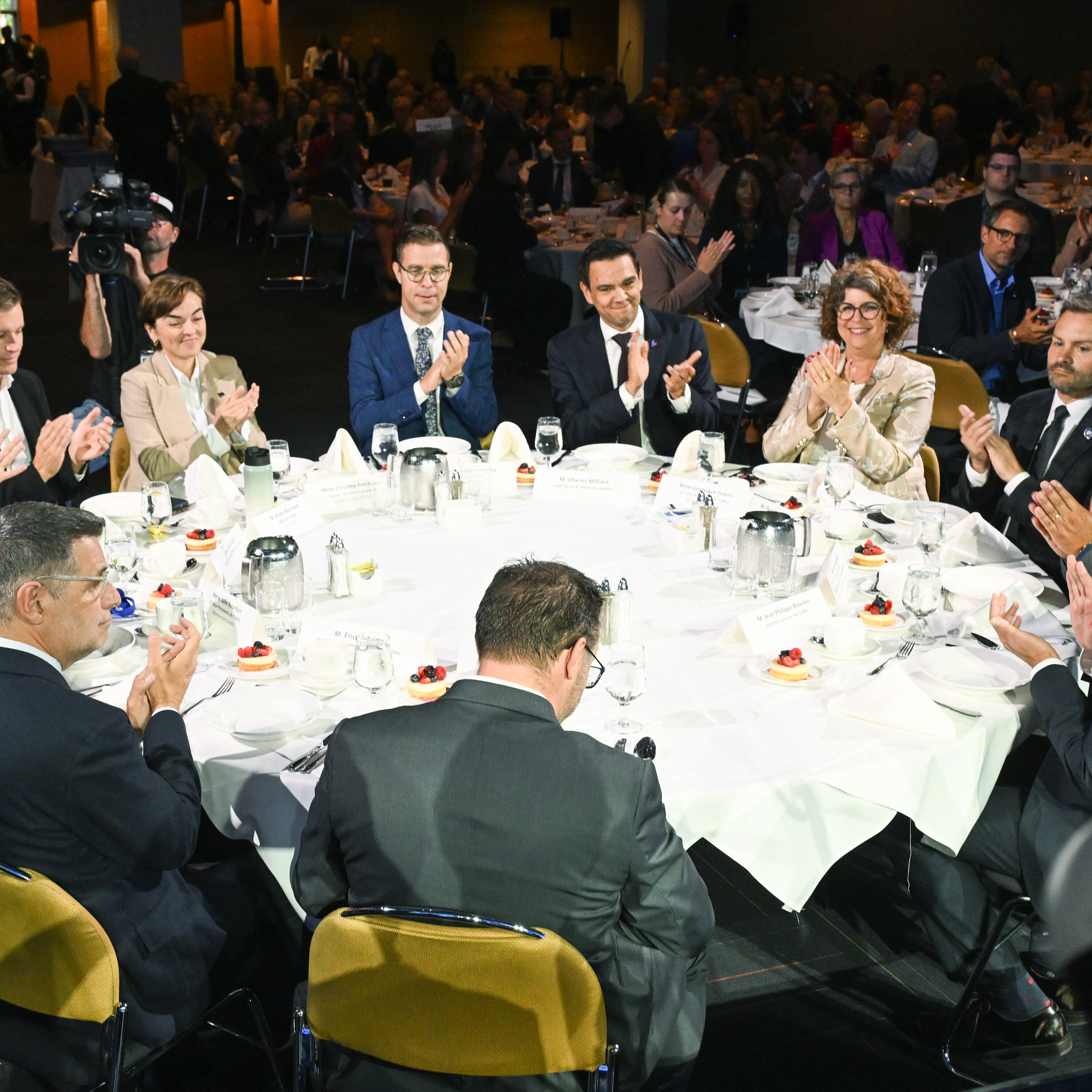
Photo of the five party leaders courtesy of THE CANADIAN PRESS/Jacques Boissinot
Get every episode summarized
Each time Weekends with Joanne Vrakas publishes, we email you a written briefing from the transcript — the topics, who appeared, and any specific claims, with the ad reads skipped.
Email me new episodesFree for 3 shows. No card needed.
Hosts & guests
Transcript ready
193 searchable segments. Every word is indexed and playable.
Full transcript
Weekends with Joanne Vrakas — Maya Johnson: What's the latest on the campaign trail?. Machine-transcribed; use the interactive transcript above to jump the player to any line.
Every Saturday morning in this election campaign, CTV News anchor, Maya Johnson, is going to be joining us and is joining us now to take us through the happenings, the goings on of the last week. And it was quite the week for the party leaders. Maya, thank you so much for joining us. My pleasure, Joanne. Okay, so we got to talk about these back-to-back debates, right? This was a big deal, our friends and colleagues over at Novo Krav hosted one of the big ones. You know, everyone's always saying, was there a winner? Did somebody, was there a big winner, was there a big loser? What do you, how do you see what happened there? I think the consensus is that there weren't any knockout punches. There weren't any clear winners or losers, so to speak. But certainly, there were two leaders who probably faced the most attacks. I would say Christine Frichette, leader of the CAQ, on both nights, and then probably on the second night to a PQ leader, Paul St. Pierre-Plamel, don't because of course he is leading in the polls.
So, I mean, it's really interesting. I can't recall having seen two back-to-back debates before. And this must have been absolutely exhausting for the leaders. I have to say because on Tuesday, it was two hours of debating hosted by TVA. And then as you mentioned, our sister station, Novo Weifo, and Crave hosted the second debate, which was another 90 minutes of jousting between all of the leaders. And I would say, if I had to pick a couple of themes or take a ways, I would say number one, Shalminial, the leader of the liberals, probably surpassed expectations on both nights. And I have to say, though, I think the reason for that is because the bar was quite low. Everyone's kind of waiting for him to sort of wake up and grab everyone's attention, but it's a slow start. So that's the thing. I mean, the liberals got off to a rough start
in this campaign of all five leaders, Milia has the least name recognition. As a matter of fact, I can't recall if we talked about this last week. No, I don't think we did because I think it happened on Sunday. So the liberals actually changed their campaign bus, nearly halfway through the campaign, adding his picture and his name to the campaign bus. So as it's driving around the province, people could actually see who he is and what his name is. And of course, there are questions like, why didn't you guys just do this from the start? But basically, he said, OK, we got the feedback. We're listening. So here I am on the bus. And that says a lot. We have to say that that says a lot about where the liberals are. OK, what we did talk about, though, last week, was this bilingual reminder card. Right, there was a legal challenge. The CQ, Frichette, they were saying, well, no, that's just what we're doing. We're sticking to this. There was a legal challenge. So can you tell us what happened exactly? Yeah, so these elections Quebec documents, voter information documents, basically,
went out in the mail in French only. And basically, if you wanted to access information in English, you had to go to the elections Quebec website through there was a QR code on the documents. You'd scan the QR code, and that would take you to the elections Quebec website. This is the first time that this has ever happened. Previously, in every single Quebec election, the voter information has been sent out in both languages. And so this obviously created an uproar English rights advocate said, this is unacceptable. This is a violation of the Democratic rights of English-speaking Quebecers. And some lawyers took on the case and launched a legal fight. And they were granted a victory this week by a Quebec Superior Court judge who said that, yes, in fact, the documents should be sent in both languages and actually ordered elections Quebec to prepare bilingual reminder cards. So that's the second batch or the second wave of documents that Kette mailed out.
The judge ruled that it was too late to do anything about the first batch of documents that were mailed out. It's too late and it would be too expensive. So that was the Quebec Election Guide, for example, that already went out in French only. So it's seen as a victory for English-speaking Quebecers and it's also a bit of a slap in the face to the CAQ government, which oversaw this change and apparently resisted elections, Quebec's request to have an exception made for them. Because this all falls under the umbrella of Bill 96 and the tightening of the language laws. So we'll see what happens in the next election because obviously this legal victory sets a precedent. But it's not the end of the story. The lawyers are gonna have to go back to court because basically what the judge did was granted 10 day injunctions, so it's not a permanent thing. Yeah, and the fact that it happened in the first place, I think, is that the precedent that people are looking at when scratching their heads. Okay, of all the issues that we're discussed, right?
Referendum, Trump, sovereignty, this and that. A big one was affordability, but then brought forward the big conversation on homelessness because of what happened in one of these homeless encampments and so the issue, I was gonna say, it's back on the table. It's not back on the table. It seems to have never been on the table. So what is being discussed about the homelessness crisis? Yeah, I mean, that's it. In theory, it's supposed to have been on the table and you kind of hear about it and bits and pieces here and there and it came up briefly during the bays but it certainly wasn't a main issue. It's certainly nothing like the other issues that you alluded to, for example, you know, the possibility of a referendum or the trade war and how to deal with Donald Trump. But, you know, the Mayor of Montreal has basically been screaming from the rooftops like there is a huge crisis happening in our city and we have to deal with it and why isn't the government, why aren't political leaders in Quebec City doing anything, why aren't they helping us? And that really came to the forefront this week
after a baby, a one year old baby was found at an encampment at police were called in, police took the baby from the encampment and the baby was placed in a youth protection, briefly, although Le Press reported on Friday that the baby is now back with his father and with his grandparents. It's a very complicated family situation but basically the father did not know, again, according to Le Press's reporting that this child was in a homeless encampment taken there by his mother. And it's just, it's a huge crisis. The encampment on Notre Dame is growing exponentially and it just seems that this crisis is getting worse and worse because of affordability issues and the mayor of Montreal this week called Christine Frichette out on it saying she can't believe that she hasn't met with her during the campaign
to talk about this. So it seems like a glaring omission and like some kind of a strategy that is a big head scratch or there because I mean this is Montreal. The problems are huge here and you think that there would have been some kind of communications but we'll see, it'll be another week and you'll be back next week to tell us all about it. That's right because we're already, it's hard to believe but we're halfway through this thing and so on just a couple of weeks we're gonna be going to the polls, Joanne. And we'll all give each other a hug when it's all over. And get some sleep. Exactly. CTV News anchor, Maya Johnson, of course, go give her a follow and watch her over at CTV News Montreal. Maya, thank you so much for your insight. We'll try to get next Saturday. Looking forward to it. But let's see, I said we need some more sleep. Looking forward to it, Joanne. Have a good weekend. Take care. The music you love. I heart radio. Your favorite radio stations. Everywhere you go. The podcasts everyone's talking about. All in one place and it's free. I heart radio. Whatever you want to hear.
Listen anytime, anywhere. Music, radio, podcasts, unlimited audio. It's on the free IHR radio app. One app, no subscription. Always free. Grab the free app. I heart radio. Everywhere you go. Always free. Download the free IHR radio app today.
More episodes
More from Weekends with Joanne Vrakas

Celine Dion has taken over Paris but she was Montreal’s first
Weekends with Joanne Vrakas

Food Professor: Why is food still so expensive?
Weekends with Joanne Vrakas

Nutrition: Food and your mood
Weekends with Joanne Vrakas

What does it mean to let your wine breathe?
Weekends with Joanne Vrakas