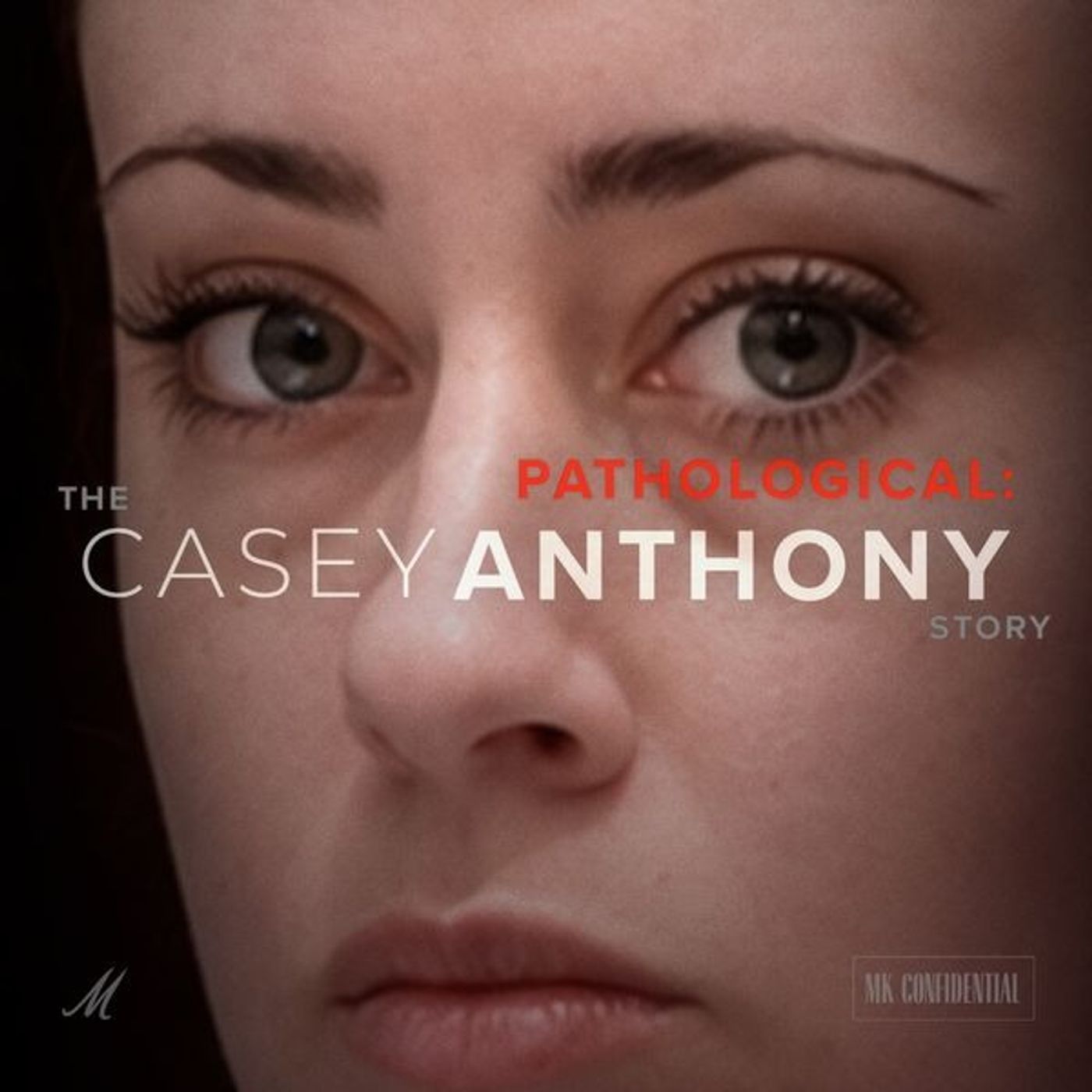
"Pathological: The Casey Anthony Story": The FULL MK Confidential Series
Get every episode summarized
Each time The Megyn Kelly Show publishes, we email you a written briefing from the transcript — the topics, who appeared, and any specific claims, with the ad reads skipped.
Email me new episodesFree for 3 shows. No card needed.
About this episode
“Summer in Las Vegas starts at MGM Grand, spend your days lounging across six sparkling pools, floating along the lazy river, or enjoying poolside cocktails under the desert sun.”From the transcript
Megyn Kelly brings you the full five episode "MK Confidential" series, "Pathological: The Casey Anthony Story."
Follow The Megyn Kelly Show on all social platforms:
YouTube: https://www.youtube.com/MegynKelly
Twitter: http://Twitter.com/MegynKellyShow
Instagram: http://Instagram.com/MegynKellyShow
Facebook: http://Facebook.com/MegynKellyShow
Find out more information at:
https://www.devilmaycaremedia.com/megynkellyshow
Hosted by Simplecast, an AdsWizz company. See pcm.adswizz.com for information about our collection and use of personal data for advertising.
Get every episode summarized
Each time The Megyn Kelly Show publishes, we email you a written briefing from the transcript — the topics, who appeared, and any specific claims, with the ad reads skipped.
Email me new episodesFree for 3 shows. No card needed.
Hosts & guests
Transcript ready
1,823 searchable segments. Every word is indexed and playable.
Full transcript
The Megyn Kelly Show — "Pathological: The Casey Anthony Story": The FULL MK Confidential Series. Machine-transcribed; use the interactive transcript above to jump the player to any line.
Summer in Las Vegas starts at MGM Grand, spend your days lounging across six sparkling pools, floating along the lazy river, or enjoying poolside cocktails under the desert sun. When the sun goes down, the excitement heats up, with world-class dining, unforgettable nightlife, and can't miss entertainment. From new culinary experiences to iconic Vegas moments, there's always something happening at MGM Grand. At US Bank, we believe the most rewarding wins are when we work like a team. That's why US Bank smartly checking and saving are designed to work together so we can reward you more. That's the power of us. Official bank sponsor of the NFF visit usbank.com today to get started. Remember FDIC Comparation in 2026, US Bank.
How the jury somehow ended up finding this woman not guilty. But I actually learned a lot about how that actually happened and I think you will too. Enjoy and we'll see you Monday. The Anthony Family lives in a small one-story ranch house in the Orlando suburbs. Four bedrooms, two baths, and a screened pool out back. George and Cindy Anthony have called at the family home since 1989. Their house has a pale pink front door with an arched window. There is usually a wreath or a plaque hanging on it and in the afternoon, the Florida sun comes off the glass in a glare. The family almost never uses the front door. Everyone comes and goes through the garage. So when the mailman tapes a certified letter notice to the front glass, it sits there for four days before anybody sees it. Sunday morning July 13, 2008, Cindy is out front pulling weeds.
She and her husband George have put down new sod in the strip between the sidewalk and the street and George is off to the side watering it. George and Cindy have been married for 27 years. They have raised two children together, Lee and Casey. The marriage has survived financial trouble and a separation, but they're hanging on still living in the same house, tending the same yard. Cindy straightens up and stretches her back, working her way back toward the house when the glare shifts and she sees the paper. It said it was a certified letter and it had Johnson's and when I read it I didn't know anybody the name of Johnson or Johnson's company, so I went over to George and showed him the notice and he said he had no clue who Johnson's was. The notice on the door communicates the certified letter is waiting for them at the post office. George tells Cindy he will pick it up on his way to work on Monday, but he doesn't make it there until Tuesday just before noon. Turns out the certified letter is from
Johnson's record service off Narcusi Road. They have the family's white 1998 Pontiac Sunfire. Titled to George and Cindy, their 22 year old daughter Casey drives the Pontiac every day. Casey has told them she and her three year old little girl, Kaylee, are in Jacksonville. George studies the letter thinking about this. The letter shows that their car has been sitting in the impound lot since June 30th. Today is July 15th. George calls Cindy at work. Neither of them understands how the car can be in Orlando if Casey and Kaylee are in Jacksonville. George drives to Johnson's to find out what happened. A woman at the front counter tells him the Pontiac was found abandoned in a payday loan store parking lot. To get it out of impound will cost nearly $500. George calls Cindy again and she leaves work around 1230 or 1. They meet at home
get the car's title stop at an ATM for $500 and head to the tow yard. It is raining. A steady, misty rain. George and Cindy pay the fee and George walks back into the tow lot with the manager to get the car. Before they moved to Florida, George spent about a decade working in law enforcement in Ohio. First as a police officer and then as a deputy sheriff. He has smelled human decomposition before. He unlocks the driver's door and gets it. He describes what he found inside to Dr. Phil in 2011. Did you smell something right away? I did notice an odor that I had smelled prior from many years ago in being a law enforcement and as I locked the car that's when the odor was leaving more stronger. I was feeling very sick in my stomach and I was like the trunk. There's nothing back there except a trash bag full of garbage. I said I was thankful. I didn't see
my daughter or my granddaughter there. Your mind went there when you walked to the back of the car. Absolutely it did. The tow yard manager pulls the garbage bag out of the trunk and drops it in the dumpster. George drives the Pontiac around front where Cindy is waiting in her own car the window down in the rain. He said we need to get home right now. This car stinks. At the tow yard, Cindy smells nothing. Back home, George pulls the Pontiac into the garage and gets out. Cindy walks toward him and she smells it. George tells her the car stinks. Cindy starts going through the Pontiac. Inside she finds a phone number for a young woman named Amy, a friend of Casey's she has never met and she calls her. Amy knows where Casey is. That evening Cindy picks Amy up and they drive about 20 minutes east across Orlando to Sutton Place where Casey's boyfriend Tony Lazarus lives. When they get there, Amy walks up to the apartment and knocks while Cindy hangs
back just out of sight. When Casey opens the door, Cindy comes around the corner. Get your things Cindy tells her you're coming with me. Casey goes back inside to gather a few things while Cindy waits at the doorway. Casey says she'll be coming back. No, get all of your things. A few minutes later, Casey is in the car, but Cindy does not drive home. It is after eight o'clock that night when Cindy Anthony pulls into the local Orlando police station on Purshing Avenue with Casey in the passenger seat. But the local station is closed, so Cindy calls 911 from her car. What are you trying to accomplish by bringing them to the station? I have a 22 year old person that has um, grand theft, sitting in my auto, with me. Cindy does not tell the dispatcher for a little granddaughter Kaylee is missing. Her first call is about Casey stealing a car and stealing money. Their address puts them
in the sheriff's jurisdiction, so the dispatcher places Cindy on hold to transfer the call. While she waits, Cindy turns to her daughter. Now the argument is about Kaylee. Cindy is still on the line with 911. The recorder keeps running. To my next thing, we'll be down the trial and saying, and we'll have a court order to set up. So, if you want to play, we'll do it. You'll never come to talk to her. Well, grand, you need help on one thing. No, I'm not giving you another day. I'm giving you a month. By this point, Kaylee Anthony is dead. Cindy Anthony is threatening to take custody of a little girl. She does not yet know. It's already gone. I'm Megan Kelly. This is M.K. Confident. Cindy drives back home from the local police station with Casey beside her. It is only about a mile and a half. Cindy does not call her husband and she does not call her son. She is thinking. As she
turns into the subdivision, her son Lee calls. George told him to come home and he is in the driveway waiting. Cindy pulls into the garage. Casey gets out, walks past her brother without stopping and goes into the house. Lee follows and asks his mother to let him try. If everybody sits down and Casey comes down, maybe he can get an answer about Kaylee. They sit down together. Lee tries to get his sister to explain where Kaylee is. Casey tells them Kaylee is with Zanny, the Nanny, and that she is spending the night there. Cindy tells her they are going to get Kaylee. Casey says it's too late. Kaylee will be asleep already. They can go in the morning. Cindy does not care if it is late. She wants to see her granddaughter. About 15 minutes after her first call to 911, Cindy picks up the phone again. This time she reaches the Orange County Sheriff's Office.
I have someone here that I need to be arrested in my home. There they are. I have a husband and a child. I have a three year old that's been missing for a month. A three year old? Have you reported that? I'm trying to do that now, ma'am. The dispatcher tells Cindy a deputy will come when one is available. Cindy hangs up and waits, moving back and forth through the house. I was trying to stay close to the garage in case they came so I could hear them. So I was pacing back and forth between the hallway from the living room to the garage, into the living room to Casey's room, and back and forth. I was just pacing because I was getting angry or an angrier and I was more upset as I was waiting. Lee takes a sister Casey into the bedroom and keeps talking to her. This time she tells him something different. She tells him Kaylee has been gone 31 days and that the nanny took her.
Cindy hears part of the conversation through the bedroom door. Lee keeps Casey talking, then lowers his voice so their mother cannot hear the entire conversation. About an hour and a half after that first call to 911, Cindy calls again for the third time that night. The dispatcher asks for the child's name. Kaylee, C-A-Y-L-E-E, then she asks how long Kaylee has been missing. Cindy says June 7th, but she is wrong. Kaylee was seen alive more than a week after that. And the dispatcher asks to speak to Casey.
Casey has just told 911 dispatcher that she spoke to Kaylee that day. By then Kaylee has been gone for a month, as Casey confessed to her brother Lee. Casey gives the dispatcher the name of the woman she says has her daughter, Zanita Fernandez Gonzalez, Zani. This is her nanny, she says, for about a year and a half, almost two years. Then Casey sees the deputies arriving. The dispatcher tells her to stay on the line, but Casey hangs up. Detective Yuri Melik gets the case. In the early hours of July 16th, he sits down with Casey and records her statement. She gives him an address for the nanny. Sawgrass apartments on South Conway Road, unit 210, second floor, first building on the right just passed the speed bump. She gives him the names of the nanny's two roommates and the friend
who introduced them. Detective Melik asks Casey if everything she has just told him is true. Casey responds, that's the truth. It's the story I'm going to stick with. Yes. A little after 5.30am, Casey takes Melik to Sawgrass apartments and points out unit 210. Later that day, after he drops Casey at her parents' home on Hope Spring Drive, Melik goes back and speaks with the apartment manager. Unit 210, she tells him, has been vacant for 142 days. Casey has also told Detective Melik she works at Universal Studios and that Zanny worked there too. So after checking Sawgrass, Melik heads to Universal and sits down with the head of security. They start running the names Casey has given him through the system. No Zanida Fernandez Gonzalez. The supervisor Casey named also does not work there, nor does the coworker. The phone extension she gave Melik does not exist.
Casey herself has not worked at Universal in more than two years. She was fired in April 2006 after she stopped showing up. Melik calls Casey and asks her to come in with her employee ID. Casey says she cannot find it, so two detectives are sent to drive her to Universal Studios. Casey is still insisting she works there. At the employee gate, the guard finds no record of her or her supervisor in the system. Casey insists there is a mistake. The security manager lets her through. She leads the detectives into the office complex as if she knows exactly where she is going, left at the first building, down the road across a parking lot and into another building. She is walking with purpose. Melik decides to let her keep going. About halfway down a hallway, Casey stops. She puts her hands in her back pockets and turns around.
Okay, she says, I don't work here. Detectives take Casey into a conference room inside Universal Studios and keep talking. By now they clearly know two things. Casey does not work here and the apartment where she says Zanny, the person she claims has her daughter, lives, has been empty for months. Despite those lies, Casey still contends she's being at least somewhat truthful. I know and you know that everything you've told me is alright, correct? Not everything in that tool yet. Okay, pretty much everything that you've told me, including where Kayleigh is right now. That I still, I don't know where she is. Sure you do. Sergeant John Allen is with Detective Melik. He tries another approach. He talks to Casey about parents who make terrible mistakes and lie because they are afraid to tell the truth. The conversation shifts to Casey's mother, Cindy.
I saw my mom's reaction right off the bat and it would have been the same from the get-do. So what is it? So you're more afraid of your mom's reaction than you are if you ever see your daughter? You know, I'm absolutely petrified. Absolutely petrified. I know my mom will never forgive me. I'm never going to forgive myself because there's that chance that I might not be Kayleigh get and I don't want to think about that. Detectives tell her quote, we're arresting you. Unless you come clean and tell us the truth, we're arresting you now. Casey insists she is being truthful. At 4.33 that afternoon, Casey Anthony is arrested for child neglect, for making false statements to officials, and for obstructing an investigation. Six days later, a judge sets her bond at $500,000 on the neglect count alone. At this point, little Kayleigh Anthony has been missing for 32 days.
It is four years earlier, spring of 2004. Casey is just days from high school graduation. At least, that's what her family believes. Then a counselor calls the house and asks George and Cindy to come for a meeting. Casey does not have the required credits to walk on graduation day. The Anthony's demand to see Casey's school records, but the school officials refuse, saying, Casey is now 18 years old and that their hands are tied. Casey says she had taken an online computer class and claims the school never gave her the credit. Her family goes to the graduation anyway. They sit there knowing Casey's name will not be called. Afterward, Casey's grandmother Shirley Plasey asks her where her cap and gown are. Casey starts to cry and repeats the same story about her being about a half credit shy.
Her parents tell everyone the school made a mistake and still throw a graduation party. Cindy tells her parents not to tell her brothers. They don't. Cindy's brothers, Casey's uncles, don't learn that Casey never graduated until four years later when police come and ask them about it. In the spring of 2005, Casey stops by Gentiva Health, where her mother Cindy has worked as a nurse since 2001. She's wearing a long black coat to cover her midsection, but it doesn't cover it quite well enough. Hi, Steve Balmer here. You know, people disagree about a lot in this country. Taxes, healthcare, education, but wherever you land politically, I think most of us agree on this. Better information leads to better decisions. That's the mission of USAFACs to make government data clear, accessible, and understandable. Because public data plays a bigger role in our lives than most people realize. Government data helps determine where funding goes, how communities prepare
for disasters, which schools, hospitals, and local programs need support. It helps businesses plan, journalists report, and voters understand what's really happening in the country. And whether we think about it or not, we rely on this data every single day. That's why supporting public data matters, not for Democrats, not for Republicans, for everybody. Because public data should be easy to access, trust, and understand, so we can use it to make informed decisions. If you believe, trustworthy public data matters to join us. Read and sign our open letter at USAFACs.org. The data we depend on. Chevy is called the heartbeat of America for a reason, with SUVs made to move with your rhythm. The versatile equinox tackles your entire day. The spacious traverse fits your crew and your whole weekend, and tracks spring style with value you can count on. All infused with tech that has your back. So your drive always hits the right cord.
Adventure awaits in a new Chevy. Right now, get $500 bonus cash on select Chevy Tracks models. Plus, get 2.9% financing on all 2026 Tracks models. Together, let's drive at your Southern California Chevy dealers. Bonus cash is available on 2026 Chevy Tracks LT and active trims only. 2.9% APR for 36 months. Monthly payment is $2904 for every $1,000 new finance. Example them payment at 11%. Most finance would jam financial. Some customers may not qualify, not available with lease and some of their offers. Take your retail delivery by 93026. Her mother's coworker Charles Crittenden is working the front desk. Usually when Casey pops into the office, she stops to chat with Charles. This time, she does not. To Charles, she looks pregnant. Charles tells a coworker what he had seen who then heads into the back to get a look at Casey and thinks the same thing. Cindy appears clueless, even as all the signs are there. Casey had dated a guy named Jesse Grund for about six weeks at the start of that year.
His father, a minister, looks at Casey once and tells his son she's pregnant. Jesse says Casey had female problems that caused her stomach to descend. He insists that he had asked Casey about it and that she told her whole family that same story. Reverend Grund doubles down, saying he knows when a woman is pregnant and that Casey is expecting. Jesse ignores his father's observation, but will soon come to regret that. Nearly a month later, Jesse receives a call from Casey, during which she says, I need to talk to you. I can't talk right now, Jesse says, send me a text message. The text comes moments later. It reads, quote, I'm pregnant and you're the father. That's it. End quote. On June 4, 2005, Casey's uncle Rick gets married in Ohio and Casey flies out for the wedding. Her brother Lee drops her off at the airport and asks her
leaves straight up. Listen, if you are pregnant or something's going on, tell me, be honest with me. No, Lee, she says, I'm just bloated. Later, when Lee learns the truth, he feels betrayed by his sister. When Casey gets to the hotel in Ohio, uncle Rick answers the door. She is wearing a powder blue top and her belly button is pushing out about half an inch. As soon as he can, Rick asks his sister and brother-in-law about Casey. Cindy, George, what's up with Casey? You got something to tell me? What's going on here? The couple look at him with puzzled expressions. What? They both ask. She's expecting? They look at him like he's crazy. Cindy shrugs off Rick's questions insisting, she's just putting on weight. But Rick keeps pushing. Cindy, I've seen a lot of pregnant girls. I'm not an expert, but man, she looks pregnant, he says. Rick, my daughter has female problems. She has
a tumor on her ovaries. Rick responds, that tumor is as big as a baby. You'd better get her to a doctor right now, because she's going to die and then he walks away. All day, wedding guests keep asking who's the pregnant girl? Casey Anthony is 19 years old and two months from her due date, her relatives would not say so out loud. Once back home, Cindy confronts her daughter and Casey finally admits she's about to have a baby. The two of them go to tell George, Cindy makes him sit down on the sofa before saying, George, you're going to be a grandfather. George cries. He asks how far along she is and who the father is. Casey says she thinks it's Jesse. She does not give a last name. Her parents go with her to every doctor's appointment and Cindy tells her about her own pregnancy. Every day, carrying Casey, she played classical music to her belly. Casey wants to do the same thing.
Cindy goes and finds the same recordings. Casey's Caley Anthony is born on a Tuesday, August 9, 2005. Her family gives her the middle name Marie, like Casey and Cindy before her. Casey has a hard birth. The doctor is still working on her when Caley comes, so the nurse hands the baby to her grandmother. Cindy Anthony is the first family member ever to hold baby Caley and Casey notices right away. Oh my gosh, she says, you get a chance to hold her before I do. From that day, grandma Cindy calls Caley her daughter, her little girl. Cindy later describes the dynamic to CBS in 2009. One man who believes he is the father is there. Jesse grund. He holds Caley the day she is born. It is the first time her parents have met him. He tells them that he is the father and promises to
take care of the baby. He doesn't put his name on the birth certificate at the hospital. He wants a paternity test first. Casey refuses. Jesse petitions the court himself, pays $550 and waits eight weeks to know for sure whether he is Caley's father. He spends as much of that time as possible with Casey and Caley in case the test comes back positive. As Jesse tells CBS, it does not. Jesse grund asks Casey to marry him. She says yes. Jesse is not the only man Casey will name as Caley's father. Another is a young man named Eric who will die in a car accident in 2007. Casey had clipped his obituary out of the newspaper, kept it in her bedroom and told her parents it was him. Casey gives different names to different
people who ask about Caley's dad, Jesse, Eric, Josh, Jesus. Caley's real biological father is never confirmed. In November of 2005, Cindy Anthony throws her husband out of the house. George had lost about $30,000 online. He tells his wife it was online gambling. Years later, he would tell the FBI it was an email scam and that he had lied to Cindy about it. At trial, he will say both are true. Cindy takes out a loan against the house and drains her 401k to cover bills she thought George had been paying. A divorce lawyer tells her if they separate, George would still get half the house and she would likely owe him alimony. Cindy tells her mother that she, a full-time nurse, simply cannot afford a divorce. Quote between George and Casey, I'm living paycheck to paycheck. George moves in with his parents in Fort Myers,
about 150 miles southwest of his wife, daughter, and granddaughter. Years later, they describe the effect of this separation to Dr. Phil. Everybody felt let down by their dad and kind of be trade. And the thing that hurt Casey the most was that he wanted us to sell the house and split it up. That Casey felt like he was kicking her and Caley out. I know she didn't want him to come home. Did you know that she didn't want you to come back? Yes. She told me. For years, Casey has been recruiting friends and family, including Jesse and the grunts, into watching Caley while she's at work. In the spring of 2006, she starts telling them she has found a proper babysitter. That summer, in 2006, Jesse's father, Richard Grund, asks Casey whether she has found someone to watch Caley. She responds with not only a yes, but a monologue. Here's how he remembers it. Quote, yeah, I got that worked out. Oh, yeah, I found Zennight Afganzales,
and she watches my friend Jeffrey Hopkins son Zachary and Zachary and Caley play together. They love to be together. So this will work out great. Richard remembers thinking, wow, that's a lot more information than I really needed. It would also prove to be entirely untrue. From 2006 onward, Casey continues leaving the house for work every day. She wears an old Universal Studios badge and tells people she is working for Kodak, taking photographs of writers on the attractions at the park. But Casey is not actually going to work. Universal fired her in April 2006. As with the matter of Caley's father, Casey tells different people different things. She says she has to go plan an event for Universal or work a warehouse shift at sports authority, and she asks for help to watch Caley while she does it. Cindy Anthony says yes the most. Casey's high school friend Lauren Gibbs is another regular resource. She's been watching Caley
for free out of compassion for her friend. She calls sports authority. In April of 2006, the employee who picks up has never heard of Casey Anthony. When Lauren confronts Casey, Casey dodges the question. I have an ID tag, she says. She tries to explain it away as miscommunication. Lauren does not believe her. Casey's father George makes the same discovery. He goes to the store in person and speaks to the manager. There is no Casey Anthony here. Separately, Jesse's father Richard also visits the store to ask. He has no idea George had the same idea, but he receives the same answer. According to Richard, Casey uses a bad check to pay back an old debt to Jesse. $250, it bounces. He later tells Cindy who responds while she only did it once. Casey tells her dad she feels Jesse grund is trying to control her. On his advice, she breaks off
the engagement. George moves back home in June 2006. He has missed seven months of his granddaughter's life. Around this time, Casey's parents start to notice money disappearing from their home. George describes the pattern to Dr. Phil in 2011. Sometimes Cindy would even ask me, says, George, I'm missing $20 from my wallet or something. And I would say, I didn't take any money from your wallet. When I had $20 or $30 a month, I'd go and look in mine. My would be gone. She was stealing gas from my gas can and outside my shed to keep her car going. Cindy's mother surely would later estimate that Casey stole as much as $45,000 from her parents. But Casey does not only steal from her parents. In August 2007, Kaylee turns two. And Cindy's mother surely comes to stay with them and attends the Little Girls birthday party. Casey sneaks into the guest bedroom, reaches into her grandmother's purse, and carefully peels a check out of the book from the back so she wouldn't notice for a while.
Casey buys her daughter's birthday cake from Publix with that check. $54 for a cake and decorations. She writes her own driver's license number on the back. Days later, Shirley notices the missing check. First, she drives the utility company. When they don't have it, she goes to the police. An officer finds the check and the driver's license number. Do you know a Casey Anthony? He asks? Shirley gasps. She would have given Casey the money if she had asked. She confronts Casey and Cindy together. Casey apologizes. Shirley accepts it and says, don't let it happen again. Shirley does not press charges. Casey takes another $354. This time out of the account that funds care for her grandfather. Shirley's husband, Alex Plase, had suffered a stroke that January and now lives in a nursing home. Shirley is a gasp and leaves it to the bank to decide whether to press charges against Casey.
The bank does not. Cindy Anthony tells Dr. Phil this sparked a change in her own behavior toward Casey. The straw that broke the camel's back was when I found out that she had taken money from my mom. I started coming down so hard on her in those few months before all this happened. She was not used to that. I said, I'm not taking your daughter away from you. I said, I could, but I'm not going to do that. Cindy does not act on the threat, which included throwing Casey out of the house. A counselor has recommended Cindy try to get custody of little Kaylee and Cindy tells her mom, she's going to do it. She does not. Sunday, June 15, 2008, Father's Day. The last day, anyone other than the family remembers seeing Kaylee Anthony. Cindy brings Kaylee to visit Kaylee's great-grandfather in the nursing home up the street. There, an employee named Karen Angel asks Kaylee her name and is rewarded with a hug.
Kaylee even rests her head on the woman's shoulder. Karen remembers her as a very happy little girl. Cindy and Kaylee take photos with great grandpa Alex before leaving. These are the last known pictures of Kaylee alive. They head to Shirley's house next for Chilly and Cornbread. Shirley has made a peanut butter and jelly sandwich for Kaylee just in case she does not like the Chilly. Kaylee does. She plays with Shirley's cat for most of the visit. Cindy takes Kaylee home and they swim in the backyard above ground pool. When they get out, Cindy takes the ladder away from the side and locks the gate behind her. Casey comes home later that evening. What happens next depends on who you ask and when. Writer Diane Fanning gives one account. Years after the incident, she will work from the police file to reconstruct the night. Here's how she describes it in her book, Mommy's Little Girl. Cindy is catching onto one of her daughter's lies and confronts her.
She slams photos down on the table one at a time of Casey at a no-clothes party. Fanning quotes Cindy as saying, you're at work, huh? I watched Kaylee that night so that you could go to work. Cindy says Casey is an unfit mother and that she's going to get custody of Kaylee herself. Cindy later denies ever making med accusation to CBS. I never said she was an unfit mother. I never said that. She was my best friend. Casey's ex-fiancé Jesse Grund adds a detail to this fight. He says that about a month later in July, Casey's brother Lee tells him that this argument did happen and that it escalated beyond words. According to Jesse, Lee claims that Cindy put her hands around Casey's throat and squeezed. Lee will later deny this. So will Cindy. Here she is in 2009 to CBS. What's not true? Mr. Grant has come up with a lot of statements that are not true.
Cindy Anthony told Dr. Phil about her appeal to Casey over those last months in 2011. I need you to straighten yourself up and I pretty much told her she had several months to do it. Did you push her too hard? I may have. I may have. The next day is Monday, June 16, 2008. It's 10 minutes to one in the afternoon. Casey sits on the recliner next to her father and says she'll be working late. Kaylee will stay with the nanny overnight. George tells her to be careful. Casey says she'll see him tomorrow. Kaylee dressed in a blue jeans skirt and a pink top walks out to the car with her mom. She carries a little white backpack with monkeys on it. No one in this home will ever see Kaylee Anthony again. I'm Megan Kelly. Next time on MK Confidential, Casey Anthony invented a nanny named Zanny.
When police go looking for her, they find a real Zanita Fernandez Gonzalez who has never met Casey or Kaylee. Her life is about to radically change anyway. The Simee, Florida, about 20 miles south of Orlando. Middle of July, it's 95 degrees and humid. A 37 year old woman named Zanita Fernandez Gonzalez lives here with her six children. She works and pays her rent herself. Until this week, no one outside her neighborhood had any reason to know her name. Then police find her name in the records at Sawgrass Apartments, the complex where Casey Anthony says for missing daughters, babysitter lives. Zanita had been to the complex three months earlier looking for an apartment. She filled out a guest card and left her phone number. That is enough to send investigators
to her home. Sheriff's deputies from Orange County knock on her door and ask if they can come in and look for a missing two year old girl. Zanita is shocked, but she lets them in. She has nothing to do with the kidnapping and she tells CBS, so she tells police to check the house. Talk to my kids, walk around, look inside and then exactly what they did. They went in, they looked around, they even checked the bathroom. I'm sure she wasn't in there. The deputies are searching for Kaylee Marie Anthony, who has been missing for a month. The night before Kaylee's mother Casey gave detectives the name of the babysitter whom she says has her daughter. Zanita Fernandez Gonzalez. Deputies go to Zanita with the obvious question. Does she know Casey Anthony? Does she know Kaylee Anthony? Has she ever babysat for them? Zanita shakes her head and says she's never met Casey Anthony, never seen her before and never worked as an Annie, which pretty much ends the conversation. Investigators still have
one more way to check. That afternoon in a parking lot at Universal Studios, Sergeant John Allen is going through pictures with Casey Anthony. He has run the names Zanita Gonzalez through the state driver's license database and pulled the photos of every woman in Florida who matches the age range Casey has given them. Sergeant Allen asks Casey to find her nanny. She goes through the pictures but none of them is the woman. So Allen draws her attention to the woman Sheriff's deputies interviewed that morning. He shows Casey Zanita's picture. Casey Anthony looks at a photograph and says she's too old. Police rule Zanita out. She has nothing to do with the missing little girl. But as records from the investigation drip out to the public, Zanita's phone number is among them and that creates a problem. I got phone calls from everywhere. They started their enemy calling me name. The calls keep coming. She says she loses her job and then her home. She took everything
away from me. I lost my life. You know, I have no privacy and no anything else. I just said to her why would you do that to somebody? What can you cause for what you're home? Being cleared by the police does not put her life back together. She had done nothing except share a name with someone Casey Anthony invented. I'm Megan Kelly. This is MK Confidential. It is the year 2006 when the invented Zanita Gonzalez first appears in Casey Anthony's life. That is two years before Kayley goes missing. Casey Anthony is 19. Her daughter Kayley is a few months old and she has just gotten engaged to a man named Jesse Grund. Jesse's family watches her three month old daughter Kayley three days a week as a favor. His father Richard Grund is a Pentecostal minister. He remembers the overshare when Casey tells him she found a sitter. I found Zanita Gonzalez
and she watches my friend Jeffrey Hopkins's son Zachary and Zachary and Kayley play together. They love to be together so this will work out great. Jeffrey Hopkins is real but the story Casey built around him is not. He grew up in Orlando. He knows Casey's brother Lee from school. He and Casey know each other but barely. When they passed each other in the hallways in high school she always had a big smile for him. The Jeffrey Hopkins invented by Casey lives in Jacksonville. He's a widower with a little boy named Zach and Zanita. The Nanny watches Zach and Kayley together at Jeffrey's house while Casey is at work at Universal Studios or whenever she needs childcare. Casey also says Jeff is romantically interested in her. Her family is supposed to meet Jeff and little Zach more than once but they never do. Casey always has a reason why. She keeps using Jeff's name to explain where the Nanny came from. She does so even after being fired from Universal Studios in April 2006.
Casey keeps getting up and leaves the house for work. By the middle of 2006, Casey has a Nanny. No one has met. Tied to a man she barely knows. While she keeps leaving home for a job she no longer has she keeps it up for the next two years. But where is Kayley going all these days if not to the babysitters? Monday June 16th 2008. Cindy Anthony leaves for work as a nurse before her granddaughter is awake. George gives Kayley breakfast around 7.30am. At lunchtime, George is on the recliner with the television on. At 12.50pm, Casey comes through the living room with her daughter. She tells her dad that she has a work meeting and that Kayley will be staying over at the Nannies and that she has already cleared it with her mom. None of this is true, which George does not know. A commercial comes on TV and he checks his watch for the time. What George does next per his own account is walk both of his girls out to the car.
JoJo is what Kayley calls her grandpa. George says he holds the car door open while Casey buckles Kayley into the back seat and he blows her a kiss telling her that he loves her. He says JoJo will see you later and Kayley says bye JoJo. George leaves for his security job at about 2 o'clock that afternoon. What happens over the next few hours has never been firmly established. That afternoon, someone on the Anthony Family computer uses Firefox to search the phrase full-proof suffocation. Firefox is the browser Casey primarily used. The search came from a password protected user account on the computer knowing can establish who actually types the search. Casey's phone pings off of the towers near her parents house for most of the afternoon. Then a little after four, Casey Anthony makes a flurry of calls. Her mother, her father's office,
her boyfriend Tony Lazaro, Jesse Grund, about 10 calls in 15 minutes, six of them within about four minutes and almost no one picks up. At 4.18 pm in the middle of all that calling, her phone stops using the tower by the Anthony house and starts using a different one suggesting she is on the move. The next time anyone sees her three and a half hours have passed. At 7.45 pm, Casey Anthony and Tony Lazaro are seen on a blockbuster video store security camera renting a movie. He has his arm around her. Kaylee is not with them. During the trial, Lazaro is asked how Casey seemed that night. How would you describe her demeanor? Did it wait she was every day? Which was? Happy. Happy to see me. Having a grand old time? On this date, at any time that you saw her that night, did she ever cry? No. Did she ever ask
scared? No. Tony Lazaro shares an apartment on Sutton Place with two other guys, Clint House and Cameron Campana. They are DJs who throw parties on Friday nights. Casey starts coming around that spring and three weeks in, she brings her daughter. Kaylee is welcomed and loved there as Clint later tells investigation discovery. Kaylee was just the cutest two-year-old little girl that you could possibly imagine. The first time she came in, she came walking through the front door, wearing some big sunglasses, and she just looked up at us and she was like, what's up dudes? Kaylee was extremely intelligent for a two-year-old. She knew how to count up to 10 in English and in Spanish. She knew her colors, she knew her shapes. Kaylee comes over three times a week, sometimes more. Then the week of June 16th, 2008, she stops. Clint tells investigation
discovery they asked Casey about Kaylee. The middle of June, it just came Casey coming over. Whenever we asked Casey where Kaylee was, she either said she was with the nanny or the parents. But there was nothing that stood out that made me think that something may have happened. Tony's other roommate, Cameron Campana, notices something that summer, he will later think was strange. Every time Casey's phone rings, she steps outside to take the call, never in the apartment. He watches her through the window pacing around in the grass. He has no idea who she's talking to. Many of those calls are from her mother asking where Kaylee is. Casey always has an answer and it is never to bring Kaylee to see her grandmother. Friday, June 20th, four days since her father watched her drive away. Casey has told Cindy that she and Kaylee are in Tampa at the Bush Gardens theme park for a work related conference. She says she's with Zanny and Zanny's friend
Juliet Lewis and Juliet's little girl Annabelle. They are supposed to be home already. Now the conference has run an extra day. That night, Casey is photographed at Fusion Ultra Lounge in Longwood, just north of Orlando. She's wearing a short blue dress and tall black boots and she is out on the dance floor. Cindy keeps calling. The excuses keep changing. Monday, June 23rd, it's been a week since George said goodbye to Kaylee in the back seat. Casey promises to be home. Instead, she calls to say the Nanny has been in a car accident and is in Tampa General Hospital with a concussion and that she and the other girls and the kids are staying there until Zanny's family arrives. Friday, June 27th, Casey is supposed to come back. Instead, she is allegedly now in Jacksonville, seeing whether she and her dear friend Jeff Hopkins have a future and her car has developed problems
as well. She claims Jeff does not want her driving be 141 miles to Orlando in it, so he has put it in the shop. That same Friday, the white Pontiac Sunfire registered to Casey's parents runs out of gas on East Colonial Drive in Orlando. Casey, who is not in Jacksonville, pulls the car into the lot of a payday loan store called Am Scott, parks it next to a dumpster and leaves. She tells Tony her father will come and get it. She does not tell her father about it. Three days go by. Am Scott decides the car has been abandoned and calls for a tow. Kaylee's car seat is still in the back. The following weekend, Casey tells her mom she, yet again, cannot come home. Good old Jeff Hopkins mother, as it turns out, is remarrying and there is a brunch on Sunday that she must attend. Cindy stops asking to see Kaylee and starts asking just to speak to her. But it is
never the right time. Kaylee's napping. Kaylee's getting ready for bed. Wednesday, July 2nd. 16 days since anyone in the Anthony family has seen Kaylee. Casey goes to a tattoo parlor on South Orange Avenue in Orlando called Cast Iron Tattoo, where she's a regular and has two words put on her left shoulder blade. Bella Vita, Italian for beautiful life. Hours after the tattoo, Casey posts on her MySpace page writing quote, on the worst of days, remember the words spoken. Trust no one, only yourself. With great power comes great consequences. What is given can be taken away. Everyone lies. Everyone dies. Life will never be easy. That night, Casey is out at a bar on the east side of Orlando called the Waterford Lake L house. And as coincidence would have it, standing in that bar
is the actual Jeff Hopkins. They recognize each other. They catch up. They trade phone numbers. Jeff has no idea this woman has spent weeks describing his imaginary life and her role in it to her mother. Cindy calls Casey seven times that night. And again, the next morning, she hears nothing back. On July 3rd, Casey finally picks up. She tells her mother Kaylee is at Universal Studios at an event for the children of employees. Casey would love to invite her, but it's only employees who are invited. Cindy shows up anyway and calls Casey from the Universal parking lot. Casey tells Cindy the plan has changed and that she and Kaylee are on their way to Jacksonville to see Jeff Hopkins and his son, Zach. That day Cindy creates a post on MySpace. She titles it, My Kaylee is missing. She writes quote, she came into my life unexpectedly, just as she has left me. This precious little angel from above gave me strength and unconditional love.
Now she is gone and I don't know why. All I am guilty of is loving her and providing her a safe home. Jealousy has taken her away. Jealousy from the one person that should be thankful for all of the love and support given to her. The jury will only hear about Cindy's MySpace post. When she takes the stand to trial, the judge will bar Cindy from reading her daughter's posts aloud. They will not hear Casey's everyone lies. Everyone dies post from the previous day. Later that night on July 3rd, Casey's brother Lee hops from Bardabar in downtown Orlando looking for his sister on a quest to help find Kaylee. He's using Casey's friends online posts to figure out where they are. Someone tips Casey off. Lee misses her by minutes. Tuesday, July 8th, Casey drives her friend Amy Huizenga and Amy's roommate to the airport for a trip to Puerto Rico.
Amy leaves her checkbook in the car. Over the next week, Casey writes a number of checks on that account. She buys groceries, clothing, lingerie, cherries, orange juice, and a six pack of beer among various other things. But nothing for a toddler. As Casey shops, Kaylee is nowhere to be seen in any of the surveillance footage. Tuesday, July 15th, Amy flies home. That morning, Casey caches one more of Amy's checks. $250 made out to herself. Then she drives Amy's car out to the airport to collect her. And on the way back, she tells Amy that she spoke to Kaylee that morning. Amy does not yet know her friend has drained her bank account. That same day, George Anthony is at the post office, picking up a certified letter from Johnson's record service. George and Cindy drive out to the tow yard together. George gets within
about three feet of the white Pontiac and stops. The stench is awful. It is also familiar from his police days. He opens the driver's door. Kaylee's car seat is still in the back. George wants to call the police from the tow yard, but Cindy refuses. She wants to find her daughter first and give her a chance to explain what's going on. That night, going through what was left in the car, Cindy Anthony finds a phone number. For a young woman named Amy, she is never met. Amy tells her where Kaylee is. Before the night is over, Cindy Anthony will call the police several times. It is now July 16th. Kaylee has not been seen in a month. Detectives start checking Kaylee's changing story piece by piece. Early that morning, Detective Yuri Melik takes a recorded statement from Kaylee Anthony and asks her to describe the woman who has her daughter. She put a weekend, she's Dominican, she's white, she's mixed, she's black and
put a weekend. Is there any underlying cause to why is an idol who's taking her job? Nothing that sure making a statement to you about only how much she loves Kaylee and how great a kid she is. The imaginary caregiver named Zannie is 25, 5 foot 7, 140 pounds, dark curly hair and brown eyes. She has two roommates and she babysits a second child in addition to Kaylee. And she has an address. Detective Melik goes there only to find the apartment that has been vacant since February. Hi, Steve Balmer here. You know, people disagree about a lot in this country. Taxes, healthcare, education, but wherever you land politically, I think most of us agree on this. Better information leads to better decisions. That's the mission of USAFx to make government data clear, accessible and understandable. Because public data plays a bigger role in our lives than most people realize. Government data helps determine where funding goes, how communities prepare for
disasters, which schools, hospitals and local programs need support. It helps businesses plan, journalists report and voters understand what's really happening in the country. And whether we think about it or not, we rely on this data every single day. That's why supporting public data matters. Not for Democrats, not for Republicans, for everybody. Because public data should be easy to access, trust and understand. So we can use it to make informed decisions. If you believe, trustworthy public data matters to join us. Read and sign our open letter at USAFx.org. The data we depend on. Chevy is called the heartbeat of America for a reason, with SUVs made to move with your rhythm. The versatile equinox tackles your entire day. The spacious traverse fits your crew and your whole weekend, and tracks spring style with value you can count on. All infused with tech that has your back. So your drive always hits the right cord. Let's do the heartbeat.
Adventure awaits in a new Chevy. Right now, get $500 bonus cash on select Chevy Tracks models. Plus, get 2.9% financing on all 2026 Tracks models. Together, let's drive at your Southern California Chevy dealers. Bonus cash is available on 2026 Chevy Tracks LT enacted Terms Only. 2.9% APR for 36 months. Monthly payment is $2904 for every 1,000 new finance. Example them payment 11%. Must finance with GM financial. Some customers may not qualify, not available with police and some of their offers. Take your retail delivery by 936. Later that afternoon, detectives bring Casey to Universal Studios. They have visited every address she gave them, and they follow her around the park on a brisk walk to a non-existent office where Casey finally admits this has been a wild goose chase. She does not work there. Soon after, Casey Anthony is under arrest. That same day, Sheriff's deputies knock on the door of boyfriend Tony's apartment on Sutton Place. Tony is there and so is his roommate,
Clint House. Clint describes the shock of that moment to investigation discovery in 2017. It was very nerve-wracking to have, you know, 20 Orlando PD inside of their home, asking you about the disappearance of a missing child. Tony was just absolutely surprised. He had no idea where Faley was. He was just the shock as the rest of us. Hours later, Casey calls home from the Orange County jail. She has seen her mother on television talking about the case. The jailhouse recording is later played allowed in court with Cindy in the witness box. Casey, Mom, hey, sweetie. I just saw your nice little cameo on TV. What's one? What's one? What's one? I did four different ones, and I don't know, I haven't seen them all, I've only seen one or two so far. You don't know what my involvement is and stuff? Casey, Mom, what? No, I don't know what your involvement is. We heart,
you're not telling me where she's at. Because I don't fucking know where she's at. Are you kidding me? Casey, don't waste your call. Casey, I'm in hall right now. What's my call? Sitting in the jail? Who's following the bunkside? Who's following you sitting in the jail? You're blaming me? Did you're sitting in the jail? No, I'm not. You're telling lies. You mean it's not your fault? You mean it's not your fault sweetheart? If you had told them the truth, they're not lied about everything. Do you mean favor? Just tell me what Tony's number is. I don't want to talk to you right now. Forget it. Cindy wants to find out whether Casey is really hiding Kaylee somewhere to punish Cindy. She's not the only one who thinks so, and it would mean the little girl is alive. Casey can receive visitors at the Orange County Jail. They can sit in separate rooms, look at each other over a video feed and speak over a wired telephone. Everything Casey and her guests say is being recorded. Some of it will be released to the press and broadcast nationwide.
Lee, George and Cindy come to see Casey nine days after she's arrested. Lee goes first, and George and Cindy speak to Casey together. What's that T-shirt? I didn't get a chance to ask him, you know, other things. Kaylee's pictures on the back. Is it? Can Dad ask, Joey? But sure. Turn around so you can see. It's the never-lose hope foundation. Do you see it? I can see it. Have you seen me? And it has the information on how to contact. Okay. Casey, you don't realize that a whole United States is looking for Kaylee. I know that one. Her cover is going to be on People magazine a few days. Okay. Everybody is looking for her. Everybody is looking for her. Are we going to be able to find her? Do you think? I hope we can, Mom. Cindy goes on to ask Casey about pictures of Zanny's apartment. Anything they can find that would
help find Kaylee. This is more than a week after police found the real Zanida Fernandez Gonzalez and quickly realized she was not involved. On tape, Cindy presses her daughter and then gives her an out. I know the pictures with Kaylee in Zanny's apartment. Is Zanny's apartment the ones with the drums? She had a drum set, yes. The one in the picture. I think there are even other pictures. I told Lee to look through everything. Okay. Is that Zanny's apartment? Because I know whose apartment it is. Is it Zanny's apartment? That exact apartment, that was Ricardo's apartment. It was set up a lot like Zanny's apartment. Okay. Do we have any pictures of Zanny's apartment? Alina already talked about this. I don't know what they are. They do not find any because Kaylee
has never been to Zanny the Nanny's apartment. It does not exist. On October 14, 2008, three months after Kaylee was last seen, a grand jury sits for two hours of testimony and two hours of deliberation. George Anthony is one of six witnesses to speak. The grand jury indites Casey Anthony for first degree murder, plus aggravated child abuse, aggravated manslaughter of a child, and four counts of lying to law enforcement. No one is arguing that Kaylee is still alive. No one has found her body either. That is exactly why on the 3rd of December, the state decides not to seek the death penalty in the case against Casey Anthony. Florida law requires aggravating factors beyond the murder itself to put the death penalty on the table. Without a body or a reasonable assessment of how Kaylee died, the state did not have a strong argument for it. That's according to one of the prosecutors on
this case, Jeff Ashton, who will later write about the experience at length. The one aggravating factor his team has in hand is that Kaylee was, quote, a child in the care of a caregiver when she was killed. While this is horrific, it does not typically push a crime into death penalty territory, not on its own. On December 11, 2008, eight days after the state attorney's decision on the death penalty in Orlando, a meter reader named Roy Cronk steps into a swamp. He is working in the suburb where Cindy and George live. He notices a black plastic bag. Curious, he taps on it with a long tool he uses to open meter boxes. It makes a hollow thud sound. Then he moves the bag a little. A small human skull rolls onto the damp ground. He calls the police. Detective Melik responds to the scene. He finds a few more bones in the black plastic bag. Over the next several days,
investigators will find others scattered around the swamp by weather and wildlife. Melik sees the skull lying in a mat of hair with duct tape across the lower part of the face. Two items are on the ground nearby. A canvas laundry bag and a faded Winnie the Pooh blanket. The laundry bag matches one currently inside the Anthony family home. Their front door is only a short walk from the swamp. Kaley's bedroom is still decorated with Winnie the Pooh bedding. That afternoon, two officers walk Casey Anthony down to the medical wing of the Orange County Jail. A television is tuned to Channel 9 News. Casey has heard there's something new about her case on the radio, but does not know what it is. Channel 9 broadcasts the update in real time. According to writer Diane Fanning, Casey recognizes the swamp. She sinks down in a chair and begins hyperventilating. Her palms turn red and blotchy. She rubs them together aggressively. She bends
forward at the waist and says she's going to be sick. On the TV, a reported describes the remains of a small child found less than a quarter of a mile from her parents' home. A little over a week later, on December 19th, the district medical examiner, Dr. Jan Garavalia, stands up in front of a bank of microphones. With regret, I'm here to inform you that the skeletal remains found on December 11th are those of the missing toddler, Kayleigh Anthony. Their remains are completely skeletonized with no visible soft tissue present and no anti-mortem trauma evident, meaning that there was no trauma to the bones prior to death. The manner of death in this case is homicide. The cause of death will be listed as homicide by undetermined means. The manner and cause of death are two separate findings, and the difference between them will
define much of the trial. The manner of death is homicide. Her death was caused by another person. The cause of death is undetermined. The medical examiner cannot say how she died. A medical examiner can rule a death of homicide based solely on how a body was handled afterward, and that's exactly what happened here. A two-year-old cannot wrap herself up in a blanket, seal herself inside a laundry bag, put a garbage bag over that, and carry herself out to a swamp. But manner and cause are not the same. A ruling of homicide by undetermined means indicates someone killed this child, and officials simply cannot say how it happened, such as the case with the body of little Kayleigh Marie Anthony. The next day detectives return to Hope Spring Drive with another search warrant for the Anthony House. George loses his temper about it. Cindy is upset for a different reason. She has just finished cleaning up after the last search.
Author of Mommy's Little Girl, Diane Fanning, quotes Cindy Anthony as saying something revealing during the search, quote, one of Kayleigh's Winnie the Pooblankets is missing. This takes detective Mellick by surprise. Cindy does not know what he already has bagged in evidence from the swamp. She also tells a detective that she had people walk that swampy stretch of suburban drive a month ago, and that there was nothing there. She believes the remains were put in that swamp sometime after the middle of November. Cindy seems to be still looking for a version in which her daughter did not commit this crime. On April 13, 2009, the prosecution reverses course and announces they will seek the death penalty against Casey Anthony. Prosecutor Jeff Ashton says that finding Kayleigh's body changes everything. Now prosecutors have the remains, the duct tape over her mouth, the bags, but while the
medical examiner rules the death a homicide, she still cannot say how Kayleigh died, which gives Casey's defense attorney Jose Biaz an opening. To Biaz, the state appears to be building its own theory of death by suffocation. A cause of death the medical examiner herself cannot give. The two sides now agree on almost nothing. Kayleigh Anthony is dead, someone caused her death, and no one can say how she ended up in that swamp. I'm Megan Kelly. Next time on MK Confidential, the state finally has Kayleigh's body, internet searches for chloroform, duct tape, and a meter reader who had been trying to send police into those woods for months.
It is 8.30 p.m. on July 19, 2008, a sweltering night in Orlando. The sun has just gone down, and the nearly full moon is about to rise. Kayleigh Anthony has been missing for 33 days, and no one has the slightest idea where she is. A woman named Keeomari Torres calls the detective leading the search for Kayleigh, Detective Yuri Melek, and tells him, I'm a childhood friend of Casey's, we grew up together, and I have something to show you. There is a place you need to see. An hour later, Kayleigh Melek meets Kayleigh's school behind Hidden Oaks Elementary School. The last of Twilight is gone, and Dark is settling in. The moon is still down as they leave the school parking lot and walk down a hill into the woods. Once under the trees, it is very dark. Melek switches on his flashlight, but Kayleigh knows the way. She says she and Casey used to ride their bikes down here after school, carrying blankets, toys, and food. They would hang out for hours.
After a while, Keeomari stops. This is the place she tells him, the woods where she and Casey used to disappear as girls, where they went when they wanted to be out of sight from their mothers. It was their favorite hiding spot. It is only a six minute walk from Kayleigh Anthony's house, about a quarter mile away. Keeomari says this area floods when it rains and turns the ground into a swamp, but no danger of that tonight, no rain, just humid and mostly still, an occasional light breeze. Detective Melek and Keeomari decide to search the spot and see what they can find. Perhaps a trace of Kayleigh, but they don't find anything. Keeomari is the first person to point police toward this swampy ground toward the woods, but she is not the last. In August, a local meter reader named Roy Krunk calls the Orange County Sheriff's Office three times about that same stretch of swamp in the woods. That same month, a man from the neighborhood, Keith Williams,
goes into those woods after talking to a psychic who tells him Kayleigh will be found in the woods near the road. Keith finds a deflated balloon, stuffed animals, and several pieces of children's clothing. He takes them to the Anthony house and Cindy says they are not Kayleigh's. Keith calls the Orange County Sheriff's Office. None of those items will be officially tied to Kayleigh, but they do bring police back to the woods again, months pass. Then on December 11, 2008, Roy Krunk is back in the neighborhood reading meters. He returns to the woods to relieve himself. This time, he sees something white in the woods. He walks closer and finds a child's skull. I looked down at my feet and that's one I discovered the skulls that basically at my feet. Kayleigh Anthony had been there for months. In her mother's favorite hiding spot. I'm Megan Kelly. This is MK Confidential.
For two and a half years, the state of Florida builds a murder case against Casey Anthony. Then comes May 2011 and prosecutors have to stand up in a court of law and prove it. The jury does not come from Orlando. Three years of non-stop TV and other coverage has made that impossible. So the court goes west to clear water on the Gulf Coast and selects 12 jurors and five alternates from Pinellas County. Then it buses them across the state to Orlando and sequesters them in a hotel where they will live together for the next six weeks. Their meals are private. Their television channels are stripped away one by one as coverage of the trial spreads. By the end, the only channel left is the home shopping network. Even the movies they watch have to be approved by the prosecution and the defense. They will not go home until the case is over. Prosecutor Linda Drain Burtick stands up for the state a little after nine in the morning.
She does not begin with the chloroform or the duct tape or the trunk of Casey Anthony's car. She begins with a baby. This isn't just a case about Casey, Marie Anthony. It's a story about Kayleigh Anthony as well. Kayleigh Anthony was born on August 9th of 2005. It was a Tuesday and Kayleigh lived nearly every day of her life on a quiet residential street in Orlando called Hope's Spring Drop. Casey Anthony, Kayleigh's mother, appeared to all outward observers to me what her parents thought she was. A loving mother working hard to provide support for her daughter.
But as the evidence in this case and the investigation into the background of Casey Anthony will show that was an illusion. Then Linda starts moving forward, laying out the timeline of events from Kayleigh's birth and her relationship with her grandparents to Father's Day and the last photograph anyone would ever take of Kayleigh alive. And finally, the 31 days after Kayleigh disappears. Linda has Casey's cell phone records, receipts, photographs, the people Casey saw and the places she went. Linda walks the jury through those days one at a time and she keeps coming back to the same question. Where is Kayleigh Marie Anthony? At the defense table, Casey begins to cry when Linda reaches the last day her daughter was seen alive. The jury sees the last pictures of Kayleigh. Then they see something else, a photo of her skull. Linda's opening statement lasts more than two hours. For
much of it, she does not need a laboratory. She does not need science. She has a calendar. And she gives the jury a rule for understanding the woman's sitting at the defense table. When her back is up against the wall and when the stakes increase, what does Casey Anthony do? Can you say Anthony, comes up with a new, a bigger and a better life. And Linda tells them one of the biggest lies. A babysitter, Casey had been describing to her family for two years, whom none of them has ever met. Did not exist. She was entirely made up. Then near the end of her opening, Linda Burtick tells the jury what the state says will explain how Kayleigh died. And he will learn that the only evidence
that she has indicated the cause of death of Kayleigh Marie Anthony are the three pieces of duct tape covering her nose and mouth. The evidence in this case will establish that there is no other reason for the placement of multiple pieces of duct tape on this child's face, mouth, and nose, other than a specific intent to end that child's life. As difficult as it may be for anyone to accept that a mother would intentionally kill her own child. From the evidence that you will hear in this case, there is no other conclusion that can be drawn. Linda finishes her opening statement sometime before lunch. The jurors file out, the lawyers gather their papers, and the courtroom empties for food.
That afternoon Jose Bias opens for the defense. And he begins by telling the jury what he says was missing from the prosecution's opening statement. We sat through almost two hours. There was day one, day two, day three, day four, and so on, and so on. No one ever told you what happened. But today you will be the first people to know exactly what happened to Kayleigh Marie Anthony. I will also discuss with you Mr. Roy Rock. That name was silent throughout the first two hours of this morning. And I think you're going to find after I conclude that it's going to be shocking why that name was mentioned to you previously. And what if any role Mr. Cronk will have in your evaluation of the evidence?
Then the witnesses start coming through the courtroom. Family members, friends, detectives, scientists. For four weeks, the state builds its case one person and one exhibit at a time. By the end, much of it comes down to a handful of things. Cases, Paniac Sunfire, a strand of hair, searches on the family computer, and three pieces of duct tape. Some of that evidence looks different when the defense gets its turn. Start with the car. Go back to June 23rd, 2008. Kayleigh has not been seen for a week. No one in Casey's circle knows she's missing. That night, Casey's boyfriend, Tony Lazaro, drives her to her parents house so she can get gas. The shed is padlocked. Lazaro breaks the lock with a tire iron. Casey takes two gas cans out of the shed and puts them in the trunk of the white Paniac. And Lazaro just stands there while she does it. Years later, in court, the prosecutor asks Tony about that
moment. What did the trunk smell like? Nothing. The next afternoon, June 24th, 2008, George Anthony comes home and finds his shed has been broken into. His padlock is gone, so are his gas cans. He calls Casey, and a little while later, she pulls into the family driveway. George takes the jury through what happens next. Casey just brushes past me very quickly, says, I'll get it. I'll get it out of the car. This is Casey. I'm capable of going out and get it. So as she nearly runs to the back of her car, and I'm walking, just thinking, okay, here we go, a little funny time here between her and I. Casey pops the trunk, pulls the gas cans out, and sets them on the driveway. She slams the trunk shut, swearing at George while she does it, and backs out of the driveway. On the stand, George tells the jury the whole scene embarrassed him. Then prosecutor Jeff Ashton asks George to go
back to the moment the trunk was open. What did you smell? Gasoline, he says. On cross, defense attorney Jose Baez asks the obvious follow-up. And you did not smell any smell of human decomposition on June 24th of 2008 in the trunk of your daughter's car. Did not. Four days later, on June 28th, 2008, the Pontiac runs out of gas while Casey is driving. She pulls into a parking lot by an Am Scott check caching store and leaves it parked by a dumpster. That's four days Casey had the car from the point of the trunk smelling like gasoline to the point she abandoned it in the check caching parking lot. Two days after she did that, on June 30th, the check caching business has the Pontiac towed. It's two weeks later, on July 15th, that George and Cindy Anthony show up at the tow yard with $488 to get the Pontiac back.
Simon Birch runs that tow yard and lives on the property too. He's been in towing for almost 30 years. Simon walks George into the yard and opens the Pontiac's door. As the door was open, the smell came out very intently. It was almost like you were releasing it into the atmosphere. And in the back of my mind, I said to myself, that's the smell of decomposition that I've been exposed to in the past. Birch keeps that thought to himself. To George, he only says the car is a little ripe. Birch is a towing business veteran with a couple of years in waste management too. He has smelled everything you could imagine in a car. In court, the defense asks him why he believed it was human decomposition and not just garbage in the Anthony's Pontiac. So you are pretty much the perfect person to have the perfect experience to be able to tell the difference between garbage and human decomposition. I wouldn't say it was the perfect person that I've been exposed to
both things on numerous occasions. And I've towed hundreds of garbage trucks in my years too. Before the family moved to Florida, George Anthony had spent years in law enforcement in Ohio. On the stand, prosecutor Jeff Ashton brings George back to the Pontiac and asks what he recognized. The odor that you were testifying a moment ago that just reminded you of from your past was that the odor of a human corpse. Yes. George opens the driver's door for himself and the smell gets stronger. He leans in and looks around. No blood. That gives him a little relief. Then he walks around to the back of the Pontiac and at the trunk, he says something out loud close to a whisper. Please God, don't let this be KC or Kaley. Inside the trunk is a white bag with a pizza box in it and maggots. So now we have our timeline.
The amount of time that has passed between George being next to that Pontiac in his driveway when he only smells gasoline on June 24th to July 15th when the smell coming out of that Pontiac's trunk is nauseating. About three weeks of Florida summer heat separates KC's boyfriend Tony Lazaro standing at Cindy and George's house beside that open trunk to George Anthony opening the car door at the tow yard. Back now to July 15th 2008 and the tow lot. George drives the Pontiac home. He pulls it into the garage. Cindy had left work in the middle of the day to come see the car at the tow lot. She later tells the jury that that is not something she would normally do. When Cindy gets home, she finds Kaley's doll still sitting in the child's car seat. Cindy picks it up and carries the doll into the garage. She sets it on an ice chest and wipes down its face and hands
with a Chlorox wipe. That smell is still there. It smells pretty bad so I went in that some for breeze and I sprayed the doll. Then I sprayed for breeze all through the car thinking that that might help the odor. I sprayed the front and the back. I used pretty much a whole can of for breeze. Cindy starts taking things out of the car. Clothes from the back seat go into the laundry. Kaley's backpack comes out of the trunk. Then she tries to air out the Pontiac. She opens every door, rolls down the windows. She opens the sunroof, raises the trunk and the hood. Finally, she closes the garage door, leaves the car sitting there and goes back to work. When Cindy takes the stand, prosecutor Linda Drain-Bertich asks her about her nursing background and whether she has smelled human decomposition before she has. Did you make some comment at that point about the smell?
Yeah, I said it smelled like something had died in the car. She says it first to George standing there in the garage. Then a few hours later, back at work too. Did you tell your co-workers that it smelled like something died in the car? Yeah, so it was a figure of speech that I said that it smelled like something that the car smelled really bad. So you did tell your co-workers that it smelled like something died in the car? Yes, and I did. Later that night, Cindy says it again this time to a 911 dispatcher. She has just learned Kaley has been missing for a month. And in the middle of an argument with Casey, she calls 911 and tells the dispatcher what the Pontiac smells like. Three times in one day in three different places, Cindy uses some version of the same phrase, something died in that car. On the stand, she explains all three instances the same way. It was just
a figure of speech. Two days after the 911 call, Deputy Jason Forgey is called in with his cadaver dog to search the Pontiac. Before the dog ever alerts, Forgey says he smells it himself. Then the dog works the Pontiac and alerts at the trunk. After that, investigators send Deputy Forgey and the dog to the Anthony house. I didn't see anything in the trunk. I smelled it, clear as day. Then Forgey takes the dog into the Anthony backyard. The dog alerts again. Crime scene technicians come in and dig up the spot, but find nothing. Forgey brings him back the next day after the ground has been turned over. And this time the dog gives him nothing. On cross examination of Deputy Forgey, defense attorney Jose Bias slows the whole thing down and takes Forgey through it one step at a time. There are such things as false alerts, yes, dogs are not infallible. They are not perfect. No, okay. There is one more thing in that trunk.
The jury has already seen in photos a dark stain on the liner. Investigators test it for blood. Then they test it again. Both tests come back negative. Lead defense attorney Jose Bias takes the state's own crime scene investigator, Herardo Boise, through those results one by one. And in fact, Blue Star is one of the leading forensic tools to help you identify blood. Correct. And this is important, obviously, in a case like this, because if you have blood in the trunk of a car, that would certainly be important. Correct. Now, when you sprayed the stain area with Blue Star, tell the jury what the results were. Negative results. And tell the jury what the presumptive test told you. When I performed a presumptive test on those specific areas that I
observed, what appears to be a blood negative results. Investigators find something else inside the trunk of the Pontiac. A single hair about nine inches long, light to medium brown, untreated with a dark ring just above the root. That band of color comes from a phenomenon known as post-mortem root banding. Steven Shaw, the FBI examiner behind the root banding validation study, is anything but defensive when the defense gets its turn with him on the stand. Byas asks him about this area of forensic science while casting doubt on its accuracy. You don't know if post-mortem root banding is exclusively from people who are deceased. Correct. That's correct. Okay. And you can never testify in a court of lots of such a fact. That's correct. This is still a very ongoing area of forensic science, is it not?
There's still research being done. I mean, I'm conducting research myself. It's pretty well established discipline, but it's mostly for the most part based on the experience, experience of hair exammers and observing hairs known to be from deceased individuals, hairs known to be from living individuals and noticing these differences. The defense gets Shaw to admit that he submitted his root banding validation study for approval only after he'd already been deposed in this case and after he'd already given his opinion on the hair evidence. They elicit an admission that Shaw then asked to have the study expedited so it would be finished before trial. He looks agenda-driven, perhaps even self-aggrandizing. Then prosecutor Jeff Ashton gets up to rehabilitate Shaw. The studies that you base your opinions on aren't just these hairs from
Tennessee, correct? That's correct. I mean, you use these as an example, but the literature contains studies of hairs from many different areas of the country under many different environmental conditions. Isn't that correct? There are publications with images of banding, but again, a space also on experience and receiving cases all over the world, really. And to this point, the only environmental condition that has consistently been found to lead to post-mortem banding is the attachment of the hair to a decomposing body. At this point, that's where the study, that's where their science is, correct? That's correct. No further questions. The hair also goes to an FBI examiner named Karen Korsberg-Lowe, who puts it under a microscope. The hair from the trunk is untreated. It has never been bleached or dyed, and is microscopicly
dissimilar to the sample from Casey. Low excludes Casey Anthony as the source of the hair from the trunk. The known sample she has for Kaylee is a hairbrush with a single hair in it. She tells the jury the two hairs have consistent characteristics. However, she cannot confirm an exact match. Low sends out a piece of the hair for mitochondrial DNA testing. Mitochondrial DNA is passed down from mother to child, generation to generation. It is identical, so cannot point to any one person within that line. Catherine Tyson, also of the FBI, handles the actual DNA analysis. She compares a cheek swab from Casey Anthony, the hair from the trunk, and a hair from the mass of hair that was found with the skull in the swamp. All three share the same mitochondrial DNA. The hair in the trunk belonged to someone in Kaylee Anthony's maternal line.
Kaylee, Casey, Cindy, anyone else on that side of the family. Tyson explains how rare this finding is on the stand. Further, I would not expect to see that mitochondrial DNA type in more than 0.26 of the African American population, nor in more than 1.85 percent of the Caucasian population, nor in more than 3-9 percent of the Hispanic population. The mitochondrial DNA matches. To narrow the match, the state looked to lows analysis. Low never received a sample of hair from Cindy or Lee Anthony for comparison. Prosecutor Lee Ashton later writes that Cindy's hair was dyed and both she and Lee kept their hair shorter than the sample. It seems an unlikely match. The decomposing hair in the trunk comes from a fraction of the population that includes Kaylee, Casey, and Cindy. And Casey Anthony has been ruled out. Investigators also cut a piece of stained
carpet out of the Pontiac's trunk from the same area where the hair was found. They seal the carpet inside a clean metal evidence can, which looks just like a regular paint can, and send it to the Oak Ridge National Laboratory in Tennessee for analysis. Dr. Arpaad Vass has spent two decades at the Oak Ridge lab studying the gases released as a human body decomposes. When the paint can reaches his lab, Dr. Vass opens it. The smell hits him hard enough that he steps back. He knows that smell. It's human decomposition. Then Dr. Vass samples the air sealed inside the paint can with the carpet. Vass tells the jury that the chemical profile is consistent with human decomposition, and one compound jumps out at him, chloroform. He describes the level as shockingly high. But Oak Ridge is not the only lab that examines the evidence. The FBI tests it too. The
Bureau's chemist, Michael Rickenbach, takes the stand and Jose Baez gives him Vass's own words. And it wasn't the most chloroform you'd ever seen in 20 years, was it? It was not the most chloroform I've seen in 20 years now. And it's not what you would call shockingly high levels of chloroform, would it? No, it's not. And Baez hammers another point. The testing shows chloroform was present, but no one ever determines exactly how much was there. The rest of the chloroform case moves out of the car's trunk and onto the Anthony family computer. The chloroform related searches on that computer take the jury back to March of 2008, three months before Kaylee disappeared, and long before anyone was searching the trunk of Kayce's car, cutting out carpet or talking about decomposition. The state calls John Bradley, the man who wrote the cashback Forensic software.
Sergeant Kevin Stinger had used that software to generate an internet history report from the Anthony family computer. Prosecutor Linda Drain-Bertick takes Bradley through the report page by page. And just before she sits down, Linda asks him one more question. Flash chloroform. How many times was that site visited? According to the history 84 times. Thank you, that's all I had, Your Honor. Court recesses for the evening on that answer. Hi, Steve Balmer here. You know, people disagree about a lot in this country. Taxes, healthcare, education, but wherever you land politically, I think most of us agree on this. Better information leads to better decisions. That's the mission of USAFx to make government data clear, accessible, and understandable. Because public data plays a bigger role in our lives
than most people realize. Government data helps determine where funding goes, how communities prepare for disasters, which schools, hospitals, and local programs need support. It helps businesses plan, journalists report, and voters understand what's really happening in the country. And whether we think about it or not, we rely on this data every single day. That's why supporting public data matters. Not for Democrats, not for Republicans, for everybody. Because public data should be easy to access, trust, and understand. So we can use it to make informed decisions. If you believe trustworthy public data matters to, join us. Read and sign our open letter at USAFx.org. The data we depend on. Chevy is called the heartbeat of America for a reason, with SUVs made to move with your rhythm. The versatile equinox tackles your entire day. The spacious traverse fits your crew and your whole weekend, and tracks spring style with value you can count on. All infused with tech that has your back. So your drive always hits the right cord.
Let's do the heartbeat! Adventure awaits in a new Chevy. Right now, get $500 bonus cash on select Chevy Tracks Models. Plus, get 2.9% financing on all 2026 Tracks Models. Together, let's drive at your Southern California Chevy dealers. Bonus cash is available on 2026 Chevy Tracks LT and active trims only. 2.9% APR for 36 months. Monthly payment is $2904 for every $1,000 new Finance. Example them payment 11%. Must finance with GM Financial. Some customers may not qualify, not available with police and some of their offers. Take your retail delivery by 93026. 84 visits to a website about chloroform. It becomes the most quoted number in the case. And it is wrong. When the defense gets its turn, Jose Baez brings back Sergeant Kevin Stinger, the investigator who did the original computer analysis. This time, Baez puts a different internet history report in front of him. An earlier report, Stinger himself had generated using a different
software program called Net Analysis. Stinger had generated both reports from the same Anthony family computer. He first used a program called Net Analysis, then ran the data again through a newer program called Cashback, which he believed would give him a more reliable result. This time, Baez puts the earlier Net Analysis report in front of Stinger and takes him through it slowly, line by line, until they reach the chloroform website and entry from the afternoon of March 21st at 2.16 pm. And how many times does it show that that website was visited? One, sir. Then Baez puts the Cashback report, the one the state had introduced in front of Sergeant Stinger and takes him to the very same entry. On the Net Analysis report, one visit on the Cashback report, 84. Then Baez shows where the 84 actually came from. He backs up 20 seconds in the Net Analysis
Internet History report. There is another website listed there, MySpace, and next to MySpace is the number 84. So according to the defense, the chloroform page was visited, but once, not 84 times, the 84 was the count for MySpace. Later in his testimony software creator, John Bradley is shown the state's Internet History report again. The one generated with his Cashback software and used to support the state's 84 visits theory. This time, he makes an important distinction. Cashback is his software, but he did not generate this particular report, Sergeant Stinger did. Bradley tells the jury he will not vouch for a report he did not prepare. The defense has knocked down the number and made the prosecution look unreliable. It has not, however, made the chloroform issue disappear. When the state gets Sergeant Stinger back on redirect,
it turns to the defense's own Internet History report. Because right above the MySpace line is a Google search. The search is how to make chloroform. Right above the MySpace, you will see a Google search specifically for the words how to make chloroform. So the 84 number may be wrong, but the search is real and the question is now in the courtroom, why would someone be searching how to make chloroform? There is one more place the state looks for chloroform. Kaley's remains. The medical examiner sends samples to Bruce Goldberger, a nationally recognized forensic toxicologist at the University of Florida for testing. A piece of bone marrow scraped from inside the thigh bone and the hair taken from the mat around the remains. Goldberger tests those samples for a long
list of substances. Chloroform is one of them. He finds none. But in his report, he adds an important caution. A negative test does not prove that Kaley was never exposed to chloroform before she died. In her opening statement, prosecutor Linda Drain Burtek told the jury, the duct tape would explain how Kaley died. Now the state turns to the duct tape itself. Several overlapping pieces of tape were found across the front of the lower skull, over the lower jaw and part of the upper jaw as well as still caught in Kaley's hair. In the written autopsy report, the medical examiner is unequivocal about when it was put there. Quote, this duct tape was clearly placed prior to decomposition, keeping the mandible in place. In other words, the report says the tape was already on Kaley before her face decomposed. But then doctors take the stand. Three of them examine the same remains. And they do not all agree on whether that tape was holding Kaley's jaw
in place. The first doctor is associate medical examiner Dr. Gary Uts. He tells the jury that once a body reaches this stage of decomposition, the lower jaw usually separates from the skull completely. But Kaley's had not. So the prosecutor asks him what was holding it there. Uts does not say duct tape. He points instead to the mat of hair around the skull with plant roots grown through it, binding the bones together. Then the state calls its second doctor, forensic anthropologist Dr. John Schultz, and puts the same photo in front of him. He's asked essentially the same question. I think the tape was, was it here to the hair, but I don't recall it holding the mandible in place in this view. And comes the third doctor, forensic anthropologist Michael Warren. He looks at the same remains and reaches a different conclusion. To Warren, the fact that Kaley's jaw is still lined up with the skull means something had to be holding it there. And when prosecutor Jeff Ashton asks
what that something was, Warren has one answer, the duct tape. Do you have an opinion as to whether the duct tape was placed on Kaley Anthony before decomposition? It was placed on prior to decomposition. What do you base that on? On the position of the mandible still articulated with the rest of the cranium. That mandible will always become disarticulated unless it is held in place by something. And in this case, can you see anything holding it in place other than the duct tape? No sir. Then the state calls Dr. Jan Garavalia, the chief medical examiner. Her name is on Kaley's autopsy report. She gives the jury three reasons by she called this a homicide. Kaley was not reported missing for a month. Her body was hidden in a field and there was duct tape across the lower part of her face. There is no child that should have duct tape on its face when it dies. There is no reason to put
duct tape on the face after they die. Then prosecutor Jeff Ashton asks the question at the center of the case. How did Kaley die? And Garavalia cannot tell him. What I put was homicide of undetermined means. I believe we can reliably say it's a homicide but I don't know the means for which that homicide occurred. Garavalia finds no trauma anywhere on Kaley's skeleton and she tells the jury that means less than they might surmise. All she has is bones and there is only so much a bone can tell you. By the time Kaley was found there was no soft tissue left to examine, no bruising, no organs, no way to see injuries that might never have marked the bones at all. Investigators also look for the role of duct tape but they never find it.
The brand of duct tape, Henkel, is not a common brand but the bold label stamped on the tape itself makes it easy to identify. Detective Yuri Melek tells the defense that police found no Henkel tape when they searched the Anthony house. The only matching tape they found on property was a patch covering the vent on one of George Anthony's gas cans, one of the same gas cans Casey Stoll on June 24th, 2008. On the stand, George is asked whether the tape is his. He evades the question. Prosecutor Jeff Ashton later writes that in a deposition Cindy told prosecutors that the duct tape from the Anthony house had been used at a command center passing out missing flyers for Kaley. News footage shows the command center George and a role of Henkel brand duct tape on the table. The defense will later play it for the court and George will continue to evade the question
of whether the duct tape is his. Before the tape ever reaches the DNA lab, it goes first to the FBI's latent print section. An examiner named Elizabeth Fontaine is looking for fingerprints. Near the end of her work, she puts one of the three pieces of tape under ultraviolet light. And there, near one edge, she sees the outline of a heart. Tiny about the size of a dime. Fontaine makes a note of it, tells the other investigators and finishes the fingerprint work she is there to do. Then she goes back to photograph the heart. It's gone. So the tape is sent to another FBI examiner, Lori goddessman, with a very specific job. Find that heart. Goddessman runs the tape under different lights, different filters, equipment designed to pick up things the naked eye cannot see. She finds nothing at all. But there is another heart in this case. And this one is not on the tape.
Out in the woods, about 30 feet from Kaley's skull, a crime scene investigator finds a small piece of cardboard with a raised pink heart on it. The ground around it is cluttered with dumped trash, old tires, even a discarded toilet seat. Police also search the Anthony house. Their warrant specifically includes craft supplies and inside Kacey's bedroom, they find heart-shaped stickers. So now there is a heart seen briefly on the duct tape, a pink heart found with trash in the woods and heart stickers in Kacey's room. But there is no heart evidence tying all those hearts together. More than two years before the jury hears any of this, cable news coverage had already gone much further, telling viewers definitively that a killer had placed a heart-shaped sticker over Kaley's mouth. The jury never hears that claim, and no evidence at trial ever establishes that there was a heart-shaped
sticker on the duct tape. The tape from Kaley's remains is then tested for DNA. One usable profile comes back. It belongs to Laurie goddessman, the FBI examiner who had been trying to find the heart. Defense attorney Jose Bias asks her how her DNA ended up on that tape. Can you recall a situation where you believe you might have contaminated the duct tape? No, I have no idea how it happened or when in this particular case. And that is the only usable DNA profile recovered from the duct tape. Nothing usable comes back from Kacey, nothing even from Kaley. Then this date brings in Dr. Neil Haskell, a forensic entomologist with 30 years experience to testify. He looks at the insects recovered with Kaley's remains and concludes that the body was put into those woods by June or early July 2008 at the latest.
The entomologist's timeline aligns with the first reported sighting of the body months before investigators found it. Roy Krunk, the meter reader, called the Orange County Sheriff's Office in August 2008, three times. One of those calls is played for the jury. I noticed something that looked white and there was a like a grey bag down in there. I don't know what it is, I'm not telling you it's Kaley or anything of that nature. Deputies go to the scene and find nothing. The calls are written up and then closed. Months afterward, December 11th, 2008, Krunk got a closer look and found the tiny skull. The defense calls him to testify. Attorney Cheney Mason asks Krunk to describe what he saw and did. When you went back in Nero, December 11th, and you saw this skull, did you do anything to your meter or meter stick?
Yes, sir. I was standing behind it, so I was looking at it from behind and I still didn't think it was real. So I very gently took it and put it into the right eye socket and I gently pivoted it up and I looked down and I realized what it was and I set it down as gently as I could and went up and called my area supervisor. Krunk describes the meter reader stick as a piece of metal about four and a half feet long with a curved end. He apologizes for using it to lift the skull but says he did not know what it was. The state has put on a case about a pathological liar, a mother who wanted to be carefree to live the beautiful life of parties, bars, and childless fun. A woman who searched how to make chloroform was the last known person to be with Kaylee, who then went weeks not reporting her daughter missing, telling lies about being with Kaylee,
speaking to Kaylee, making up a non-existent nanny who had supposedly kidnapped Kaylee. The smell of decomposition in the car that was with Casey, the tests confirming decomposition in Casey's trunk. The remains found near where Casey lived, her childhood hiding spot of all places, with the blanket from Kaylee's bed and in a laundry bag that matched those inside the Anthony home. When the state finishes presenting its case, Judge Perry excuses the jury for a moment. Bias and Mason ask the judge to throw out the charges against Casey Anthony altogether, but press especially hard on the first degree murder charge, arguing there is zero proof of premeditation. The state argues that the three separate pieces of duct tape and the time taken to apply them are enough to establish premeditation. Casey Anthony, Linda Drain, Burtick argues, had enough time to realize what she was doing while placing them and chose to continue.
Judge Perry declines to throw out the charges as for the premeditation and the duct tape. These are strictly questions for the jury to decide. Kaylee's death has been ruled a homicide. The prosecution has laid out its case that her mother killed her little girl intentionally. I'm Megan Kelly. Next time on MK Confidential, lead defense attorney Jose Bias tells the jury that Kaylee Anthony was never murdered at all and that her grandfather knows what really happened. At 8.30 in the morning, George Anthony walks out of his house on Hope Spring Drive, carrying several bottles of medication and a handful of pictures. He gets in his car and leaves Orlando behind, driving east toward Daytona Beach. Six weeks earlier, his granddaughter Kaylee's
remains had been found in the woods less than a quarter mile from his own home. It is January 22nd, 2009. Around 7 p.m., George checks into a room at the Hawaii motel in Daytona Beach alone. He has his blood pressure medication with him. He also has the medication his psychiatrist prescribed for his anxiety. And sometime after he gets into that room, he starts taking pills. By his own account, about 70 of them. Not one prescription, whatever he has with him. He starts drinking beer too, as much as he can. At some point, he sits down and begins writing a letter. Later that night, George starts sending goodbye messages. He texts friends, family. Even lead defense attorney Jose Bias. He leaves Bias a voicemail asking him to tell Kaylee he is sorry and that he loves her. George tells people he wants to be left alone. He says he wants to
make sure Kaylee is in God's arms. He says he does not want to live anymore. People get scared that George is going to kill himself. Number one, what is your margin staying? Finally, the family lawyer calls 911. Police begin tracking George's cell phone, trying to figure out where he has gone. Officers follow the signal east to Daytona Beach, to the Hawaii motel, where George's car is sitting outside. Then there is a knock at his door. It is Daytona Beach police chief Mike Chipwood. George opens the door and immediately says he's doing fine. He's great. Hey, I needed to get away. He says I needed to think. I needed to clear my head. I'm fine. You guys can leave. George's letter runs eight pages and he never finishes it. He writes to Cindy about the ways he thinks he has failed her over 30 years of marriage. He writes that he needs to be with Kaylee.
That it should have been him that died, not her. And then near the end, the letter changes. He stops apologizing. He starts asking why? He wanted to die. He wanted to be with Kaylee. Prosecutor Jeff Ashton reads part of that letter, allowed a trial. Kaylee Marie, I miss her. I miss her. I want my family back. I sit here falling apart because I should have done more. She was so close to home. Why was she there? Who placed her there? Why is she gone? Why? From months you and I, especially you always questioned why? I want this to go away for Kayce. What happened? Why could she not come to us? Especially you. Why not Lee? Who is involved with this stuff for Kaylee? Before that, he says, I blame myself for her being gone. You know for months, as a matter of fact, for a year or so, I brought up stuff only to be told
not to be negative. Two and a half years after he wrote them, those words come back. Only now, George is not sitting alone in a hotel room. He is sitting a few feet from his daughter. Casey Anthony is on trial for murdering his granddaughter Kaylee. And a prosecutor is reading his suicide note to the jury, trying to show them that George had no idea what happened to Kaylee. It is a point made necessary by defense attorney Jose Bias, who in his opening statement tells the jury that George found Kaylee dead in the family pool and helped conceal her body. As a result, George was the first witness, the prosecution called. Will you present in your home when Kaylee Anthony died? No, and when I heard that today, it hurt really bad. Because I would have known something would happen to Kaylee. We wouldn't be here today. Prosecutor Jeff Ashton does not move on.
George had spent years in law enforcement, so Ashton asks him to imagine Kaylee in danger. If there had been anything he could have done to save her, anything at all, would he have? I would have done anything I would have saved my granddaughter. Then Ashton gets more specific, hitting Bias' claims that George placed the duct tape on Kaylee in the process of disposing of her body. Did you dispose of the body of your granddaughter? No, I did not. Did you obtain duct tape from your shattered garage and place it over the nose and mouth of Kaylee in? No, I did not. I'm Megan Kelly. This is MK Confidential. May 24, 2011. Linda Drain-Bertick wraps up the prosecution's opening statement in the morning.
After a lunch recess, when the jury comes back, Jose Bias gives the opening for the defense. Almost immediately, Bias tells jurors that this case is not what prosecutors say it is. Kaylee Anthony was never murdered. She drowned, he tells the jury. He tells them it happened on the morning of June 16, 2008, in the above ground pool behind the Anthony home on Hope's Spring Drive, and that George Anthony Kaylee's grandfather was the one who found her. Then Bias goes somewhere else entirely. He paints a picture of a deeply dysfunctional family, making two very serious allegations about the Anthony's. One involving Kaylee's father George and another involving her older brother Lee. Jose Bias starts with George. This family must keep its secrets quiet. And it all began. When Casey was eight years old and her father came into her room and began to touch her in appropriate
thing. And it escalated. And it escalated. What does a sex abuse survivor look like? They wear a scarlet letter. They have a tattoo on their forehead. We could all be sitting next to a person who's a sex abuse survivor and never even know it. These things are kept quiet. And these ugly secrets slowly will come out through this trial. No such thing will come into evidence in this case. But the character assassination of George Anthony has begun. Bias does not, however, call George a murderer. We are not nor will we ever say that George Anthony killed Kaylee or that he had something to do with her death. And the reason is simple. It's not true. It was an accident. This is a tragic accident
that happened to some very disturbed people. Then Bias moves to Casey's brother Lee. And you'll hear evidence that Casey has a brother. And he too wanted to follow in his father's footsteps. And on certain occasions when he was a teenager he attempted to also touch his sister. Although it didn't go as far. It got so bad that the FBI did a paternity test to see if he was Kaylee's father. And when he was confronted with this information he didn't deny it. He said we'll talk about it when the time is right. Well the time is now. The time is now to try and save his sister's life. It's true about the FBI. They asked Lee to take a paternity test, allegedly to help clear up an internet rumor. He does and it is negative. Bias tells the jury these allegations explain
Casey Anthony the lies, the imaginary nanny, the fake job, the life she appeared to be living while Kaylee was missing. Jose Bias describes Casey as a sex abuse survivor who had learned to retreat into a world of her own making. In Bias' words quote that's what Casey had to do to live. She forced herself to live in a world that she wanted to. Not the one she was thrust into. No witness will ever come into that courtroom and support either allegation against George or Lee Anthony, which both men flatly deny. George is the first to deny the allegation. Prosecutor Jeff Ashton asks him about it directly. No Mr. Anthony I need to ask you some questions about something else. Have you ever sexually molested your daughter Casey Anthony? No sir. Have you ever committed any
sexually inappropriate act with or in the presence of your daughter Casey Anthony? No sir. The defense story is that on June 16th 2008 while Casey and George are both at home, George finds Kaylee dead in the pool. Bias says Casey is distraught and that George is angry. In the middle of it Casey begs her father for help. According to the defense George agrees and takes over the cover-up including disposing of Kaylee's body. A few hours into the trial the state calls its first witness George Anthony. He establishes the timeline of Kaylee's disappearance, Casey's behavior and her lies and the incident with the gas cans in his driveway where Casey seemed to want him nowhere near her car's trunk. On cross Bias immediately starts trying to advance the defense story. He brings up the gas cans aiming to link George to the unique brand of duct tape on them.
Objects Judge Belvin Perry sustains it. Bias changes course and moves to the duct tape directly. Perry stops them there too and this time the judge tells him exactly why. Judge Perry says quote, you can ask him about the duct tape but you cannot ask him about your opening statement. The opening statement is not evidence. After that Bias never comes back to the sexual abuse allegation not with George and not with any other witness but that bell cannot be unwrung. The jury does hear Casey Anthony in her own words. Months earlier while she was being held at the Orange County Jail George came to visit her and their conversation was recorded. I wish I could have been a better dad and a better grandpa you know. You've been a great dad and you've been the best grandfather. Don't first second think otherwise. Years later I asked veteran criminal defense attorney Jay Cheney Mason about the allegation that
George had sexually abused Casey. Mason served as co-counsel on Casey Anthony's defense team sitting beside Bias throughout the trial. When I spoke with him in 2021 I asked what he made of that accusation. I told George and my office with the permission of his lawyer what was going to happen. That George is going to be accused of sexually molesting his daughter. I wanted to see his reaction. All George did but just look and sigh put his hands on his laps and no other on his legs and no other response. I thought there was a peculiar response for a father having been accused in some situation like this by a lawyer of you know kind of officially. You know this is what's going to happen. You make that kind of accusation. You got to prove it somewhere. This really bad situation for a defense lawyer or either side to make promises to a jury that they cannot deliver on.
The jurors remember it. Later in the defense case Mason calls Dr. Werner Spitz to the stand. Spitz has been doing this work for more than half a century. Over 56 years in forensic pathology he has conducted or supervised more than 60,000 autopsies. He also literally wrote one of the standard textbooks in his field. Spitz testifies that he believes the duct tape was placed on Kaley's face after she had died. He also has a problem with the autopsy in this case. He tells the jury it was incomplete. The reason he says is simple. Kaley's skull was never opened. To not open the head I think is a failure. Failure of the autopsy and I'll tell you another thing that if an autopsy was done in a corresponding to what I think every forensic pathologist will tell you where the head is not opened that tells me about a shoddy autopsy. Excuse me the expression but you
promote it. A shoddy autopsy because if the head is not opened what else wasn't examined. Across examination prosecutor Jeff Ashton presses him on that point. Where is it written that a skull has to be opened for the examination to be complete? Spitz cannot say. Then Ashton asks Spitz why he believes the duct tape was placed on Kaley's face after she had passed away. Spitz notes the tape appears to have adhered only to hair roots not to skin tissue. He also believes the tape was used to secure the corpse during transport of the remains. On June 23rd 2011 Cindy Anthony comes to the witness stand. The jury has already heard from her once when the prosecution called her earlier in the trial. This time she is here for the defense. Lead defense attorney Jose Biaz takes Cindy back to the family computer and straight to one of the most damaging pieces of evidence in the case. As it turns out there were two separate afternoons that someone searched the word
chloroform on the Anthony family computer. On March 17th the search was just for chloroform. The other on March 21st was for specifically how to make chloroform. If Cindy made those searches the defense has an innocent explanation for them. If she didn't the state can point the searches back to Casey. Then Biaz asks Cindy a simple question why are those searches there? Well I started looking at chlorophyll and I was concerned about my smallest shorky we have to yorky puppies. The smallest one was having some issues where she was extremely tired all the time. Both of the dogs would eat the bamboo leaves out in the back. I started looking up sources from the backyard that could potentially cause her to be more sleepy. Then it would affect the larger dog. I started looking up chloroform. I mean chlorophyll and then that prompted me to look
up chloroform. I don't understand how you can get those two mixed up. Not getting them mixed up. If you look into chlorophyll there's some bacteria associated with chlorophyll production. Looking up that it comes from different species of plants that have red and brown coloring and that prompted me to look up chlorophyll because some species of algae and seaweeds and stuff produce naturally chloroform. The problem for Cindy is her work records. They put her at the office on the afternoons when those chloroform searches were made. Cindy says that does not necessarily mean she was at the office. She also tells the jury she had been searching other household chemicals that March after a warning about hand sanitizer and small children. Things like alcohol, acetone and hydrogen peroxide. Kaylee was just the age to get into
something like that. Cindy says so she went home and started looking up what was in it. On cross examination prosecutor Linda Drain-Bertich brings Cindy back to the dates March 17th and March 21st 2008. Dates her employer has her at work and Cindy's claim undirect that she might have popped back home. Linda starts reading off some of the other internet searches found on the Anthony Family computer. Self-defense, household weapons, neck breaking and a shovel. Cindy admits those were not hers. For most of this trial, Cheney Mason has let Jose Bias run the defense. Prosecutor Jeff Ashton says that Mason once passed the state's table a note, counting the ceiling tiles and recessed lights in the courtroom. Ashton later writes that on the last Saturday and June with the defense case nearly over, Mason goes to Linda Drain-Bertich about a plea deal. Bias, on the other hand, writes that Bertich approached him about a plea deal.
According to prosecutor Ashton at this point, the state is willing to discuss secondary murder for 30 years on a guilty plea. Both accounts note that there is also the possibility of aggravated manslaughter. But the state wants something in return, an explanation of how Kayleigh died and the explanation has to fit the evidence. Mason tries to broach the subject with Casey. Later he tells Judge Perry that every time he brings it up, Casey seems to shut it down. She looks at him blankly. If he keeps talking, she acts as though he is not even in the room. It concerns Mason enough that he begins to question whether Casey is competent to continue with the trial. So the trial stops. Two psychiatrists examine Casey Anthony. Both find her competent, both report that she is not interested in a plea deal. So it goes no further. Back in the courtroom, the defense calls a woman named Crystal Holloway. She also goes by River Crews. She met George Anthony
in the summer of 2008 at a volunteer command center people had set up while Kayleigh was still missing. Crystal testifies that she and George began an affair and around Thanksgiving that year while Kayleigh was still missing. Crystal says George came to her house and told her something she has never forgotten. He was sitting on my couch and I was sitting on the floor and he had told me he had said it was an accident that snowballed out of control. But I was in shock and by the time I looked up, his eyes were filled with tears and I didn't elaborate. I didn't ask him anything further. I didn't think that he could raise somebody that was capable of harming her child. And that's when he said it was an accident that snowballed out of control. George sits beside his wife Cindy during Crystal's testimony. He denies the affair from the witness stand,
but Crystal Holloway has a text message from him. It's dated Tuesday, December 16, 2008. Five days after Kayleigh Anthony's body was found. The text reads, quote, just thinking about you, I need you in my life. George admits he sent the text, but his explanation is that he needed every volunteer he could get. Crystal admits that she lied to police when they first asked her about the relationship in February 2010. She tells the jury she was embarrassed. She thought George would get in trouble and she assumed it would get out into the media. She was right. Prosecutor Jeff Ashton gets up to cross examine Crystal. He points out that she gave an interview to the national inquirer about her affair with George and that Crystal or a family member of hers received $4,000 for it. He suggests she sensationalized her story for cash. She snaps back from
the stand. I took what I could because I was being trashed in the media as it was. Then Ashton pulls out Crystal's sworn statement denying the affair dated February 17, 2010. On the stand, she admits she lied to police at first but says she came clean about the affair within a week after her sister gave the media her name. Tell us how the contact from the national inquirer or other media sources how that related to your changing your story about the romantic relationship. I had no choice to tell the truth because my name had already came out. Well, I mean, you had no choice but to tell the truth on the 17th because you saw you would, but you lied. Yes, sorry, I did lie. So what we're trying to figure out now is when this change in the story took place and how? Prosecutor Ashton also takes issue with her newfound recollection of George's alleged confession. He has her read the sworn statement she gave
police on February 17th allowed. It goes further than what she just testified to on the stand, which was that George called it an accident that snowballed out of control. In her written statement, it was quote, he just said that I really believe it was an accident and it went wrong and she tried to cover it up. His tone rising Ashton says that George never told Crystal he knew what happened to Kaylee and that he never told her Casey had confessed anything to him. This time Crystal Holloway agrees with the prosecution. No, sir, she says you're right. With the jury out of the room, the lawyers argue over what the jury is allowed to make of Crystal Holloway's testimony. Can they consider the claims about Kaylee's death being an accident? Judge Perry settles it. The jury can use Crystal Holloway's testimony for exactly one purpose to decide whether George Anthony is trustworthy on the witness stand. In deciding whether Kaylee's death was an
accident or intentional, the jury is instructed not to give any weight at all to the claims of Crystal Holloway. Hi, Steve Palmer here. You know, people disagree about a lot in this country. Taxes, health care, education, but wherever you land politically, I think most of us agree on this. Better information leads to better decisions. That's the mission of USAFx to make government data clear, accessible and understandable because public data plays a bigger role in our lives than most people realize. Government data helps determine where funding goes, how communities prepare for disasters, which schools, hospitals and local programs need support. It helps businesses plan, journalists report and voters understand what's really happening in the country. And whether we think about it or not, we rely on this data every single day. That's why supporting public data matters, not for Democrats, not for Republicans, for everybody. Because public data should be easy to access, trust and understand so we can use it to make informed decisions. If you believe trustworthy
public data matters to join us, read and sign our open letter at USAFx.org. The data we depend on. Did you take Nikol and Sense Flu? No, I got this. Okay, I don't got this. Yeah, you need Nikol and Sense Flu. Undo your flu with Nikol and Sense Flu. Nikol and Sense Flu provides powerful relief of your flu symptoms so you can sleep. You do got this. Nikol and Sense Flu, the nighttime sniffling aching aching fever, best sleep with a flu medicine, uses directed keep out of reach of children. On June 30, 2011, the last full day of the defense case, Jose Baez brings the Anthony family back to the stand. This time, he wants to talk about their pets. Baez would later write that Cindy had told the defense team that George handled all the family pets the same way when they died. He wrapped them in a blanket, put them inside a plastic bag,
and then duct taped it shut. A trial Baez tries to link the way Kaley's remains were found to the way this family has buried their animals over the years. But the memories on the stand do not line up neatly. George Anthony is first. Baez asks about a dog the family buried in Ohio almost 30 years earlier. George does not remember. Baez asks about another dog in Florida. George remembers burying the dog, but not exactly what it was wrapped in. Baez keeps going. The family cat, the other dogs buried in the yard. George still cannot give him any details. When Baez is finished, prosecutor Jeff Ashton stands up for the state. He asks George Anthony just one question. The Anthony have you ever taken a dead pet and thrown him in a swamp? No sir. And Ashton sits back down. No further questions. Then Cindy Anthony takes the stand. Her memories are much more specific. Cindy says that when the family buried pets, they would wrap the animal
in a blanket or a special towel, then put the pet inside a couple of plastic garbage bags. Baez asks three times about the tape. What kind of tape was used? Each time Cindy gives him the same answer. Clear packing tape. Not duct tape. Lead prosecutor Linda Drain Burdock gets up to cross examine Cindy. Has the family ever used chloroform on one of their pets? No ma'am. Have you ever put duct tape across an animal's face before burying it? No ma'am. Then Linda has Cindy describe what the family normally did when one of their pets died. When we moved to Florida, we designated a spot at our home that if any of the animals passed, we would put them there if possible. But this is something that your family did for a period of years that your children were aware of, correct? Yes. We even had a dog, not really a headstone, but George had found a dog made of stone that we
kind of marked the spots. A little memorial marker in the yard for the dog. Linda then confirms whether Casey would have seen this done. But definitely by the time she's a senior in high school, she was aware of the burial and the method of burial in the yard. Yes ma'am. Lee Anthony remembers it differently. He is the only member of the family who says they used duct tape when they buried one of their pets. With Cindy on the stand, the defense puts up photographs of little Kaylee by the pool in the pool and opening the sliding glass door to go out into the backyard where the pool is. Cindy talks about Kaylee being able to get out of the house on her own about how closely she had to be watched and about the fact that there were no locks keeping her inside. Then Baez walks Cindy through the photos. Baez later writes that as he does, the defensive story becomes clear that Kaylee could have gotten to and into the backyard pool on her own.
The defense is nearing the end of its case. One big question remains, will Casey Anthony take the stand? Years later, Jose Baez writes that this was an open question and at some points in the trial seemed like it might be necessary. Ultimately though, as he told me in 2022, the choice was not his to make. If Casey told me at any point during that trial or when it was asked upon her whether she would take the stand, hey, I want to testify and I tell her, oh no, you're not. It doesn't matter what I say. She's going to get up there and testify and it's her constitutional right. Back in the courtroom on June 30, 2011, Judge Perry affirms this exact right to Casey Anthony. First of all, is it your decision not to testify based upon consultation with your counsel? Yes, sir. You understand that your decision to testify or not testify is solely your decision
in your decision alone. Yes, sir. And it is your decision not to testify. Yes, sir. And with that, the defense rests. Now the trial enters the rebuttal phase. The state, which has the burden of proof, gets one last chance to answer what the defense has put in front of the jury. So for the next two days, prosecutors call rebuttal witnesses. They start with Cindy Anthony's employer, Gentiva Health Services. Cindy had told the jury that the records showing her at work did not necessarily mean she was at work at the time. Now John Camper-Lengo, general counsel from Gentiva, tells the jury that Cindy could not have been home on the afternoons of March 17th and 21st when the chloroform searches were run. He presents records from the IT team that show Cindy was logged into her office workstation. Cindy's supervisor, Deborah Palazano, says Cindy had no way to
access her work computer outside of the office. So the state turns from Cindy's office back to the computer in the Anthony home. Detective Sandra Osborne searches the entire hard drive for the terms Cindy has told the jury she looked up. The search runs all day, then overnight. Chlorophyll turns up one time inside a Microsoft dictionary file that came with the operating system. Hand sanitizer does not turn up at all. And bamboo, remember Cindy's story about the little dogs eating the bamboo leaves? Detective Osborne finds plenty of it. Bamboo flooring, bamboo furniture, panda bears, tiki bars, but not bamboo leaves, like Cindy said. Then prosecutors dig one layer deeper. Sergeant Kevin Stinger is the computer crimes investigator who had already worked with the Anthony family computer. After Cindy testifies, prosecutors ask Stinger to go back through the browser history one more time. This time, Sergeant Stinger checks
it several different ways, looking for proof of the searches Cindy says she did make, and also trying to figure out how some of the more troubling entries got there. Take the search for neck breaking. Cindy denied to prosecutors that that was hers. Stinger tells the jury that was not something a pop-up ad generated on its own. Someone did type those words into Google and hit search. He also testifies that some of what Cindy said she had search for really is on that computer. The alcohol, the hydrogen peroxide, those searches exist as well. But Cindy's credibility has taken a hit. Then the state brings Dr. Michael Warren back to the stand. Warren runs the identification lab at the University of Florida, and prosecutors ask him to answer one of Warner Spitz's biggest criticisms of the autopsy that the skull should have been opened. Prosecutor Jeff Ashton asks Warren whether he knows of any protocol requiring a skull to
be opened in a skeletal case. The defense of Jax, Judge Perry, over rules it. Are you aware of any protocols which would require or recommend the opening of a skull for examination in a skeletal case? No sir, there is no protocol that I'm aware of. Is it in your profession considered best practice to saw open a skull in a skeletal case? No sir, that in fact hasn't been discussed among the scientific work and group members or any other groups that I'm aware of. It's not necessary. And it is during the state's rebuttal case that George Anthony's letter from the Hawaii motel in Daytona Beach two years earlier finally goes into evidence. Jeff Ashton introduces it, Jose Baez objects. Judge Perry points back to Baez's own questioning of George as the reason the letter is now admissible. So the jury gets to read the
eight pages George wrote alone in that motel room agonizing over not knowing what happened to Kaylee. On the morning of July 3rd 2011 before either side gives its closing argument, Judge Perry rules on what the lawyers can and cannot say to the jury. He starts with the unsupported allegations thrown out by Baez in his opening statement that George Anthony and Lee Anthony sexually abused Casey. Judge Perry says there is absolutely no evidence to support either in the record. Lee was not asked a single question about it and rules that Baez cannot mention either allegation in closing. The judge turns his focus to the drowning theory. No witness has testified that Kaylee drowned. No one has told this jury they saw it happened and nothing in the evidence establishes when a drowning would have occurred. But the defense does have pictures of the pool behind the Anthony house, the pool ladder, and Kaylee not yet two years old opening the sliding glass door
by herself. That is enough for Judge Perry. There is evidence that the defense can make the reasonable inference of an accidental drowning by the use of the pictures as Mr. Mason argued. So whether or not one chooses to believe or disbelieve, there is some inference that can be drawn. Years later, I asked Jose Baez where the story of the drowning came from, as well as the sexual abuse allegations he made in his opening statement. Here's some of that exchange from 2022. Everything I said in there, I had a good faith basis based on the evidence and based on what I anticipated the evidence to show. But where did you get the good faith basis that she drowned in the pool? That she saw that the mother Casey saw her dad holding little Kaylee in his arms? That she immediately grabbed Kaylee and began to cry. This is very specific. That she immediately grabbed her and began to cry and that George yelled at her with the following
quotes, look what you've done. Your mother will never forgive you and you will go to jail for child neglect for the rest. Where did you get that from? Well, you know better than to ask me those questions. I mean, you know there's a thing that I respect incredibly, which is the attorney client privilege as well as other evidence in the case. There was evidence testified to by our forensic experts as to the potential drowning theory. There was in addition to that, there was cross examination that the jury can make their interpretations based on. They could they're free to believe a witness or not believe a witness based on those questions. And I can tell you this a lot of the feedback that we got from the jury is they believe certain parts of the evidence. There were statements made at numerous points throughout the trial that raised serious concern about the drowning in the pool. And when I say concern, I mean raise the issue that that was certainly a potential aspect. And it's the prosecutor's job to exclude that reasonable
hypothesis. That's true. That's true. So, you know, they knew they knew about the drowning theory since day one. On July 3rd 2011, prosecutor Jeff Ashton begins the state's closing argument. Jeff Ashton walks the jury back through the 31 days Kayley was missing and the lies Casey told each lie was deliberate and they only worked as long as Kayley could not tell the truth. In the summer of 2008, Kayley was about to turn three years old and becoming more verbal. Casey's double life was going to be exposed. Here's how Ashton put it. So she has a choice. A life tethered to a child or a life free to be 22. Having answered the question of why Kayley died, Ashton says the duct tape explains the how. The defense says and will say that we can't prove how Kayley Anthony died.
Let me echo the words of Dr. Jan Garavalia, the medical examiner in this case when she said, No one, there is no good reason to put duct tape over the face of a child. There is no other justification. There is no common sense. There's just no reason to put duct tape over the face of a child living or dead. And that, ladies and gentlemen, is proof beyond a reasonable doubt. Of how Kayley died. Because there simply is no other explanation. For why you put duct tape over that nose and mouth of a child. Jose Bias opens for the defense on the question he opened the trial with. How did Kayley die? Then he goes through the forensic evidence and slams it. They gave you more speculation upon speculation.
Guess upon guess. They want you to fill in the gaps with your anger and your emotion. That's what they want. They'll ask you to see things that aren't there. And they'll ask you to imagine fictional science. It's a fantasy of forensics is what it is. A forensic fantasy and nothing more. We have the most advanced crime fighting tools available to us anywhere in the world. And they couldn't find a single link from Casey to Kayley's death. Not a single link. He acknowledges that Casey lies and tells the jury he's been consistent about that throughout the trial. He tells them they can convict her for being quote a liar and a slut. For that, she deserves to quote pay with her life. He asks. And he points to the state's multiple explanations for how Kayley died. Here's the thing. There are several things. But if neither one of them,
individually can actually stand on its own, you shouldn't consider it. They're hoping they throw enough against the wall and see what sticks. That's what they're doing here. Let's throw it all against the wall and see what sticks right down to their cause of death. One week it was chloroform. Today it's duct tape. Let's make up our minds. And say we prove to you that this case was proven beyond until the exclusion of every reasonable doubt. How can you say that? How? It makes no sense. Late in the argument, he talks about the Anthony's pool. Cindy and Kayley swimming on the evening of June 15th, 2008. Cindy testified she took the ladder down afterward and by as reminds the jury that the prosecution has attacked Cindy Anthony's credibility as a witness. Then the photographs. Kayley, not yet too, climbing that ladder. Kayley opening the sliding glass door
of a house with no child safety locks on it. That he tells them is as close to proof as anyone is going to get short of a video. And the child was found with no socks and no shoes. Law enforcement didn't want to keep their eyes open. Didn't want to look at every possible long turn of the room. There's nothing sexy about a drowning. There's nothing interesting about a drowning and they didn't care. The state gives its rebuttal on the 4th of July. Prosecutor Ashton goes first and he starts by telling the jury how to think about competing experts. Look first at what the scientists agree on, he says, and then at what they don't. He tells the jury the state believes the evidence fits a scenario in which Casey Anthony used chloroform so that Kayley would not suffer and then placed duct tape over her nose and mouth. He also tells them they do not have to accept that exact sequence that they can decide for themselves
what scenario the evidence supports. Near the end of his argument, Ashton comes back to George Anthony and the motel room in Daytona Beach. The defense has spent the entire trial suggesting George knew more than he admitted. Ashton uses George's suicide attempt and the letter he wrote to argue the opposite that George was a grieving grandfather who was shattered by Kayley's death. And you cannot read this letter and not see that this man was in pain. You can even see the effects of the drugs and alcohol as his handwriting deteriorates through this letter. This is not some self-serving, deliberately created, manifesto of innocence. This is the cry of a man who just doesn't understand the world anymore. He doesn't understand what
happened to his granddaughter. He doesn't understand why his daughter won't tell him. He just doesn't understand and he just tires. When Ashton is finished, he does not ask the jury to convict. He simply thanks them and sits down. Linda Drain-Bertich is the last lawyer to stand up. She is the final voice these 12 jurors will hear before the case is theirs. Linda says she feels like the kicker being sent out for the last second field goal after a teammate has carried the ball to the one yard line only to have to wait through a time out before she can take the kick. Her biggest fear, she tells them, is that after weeks of testimony, arguments, experts, and accusations that common sense gets buried underneath all of it. So she goes back to the 31 days. The defense has called that evidence a smear, an attempt to turn Kayley Anthony's behavior into proof of murder. Linda tells the jury why the state spent so much time on those 31 days. Because Casey's lies, her avoiding and her misleading, are evidence of guilt.
She gives the jury a simpler way to look at the case. Look at the evidence tied to Kayley's remains and ask who had access to all of it. The duct tape, the laundry bag, the blanket, the car, and Linda's point is simple. Casey Anthony is the one person who had access to all of them. Then she leaves the jury with one final question. Whose life was better? That's the only question you need to answer. In considering why Kayley Marie Anthony was left on the side of the road dead. With that, Linda Drain Burtick puts two photos on the screen in the courtroom. One is of Casey in a short blue dress dancing. The other is of Casey's Bella Vita tattoo.
Both are from the 31 days where Kayley was missing. Burtick sits down. The lawyers are finished the jury has the case. Now the jury has to decide whether the state has proven beyond a reasonable doubt that Kayley was murdered and that her mother is to blame. I'm Megan Kelly. Next time on MK Confidential, the verdict in and out of the courtroom. 2nd day July 5th, 2011, Orlando, Florida. The line outside the Orange County Courthouse begins forming in the middle of the night. For six weeks, people have been showing up at three, four, sometimes one in the morning. Hundreds of people a day from around the world, fighting for a seat in one room they have seen on TV for weeks. All of them are here to watch in person the trial of a mother accused of killing her two-year-old daughter.
I've been watching I tape every episode. Our families at Disney World, but this was more exciting for me. 25 floors up is the courtroom of Judge Belvin Perry, Jr. He grew up in Orlando, where his father had been one of the city's first black police officers. The jury in the case, Anthony Case, has been out deliberating since yesterday afternoon in all between 10 and 11 hours of deliberation so far. Judge Perry steps through a door into the courtroom, takes his seat, and reads a note the bailiff hands him, and he calls the courtroom to order. Let the record reflect that the defendant has brought along with counsel for the defendant has been brought to my attention that the jury has reached the verdict. To those in the gallery, please do not express any signs of approval or dis-approval upon the reading of the verdict. Let's return to jury. The jury files in. Good afternoon, ladies and gentlemen. The jury have your reached the verdict.
Would you hand the verdict form to the court, Deputy, please? The four-person hands the verdict form to a deputy, and the deputy carries it up to the bench. Judge Perry opens it and reads it. Then he reads it again. He explains why later to NBC. I just wanted to be sure I was reading what I was reading. Would a defendant rise along with counsel? Madam Clerk, he may publish the verdicts. Casey Anthony stands up. Defensive attorney Jose Baez is holding her hand. At the state's table, prosecutor Jeff Ashton has a habit when a verdict comes in. He watches the clerk's eyes. Guilty sits at the top of the page. Not guilty sits at the bottom. He watches her eyes go all the way down the page. The clerk starts to read. She stumbles. The court for the ninth judicial circuit and then she gets her voice back. State of Florida versus Casey Marie Anthony. As to the charge of first degree murder,
verdict as to count one, we the jury find the defendant not guilty. So say we all. Baez squeezes Casey's hand for the rest of the verdict. Aggravated child abuse. Not guilty. He squeezes harder. Aggravated manslaughter of a child. Not guilty. Jose Baez squeezes her hand so hard that he thinks he may have broken it. By the second not guilty, Jeff Ashton can see where this is headed. If they would not convict Casey of child abuse, they were not going to convict her of anything serious. He mouths a word without saying it out loud. Wow. He wants to shake his head but he doesn't. By his own rule, you don't show a jury what you think of its verdict. He had put off his retirement to try this case. After the third not guilty, Jeff starts thinking about retirement again. 25 floors below the crowd on the street. Here's the verdict. Not guilty. Oh my god. And gasp.
Casey Anthony does too. Then she starts to cry. Casey's parents, Georgian Cindy, are sitting in the gallery in the back row. Neither of them makes a sound. Then the clerk reaches the remaining charges. After three acquittals, she says a different word. For counts of providing false information to law enforcement, guilty on each one. Casey Anthony's mouth shows the faintest hint of a smile and then it is gone. Across the room, the clerk turns to the jury and starts with juror number one. Yes, yes, yes, yes, yes, yes, yes, yes, yes, yes, yes. 12 times, yes. Byas puts his hand on the side of Casey's head. We did it, kiddo. He says, thank you. She says in response and she hugs him. Judge Perry then calls Casey and her lawyers to the bench.
Casey walks up and Judge Perry reads the verdicts back to her. Casey, Marie Anthony, the jury of your peers have been found you'd not guilty. It's to the charge. It contained in count one of the indictment, murdered in the first degree. At this time, I will judge you to be not guilty. Almost three years after two-year-old Kayley Marie Anthony was reported missing. And after the little girl was found dead in the woods near her home, her mother stands convicted of four misdemeanors based on lying. Then we are set sunnets in Thursday at 9 a.m. Judge Perry thanks the jury and sends them home. He maintains a cool exterior. As he later tells NBC, the decision rattled him. What did you think when you opened the envelope and read that verdict? Surprise shock. For 15 years, people have argued about how that jury could have
voted not guilty. A few of the jurors pulled us immediately, but nobody wanted to listen. I'm Megan Kelly and this is MK Confidential. In April 2011, before the trial of Casey Anthony begins, a pseudo trial kicks off. CBS News hires Richard Gabriel, a trial consultant working for Anthony's defense team, to see how the evidence might play in the courtroom. Gabriel assembles a mock jury of 12 Orlando adults and presents the evidence from both sides for four and a half hours. Then he asks them to vote, guilty or not guilty. On first degree murder, nine mock jurors stand up. They would acquit. They all say they believe Kayley died accidentally, but cannot agree on how. Gabriel offers a different charge, who would convict her on involuntary manslaughter. Nearly the entire
mock jury stands. Judge Perry has observed Casey Anthony from the bench for six weeks. He later tells NBC that whenever the jury left the courtroom, he noticed a shift in Casey's demeanor. There were two sides to Casey. There was the side that was before the jury where she betrayed the role of a mother who had lost a child, someone who was wrongfully accused, and then you could notice the change in transformation in her when the jury went out. She was very commanding. She took charge of different things and you could see some time her skull in her attorneys. Did you think she was manipulative? Very manipulative. The judge also tells NBC his own opinion of the state's case, and why he believes they did not convince the jury. Yes, there was sufficient evidence to sustain a vertical murder in the first degree in this case. I thought they had proved a great case, but you got to realize this was a
circumstance or evidence case. And all the defense had to do was create that reasonable doubt, and that's what they did. On July 6th, 2011, the day after the verdict is read, juror number three speaks to ABC. Her name is Jennifer Ford, and she is a 32-year-old nursing student. She is the first juror to speak to the press after the trial. ABC's Terry Moran presses her on how Casey behaved during the 31 days her daughter was missing. Here is Ford's response. It looks very bad. The behavior is very bad, but bad behavior is not enough to prove a crime. Well, if you consider the whole family, they didn't really live in reality. They wanted everything to be happy and everyone to be fine. Even when she in the jail video, she came up smiling. She looked happy. She's in jail. Do you think that's how she really feels? I'm guessing not. As to the cause of death, Ford does not believe that Kayleigh drowned in the family pool,
though she does find it more plausible than the state's chloroform theory. You think that this might have been an accident that you might have drowned in the pool. You believe the defense on that? I'm not saying that. I'm saying it's a lot easier to get to that conclusion. I can walk from here to there and make it happen. But the chloroform, I'm all over the place. I have no idea. I'm in amaze. I know I don't know where I'm at. I can't get from beginning to end A to B to see what even happened. I can't make it work. Moran then asks Ford's opinion on George Anthony, one of the state's most important witnesses, and the first called to testify. What did you make of George Anthony's testimony? He did not. He did not help the state's case. Why? Because he was clearly dishonest. He was evasive. Number one, his story seemed to change depending on, like they said, initially he was on the defenses side. So he would fight with Mr. Ash in not give straight answers. But then he switched to the prosecution side, and then he now he won't give the defense straight answers. It was clear to me that he was just being difficult. He didn't want to answer questions.
Ford later tells CNN that during deliberations, the jury took a vote on the manslaughter charge and that she voted to convict. Here she is after the verdict with Gary Tuckman of CNN. Tell me though that the original vote for the aggravated manslaughter was six to six. Correct. And which side of the six were you? The manslaughter. So originally you thought that she was guilty of manslaughter or it could be guilty. It could be and I wanted to investigate it further to see if it fit based on the evidence that we were given. So what convinced you and the five others to switch your votes and vote for Nat Gilpin? I think everyone will tell you the same thing. It's just lack of hard evidence. She makes a similar point on the evidence when speaking to ABC. There wasn't enough evidence. I don't think anyone in America could tell us exactly how she died. If you put even just a 12 jurors in one room with a piece of paper right down how Kayleigh died, nobody knows. We don't be guessing. How can you punish someone for something if you don't know what they did? In the ABC interview, Moran pushes back on Ford saying the tape on Kayleigh's
body wrapped in a plastic bag hidden in the woods would suggest murder to most people. Here's how Ford responds. In our country, unfortunately, we have to prove it. You can't just be like, yeah, that really looks bad. Smells bad looks bad. I get that. It smells bad looks bad. I get that. But it's someone else's life and if I'm wrong and I kill someone else, I can't live with that. Judge Perry would later say that a few more minutes of instruction to the jury could have changed this verdict entirely, but that it was not his place to volunteer it. Listen to how he explains it to court TV in 2020. Judge's job is to give the standard jury instruction is the prosecution order defense to request a special instruction. Would a special jury instruction indicating that proven how she died was not an element of the crime to be proven.
I think that may have made a tremendous difference. I had already prepared that instruction. I figured it would come from the state, but didn't ever ask. Prosecutor Jeff Ashton will later say he felt the state did show the jury how Kayleigh died with the forensics and the duct tape testimony, but that the jury failed to connect the dots. As the public demanded to know how the state lost this case, some suspected that they overcharged it with first degree murder and that seeking the death penalty may have pushed hesitant jurors away from a guilty verdict. Juror Jennifer Ford speaks to this exact point after the verdict. Here she is with George Stephanopoulos on ABC. Do you think if the prosecutors were not seeking the death penalty, it might have affected how you deliberated about this case? Absolutely. I think it was even mentioned a few times. If they charged with other things, we probably could have convicted or got a guilty sentence, but not for death, not for first degree.
There's not enough to substantiate that. That's a very serious charge. Prosecutor Jeff Ashton disputes the overcharge idea in his book Imperfect Justice, written after the trial was complete. Ashton points out that the jury could have acquitted Kayleigh on first degree murder and still convicted her on either second degree murder or unmanslaughter they did not. The night of the verdict, a SWAT team shuttles the defense to a restaurant across the street from the courthouse. They order champagne. A photographer snaps a picture of them through the window. Attorney Cheney Mason proposes a toast to the United States Constitution. Any flips off the cameras outside the restaurant. The defense team sits down to watch the media coverage of the case they've been arguing for the first time. The toast ends up on television. Here's Nancy Grace from Headline News that night. As the defense sits by and has their champagne toast after that night guilty verdict,
somewhere out there the devil is dancing tonight. Public interest in the case is at a fever pitch. Casey Anthony has been presumed guilty for months in the press. You could feel it in the air. The tabloids covered it breathlessly. Multiple people in the case's orbit sold stories to the national inquirer which just wet the collective American appetite for more. And that interest began long before the trial. Good evening. I'm Nancy Grace. I want to thank you for being with us tonight. The desperate search for three-row Florida girl, Kayleigh Anthony. I just want to slap her. As the story of Kayleigh spread, George and Cindy Anthony called 911 multiple times in response to protesters gathered outside of their home. People shouted at the parents, held signs calling Casey a baby killer. At least one woman went through the Anthony's trash looking for some way to help investigators.
TV news covered the story of missing and then dead Kayleigh Anthony almost every night. Nancy Grace rocketed to national stardom through her coverage of the case. She eventually threatened Bill O'Reilly for the number one evening spot. A month after the verdict, one of the men on that jury speaks anonymously to People magazine about the moment they took their final vote. When the decision stopped being something they were debating and became the verdict. He says, quote, and then we sat there for a few minutes and were like, holy crap, we are letting her go free. Everyone was just stunned at what we were about to do. One of the women jurors asked me, are you okay with this? And I said, hell no. But what else can we do? We promised to follow the law. 10 years later, People magazine goes back to this juror. And he is still wrestling with his decision. He says, quote, I think of the case at least once every
single day. Every time I see her face or hear her name, I get a pit in my stomach. I think about those pictures of the baby's remains that they showed us in court. I even remember the smell of the courtroom. My decision haunts me to this day. I think now if I were to do it all over again, I'd push harder to convict her of one of the lesser charges like aggravated manslaughter. At least that or child abuse. I didn't know what the hell I was doing and I didn't stand up for what I believed in at the time. He says the jurors stayed in touch for a while. They had a group text. He says eventually even seeing one of their names light up on his phone made him feel sick. So he muted it. Two days after the verdict is read, Casey Anthony is back in Judge Perry's courtroom. This time getting sentenced for the four misdemeanor convictions. Judge Perry gives her one year in jail and a thousand dollar fine on each count with credit for the three years she has
already spent behind bars. He asks if Casey wants to say anything. Jose Baez answers for her. No, your honor. Casey says nothing at all in that courtroom. 10 days later just after midnight on July 17, 2011, she walks out of the Orange County jail, a free woman. The case keeps moving without her. The next spring Florida passes Kayley's law, making it a felony in certain circumstances to wait to report a missing child. Several other states follow with laws of their own. In January 2013, an appeals court cuts Casey's four convictions down to two. The court says the four lies she told came during two police interviews and that prosecutors cannot turn every false statement inside those interviews into separate crimes. By then, Casey Anthony is already free. Hi, Steve Balmer here. You know, people disagree about a lot in this country. Taxes,
healthcare, education, but wherever you land politically, I think most of us agree on this. Better information leads to better decisions. That's the mission of USAFACs to make government data clear, accessible, and understandable. Because public data plays a bigger role in our lives than most people realize. Government data helps determine where funding goes, how communities prepare for disasters, which schools, hospitals, and local programs need support. It helps businesses plan, journalists report, and voters understand what's really happening in the country. And whether we think about it or not, we rely on this data every single day. That's why supporting public data matters. Not for Democrats, not for Republicans, for everybody. Because public data should be easy to access, trust, and understand, so we can use it to make informed decisions. If you believe, trust where the public data matters to join us. Read and sign our open letter at USAFACs.org. The data we depend on.
So your drive always hits the right cord. Some customers may not qualify, not available with police, and some of their offers, take your retail delivery by 9.30.26. There is one piece of evidence those 12 jurors never got to consider. We told you about it earlier in this series in episode two. State investigators found it after the verdict had been handed down. The defense had found it much earlier. It comes from the Anthony's home computer. What emerges after the verdict is just how serious a myth this was for the prosecution.
In July 2012, Jose Baez reveals the find in his book explaining the defense was waiting for the prosecution to drop this bombshell. It never did. It never found the search. On June 16, 2008, the last day Kayleigh was seen alive. Someone using the family computer opened the internet browser Firefox. That was the browser Casey Anthony primarily used. At about 251 that afternoon, someone typed a query into the search bar. Full proof suffocation. Suffocation was misspelled. The next page opened was about suicide. It discussed methods that included poison and putting a plastic bag over one's head. Then a minute later, the same browser session records activity on my space. Casey used my space. George did not. The Orange County Sheriff's Office later admits its computer examiner had missed the Firefox browser history. The original investigators had pulled just
17 entries from internet explorer. More than 1200 Firefox entries from that same day were left behind. The full proof suffocation search was one of them. The jury never heard it. And according to prosecutor Jeff Ashton, neither did the prosecutors trying to convict Casey Anthony. When Ashton learned about it after the trial, he said it was a shame they hadn't had it. Because it would have put the defense claim of an accidental death in serious question. Defense attorney Jose Bias knew his own computer expert had found the search before trial. Bias expected it to be a major issue. His plan was to argue as he did later in his book that it was George Anthony who made that search. Maybe Kayleigh had already drowned and George overwhelmed by guilt was looking for a way to kill himself, like he tried to do months later. A computer record cannot
tell you whose fingers were on the keys. But the clock creates a problem. Bias also has the phone call Casey was having with her friend Amy Heizinger, but that call ended around 220. The suffocation search comes at 251 31 minutes later. And at 302, George Anthony's cell phone calls the landline inside the Anthony house. That does not tell us exactly where George was standing. His cell records were never obtained. But now there is something besides George's memory of when he left. A phone record showing his cell phone calling home 11 minutes after the suffocation search. Casey's own phone, meanwhile, remains in the vicinity of the home until later that afternoon. And the Firefox browser activity immediately after the search goes to my space, a site associated with Casey. None of that proves who typed the words, but it doesn't take much to get there. And it is evidence
the jury never received. 11 years later, Casey Anthony sits down for the peacock series Where the truth lies. The filmmakers put that search directly to her. Wasn't me? I can tell you that everyone had each other's passwords because it was a family computer. But I didn't make those searches. Casey says George still could have made the search before leaving for work. Then the interviewer puts the 302 call to her. George's cell phone calling the house landline. Casey's answer is that without his cell phone records, nobody can say where his phone was when that call was made. But there's another problem. That explanation only really works with the story Jose Baez gave the jury. Caley accidentally drowned. George found her, he panicked and covered it up. And George consumed by guilt was searching for a way to kill himself. Except Casey no longer tells that story. The same documentary asks her directly whether
Caley could have drowned accidentally in the family pool. No, she had no way of getting in the pool. So years after the acquittal, Casey denies making the suffocation search. And she rejects the accidental drowning story that Baez later used to explain why George might have made the search. The very theory the jury found more plausible than that Casey suffocated Caley. So Casey Anthony says Caley did not drown. That still does not put Casey Anthony's hands on that keyboard. But it leaves a fact that never reached the jury. On the afternoon, Caley disappeared. Someone on the Anthony family computer searched foolproof suffocation. The browser Casey normally used was active and her MySpace activity followed. Her phone remained near the house. Her conversation with her friend Amy ends 31 minutes
before the search. And the 11 minutes after it, George's cell phone is calling the house. And the jury that decided whether she murdered her daughter never knew any of it. For 11 years, Casey Anthony says almost nothing in public. Then in her November 2022 sit down on peacock, she explains how she has lived. I didn't receive any help or assistance from my biological family. I was given a little bit of money from my defense team. Pat McKenna was lead investigator during my case. I've been working for Pat McKenna as his research assistant for 10 and a half years. And for the first time, she corroborates her defense attorneys' most explosive accusations from more than a decade ago, which both her father and brother deny. When I was eight years old, my father started to come into my room at night. I was physically hurt, scared because I was physically hurt and I can't tell mommy what happened.
She'll get mad at me. That's what I was told. With my father, the abuse one day just stopped. Just before my 12th birthday, my brother started coming in shortly after I turned 12. And it stops around the time I turned 15. Wasn't the same thing that happened with my father. My brother never raped me. No, no, absolutely not. But it was close enough. Close enough where there was a pattern. In 2011, Jose Baez stood in front of that jury and told them exactly what happened with a morning and a place and dialogue in it. Kaley drowned in the family pool on June 16th. Casey came around the corner of the house and found her father holding the wet body of her daughter and told her it was all her fault. It was the story Baez put before the jury. 11 years later, the woman it was told for describes that morning herself.
She claims she woke up in her bed and Kaley was out of her room. She said she went looking for Kaley throughout the house when suddenly George appeared holding Kaley. She's soaking wet. I can see him standing there with her in his room. It handed to me and telling me that it's my fault. In that account, she does not mention the pool. She does not explain why her daughter is wet. She says George took Kaley away and told Casey it would be okay, though she didn't understand how. And she can't remember much. Through the 31 days, she says she believed her daughter was alive because her father kept telling her so. Quote, I protected the person who hurt me, she claims, like I was brainwashed. In 2011, her lawyer gave 12
people an answer. In 2022, she does not have one. Baez won the acquittal after putting the drowning story before the jury. 11 years later, his own client would not repeat it. In his book, he concedes the rest. He never learned how the child got from that house to those woods. Casey explains why she behaved the way she did while her daughter was missing. She said it was part of putting on a happy face, something ingrained in her for her entire life, to protect the image of a perfect family, even in denial, like her pregnancy. I completely replicated my father's behavior during those 31 days. I watched him lie manipulate, take money from people. I did all of those things. Casey Anthony said she was looking for her missing daughter. We don't know if that's true, but we do know this. Casey got a tattoo. You covered up your tattoo.
Well, Evita, that was my fuck you to my family. We spent my entire life protecting our perfect, beautiful little family. That was a subconscious way for me to to speak out against all of it. Eight weeks after the trial ends, George and Cindy sit down together with Dr. Phil. He plays the verdict back for them. We the jury find the defendant not guilty, so say we all did it at Orlando, Orange County, Florida. On this fifth day of July 2011, signed for person. They hear the same verdict, but George hears Casey walking free, and Cindy hears her daughter coming home. First thing came through, they found her not guilty at first-degree murder. I remember I started to shake. I got this deepness feeling in my heart. I'm like, okay, but she's going to actually be in jail for a while to pay for Kayleigh's death. And the second count comes back, not guilty. And the third does too.
Oh my gosh, my daughter's going to walk out of here, and I'm never going to know about Kayleigh. I felt she needs to have something to be held accountable for. If that meant being in jail, that meant being in jail. Dr. Phil asks George whether sitting there in that courtroom, he had wanted to hear a guilty on one of the first three counts. I did. I didn't want to see my daughter put the death. Of course. My wonder be held responsible for my granddaughter. I did, and I still do. And Dr. Phil turns to Cindy. What was your reaction? You wanted to hear? I was praying for all three not guilty, and I was elated when all three of them came not guilty. Would she be welcome in your home? Not what I was there now. That verdict broke more than people's faith in the justice system. George and Cindy's marriage cracked too, though they never divorce. In 2018, they sat with A&E. There's different things that I got the blame for.
But you know what? It didn't affect that. I didn't take $20 from your wallet. I didn't take this. I didn't take that. What about Casey going into Kaleigh's savings account that I'd started with there and taking money out? The choice. Kasey learned by example. And I, okay, you're really great. No, but I'm telling you there was two lives for me for several years, and that's where our daughter got it. Years later, George agrees to take a televised polygraph. Whatever you make of polygraphs, one question stops him cold. Did you knowingly conceal Kaleigh's where it was? No. I mean, I didn't know where she was at. Okay, so you're struggling with that one a little bit. Tell me. Names because I was at close to our house. Yeah. As she was found. Right. I just would visualize and made the words at the moment, sorry. The former FBI examiner giving the exam says George passes the polygraph test that he is being truthful, including on the questions about whether he had concealed Kaleigh's whereabouts.
The woods at the end of suburban drive begin just a few steps off the road. You step off the street and the ground falls away under the trees, tall pines overhead. Beneath them, thick palmetto, tangled with vines and underbrush. When the rain comes, the low ground fills with dark water and turns the area into a swamp. The house where Kaleigh lived is only a quarter mile away. People drive past these woods every day. They go to work, they come home, they get on with their lives. And for nearly six months, Kaleigh was in there. Five months after Kasey is acquitted in December 2011, a PBS photographer goes back to suburban drive to take pictures. By then, the woods have become a memorial to Kaleigh, a shrine of kids things built up over the years. Stuffed animals in the muck, stuffed animals propped against trees, hundreds of them, balloons caught in the tree branches, notes tied to trees, notes written on the trees,
notes written on the toys. There's a lot of Winnie the Pooh, Kaleigh loved Winnie the Pooh. The blanket found with her remains had poobare on it, with piglet riding on his shoulders. Some of these stuffed animals have been sitting in the woods for years, longer than Kaleigh had been alive. The photographer sees a life-like child's doll lying face down in the leaves. A group called with love ministries has been tending the Kaleigh memorial. That winter of 2011, they finally start clearing it out. It takes months. Anything that can still be used goes to shelters for women and children. The moldy toys, the ruined notes, everything the weather has gotten to, at those in the trash. By the time they are done, there are more than 100 large trash bags full. After that, they ask people to stop bringing stuffed animals. If you want to leave something, bring flowers instead. One thing keeps coming back. In 2011, a man named Wally Goodnow drives up from
Sarasota with a wooden cross and plants it near the place where Kaleigh had been found. Someone takes it, so he builds another. That one disappears too. So Wally makes a third cross. Someone takes that one too. Five years later, on what would have been Kaleigh's 11th birthday, Wally and his wife Janine come back with the fourth cross. This time they put it 30 feet off the road and sink it deep into the ground. Wally says he keeps doing this, bringing the crosses, because he does not want people to forget the little girl who died there. So many children go missing every day, he says. Then the fourth cross disappears too. Wally keeps coming back. Twelve jurors said the state did not prove murder beyond a reasonable doubt. They were never told the state did not need to prove a cause of death. They never heard about the full proof suffocation
search. Jennifer Ford said it the morning after the verdict. Not guilty is not exoneration. Not guilty doesn't mean innocent. 18 years later, we are left with a verdict with which few agree and the mother who faced no condemnation from a jury but was sentenced to a life of it from the public all around her. I'm Megan Kelly and this is MK Concord and the Child. I just bought a new automobile the same way they did in the 1900s when movies were silent. Wow. Well, I just got this Jeep from Flexcar. All my smacker rules go to paying off the hefty value. This little gas buggy lost the second I chugged out of the dealership to toot. Okay. Well, Flexcar includes maintenance and insurance and I can switch to an F-150 or Mercedes anytime. What are you high on giggle jizz? Buying a car supposed to be the bum deal. You pretend it's the bison's berries. I have no idea what you're saying. The first and only
months to month carless Flexcar you drive everything. In Orlando, meetings reach another level thanks to a growing list of award-winning restaurants a world-class convention center a great hotel community easy access for the airport and of course the weather. Andrew Moise VP of Fan Expo HQ had this to say about Orlando or Orlando really can be that destination where you can innovate, collaborate and look into the future and that's what makes Orlando unbelievably real. Learn more at orlandoforbusiness.com.
More episodes
More from The Megyn Kelly Show

Trump's Midterm Campaign Trail Push, Botched Pike Execution, Diddy Back in Solit...
The Megyn Kelly Show

"Cornell 7" Lawyer Speaks Out, Plus Bombshell New Texts From "Jane Doe," and Kev...
The Megyn Kelly Show

Hijacking Attempt on Israel-Bound Plane, Execution Proceeds, Diddy's Life in Pri...
The Megyn Kelly Show
The Truth About Every Angle of the Cornell Case, From the Original "Jane Doe" 20...
The Megyn Kelly Show