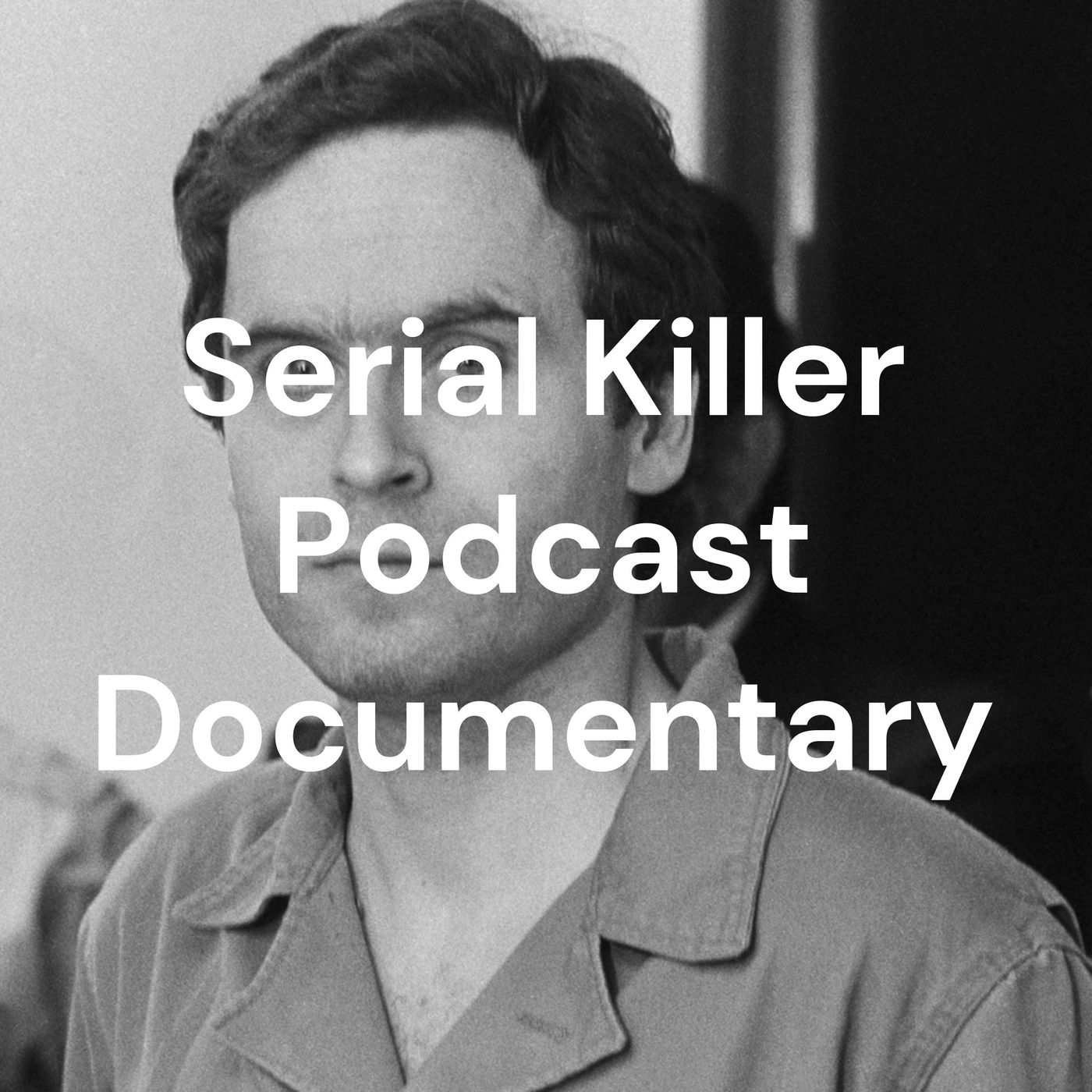
Serial Killer Documentary - Joseph Franklin - Prison Interview
Get every episode summarized
Each time Serial Killer Podcast Documentary publishes, we email you a written briefing from the transcript — the topics, who appeared, and any specific claims, with the ad reads skipped.
Email me new episodesFree for 3 shows. No card needed.
About this episode
“Meet the Red Bull Dragonberry Emergizer. It's one of the many new drinks out now. Who knew ice cold drinks could be so fire? You are about to enter the criminal mindscape of Joseph Paul Franklin. Did you feel like you were actually hunting human beings?”From the transcript
Get every episode summarized
Each time Serial Killer Podcast Documentary publishes, we email you a written briefing from the transcript — the topics, who appeared, and any specific claims, with the ad reads skipped.
Email me new episodesFree for 3 shows. No card needed.
Hosts & guests
Transcript ready
537 searchable segments. Every word is indexed and playable.
Full transcript
Serial Killer Podcast Documentary — Serial Killer Documentary - Joseph Franklin - Prison Interview. Machine-transcribed; use the interactive transcript above to jump the player to any line.
Meet the Red Bull Dragonberry Emergizer. It's one of the many new drinks out now. Who knew ice cold drinks could be so fire? Try them all only at McDonald's. You are about to enter the criminal mindscape of Joseph Paul Franklin. Did you feel like you were actually hunting human beings? Well, it was. You wouldn't call that hunting them? It was shooting them. On a mission to start a race war in America, Franklin ruthlessly murders 20 people. We're asking him to open up and talk about who he is, his crimes, why he did what he did. The only thing we can tell you at this time that we're positive of is that there have been two people shot here at this location. Larry Flint, the publisher of Hustler Magazine. He and his lawyer were walking down the sidewalk when somebody on the side, opened fire. His methods vary, making him nearly impossible to catch.
We know that they were shot by a sniper. The rifle is a high-powered rifle with a scope on it. Remember the two teenage boys in Cincinnati that you shot? You could see that they were young. The well-known Clans leader said, when I go out to kill rattlesnakes, I don't make any difference between little rattlesnakes and big rattlesnakes because I know the little ones who grow up and bite me when they get big. So I looked at blacks the same way. I totally understand that he will be in control of this interview. And that is the way I'm planning it. Now, a veteran FBI profiler enters death row and steps into the criminal mindscape. These interviews for me are fascinating. They are absolutely the most intriguing experience that I've had in the FBI.
Mary L.O.T. Spender career at the FBI, including 15 years in the Bureau's famed profiling unit. I work specifically on profiling serial murder cases and assisting law enforcement all over the world in how to understand these offenders and how to make sense out of their crimes. I think Joseph Paul Franklin will be very interesting to talk to because if you scrape away the racism, he is still a cold-blooded, predatory individual who was driving around the country, shooting and killing people. And so to say that that's the reason that he killed is very difficult for me to accept. Interviews like this are extremely helpful. Will they identify all the answers? No. But they will give insights into why certain behavior at the crime scene, why not certain behavior? Who are we looking for? What were they like 20 years ago? What was their family like? How are they deciding on their victims?
Why did they kill some victims and some they didn't? He doesn't have to talk to me. He does not have to open up to me. He can walk out of that interview anytime. By way of background, I'm a retired FBI agent after about 28 years as an agent. Oh yeah? And... Yes, a lot. And actually the last 15 years I've spent back in the FBI's profiling unit. And we're located at the FBI Academy. And most recently, my area of expertise was in the serial killer unit. Well, I don't claim to be a serial killer though. Okay, I don't know. And I want to talk to you about that. You'll put myself in that category. Okay. Can you tell me what your idea of a serial killer is? Well, I've read in the news, the definition in the newspaper, you know? Sure. And it says that someone who commits various killings with cooling off periods in between. Tell me why you don't fit into that definition of a serial killer.
Let's say Ted Bundy, who was out when you were out. I don't feel like I have anything in common with the dude. You know, I'm just a completely different type of person, you know? A lot of these other criminals, you know, these serial killers, they were just into one thing, strangling women and all that stuff like that. See, they've been trying to associate me with the scumbags like Ted Bundy, who are killing innocent women, you know? And take everything political away from my case over and over again. You can hear on the newscast, serial killer, that serial killer, that, to try to cite hatred against people like me, you know? I was an alpha-monger, I was motivated by the love of the white race. Joseph is a serial killer. And he's different from other serial killers, just like they're different from him. There's no one profile of a serial killer. So you have cases where you were a sniper and then you have... Because you were not a sniper. ...where you were not a sniper. So you really have both.
Yeah. In 1977, Joseph Paul Franklin, aged 27, is a versatile criminal, a successful shoplifter and bank robber who is ready for murder. He claims to have found his very first victims somewhat spontaneously in Madison, Wisconsin. He was in the parking lot of a shopping center. He had a 357 magnum tucked alongside of him. This first case in Madison, Wisconsin was kind of an unplayed thing. What put you in that parking lot that day of the shooting? Well, I was driving around and I saw a couple of young girls standing at a bus stop, pull over and picked them up. I was often do that. I would just pull over and see a couple of broads, waiting at a bus stop and off for the marines. They said, they go into this mall, so I gave them a ride to that mall. And I'm pretty tall and black dude, about 6'2", was sitting in the car with a white girl. And I beat that him because he was driving too slow.
He then began traveling about five miles an hour just to aggravate me. So I sat on the horn then. He held out, so he stopped his car and front of me, got out of the car and began walking toward me. He had his really scowl on his face at first, walking toward me. So without even thinking, I just reached in there with my right hand and whipped out my 357 magnum with a 6-inch barrel. And then when he saw the gun, the scowl turned into a surprise. And then, he just closes out like that, just keel over. That was a very risky thing for you to do. There you were in a shopping center, and it was daylight. And there was a whole bunch of people. How much people? Why did you shoot the woman in the car? I figured, well, I'm gonna get some interracial couple. She was one half of an interracial couple. I thought, well, I might as well get both of them because I'm gonna probably get caught for this. So I shot her and sped out the parking lot. Man, I was burning rubber, man. You know, trying to get out of there.
And luckily, there was a whole bunch of lights all in front of this mall. You know, and every single one of them turned green for me. I got on the interstate and took off. And got out of medicine with constant. It's pretty amazing that that's the first time that you committed murder. That's a pretty cold-blooded thing to do to a complete stranger. Yeah. Joseph identifies a first murder, which is a double murder at Point Blank Range. Joseph has very good recall of that incident, broad daylight, and a parking lot of a shopping center. My question is, is that, in fact, the first incident? Or is that the first one that he wants to talk about? What were you feeling at the time you pulled that trigger? Fear, you know, I fear... If I get him to fight with that guy, I'll be arrested for all this bank money I got in the trunk. I just hit the bank in Columbus a few days earlier, you know. He had a very difficult time describing his own internal feelings.
He could say what he was thinking, but he could not articulate or describe how he was feeling. I don't know, I guess it's kind of like, you know, you see this stuff going on on TV a lot, you know? And it seems to decent to touch you. Maybe that was it. I did not do an official assessment of Joseph as to whether or not he was a psychopath, but it's my opinion that he does show traits of psychopathy. This underlying personality disorder known as psychopathy does seem to be present in most serial killers. It's difficult for people who do have traits of psychopathy to identify feelings because they don't feel the same way that regular people feel. Coming up. Did you feel like you were actually hunting human beings? Well, I was. You know, the white people were sitting there and waiting for, well, I'll game, I guess.
Before launching his career as a serial killer, Joseph Paul Franklin was a deeply troubled young man, searching for identity and belonging. First among evangelical Christians, then with right wing extremists. During the early 70s, you kind of see a metamorphous with Franklin. He begins to associate with the Nazi party. He begins to associate with the Ku Klux Klan. And then you see a little bit of the trial and errors of his criminal behavior. You became, for a brief time, a member of the American Nazi party and even the Ku Klux Klan. I was involved with the party and then that was in 1973. You weren't a member very long. Just a year for that one. I didn't stick with any of them. One of them were just filled with FBI informants and people just always trying to get information from you. But how did these groups think about you? I think you weren't there for a very long time. Were they too conservative for you?
They were mostly weren't doing anything. Most of them were in the talking. The average Klan's mother, the average Nazi, you know, they're all talk and that's that's it. And what were you into? I was into action, you know, doing things. I wanted to get, you know, actually do something. I wasn't sure exactly specifically what I wanted to do, you know. So you became kind of a loner. Yeah, yeah, you got to be because you can't trust anybody. I thought when he gave that explanation, he was more or less legitimizing why he left those organizations. Even though he touched on it, I think part of the reason he left was because they weren't extreme enough for him. Then you begin to see him focus a little more and more on what he ends up being for the rest of his time before he's arrested, which is a sniper. St. Louis, 1977. Meet the Red Bull Dragonberry Emergizer. It's one of the many new drinks out now.
Who knew ice cold drinks could be so fire? Try them all only at my dogs. Two months after Franklin's first murder in Wisconsin, a group of people chat in the parking lot of a synagogue. They are about to become the targets of Joseph Paul Franklin's first sniper shooting. There was a total of five shots. One shot struck a man in the chest, which killed him. Police that are arriving on the scene didn't know where it was coming from. The only thing we can tell you at this time that we're positive of is that we have the weapon, the rest post, and we have five spent cartridges, which is right up there at that telephone pole. It appears to be someone planned to come here and do justice.
This was not an impulsive act whatsoever. This was an act that required planning lots of patients. He chose this location. It had all the features that he was looking for or that he needed to set up his rifle to give him an escape route and to be able to sit there for two hours, laying in wait for his perfect victim. The victim is almost the last thing he decides to do before he commits the homicide. For his first sniper killing, Franklin boldly leaves the murder weapon behind, having removed both his fingerprints and the serial number from the rifle. The St. Louis police eventually traced the gun back to Texas. It would never leave them to Franklin. The arena of a sniper is a very unusual type of serial killer. You choose the place that you're going to shoot. You're kind of off, so minimizes any contact whatsoever with the people you're going to shoot.
And I'm wondering, what is it like when you're laying there getting ready to have a person walk in front of your sights? The white people will sit down there and wait for wild game, I guess. I guess it's the same, you know, hunters who find a tree stand or something. It's a similar situation. I guess you sit there waiting until the target appears and shoot. I would just take out an area, find a good place to hide, bushes or just to vacate yard, as long as it was dark. And I knew that I could see them, but they couldn't see me. You go over everything, every little step you'll take, so that when you do get all you're drilling going, you can just fall to plan that you already had in mind. You don't have to worry about getting so scared that you can't even move, you know. Did you feel like you were actually hunting human beings? Well, I was. You wouldn't call that hunting them? I would. Well, hunting them and shooting them. Well, you know a lot of people in the military do the same thing all the time, kill people they don't even know. Some of the heroes of this country were the same way, you know, but they killed the enemy soldiers,
so they're not looked down despised by the society, whereas people like me are. Some people who just born homo-synos, what I'm saying, and believe it or not, you'll find a lot of people in the Bible who fit into that category who are prophets of God. Look at all the Philistines, Samson killed. He's implying, how can you judge me for doing the same thing that people in the Bible have done, and heroes in Vietnam have done, and soldiers in Iraq have had to do. So he's saying, I had to do this. This was a good thing. I mean, it may sound bad, but it's a good thing, and I had to do it. So don't judge me on the basis of my actions, because I'm not that different from people in the Bible. I'm not that different from heroes in Vietnam and in the Iraq War. Coming up. Blacks all over the country will be afraid to walk down the street. I would be terrorizing the entire United States. Just one layer. What a sense of power. After his st. Louis sniper killing, Joseph Paul Franklin hits the interstates, looking for new opportunities to carry out his racist wrath.
From 1977 to 1979, he commits similar shootings in Virginia, Tennessee, and Oklahoma. You begin to see this really what I would call very mission-oriented serial killer, who's killing a lot. He's driving around a lot. He seems to have perfected the method of his killing. In addition to blacks and Jews, Franklin sets his sights on an infamous magazine publisher who dared to print pictures of an interracial couple. Larry Flint, the publisher of Hustler Magazine. He and his lawyer were walking down the sidewalk when somebody on the street opened fire, shooting Flint in the stomach and his lawyer in the side and then escaped. Both are in critical condition. To Franklin's frustration, neither the police nor the media recognized that one person is behind this shooting. The one in St. Louis and those in other cities.
These would have been very difficult crimes to link. There's such a limited amount of evidence at those crime scenes. There's no interaction with the victim, so the detective has very, very little to go on. By 1980, Franklin finds a strategy he thinks will demand law enforcement's full attention. So what did you decide to do in 1980? Well, just to keep doing a whole lot more of them so they could not ignore it. All the law enforcement officers knew all about it, but they wouldn't tell the media that it was a national thing. I guess they figured until we catch the guy, we're not going to let him give him any kind of national publicity. But had to be frustrating. Yeah, it was kind of frustrating, but that just made me want to do even more. That's why I wanted to shoot Jesse Jackson the most. That's when I stalked up in Chicago, went to Operation Push Headquarters up there. Evidently, I might have been a little too obvious because I was driving down that road one day, and I looked and saw a car behind me. And I thought, it looks like that dude has fallen me in that car, and I'm more police car.
I'm going to take the next right, and if he takes the right to, I know he's following me. So I took the next right, and sure enough, he took the right to and kept on going. I thought, somebody is tailing me here. I better get out of town, you know? The paranoia really in a way is very justified because he knows that he has shot and killed people all over the United States. It's that personality trait of his that actually led to his identity and ultimately to his arrest. After Franklin's plan to shoot Jesse Jackson fails, he stumbles upon another high profile target, Civil Rights leader Vernon Jordan. So I left Chicago at that time, headed toward Indiana, and I stopped in Fort Wayne that night, and just happened here on the news that Vernon Jordan was speaking at the Marriott Motel. At such a such a such a time, I thought, well, if he's speaking at the motel, he's probably staying at the motel. So I called the motel up from my motel room, I said, because you tell me what room number Vernon Jordan is in.
She said, Sirass against policy, I can't do that. We're not supposed to do that. Somehow I was able to convince her to give me the room number. So that's all it took. I was able to set up an ambush out of the middle of the table by the interstate, you know. And so that went down. Vernon Jordan is said to be very serious, but at least stable condition at a Fort Wayne Indiana hospital this morning, while local and federal officials are trying to find out who shot him and why. He talks about going after high profile targets like Mr. Jordan and Larry Flint, and actually stalking them, getting up close to where they were staying and where they were at the time, which really is very stupid. Because when you go after people who are famous, you're going to unleash law enforcement from all over the country. Was there something that triggered it that happened to you or what did you decide that I need to kill somebody? I was actually trying to get a race war started. That was my goal committed enough racial incidents all over the country to get the blacks all stirred up, you know.
And they would start killing whites, and then the whites would then get angry and retaliate for that, and they would go back and forth until a full scale race war was going on. Joseph wanted blacks to use to fear that anywhere they went, they could be gunned down. That is such a grandiose scheme and it's unrealistic, and having unrealistic goals is consistent with people who manifest traits of psychopathy. In fact, that's one of the traits of that disorder is that they have unrealistic goals that never would have happened, and yet he believes that he was capable of being able to accomplish that. I guess if I would have been able to do it long enough, they would have had to give me national publicity. Blacks all over the country, international couples would be afraid to walk out of the street. I would be terrorizing the entire United States, just one million. What a sense of power. Yeah, they didn't want to freak out the blacks all over the country. That's why they wouldn't give me all that new national permission. Wow, that must have made you feel pretty important.
No, I wasn't really important. You know, it was just the fact that the acts I was trying to do, my goal was to get the race war started. But you weren't successful. No, I wasn't successful. I got caught after the Salt Lake City shootings three years later. I think underpinning a lot of his criminal behavior was the need for attention, this need to get credit for these crimes. It's what we call need-driven behavior. And his need-driven behavior was law enforcement recognizing that one person and one person alone was capable of creating chaos and fear in the United States. Oh, my God. Remember the two teenage boys in Cincinnati that you shot? Mm-hmm. You could see that they were young. Yeah, I was trying to wrap it up the violence. Meet the Red Bull Dragonberry Emergizer. It's one of the many new drinks out now.
Who knew ice cold drinks could be salt, fire, try them all only at McDonald's. In 1977, serial sniper Joseph Paul Franklin begins wandering the country shooting people he calls enemies of the white race. His victims had chosen at random except for two civil rights leader Vernon Jordan and hustler magazine publisher Larry Flint were targeted for their high profile work. By 1980, Franklin, feeling that his crimes are not getting the attention they deserve, escalates his violence. A serial sniper is a tough, tough offender to understand. He decides who will be in his sights. He realizes that that person's life rests in his hands. So the ultimate thrill and sense of power and control over another human being has to be considered as part of the motivation for being a serial sniper.
It appears that Franklin also decides to expand his target list to include children. On June 8, 1980, the sniper unleashes his pain on Cincinnati, Ohio. You have two teenage boys who are shot and killed in Cincinnati. No one sees anything, no one identifies anybody that was responsible. The victims, Dante Evans Brown and Darryl Lane, cousins and best friends were 13 and 14 years old. Give our brother Dante a peaceful rest in this grave. The father, the son and the whole spirit. Come on you and remain with you forever. Amen. Up until that point, we had not seen really young victims 13 and 14 years of age who now were targeted by this serial sniper. And it really suggests that Joseph was changing his MO.
He was increasing the number of crimes and he was even changing his victimology to include these two very sympathetic victims. If we could go back to the choice of the two teenage boys in Cincinnati, the two teenage boys in Cincinnati that you shot. They were 13 and 14 and this was during that period of time that you described that you were going to do things differently. Yeah, I was trying to ratchet up the violence. Is that why you picked two young teenage boys because you had a scope on your weapon at that time and you would have been able to see that they were young? You could see that they were young. There was only one time during the interview when his body language became defensive and that was when we started to talk about the homicide and Cincinnati involving two young African American boys ages 13 and 14.
I couldn't really tell exactly how old they were. I figured they were young but maybe just 18 or 19 years old, sitting there in a dark and seeing just your silhouette. The shadows, it was kind of hard to tell how old somebody was. I had no idea they were that young. I knew from reviewing the case and from talking to other people that not only could he have seen through that scope, but he wasn't all that far away from those two young victims. When you know only shoot young children, the repercussions for you as the offender can be far greater, especially when you are incarcerated in prison. And people think of you differently when you shoot and kill children. It didn't matter what they mattered in that. I had no conscience as far as the blacks go. You know, when you remember the clan and you were spending years around white supremacists, you begin thinking of blacks as non-human. Connie Lynch, who was a well known clans leader, said, when I go out to kill rattlesnakes, I don't make any difference between little rattlesnakes and big rattlesnakes because I know the little ones who grew up in bite meat when they get big.
So I looked at blacks the same way. So it appeared to me that he was speaking out of both sides of his mouth. He was talking about not knowing that they were younger victims. And yet if he shot two young boys, he knew that he would get much more attention from the media and much more attention from law enforcement. Coming up. I was a little kid. It was beat up and starved. You get so traumatized, you just try to pay back other people all the pain that you suffer. In the summer of 1980, an unusual type of serial killer, a racist sniper, roams the US looking for targets, in states from Virginia to Oklahoma, he's used high powered rifles, shotguns, and a 357 magnet to kill.
In Salt Lake City, detectives are facing a double homicide that has all the trapeze of this serial killer. We had reports of several shots fired. When we arrived here, we had two victims down. We do have confirmed on two of the victims that they have expired. Two young men, 18 and 19, both black and well regarded in the community, are dead. The two white girls they were jogging with escaped. I responded that night. It looked like the sniper had laid in weight inside this field and then shot these four people as they were coming across the light of the intersection. Both the boys were shot even after they had quit moving. They weren't wounds to the legs or the extremities. These were all in shooter talk. These were all like kill shots. I'd like to talk to you about the Salt Lake City shooting. That was August 1980. Why did you travel to Salt Lake?
I've been there before already back in 1975 and had noticed a lot of misadjination. What is that? The next thing of the racers, especially white with non-whites, it would be a good place to target. I saw two interersion couples jogging toward the park, two black dudes and two white chicks. I thought, well, I'll just keep waiting here until they come back. I was a man to dirt there so I was concealed with tall grass and everything. Salt Lake City had been used to dealing with a number of very violent crimes. There was tremendous experience in the department, but this was a very different kind of offender. Although Franklin has killed his intended targets, the crime is sloppy. We did find some tire tread marks in the field where the shell casings were found. They were a prototype tire and they were only sold in a very limited amount of states, but every one of those states were east of the Mississippi River. They had to be from somewhere back east.
It's not long before witnesses come forward and describe seeing a dark colored Camaro parked in the field near the sniper's position. We found a man who was walking by about a week later and he actually saw the Camaro and he gave us a very good description of the car. Soon a local prostitute confirms that she's done business with a man who drove a similar car. He didn't want to trick in the car so he says, we'll go to my motel room. She thought he was from the south because he had a southern accent, but she couldn't remember where in the south. What made it interesting to me is she mentioned that she saw some handguns and rifles in his room. Then he told her that he was a hitman for the Cluclex clan. The witness is able to help police put together a composite of the suspect. When we knew that there had been other killings back east, and we now knew that this guy was from that area. I think from the composites alone, we're pretty much convinced that we were on the right road.
The registration card from the motel also lists the Camaro's license plate number and the name of its driver. While the information is phony, Salt Lake City police soon discover a trail of similar aliases in motels across the region. So from the 9th of August to August 20th, we could place him in I think 7 or 8 different motels. We never found him after August 20th, which was the night of our shooting. It's like he disappeared off the face of the earth. The Salt Lake City police catch a break when one astute motel owner writes down the Camaro's real license plate number. A month later, this information pays off. Meet the Red Bull Dragonberry Emergizer. It's one of the many new drinks out now. Who knew ice cold drinks could be Salt, Fire, Tridomore only at McDonald's.
I think 11 o'clock one night, I got a call saying, head to the airport, they found this guy and were flying you to, I think the little town was called Urlinger Kentucky. And they'd arrested him at a motel on our warrant. In an odd turn of events, police in Boone County, Kentucky, while arresting a burglar at a local motel, encounter an angry and paranoid man in the room next door. They check his identification, they check his vehicle, and they realize that his vehicle parked in the parking lot is a vehicle that is wanted by the Salt Lake City Police Department in a double homicide. Finding two high-powered rifles and handguns in the man's room, police take him in for questioning. So law enforcement in Kentucky didn't realize when they brought him into the interview room, really who they had, they didn't know how many homicides that he had committed, and how committed he was to not being apprehended.
And it wasn't until they got him into the station, and then they started talking about Salt Lake City and shootings, I think, then that's where he got worried, and he manufactured his escape, and he took off. During a break in the interview, Franklin escapes out an open window and disappears. One of America's deadliest serial killers is back on the street. But now, police have his real name. On September 25, 1980, Joseph Paul Franklin, age 30, is now the object of a nationwide man. One month later, the FBI, aware that Franklin regularly sells his blood, catches him at a blood bank near Tampa, Florida. Franklin proclaims his innocence while proudly admitting his racist views. Oh, definitely. How do you feel about blacks? His denials don't last. In the coming years, Franklin confesses to numerous murders.
For the sniper killing at the St. Louis synagogue, Franklin is sentenced to death. Mr. Franklin has said that his motivation was to eliminate what he referred to as ugly people from the community. In my opinion, that is an explanation that he thinks would give him more credibility. But as far as what caused him to become a serial killer, I think that was an excuse. So how did you, Joseph, evolve to the point where you could do something that seems so cold-blooded? You get so traumatized that you're just trying to pay back other people all the pain that you suffered. That's what happened to me from the time I was a little kid. It was yelled at all day long and beat up and starved. It had an effect on me when I got older, you know? It's about everybody in the family had alcohol problems. You know, they all drank my crazy, including my dad was an alcoholic.
After spending all his paycheck, my mother would start flushing at him. They would be fighting, cussing and screaming at each other. And he would be beaten her. That's the way it went. A member of the landlord would come and bang on the side of the trailer and he would just terrorize us. He would hit the trailer real bad and start yelling at my mother to pay the rent. And she had no money because my father would take all the money and spend it for alcohol. Eventually they split up in 1965. They were divorced. And they left us on welfare. And so she began abusing us even worse after he left. I was the only child in the family who was always bringing animals home. One afternoon there was a little terrier dog for the neighborhood. We were all out in the yard of us kids petting this little terrier. It was a cute little dog too, you know, with a little tail that stuck straight up. And just as friendly as it could be, you know? Mom had been sitting in her lawn chair and watching us and went into the house. She said a pot of water on the stove and began boiling it.
She got the water up to a full boil, you know? And poured it right on the little dog's back. And he went, you know, screaming and running away real fast, you know? She had a lot of cruel behavior. Oh man, she was a sadist. How old were you? About 10 or 11. Joseph talked about a childhood that was chilling. The question is, despite the harshness and the severity of the abuse, does that act as a cause and effect for him later to go on and become a serial killer? We have no research at this point to say that there is a cause and effect just with childhood abuse, because we know that there are, unfortunately, many people who are raised in very abusive situations and they don't go on to become serial killers. So I think we have to incorporate that environment that he described. But I think it would be wrong to say that he was a serial killer strictly and solely because he was raised in an abusive environment.
Oh my god. Do you think you were born to kill him? Yeah, I guess you could say that. I was under the influence of a devil. What do you think is going to happen to you when you die? Joseph Paul Franklin has been on Missouri's death row for more than a decade. Extreme hatred and what appears to be an utter lack of conscience. Draw them to kill some 20 people and injure many others. How do I feel about someone like Joseph? Do I pity him? What are my feelings towards him? I feel that it's important that we understand how he developed to be able to go back and say, was it possible early on to prevent this? Was it possible to do something that would have changed the course of history? You're first thoughts of killing somebody. How old do you think you were?
About 17 years old, I think. When I was watching all these Westerns on TV, I guess I would see people wanting them to get shot. Here he was watching TV, watching Westerns, lots of shootouts. He particularly enjoyed when the bad guy was successful in the late 50s and during the 60s, the era of Vietnam. John Kennedy was assassinated by a sniper. Charles Whitman was a particularly successful sniper at the University of Texas in 1966. There was a period of time of a lot of violence. A lot of violence that didn't make any sense. So you have to wonder about the impact of some of the events of that period and what role they played in him and his decision to ultimately become a serial sniper. Was there a point in time where something could have been done to put you on a different course? Was there some kind of intervention that could have happened? If I had some people that teach me and encourage me to go to school and get an education when I was little,
my life would have turned out a whole lot differently. Do you think you still would have become a serial sniper? I don't think I would. I know. I wouldn't have built up all that hatred over the years. It's the thing that people, everybody does. When they get hurt, they want to pass that pain on. I just kept getting angry, you know. Do you think you were born to kill? I guess you could say that. Some people just born with a streak that they can do something like that. There's other people, I guess, if the same thing had happened, they wouldn't have done anything. Joseph referred to himself in previous interviews as a natural born killer. And I asked him about that. And he agreed that that was a possibility for him. Again, almost a recognition that in spite of this environment that he described as abusive, he still was a natural born killer. And the research up to this point seems to suggest that there seems to be some part of it that is hard-wired. In other words, genetic link to this personality disorder.
Do you think there was a part of you that at that time enjoyed the killing? I wouldn't say enjoy it. There's just something I felt I had to do. There was nobody else doing it, so I figured I had to do it. How did you feel once you finished the shooting? I was just glad to get away. Was it sexually arousing when you were pulling the trigger? Not at all. Have you had violent sexual fantasies? What do you mean by violent sexual fantasies? Violence and sex are involved in your fantasies. That'd be a VSF, huh? No, I never had any of those. I wouldn't do that. The only thing I got sexually aroused with was women. I was either out chasing skirts trying to get laid or I was out trying to kill an interracial couple or a black man. That was what I was spending most of my time doing. For some people, though, killing is very sexual. I know there are some sick companies out there. I don't follow that category, though. The most frequently seen serial killer in my unit are those serial killers who are motivated for sexual purposes.
In other words, they're sexually gratified in some way as a result of murdering the victim. Joseph does the definition of a serial killer. Now his motivation was different and he talked about his motivation being non-sexual, which is obviously a very touchy area to get into with an individual. Is he telling the truth? There's no way to know that. We're depending on him to tell us that. If it is true, it may be too embarrassing for him to admit. Or they may not have been sexually motivated. And as we close, let me ask you this. How do you feel about the people that you killed? I feel sorry for him. I regret having done that. What does regret feel like to Joseph Paul Franklin? Well, in other words, I just wish I had not done it. I feel so sorry for the people. It was really wrong for me to do that.
I think like most serial killers, Joseph knows right from wrong. He talked about regret, but whether or not that was a sincere, remorseful regret, I can only tell you what my opinion was based on my experience with these types of offenders. And I did not walk away with the sense that he had those feelings of remorse and guilt. I was under the influence of a devil to be quite honest. I know that sounds, you know, I'm not trying to say the devil made me do it, but the devil does put thoughts in people's minds. That is a fact. At the time, when Martin Luther King and Robert Kennedy were both assassinated the same year in the Port A. Carrida article that was titled, Two Enemies of the White Race Die. That's the kind of stuff I was feeding my mind for years and years. That's why I began to think of black as nothing but subhumans who go around committing nothing but rage and raping white women and killing.
I know that's just a criminal element now. There's a lot of hard work in blacks who don't do that stuff, you know. You mentioned heaven and hell. Yeah, I will miss those and so does the Quran. What do you think is going to happen to you when you die? Well, I'm trusting in Jehovah's mercy, you know, trusting the guy's mercy. I think Joseph lives in the here and now. I think he lives for the present moment. I think he's obviously cognizant or aware that he has a death penalty hanging over his head. But there also may be a part of him that thinks that something may happen ultimately and he won't be executed. Many serial killers who are psychopaths are very optimistic in terms of their future. Thank you very much. Joseph was hardly disappointment. Joseph's smart, he's articulate and in listening to him talk about what he wanted to do, what his hope purpose was, made him even more frightening of an individual than we realized 37 years ago.
I think that he was absolutely a very, very dangerous serial killer set apart from many of the other ones that we saw then and that we see today. One of the reasons for this kind of interview is not just to develop a better understanding of these kinds of offenders, but also to help investigators the next time that this type of crime occurs. Joseph Paul Franklin will not be our last serial sniper. And we know that because we had the beltway snipers right after 9-11, a lot of the information that Joseph talked about is information that we can take into not only prepare the investigation, but also help prepare for the interview with the next serial sniper.
More episodes
More from Serial Killer Podcast Documentary

Killer Couples Documentary - Fred & Rose West: The Couple That Killed 12 Kids
Serial Killer Podcast Documentary
True Crime Documentary - Teen Slaughtered with Sword After Meeting Up with Girl...
Serial Killer Podcast Documentary

Serial Killer Documentary - Mick Philpott
Serial Killer Podcast Documentary
Serial Killer Documentary - This Serial Killer Kept Bodies In His Closet
Serial Killer Podcast Documentary