Get every episode summarized
Each time Rosebud with Gyles Brandreth publishes, we email you a written briefing from the transcript — the topics, who appeared, and any specific claims, with the ad reads skipped.
Email me new episodesFree for 3 shows. No card needed.
About this episode
Rosebud with Gyles Brandreth is made possible by:
“During Lowe's pro savings days, my Lowe's pro rewards members can save up to 20% when they buy more job site materials. Save 20% when you buy 30 or more select bats and rolls of fiberglass insulation. 24 more cartons or pales of joint compound tape and bead.”From the transcript
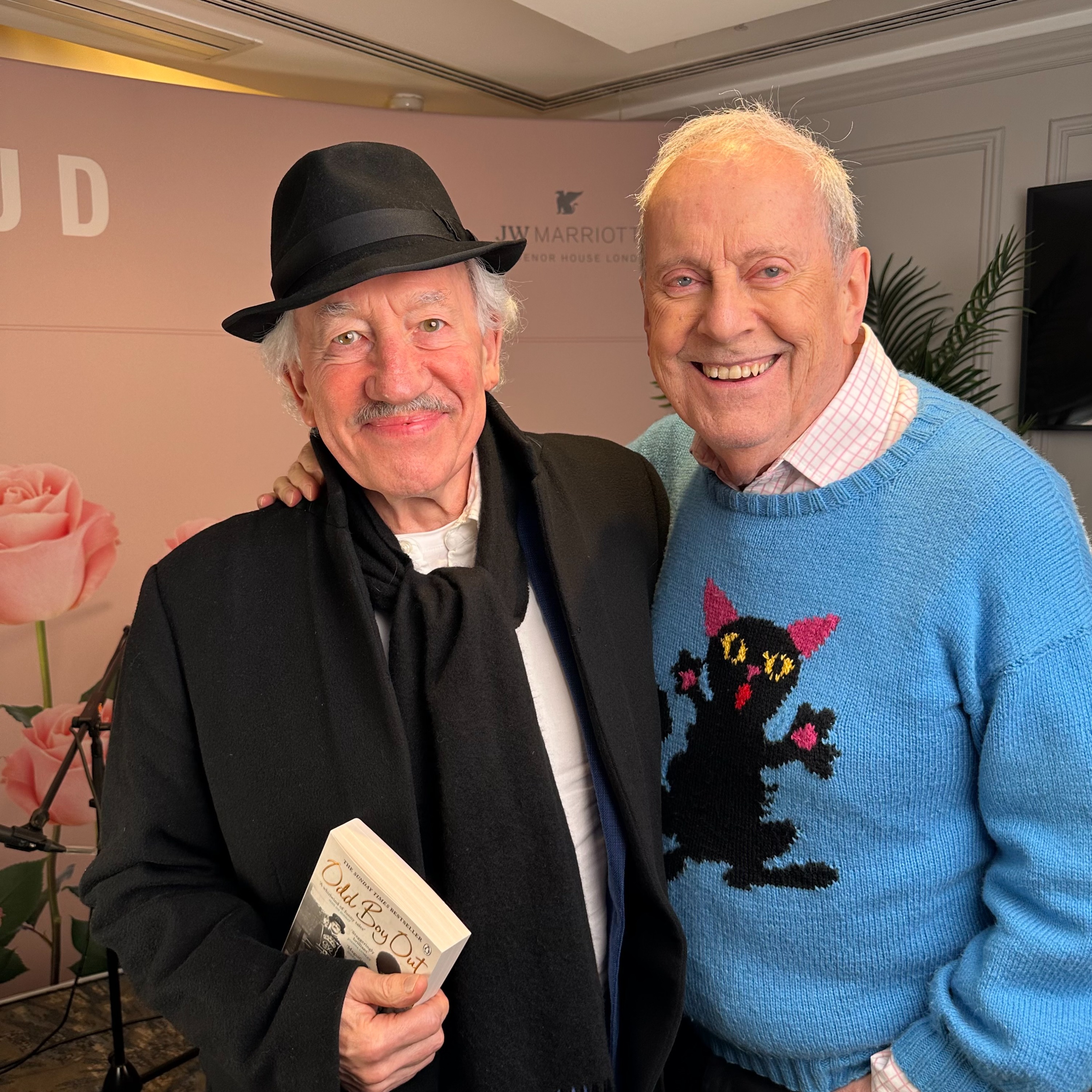
One of Britain's best-loved and most talented actors for you today: Simon Callow. In this gem of a conversation, Gyles hears about Simon's childhood in Streatham, where he was dazzled by his theatrical grandmother but had a more complicated relationship with his "odd" mother. His father left when he was small. Gyles hears about formative teachers, an early love of theatre and literature, and music. Simon also talks about university in Belfast, Michael Mac Liammoir, drama school and how writing to Laurence Olivier landed him a job at the National Theatre.
This is a fabulous episode, one of the best. We know you'll enjoy it - and our deep gratitude to Simon Callow for taking the time and trouble to record with us.
Hosted on Acast. See acast.com/privacy for more information.
Get every episode summarized
Each time Rosebud with Gyles Brandreth publishes, we email you a written briefing from the transcript — the topics, who appeared, and any specific claims, with the ad reads skipped.
Email me new episodesFree for 3 shows. No card needed.
Transcript ready
776 searchable segments. Every word is indexed and playable.
Full transcript
Rosebud with Gyles Brandreth — Simon Callow. Machine-transcribed; use the interactive transcript above to jump the player to any line.
During Lowe's pro savings days, my Lowe's pro rewards members can save up to 20% when they buy more job site materials. Save 20% when you buy 30 or more select bats and rolls of fiberglass insulation. 24 more cartons or pales of joint compound tape and bead. Or when you spend $200 or more on free M painting and job site essentials, members give more at Lowe's. Val of your 925, while supplies last, selection varies by location, program subject to terms and conditions, C-Lowe's.com slash terms for details, subject to change. This ad is sponsored by ZockDoc. Hi, it's Danny Pellegrino from Everything Iconic. Have you been putting off that annual doctor's appointment because you don't want to make the call? Or maybe you've been meaning to find a new dentist, but you have no idea where to start? I find that's especially true when you move. It's hard to find your people. I've been there, which is why I use ZockDoc. Now, as a busy podcaster parent and someone who's always juggling a million things, I love anything that makes life easier. And ZockDoc lets you search and compare local in network doctors with over 250,000 providers
across more than 200 specialties. You can read reviews from real patients, find a provider who feels like the right fit, see actual appointment openings and book instantly. I recently had a last minute health issue pop up and you just see someone fast instead of calling around or sitting on hold. I found a doctor on ZockDoc and booked an appointment in just a few minutes. It made the whole process so much less stressful. Ready to be seen? Download the ZockDoc app today. That's ZockDoc. Z-O-C-D-O-C and book that appointment on your to-do list. Gather ye rose buds while you may. There's a new guest waiting with quite a lot to say. So I'm going to shut up and say welcome to another episode of RoseBud. We do indeed have a very special guest for you. Queue the music. They're ready.
This week we've got an actor on RoseBud. One of my favorite actors. He's also one of my favorite writers and one of my favorite people. I've known him for quite a while, not that well, but we have a number of interests in common. Chiefly I suppose Oscar Wilde. I'm president of the Oscar Wilde Society and he has played Oscar Wilde on stage. I think we were most recently together when we were in Paris last year at the Péâle-Acheire's cemetery where Oscar Wilde is buried and we were together. Me with my wife, Michelle, he with his husband, Sebastian, they're at the tomb of Oscar Wilde 125 years to the day. In fact, to the hour since the death of Oscar Wilde. So Oscar Wilde very much informed his youth. He is gay. That is, we're saying only because I think when in the 1980s he became one of the first high
pro-file British actors to come out as gay. He described it as his biggest act of activism. But I think of him principally as a writer because he's written some wonderful books, Being an actor which was an exploration of the craft of acting. He wrote when he was very young. But I have his biographies of Austin Wells, of Charles Lawton, both of which I have devoured. The Austin Wells is three volumes so far, this more to come. He's written about Wagner. I have that book. I've not opened it. I'd confess that because music is a normist, he's not so big to me. But Dickens and Shakespeare is written about them because he's played Dickens. He's played Shakespeare. Have you guessed who he is yet? In the theatre, his breakout moment was when he appeared as Mozart in Amadeus at the National Theatre at the end of the 1970s. Famous, of course, for a number of film roles, a room with a view,
four weddings in a funeral with that wonderful reading of the Ordin poem, Stop all the clocks. Shakespeare in love, which I saw again just before Christmas, and he's brilliant in that. I would then morris all those great merchant ivory films and of course on theatre television. Have you guessed who he is by now? It's Simon Callow. And we're really going to talk today, I hope, not about the stuff we all know about, you know, the stage and movie career, but about his origins, what made him the person he is. I particularly want to hear about an actor called Michael McCleamore. If you don't know who he is, well, I'm going to discover more. He was an extraordinary character. An extraordinary character is a part and part of the story of Simon Callow. So, enough from me, let's cue that music and introduce you to Simon Callow, author, actor, director, commander of the Order of the Brigham Pa, and a very interesting human being.
Give it a music. Simon Philip, Hugh Callow. Born, I've got this right, 15th of June 1949. Indeed. The question is, what Simon is your very first memory? Well, I think my very first memory, and I'm sort of suspicious of memory generally, but anyway, I think my very first memory is me tottering down the hall of my grandmother's house in a shantung running towards my grandmother, who was the sort of salvation of my life, and just a joy of going into her room to see her. That's it, and there's no real kind of punchline to the memory at all.
It's just that there she was, this extraordinary copiously built woman, who I utterly understood me utterly, and who I see more and more and more is the foundation for the basic optimism, and Jouada Vivo, which I'd still flickeringly maintain in my don't even. So where was this, and who was this lady? What was her full name? Who was she the mother of, and why did she come to be the central figure? It was in Stretem, in London, where I was born, in a nursing home, so I went up the road from my grandmother's house. And of course, it was a semi-detached house of no great distinction, or size, but to me it was a magical castle. And her name was Vera Agnes Geese. Geese was,
my grandfather Geese was Danish, and an inventor, and an engineer, and a thoroughly ill-humoured man who dropped dead at the age of 41. So he was long in the past, I never met him at all. She, my grandmother, had been a singer. In fact, a rather remarkable voice. She had one of those contralto profundo voices, like Marion Anderson or something, and she very rarely hear now. Marion Horn had some of those notes in her voice. And she did sing, she told me, my grandmother's historical imagination was considerable. So we mustn't take this as a fact, but she said that she changed her name to Vera Melbourne as a tribute to Dame Nelly Melba,
and she sang at the Albert Hall on Armistice Day in 1919. And it is said that she managed to shatter the acoustical arrangements, so it was the size of her voice. It was immense and very, very, very deep. And she would sing at parties, didn't take much encouragement. And she, her absolute star turn was to sing, softly awake, my heart from Samson and Delightler by Samson. And she would work the room, that I remember vividly. She would go from, especially, she'd go from man to man, locking eyes with him and pouring this golden tone at him. And she was, she did, she loved life. And she gave birth to your mother. Yes, she gave birth to my mother. And my mother, my aunt and my uncle, my uncle,
died in the last year of the war, saving somebody, one of his, he was a captain, I think, one of his men's lives. And that's the sort of story families tell each other, but I've seen all the letters. I've seen the letter from the Padre, I've seen the letter from the, from his, the Colonel, his battalion. And he is the absolute mystery figure in my life because everybody adored this man. He was quite short, not exactly strikingly good looking, but the photographs show an extraordinary personality and a charm, a gracefulness about him. Everybody adored him, Tony's name was. And in fact, my grandmother frequently, absolutely called me Tony rather than Simon. Explain why your grandmother though is a central figure, given you had a mother. Ah, I did have a mother. My mother and I were very temperamentally at odds with each other,
really all the way through her very, very long life. She was 98 when she died. And we, she was a good woman and she was a woman who worked incredibly hard. Oh, it was her name. Her name was Ivonne. And she worked extraordinarily hard as a secretary, all her life, but she rose to great heights. She was the secretary to managing directors and people of that sort. And she was known to be by everybody a difficult woman. Even as a girl, she was a difficult girl. She was, she was a bit of a tease to the men, but very scornful of them. And she was, my grandmother typically would tell me everything really about everything, but she said that that my, my mother as a child had had a rather curious
interest in there was a medical student staying in the house. There was always a lodger. And this was a medical student and he had a skeleton in his room. And my mother loved this skeleton. And in fact, couldn't get to sleep without the skull on her pillow. This is a story told by my grandmother. Now it's very possible that there's some embellishment going on here, but she certainly was a slightly odd woman, my mother, very independent and very quite, quite easily scornful of people, you know. And when did you feel first that you were at odds with her? And so warmed more to her mother than to your own mother? I think it was fairly apparent from the beginning. But we had quite an interesting life, my mother, because to try to cover this elaborate story as quickly as I can, she married her brother's
best friend. Tony's best friend was my father, Neil. Neil Calo. Neil Calo, who was the life and soul of the party. Now he was the man who reliably laughed at everybody's jokes and then went off and bought another creative beer. He was a jolly, happy, go-lucky, lively man. And my mother took an instant dislike to him. She was my uncle's best friend, but she took an instant dislike to him. He became that probably excited him more and he started to pursue her heavily. And when she would walk into a room and if he was in it, she'd walk out again immediately. And eventually there was a bomb raid and they all went down to the cellar. And somehow another, they all piled on top of each other. And my father did something to my mother, which
must have stirred her deeply physically. And she being somewhat naive thought that this was that she'd lost her virginity. So she felt she'd succumbed in this tumble and tassel. Felt she'd lost her virginity and therefore felt obliged to follow it through with matrimony, even though this was a man who she would leave the room rather than be with precisely. So she married him. And then she had not lost her virginity. She had a virginity, not sure. No. It was just a tumble in the air shop. Yeah, exactly. And however, the unexpected happened, which is they got married and it turned out that he was a wonderful lover and she fell in love with him deeply. Oh, well that's a good twist. That's a terrifically good twist, but there are more to come. So they went, she joined him. This was I think 44 or something like that. And he was in Africa fighting in Africa. And
by 44, I think you could be joined by your spouse because the war was over in that arena. Anyway, she was there in Africa and they once the war was over, they stayed in Africa, living the life of Brian Lears as colonial's deared, you know, in Lagos they were eventually. And then finally I was conceived as an 48 and late, autumn of 48. And then and due course they came back to England, both of them. And they decided they'd try to make a go of it in England. They lived in a bed sitting room, me and the two of them. And it became intolerable. My father went back to his former job, which was an insurance salesman, which he detested, having known the glorious life of the colonial's. And so he said he would go back to Africa and he would send money, which he did. And then at the end of 18 months he was due for a sort of
vacation or whatever. And he never showed up. And that was it. He never showed up. He never showed up. And then eventually she got through a large party throne for him to welcome him back. And he just never showed up. And so I mean literally the day was set when he was going to be there. Yes, and everyone was invited to the bar was there. All the family were gathered. You the little boy aged two or three by then. 18 months. 18 months. Waiting for dad his return from Africa. And never again. He yet they all came. He didn't come back here. And he was still in Africa. He just hadn't she then on the boat booked a call to Africa for the next day. Obviously, in those days you couldn't call straight away. And she said I'd like to speak to Mr. Calo. And they said, Oh, Mr. Calo left for Paris with Mrs. Calo for 10 days ago. And so my father
eventually sort of crawled back to London and begged my mother for a divorce saying, I'm sorry, it's all over. But we, you know, I loved you, but I don't anymore. And I found a new person. I want to marry her. Well, I don't know whether he said that or not because that didn't mature. There was no second, Mrs. Calo. I know as far as we know. It was just somebody that he had gone to Paris with. And my mother being a very strict Catholic Catholicism was absolutely the center of her being in a way that it wasn't for anybody else in my family. I mean, they were all Catholics, but very much in a, you know, eat drink and be married for tomorrow, we confess kind of a way. And anyway, the, the element, it was always very fitful. My mother got a job then, and I was five years old. Forgive me. When did you first realize you as a boy that there wasn't a father in your life? Not until much later. And, and I'll tell you how that came about. But anyway, the, the, what happened in the sequence, which was quite enough to distract me
from being fatherless was that my mother went to work in a boarding school, in Goringon Tems, as the school secretary. And my education, such as it was at the age of five, was thrown in as part of her salary. And it was a boarding school run by a man rejoicing, I mean, for a schoolmaster, in the name of Roland Birch. And, and he did, he was a great enthusiast of Corporal Punishment. He was a, exactly, he was a, he was a, a linguist, he spoke Spanish fluently, and indeed he'd fought in the Spanish Civil War on the other side, on the Franco side. So, even more situation here, not that I, of course, knew any of this, until I was later told by my mother. But I, I wasn't, I was too young, really, to be part of the school as such. But I, I was taught how to read
by another sort of angel in my life, which was Roland Birch's mother, who was an elderly cockney woman, her suit, and with the Mrs. Gamp, like, sort of tincture of Sherry and Jin on her breath. At all times, I liked very much, it was a lovely warm, sort of thing to be round. And she taught me how to read. So, Mrs. Matru, Mrs. Matru, Mrs. Matru, Mrs. Roland. And I had a breakthrough, it took me somewhere, so I was a bit late to learn to read. And she said, all right, now you go and tell your mama that you can read. So, I went off and found my mother, and I said to my mother, I can read. And she said, you now have in your hands a key with which to unlock the riches of the world. No. That's my mother for you. But how right she was? She was. Absolutely right. And then I, then there was no stopping me, once I could read,
I would read everything. Unpick for a moment, a little bit more of this incompatibility with your mother. Yeah. Because that line you've quoted just now, if I may, draws me to her. Oh, yes. She was, she had many, many virtues, but she wasn't fun. She wasn't particularly warm. And I was, I mean, I'm putting all the burden on her. I mean, I was a sort of uncontrollable child. Oh, in what way? Not just energy. Just absolutely insatiable energy and rumping around and showing off and doing voices and all of this kind of thing, which of course delighted my grandmother, but they're, oh, they're the other have my grandmother didn't have to live with me all the time. You must have had another grandmother, your father. I did, that's my mother. Was she part of your life? Yes, very much so. I loved her very deeply too. But she was as great a contrast to the woman I called mate.
Everybody called that grandmother mate. My father's mother was French from Lyon. And she was exactly what we all think of a French housewife to be incredibly busy around the house all the time scrubbing and cleaning and spotting dust. A eagle eye for it. And other people's houses too. Also, interestingly, she came to England when she was, I think, 19. She married my grandfather, Charles Callow, who was a silk salesman, who had ended up in Lyon where there's a considerable trade in silk. And there he met my grandmother, whose name was Marie Elizabeth O'Rgenny Lennar Callow, eventually, but born Harvey because her father was a Scotsman.
And my grandmother, I don't think she'd come to England until she married Charles and then was here from her being 20 years old. And she still spoke English with an Inspector Clousseau accent to the day she died. My darling, don't stand front my light, take her. All of this. She was a very smart woman. She read voraciously in English. She read Dickens from Cover to Coward. She had doored Dickens. But she was essentially just that thing, a French housewife. So these two grandmothers are the influential figures as far in your mind as you see it now. And your mother is a distant figure. A distant is now quite right. No, not distant. A motionary remote. Not even that because she was perfectly capable of losing a temper. But odd. My mother was a little odd.
And therefore you could never be totally comfortable with her. Yes. But with the grandmothers you could be comfortable. She was also tremendously conscious of, as I said before, which I sympathized with, therefore my uncontrollable energy was problematic. She was trying to contain me and to focus me on proper academic work. Because the only thing that mattered to her for me was that I should become an academic. That's what she wanted more than anything else. And of course I realized, even then I think I realized that it was herself that she was thinking of. She wanted to be an academic. She wanted to, she had this vision of me, she used to say, walking across a quadrangle in Oxford with my academic gown, flowing behind me, and students racing to keep up with me to note down the words of wisdom that are coming out of my mouth. And I realized it's her. It's a lovely ambition, though, for herself and through you if it could have happened.
Given that she was a Catholic, obviously she always felt she was married to the end of her days. Absolutely. Did she and your father ever attempt to reconcile? She never saw him again. Oh really? Never saw him again. Oh my. And did you see him again? Yes, because there's a bit I've left out which is that, actually contradicts what I've just said. What happened was that I was nine. And by now I'd obviously, she'd left Elmcroft, which is the school where she was the school secretary. She had taken six months leave of absence of me to go to Spain where she'd always wanted to go. And she worked as a sort of whatever you call it now, a governess for a Spanish family and learn Spanish, which is amazing and the enterprising of her. And then I'd gone to various boarding schools in England, unhappily mostly,
and suddenly really completely out of the blue when I was nine arrived one of those blue aerograms. And it was a letter from my father saying it's been a terrible mistake. We must get back together again. And he was living in Zambia by then. And so my mother said to me very simply, he is still my husband, we will be going. And so I would be taking all the precautionary drugs, you know, we had an arrest and all that. And we took the three-day flight to Nairobi. My father drove us down all the way down the African continent, more or less to it. This was the first time we'd probably seen him. Yeah, since his departure, since you were tiny. I had seen him on my own once or twice. Yeah. There are photographs through your grandmother, through the grandmother. Exactly. Who is mortified by the way he had behaved, mortified and felt guilt-treated by it.
So you knew him in that sense? In that sense I did. I met him once or twice. There are pictures of him, bearded, very bearded, very looking like a sort of, an explorer or something like that. He was working for Shell or whatever I can remember. And then he went to, so he drove us down, down, etc, of her, stopping at overnight at, you know, the Luangua Valley and things like that. I mean, I mean, child from Stretem, it was a really shocking experience. Shocking, I mean, exciting, of course. But truly, I mean, like otherworldly and seeing the logs on the side of the river suddenly slip into the water. Because they were alligators. Alligators and the lions, we stay in our little rondavels at night and there'd be a fire outside. And if you, you know, happen to see them at 4 o'clock in the morning when the fire really died on,
the lionesses would come into the, towards the fire with their cobs and so on. I mean, this is absolutely extraordinary. And, but for the most part, I, we lived in Africa for three years, my mother and I. But when she came, when we got to the house, it was immediately apparent that his idea that we were resuming the marriage was not really going to work because they were in separate bedrooms, first of all. And very soon after we arrived, he started locking off all the other rooms, like the front room and the lounge and so on. And then eventually the servants, the servant, the houseboy was still not to take any instructions from us. So it seems that what he was trying to do was to get her to desert him. Therefore, he could have claimed that as a grounds for divorce. Oh, anyway, it nearly drove my mother insane, as you can imagine.
And your father was a drinker by then, a heavy drinker? My father was always a heavy drinker. And I mean, that just got worse and worse and worse. In one of the last time you said, I was on him. Yes. He came to England on a visit. He asked me to arrange a higher car for him. And because nobody drove in my family at all, he was a rating driver here. I got pictures of him with lots of cups on the hood of his car. He's a big piece of it. He's big piece of it. And he asked me to arrange a higher car for him. And I did. I was immensely proud of it because I had no experience of cars at all, right? Somehow I got in touch with whoever it was and that day hurts or whatever it was. And there he arrived, my father. A shocking sight really to me. He was still wearing sort of bush shorts. And he lost an e-cap in the wall. And so he sort of lurched and
was extremely bronzed and sweaty and so on. And he spoke in grunts mostly. And we got into the car that I'd so carefully arranged. And the conversation sort of just faulted very, very quickly, particularly when he started denouncing the black population of Africa in terms which is just stomach churning to me then. And even now, 100 times worse now. Because this was, yes, 69. So that is really the last time I saw him. And then the next, and he would write me occasionally, letters. Very often there was this pretensity to sent me a poster order, but which never materialized somehow they'd always got lost. Where did he die? Well, when he died, I was working in the in Edinburgh
in the Young Lyceum Company in the Edinburgh Festival of that year. And so I arrived off the train at Waverley, went to the stage door and the director of the theatre, not the director of the play, but the director of the theatre was there. And said to me, would you sign me a welcome? Would do life come for a short drive? And I said, yeah, sure, I thought this is not the next. On your first day in a new company, they directed it for a drive. And we talked of this and that. And then eventually said, I don't know if you know this, he said, I think your father may be not well. I mean, very, very, well, I mean, I mean, I think he might be, and I said, dead, you mean dead. And he said, yeah, I didn't want to be the person to tell you this and I said, oh, it's all right. I know you better
than I knew him. How's the season going? And that's all the effect it had on me. And then we went to the police station and then I gathered what had happened, which is basically the dead of cirrhosis and where was he when he died? And still in a sampler. And was that the end of it for you? Is that the end of it in your life? Is there what, if I ask you now, do you have a new today that you've got from him? Is there anything? I looked like him. I don't know. Well, and also when you played Toby Belch, you decided, because I belch is my father. Yeah, well, exactly. And did you play him like, were you conscious when you played Toby Belch and Dr. Belch? I was. I was. And that's probably the closest I've got to my father for a long time, because he was also very sentimental. He cried. When we did our production and we sang, Festi sang, you know, used the stuff, or not,
endured all of that. I tried myself weeping, as I know, he would have done in his cups, you know, at the loss, nothing having really come of his life at all. Anyway, so that was that. So I came back back to England in, yeah, 62. That's it. 62. 62. When I was 13, having missed the 11 plus and all of that. So you would go to secondary school, but it was going to be an independent school, was it? No, it was actually the grammar school. It was the London oratory grammar school in Chelsea.
Loads. Valid through 925. Wall supplies last. Selection bears by location. Program subject to terms and conditions. Sealows.com slash terms for details. Subject to change. At Edward Jones, we believe Rich isn't about having life all figured out. It's opening yourself to all the possibilities. That's why your dedicated financial advisor provides long term planning built around you, meeting you where you are and helping you get closer to where you want to be. So no matter where you're starting from, you can move forward with confidence. The key to being rich is knowing what counts. Let's find your rich. Edward Jones, member SIPC. This ad is sponsored by Zock Doc. Hi, it's Danny Pelagrino from Everything Iconic. Have you been putting off that annual doctor's appointment because you don't want to make the call or maybe you've been meaning to find a new dentist, but you have no idea where to start? I find that's especially true and you move. It's hard to find your people. I've been there, which is why I use Zock Doc. Now, as a busy podcaster parent and someone who's always juggling a million things, I love anything that makes life easier. And Zock Doc,
let's you search and compare local in network doctors with over 250,000 providers across more than 200 specialties. You can read reviews from real patients, find a provider who feels like the right fit. See actual appointment openings and book instantly. I recently had a last minute health issue pop up and needed to see someone fast instead of calling around or sitting on hold. I found a doctor on Zock Doc and booked an appointment in just a few minutes. It made the whole process so much less stressful. Ready to be seen? Download the Zock Doc app today. That's Zock Doc, Z-O-C-D-O-C and book that appointment on your to-do list. So describe the teenage Simon Keller. You arrived at the school age 13. Are you still large? You still describe yourselves as the fat boy from Stretton? By plum. Yes. And still full of energy? Oh. How are you using the energy? Not for sport. No. Indeed no. No, for just racing around like a lunatic and running things within the school.
I didn't become, I did co-found the literary and dramatic society, Red Place, because I was passionate about classical music. My grandmother had, I think I said, this vast collection of shellac recordings. And they were the open sesame for me to a world of music which is probably means more to me the most anything, any other element of my life socially and artistically. I just adore music and I listen to it constantly. I'm very knowledgeable about it. I'm not a performer of any kind. I did ask my mother if I could have the other lessons and she said probably quite rightly. No, because you've manifested no talent whatsoever up till now. And if you start now, it'll only take time away from your proper studies because this big idea for her was me to get to Boxford or
Cambridge become a Don. So why did you go to Queen's University of Belfast? My plan was to go to Trinity College Dublin mostly because of Oscar Wilde because by then I was aware that I was gay or whatever I called it in those days, I don't think I had quite caught on yet, from a very early age. Oh, a very very early age. I knew I was very attracted to not only other boys but men. Because there was an absence of men in the family you see because obviously my grandfather had both my grandfather's and died, leaving behind just women. And my mother was separated from her husband. My aunt who was an absolutely extraordinary woman, a remarkable brilliance, but harsh and and combative and hard drinking and hard swearing. But I thought she was a wonderful
person. Just magnificent, extraordinary woman who had her hair done up like the evil queen in snow. Yes. I was thinking of her as a painter. I had had many many boyfriends but was scornful of them all. They'd all let her down one way or another. Men were a very threatened species. In my family they were like it was hang on to the movie. The local priest was a regular visitor for drinks just to get male energy into the house. So I shared this excitement about the otherness of men, grown up men. So I was very young because I was a big reader and so on. I knew pretty well what I was and what I wanted. And you were comfortable with that? Well, it didn't trouble me. It was a little hard in my school to sort of, there didn't seem
to be anybody who was gay there at all. Or if they were, they were so extreme and flamboyant and all the rest of it. I thought, oh god, I really don't want to do that. And then I read a book by DJ West, his name was. He was a government, a government, there's a famous book. I remember the book. It was a penguin. I can see the cover. Blue bottom half and there's some orange and red in the top half. Just called homosexuality. It is. I remember this book. And it's a very depressing book and it paints a picture of the life of a gay man, particularly as being utterly bleak and disconsolate. And it really, it did cast a shadow over me for quite a period. And then I read a wonderful book, an absolutely extraordinary book by Brian McGee. You remember who I, you know,
I'm talking about the book. I knew Brian McGee. And academic. I knew Brian very, very well by the end. I were very, very close friends. Brian McGee. And he became quite well known through television. He was very famous. He was an MP, all-concent. He wrote a book called One in 20, which came from one of his documentaries, which was about the condition of gay people in England. And he basically said, the laws it stands is absolutely preposterous, unjust, stupid, makes people's lives miserable, people who would otherwise be perfectly happy and contribute to society. And I said, yes! And through the DJ West, out of the window, and put the Brian McGee up in its place. And after that, I felt not exactly militant, but I never concealed. This is a very curious thing, is that when I was at school, I was very candid about, you know, they'd say things like, oh, do you fancy? You know, oh, do you really fancy? And I'd say Cliff Richard. And I did too. He was very dishy in those days. And they didn't seem to face anybody at all.
I mean, can you remember your first crush that was reciprocated? I never had a crush that was reciprocated in the last. I did have big crushes. And the objects of my desire sort of probably knew that that was behind it, but nothing was ever said. And it was all very nice. But no, it wasn't till I got out of school and all of that that I was able to finally meet somebody and then it all went. So you go to Queen's University of Elf-Arts because you don't get into Trinity. Yeah. I mean, that's it. You failed into Trinity. No, no, because the British government ceased to give grants. Ah, because it was Ireland. Suddenly it was Northern Ireland. Exactly. Yeah. So I thought, oh, I'll go to Belf-Arts, it'll be much the same. It really wasn't at all the same. But I, wonderful. I love. And you'd discover an Oscar Wilde because of this whole interest in that. Totally. And he becomes, he's the heroic figure. Totally. Absolutely. And when do you meet the great Michael McCleermor? That's in Belf-Arts. Good.
Explain to people who Michael McCleermor is. Yeah, yeah, yeah, yeah. Michael McCleermor was an absolutely unique phenomenon. He was a boy actor of some reclam, if you consider, he played Oliver Twist to beer boom trees, Faken. He was a big boy star the West End stage. What was his name at that stage? His name was Alfred Wilmore. And then, so then came the war and he was growing a little, he grew out of being a boy actor. He appeared in a play with Noel Cout. They were both boy actors. They were always a whenever Cout used to meet him, he'd say, and you're still three months older than I am. And Michael then, like many, he went to school. He went to the Slade School as an art student,
thinking he might be a theater designer. And there, how exactly, I'm not absolutely sure, but there he met someone who introduced him to the Irish movement, the Gaelic movement. And so he started to learn Irish, which is the most extraordinary thing for a young boy from Wilston, you know, at art school, to have done it. His cousin and he toured Europe. She had TB. And they went from one watering hole to another and eventually ended up in Ireland, where she somehow had Irish connections. Michael had no no drop of Irish blood in him at all. And he went to a touring company there and suddenly the idea of being an actor again came to him. But he had been well learned Irish so well that he was speaking Irish fluently. He'd adopted
an Irish accent and he'd invented this name Michael Mcleermor, which is an unprecedented name in Irish. I don't think anybody else is ever called Mcleermor, but anyway, well, called Michael Mcleermor. And he wrote one of the first modern plays in Irish, Diermeid O'Gronier, and was clearly a very good actor, a rather wonderful actor. And he met the partner of his life at Mcleermor, Hilton Edwards, and they together decided to form a company which became the gate theater in Dublin. Now bring yourself into the story because he is one of the figures, I think, knowing you, who is a formative figure. Totally. And how did you meet him and why was he formative? I knew who Michael Mcleermor was because of my obsession with Wild. I'd read everything about Wild. I came across this in the public library where you could get a gramophone records
to borrow. I came across this thing called the importance of being Oscar, which was on two albums, two 12-inch vinyl albums. And it was the most extraordinary. I was enchanted by what I heard. Because Mcleermor, and this is just the voice of Mcleermor, simply plunged you into the life of Oscar Wilde and had filleted the life so brilliantly that you understood, really, I think, the essence of Oscar Wilde and what had happened to him and what he was as both a man and an artist. And so I knew these albums, these records, had listened to them again and again and again. And there was something called the Irish University Drama Association. And this year it was held in, there was an annual competition at the University, I was part of the Drama Society, of course.
Which was responsible for our involvement in the competition. They said, we've asked Mcleermor to adjudicate it. And I said, well, then I'm going down to Dublin with a tape recorder to interview him for the student newspaper. And I rang the bell and I was actually and then suddenly Mcleermor appeared wearing a dressing gown and wearing heavy street makeup. I mean, extraordinary with a two-payer, palpable two-payer. And then just erupted into this phenomenally brilliant conversation. I'd never heard any of that. And he was 17 and you were 20. Sort of. Especially more 70, yes. Yeah. Exactly. And the whole phenomenon and he was very, he didn't dream me as if I was 17 at all.
He treated me as if I was his oldest friend and he said, you know, I said, there were all these beard sleas on the wall. Orbribeats. Orbribeats. Wonderful, wonderful. Beardslees. We haven't seen them reproduced in here with the originals. And I said, well, the salami is one of his. He said, oh, yes, he said, that idiot woman, Bridget Brophy, he says that as she holds her fingers up in the air, it's a phallus. He said, will I've never seen a phallus like it, and I've seen a few. We were into suddenly an intimacy of it was like being in some fabulous club or something. It was just absolutely amazing. And I had this ancient tape recorder with me, huge, great, big box like things I'd loved all the way down. And it was jittering through and I
am sure to be alright. So I got back to London completely intoxicated by his personality and discovered that I hadn't had only half recorded or whatever. So I then basically made the interview up, you know, and published it and it got great prominence in Gown and the paper Gown. And then Michael sent me a letter saying here, many congratulations on your modestly accurate interview with me. I've never been so accurately quoted to my life. And then when he actually came up, I said, and now I must be his amannuensis because he had cataracts at that time and they were growing out as they used to say. And so he couldn't really even see his own handwriting. So I went round with him to every event we sat there and
I wrote the, you know, I wrote down his judgments, you know, he dictated them to me. But he used to sit in his hotel room with this kind of terrible, cheap, plastic wig. He said, oh yes, he said, my wonderful black dresses. All my own, every one of them needs. So he was, he was a conucopia of anecdotent and notiness. There was a lovely combination. And there was a great seriousness about him too. He and Hilton had made this theatre together me. But one of the duties I had was to take Michael run to lunches and so on. So how long were you with him working for him? Just a week. Just a week. And Tom's top art was the very young Tom's top art. He just had to accept his Rosemar Clantz in Gildenstern and Michael said to him, oh Tom is said in Rosemar Clantz in Gildenstern.
He said, oh did you do it? I understand how you've found the comedy. But the pity and the terror. I don't know if I was the next Henry Irving or something. But it was just absolutely astonishing. And of course I was looking after him in his dressing room. And that was a fascinating experience because all he did was he wore a rather 1890s jacket, smoking jacket really and a white shirt and patent shoes. But they had to be impeccable and I was taught by him how to iron it and how to pack it and all of that. And he was full of bon ami and wonderful, wonderful stories and notiness. To begin with. And then as the clock ticked he began to get nervous and more nervous.
And then the story stopped and then he stopped talking altogether. And then because of his cataract I had to take him down the little corridor and he asked me to push him onto the stage. And as we went down that corridor he took me by the hand and dug his fingernails into my hand. Well crossing himself, Jesus, Mary and Joseph, Jesus, Jesus, Jesus, Jesus, Jesus, I'm in my father. And then he literally I'd push him up the stairs and he'd say look there goes that bloody fool Oscar Wilde, the gentleman said to his companion and Oscar Wilde turned around and he said it's extraordinary how quickly one becomes known in London. And he was in it absolutely and I slipped around the front and watched him beguiling this audience of sort of else to people like you know literally farmers and and and and and people whom he made feel sophisticated. They became
sophisticated. They laughed, they understood all these wonderful jokes of wilds through the medium of Michael. Michael had sort of somehow made it all live for the mayor. It was an extraordinary lesson. The right products, the right deals ready when you need them. Our best lineup is here at Loves. Valet through 9.25, wall supplies last selection various by location. Hello, I'm Monica Reinagle, host of the Nutrition Diva podcast. Summer is here and with it the hot
and sticky weather. A morning working in the garden or maybe on the golf course can leave you more depleted than you realize and plain water isn't always the most efficient way to restore the balance. That's where liquid IV comes in. Its science-backed formula is clinically proven to hydrate faster than water alone. Whether you're exercising, playing outside or simply surviving a summer heatwave, it's an easy way to stay hydrated. Shop now at liquidiv.com, liquidiv, hydration that goes wherever life takes you. At Edward Jones, we believe rich is more than caring about the latest and greatest. It's also taking care of what gives your life meaning. That's why your dedicated financial advisor meets you where you are with personalized financial strategies that help protect what matters so you can preserve your progress while creating a path forward. The key to being rich is knowing what counts. Let's find your rich together. Edward Jones, member SIPC. So you sought out this heroic figure from the Irish theatre that he was not Irish at all and you
then sought out heroic figure from World Theatre in writing to Lawrence Olivier. Is this right? That's absolutely right. Why had you written it on TV? Well, because I left school not having the remotest idea of what to do. I'd had these entertain these ideas, perhaps we all do, of one having a diplomat I thought. But then I realized that it was just the canopays and the champagne that I was wanting to be a diplomat for. There'd be a lawyer perhaps, but I realized it was just standing in court in my wigan gun and saying, I submit my lad and so on. So I really honestly I just had no real idea about what to do. And I was, I mean, well, passionately in love with the theatre. I'd read every play that I could get my hands on. I took myself into the West End to see plays above all I took myself to the National Theatre of the Old Vic. We even went there with the school those with days.
And he was on Robert Stevens and Roller Hunter the Sun, all those. Oh, that is. That is. That is a magnion much to do about nothing and so on and so on. So I've had all these wonderful and it was glamorous. The National Theatre of that period was unbelievably glamorous in a way that no other theatre in London that Binky's Day had sort of started to fade in the West End. The way they were in 1950s, all that glamour and gold. All of that. It could sort of gone faded away anyway, but the National Theatre was a strutting group of fantastic actors, many of them young, some of them among the greatest actors of our time, the events, the record, the events and the Olivier himself at the centre of it all. And it was a dream, a centuries old dream of creating a National Theatre and all that. And so I went there very often. And one day I just had this sort of revelation. I thought, well, this is extraordinary because what is wonderful about this building is that everybody who works there knows how extraordinary what's going on on the stage is and is there to serve that. It sort of inspires them. It was the first time that Usher's in the West End had won
uniforms and all that kind of thing. And I just got a wonderful, what a wonderful phenomenon. That's all I thought. And so I sat down and because then my great dream was to be a writer. And I'd sold all my records and had a monthly typewriter and so on. You sold your records all to be able to afford to buy your typewriter? Yeah, yeah, exactly. And I and I and I and I and what will you get to write? Well, what else would I write about? But me and even I realised how tedious that was after a while. But anyway, I went to the to the orbit and so this and so we went to have a typed out a three full scape page letter to Lawrence Olivier explaining to him what a wonderful theatre he had. And I think I might have ended with the phrase such as it makes one feel proud to be British, which is a perfectly wonderful thing to say to Lawrence Olivier who was a deeply patriotic man. And by return of post, then was the days, I got a letter back saying well if you like it so much, why don't you come work here in the box office. From Olivier? Side by Olivier. And I was working in a bookshop then and I said
I said, I've got a letter from Lawrence Olivier and one of the women's secretaries said, show it to me, I used to work for him. I'll tell you if it's his own signature, that's it. That's Larry's signature definitely. And so I got a job in the box office which is a great place to work if to to learn about the theatre from from ground floor upwards because there are no illusions in the box office. You know what succeeds and what fails. You know what the public saying about the even the individual acts, it's people are very chatty at the box office when they were in those days. And Olivier functioned very much as the actor manager of the company, he was a very, you know paternalistic figure. He looked after his company and it was remarkable. He knew, see if you know everybody's name and I thought well he's not into Olivier. He's got the best memory in the business but I discovered later on the contrary that he had photographs of everybody and Joe Blahra used to test him on it. He'd hold up a photograph and he'd say,
Tony, Tony, no, again starts with an ass Simon Calle was he that boy in the box office? He did know everybody's name. Absolutely remarkable. Then he'd also decided that there should be a canteen in the Olvick. He'd knocked down two storerooms, hired a very good chef and played on food at rock bottom prices. So everybody was there in the canteen, everybody, the whole company because the food was so good and so cheap and so you would find yourself sitting next to Joe Blahra or or the chief sparks or the designer of the set or that and suddenly I was in this extraordinary world and then the best of all for me was that Monday nights were dark in the theatre so as they could rehearse on the stage and I therefore could sneak in at the back of the stalls and watch Peter Brook rehearse, Edeppers with John Gilgurton, Irene Worth, Lawrence Olivier
rehearse the three sisters, the staff producer, Rhea Rhea, Fliin Herrier which was running at the time and I discovered that contrary to my imagination actors don't stand around in dressing guns, smoking cigarettes out of cigarette holders and uttering vitiressisms. They try to get the scene right and there was just a lot of this kind of well I don't know how to do this. It doesn't make any sense how can I do this and do that and then somebody would say well why don't you come on left instead of right and they'd say well I tried and try to say actually that helps that's wonderful. I thought what a fabulous way to make a living solving these problems of how you release these plays, how you liberate them so then I thought well I was I suppose I'd better see if I can act because there was no school drama in my school no school drama at all so I had no idea whether I could act. Honestly no idea at all. I thought well I could go to amateur theatre I suppose
but I sort of felt I instinctively knew that wasn't quite what I needed or I could go as various young actors at the time like a Lee and McKellan ones or had gone to university and learned to act there or I could go to drama school either everything probably drama school is the right thing to do but anyway I couldn't figure that one out for myself instead I went to university thinking well at least I can join a drama society or something. And did you then go to drama school after university? I did because I left I realized that I because I played Tregoran in the sea girl and realized that I was absolutely hopeless and that I'd have to if I really was going to find out if I could act I'd have to go to drama school so I left Queen's University and and I then went back into box office the I went to the mermaid theatre which is an education in itself.
Well in a month. In a month. That was a real revelation actually that theatre which is dead now and long dead and gone tragically was astonishing organization the range of the repatriate was absolutely unique where ahead of the RSC and the national theatre but with no money you know but they were doing extraordinary extraordinary things so I learnt a lot from that and I worked and met Bernard Miles and all the rest of it it was a really it was a wonderful place to be and then the RSC in the time of Julie Denton and and you know all those astonishing productions like the 12th night and Troidus and Cressida patterns masterpiece and so on and so on and so on. So but all the while I was planning to go to drama school and I hopped off one afternoon and went to an audition for this place called the drama center which I I read the perspectives of all the drama schools and they all look like holiday camps except for the drama
center which looked like a concentration camp and I thought that's the one for me. I was already feeling very old but now I was 23 or something like that by the time I went to drama school and so I left and one of the one of those lovely cleaning ladies at the Aldrich did it to me so what were you doing so what were you doing at the moment I said well I'm I'm going to drama school she said oh she said that's quite right you look like one you know you look like an actor so I said I felt maybe she was right anyway so I worked at drama school in you I see and we can't go through your whole career because we would be a full-hole series an extraordinary and wonderful career the breakout moment I suppose in the public consciousness of when you were in Amadeus at the National with Paul Scofield playing Mozart and then the merchandise films and all of that but I look at your career and you are the golden thread
that links this world that you have worked so beautifully the Michael McLean War World born 1899 the Lonzo Livier World born 1907 with 2025 and that has been a thread throughout your life and you've been a writer and you've written about these gigantic heroic figures you've done things that your heroes did you've played Oscar Wilde and I think McLean War's version you've done Charles Dickens since you've been a Shakespearean actor you've done a show about Shakespeare and that's the one man-show tradition as in Magnumickley or more but also as actually in Bernard Miles he used to do one man-show as well absolutely yeah has this life that you've led do you feel you're a modern person an old person has the golden thread that has enchanted me all the time I've seen you and read your books and loved your work do you think it's been a disadvantage? no I don't think so I have no complaints about my career it's been a bit erratic but that's
sort of kept me on my toes I've liked that I've I've done I think that's my greed you see again I I wanted to do as much of as many different things as I could possibly do and I've done quite a lot of the things I thought I might be able to be allowed to do like I've directed operas musicals plays I've directed film I've just finished directing my second film I've done especially I'm very excited by the one man format which I've done about four or five well actually ten one one one person plays which is not just Megalamania it's a very particular relationship of the audience because if there's anything any one word that would sum up for me the quintessence of the theatre its storytelling I believe passionately in stories and I know
that there's a lot of brilliant conceptual theatre around in our lives but whether it tells a story is the crucial matter for me and often I find the more brilliant the concept the less clear the story and I I like any actor will tell you long for and wait for that moment in the theatre when it's it's not the thing we're not longing for is laughter or applause the thing we're longing for is that silence where people are just focused totally on what you're telling them and they just must know how this story ends what is it I the more in the one the person chose I've been able to kind of hold on to them from the first word to the last then I feel that that consummation has occurred it's been a really that's that's that it's not just that it takes people out of themselves
it takes them into themselves it it focuses them in a wonderful way and there's nothing I think but anyway for me more gratifying than a story well told either on the page on the screen or on on on the stage itself and for me as an actor it's it's it's it's it's not about it can be of course it and that may be part of the story too about splendid effects wonderful stay stay stage craft and all the rest of that's that's a wonderful thing in itself but unless I'm engaged by the people on the stage and connected united with them so that I'm absolutely that we're in time present totally when that happens I think then I've spent my life well you know that's that's as much as I ever aimed for and that's what I hope was happened you know
you said it tell your story magnificently you're fascinated by great men who are complicated I think you've written about Charles Lawton great actor complex figure written about Austin Wells great man complicated figure hey come on we are called Rosebud because of the Austin Wells film yes we write to call ourselves Rosebud I mean I saw a clip of him of Austin Wells rather dismissing it saying it's a Montgomery cliche I rather a credit yeah well he always said whenever he whenever he wanted to dissociate himself from something he claimed that it wasn't him who did it he said that it was Herman Mancubic oh yes he's not he's called it dollar book Freud it's just it's just it's it's a it's a mcguffin it's a kind of a hook although I think you know the early scenes in Citizen Kane the little boy who's somehow separated from his family and in her it's great wealth is not worlds is actual story but there is because he lost both his
parents and felt weirdly guilty about the death of both of them there's something very there's something resonant there something resonant you lost both your parents in a sense one for literally your father disappearing and the other through your mother being the odd person you describe her as being does that bother you now well it's just it's literally it can happen in families can't it it's just literally it we have two people that would not normally have been together but because she was my mother and I was her son then we were and we had to kind of make the best out of that that we could and you know I feel very strongly now how incredibly hard she worked sacrificed a great deal to enable me to be properly educated that was her big obsession and
and it really I mean it wasn't yeah it was very sad when I wrote my first book I was called being an actor I dedicated it to her and I sent her the manuscript I heard nothing from her at all and I said to her after a while I said did you get the manuscript yes I got it and I said well what what what do you think and she said it made me angry she said I thought he can write his intelligent and he wastes his life on being an actor and it was kind of it I just thought oh god you really didn't get it do you at all I didn't feel angry I didn't feel disappointed I I didn't I just sort know this is an unbridgeable gulf because she just does regard the theatre as basically a theatre acting etc as basically being shallow and easy and cheap and and had I been you know the head of a a college at Cambridge then she would have
thought that I was the master of modeling I think she would have died happy and I mean she had so badly that I don't have any idea how she you know was but she did say something to me which is probably one of the most sort of heartbreaking things that my entire life was one day there was a sort of lucid interval interlude in her Alzheimer's and she sort of woke up and she saw me I was with her and she said oh oh oh hello and she said well where have you been and I said well I've been you know working up in America a little bit and I've been in in in in in trance and I've been in Spain and she said oh yes she said you work very hard don't you and I said well you worked very hard and she said did I so I said oh yes yes you were a very hard work and and
everybody knew it and acknowledged it I said I've got letters from people at your ex bosses you know saying how attributes to you saying how wonderfully helpful you were and how you organize everything so fantastic and how hard it was going to be to do with act you and so on and she said like almost like a little girl she said you mean I was a value I mean terrible things are here from somebody but but that's of course that was in a way her a problem of her life she didn't think that she'd been recognized or or or or everything she'd done although God knows I turned her off and enough but well that can be your moment of sadness the moment of joy I've met Sebastian your partner now husband yeah where you lucky in love before you met him oh yes good
so very lucky in love have you overall been lucky in love seriously lucky in love yes I suppose yeah though you know otherwise I the relations would have endured but they didn't but they were all they all had wonderful wonderful aspects to them and you know and then less wonderful aspects and with Seb it's been so much more evenly about happiness and and and straightforward love and support and and tenderness and all of this as opposed I you might say I was ready for it you know and and he was too and so it's it's been just an unalloyed blessing really congratulations one last question yeah I'm going to ask you back another day if you don't mind to talk about Austin Wells oh yes you're on to your fourth volume or third fourth volume and final fourth
and final so when you want to promote Austin Wells and encourage people to buy all the books we might do a special rose by on Austin Wells and maybe throw in a bit of Charles Lawton as well that was just two volumes Charles Lawton just one just one volume we might just as a as an amuse bush a bit of Lawton and then a proper deep dive into Wells amazing life wonderful life wonderful storytelling what does life taught you now you're in your seven just now you gosh yes oh trombones can be played very good what was life taught me I don't know that life has really taught me anything except just to embrace it you know I do try to embrace life as much as possible I I hear myself kind of saying things like you know that I don't want to do this anymore
I wouldn't do that anymore but the truth of the matter is that I'm a greedy creature and I am appetite for everything is almost insatiable and that's but it sort of keeps one going and it's always life has just been an ending series of surprises some some of them quite tedious but most of them really rather marvelous and I think that does come from my grandmother somewhere that feeling that that her great director of Yvonne was was was everything to her even then when she was almost incapacitated and so on if you know she should take her bed for long long periods of time and then at the mention of the word party she was up on her pin and at it you know that that
was what her daughters didn't like about her because they thought she was inverted commas just an actress but in fact she was she was she was in life she was in life she loved it deeply and I I do too wonderful we began with your grandmother it's good to end with yes you'll be back Simon Simon can you so much thank you oh my thanks there to Simon cano what a voice actually what stories I really enjoyed that and I'm very much looking forward to inviting Simon back onto Rosebud at some point in the future to tell us all about Austin Wells well without Austin Wells there'd be no Rosebud and so that will be a return visit from Simon cano at a point in the future fantastic talking about the future we are going to be giving the outcome of our postcards competition I don't know if
you remember this but we invited people to centers postcards when we read somewhere that the postcard was dead dying all over for the postcard we said no we still love postcards if you've got a postcard you want to centers to send it and people have centers postcards literally from all over the UK but also from all over the world from Stalbad to Auckland we have received postcards including some very saucy Donald McGill style postcards we haven't yet chosen the winners but we will be choosing them soon and they will be getting prizes and that's going to be something to look forward to some Tuesday in the near future because it's on Tuesdays that we do that kind of thing and on Tuesdays we're going to be having to have the results of our poetry competition Larry Lamb telling his story in poetry has proved incredibly popular a really popular episode this weekend Larry will be appearing in person at Chatsworth House in Derbyshire as part of the Queen's Reading Room literary festival and he and I are going to be in conversation there and he's going to be performing some of his
poems but people have been sending poems into us and we've been enjoying reading them and the best of them in our view will be sharing with you at some point in the near future some upcoming Tuesday meanwhile shall I share a little with you it's from Steve Simmons from Worcester Park in Sarie this is Steve's Limerick so Rosebud a podcast with Giles he digs into memory files a lovable host who name drops the most some tears but then plenty of smiles thank you Steve for your Limerick appreciated and enjoyed and thank you very much indeed Simon Kano for being with us today we've got more exciting guests to come next Friday well I won't tell you but I will want you to listen and next Tuesday surprises too and if you want to join us on a Sunday you always can you simply join the Rosebud family to do that you go to patreon.com forward slash Rosebud and find out all about it but for today I just want to leave you with that marvelous message
from Simon Gallo about well the lesson he has learned simply this embrace life yeah embrace life thank you for making Rosebud part of your life give it a music you Rosebud is a plain Jane production produced by Harriet Jane hosted by me Charles Brandruth
with music by Phil Leopard and recorded this week at the JW Mallard Grove Nathouse in London's Park Lane Room service during lows pro savings days my lows pro rewards members can save up to 20% when they buy more job-site materials save 20% when you buy 30 or more select bats and rolls of fiberglass insulation 24 more cartons or pales of joint compound tape and bead or when you spend $200 or more on painting and job-site essentials members give more it lows value to 195 while supplies last selection various by location program subject to terms and conditions cloes.com slash terms for details subject to change i'm Jake stauke co-founder and CEO of serval we built serval to automate the IT work that slows companies down onboarding password resets access to applications my laptop stopped working while employees wait for help their real work is put on hold IT desperately wants to automate this work and that's why they need serval you just tell serval what you want to
automate in plain English and it's built no drag and drop workflows no expensive consultants employees get unblocked in IT teams go from drowning in tickets to building what actually matters with serval it becomes the AI engine powering the entire company this is a new way to run IT we guarantee you'll automate 50% of all tickets and we'll prove it to you in a free four week pilot go to serval dot com slash tickets that's s-e-r-v-a-l dot com slash tickets hello i'm monica rinagal host of the nutrition diva podcast summer is here and with it the hot and sticky weather a morning working in the garden or maybe on the golf course can leave you more depleted than you realize and plain water isn't always the most efficient way to restore the balance that's where liquid ivy comes in it's science-backed formula is clinically proven to hydrate faster than water alone whether you're exercising playing outside or simply surviving
a summer heatwave it's an easy way to stay hydrated shop now at liquid iv dot com liquid iv hydration that goes wherever life takes you
More episodes
More from Rosebud with Gyles Brandreth

Rosebud Special - Jeffrey Archer At The Leicester Square Theatre
Rosebud with Gyles Brandreth

More Rosebud - Don Black
Rosebud with Gyles Brandreth

Dame Zandra Rhodes
Rosebud with Gyles Brandreth

More Rosebud - Francis Rossi
Rosebud with Gyles Brandreth