Get every episode summarized
Each time The Projection Booth Podcast publishes, we email you a written briefing from the transcript — the topics, who appeared, and any specific claims, with the ad reads skipped.
Email me new episodesFree for 3 shows. No card needed.
About this episode
Become a supporter of this podcast: https://www.spreaker.com/podcast/the-projection-booth--5513239/support.
Become a supporter of The Projection Booth at http://www.patreon.com/projectionbooth
Get every episode summarized
Each time The Projection Booth Podcast publishes, we email you a written briefing from the transcript — the topics, who appeared, and any specific claims, with the ad reads skipped.
Email me new episodesFree for 3 shows. No card needed.
Transcript ready
240 searchable segments. Every word is indexed and playable.
Full transcript
The Projection Booth Podcast — Special Report: This is Buzz (2026). Machine-transcribed; use the interactive transcript above to jump the player to any line.
The Hold you is folks it's showtime people pay good money to see this movie when they go out to a theater They want cold sodas hot popcorn in no monsters in the projection booth everyone pretend podcasting is boring I Think the term in those days people used to use this magazine show Yeah, and so this was like sort of a an avant-garde magazine show John called it a spin through the pop culture blender Like me that the term is that the time with the pop culture blender, you know, we should call it a spin through the pop culture blender If you loud one minute just like grabbing you by the throw it's the way things are going
It's like the creative voices you want to hear it's like everybody's voice and nobody's voice It was a kind of you know subversive current affairs show it was John the less in fact you just took the word John And ripped it up and spat it out you know and pissed all That buzz was overload buzz was like a little glimpse through the curtain I was buzzed. It's about what gives you a buzz Television is the result of endless experiments this this is buzz It felt like a distillation of the zeitgeist Suddenly you saw this thing where in 15 minutes you'd seen more ideas than you'd seen in the last two years And when I first saw a buzz I thought I was seeing the future of television When I watch buzz today I still think I'm seeing the future of video It was extraordinary I mean really it looked like something that Jack Jarrowack and William Burrows would have produced the kind of five o'clock in the morning after a whole weekend being honest
It's supposed to make you buzz, it's supposed to give you a buzz, what moves you There is a buzz around Market flash of fun. I would talk about buzz and I'd be like what is it and I try to explain it and I'm like what's this new show But it's really like imagine like somebody's changing the channel It was Paul Boutique there was no keeping up with an example Buzz was the first piece of programming that really got my attention that just fucking blew my mind But what buzz did was it pushed the envelope further than anybody else had ever pushed it It was thought provoked and it was like a scream It was like this primal scream wasn't I 29,000,000,000 eyes all over the globe Buzz feel I think the first person I ever had talked about buzz it was fun It was like flicking through a magazine It was influenced by pearls, it's supposed to make you buzz, it's supposed to give you a buzz It was way out of its time that was understood But we didn't realize that it was actually prophetic So I should it all off
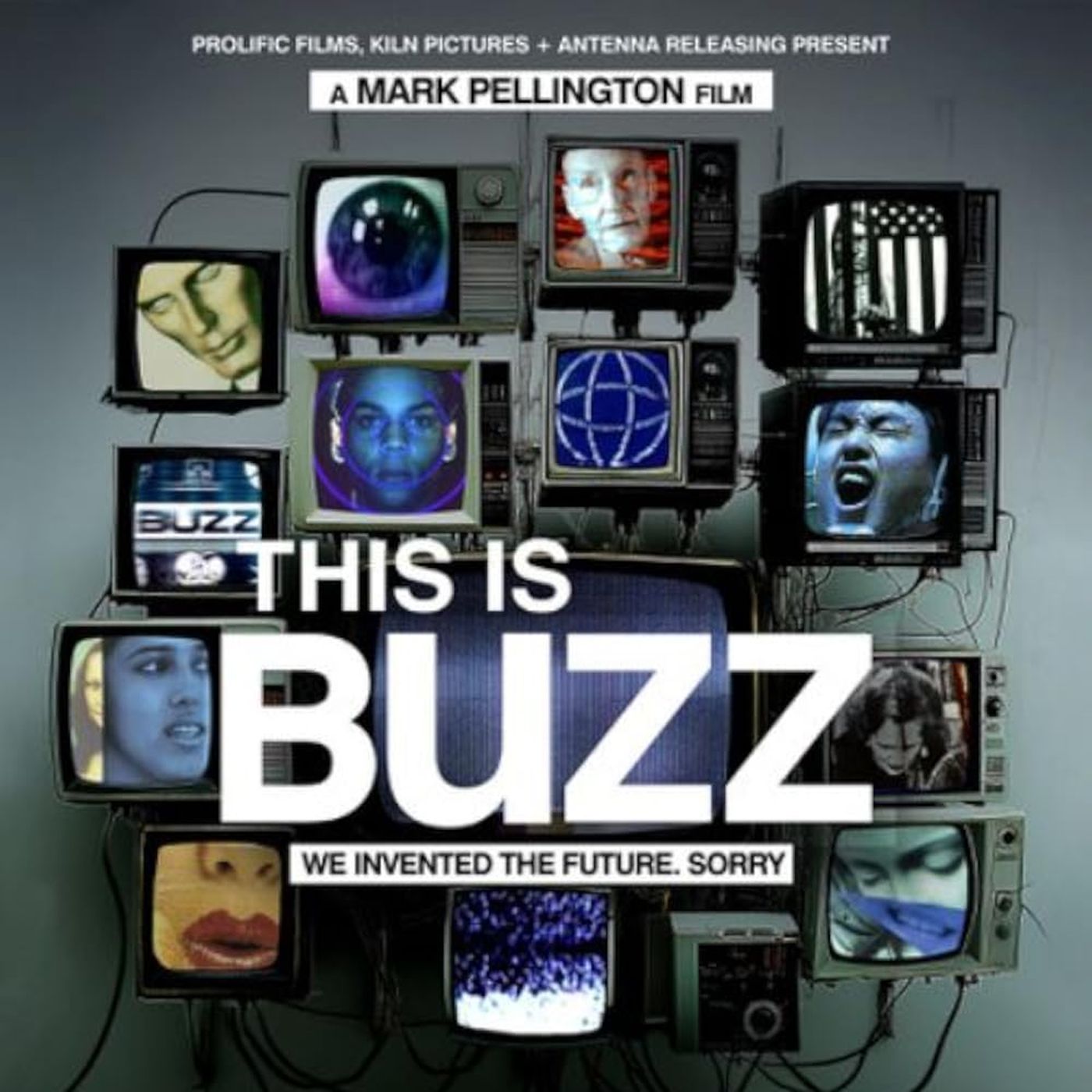
So I should it all This is Buzz Hey folks, welcome to a special episode of the Projection Booth I'm your host Mike White Today I am talking with Mark Palington all about his new documentary This Is Buzz It is an experimental deep dive into the experimental MTV series Buzz from the networks Well, not early years from the 90s I guess that's kind of early when it's now 2026 It is told through the people who lived that MTV generation first hand
This is Buzz premiered at Slam Dance, landed a distribution deal through antenna releasing and is currently touring theaters Visit thisisbuzz.com for more information and to find out where the movie is playing near you Had a great time talking with Mark and I hope you have a great time listening, enjoy I kind of grew up in that MTV generation that this is buzz is all talking about Yep, yep, how old are you can I ask? I am 54 Okay, yeah, I find a real like that generation like 10 years below me right? So I was like 30 coming of age then as people were really from anywhere from 14 to 22 That they gobbled up MTV in a different way than I had in 81, 82, 83 The form was different and so good for you so I'm here to lead you back into the promised land What was the first music video you ever directed?
The first one I did was a band called Deep Six They're in Little New York, kind of nervy pop band 1985 And last weekend at the brain dead in LA I showed an hour of music videos and I showed my first one Deep Six and my most recent one from two months ago Both around the same budget but yeah, it was fun It holds up pretty good to be honest with you I was just rewatching the information society video so good and just so many techniques you were using back then Those videos like what we do in some cities is some cities I show afterwards like an hour of videos And then some I just do a little shorter like sampler plate and those I try to keep those for ones I made before buzz and right after So information society PM dawn crystal waters those were all in the language of those videos is very much the language of buzz
A lot of film bleach a lot of text a lot of the editing style I edited them almost all myself so there was a certain impatience I guess you could say Back then what were you using to edit? You rough cut on a three quarter inch tape two channel thing where you have to hit in and out things and then Oh, it wasn't until like 92 93 that the avid came up so I didn't work on a non-linear system till 93 Jeremy was still cut old school I cut that rough cut myself yeah, all tape tape before digital I just remember how long that process would be especially when you had set those in and out points And you had to get the tape up to speed so you wouldn't ruin that control track it was just insane Control track yeah, I tell a little story that my cutting style became known for being frenetic
Because a lot of times when you would edit like that you would have a flash frame right so to really redo it you'd have to relay maybe it would be Okay, all three minutes up to that point then relay that edit to a frame to a pull you know sometimes I just was like fuck it I'd put three shots in where there have been two in the glitz I'd cover the whole would say like an eight frame shot So within a second there be three shots instead of two and But there was always something interesting musically going on in the track So if it wasn't on a snare it was done a baseline it was on a vocal so I learned how to alternate in my cuts between sometimes I'd cut on the vocal Sometimes I'd cut on the base sometimes I'd cut on the counter rhythm in between it and I learned from some really good editors Like Hank Corwin who cut JFK and natural born killers we with Alison Chains video and he cut that way remarkably different
I just was watching that and noticing how long many of the shots were because we shot it like a movie how long many shots were in then how short many were in between as opposed to the whole thing being fast Was it the avid that allowed buzz to be what it was there was no avid with buzz It was all tape online and highly structured and highly a lot of the pieces were pre-made all the host projection things and all the textures and all the transitional pieces with film bleach and strips were all pre-made All pre-made per theme of each show so I'd made them for them in the few months before when I was in New York And then so we got to England it was like you'd have the panels of the people talking to of them per show So somebody would work on those we'd pre-mix the audio for that And so when I would sit in the online edit room it was like okay go to those host projections, John would write some text
So it was kind of like very following the recipe it was never until maybe the last few shows where we went in there and it's like completely free form I never went in with any script it was just kind of let's just go to here go there was way more like jazz then And before it felt like jazz but it was hyper constructed very curated to the frame there was nothing left to chance How did you have to kind of shift your brain when it came to actually making more feature films when you made Arlington Road or Mothman prophecies How did you have to change yourself to approach those or did you? You had to when you look at those films I had a lot of transition I think by the time I finished buzz and just buzzed here as if a poppercy and Jeremy and even Jeremy and Alison Chains in relation to buzz are a little bit slower and they're also narrative their stories in there so around my father got sick and I think generally that kind of a lot of my videos became very slow
There's a connels video Leonard Cohen a lot of them became very meditative explorations of memory so I think my super hyper speed thing Ended around 92 I definitely put my career into speed memory and trauma loss and healing very much the 2010s were very different than the early 2000s And so movie wise by the time I did a poetry series in 1995 which was two minute three minute one minute collage poetry films I was very tired of doing that collage work I'd say to poetry is like buzz meets spoken word but I remember a friend of mine said you should just put the camera down and see what it's like to tell a story that way
And so that was exciting on one level so my first movie was very much going all the way was very much a wake up call I got to redo the movie a few years ago and I'm really happy with it now but there's moments that are very hyper kinetic and there's very much that are very single camera no cuts Because the limitations of an independent film is like shit you an hour to do it do one floating master You didn't have the kind of three camera shoot the hell out of it set up and the material was also very light 1950s very language Not that people haven't made hyper kinetic 50s movies but I remember shifting gears into that and working with actors and I really liked it because it was a challenge Cutting up and doing stuff I've been doing it for a long time so I'm sure you as a writer journalist interviewer like if you did the same thing over again I'm sure you get really good at it but you also start to be like
Here's some text here's some this here. This is over cut and I would notice it I would note I'd saw I remember a lunch video as I Jesus I just slowed the fuck down for two seconds But these are things you learn artistically So let's talk about this is buzz why now for this project how did this come about? Hey, they got out of a little bit of COVID boredom not boredom but Chris Gore from film threat said oh you should do buzz again I was like what do you mean? You said you should just do it again and he goes or do a doc about it and I thought about it and said that could be interesting let me ask a few documentary filmmakers that I knew not super well but couple of friends I knew like Scott Kennedy And I knew I met Alex Gibney before and Davis Guggenheim and Marina Zenevich so I'd met these doc people who I respected and I said I have this show and they've heard of it somewhere like mildly remembered it but they always said what's the story
not what's the form or what's the collage or they said what's the story so there was this old show that we made there was I think a little bit ahead of its time and as I look around it the way people communicate in the media I find it's very much like we were saying this is where the world was headed and the form of which we were saying it globalism news information so in that kind of news magazine show voiceless faceless kind of interactive on a certain way so I said oh let me see let me start interviewing some people let me get the rights to the show which took a long time and you don't go out a lot of times movies feature films you like I want to make this movie I gotta get the cast I gotta get the money and it's an arduous task I wasn't going out to do this so let me see what it is because you can go to interviews you shoot five interviews pay a camera man a thousand bucks and I said well let me see let me do three or four waves of interviews and see
what it is and again what the story is so I did that for like two years and I was never really sure there was no timetable nobody was clamoring for it I tried to get some finishing funds that went nowhere as I well I'll just keep shooting people till I had enough witnesses to it people who had experienced it saw it knew what it was it didn't do me any good people not have seen the show although in retrospect we had some ideas of getting reaction videos from kids in it again all things that were different kind of construction but I said let me just tell the honest story of two guys who were coming from different places MTV let me tell the story of a corporation the time that was trying to expand let me tell the story of a corporation wanting to have their cake you need it to so they'd want to hip things but to what end with they be experimental and we look we took advantage of it and we got canceled there's no happy ending to it there's no happy ending to a buzz show and there's no happy ending to this but in retrospect it's like somebody let you go make something and there was nobody at home watching us so a certain raw experimental freedom of expression erupted out of it was contained and that's what made so the fact that
you can never see it it was only airing once that became for me mythic and interesting because everything is so readily accessible all the time now everybody can watch everything about anything and the fact you couldn't my friend in my new york said yeah buzz was like this lost piece of media so I was always interested in that we finished it and again you don't get in major festivals or get streamers knocking on your door so you're like I always a very narrow kind of culty it's like doing a cult band but nobody even heard of the band right but maybe you and I had and certainly Chris Gord a few people had so you shoot it you edit it and you try and get it out in the world and find a a brave distributor that'll give it out in the world and let journalists and audience to see it for what it is good batter and different the response has been good the people that criticize it that I am in it talking about it
there was only a few witnesses to the experience and again we got canceled and we knew exactly what we're doing as John Klein says we made a Faustian bargain we were fully aware but that's what being 28 years old does in retrospecture but at that time in the 80s the way the world was and the way that media was you're in this room but I had been in those edit rooms for six years I was just doing the same thing I was done try things I said I'm just going to keep going until they tell me to go home that's what happens speaking of lost media and preservation what was the shape of the materials did you have all of this at the ready it did you have to go to MTV and go yeah give me the three quarter inch tapes one inch I went to the guy who gave me the rights to it for a reasonable amount of money to make the
series was a guy named Bruce Gilmer Bruce Gilmer's last real professional job was the head of MTV docs right he was the last man fired at last year when David Ellison cleaned house of MTV right they were the last company that was maybe even interested in doing buzz again or doing it as a streaming show they were super cool and Bruce was the guy who was an intern when we were at doing buzz that gave us now 35 years later gave me the rights to the footage for 10 grand for an hours of footage right which is really great so it was on a pal this different European standard is pal p-a-l not ntsc so they had a pal one inch masters in their vaults in England they had them on a google drive sent that to me so those were the best quality that I could get now I never
up-res all 13 I probably would if I held the rights to them and people would really like to see them so maybe in a museum context we could show them but I don't have the rights to just do whatever I want with them but I would up-res those and that would be the best you could do even if you went back to England and got those tapes I'm sure there's super high-end up-res now that can really get it looking pretty great but anything pre anything really pre-1998 is still pretty shabby anything that was really tape based even though a lot of our elements we shot on film went up-res really hold up better than stuff that was like stock footage from a Bulgarian commercial shot on VHS yet it has a certain scruffy texture and all you want is the texture you don't you just don't
want it soft you don't mind texture you just don't want thing to whole thing going too soft that's really that was really the aesthetic watchword because it's a mixed media piece right and there's literally stuff in there from the 1970s old footage of old stock films that I had that we put into this so there's stuff in there that's 50 years old will be some of your influences when you were growing up you're talking about pulling together all this footage and immediately my mind goes to Bruce Conner or something where it's just like this kind of back when found footage was meaning literally found footage I didn't discover Bruce Conner till I was in New York in the 80s when my friend Lewis Clark was a filmmaker who did all the film strips he would turn me on to a lot of these avant-garde filmmakers Namjoon Pike Bruce Conner Robert Longo the artist and Gretchen Bender they were definitely influences Gretchen's video work
Julia Hayward and people at the kitchen in New York City you know like brackage influenced Glenn Rible who was RPA and MTV who did all the bleaching in Turpentine and I work with Glenn a lot that bleaching cutting out of film under strips and bleached because when it would go on bleach depending on the contrast or what the image was sometimes it would eat away the subject sometimes the background and it always did something very different very unpredictable there was a cut out film artist named Esther Shutovsky who Lewis turned me on to who she would cut out the images in 16 millimeter film like somebody's going through a record right and their hands got but she would cut out literally the image of the record in the person's hand so that she would animate different things within it so all that super intricate handmade processed handmade time-based
art was a huge influence to me so between those artists every music video that came in I would watch everyone that came in I'd be like ooh what's that shot ooh that's cool Peter Care Cabaret Voltaire or then Touchables would do a thing with little animated figures that later on I used that in information society so I would watch every video and make notes on what were the cool videos that nobody ever saw and I would take images from those and put those I said can I make a promo with all these images and they said sure and that promo starts with Martin Frye from ABC is in the film so that first promo from 1985 I found online looks terrible and we put it in because it was important to me to kind of show some of those seeds which were just taking bits and chopping them up
and again soundtrack first sound in a motion first and then the pictures really secondary I just loved that it was this sampling culture kind of writ large we're already hearing even sorry to keep harping on information society but having the clips from Star Trek inside of that song was wonderful but then watching stuff like buzz and you hear all of these things you're just like where is this even coming from or just that whole idea of like bringing together all of these disparate things and just like recontextualizing all of them it was so wonderful that was always what I really appreciated about the show well it was fun and we even in the film recontextualized some of that stuff there's one chunk early on before we're talking about burrows and there's a little bit of Clint Eastwood it's a little sample from Dirty Harry and I remember the piece who was sampling from Dirty Harry and taxi driver at the same time but in this transitional piece in the film
I remember I said to the editor I said throwing the thing about a one hit wonder and just keep this rhythm going for about eight bars and end up ultimately just get to the burrows bite so sometimes it was just like here's a pathway doing it every once so she could take it out of the context of the show and put it in so like where the show and where the film blurred was I was interested in that relationship well tell me about your editor like one what was she working on and two how was it you're coming from a different mindset especially in the early 90s then probably people have now in the early 2020s the first person who helped me work on this edit was at the time he was in high school and we ended up making like a 15 minute presentation real to try to get footage to to try and get money to continue shooting and stuff like that and I remember
in that was the first time okay a little piece of this little piece that you can't say this is what the film Steve Jobs into a little piece from the show a little interview bite and he had to leave and I said god I gotta find another editor because this is the final editor for the movie I said no I said it's just one sort of helped me expand this presentation real so he went on Facebook and he put a description of it and we looked at some reels and my reoot no was a late 20s she's from Lithuania and she had a very interesting reel she knew after effects and it's okay so she came in and we'd start to play the play try this try that and then she started taking some of the the bites interview bites which were on black shot on black started putting them within some of the faces of host projections which had also been shot in black and morphing where the subject and the object of the buzz host was blurred together and so that's interesting and then she knew
split screens pretty well and as long as I gave her a good direction like any editor needs just a path and once we can head lay it out the bites in okay here's the story in a linear fashion and you get it from eight hours to five hours to three and a half I think three and a half hours was the first time that I showed anybody the cut like a group of ten people say what is this what do you think this is and she was with me the whole time just grew and learned and so I wanted to film out kind of a modern feel she was younger but I wasn't trying to ape the past but I'd say here's all the faces here's all these things make buckets and say here you go here's the music had cleared those songs that I like and got stems for those so in a way like back to the old buzz thing take any piece of any bit of music any of the footage should all it should all work together
you mentioned that this is touring and I'm curious where can people find out more about that and keep up with this movie on our website this is buzzfilm.com and we're in Virginia tonight Kansas City doing the really cool takeover of the Atlas 9 environment which I'm really excited about seeing on a big screen we've done a few immersive screenings with eight projectors showing the film we've done single screened it's really fun to we have small but loyal and rabid little audiences and there's so many things competing for your attention out there in the world so for somebody to show up to a theater and experience in a theater is cool because it's a very different experience in a theater you really get swallowed up by it you really do get immersed in it differently than if you watch it on your phone or your laptop we hopefully we'll just keep going
keep showing no it's fantastic the thing too is MTV watching MTV was usually solitary thing maybe a few friends but seeing this with an audience this got to be completely different experience I've seen 150 people I've seen five people and I think once you have that intention in the dark room it hits you in a singular fashion and I've sat up front I've sat in the back I've sat to the side and it does just tell you the story and it is pretty unrelenting it's not for the faint of heart but I don't think it's more than anybody can handle in this day and age of media consumption and media literacy and verbal and sonic acuity mr. pelington thank you so much for your time this was so nice talking with you a pleasure you too Mike thank you very much
I want to know what you're thinking there are some things you can't hide I want to know what you're feeling tell me what's on your mind I know I could break it down but what good what it could do I could surely ever know that what he says true you know here I am silence and it's again I have to pay you and I silence with nothing else to say I don't know what you're thinking there are some things you can't hide I want to know what you're feeling
tell me what's on your mind so you I want to know what you're thinking There are some things you can't hide
I want to know what you're feeling Tell me what's on your mind I want to know what you're thinking There are some things you can't hide I want to know what you're feeling Tell me what's on your mind I want to know what you're feeling Tell me what's on your mind
More episodes
More from The Projection Booth Podcast

Special Report: The Squirrel (2026)
The Projection Booth Podcast

Special Report: Galicia! (2026)
The Projection Booth Podcast

Special Report: Big Girls Don't Cry (2026)
The Projection Booth Podcast

Special Report: Double Trouble (2026)
The Projection Booth Podcast