Get every episode summarized
Each time Brushwood Media Network publishes, we email you a written briefing from the transcript — the topics, who appeared, and any specific claims, with the ad reads skipped.
Email me new episodesFree for 3 shows. No card needed.
About this episode
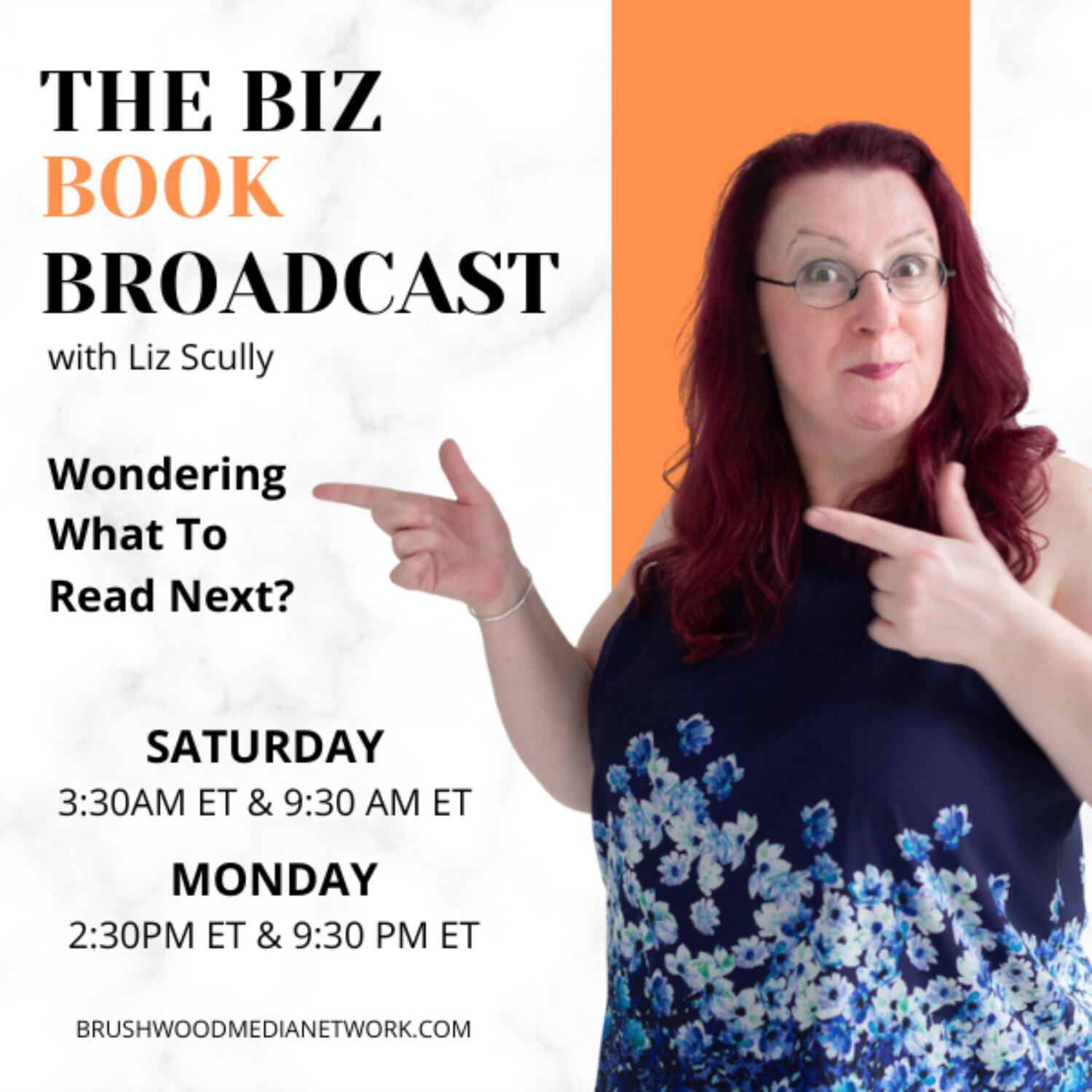
“It's time now for the Biz Book broadcast with Liz Scully of Rethink Central. Liz is a business strategist and coaches businesses so that they grow while protecting their owner's time, resilience, so they don't burn out.”From the transcript
Today we're discussing the best Sneetches on beaches.
And everyone's favorite chancer in the Seuss world - Sylvester McMonkey McBean - who has probably the best product-market fit in all of fiction.
Show regular Ron Tester is back to dig into his business plan to discuss what he gets right + why he leaves exactly when he does.
This is a Classics episode, where we treat a book that is absolutely not a business book as though it were.
Books discussed in this episode:
The Sneetches and Other Stories - Dr. Seuss
The Mom Test - Rob Fitzpatrick
Ron's Website: rontestercoaching.com
====
If you’d like my help with your Business go to www.lizscully.com/endlessClients
====
And don’t forget to get your reading list of the 10 essential reads for every successful biz owner - these are the books Liz recommends almost on the daily to her strategy + Mastermind clients.
This isn’t your usual list of biz books, these answer the challenges you’ve actually got coming up right now. Helpful, quick to read and very timely.
Click here lizscully.com/reading to get your book list
Get every episode summarized
Each time Brushwood Media Network publishes, we email you a written briefing from the transcript — the topics, who appeared, and any specific claims, with the ad reads skipped.
Email me new episodesFree for 3 shows. No card needed.
Transcript ready
628 searchable segments. Every word is indexed and playable.
Full transcript
Brushwood Media Network — Star On, Star Off | Classics with Ron Tester. Machine-transcribed; use the interactive transcript above to jump the player to any line.
It's time now for the Biz Book broadcast with Liz Scully of Rethink Central. Do you like reading? Do you run a business? Wondering what to read next? Then this is the show for you. Liz is a business strategist and coaches businesses so that they grow while protecting their owner's time, resilience, so they don't burn out. Books can be a real key to changing things. Liz reads a couple of books a day to sift out the dust and is a self-proclaimed book nerd. It show gives you one big idea for you plus your business to chew on until you read the book. Join us now and see what Liz is recommending this week. Hello and welcome to the Biz Book broadcast. If you've got a business and you love books, you're in exactly the right place. My name's Liz Scully. I'm a business strategist and a total book nerd. And we have a delightful show for you today.
And I have a delightful guest. It is our Ron Tester, our Biz Book most popular guest. And no yinkely. Sometimes more popular than me. So rude. So say hello, Ron. Hello. Ha! That's what I say. So today is a classics episode. You can tell the why we are in such a good, delightful feeling because these are my favourite shows. This is where we go to a classic and consider it as a business text. It truly is a beloved story today. It's something we've had in our back pocket for a while or something we wanted to work on. So this is for you if you work in fashion in any way or are influenced by trends or you just really like star shapes. It's a clue, peeps. Now, before we get into it, let me give you a proper intro to Ron Tester. He is a business coach and a very good one.
I have to say he specialises in service and health-based businesses. He's a coach. He's a mastermind leader and also a very good one. And he has, of course, done my flagship training, mastering mastermind and if you have ever, even vaguely thought that you should run a mastermind, please get some training. And in fact, get my training next time it's offered because there is nothing like it on the market. Most of them will tell you how to sell a mastermind. None of them will actually tell you how to run a mastermind. Very annoying. But things that are not annoying is today's book. And in these trouble times where we are very divided in all sorts of ways, it seemed the moment to pull out the big guns. Because yes, we are going to discuss a Ted Geisel book or, as he is more widely known, the lovely Doctor Zeus. And today we are talking about the snitches that came out in 1961 as part of the book,
The Snitches and other stories. It is about, obviously, creatures called story. They are called snitches. And they have stars on their bellies. Or rather, some of them do. Some of them are plain bellied. And they, the star bellied ones, absolutely lord it over those who don't. They are super snooty about it. And they, they go on about things like they're the best snitches on the beaches. Very rude. They teach their kids to be horrible to the plain bellied ones. There is social exclusion. There is snobbery. And the whole snitch social setup is, frankly, a powder keg. When our entrepreneur rolls into town and his name is Silvester Munchmunchi Mookbeen. And he has a machine to add stars to the plain bellied snitches which upsets the star bellied snitches
because their exclusivity is gone. And they have their stars removed. And very quickly, a frantic cycle of adding stars and removing stars, stars on, stars off. The whole thing. The only winner is Munchmunchi Mookbeen who is making money from all of this. Eventually, he has drained all the snitches money. And he leaves saying, snitches never learn. And he's wrong there because having had this exciting single day of star on, star off, they get all delightfully community minded and they heal their breaches amongst them. And as he leaves, the snitches become happy. It's delightful. And the snitches themselves are just beautifully drawn. So obviously, from a business point of view, we have a lot to work for. We've got a work with, we've got a hot market. And we have a wily entrepreneur who is doing his absolute best.
So Munch to discuss. Now, before we get into it, tell me about rereading this, Bron. So this is, I've read a ton of Dr. Sus books and this is one that really sticks out in my memory. I've read it roughly a million times. But I haven't read it in decades until recently. And just rereading it, I love this book. I really enjoy the whole thing. I love Dr. Sus. I love the crazy rhymes. I love the wonderful illustrations. And it was just a delight to get back into it. And as a business coach, a business owner, I seeing it through the lens of what's really going on here was super interesting to me. Absolutely. Well, you know that I worked for Jim Henson's for a while. My background is in film visual effects. And I worked on the webbulous world of Dr. Sus, which was a really bad 1990s TV series.
But I worked with Henson's. I often worked with Henson's. I got to live in New York for a year. It was just absolutely delightful. And all of the objects that you see in the star-bellied snitches, I've built. So it feels like a homecoming for me. The whole wacky machine in the backgrounds. It's just lovely. We had all of the Sus books. And we just worked our way building through the, oh, delightful. Absolutely delightful. And I think I saw a snitch puppet while I was in New York as well. Just wonderful. Absolutely wonderful. And his Ted Geisel's art director was our art director. I'm just a really nice manhead of these Ted Geisel stuff. Oh, it's lovely. My film years. Delightful, you know. Now, after these messages, we're going to just get really stuck in to the whole star-bellied snitch situation, because they seem to be the instigators. Ah, I'm not kidding. Travel is part of the American way of life. When we're on vacation, we keep an eye out for anything that looks out of place.
You're making me miss your bag. When we travel from city to city, we pay attention to our surroundings. Everyone plays a role in keeping our community safe. Whether you're traveling for business or pleasure, be aware of your surroundings. If you see something suspicious, say something to love the authorities. And you're back with the big book broadcast. I'm Liz Scully. I'm speaking to Ron Tester. And we are discussing the snitches by Dr. Zeus, because of course we are. So one of the things that is fantastic about Sylvester Munkimuk-Bean is that he turns up and he has a very simple, that he turns up and he has a very segmented market that is, let's be polite about their bigotry, they have strong values. And he is really clear that he can speak to a big market because he has a machine that goes either way. Now, before we get into that,
the thing that kept being front of mind for me all the way through this was you know that saying, everyone is digging for gold, sell picks and shovels. That's Mr. Munkimuk-Bean. Well, that's true. I hadn't really thought of it like that, but you know what people in my reading of the book, what people are really seeking is either belonging or exclusivity depending on whether you have a star or not. And you're absolutely right. You know, he is essentially tapping into that deeper need, right? And people don't want shovels. They want riches. Or you know, whatever. And then the same way by linking what he does to what they really want on a primal level, he's able to capitalize on both sides of the market. Absolutely. Absolutely. I mean, like they're in, they say in the gold rush, the only winners are the people with the picks and shovels because everything else is difficult. Whatever this niche is want, he's got them covered. And he has the best product market fit
of anyone I've ever heard of. Yeah. Which is true. And it's funny how when, when you make that alignment between product market fit, everything's so much easier, right? I mean, it barely has to say the word and people are running into the machine, right? And I think that's, that's fun. And when you, when you strike gold like that, that is the result. Absolutely. Now he's brilliant. And part of why his product market fit is so good is that he listens. There's, you know, in the cartoon, which was made of this, he goes to the public meetings, but he's there for all of, you know, he's on the beaches with the sneakers, listening to what they're saying as they're grumbling about stuff. For whatever their results are, he is there. He's listening. He's effectively doing surveys. He's him and his avatar. He totally understands what they're upset about,
what they're getting. He knows the sneakers inside out. And it's pretty clear that he obviously has quite a lot of history with sneakers. You don't turn up on a sneak beach with two machines that will star barely add, so they're like star remove, unless, you know, that's not an accident, but a lot of research has gone into that. So he really knows his people. The reason his fit of his business is so good is because he's done all the research. Yes. You know, it's interesting. You know, see Blank when he talks about starting a business. He's like, wisdom exists outside of the building. You've got to get outside of the building. So to go out and to, you know, live with your market, so to speak, and to do that research, I think is important. And at the same time to understand human nature, right? Because a lot of times people don't have words to say what they really want. They may say, you know, I want to star when what they really want is belonging or that sort of thing. So I think both are important, right? So you can't just listen, right?
You know, Steve Jobs' whole thing, or you know, about, you know, they would never have wanted the iPhone. They didn't even understand, you know, what that was. But I think that's true, in a sense, you have to listen to your market and understand them on a fundamental level, right? Absolutely. I know that I want to, I want, uh, Rand, uh, a course that was, and was exactly about this. It was about how, it was going to be Avatar Academy. Terrible, no. But it was about specifically, um, how to create products that your people wanted. And I made it. I did exactly the perfect thing. I'm, I, I had a lot of people saying, how do you always know to make the right thing? I was like, because I listen to people. And then I do the research, and then I make the sales pages, and then I see if it sells, and that, you know, let textbook stuff. And they were like, which teaches how to do it. We will give you money. And I'm like, excellent. This rarely happens. But there is actually happening to me. And, um, the, the first step, was you have to go and speak to your market.
You have to go and survey people. You have to research. And people, like, the, so the first module was just about how to, how to ask the right questions. And the second one was you collate the information. And you make, and people would spend so long on the first bit, because they did not want to go and ask people. And I, I would sit through Q&A's where people were like, can you check my question? No, no, your questions are fine. This is the 17th time I've checked them. Go and ask them to somebody. Yes, it's totally shocking to me. I mean, I guess because I'm used to it, right? Just the idea that you won't, it's unnerving to go talk to, you know, your customers. And it's unnerving to find out that they don't really like your thing. Whatever. So I'm going to set up an internet survey. I'm going to do anything besides actually have a conversation with actual human beings. And I do think there's some skill to that, right? You and I both love the book, the Montest for that reason. So it's not just saying, hey, would you like to buy my thing?
Because all your friends are going to say, well, of course I would. But I fundamentally, if you don't have those conversations, you will never really understand your market like you need to make that great fit. Exactly. And for both of us, we sit in mastermind sessions and our clients tell us what their problems are. And obviously they're not all aimed at, hey, Liz, make us a thing that will deal with this. But I know what their problems are. And you can do it. You can do your surveying by listening in network groups or being online and seeing what kind of it. It's not the same as actually talking to people, but it's a good start. It is a good start. And I'm all forward searching on the internet. I really am, but I just don't think that you will get the nuances without actually talking to people. That's just my experience. Exactly. And you need to know what? I've sat to them in the case of the snitches, a star, and what are they aiming for? And I think your point is very strong about the fact that the plain-bellied snitches, they want to belong. They want in to the in-group.
And the stars, star-bellied people, they want exclusivity. That as soon as the other snitches are the same as them. They're not happy at all. Yes. Yes. No, it's true. I think about when I was in high school, Ralph Lauren Polo shirts were like the pinnacle, right? And if you couldn't afford one of those, maybe you got an eyes on shirt. And then, you know, what's interesting when my kids were in high school, they went into it with like brand names are awful. We don't want any brand name, right? And thrift shopping became the thing. And so like, we're all going to go and buy a shirt for $3 and brag about that. That became the end thing, right? Whereas if you got forbid, you should wear one of those Polo shirts or eyes on shirts. Right? So it's like this. We all seek ways to belong and to find our own bit of exclusivity. But how it changes in shifts over time. And if you're not aware of that, then the market can totally run away.
And you'll be like, what happened there? Well, absolutely. Without brings me beautifully, beautifully to my next point, which is, I'm going to practice this now, Silvestre Munk-Monkey Munk-Beam. He stops when the market's dead. Now, admittedly, in the book, he has bled them dry. He has completely removed all of their cash from them, from their excited star on star off issue. But more importantly, they don't have money. They cannot buy more. So he doesn't continue to vlog his market in a way that he's just trying to sell them stars or not in a place where that is not going to happen. He packs up his machine as soon as he sees that's happened. So he's market reactive. And then he moves off. And it's not mentioned in the book. But it's fairly obvious. He's going to go to another Sneech Beach, because why on earth did he turn up at this one?
And I got the feeling that he'll be back in 10 years, because these Sneech is sure. They've patched it all up and everything's great. But really, really. Right. Right. No, I agree. I mean, there is human nature, right? Or maybe Sneech nature. You know, the end. Some things don't change. We can change. We can move. And that sort of thing. But fundamentally, we all want belonging. For whatever reason, right? We want belonging. And conversely, if we are in the end crowd, we want exclusivity. We don't want the rift raft joining us. You know, there was a few years where I traveled a lot. And I had a high airline status. And so, you know, they like welcome me in, right? When I would get there. And now I don't travel that much. And so now I have a lower status, which is not, it's not terrible, but it ain't what it used to be, right? And so now, now I'm part of the rift raft that's kind of watching the other people glide by in their royal robes.
So we'd that with the Rosie's strewn in. Exactly. Exactly. And there is a sense, there's a little bit of whistfulness. Like, and what's hilarious to me is my airline will say, you know, I see you're flying. If you'd like to buy 10,000 miles, you can do so. If wrongly, like, I don't know, $700 or $800, I'm like, I could fly somewhere for that. I mean, I mean, but literally people will pay for these miles just to have a chance to be in a hired tier. I have friends that have literally flown from the US to Australia, like on December 30th, so that they could get their status for the next year. I mean, they'll fly round trip and not and hardly get off the plane. They'll go like sitting around for a minute and then come back onto the plane and fly back home just so that they can have the status for the next year. Good grief. I mean, I used to fly a lot and I would, and it certainly works. It would make me loyal to that airline. But I am a dog at a round trip to the to Australia.
Good. Yes. We've 100%. Yeah. Forgive me. That is as daft as a star-bellied snitch. That's exactly. Just ridiculous. And we'll be right back after these messages when I've got my breath back from that astounding fact. And you're back with the Biz Book broadcast. I'm still this gully. I'm still speaking to Ron Testa and we are still talking about the star-bellied snitches and their friends the plane-bellied snitches. Now, what is interesting to me is the whole pricing for this thing.
Because first of all, Sylvester is making money whatever they want. So he knows his market and he's got his two machines star on star off. So he's covered and they are simple machines that you just get in and you either have the star or you don't have the star. And that's right. So that's great. We'll come back to that. But so the felt need of his clients. He is all over. He's got really clear about that. And the felt need changes and he has the access for that. So pricing wise, as well as having both sides covered, the first snitches that go in, the ones that are plane-bellied and are getting a star, he only charges them three bucks. After that, it's ten bucks for everybody. I like that because that is a loss leader that would be no cycle of snitch star issues if he hadn't really introduced it well. And I don't think enough people offer introductory offers like big companies do.
But smaller stuff. Yeah, I know it's so effective. It really is. Yes, you know, it's interesting. I was thinking about it differently. But now that you mention it, I do like the idea. I mean, you and I talk about pricing all the time. You know, having a low barrier to enter your offer and that sort of thing. So I think there is, there's a lot to be said for that. And as he offers it for three dollars, he builds up tremendous social proof and word of mouth because suddenly all these people are getting the result that they're looking for. And then it's very easy for people to say, well, I'll obviously invest ten dollars on a star on star. Because I know that this thing works, right? So in a sense, he's proven himself. So I like that introductory offer. Yeah, me too. I'm like a discount. I remember years ago, my coach, because all coaches should have coaches. And if you actually just as to pausing there, if you're a coach and you don't have a coach, do you not trust coach it? Like, why would anyone buy from a coach that doesn't have a coach? It makes no sense to me.
But my coach was up. Because I'm a big fan of a discount just at the end. Not a huge discount, but you know, just a little bit at the end. Maybe if you're in a big sales call, you've been talking to people from while, you can see they're close in Ireland where I'm from. That's the moment that tips people into buying it. It's almost like a polite thing. I come from a horse trading nation despite the English accent. And my coach was like, yeah, are you selling to a horse trading people though? Like, why are you always making a discount? I'm like, it's just, I can't help myself. It's not that I discount, you know, by thousands of dollars, but just a little, like showing of good faith, I think is quite important. Oh, I agree. I think that it's nice. I mean, we don't always discount everything, but I think there are reasons what I hate is the false scarcity discount that annoys me so much. It's like, you know, like, you know, for this digital download, we only have 12 copies.
So, you know, that's sort of thing. It's like, you know, and then I think there are ways of doing it that serve. And I think there are ways of doing it that feel manipulative. And I'm all for serving. I don't love the manipulation. So I think it's important to figure out how to do it well. Exactly. And I think if you are prone to discounting too much, listen up. Then what you should do is decide the discount you're going to give before the conversation. So that you don't blurt out something enormous. Would you like, what was I thinking? You don't want to be a heckling with yourself, basically. Right. Mr McBean would not be doing that. Right. I think that the thing to do is to come to peace with who you are and what you have to offer. And, you know, if you're going to offer a discount, offer a discount in service is my opinion, not as like I'm desperately trying to get you. You know, you won't pay 500. How about 400? Have a three? Have a two. Right. And in that, that reach of kind of desperation. And even though your, your audience, of course, is going to rather pay $100 and $500.
That comes a point at which you, it doesn't feel good to you. Right. So I think I think this counts should feel good to both parties. Absolutely. Absolutely. And a loss leader is a great way to do that. Introduce the service, show how beautifully you can remove a star and how pain-free it is. Although the snitches do not seem to spend any time worrying about that. They're just straight into that machine as soon as it is offered to them. And they are really, I'm like, I'm hung up on your point about their paying for different things because that matters how you market to them. Because the plain belly people want the access. They want in. And that's so, so important. The star belly people are continually thinking about status. And that's the same payment for the same machine, for the same result. But their goals are completely different. This is why you want your avatar stuff so clear. And it's also why I think that the harmony and community at the end isn't going to last.
Because those star-bellied snitches have been training their kids to hate plain belly snitches for decades. And that ain't going to go away from the, what do we know? We don't care about stars. Because that stuff is very ingrained. Right. I mean, I don't know how snitches evolve, but humans evolve to want exclusivity. To want to be part of the ingroup and then to keep the out people out. We set up societies and structures and institutions all for that reason. And so I think, you know, the snitches may have that success. But the humans won't. I mean, we're never in my opinion. We're not going to ever evolve past the stage of saying, I want to be part of the ingroup. And or if I'm part of the ingroup, I don't want the riferaf, the out group to be in here. Because then it feels like that. You know, one of the things, because of my airline status, I have, you know, lounge access on certain airlines.
And what's funny is it used to be really exclusive. And now if you just pay a little bit more, if you fly a little bit more, then it's less exclusive now. And the old old guard just hate it because I'm serious. I mean, you read about it, message boards. And that's what I think about, you know, all the riferaf are now in our clubs. And they're taking our good seats. And you know, it really is. It's a total snitch land event. Yes, yes, they're in here drinking our free orange juice. Yes, speaking of riferaf, I'm very happy to be there. I'm very, very happy about it. So I think I mean, marketing wise, because he doesn't do any marketing. He just says, this is your problem. I've got a solution. Right, that's it. But he doesn't need to because as soon as the first snitch appears with a star, like his whole process is yet they're not dead. They're not covered in like blue stuff. They are just a perfectly standard snitch, but with a star.
And so his system is understandable. He doesn't have to have, you don't have to go on kind of star, star training. You don't have to watch a course. Or you know, you know, when you join a big corporation and they make you watch a video on how to sit on a chair. They even do it in film studios like half an hour and I have to say, I've been doing this since I was five. I think I'm okay with this. Look, I would disagree with you slightly. His marketing is he has to show up fundamentally, right? And that is something that a lot of small business owners, because they're good at doing the technical work, but they don't like to sell themselves or what. So they don't even show up, right? They're not talking to people. They're not in that sense that I think you have to show up. You don't have to be great at it, but you do have to show up. And that's what I'd say. No, I think you're right. And you have to talk to people. Yes, two things that many of our clients don't do. You know who you are. Get out there and speak to people. But I think that like having a completely understandable process
that is simple has zero customization. You can't have a red star or a like two stars. No, you just get that. You get the sneak star or you get the sneak star removed. And I admire that. That's, you know, any color you like as long as it's black, really. It's that whole, it's an easily understandable process. It's obviously very weird in all sorts of ways, but it's clear. And also once they either have the star or remove the star, they're a billboard for the process they just had done. That's how that kind of frantic chaos of as soon as it's happened, they realize how effective it is because each sneak is a billboard for the process they just had. Yes, you know, I do think that it's important to, if for small business owners to be careful or wary about too much customization because we all have a tendency, especially as we're starting out, like I want any customer. So it's like, okay, so if my customer comes and says, well, it'd be really nice if you could also, I don't know, do web design.
I don't do web design, but I'm like, well, I might be able to find somebody. You know, and suddenly I'm doing all sorts of things that I have no business doing because I'm trying to get customers. And I think that while it may work temporarily, ultimately will undermine me and my success. So I think that there's a real value in saying, this is what I do. You know, I mean, you may have to pivot if you're really at the beginning. But if you have an established market, you haven't established offer. I think holding to what you do and making that the basis of your success is much stronger than trying to become a custom. A boutique, you know, whatever for everyone. Yes, all things to everyone. Oh, terrible idea. Terrible idea. It's so easy to happen. So we've got to be clear. We've got to be focused. You've got to have a process that is understandable. I think we've, I think we've business booked the heck out of the sneakers here. I think we should be quietly proud of ourselves. So Ron, where can people find you?
People can find me at runtestercaching.com. And they absolutely should. And you should also go to listscully.com slash endless clients. If you would like this, sneech-obsessed person working on your business. And you want that, right? Thanks for listening to List Scully of Rething Central. Follow us on Instagram at Rething Central for what she's reading right now. Books are the answer to most things. So if you've got a business problem, there's a book that'll help. Get your reading guide at listscully.com slash reading.
More episodes
More from Brushwood Media Network

How To Believe In You
Brushwood Media Network

Awaken Hope - Dr Christina Tracy Stein The Accomplished Woman
Brushwood Media Network

Awaken Hope - The Colors of Home with Edwina Perkins
Brushwood Media Network

The Vault Expert: Inside the National Veterans Parade with Diane Ventura
Brushwood Media Network