Get every episode summarized
Each time The Rest Is Entertainment publishes, we email you a written briefing from the transcript — the topics, who appeared, and any specific claims, with the ad reads skipped.
Email me new episodesFree for 3 shows. No card needed.
About this episode
The Rest Is Entertainment is made possible by:
“The rest of the entertainment is presented by octopus energy. Now, entertainment loves keeping business in the family. Yeah, it's no secret that that's traditionally been an easier route to perhaps into show business.”From the transcript
Get every episode summarized
Each time The Rest Is Entertainment publishes, we email you a written briefing from the transcript — the topics, who appeared, and any specific claims, with the ad reads skipped.
Email me new episodesFree for 3 shows. No card needed.
Hosts & guests
Transcript ready
906 searchable segments. Every word is indexed and playable.
Full transcript
The Rest Is Entertainment — The Rise & Fall of Mr Beast. Machine-transcribed; use the interactive transcript above to jump the player to any line.
The rest of the entertainment is presented by octopus energy. Now, entertainment loves keeping business in the family. Yeah, it's no secret that that's traditionally been an easier route to perhaps into show business. It's not necessarily the only way to get into the business. However, there are lots and lots of examples where it really has worked for people. The Coppola's stretched out beyond film into music. Nicholas Cage, though, changed his surname from Coppola. He's Francisville Coppola's nephew and he changed his surname just so that he could just be Nicholas Cage. But one assumes that in LA they didn't know that he was a Coppola. He stands alone for me. I think Stenner's glass guard is an interesting one because lots of his children became very, very famous and he always calls himself a nepotad because as his children got more and more famous, people started coming to him for roles. That's a nice way around. So, entertainment has some remarkable family machinery, but however useful the surname, it isn't always the only way in. No optimist energy, for example, didn't inherit his place in the energy industry. It's proudly independent and one way it does things differently
is having each customer's account looked after by the same small team of around 10 energy specialists. They know exactly who you are. Every game day you show up for your team. Now it's your time. We go, we go, we go, we go, we go. Ask your prescriber about Wigovie, some magnified injection 2.4 milligrams, a GLP 1. Call 1-8334 Wigovie or visit Wigovie.com to view the medication guide and to learn more about Wigovie. Why wait? Observe the North American dad. 50s, great polo collection. He enters his vehicle information on Carvana and offers appears in minutes. Remarkable. He squints, reads it again, smiles and says, dang, that's a good offer. The highest form of approval, no haggling, no hassle, no one called him, boss.
He's still on the couch, astonishing. Sell your car today on Carvana.com. Pick up these may apply. Hello and welcome to this episode of the RESTDIS Entertainment with me, Marina Hyde. And me, Richard Osman, hello everybody. Marina, what a busy week you've had. I see you, you announced you're leaving the Guardian. I am, after 25 years. I know, I know. Any plans? Well, yeah, I mean, I was thinking we should sort of do an item about it and sort of general trends in this. Self-obsessed, huh? Self-obsessed, huh? In this general trends in this direction, maybe in a couple of weeks, because I'll be more to say that. Yeah, when you have a better idea of what you're doing. I have some ideas, but there'll be more to say than perhaps. How about you? You've been on your book tour. I've been on their book tour, how they do everybody who I met. It was just so brilliant. I went up and down the country visiting those of independent bookstores and those of events. It's really thriving as an industry, books.
It really is. I do think books are an antidote to AI. I think there's something in the air. And I think these, lots of these shops are expanding. Lots of the events are absolutely round for them. It's just, it's one of, I think, this human connection thing. I'm really looking forward to mine, which whenever it starts, maybe maybe like next weekend, but it's really, I totally agree with you. It is, when you're doing it, it can feel a bit daunting before you get started. But when you're doing it, it's like, wow, this is incredible. But local bookshops, honestly, I can't think of a better way to spend one's time than hanging out with booksellers and asking them about stuff. I bet you got a lot of data. I got a lot of data, so that I'm here for data. I absolutely understand the emotional side of this, but what I am here for is data. No, they are very happy. And they're very, very happy that they've had a great week. This week, lots of big new releases out this week. Well, we're going to talk, because I'm actually going to talk about two. Two extremely different books this week, aren't we? In different ways. We are talking about Mr. Beasts' new book, a thriller that he's done with James Patterson, the sort of prolific and celebrated thriller writer.
Which is called the Most Dangerous Games. And basically, the title of that segment is, what's that all about? Well, that's not about. We're going to talk about the new book from Julia Donaldson, and illustrated by Axel Sheffler, Grapalo Granny, which is, I mean, will be an instant mega mega mega mega best-seller in class. And we're going to talk about just how do you become the biggest selling British author of the century? Well, that's something you're very interested in, of course. Now, it's not me, it's not me, is it? I believe it's unbelievably, it is not actually you. And we're also going to talk about friend of the podcast, Nicola Peltz, appeared to receive a rising star award at the Venice Film Festival. We're going to be asking Did She and what are the awards all about, please? Can you buy an award? And you buy an award? I'm not suggesting she did. I'm asking can you buy an award? I just, it made me think on a completely separate note, I wonder if one could. Mr Bees. Mr Bees. So the new book is called The Most Dangerous Games.
It's a survivalist thriller. It's published by Harper Collins. It's written with James Patterson. Yeah, I mean, the plot won't surprise you. Essentially, this, essentially, if Mr Bees came to your house and said in 25 minutes, we have a meeting with Harper Collins. What should the plot for our book be? It is, it is this plot. There's an element of Simon Kahl, isn't it? It's one I did just done a bit differently each time. Okay, so the plot is a thousand strangers get an invitation from Mr Bees, who is a character in this book. And he's seeking out people who don't normally apply to things. Maybe veterans, martial arts, sex, person stuff. And a hundred of them are going to make the cart for some games. Yes, they are going to be in challenges against each other. Mr Bees is the character running the games. They have to go around the planet and so on. Yeah, and they get knocked out one by one. Yes, we'll get to what the prize is because that's a particularly interesting bit of business. What do I think about it? I think it's good. Mr Bees is writing a book. I think it's good that Mr Bees is sending people in the direction. I saw a really great review, I think in slate. It wasn't a great review of the book, it wasn't.
But this is a bad book. But when I was a teenager, I read a lot of bad books and they made me onto reading good books. The way that they he announced it, I found massively irksome, which was like, I found books boring when I was a child. But don't worry, here I am to effectively save books with my, you know, he and James Fasson, I think, he's just saying whatever Mr Bees needs to say to get this book out there. Oh, James Pettison, he can't believe he's like, yeah, I mean, he's not going to say no to Mr Bees. The other people he's written books with are Bill Clinton and Dolly Parton. I mean, he, you know, he doesn't like about... He's collabed in paginated form. Yeah, he doesn't just, yeah, he's not writing with Sue Pollard. He's not writing, you'd be listening. He's not, she did such a great turn for us. I'll turn up the quiz. Oh, the rest is first. The rest is first. She did a very good job. Absolutely amazing, Sue Pollard. So they say they want adults and children who don't normally read to read, you know, this 480 page thing. And it's, it debuted at number three on the New York Times bestseller list.
I would like to come back to that. Yeah. I'm a pretty market ad. And it debuted at number 47 in the UK charts. With, I think, 3,370 copies across the first two weeks. That's again, you have the receipts. I have the receipts. We're going to talk about, we're going to talk a lot more about it, but I will say this. There's this truism that seems to have crept into publishing that if you go into a publisher, they will say to you, how many photos have you got on social media? And if you don't have enough, they won't publish. Now, I say for a fact that that's not just definitively not true. There's not a single agent I've ever heard say that's not a single editor. If you do have a huge social media following, they will use it. That's for sure, but they're not interested in it. This book, this book, this guy has more social media photos than pretty much anyone else in the world. He has 550 million YouTube subscribers. He has essentially one in 15 people on the planet, supposedly, follow this guy. To his YouTube channel. I mean, it's an insane amount of people. Not only that, but you always think in,
you know, is there a little competition that we can run to sort of send people to bookshops? Can we sort of do a weekend away or something, you know, or a cream tea and a cathedral that you can win if you do this? If you read this book, Mr. Beast is going to get one person. He reads the book and follows a series of clues. One million dollars. He's got half a billion followers. He's going to give someone a million pound if they read this book. And he sells 3,300 copies in the UK. And that, by the way, is no shade on him whatsoever, because I sound glad that he's written a book and glad that people are buying it and reading it. But anyone who still thinks you have to have a social media following or it helps to sell books in the fiction sphere, you are incorrect. James Patterson, by the way, has had 67 New York Times Number One bests at us. So this is, he's teamed up with the biggest social media star in the world and not had his 68th New York Times Number One bests at us. You know, and again, it's in the top 10 of the USA today,
USA Today this, but it's, it's, you should be in your first week with some publicity and with a name like James Patterson should be number one. Yeah. And certainly when you team up with Mr. Beast as well, they would have been expecting, they would really have been expecting to be number one for absolutely certain. You never tell with New York Times things, but they, they, they will not be delighted with that. And certainly they won't be delighted with the, um, forms in the UK, which is, which is very low. That's very interesting, isn't it? Yeah. I thought, I really thought it would go higher. But what the test is. But what the test is. Number three is not great. I mean, it sounds good. It sounds good. We saw murders. Your last, but, but, was obviously number one on the New York Times. You have a certain sort of plan to, you know, it's, it's three, three is not, three is not great. They, they've even started saying, and also it's, um, number one on mystery and thriller hot new releases on Amazon, which I mean, that's like, you can't mention those. The last refuse of the, uh, of the scoundrel. All of that. That's when you know you're in trouble. Can I just get a little bit more into the weeds of how the competition bit works? Yes. You think it's like, you, you see, you have to buy the book,
you save the receipt, you register it online. And then you have to do weekly elimination challenges online. And you have to work out clues that are in the novels, text, sort of Easter egg type things, I guess. And then the top players face off. And one of them is going to win a million dollars because even books can apparently be gamified. But not as we say, not particularly successfully. But I suppose what he's trying to do, because I mean, what he's always trying to do is make everything a kind of sit up and non-passive experience. I suppose it's interesting talking about sort of what was in it for James Patterson. They are both basically content creators in some ways. If you can call an author one, he is one. Yeah. So James Patterson, since he, he was not advertising executive James Patterson, I've got a lot of time for James Patterson. Yes. I have to say his first book. It's not for me, but I can see. Yeah, yeah. But I like the way he's, he's run his careers.
First of all, it was the Thomas Barryman number. That was 1976. So he's 50 years in the business. He has over that time written 416 books. So that's almost 80 years. So 50 years he's done that. Started as just any regular writer, through the right of the Alex Cross series, various other things like that. And then very quickly got into this idea of franchising himself out. And so he writes a huge amount of books with other people. The ladies' detective agency books. There's lots of books that he does he series with with other writers. I read that he does the outline. And then he often someone he used to be an advertising with, then takes that and starts writing the book, which comes in maybe 30 or 40 page chunks. He either totally rewrites those or just gives in some notes and then they do it again. But it's that sort of process. Exactly. And that's happening all the time with, as you say, about A for two years. But as soon as it's different, obviously the long he works with people, the less he has to do with things. Now the one thing I would say about it is,
first, he's interesting as a business proposition. Secondly, he credits all of his co-writers. So it's not that he's not been ghost written. He writes he sings with a certain person. I spoke to one of his co-writers this week who I won't name. And they said he is a wonderful to work with, B gives you all the credit you deserve, and C pays really, really well. And you think, well listen, with all of those things, you'll take it, right? If you team up with James Patterson, you'll do good business. People know who you are, people in the industry will know that you've done it. The public will know that you've done it, and you'll be well paid for it. So I think it's an unusual business model to write 416 books in 50 years, but at least he's doing it in the right way. So I have some time for James Patterson. As I say, he's done a couple of books with Clinton. Did a book with Dolly Parton. So Mr. Beast comes along and says to him, I mean, it does rather beg the question of the two names on the cover. Did either of them write it? Yeah. And also that thing about, like, I've got a meeting in 15 minutes and what should I do? Yeah. I think what happened is that James Patterson went,
you know, Mr. Beast works as a Greenville in North Carolina. James Patterson went, Mr. Beast sort of gave him a two hour tour of, you know, the facility. I do really now start to think of it as a sort of bond learn now, that facility. And, you know, all the different things they're doing, many of which are various forms of survivalist challenge. And then by the end of it, they're like, I wish you'd just do a book that's a sort of survivalist challenge. So you don't actually even need the 15 minutes before the meeting to work out what the book is going to be. I mean, there's absolutely no way James Patterson would have approved of starting with a thousand, then immediately going to a hundred. That's not making a sense. Start with a hundred. But listen, that's absolutely fine. There is at the beginning of the book, I skimmed it. I will say that. You get the idea of it. There is a dramatic persona at the beginning of this, telling you who the characters are, including Mr. Beast. So it tells you who Mr. Beast is. So he's a character in his own book. What's his character name? Which he wrote? This is his character name. Mr. Beast, according to Mr. Beast, is sharp, fair-minded and deeply loyal. But he tells that, I mean, again, the first rule of writing is,
so don't tell, but yeah, on the first page, he tells us who he is. And you know, various points in the book, he's saving ex-Marines and stuff in very, but listen, if I was a character in a book, I'd be doing the same. Yeah. I mean, you do it in your private life, but no, like to talk about it. I don't like to talk about it exactly. Okay, there's things that I find quite interesting about it. There has been, although they've told you there is ongoing, a huge bidding war for the film and TV rights. That interested me because I'm like, if it's... It would have sold a long time ago. I agree. And also, who keeps wanting to bid for these Mr. Beast shows where they are so expensive? I don't know. Well, Amazon paid 100 million or whatever it was for Beast Games, didn't they? I mean, they are so expensive. They don't make him any money. And the idea, sorry, it is a ripoff of good game, anyway, which itself is... Yeah, 100 millions, better way out of the world. No, lots of things, you know. He says, you know what he says it's based on. What? The Odyssey. Of course. Because he says it's a character on a journey going through different challenges.
I think you're supposed to. I'm not supposed to. No, no, no, no, the Odyssey is about American dads. He's crying their cars on the way home. I've told you. Okay. Well, you and Mr. Beast disagree on that. If he comes on a Q&A episode, we'll have a, what's the Odyssey about discussion. God, I mean, yeah. So it's, as I say, I hope they have nailed down their rights deal because I think that if it performs like that on the book charts, it's perhaps not worth as much as they thought it was before. Yeah, it's a tricky story because I do, I like every aspect of it. I like the fact that Mr. Beast, who can do a million different things to decide to do, book, I like that. I don't know how much work he's put into it. It might just be one of those things. Someone says, would you like to do a book? Yes, sure. I like the fact that James Patterson has done it. I like James Patterson. I like the fact that maybe I'll send people into book shops who wouldn't ordinarily go into books. Obviously, it doesn't massively look like it is. But I do like all of those things about it. I think it's lame, but anyway. Yeah, but something can be lame and also admirable.
I don't find it admirable. But I think to widen it out to what's happening to him at the moment, I think it's quite interesting what's happened to him. Because as you know, if you have followed the show before, you know he is the biggest thing really on YouTube or was the biggest thing. And it's quite interesting what's happened to him. He doesn't really, he spends so much money on all of those challenges, his weekly videos and most of which are making people endure things in one way or another. He has big hook ideas. Yeah, very big hook ideas and they're hugely popular. But we totally look funny enough when we talk about the BBC, we talked a little bit about the sort of pointlessness of trying to sort of be YouTube. Even though YouTube gave him huge amounts of money because he was they're kind of almost effectively the non-official face of YouTube for quite a while, a long time. There was something that came out earlier this year where people were like, oh my god, like his video counts of another creator said his viewership is basically 50% down.
And as we always say about YouTube, you know, they own the platform, they make sure they win. And people are saying, oh look, smaller creators are being boosted. They're trying to boost many, many, rather than having these, you know, behemoths that no one can really, any moment come close. They are prioritising smaller creators. And you know, they can change the rules any time. And it's, it is clear, although Mr. Bees said, no, no, no, everything's, you know, tractor production is up to make a sound of it, so yeah. I have to say that it's clear that there has been something that has happened to the algorithm that has kind of tried to surface more, more, and it has to be at the expense of some of these bigger ones. Either way, he sort of loses money effectively on YouTube. He makes the platform's biggest star, which says something about YouTube, makes more on snacks. He has his feastables line, which is hugely popular. So, I mean, I suppose he sort of raises those questions about YouTube. Is it a customer acquisition engine that ultimately owns the platform and makes them all the money for itself?
Or is it your ultimate revenue stream? And if the biggest creator effectively makes more money on other stuff and spends a huge amount of money to do what he does in the platform, then we might say it's a customer acquisition engine. But this is the thing I admire most about Mr. Bees. I have to say, he worked up very, very early on that those videos were a loss leader. He got it, it's very easy to go on YouTube, but understand that you're getting paid expound per view, expound per ad, and think, okay, I'll try and build a business off that. He worked up very, very early on that I want to build a profile off that, then want to leverage that profile into setting things. Now, you might not love that as an idea, but that's capitalism, and he's done it very, very well. He understands that algorithm aside, it comes to a point where your popularity slips. Doesn't matter who you are, you peak, and then you go, you manage to climb from there and in. That's almost all careers is that. And you have to, before that happens, own something. Well, I agree. So he's had his glow up, and it's been beyond phenomenal.
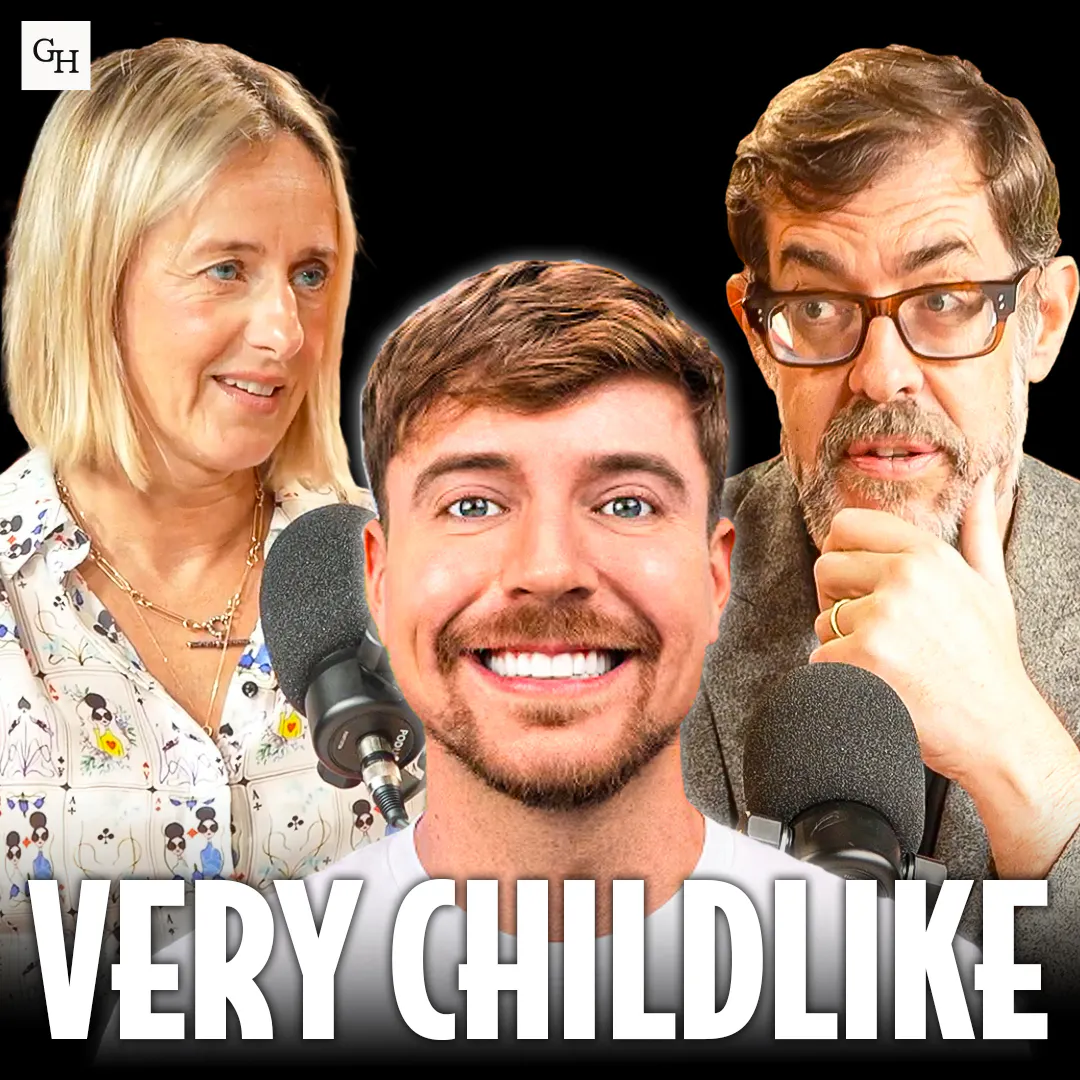
Can he enter his imperial phase? That's a bit that's quite interesting for me now. He wants to create an empire. He's got this base. He's now got a professional CEO in because who is trying to impose some kind of financial discipline, because they kind of just spent any old money, just like Lamborghini's lying around the place, not particularly for them, for his team of posse, but also just to give away to people, just there was no sort of discipline, particularly. It's very childlike. I mean, the ideas are all very, very childlike in a kind of fascinating way, really. Psychologically, I mean, it's sort of psychologically fascinating. I think it's interesting at this point in any business person, or obsessive creator, and he is an obsessive creator. I mean, like he's set there. As we know, he spent five years studying the thumbnail on YouTube. He is obsessed of every single way of trying to win against the algorithm. But it's interesting with anything like this, are you your businesses only real asset?
This is how you enter your office because you know, we know he wants to sell consumer goods. He's got a finance app. He wants to do toys. Obviously, he wants to do streaming service. There's lots of things we know he wants to do, but it's whether the revenues are sort of sufficiently predictable, and you can separate, and they are legally separable, and even kind of conceptually separable from the creator, so that you can become something that's akin to a, like an institutional asset class. And I wonder, you've seen lots of people, you know, you look at Alex Cooper with her on well network, is Alex Cooper the thing that really people want? Or do they think that you can just actually sort of roll it out, and she can kind of point it a few things, and all the other people she can bring up, and then she can create an empire. And there are lots of these people who are that, I mean, I don't know if we can call them first generation creators, but then everyone understands what we mean by these people now. These huge big people, like Alex Cooper, like Mr Beeslite, whatever, they are all having some kind of troubles trying to
separate, you know, trying not to be the only asset in their business. If I look back to, you know, Endermall, which grew so absolutely in almost off the back of Big Brother. So in some ways at that point, that was a one product business, or certainly was massively reliant on that. And you're very, very aware at that point, sort of with Big Brother, that Palo and Cisco one thought, I mean, turns out it's still on now, but is it, certainly not where it was? I don't know, we're going to do a really cool bonus series on Big Brother. Yes, I know, with some very interesting people. Oh my god, with some very coffee, for you. Yeah, and so at that stage, you think, okay, you have to diversify, right? And we diversify, you know, you come up with new shows, did I know, deal was huge, various other shows were super big. So that's what you have to do. They then got a point in that cycle where to grow, I'll do one, and it's Cooper doesn't want Mr Beeslite, you just buy other people, you just buy other people who are doing that stuff, and I hate it, I think it's cheating. That's what method it, that's what Zuckerberg did, he just bought all the small, yeah, as soon as you got your ideas and then you
have a billion, the world of business is easy, because as soon as someone comes along, it's better than you buy them, because they're better than you, but they're smaller than you, and everyone wants 200 million pound in their bank account. So you buy them, and that's what Mr Beeslite, you know, he's got a lot of money, he's got these brands, there will be a generation who eat feastables who will not have heard of Mr Beeslite, who don't understand that Mr Beeslite wasn't a real person, they go, like Colonel Sanders was a real person, right? But the moment, it doesn't feel like Colonel Sanders was a real person, but we know KFC, they'll come a point in 20 years time when people go, oh, Mr Beeslite character, who came up with that, and he go, oh, no, that was a real person. But okay, that's really interesting, I do agree with that, but I also think there's something about him psychologically, whether he can do that, because actually for all the lots of people who are denigrating him all, for his own brand and his own distinct thing of what he does, he has been an obsessive controller, and he's tried to be sort of across absolutely everything, and we know that people get into problems when they try
to do that. And if you cannot, like, you know, sometimes founders say that, they have to step aside from things, because they can't, they just, they're either all in, or they just, it stresses them more to have stuff going on that they're not fully controlling. Well, we have a clue to what his, inner feelings are about his career and about where he wants to go, because he's never really opened up about that. But in the book, the Mr. Beast character opens up about it, and obviously it's written by Mr. Amin, you know, it's written by Mr. Beast. So in the book, it's fascinating, the competition, these 100 people, I don't think this is working the real world, the prize is, the winner gets a billion dollars to do something that will help save humanity. I mean, quite to why fighting and killing each other is the right way to find that. I don't know, but it's to give someone a billion dollars to save humanity. And Mr. Beast at some point talks about the responsibility of having that sort of money and having that sort of profile and trying to do good
in the world and talking about what money can do and how money can save humanity. He doesn't do it in an Elon Musk way. I'll say that. He doesn't, in a slightly more interesting way, maybe a naive way, but naive it is not the was a flaw in anybody. But he does seem to have some view that an individual can change the world for the better and an individual can use their money to change world. Be 2032. Is that what you say? Do you know what? I don't think I think politics would be beneath him. That's what I think. I think that's very own now. I think you'd rather turn into a dolly. Do just things with his money. He sort of is in some ways. Not to, he does. It is, and a lot of people say it's like, you know, kind of the gamification of poverty and he's done all sorts of, because he has the charitable sort of stream of Mr. Beast philanthropy where he's constantly doing these things like, can we build 100 wells in however many days? I mean, he's building wells. Yeah, and listen, we've always said that. There's many of people who are.
There's an element of what he would do that wouldn't he? But he doesn't have to do. There's plenty of billionaires. And as I said, the building age, you know, Carnegie, all these sort of people, they were often terrible, terrible people, but they did build extraordinary things and railroads and all sorts of things. Yeah. So if and libraries. Yeah, if you have a child who would like to read this book, I would say absolutely get them to go into a book shop, go to the library, pick it up. Mr. Beast suggests, by the way, on one of his many videos with James Patterson, that you buy two books, one for a parent, one for a child. So you can talk about it over the dinner table, which is an interesting marketing technique. But you don't have to do that. He's doing them, sorry, my favorite, but in those videos and listen, it's a slip of the tongue, but he says, and of course, you can buy online or go wherever you buy books. I know who it means is wherever you buy your books. Yeah. But it sounded like, or wherever you buy books. This is not a thing he thought of before. Listen, it's a it's a book. I'm glad you were. Please let me the cover line. Please let that be the
blow for the paperback. I love James Patterson. It's a book, Dashbridge, a girl to me. I thought that's so hard. James Patterson doesn't have an agent, which I think is quite impressive as well. He's got a lawyer. But the final word, I think it's a 300, 370 copies. It's actually saying that in the US hasn't pulled up trees either. But it is three places below in the chance the K-pop sticker dolly dressing book, which has been out about two months or a few months or a few months, still outselling the most dangerous games. So it's even called the most dangerous games. Doesn't it even really flow the most dangerous games? Yeah, it should always be in the singular in a title. It shouldn't it? The most dangerous game. I think there is a short story called the most dangerous game, but you can be there. It does, in my mind. Yeah, but it's listen, it's a phenomenon. It's a phenomenal, phenomenal one. It's not burning too brightly. Knowing our listeners, there will be so many fits. Is anyone out there who has an ironic book club? Hi. And also just keep me up because I'll be there. Yeah, an ironic book club reading of
the most dangerous games. Mr Beast and James Patterson. I'm looking forward to talking about Julia Donnell. After the break, we will be talking about Graffalo Granny. Yeah, first we'll be talking about Nicola Peltz, but then we'll be talking about Julia Donnell. The talent cleanser of Nicola Peltz. Hang on one second before we go to a break. This week is the final episode of this tranche of our Bond story. We're doing a huge set of... The Sean Connery years. The Sean Connery years. It all goes wrong for Sean Connery. No spoilers. No spoilers. It happens in Japan, but no spoilers. But that is for our members. So if you want to join, it's the rest is entertainment.com for Adfree Listening and all these bonus things. Otherwise, should we go to a break? Yeah. This episode is brought to you by Lloyds. Now show business loves a club. I love all these sort of unofficial greapings of people. There's two brat packs that I'm big fan of. There are two brat packs. Yeah, there's two brat packs because there's the movie brat pack, all of the Jud Nelson, you know, Rob Lowe and Charlie Sheen and all those guys. I've gone in the breakfast club.
And then there's also the brat pack of those kind of turn of the 90s novelists, Bretti Sinales, Jay Maconani, Donna Tart. And that's, I think, creatively. It's actually very, very useful to hang out with other people who are incredibly talented because you drive each other on to do things because a lot of the British novelists in the 80s, Martin Amos, Julian Barnes, Ian McEwan, they always took sort of going, I've lunch, I've dinner, and you could just tell you, you know, they would talk about stuff and they would make each other's work much better and that's the benefit of being in a group, being in a club. That becomes more than the sum of its parts. Clubs really do have benefits like club loids and elevated everyday bank account with exclusive benefits plus a lifestyle perk like cinematics. And you get no fees on debit card spending and with rules abroad and exclusive mortgage rate discount to interest on your balance. To join a club worth being in, search club loids. You must be a UK resident, age 18 or over to apply. This account has a £5 monthly fee, refunded each month you pay in £2000 or more. So this episode is brought to you by Atio, the agentic CRM. William here from Empire,
briefly crossing the Goalhanger Network borders. Now on our show, we discuss the rise, fall, and lasting legacy of history's greatest empires. And if there's one thing it has taught us, it is having mountains of information is useless unless you can cut through the clutter and march forward with absolute clarity. The same rule applies to modern business. Atio is the agentic CRM that runs consistently in the background, chasing potential customers and building your pipeline automatically giving you a complete picture without the admin. And it meets you where you are in your browser and in your inbox. Innovative revenue streams are already setting the pace with Atio. Now it's your turn. Try Atio for free at a double ti.o.com slash Goalhanger. That's a tti.o.com slash Goalhanger.
10 Minutes Sensational Color Sensational Price. With those savings, your next girl's night is basically free. Find your perfect match at walmart.com or to store near you. Welcome back everybody. Lovely to have you here. Nicola Peltz, Marina. Tell me more. It's just been the Venice film festival among various others. Part of the sort of festival season is time of year. Now Nicola Peltz, friend of the podcast, wife of Brooklyn Beckham and daughter of billionaire activist investor Nelson Peltz, relevant perhaps. Isn't it funny when people because normally when you say the word activist, you think of someone up in a tree stopping a bypass. But as soon as you put investor on the front, you think, oh, okay. This is a guide just like to screw companies. You think nuclear bunker. Yeah, this is a guy who just likes to tree house to nuclear bunker. Make trouble at your company. Anyway, so Nicola Peltz appeared to
win the Rising Star Award at Venice. Now, well, let's go to that. Can I immediately clarify, she actually won the Rising Star Award in Venice in the city, but at a festival that takes place at the same time as the Venice film festival, but it's not in fact the Venice film festival, or indeed affiliated with it in any way. It's called Kinneo. And it has no official ties. But if you saw this thing, if you saw the pictures of it, there's a big, big red carpet, which is in a big old dress that's Brooklyn, you know, it looks for all the world as though it's part of the big Venice film festival, which is, you know, one of the huge sort of, it's that and can really, which, although as we've said before on the podcast, people are getting scared of taking that film. It's a big studio to those. So again, crucially, this was not the Venice film festival. It's just a film festival in Venice. It happens to happen at the same time as the Venice film festival. So it's like saying my band is playing at Wimbley, but it's not the stadium, it's a pub. Yeah. So Kinneo said she's attracted, increasing international attention through her work as an
actress, screenwriter and producer. Oh, yeah. We talk about little else, do we? Yeah. She's also 31, which is there, I say, not the age of a, in fact, she's first one of Rising Star Award at CinemaCon, which is a sort of nothing sort of thing in 2014. Wow. What does the constan for? She's been acting a long time. Now, her next film, and this is sort of relevant. And by the way, it's called Premur. It's about a ballerina. She's in it. It's Faye Dunway is also in it. Again, it's been written by Nicola Peltz, directed by others, but funded by, well, I can't imagine, no one knows who it's funded by. She's got some kind of production start-up, bunny films, which I think we can assume could be traced financially back to her father. She did one other film, which she, I think even directed, directed and starred in, and called Lola in which she played a sort of impoverished stripper, which I think we can all live without the officers of Binyan as doing, but they should be for their
film rights for the most dangerous games. Yeah, yeah. I think the marriage may not have any. Yes, but I think projects in which Nicola is sent to stage the only things that they've been for any, she's been at the beast. She's, yeah, there is a deadness in the eyes, that's similar perhaps, but she's been acting for almost two decades. So I suppose the question is, what has happened here? There is no shortness for this award disclosed. We are going to broaden this to a discussion, why are you discussing a minute about awards and how much one has to essentially pay to play. No shortness has been disclosed, no vote tally, or we don't even know the process by which the Rising Star award at Kineo, a festival in Venice, but it not happens. We don't have access to the transcript of the jury. No, so it's in a way, it's more of a question about how these satellite film festivals work and who funds the film festivals themselves, and what sort of PR is needed for them to continue to exist as kind of going concerns. What's interesting about
this award, I mean, you can hear how careful I'm having to be on the talk about it, it's not tied to a specific performance. However, at the same festival, Faye Donaway, who I recently mentioned to starring in this upcoming Nicola Peltz film, she got a lifetime achievement award. So the Rising Star was given to Nicola and Faye Donaway got the lifetime achievement award. I don't know quite how to put this, it is certainly helpful marketing for a film that has yet to be released. So I thought that was quite interesting. Everyone to sort of clutch their hand keys to their noses is sort of ridiculous because so many awards across entertainment are effectively paid to play. And you often see very small movies which suddenly have these posters which have like 15 laurels on them all of a sudden size, so you know, silver winner, exact film festival, which essentially is a is a and everyone gets medals type situation, right? Absolutely, and these festivals want to completely to exist and they have to be funded in one way or another. But if we look at sort of
general for your consideration campaigns, by the time you listen to this podcast, the Emmys will have happened or will we just happen, you know, tailing off. You don't know when I'm going to listen to this podcast. And Emmy campaigns can easily cost a million dollars for a show easily, easily. But you're in that, you're including like trade ads and billboards, events, PR, screenings, full-time campaign staff. The combined total of what they think people spend on the Emmy campaign is maybe 100 million. Maybe it's even last time they looked in about 60 years ago. I mean, maybe it's closer to two now because there's so many different and so many of the big streamers who are kind of effectively tech companies have huge amounts of my respect and want those things. And you know, no offense Apple, I've got lots of great shows, amazing shows. But but it helps have that cashier is very important for television. They really care about that. And for Phil, remember, they all have films now that they also, they release one way or another,
even if it's only for a week into theaters, so they're eligible for these things and then put them onto their services. So Oscar campaigns, you're really in the big leagues. It is tens of millions to push a movie. And sometimes people, you know, if you were Apple or Amazon or whatever, and you had a film that you wanted to push for awards, you could they think people have spent over 60 for a significant push for one of them over 60 million over 60 for one for one film. But you know, if you're a phone company, you're the everything corporation, you want awards. Now what they spend it on for the Oscars and you know how long those campaigns go on the gun for absolutely months, depending on when your film comes out. Start taking out really, hasn't that? Yeah, well, it starts. Maybe it starts at can and maybe it starts at Venice in the old days because you put your big films there and then you'd essentially get your talent out there campaigning for months. Yeah, I saw I play Rocky. I'm dying for it. The Toronto Film Festival. I think yesterday, maybe, or I think we can and people already again, this feels like I cannot wait.
That's not so. I'm sorry for our series. Look, yeah, that's not until November. But a good example of this, like how what you do if you haven't got 50 million to throw on your film. So Andrea Rizbrough, you'll remember this story. There was a film called Tilesley. I mean, it is a brilliant performance. If you want to see movies about alcoholics that are brilliant performance, I can tell you people don't particularly, which is why it took $400,000 at the box office. But it is a brilliant performance. But no one watched this film and it didn't cost me, you know, it probably cost about a million dollars to make. But because a film company who spends a million dollars in the film does not have anything that cannot possibly compete with the studios in this way, there was a sort of celebrity back campaign for Andrea Rizbrough to get a best actress nomination, which is organised by the director and his wife who are very well connected in Hollywood. And they did hear some publicists and lots of people, lots of kind of big name celebrities say Gwen is pouch or someone like that. So, oh my god, this performance is so brilliant, stuck it on their Instagram. And there was a really big scandal about that. She did get a nomination
in the end, Andrea Rizbrough, the Academy didn't find her guilty of any. They did have a whole big inquiry into this as ridiculous as she was not found guilty of anything and they didn't resent her nomination. But it was quite unpleasant. The backlash against it was so unpleasant when really all it is was that some screeners were sent out to people in the entertainment community. And if they liked it, they said, wow, this is amazing. And she is a brilliant actress. So, it was the kind of ridiculous scandal. Yeah, I think it was a supposed scandal which actually reflected the real scandal. You know, because you're not supposed to lobby directly and it's like, have they broken rules. So, please, if anyone is spending $60 million, I for me it's so much worse to do that than it is to- I always thought that scandal was the other way around when Andrea Rizbrough got nominated. The fury that someone who hadn't played the game had got nominated. The money, the industry, the money they're paying, you look at the Emmys, there are certain shows every year. Oh my God, it's got 17 nominations, 16 nominations, year after year after year. And nothing surprising ever manages to get through the door. I didn't care less that we were
doing it the morning after that we were doing our Holocaust Effectively recording at the day before the night of the Emmys because you're never going to talk about it. It's just it couldn't- It's a close shot. That's one of the most interesting things is that you don't really want to discuss it because it's just it just feels like something that's been long decided just playing out. And what you- because what you want in say in Oscar is Andrea Rizbrough does his performance in a film that people didn't really go and see but because the academy has made up of filmmakers, they have noticed this enough of them understand the quality of that performance that she gets nominated. That's not what happens. What happens is you know they get sent the screen as they get see huge billboards all over the town. It's a massive, it's not just breakfast. That somebody breaks through that, doesn't a different way and gets through. They were so angry because they had wasted so much money. Yeah so let's conclude this item by saying in a very generalized terms it is a racket one way or the other. I really have to say I mean it is a racket why all this awards business one way or the other. Yeah normally in any industry
you have to pay for a table you have to pay to be there. You know they they make a lot of money and the water is a fun they're fun to watch and they're very political but for lots of the smaller ones you were paying an awful lot of money for the privilege of you know having a table and being nominated or you know whatever it is it's yeah it's a it's a money making. It's paid to play. It's paid to play. Yeah so let's conclude that item tactfully there. Yes and but I look forward to seeing if Nicola is up for Anosca anytime soon because that would prove that this slightly off-brand Venice jury was right. Yeah or it just proves that some more money had been spent further down the line. Well I see I don't have that cynicism I believe in artistry. Now to happier and heartier fair a celebration of the wonderful Julia Donaldson so Grophalo Granny is out this week it's a follow up to the Grophalo books it's going to be an absolute enormo seller. I mean like beyond huge I
believe I believe you bought it. I bought a copy at the weekend it's it's extraordinary and we'll get on to why I think it's extraordinary later. Now Julia Donaldson is the bestselling British author of the century she has sold over 50 million books she's much beloved by generation after generation of children so I just wanted to look into how you become the bestselling author. Yes. Of the century because it's it's it's an interesting story so Julia Donaldson who is the most wonderful woman I mean she's she's incredible. She was at university in Bristol in the late 60s, studied drama in French, her and a friend went to Paris for a year and started busking on the streets of Paris. She's always been a songwriter that's the thing that Julia Donaldson loves to do. While at Bristol she meets a man called Malcolm Donaldson who will be another hero of this story and they start playing songs together and this that the other. A former after university for me theatre troupe they tore plays around counts of the states and she started writing things where
people who came to the members of the audience could have roles in them. So I didn't understand what it is that kids liked and tried to get them involved in stuff so very participatory. So she's writing songs it's very very interested in the imagination of children you see where all this is going. Yeah you see the the the foundations you have to lay very very very long time before anything else happens. Started busking around Europe with Malcolm with their guitars. They got married in London. She composed an operator for their wedding which she and the other guests all performed including by the way this is a real nice sidebar for fans of I'm sorry I haven't a clue. Colin Sel who plays the piano on that he was Malcolm's roommate at university and a very good friend of Julia Dawson. They moved to Brighton her husband is a pediatrician Malcolm so he's always moving around and stop playing on the local folk scene. So that's you know writing folk songs this sort of the
other someone suggested that she start sending songs to children's BBC. So this is like the 80s so they've been touring around you know she's been doing these plays and all sorts of things so she starts writing songs for play away and play school. Sorry if you were a child of the 80s like me play away is a mate well actually it was kind of it's yeah it's like the turn of the 70s to 80s but it's absolutely it was absolutely brilliant I'd love to play away. And so at some point by the way at this point in the 80s flow out of Benjamin Woolf's song one of one of Julia Dawson's songs who would have known. It's too iconic it's too iconic. It's absolutely too iconic. It becomes an English teacher because the writing work is drying up the song white is drying up you know those shows are not those shows are not showing anymore and always in the teaching she was writing songs and plays and getting kids to be in them right so she's this extraordinary woman we know exactly the
type of person we're talking about someone who actually cares someone is incredibly creative somebody loves collaborating and someone who really really cares about what it is they're doing and in 1991 Matthew and the publisher so you were to song in 1975 for playboards and it was called a squash and a squeeze and she's like yeah I suppose so so well we'd like to turn it into a picture book and she's like oh okay so this is 1991 by the way is it not like 1978 or something this is 16 years after she'd written this song that she'd long forgotten about and Matthew and say could we turn it into a book and she says well yeah I suppose so you said that but I can't you know I don't have would someone do the drawings and they say oh we got this young guy from a hamburger called Axel Sheffler he can do the drawing for you as she's like okay so they publish a squash and squeeze doesn't do enormous business but it makes I think I've been doing these plays for years I've been writing these songs for years I wonder if there's other ones that could be turned into books and so she
starts doing lots of things for kind of you know educational publishers and the other social does that throughout the early 90s 1995 comes across a Chinese folk tale about about a girl walking through a wood yeah yeah do you know this one no I forgot that it was that was based on a sort of Chinese folk tale but yeah all inspired by a inspired by a girl walks through the web of the tiger convinces the tit is terrified of the tiger princess the tiger that she's the queen of the jungle and then as they go through the rest of the forest or as they go through the rest of the jungle the tiger sees how frightened all the other animals are and assumes that they're frightened of the girl so that's the Chinese folk tale and you know Dars and I think I've got this something in that isn't there start sort of kicking it around a little bit and her kids really help her out with it and you know says oh maybe I maybe a tiger's not right and actually tiger doesn't really rhyme with anything so comes up with the idea that maybe you know being a monster and comes up with the gruffalo said let it this four years later she writes it okay so this is again this is the
writing process she's thought it in thought she likes this tale but it's not right and anyone who knows their first gruffalo understands some of the things she then did to that story to turn it into something even more extraordinary so 1999 she writes it so it takes her two weeks and don't forget that two weeks is just writing that text you've been thinking about it for four years sends it to a publisher but also goes oh that guy who did who did that book with me four years ago Axel Sheffler I wonder if he'd like it's a sensitive tax or Sheffalo as well and the gruffalo is published and 18 million copies of that book later and many many other books room on the broom solve things like that she is the best-selling British author since records began and I do think when we think about writing and books write the way back to the late 1960s you could see what she cared about she could see that she was writing songs you could see she cared about kids you could see she cared about participation and that's how you do it I think you you have to really mean it absolutely I think that there's so many interesting things she said that I find sort of kind of
fascinating the stories are sort of about storytelling and the the new one which is sort of inspired again by Shia Harasad from the Arabian Knights but you can it takes in all these stories from the Julia Donaldson and Axel Sheffalo extended the universe there's a bit of room on the broom in there there's a bit of monkey puzzle there's the snail and the whale within the gruffalo granny story and it's incredible when you think you know I think the gruffalo itself is like 700 words you read these things on the internet now what people think they've done some long-form journalism it's like my god this isn't long form it's just long you don't have 5,000 words and it could have been said in 50 the amount that is packed into tiny amounts of words in these kind of children's books she's very interesting what she said was she doesn't like books as medicine she's got this kind of very something very distinct about she got very 2020 kind of memory of what it's like to be a child and what children want and as you say through constant interaction with it and so she's not rude about books about she says there are a lot of books about sort of feisty girls and climate change
and things like that and she says there's an awful lot of books about I love you mummy yes I love you too darling little bear we all know these and they do sell brilliantly and she said but there's so many books on that which I think are probably quite reassuring for the parents and it's such an insight isn't it that she says most of the children I would hope would take for granted that their parents or carers love them they want a story where you're not with them and you're having some sort of adventure and I just think I know just get to hear right she's and what it's also part of the sort of I'm not business story but all but how hard it is to break into that market because the children's book market is enormous it's like whatever it is a third of all but sold or something but there's a huge amount of nostalgia within that market so parents just want to read the books that they had when they were children and their children are like and you say you're buying things like you know the tiger which is amazing by the way I couldn't do a whole special on Judas car as well so but you're buying books like that you like when you're a child you know you're like the the all bugs good night moon all the sort of things that you had
so it is really hard with a market that's kind of like that to break through with something completely new and rhyming by the way was really out of fashion because in order for it to make any money you basically had to translate it and as we've discussed before in musicals it's very difficult to translate but and especially someone who is obsessed with a scansion as she is she's like she is she refines and refines and refines these books and I think it's really interesting that you know she managed to break in the hardest way really to break through with rhyme and a new books and something that as we say isn't immediately like oh my god I love my care that's why this title is all about how much I love you and two ways that she did break through and both both of which I think are very very interesting and both of which funny if I let a mirror image of this mr. beast thing over you really don't need social media followers yeah um because she toured for years yes this marriage she had with Malcolm who sadly passed away um a few years ago seems so beautiful and the two of them don't forget this guy is like a like a very very senior
pediatrician this guy he's like he's got a full-time job he's working in hospitals he's saving children but they would tour the country just the two of them with their guitars and sing songs as schools and liby's even when we know when the gruffalo has been published that's the thing that they would do so all of these places people remembered them people remembered exactly what they did they left a great impression wherever they were and so they built up this sort of grounds was so there were enough people who sort of knew who they were and she said you know after the first couple of weeks it is and it's true it's true now as it was then it was word of mouth people read that book were like and every learning that she had got from that long career and every sort of ounce of love in her heart all of which come across in that book people just say oh this is great this this feels like it's a different level to other things and so that combination of things of going up and down the country really putting the work in and then people reading it and loving it turns you into the best selling author in Britain and you know it's amazing that you know the book is out there and people
heading up and down the country to their local book shops to buy it and kiss me out to buy it and liby's just being inundated with people wanting to get this book as well and what an extraordinary life and career she had and what a testament to her these books are and how lovely we have someone like her right in the heart of our culture right absolutely I just I couldn't have more and I just as I say the book is so sort of matter that really in the way that whenever you read I mean I remember when I was reading my children stories like this you're thinking but what's really happening here you know you know the one thing that hasn't happened is a tiger hasn't come for tea okay what is this actually about you know whatever you of course it one has come to tea but you're always thinking this but if you are a parent reading these to to small children which I no longer and you were 100% be deep in the matter of like how are all the other books fishing into this it's so interesting it does so much contained in so few words that I think it's it's a lesson to anyone at who writes yes of how much you can do so I'm I love to to I love to Julia so you live so two
other facts you live in the village where my granddad used to be the village Bobby many many years ago they bought the her and her husband when the post office was gonna close down they bought it so it didn't close down that's what you want right yeah and her great niece is lowly young who sings messy I did not know that yeah that's a family isn't it that's a family knows how to write songs wow okay yeah okay any recommendations this week I would like to recommend the second series of the paper if you remember what happened at the end of the first series and if you haven't seen the first series it's a sort of it's technically like an office spin off but it isn't really yeah Oscars in it isn't it but and if you remember what happened at the end of the first series don't worry it didn't change anything okay and it's it's just it's a it's a it's a wonderful show about of industry newspapers that are in a terrible terrible decline and I've got simple recommendation which is if you live anywhere near an independent bookshop go in there and ask them what you should buy because they're they are the best of people and they'll suggest something
absolutely amazing and every high street is better for having an independent bookshop and they're absolutely thriving and you will pay a couple of pounds more for your books and you would do online but that's because as I always say they pay rent and they pay taxes but please please please please support them I know that's it for us I think yes that was that bond episode from members tomorrow and otherwise see you on Thursday t s I an 300 the great game strategic struggle between Britain and Russia We assess Prime Minister with high confidence it was Russian.
Holden Derussians accountable is world war story. They took down a British passenger jet containing 350 people. Men in the Kremlin is playing Alex. Got to ask yourself, you want to play or not? You're the Prime Minister. If done, nothing! We would need to understand the policy context. All the relevant context will be structured as a framework today. And disseminated into an operation order, or Frago. Frago that says to kill the president of Russia. Yes. New from Goldhanger. Who is going to be able to pull this off? You're my soldier, are you Sergeant Toppiddaff? Duffy! An audio drama journey like no other. Men like Duffy, they are our most valuable weapons. Devised as a technically rigorous geopolitical action forever. We're Britain plays its strongest arm against its strongest foe.
Don't do it Duffy! Bear hunt. I'm available now wherever you get your podcasts. Hi everybody, it's Dominic Sambrook here from the Rest is History. And we are here to tell you about a thrilling new series on the blood-soaked climax of the French Revolution. The reign of terror. So the French Revolution is one of the most significant episodes in the whole of world history. It essentially lays the foundations for contemporary politics as we know it. But it is also unbelievably dramatic. We'll be discussing the murder of the firebrand Jean-Paul Marra in his bathtub. We will be going to the guillotine with Marie Antoinette. And in our final episode, we will be telling the story of the extraordinary grotesque downfall of one of the chief architects of the terror.
One of the most evil men in history, some would say, Maximilian Crabberspier. So if you want to hear this epic series, search for the Rest is History, wherever you get your podcasts.
More episodes
More from The Rest Is Entertainment

"The Boldest Move Yet?!" - Celeb Traitors Reaction (Week 1)
The Rest Is Entertainment

How John Grisham Sold 400 Million Books
The Rest Is Entertainment
New Strictly Hosts & New Celebrity Traitors
The Rest Is Entertainment
What A Time To Be Alive! - Marina Hyde [EXCLUSIVE EXTRACT]
The Rest Is Entertainment