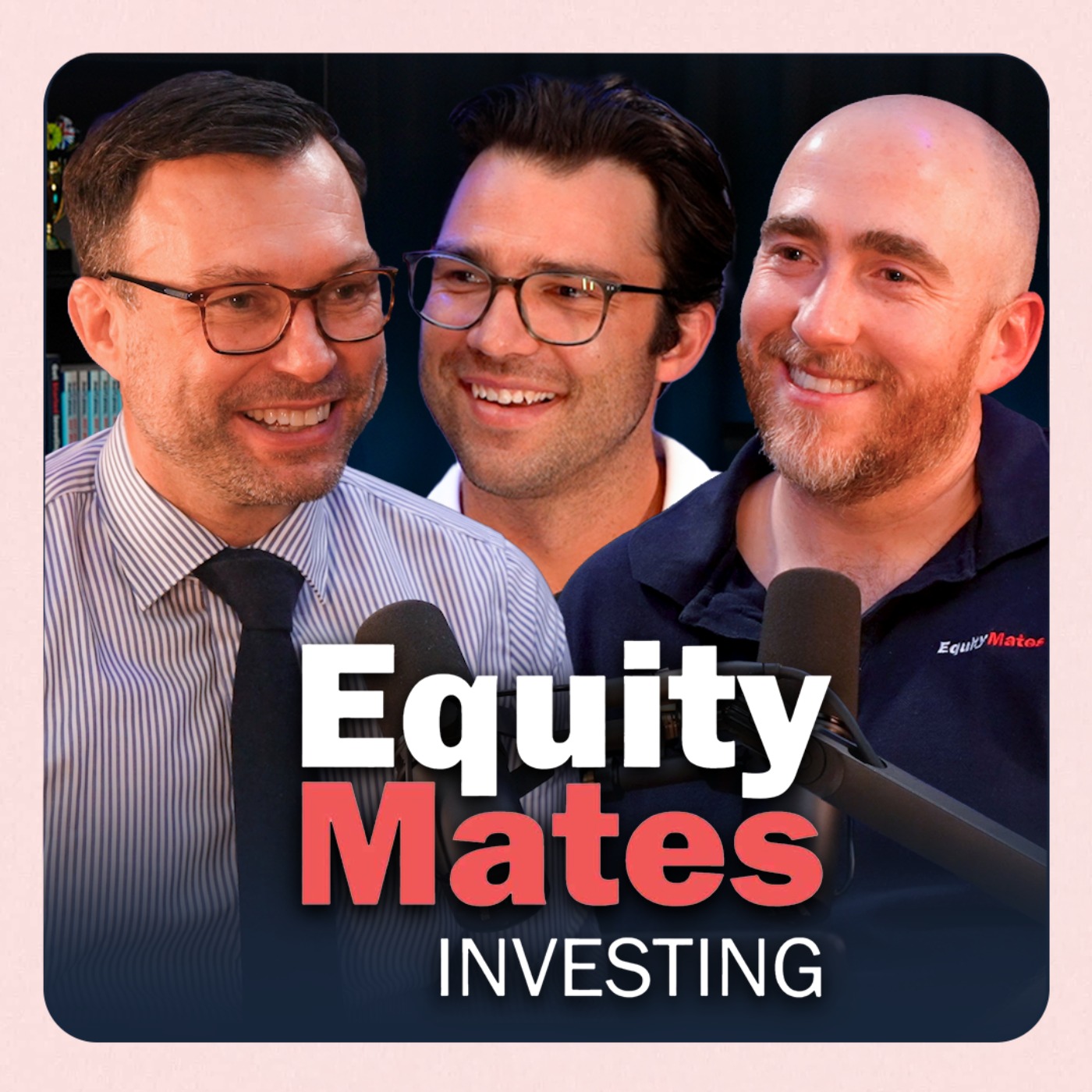
The Small Cap index is lying to you with Andrew Mitchell
Get every episode summarized
Each time Equity Mates Investing Podcast publishes, we email you a written briefing from the transcript — the topics, who appeared, and any specific claims, with the ad reads skipped.
Email me new episodesFree for 3 shows. No card needed.
About this episode
“Looking out at the ocean, it looks really calm, but underneath there's monsters, sharks, crocodiles everywhere. That's kind of what happened in small caps in 26.”From the transcript
Australia’s small-cap index might have looked calm in FY26, but beneath the surface it was anything but. Ophir Founder and Senior Portfolio Manager Andrew Mitchell joins us to unpack record sector dispersion, why reporting season exposed cracks in the earnings outlook, and how AI & data centre spending are reshaping opportunities for investors. Andrew also takes us inside Ophir’s bottom-up stock-picking process and explains why Codan remains one of the portfolio’s highest-conviction ideas.
In this episode:
00:00 Small caps: calm on the surface, chaos underneath
05:45 What reporting season revealed about Australian earnings
09:45 AI, data centres & the changing CapEx trade
14:33 Southern Cross Electrical & Australia’s data centre boom
17:57 Why reporting season volatility is getting harder to navigate
21:56 Inside Ophir’s small-cap investment process
28:44 Why Ophir avoids commodity-driven sectors
33:09 The Codan thesis: gold detectors, drones & defence spending
Stocks & ETFs Mentioned: BHP (ASX: BHP), Rio Tinto (ASX: RIO), REA Group (ASX: REA), SEEK (ASX: SEK), JB Hi-Fi (ASX: JBH), Cleanaway Waste Management (ASX: CWY), Integral Diagnostics (ASX: IDX), Monash IVF Group (ASX: MVF), Southern Cross Electrical Engineering (ASX: SXE), SKS Technologies (ASX: SKS), NRW Holdings (ASX: NWH), GenusPlus Group (ASX: GNP), Codan (ASX: CDA), DroneShield (ASX: DRO), TPG Telecom (ASX: TPG), Afterpay, Quanta Services (NYSE: PWR), MasTec (NYSE: MTZ), Microsoft (NASDAQ: MSFT), Amazon (NASDAQ: AMZN), Motorola Solutions (NYSE: MSI)
Ophir publishes a free monthly newsletter covering their view on Australian and global markets, as well as the companies they are buying and selling. To sign up and learn more about their funds head to - https://www.ophiram.com.au/subscribe-equity-mates/
———
Want to get involved in the podcast? Record a voice note or send us a message
And come and join the conversation in the Equity Mates Facebook Discussion Group.
———
Want more Equity Mates? Across books, podcasts, video and email, however you want to learn about investing – we’ve got you covered.
Keep up with the news moving markets with our daily newsletter and podcast (Apple | Spotify)
We’re particularly excited to share our latest show: Basis Points
Listen to the podcast (Apple | Spotify)
Watch on YouTube
Read the monthly email
———
Looking for some of our favourite research tools?
Download our free Basics of ETF handbook
Or our free 4-step stock checklist
Find company information on TIKR
Research reports from Good Research
Track your portfolio with Sharesight
———
This podcast is intended for education and entertainment purposes only. Any advice is general advice and has not taken into account your personal financial circumstances. Before acting on general advice, you should consider if it is relevant to your needs. If unsure, speak to a financial professional. The host of this podcast and their guests may have positions in the companies mentioned. Equity Mates Media is part of the Betashares Group but maintains editorial independence and operates under Australian Financial Services licence 540697.
Hosted on Acast. See acast.com/privacy for more information.
Get every episode summarized
Each time Equity Mates Investing Podcast publishes, we email you a written briefing from the transcript — the topics, who appeared, and any specific claims, with the ad reads skipped.
Email me new episodesFree for 3 shows. No card needed.
Know when Andrew Mitchell turns up
Follow Andrew Mitchell and once a week we email you every new episode they appeared on — including guest spots the show notes never mention, because we read the transcript.
Follow Andrew MitchellFree. Pick your own day and time.
Hosts & guests

Transcript ready
187 searchable segments. Every word is indexed and playable.
Full transcript
Equity Mates Investing Podcast — The Small Cap index is lying to you with Andrew Mitchell. Machine-transcribed; use the interactive transcript above to jump the player to any line.
Looking out at the ocean, it looks really calm, but underneath there's monsters, sharks, crocodiles everywhere. That's kind of what happened in small caps in 26. In the AI space. What used to happen was the hyposcales in the US would lift their capex and the market would reward them and the share price would go up. That reversed. You lift your capex, the share price goes down. So there's a big question mark there. Welcome to another episode of Equity Mates, a podcast where we explore what's possible in the world of investing. If you've just joined us for the first time, a huge welcome to our community. My name's Bryce. And I'm Ren and today we're talking all things small caps. We're talking to a manager who looks at both the Aussie small cap market and the global small cap market and is made a fair bit of money along the way. Joining us in the studio today is Andrew Mitchell. Andrew is the founder and senior portfolio manager at a fair. And yes, they focus on all things small caps, global and here in Australia and full disclosure, we are unit holders in the global opportunities fund.
Yeah. Now the Australian opportunities fund has delivered 22.5%, or 22.6% per year since inception, beating its benchmark by 16% each point per year. So that's an impressive track record and we really wanted to dig into how Andrew sees the world, how they pick stocks. And probably most importantly, where they're saying opportunity today, because as we get into with Andrew, beneath the benchmark, like beneath the small cap index, there's a heap of movement, a heap of change going on. And yeah, I guess it's an opportunity for people who are trying to play the small cap game. So a fear publish a free monthly newsletter covering their view on the Australian and global markets and the companies that they're buying and selling. So if you want to get an understanding of how they think about markets, what they're interested in before even investing in any of the funds, it's a great opportunity. We'll put a link in the show notes for you to sign up and you can find out more. So before we get into it, we want to say a massive thank you to Ophere for sponsoring this episode and helping us keep all of our content free here at equity mates.
With that said, let's get to our conversation with Andrew Mitchell. Andrew, welcome to equity mates. Thanks for having me, bros. So Australia's small ordinary index rose roughly 10% in FY 26. Yeah. Why is it that you say that number told investors almost nothing? I think it's Arthur Conan Doyle. He has had this phrase that sometimes it's like looking out at the ocean. It looks really calm. But underneath there's monsters sharks crocodiles everywhere. That's kind of what happened in small caps in 26. For us as a long only industrial sort of really focused fund. You had materials go up 50%. So these are the resource companies going crazy. And then on the other side, you had these software, SAS, perceived that will be the carnage of AI effectively. They were hit for six. And so there was a lot happening to give you 10%.
Yeah. Just an average, you're for an average year. Average year. Like now there was a lot happening under that under that calm surface. Fair. How unusual is that? Is that just the story of the market every year or was FY 26 particularly volatile and dispersionary particularly volatile dispersion. I'll bring that into the vocabulary on record. If you look at the best performing sector as we said, as I just said before materials like resources versus the worst performing, which is common services. Now that's sort of got real estate.com and seek and these sort of companies in there and consumer discretionary. They were off 20%. That in the history of the ASX is the greatest dispersion between. Wow. Yeah. The history of the ASX or the history of ASX. One of the index. Yeah. I've gone back and I've got the history that I've gone back and I've got that. That is the greatest dispersion that we've seen between the best performing sectors and the worst performing sectors.
So yeah, it is unusual. Now you're always getting regime changes and there will always be the best performing and the worst performing sectors. So people move out of some and into others but to get that sort of 70%. And they're not small sectors like resources in smalls and midcapses. It's like 30% of the index. Obviously you've got BHP and Riga up the top. And then you've got consumer discretionary. Obviously consumers big and common services big two. So these are big sectors moving big ways the opposite. And when you try and understand that, is it that something is structurally changing in the market or is it that in the past financial years some individual company is just incredibly well and incredibly poorly and it was just like idiosyncratic. Yeah. I think when you get these movements is a big structural change. So number one, we've got the US, Besson, with Trump really trying to base their currency and anything denominated in US dollars, you're going to do well. And you know, we've obviously seen what gold has done, but it wasn't just gold copper. That's it. There's a little bit of AI trade. Obviously there in the copper as well.
And some supply shortages. They're moving on that same thematic where at the same time as that's happening, you've got AI and the real big breakthroughs that you had with those large language models. And then the perceived threat that had to software and technology companies that we all know very well in Australia. So you had two big thematics, I think. So one on the plus and one on the minus and that's why you had the big the big move. Now, Andrew, the dispersion we're talking about was the context leading into the August reporting season of which we've just come out of and you've got some time sort of breath and reflect on what has happened. Yeah. You know, you've been in markets for 20 years. What are your key takeaways from this reporting season and perhaps compared to some of the others. This reporting season for Australia, we were expecting 10% EPS growth and we got 10% EPS growth. So that's a tick, but there was a problem. The outlook. So companies outlook didn't reflect what the market was expecting and we're sort of in this after a couple of years of absent of EPS growth.
We're in the recovery, we feel that we're in the recovery stage, you know, 10% EPS growth was expected in 26. We got a tick 27 10% OK, the outlook statements didn't reflect that. And what we've seen is the EPS expectations for 27 for the market. Have now come back down to 8% and there's a couple of things that are driving this. There's some foreign exchange ones, which I wouldn't really worry about. But the ones worry about is costs and we've seen that in resource companies underground miners that they're facing some big cost pressures as that labor tightens. So we've seen some EPS down I think even about one third of that downgrade on EPS was from gold companies, but also weaker outlook statements calling out JB Hi-Fi. It's obviously in that consumer discretionary, but basket has not misdebeat for a long time and they had a very what the market saw is a very weak start to this financial year.
What that has meant is we brought down EPS growth and then what happens with that well if EPS growth is coming down will maybe the multiple that you pay for this market comes down a little bit as well. So yeah, there's it's really the outlook statement that was the thing that I guess would have caught a lot of guard. Yeah, how much should we read into the weaker outlook like should we be reading into it around the health of the Australian economy or you know what's going to happen with GDP like or is it just that companies are facing cost pressures like everyone across Australia and again it's a slightly lower profits as a result. When companies have maybe a little bit of a subdued outlook it means they're not going to invest as much in their business they're not going to hire as much maybe that's good news in this current inflation environment. But on the flip side of that something that I'll say is promising is the balance sheets have come out post reporting season in the best shape they've been.
So we're seeing a lot more buybacks getting announced and I think dividends are now at around a hundred billion dollars for forecast. I can't remember if that's the 26 number or the forecast 27 number I think that's the 26 number but there's a lot of money coming back in now. What we want to see balance sheets are in great shape don't give the money back to the shareholders are we going to see more capex as well because they have the ability to. So the glass half empty would say okay you're a CEO you're watching the 730 report as we all do and you're going oh this isn't good. Do you hold back or are you still going to invest but you just want to temper the markets expectations a little bit at the same time. So they're certainly in a position to put money back into the market and we're hoping that they do we do need obviously some interest rate relief in Australia would go very well and now we're talking about.
One maybe two interest rate increases I don't know if that's bearing a lot of confidence for CEOs out there as that occurs. When you look at the most recent reporting season though are there any sectors that did give any Ford guidance that was on the upside or sectors that are actually going well we're obviously globally investors as well and so this is a lot bigger sector globally but I think it's also relevant it happened in Australia. It's just not as big a sector but in the AI space there's a few things playing out I was just having lunch actually with some of the big AI electrification. Private companies out there or private company out there and we were talking about what used to happen was the hyperscales in the US would lift their capex and the market would reward them and the share price it would go up that reversed you lift your capex your share price goes down so there's a big question mark there but what we also saw in the AI space was that the companies would come out these are maybe you know the electrification or association.
So associated names and also some semi conductor sort of style names and memory names they come out with some big numbers but they wouldn't hold on to the share price you got a rather muted reaction to a really a good earnings result so that would be the sector that I saw the best results come out of but you weren't rewarded for it. So I think we've seen what we've seen obviously in Australia you know we've clean away and all these businesses these are heavy industrial manufacturing businesses getting the bid from private equity. There's been a response any company that's been underperforming and this is quite hard to manage in where there's question marks about earnings private equity is coming in and buying and we saw a real bid come for companies like IDX which is integral diagnostics which is a diagnostic imaging business like a radiology business monash IVF that's challenges it's sort of in the discretionary space maybe the worst is over but that's got to be these are all seen as companies that could be taken over.
So it's made it for a very hard reporting season because we and we did okay but we find it hard buying companies that are downgrading so they're really challenged but they're the ones that were the most rewarded so the market really and this is you know small mid caps has been caught off side the companies that you don't own they're the ones that have gone up I'm sure there's a lot of short covering in there as well and so it's a particularly difficult time but we love we love the volatility this is the difficult times are the best times for us. Ultimately where the money is made you mentioned the lunch you're out earlier talking about electrification and you know AI data centers what's the what's the inside word there like are we there's been a flood of money in the US should we expect a similar flood of money in Australia. Well I think we are seeing the flood of money the the size of the data centers that are getting built at the moment the next ones to go we're talking 400 500 almost giga what when it wasn't long ago when we're talking 10 20 mega watts so there's a huge amount of capital that's looking to come to Australia we're going to have to find the energy though and we already know that there's issues in certain places where some of the bigger guys are going to be able to go to the market and we're going to be able to do that.
So the guys are saying we just don't have the energy to do this the inference guys there the ones that are just the learning they don't need to have the energy on the base load energy so much they can come in and out with renewables that might be a bit better but there's certainly a lot of capital and we can't really see it slowing down I should say what's an interesting point in what we're talking about this morning is just the midterms in the US and it's also almost become bipartisan. That you become anti data center because we don't want AI because this is this existential threat to our to our being and so if the Democrats get in and I know it's more of a state thing what's going to happen with health care because they're going to start spending again what's also going to happen with data centers and I know it's a state thing but it's very much become this bipartisan anti data center now what does that mean for Australia if we can get our act together.
There's probably a lot of money that will have to find a new home the Middle East is very challenged the Nordics is certainly attractive but Australia as a as a democratic was certainly got the rule of law down here something we do very well is maybe not a bad place to put some more capital for those big US hyperscals now one company that has captured a lot of Australian investors attention with this data center trade is Southern cross electrical. You were actually on a show in the equity mates network by or sell earlier this year talking about Southern cross electrical so what's your thoughts on it now post reporting so you caught me on the fly I think they you know they they obviously came out with a huge profit upgrade and they did a capital raise to make acquisitions so the positive is they've basically said we think our data center work is going to triple from 120 million revenue to 30 million. So we're going to be able to do a lot more.
I think they've got the potential to do a lot more there's you know just going through the amount of work that's out there and they are a diversified business so they'll benefit from that and they'll also benefit from what we've seen you know with the grid is the infrastructure really needs to be built out and we need these batteries to be built these best batteries. So we think it's well placed to do well we've taken a bit of profit since that profit upgrade and all those sort of things but I think it's still. Place to do well notwithstanding if a Microsoft or Amazon board come out and say hey we're pulling back on our capital things can change so you got to really manage your exposure to this part of the market not to go down a rabbit hole but just think. About the supply chain effects of all of this and I was chatting to a business owner the other day who's building a very very small like eight like a very small.
So I'm like a sort of like sauna and his trying to get an electrician in to just fit it out and he can't get the data center or he's saying that all the data centers are sucking all electricians they can't get an electrician in he found someone to quote at 10 grand for half a day. Yeah and it's just like that's you know that's part of the problem with you know that the US and what's happening with rates there and also in Australia within and US inflation and also in Australia with inflation and and and rates. Yeah there's there's a couple of listed guys who are saying Labor's not a problem Labor's a problem we know that there's cash incentives getting paid to electricians to go and to work on a data center are you upfront here's X thousands of dollars to come work for us. Somehow put that into the costing of the business and so yeah it's getting tight and to answer that question before another key risk is how are they going to manage their labor force and the risk and the margins at the moment they're all doing well but as it gets tighter and tighter that's when the risk the risk builds.
Yeah it's wild. Wild. So I want to ask this question. Yeah this is actually a sauna it's not a sauna now converted to a data center. No no no no nothing to do with data centers. But that's not a bad idea. I'm looking for a compute maybe you've got some space in my place if anyone wants to put a data center in. I want to close out the conversation around reporting season just with the volatility I think I'd be interested in your perspective you've been in the industry. I'm sure you've seen it through different cycles but it feels like volatility is at an all time high around the report. Do we see big moves up and down sometimes it's a great lose seems great market still punishes you is that impression right like is it more volatile and then like as an active manager how do you try and take advantage and not get burnt by it. Yeah it certainly is more volatile I did I feel like say this every year though so maybe maybe there's a lot of things that I'm going to do. Maybe there's this sort of like a reason why the number of companies I'm sort of I cringe thinking about it where I would get up out of my desk and there's a result out and I'd be like Kelsey and good numbers or something like that it looks like a beat I'll be uplifting my numbers and I go around and get everyone in the office to give me a little fist bump and now the stocks of 10 15%
that's not my mom a small one. Oh here's a good result here's an upgrade it's just a clear upgrade go around and get the fist bumps from the team and then the stocks down 10% then it's up 20% that is down 10% yet the volatility is is real and I can't remember it certainly in the intraday so when you miss numbers it's probably the same but this is being different and what's happened to companies that have actually beaten where they've gone down and then gone up again and gone down again. It's unprecedented and for Australia the US though is another beast and obviously I have that perspective this is not unusual for the US there's so much leverage on positions in the US because your average or the marginal buyer or seller is a pod shop Citadel or Millennium and results come out all the time and it's a great barometer for the market where companies come out and they beat from particular state. So I think the US is a very good sector and they go up 7% but at the end of the day they're flat. You probably should be starting to move out of this sector because it's been fully priced and I think you know as I was saying before there's a bit of a regime change here with sort of we're looking at these companies that are the EPS misses and they're getting taken over versus the EPS beats which are now the funders and maybe the crowded stocks that people are moving out of so I'm not sure what the other companies are going to do.
The answer is the other theory is that there's a lot more quant funds some of the reactions are very fast and I wonder if we've got quant funds with AI that's reading transcripts and reacting which is great for us because they get it wrong but yeah they'll get better over time obviously but they get it wrong because there's a lot of a lot of things you just can't you need to actually hear the you think about the company talk and what they say I yeah so that might have been a bit misleading what we said there we're not saying that at all in the presentation if you read it you know if the commas should have been a common air versus no comment there is completely differently that sort of thing is an extreme so I'm not sure what it's actually causing it's probably a combination of all three of those three of those facts. If you're a savvy CEO you should start just dropping some lines and yeah are they doing it? I mean down. No no no they are 100% dropping what they know as buzzwords really.
Yeah we've picked up on it and we've gone and said to a CEO and they've laughed at it without answering it. I know exactly what you're saying. Yeah yeah yeah but I mean that's the game for them like if people want to trust AI to trade money surely see you're just accessing your experience which see you. Oh yeah. Oh, we've hang on. Probably not one to say on the. That's fair that's fair. Now Andrew we want to turn to how fear are investing and we want to start with your process because you're a global investor you've got an office in Danva here in Sydney. Can you talk us through I guess your investment philosophy and then how that translates through to an actual process. We're spoken of a lot of big picture stuff but really we are like really bottom up guys and we use that top down to manage the risk to take the volatility out of the portfolio but what we are looking for as an investment team and for companies to invest in a company that we think are on a different earnings trajectory than the market thinks we're looking for EPS quite often will be earnings before
interest and tax or other profit measures but for simplicity EPS you're looking for EPS inflections that the classic one is a company that's consistently miss what the market thought and then if they've got a new product they've got one of their competitors has become very weak for whatever reason and now the EPS inflects and there's upgrades what ends up happening is all those quant funds are talking about they all buy those companies with those EPS upgrades and and it's earnings I should say earnings of what drives a company share price over the medium to long term. So we're just trying to find out the company over the medium to long term where the market says I think you're going to make $500 a profit in 10 years time and we think because we're seeing these early revisions we think it's going to be 750 million well that's just absolutely game changer for the discounted cash flow and what it does to the valuation and you get these big gap ups in earnings. So what that means to your to your question price in terms of our process is that we're out doing the work that other people won't the real
scuttle but mosaic sort of putting together the pieces of the jigsaw puzzle to work out a company that we think is doing better than the market on a turning so that will come from talking to customers talking to competitors some of the best insights I've ever got of talking to I'll just drop it here but tpg we bought that when it was called sold pats telecom or something like that I had a day to make the decision or a day I had less than a half a day but I had to make the decision because 5% of the business was going to transact at basically 21 cents a share and I could see the growth I could see the balance sheet did have a bit of debt at that stage but I could see the cash flow how could I possibly make a decision in half a day for 5% of the fund I rang up Bevin Slattery Clive Stein from Amcom I think probably James Spensley from Vokis Vaughan Bowen who would have been at M2 Mike Malone from IINET
and I asked them this David T.O. we don't know because this is like at the bottom of the GFC like bottom GFC was 9th of March 2009 this was like in February 2009 and I just asked them is this company any good because we really had no one to hurt of it and they all went oh yeah David T.O. is amazing operator and that's how made the decision by 5% of it and then was 6 months later the stock was $1.50 but that's the best example I could get that's not an average example that's the example I could get on equity but that's what you do you know like if and that we're lucky there because these are all capital hungry businesses they're all listed and so I knew all the CEOs and so I could do that it's not normally as easy to do that in half a day but we're talking to customers competitors suppliers people who left the business a year ago used to work there and trying to work out you know like what is the earnings trajectory of this business is on interesting
650% growth in half a year did you just showing off the mentor that's what you do yeah yeah yeah it's an impressive impressive one the way you described your philosophy and process there it is simple it's find a company that the market things will do 500 million in profit in a couple of years and it's going to you believe is going to do 750 mil like conceptually we can all understand that the difficulty is in the complexity is in actually finding those companies and you know you said it's about scuttle bar and you know calling people but there's you know what 40,000 listed companies in the world you play in the small and mid space mainly but the small and mid space globally is still a huge number of companies like the art and I guess the science is actually figuring out where to look and where to spend your time so how do you actually navigate that world to actually find what may you know what you can describe as quite simple find companies that are going to do better than the market expects. Well you get the idea I guess so let's say with those electrification companies were invested in them last year and we still are but we could see in the US that companies like Quanta and Maztech and IFC they're all having these huge multiple re rates driven by EPS revisions so that took us to go speak to Southern cross electrical SKS and obviously NRW and all these different businesses
and then we heard management and management can only tell you what they can they can tell you but we we said you know what I feel that this could really take off in Australia as well there's nothing to prove me wrong and so you get the idea first of all where you think there's something and then as I say to the team it's like okay you get the idea you get a little bit of an edge but you don't stop there and then just okay let's buy the stock because the US guys are all rallying that's where the real works starts when you get the edge and quite often you buy let's say 2% position because you go okay there's enough here that I think that this we're going to make money out of this but there's a bit of risk because I really don't know what I'm doing at the moment and so you buy that 2% position and then you just keep working and over the next two three months you keep working keep working and then you might end up at a 3 or 4 or 5% position of the portfolio. So we're always just turning over a lot of rocks which means you're talking to the cell side they're the anus doing the same thing watching news watching stock prices watching companies that are breaking out and wise this company breaking out it shouldn't be okay is there something here.
And you build a roll a deck of different contacts in each industry that you can call. And we just want to have an unpack some of the I guess the waiting of sectors in the in the portfolio because we spoke about materials rising sort of roughly 50% but you are intentionally under weight materials along with energy and reads what is the reason for that if you think about what drives a resource company and it's share price let's say it's a gold company well there's two inputs cost. They go up I've got a fair idea how much they're going up and gold price yeah I got no idea where the gold prices going. And it's going to really all hinge on cost the cost is probably pretty well known by the market but it's how well they do is going to depend on the gold price so when I told you about how our process works you know it doesn't matter how much work I do on these gold companies I'm not going to really get an edge now we do own some we're backed we're back in the market.
And we're going to be doing really good founders because you can actually back the founder or people who have worked in you know great businesses and that roll a deck extends to to people who used to run multi billion dollar gold companies and you just there's a new CEO who used to work for this person. Let's call him up is this person any good and he's I'm I'm in this stock P.A. really long you know okay well let's go in that but it's it's a lot harder to get the edge reats is the same it's yeah. Now you're looking at interest rates and depending on what part of reats the the economy and what was the other one I think there's another second energy energy. Yeah you're looking at energy energy prices so we will be underway I want to say we don't own them so we do my resource companies but they're not the ones that we're overweight where you'll find us more to be overweight and hanging out are the ones where that edge really exists so they are industrials health care tech consume. Discretionary consumers good because you can actually better than enterprise the consumer you can quite often witness where we all know like with you know after paying things like that we could witness friends using after we had a lot of clever ways of working out how that was going.
The consumer is actually quite easy to witness we don't think it's doing very well at the moment we're not overweight consumer right now but those sort of things that you can actually do the work and you can witness where as tell someone selling an enterprise agreement to tell stress some software we've got no idea that that's happened maybe looking at LinkedIn and they've liked a post or something like that which has happened before you see that it was this person from tellstuer who seems like they're like big in procurement like in this post from a software person it's not tellstuer and it's not a software company that you do see those things you go hang on I wonder if there's something going on here that there could be a deal happening but it's very hard. So witness anything on the enterprise side yeah I wish you hadn't said that because now Bryce is going to justify all this time on LinkedIn stop research. Yeah. Why is no one liking my post. Now despite being underweight materials and materials having a cracking year you guys had a pretty great year as well your opportunities fund returned 22 and a half percent after phase what was some of the big drivers of that out performance if you were underweight materials.
Data electrification one they're actually small companies for our portfolio so genus plus and the Southern cross electrical so they're like 2% positions because they're not big companies but they doubled in triple so that was enough to make a reasonable a reasonable difference. One I can certainly talk about because we still like it very much as a company called code and that did well and then you just have a real spread but what's very important is protecting the downside so you don't want to be losing too much money when you get them wrong and we get plenty wrong. Being able to cut your losers quickly I sometimes see some pretty smart fund managers just slow to move yeah and they get caught in a stock and it's just keeps going down every day I think we're reasonably good at moving quickly to when we sense that there's something wrong in a business as well so it's the avoid it's not just getting them right you got to avoid how big you like because you will get them wrong just don't let the loss is be too big.
So Andrew you mentioned code and let's dig into it what is the company actually do code and for people who don't know is just gone into the ASX 100 it has 2 segments right one segment is has been around for a long time sells gold detectors and they own the market so this is the you know the people walking around with the headphones on yeah cross ground digging up dirt looking for gold nuggets or little bits of gold. So there's that business and I'll go to where the edge is there but the other business that's going phenomenally well is drones so they do drone communication systems and a lot of them are going to the Ukraine they sell 3 products there really I think there's more coming actually but 30 miles 60 mile 90 mile and they're used for a really you can let them go far behind the front line so you can save a lot of Ukrainian lives but also they think they go over the front line and they're used for hitting supply dumps and think like fuel dumps and all those sort of things and we all know what's happening with the drones over there but I'll just take through whether the edge and how the process is worked and why we like this company so first of all start with the gold detectors.
So they own this market a lot of them go to Africa but they're also in Australia and the US release 2 new ones the gold monster to go monster so that's just immature if you laugh at that. Test the gold monster to and the other one is the GPZ 8000 so that's a that's their best detector they've doubled the price so the gold that they sell to the retailers to the GPZ was 9000 and it's now 18000. So the work that I did and there's no sacred cows I'm doing this work I just rang up pretty well as many of these companies these they're just on the outskirts of the cities in ballerat all these different places and just said what do you think of these new detectors the gold monster 2000 is the best detector that they have ever released the gold monster one this is all stuff people in the market won't know the gold monster one didn't work in w a because of the type of mineralization there.
The gold monster 2000 is so good it works anywhere so it's just opened up the market this is the best selling one one of the people I spoke to I said I look you know this is the cheaper best selling entry detector. They've doubled the prices this bad and they were like we think that they should double the price again because it's way too good for the price it is we think they should come out with another detector which co down told me that categorically they're not doing coming out with a new detector but it's that good right there's a guy who came from America to Australia a month ago and he's just buying all the gold monsters he can he didn't get any or he apparently didn't get any. And he's going to Africa to sell them premiums because in Africa they just sell them for the clearing price so word rent around the street not long ago that someone had spoken to one of the African dealers who said are they not selling and the stock plummet it because everyone was like oh what's the not selling Africa someone sold 50 million bucks worth of the stock right like someone just went oh my god this is the worst thing ever we did the work and we like this makes zero sense so we didn't sell so that's the first first bit I don't say the
gp z which is the best detector there's still a lot of features like the coil they've only got an 18 inch coil the enthusiast will know what I'm talking about here they need to release more features of it for it to keep selling it just means that this is going to be an elongated rollout of their new detectors and they're at a new price the markets expecting the margin to hold flat they've just doubled the price on their detectors I'm guessing the margins gone up a lot right so that's insight number one edge number one on the gold textures roughly 50 50 the business gold detection and communications on the unmanned well we've been speaking to different people who work for competitors that sell to the Ukraine and they basically said look they do a really good job codan in their communication systems on these drones it's low probability of intercept low probability of detect that's how they manage they measure these guys and they score very well they score similar to Motorola
and Motorola's having a few delivery problems at the moment and they're a lot cheaper so they'll do well and they told us that they're expecting that they'll be picking up a lot of market share over there and they're selling to more and more drone manufacturers in the Ukraine now if you see what's happening globally in just the U.S. is I'm going to miss this number because it's so many billions of dollars towards their drone capability you've got obviously Taiwan is talking about it all over Europe is talking about it and these guys are on the battlefield the number two player taking market share you know if you were NATO who you worried about you worry about the Russians if you're Taiwan who you worried about you're worried about China who we know that the Russians are helping on their drones because Taiwan they think the U.S. is helping Taiwan on their drones so codans in the box position to be able to sell a huge amount of these comms now we in Australia we're talking about drone shield and all these other drone manufacturers these are low margin that what codan does is
the real smarts of the drone but the comm system is the that's the most expensive part that's the bit where you have jamming and all these different technologies and so that's what the Ukrainians are paying up for you don't pay up for the people who put the wings together and that's that's not the valuable thing so you've got an Australian business on this huge structural growth story that's we think taking market share in a market that's getting a huge amount of extra capital and they are the one that's well that one of two that's proven on the battlefield and we all know what's you know the Ukraine's getting a lot of success with their drones so from that perspective we've got two bits of key edge on their two divisions now it's not cheap the company it's trading towards 40 times price earnings we think that there's significant earnings upside from for the reasons that I said before so we think it's not trading on that multiple but it's not without its risk one that multiples high so if it has a slip it's not that won't be good gold price goes down that won't be good because Africans will be buying detectors using the gold that they find with their last detector so you need the gold price to hold up the other one which is something which would be very good for the world and let's hope it happens but not good for codan is that if the Russia Ukraine conflict ends that wouldn't be good for them because they're selling a lot there.
But on the balance of probability we feel that we've got great age on two of the divisions we think this business is growing a lot faster than the market expects and it's got a runway for many years in the future to do well so that's the company up or on love it love it that's going on the watch list for sure thank you so much and we have run out of time but thank you so much for coming in today always fascinating talking about small caps and everything that is going on below the surface so we really appreciate your time. Oh thanks very much for having me Bryson Alec. Appreciate it. Thank you. This podcast is intended for education and entertainment purposes only. Any advice is general advice and has not taken into account your personal financial circumstances. Before acting on general advice you should consider if it is relevant to your needs. If unsure speak to a financial professional. The host of this podcast and their guests may have positioned in the companies mentioned equity media is part of the beta shares group but maintains editorial independence.
We operate under Australian financial services license 540 697.
More episodes
More from Equity Mates Investing Podcast

Australia's older, slower future, how much do you need to retire & Mr Beat-Up lo...
Equity Mates Investing Podcast

Cathie Wood: How to Invest in a World Moving This Fast
Equity Mates Investing Podcast

Rates rise around the world, why the Aged Pension isn't enough & Pimp my Portfol...
Equity Mates Investing Podcast

AI panic, finding growth in Australia & who gets your Super when you die?
Equity Mates Investing Podcast