Get every episode summarized
Each time Lore To Sleep To publishes, we email you a written briefing from the transcript — the topics, who appeared, and any specific claims, with the ad reads skipped.
Email me new episodesFree for 3 shows. No card needed.
About this episode
“As the war rages against the minions of Hell, strange visions torment the faithful across the globe. Men and women touched by heaven were granted visions. The revelations are made by the messengers of God.”From the transcript
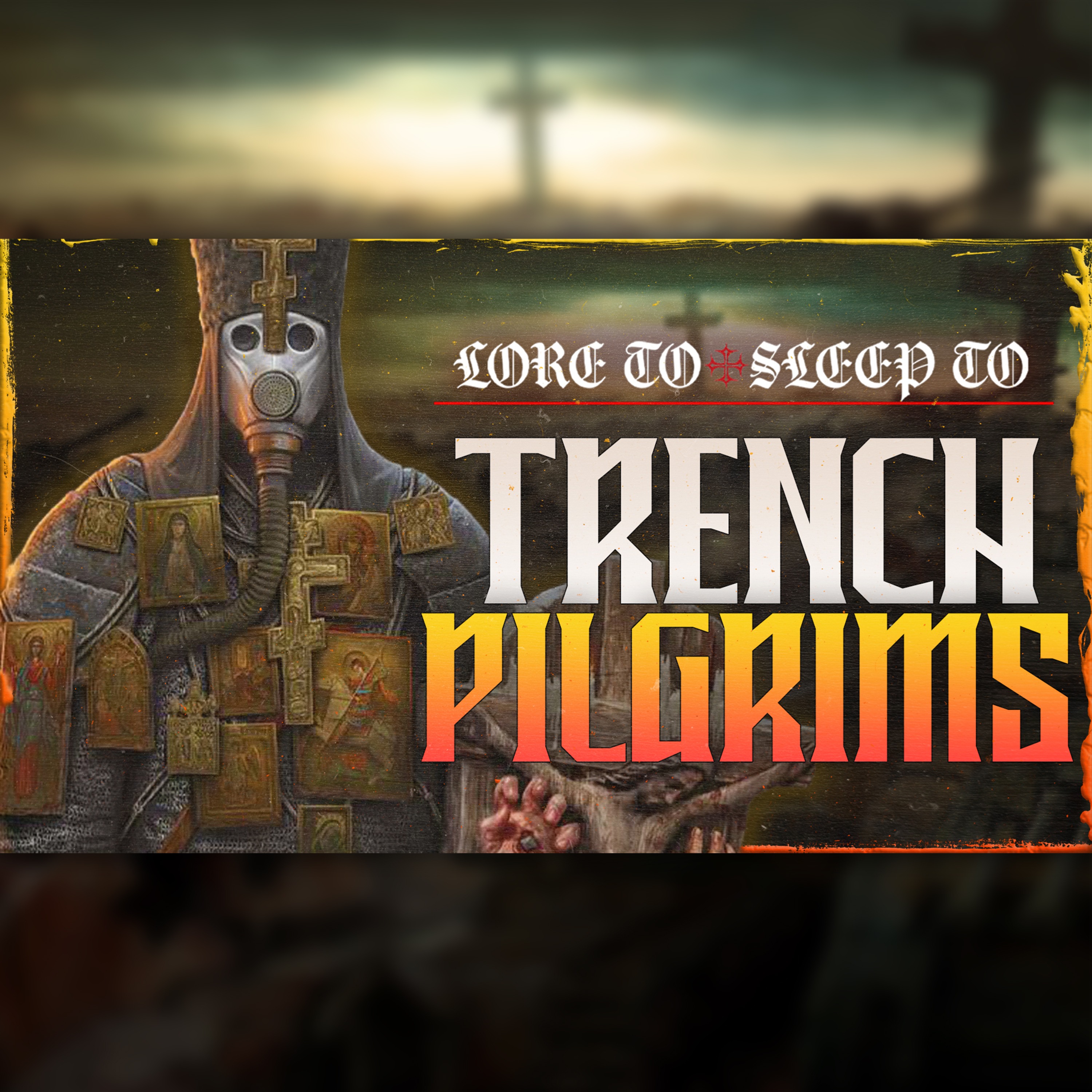
Trench Crusade - Trench Pilgrims
Get every episode summarized
Each time Lore To Sleep To publishes, we email you a written briefing from the transcript — the topics, who appeared, and any specific claims, with the ad reads skipped.
Email me new episodesFree for 3 shows. No card needed.
Hosts & guests
Transcript ready
312 searchable segments. Every word is indexed and playable.
Full transcript
Lore To Sleep To — Trench Crusade - Trench Pilgrims. Machine-transcribed; use the interactive transcript above to jump the player to any line.
As the war rages against the minions of Hell, strange visions torment the faithful across the globe. Men and women touched by heaven were granted visions. The revelations are made by the messengers of God. Sisters of the Holy Orders are marked by Stig Mata and take up sword and cross as instructed by the angels. Those who have transgressed seek to atone for their sins by taking as many followers of the devil with them to the afterlife. So they come, the mad and the maimed, the God touched and the guilt ridden, all gathering around prophets and prophetesses, forming trench pilgrim processions, disorganized groups which arm themselves and follow the prophets of the Lord unto the front lines.
They fight with unrivaled seal, throwing themselves against the heretics and harming themselves with anything they can get their hands on. From the oldest muskets to scourges and a Molotov cocktails. Pilgrims are not officially sanctioned by the Holy Sea, but the church still blesses the crusades of the faithful. Thus, the pilgrim processions are a common sight on the battlefields, often charging across no man's land in suicidal assaults against the heretics, directed by visions of the prophets and prophetesses who lead them. And urged on by the whips of castigators who are charged with instilling the fear of God in their troops. The bulk of the pilgrims are men and women with little military training, but when they dawn the iron caperote of a trench pilgrim, they can face even a demon from the deepest bonges of hell, on flinchingly.
Nor is death necessarily an end to their mission. Sometimes, the Seventh Metacryst will deem a fallen pilgrim worthy and bring them back as a martyr penitence, warriors halfway between heaven and earth, able to fight once more and feel no pain from bullets or pain at thrust. Rareer and more dangerous are the stigmatic nuns, holy sisters who manifest wounds to match those of the Third Metacryst, whom the nuns venerate. They excelled in close quarters combat, for each bleeding wound that they suffer makes them stronger, not weaker. As their devotion to suffering as their Lord once did gives them strength and endurance not found on mere common mortals.
Arms with swords and pistols, they cross no man's land heedless of any danger, praying to sustain wounds for the Redeemer, which in turn will transform them into the very vengeance of the Lord. In front of the trench pilgrims are driven the ecclesiastic prisoners, either captured enemies of the true faith, forced to make a final act of contrition or volunteer sinners seeking redemption. Each is strapped with high explosives, which are detonated once they reach the enemy lines. They dash across the killing grounds, hoping to either miraculously survive the blast in escape, or take as many followers of Lucifer with him as they can, depending on their convictions.
The most poised sons of pilgrim processions will be accompanied by an anchorite shrine, a metal behemoth some 12 feet tall, a living altar of war almost completely immune to any damage. The interior of the anchorite is covered in spikes and barbed hooks, so that the monk who controls this colossus is in a constant state of torment, rejoicing in the pain so they can suffer as their Lord once did. In combat, they wield adamantine Catherine wheels of massive proportions, which they use to crush the sinners and heretics into a pulp, and then string them upon the wheel as a warning to others. There is a bewildering number and variety of trench pilgrim processions.
The penitents of pious revenge swear in the name of St. Olga, Jews flame throwers, burning grenades, and incendiary ammunition to assail the heretics. The pilgrims of the Iron Path follow St. Rita of Cassia and go to battle with hammers, malls, maces and cudgles, and hammer nails into their heads in the memory of the saint they venerate. The Thiban Legion of Rome carries the heads of heretics upon their standards in the memory of their patron, St. Maurice. They fight with swords and other blades, competing with each other for the number of heretic heads they amass. Trinch pilgrims in the procession of the sacred affliction are known for their zeal for close quarters combat. Their armor decorated with icons and shields adorned with the depictions of the saints, which despite appearances and withstand machines,
and the millstones they carry in order to tie them around the necks of sinners, before they suffocate them in the mud and blood of no man's land. Anchorite shrines are metal behemoths, some 12 to 15 feet tall, a living altar of war almost completely immune to any damage, with a diesel engine belching smoke and trumpets echoing with prayer. The interior of the Anchorite is covered in spikes and barbed hooks, so that the monk pilot is in a constant state of torment, rejoicing in their pain so they can suffer as their lord once did. The exterior is festooned with icons, holy relics and devotional prayer scrolls, each according to the traditions of the pilgrim sect at the Anchorite serves.
The first Anchorites were built a long time ago in the fortress monastery of Velarad in Great Morovia. Several hundred of these battle machines were built under the guidance of Saint Methodius, though now the craft is lost as the monastery was destroyed by a death commando infiltration force of the demon Marcosius. Later innovations of the engineering foundry of New Antioch, created machine armor, a far smaller but more maneuverable personal protective suit, based upon the Anchorite design. But the pilgrim processions have neither access to these marvels of modern engineering, or do they have any desire to give up their Anchorites, which act both as fearsome engines of war, as well as mobile shrines that form a focal point to the prayers and devotions of the pilgrims.
The pilot monk or nun once installed never leaves the Anchorite shrine until the day they die. Once they fall in battle or rarely revolt age, their remains are reverently removed, body parts are preserved and reliquaries mounted upon the Anchorite. Thus each of these war machines is a testament to its long history of war against the forces of hell. In battle each Anchorite carries a great adamantine Catherine Will, as well as an immense bone-breaker mace, to bring the wrath of God upon the sinners, heretics and apostates. In a show of piety and atonement, it is a common practice for a trench pilgrim or stigmatic non-volunteer to be broken on the wheel and serve in their final battle, mounted upon this device of execution, as a sign of both their willingness to suffer for their sins, and for the spiritual protection their sacrifice is set to grant the Anchorite.
The church frowns upon this custom, but pilgrims flock to their Anchorites on the eve of any battle, hoping to be granted the honor of perishing upon the wheel. Though often dismissed as disorganized rabble by the generals of New Antioch and the Heretic Serenim, years of bitter warfare and painful lessons learned on the front lines have molded the trench pilgrims into a surprisingly effective fighting force, the Great War. People come from all over the faithful lands and beyond to join the trench pilgrims. Each carrying whatever burden of guilt or zeal led them to their fateful decision. Many seek atonement from real or perceived transgressions against God, others wish to practice the mortification of the flesh, seeking to deaden their sinful flesh in the pain and suffering of war to achieve sanctification.
The church does not condone or officially recognize the doctrines of the pilgrim processions. Many of its leading theologians consider the trench pilgrims brand of faith, a heterodoxy, and officially condemn the preaching of its prophets. Yet little is done to curb the widespread popularity of the trench pilgrim movement, as its fury is mainly directed at the servants of hell. Many scholars also suspect that certain fiery orders and charismatic leaders who might otherwise have caused great civil unrest, find their home and their grave in the ranks of the trench pilgrims, saving the churshore secular authorities the trouble of persecuting them. New aspirants arrive daily at the camps and bases of the pilgrim processions. As their very first acts, they must turn over all their worldly possessions from monies to land, prints and valuables to the elders of the pilgrimage for the great wars for racious appetite for funds is unending.
This is not the only source of income for the trench pilgrims. Families of those who have joined often support their loved ones with material donations. And in some areas, the trench pilgrims claim the Peter's pence for themselves, much to the chagrin of the local church authorities. Next, the castigators are quick to sort the new recruits into roles where their skills can bring maximum benefit to the entire congregation. Those with military training, especially if they have served in the front lines, are put to work in drilling raw recruits. Those with technical expertise tend to the armaments of the war pilgrimment. While the few scientists who have become so drunk from the cup of the Lord that they have cast away their academic lives, are sent to work in war laboratories hidden in no man's land.
The trench pilgrims waste no skill, palindor strength, that can be put to use in service of the procession. Some are considered so sinful that they are not permitted to become trench pilgrims. Instead, they are condemned to become ecclesiastic prisoners who must seek atonement on the battlefield without weapons. Their hands bound with spiked silices. With their one hope for salvation found and self-sacrifice, the detonation of explosives blessed by the war prophets. Arming their multitudinous followers is no mean task for the war prophets. Civilian firearms from shotguns to blunderbuses are put to use. Massive ponte guns, hunting shotguns usually affixed to boats, or used as heavy weapon support, despite being extremely dangerous to fire for their wielders.
Those who have served in the armies of the faithful before and purchased their service bolt-action rifle, as is the rights of those who have completed their seven-year tour of duty. Bring their arms along with their faith when they join. Trench pilgrims readily engage in black market trading, to gain access to restricted military hardware, machine guns, automatic pistols, and submachine guns are all prized and much desired, though difficult to acquire. Immunition, martyrdom, pills, and explosives are also eagerly sought after by the trench pilgrim leaders. Mechanical components to repair and maintain the venerated anchorite shrines are extraordinarily expensive, but their care is seen as a sacred duty.
But above all, trench pilgrims' value discarded samples of metacryce flesh and blood, as well as chemical compounds smuggled from the sultanate's great houses of learning. Creation of the communiquence is the highest priority to most pilgrim processions. Both for their value on the battlefield, as well as for the religious vindication their creation brings, the eyes of the trench pilgrims. When the fences of No Man's Land can't provide what they need, more when coignants in short supply, trench pilgrims turn to other means, scavenging the battlefields for weapons, armor, supplies, and valuable sets of routine practice. Some of the most zealous warbands make bold raids to the ammo depots and arm caches of New Antioch and the sultanate, though most are content to strip the fallen of their gear and collect artillery shells for their explosives.
In their makeshift laboratories and chemical workshops, the trench pilgrims with some academic training, experiment with the dosages and other additive substances create communiquence. Most such attempts end in the agonizing death of the would-be communiquence, but new volunteers are never in short supply. Such underground testing sites also produce Molotov cocktails, charges for anti-tank hammers, and explosive devices for the ecclesiastic prisoners. In the lands of the Holy Roman Empire, peasants are not allowed to carry arms of any kind. There, the lowerborn have turned to using war crosses, metal projectiles in the shape of a crucifix. The trench pilgrims ceaselessly train with these weapons, and some have attained such accuracy with them that it borders on supernatural.
These war crosses, though primitive, have proven to be almost as effective as grenades and firearms. Lacking the heavy artillery support of either the forces of New Antioch or the heretic legions, the trench pilgrims have mastered the art of keeping their enemy close. Where the advantage of sophisticated firearms, their foes usually enjoy, is not common to play. This turns the balance of power around. For in the fears, brutal and bloody melee font with trench club, pistol blade and sheer ferocity, the trench pilgrims have few equals. While most regular troops of the faithful understandably dread closing in on the horrors of the path of the beast, or the undead slave of the cons of the Black Rail, the trench pilgrims are enured against the supernatural fear that surrounds them.
Thanks to their famed iron caperotes, whose shape and decorations follow the sacred geometry devised by Saint Hubert. A trench pilgrim will charge into combat against the dreadful monstrosity of Beelzopup, with battle hymns on their lips, even though it spells a most certain doom. It is by the clamor of Beelz and hymns that they shall be heard. It is by the iron perfume of mersoaked scabs, leaching up from brazen sensors. They shall be smelt. And it is by the heavy sprinting of sickly bodies, barely contained by yellowing bandages, and the dance clatter of holy icons. That they shall be seen. But it is by their hands locked in blessedly arthritic union around the throes of the heretic that they shall be known.
They are pain and piety. They are church and trench. They are lepers and pilgrims. A mast as the bang throngs of the processions of the sacred affliction. The leper pilgrims are the bloodied knuckles of chrysendum. All two mortal bodies and minds reshaped over centuries in the crucible of the Great War. Communities of faithful refugees dispossessed by conflict, the creed sacred processions by papal bull, have official records dating back to the wars of triclavianism, the 13th century. However, the first true procession of the sacred affliction coalesced at the onset of the corpse wars, led by the now revered and legendary prophet Solan.
Once the prince of decay beels or pub unleashed the black grail across Europa, innumerable caravans of the sick and dying fled their festering homesteads and clogged the arteries of the continent's trade routes. Solan's flaw, most grievously blinded with leprosy and the sickness that it cultivates thereafter, where one of the many to be denied passage through townships due to the fear of spreading infection. Close to death and outraged by their fellow Christian selfishness, the prophet sought martyrdom on behalf of his followers. To the processions dismay, Solan and his fellow lepers shut themselves in a nearby tomb to perish, and called upon his flaw to uncover and parade their remains through the town gates, seven days later, to demonstrate the consequences of the town's refusal.
However, when those seven days passed and the tomb was opened, the prophet and his followers emerged, hailed, strong, and very much alive. They each praised God for the miraculous visits of the blessed Mary, who bathed their flesh, and bathed them bare their affliction as a gift from the Lord. Each pockmarked a sign, each lesion a lesson, that they might foster the strength of body and soul needed to defeat the forces of hell. Overcome by holy joy, the pilgrims immediately departed in all directions, as spread the good news, as far as their damaged legs would take them. While Solan himself traveled across North Africa, leaving behind many more processions in his wake.
In the decades and centuries to come, the processions of the sacred affliction embraced Solan's miracle, not simply as a figurative sentiment of pain makes you stronger, but rather a command to mobilize and fulfill their destiny. They are, too, quite literally, defeat the forces of hell through displays of zealous strength and fearlessness. Followers of the Lord from all corners of creation travel to join the raucous glory of the processions, often enamored by the message that whatever ailments they carry are a sign of God's love, rather than a punishment. Perhaps most surprising to many is the warmth and readiness with which the processions accept would be pilgrims, but then each member of the procession remembers well the conditions that saw them seek their roving caravans, whether it be agonies of the flesh, and a reputation.
While each procession boasts unique initiation rituals, all honor the rights of pure's RF. The rights begins with each aspirant confessing both sins and suffering to the Lazarist castigators. Once this first step is complete, the oft-weaving aspirant then walks through the assembled audience of the rest of the procession. With each pilgrim reaching out to them, and offering words of comfort and community under God. Only when all in the procession have welcomed the aspirant does the walk-in at the feet of the Lazarist prophet, who has taken this time to engrave the postulance confessed sins into a millstone. The aspirant binds the millstone to their body, and the rights are completed with the gift of a virtue name, a new identity to herald their path to heaven as leper pilgrims.
Such intimacy with their fellow sufferers invariably leads to the spreading of some physical sickness, but this is considered a small price to pay for unity and salvation. Rarely the wheel of fortune turns that this communal blend of affliction blooms fully across a leper pilgrim's body, no part left untouched by the Lord's will. These faded souls are racked with such suffering that no means of mortal injury could compare. Whether by blade or flame, they are filled with the inviolable wrath of God. Unlike other pilgrim processions, there are truly no limits to the procession of the sacred afflictions forgiveness, provided one's commitment to redemption is true and unwavering. For those that do misstep, the Lazarists loving nature grants the transgressor a final chance at atonement amongst the ranks of ecclesiastic prisoners.
When a leper pilgrim takes to the killing fields of no man's land, they are a vision of heavenly violence. The methods they choose to deliver the heretics unto the Lord, in differ across processions. Many, such as the Maury in processions, choose to bathe the battlefield in fire from improvised flame throwers and hurled Molotov cocktails. Before they dispatch smoldering survivors with bayonets or polar. Others, such as the holy caravan of St. Dunstan, take up smithing hammers and hefty flails forged with spiked bells, bludgeoning their foes ruthlessly and nailing their feet to the ground. Those that follow the wandering nightly warbands of St. Lazarus take up swords and shields in the tradition of their long-lasting allies.
Irrespective of their weaponry, leper pilgrims often favor elaborate symbolies of holy icons for armor, overstandered plates or mail. They believe the countenance of blessed Mary and other patron saints is able to turn away ballistics designed to pierce even machine armor. More common still are those who is skewed protection altogether, instead leaping across the trenches in simple ragged vestments, unhindered by unnecessary weight. The signature method of murder used across all processions of the sacred affliction comes in the form of their heavy millstone, which is removed from their bodies. The only time one is permitted to do so, entied around the necks of their bested foes. Many are the heretics who ground in the mud beneath a millstone's weight.
Their last living moments filled by the ecstatic recounting of sins, warbold or barked through mouths full of hollowed rotten teeth and spittle-strung bandages. Castigators can be found in the ranks of almost every pilgrimage. They serve an essential role in being the first and the foremost that provide direct spiritual guidance. And vigorous moral correction to the milling hordes of their fellow trench pilgrims, acting not unlike the non-commissioned officers of a regular military force. The path of righteousness is not always easy to follow, and transgressions made by pilgrims must be promptly punished to remind supplicants that they must always fear God's judgment more than the enemy. They are often both imposing in stature, dower in dress and demeanor, and possess the stintorian voices capable of penetrating even the most in raptured ears.
All castigators bear a ceremonial scourge of some kind as their badge of office. The precise form of this instrument of correction, punishment can vary greatly depending on the castigators patron saint and orthodoxy. For example, methodians employ metal rods, duncedanians use hympin ropes, and the marian's preference is for red-hot irons. The lacerist castigators of the sacred affliction commonly use scourges of braided leather or of knotted hair shorn from their flock. The symbolism of the instrument is always singular whatever form it takes. It is the whip of God. Both a reminder and a physical manifestation of the righteous metaphysical punishment that is in store for all sinners in the eyes of the Lord.
For those who have dedicated themselves to be mortared with the everlasting glory of God, it is a necessary and welcome tool used to expose and exercise the weakness of the body when confronted by the temptations of sin. Pride, envy, wrath, gluttony, lust, sloth and greed can seep all too easily into even the most pious mortal soul. The watchful castigators always stand ready to discover any trace of sin to vigorously drive it out. On the march castigators keep discipline within the ranks of the pilgrimage and issue the war-profits commands to the faithful. They act as the prophet's confidants and personal confessors, driving them and granting absolution for any of their sins which should not fall under the auspices of the apostolic benitentiary.
Castigators also take daily confessions from the faithful, typically after vespers and by necessity in mass if the pilgrimage is a large one. Depending on the degree, transgressions made by the pilgrims can be absolved through vows, additional duties, privation, enforced fasting or corporal punishment. In the latter case, the individual orthodoxy and patron saint of the pilgrimage also greatly influences the degree and nature of the punishment. Flogging, branding and even mutilation are widely accepted as forms of physical absolution for most pilgrimages, but some disagree. Methodians abhor gratuitous and barbaric practices and will prefer exile or incarceration over anything more serious than the most symbolic of physical correction.
Naturally, Maureans prefer to use severing and branding while done standians favor pressing. Lazarus castigators assign the weights of the millstone given to lepre pilgrims to carry as their symbolic weight of sin, so among that horde a wayward pilgrim who receive a yet weightier stone to bear. In the case of repeated or serious transgressions, a castigator may invoke a reduction to the ranks of the ecclesiastic prisoners or even immediate martyrdom for final judgment be made by God. Arisein or blasphemy are universally met with instant excommunication and execution without last rites or sanctified burial. The sin of personally taking up the cause of the Almighty and then turning aside from the path is among the most reprehensible to a castigator, no matter what their creed and they meet its accordingly.
In a more pastoral role, castigators also act as the guardians of the pilgrims shrine and its sacristy, and they are often the pilgrimages acting quarter masters as well. In battle, many castigators lead their flock from the front, but in better equipped pilgrimages, castigators may stay in a supporting role to direct the pilgrims' righteous, but at times unruly fury against the phone with more precisely directed volleys. In either role, castigators constantly remind the pilgrims of their ultimate duty to the kingdom of heaven and absolve any temporary lapses on the spot with suitable verbal encouragement and corrective application of the whip of God. Inevitably, such a prominent presence makes castigators prime targets for heretic snipers, assassins, so they may wear armor or bear trench shields for protection.
Some pilgrim dogmas is skew such protections entirely to demonstrate complete commitment to God's plan, but even these castigators may utilize martyrdom pills and holy icons to ensure they will not fall before the battle is won. Although they are confirmed members of the clergy as appointed by a pilgrimage, few castigators are students of the innumerable parish and metropolitan seminaries of Europa. Indeed, their role falls outside the doctrines of the unified church, which does not officially condone pilgrim processions. In some cases, castigators may barely stand within the broad orthodoxy of faith at all, as is demonstrated by the notoriously brutal castigators of the cavalcade of the 10th plague. Most castigators refer to their purpose as a calling that came to them later in life as a result of their natural disposition or personal experiences they typically cite as receiving revelations from the Lord to set about his work last.
Combat veterans, non-commissioned officers, ships boasts, prison wardens, school masters, deacons, coast masters, executioners, torturers, farmers and police officers have all been noted as making effective castigators with little more than additional biblical studies. Those from other walks of life usually require a more rigorous period spent as an acolyte to a full-fledged castigator to learn the ropes in many cases, literally. There are whispered rumors that castigators are in fact, clasiasistic prisoners, who survived martyrdom or heretics forgiven by the grace of God, with those who speak them are careful not to do so anywhere a castigator might hear. For those pilgrimages that do follow the official church doctrine, confirmation of a castigator into the clergy can be made in the field via a writ of authority from the ranking cleric.
The preferred method is to register the confirmation with Rome to ensure the castigator's name is added to the ledgers, the righteous that rest in the Vatican archives. Orthodox castigators will strive hard to ensure that their flock is sufficiently purified, that they can one day make a personal pilgrimage to the Holy See and receive confirmation in person. Few succeed in this goal. Either they are daily God-given burdens occupy all of their time, or they are martyred long before the opportunity arises. Other castigators have little care for notions of propriety dictated from afar by the supreme pontiff in Rome, and are content to pursue their cause in their faith, unmarked and unknown, saved by the eyes of God. Because of this, the sight of a hard-bitten veteran castigator from the frontlines on the streets of any city will draw guilty whispers and averted clansis from some, and a huge upwelling of faith and others.
Many a pilgrimage has begun with just a single castigator and a worthy prophet that they found in the hinterlands and persuaded to lead the faithful to battle. From these first small stones, a righteous avalanche grows. To dismiss the pilgrim processions as not but blunt instruments of war is to neglect how effective a hammer is at rendering it in the enemy's face unrecognizable. But also, it is to forget that the processions do not go to war un-aided. For their vanguard is often formed of the blessedly lethal sisterhoods of stigmatic nuns. For every heretic grunt struck down by a pilgrim's flail, so just as many gaps in a fallen knight's plate are found by a nun's keening sword. For every snap boom of a punt gun into an enemy fortification, a crucifix of sharpened iron flies silently into a spouter's window, launched by the hand of a nun as she darts in careens the sword.
The stigmatic nuns are in equal parts, surgical outflankers and bloodied angels of death, killing with a divine alacrity that is only empowered by the apparently mortal wounds they so readily survive. The most widespread origin of the sisterhoods of the stigmata, hails from its oldest order, the mantelata, sisters of St. Catherine. Born in the early years of the Unified Church, Catherine of Siena's literacy and rhetorical competence, light her age. But it was her mystical visions of union with the Son of God that attracted the monetary gaze of the papacy. Her first vision saw Christ himself visit the young nun, beating her sup from the red honey and iron that trickled from his pierced body.
Further encounters over the years included a form of mystical marriage with the Son of God, and numerous theological essays on the sacrificial power of his ever leaking blood. This not only earned Catherine the title of a possil of the blood of Christ, but an ongoing correspondence with Pope Agapetus III, which eventually culminated in a personal summons to the Holy See. As the story continues, it was in the darkest chamber below the Vatican, but the would-be saint was brought unto the heavenly and terrible presence of the new Lamb of God. She beheld its divinely contorted form, the rapturous awe, an arrangement of o'erian legs framing a chest, peaving with staccato breaths. Perfect sanguine ruin, pouring down from eyes across the sublime face, Catherine had wed in her visions.
As if reliving her first encounter with the redeemer, Catherine lovingly imbibed this new being seeping wine. Her own vision blurred with bloody tears, her habit dampened by identical, immaculately conceived wounds, and she felt all the strength of the heavenly host. Scholars of the Sororum Stigmata would later attribute this encounter to a prophetic visitation from the third-emed Christ, despite records not dating its appearance for several generations to come. However, the saint disappeared soon after, leaving behind only a letter detailing her transformative experience. On which the mantelada sisters were found, St. Catherine's story spread like wildfire throughout Christendom, finding extra purchase at a time where the influence of hell was strongly felt.
Nuns in the condom old and new began scarring their bodies and eyes, reporting feelings of divine strength and conviction that outshown the terror of the corpse wars. However, this also came with an unyielding desire to excise, any who failed to meet their standards of piety. After all, when one has suffered as the Lord suffered and has felt the transcendent power of his persistence and love, how could one accept that any would doubt him? Many saw these practices as heretical impieties and the resulting civil unrest led to the excommunication of these newly identified orders of Stigmatic Nuns by papal bull in the 15th century. Rather than quash the orders, this merely drove them out of the mainstream church and into the wastes of the war.
It is here that the sisterhoods found companionship alongside the pilgrim processions, and it was in the violence of the frontlines that the sisterhoods discovered that the strength and speed granted by their blessed Stigmata only heightened when the wounds were inflicted by others in battle. Over the centuries, the martial aspect of the sisterhoods of Stigmata became perhaps their most defining characteristic. Now, Novitiates train as much with the sword as they study holy texts in hidden convents, fulfilling their charism by earning the blessed Stigmata when finding the enemies of God. As each sisterhood has their own patron saint, so tuned to their own practices and traditions. The order of the ecstasy of St. Teresa emphasizes mortification of the flesh to attain a form of religious ecstasy known as trans-verberation.
As such, they are known to go into battle with the barest minimum of clothing or armor, so that they may earn their divine suffering unhindered, though such immaturity goes against official church doctrine. Meanwhile, the sisterhood of St. Hill Guard considers their martial aptitude that one of many gifts granted by the blessed Stigmata. Dedicating much of their time to all manner of creative tasks, including scribing musical and literary works. Their research on the mystical language known as the Lingua Ignata has even attracted the attention of the synod of strategic prophecy. The number of smaller orders honor a centuries-old sacred commitment to the order of Saint Lazarus, forming highly specialized warrior convents at the service of their leper knights, or splintering off to join the many processions, the sacred affliction, which were once under their protection.
In sharp contrast, the convents that fight alongside more orthodox pilgrim processions embrace traditional values of modesty and reject the doctrines of the metacrised entirely, attributing their miraculous power to divine purpose. Much like the larger pilgrim processions, the church does not recognize, but rather tolerates, these varying sisterhoods of the Stigmata, as co-belligerents in the Great War. Yet, their more punitive excommunication has not been formally withdrawn. With some of the more patriarchal clergy officials dismissing the orders as no different from the other pagan witch-cults, dabbling in sympathetic blood magic. However, for the princes of the church were viewed the papal records concerning the third metacrised. They know that the truth may be far more complex and troublesome for the unified church.
A Lazarist prophet is as much a leader in pastoral love as they are in war. They are the first kind face, smiling through mucus-laden bandages to welcome aspirants down the path of redemption, reborn through a new name, new family, and new doctrine. They are the first kind face, contorted by lion skinbumps and eroded sadlenose to welcome heretics down the path of retribution, ushered by the suffocating weight of a limestone crown. It's a dynamic that ultimately serves one purpose, the correction of mortal ways, and the end of all that is sinful. Who better delete the processions of the sacred affliction than those who navigate in the sacred space between spiritual life and physical death?
The prognation of a prophet is ordained by God, determination and the course laid out before them. Would be prophets are typically adherent to leper pilgrims of the sacred affliction, guided by the all-encompassing tribulations of pure Zareth, hardened by the thrones of battle, and humbled by the acceptance of their community. They are legs to the lame, eyes to the blind, shields to the weak, and well acquainted to the woes and perils of the downtrodden of this wretched world. Draped in lesions with notwith badges, the rusty soar to their name, if fundamentally understand the troubles which burden themselves and their troubled kin. It is through these trials that the prophets of B is granted perspective in the face of death, the freedoms that come with it, the tethers that break as one catches a glimpse of the twelve gates.
How much good can one do when one only has a year left to live, a month, days, seconds? Each action is more critical than the last, especially as the lords affliction take their aching toll on a body left ragged and wanting. Each fourth ought is a mere suggestion, but the present is certain. We may begin the journey today, but who will reach the destination tomorrow? A thousand inquiries leading to but one answer? Love? It only then is the pilgrim, nay the prophet, find the truth of God's unending warmth and his power over mortality and understands how God brings new life even when all hope seems lost. The path of compassion overcomes death and offers an escape from finality.
Every moment is an opportunity to take one step forward, welcome another believer to the cause, or deliver another blow to the apostate, even if that moment is their very last. And so, the Lazarist prophet grasps their kin and holds them tight, uttering harrowing lamentations of life beyond the safety and purity of their holy commune. They point to a world cradled by the heretics who have opened the doors to hell, an invited pain, poverty, war and sin to pollute the gardens of creation. It's not only those who deal with the devil, but even those who call themselves good Christians who have become numb to practices that edged nearer and nearer to the brink of heresy. Tumoring the world to the iron-locked clutches of Satan, it is not us, the prophet's rattle, who have earned the trappings of misery.
These burdens are a gift from God to separate the righteous from the slothful. Infections are drawn from desperate newcomers as the prophet taps hammer to blood and chisel. They inscribe transgressions that the Holy See would reward only with capital punishment, laying bare the pilgrims deepest vulnerabilities for all to witness. Only once the Lazarus prophet detects honest dedication in an aspirant, do they bestow the homecoming gift of a millstone. Though so burdened, their darkest confessions on a rope-rash display, haven't a place to go, and thus cling to the men and women, they call father. For the prophet is the only one who could offer salvation and lead them with the promise of hope and home.
Most percessions are small bands of album seekers and roving warriors, but some more magnificent gatherings thousand strong, spearheaded by a loose covenant of prophetic leaders, each under a web of old respect as baptized and baptised. Esquiving formality and institutional support in favour of community-focused aid. These inner circles bear an incredible weight in guiding enormous columns, one sheltered, hungry, maddened levels. Sourcing the aid necessary to drive those feet forward is a monumental task, acquiring cooperation, sacrifice, and of course faith. However, the journey is not always giving nor forgiving, for many faithful cities and townships withhold alms and forbid passage and fear of wasted resources or spreading of illness.
This defiance of papal bull defiance against the children of God forces Lazarus' prophets to take more extreme actions to provide for their followers. Lazarus' prophets' affection for their flock is mirrored in their unrelenting hatred for slights against their cause. In the year 1909, Bagarus Fortress was taken by a procession of 30,000 pilgrims led by the war-profit known as Risen, who utterly overwhelmed the heretic defenders with wrath and zealotry before establishing the fortress as a Levenite stronghold. Although Duke Constantine XI expected field regiments to displace and defend the fortress under new anti-ah control, he was surprised to be met with refusal by the prophet. Bagarus Fortress was taken for the procession, and for the procession it would remain, no outsider, Christian or otherwise, shall assert their command.
In a bleak irony, it isn't uncommon for a Lazarus' prophet to direct their visions of calamity upon Christian settlements that have denied them alms, declaring them no better than sinners at the burning gates awaiting their turn at the yoke of the court. They camp outside the walls of offending settlements in spiritual protest, exhorting sulfuric dam nations through loudspeakers, capturing Craven merchants and travelers who peddled to the blasphemers, and crafting towering monuments from the cracked millstones left by leopard pilgrims who have perished during their long and arduous protests. While some are satisfied with demonstration alone, some Lazarus' prophet will pick up alms and direct their pilgrims into the cities by force, sacking fellow Christians for their supplies, and demanding the burdens of faith be shared amongst all of God's children.
Whether confronting the ronious believers or the outright heretics of Satan's armies, Lazarus' prophets are a powerful force of faith on the battlefield. They take to the front and center, standing side by side with their congregation, dawned with their personal millstones, and armor made from saintly idols and holy relics. Capable of deflecting heavy fire through faith alone, brimstone sermons and jaunty hymns alike are hawk through horse-rofetic throats, as their kin stoked by visions of heaven's glory clamber over the top to drive their foes into the mud. Though no stranger to finer mechanisms of warfare, Lazarus' prophets are more intimate with sharpened steel and weighty stone extensions of their calloused bodies, crushing heretics flat with great flail blows, or blasting through a cursed armor with anti-tank hammers.
As the lions thinn and their pilgrim comrades begin to fall, Lazarus' prophets will offer an outstretched hand invoking the gift of the sacrament to quell the pain of near mortal realms or stymic the speed at which the black rail spreads. As the battle comes to its last, when blades are blunted, magazines are emptied, the prophet builds a pyre around the bloodied millstones of their fallen kin, sending them to salvation with one last act of love. The prophet then holds the embers of faith in their heart as they gather the pieces of a sundered procession. Again and again they follow St. Lazarus on the next trail of devotion and destruction. When the Pope dispatched his relief flee to the Vant in 1905, one of the first aboard was Black Bartolomale, a Lazarus prophet of the sacred affliction.
He had earned this moniker on the march to Rome by refusing to detour around lost Avignon, ultimately emerged out of the other side, covered from head to toe in black blood, brim and soot. By then he had already gathered a zealous following who saw in him a leader untouchable of the powers of hell. That belief was put to the test when the fleet was ambushed by heretic submarines. Every last ship was destroyed in a devastating blow to the church. As Bartolomale ships sank, the sacred millstone around his neck dragged him into the deepest trench of the Mediterranean. Darkness closed in until he was utterly alone in a featureless void, but then his fading sight beheld ancient columns, garland, a vast chains of russet iron.
The sea bed undulated as if a titanic heart lay in tuned beneath the pallid sands. Plunging wrecks of seven devastated ships fell like golden spearheads, and as their winged prowls pierced the sand, Bartolomale felt the stirring of something unutterably ancient and unholy. Its chained being was a vision of forms beyond the wit of mortal comprehension, serpentine, draconic and formless all in one. This was Leviathan, and deep in its fell heart Bartolomale witnessed its creation wrought upon the fire of Heaven's Anvil and felt its agonized trail as it was cut down to this lightless prison for all eternity. As madness took hold, Bartolomale tore at the court securing the millstone around his neck, as they snapped the ocean past him out, like Jonah from the belly of the whale.
And Bartolomale awoke, there was a top-a-sweighing mountain of corpses. Himinals blared from brass horns, the clawing reek of mure combined with droning monastic chance revealed his location. The Domestometrius, the great corpse depot the Levant. He screamed the name of God until a cadre of Dometrian monks, fearing him to be some hellish fiend, raked his body with machine gunfire. Though Bartolomale's holy icon armor was sult corroded and rusted, their bullets could not penetrate and were turned away from his flesh. The enraptured monks could only watch as Bartolomale departed their dominion of death to serve God once more. In one hand, Pete Bohr arriving whip, wrought from the broken cords of his lost millstone, and the other, a fearsome Dometrian corpse catcher hook.
The reborn Lazarus' prophet roamed the battlefields of the Thavant for years, no longer black Bartolomale, but now blessed Bartolomale. Processions of every stripe flocked to his afflicted banner to hear his prophecies of Leviathan, though few among the established church took his raving seriously. Only when he and his pilgrims looted and burned the library of the revered house of pillars in 1914, it's some worry that a deeper truth might be buried within his proclamations. Following this heinous act of destruction, Bartolomale's ever-expanding pilgrim hosts crossed the Ammonist Mountains, branded passage through the gate of Borgres fortress by Lazarus in Ascension, also pledged yet more soldiers to his fanatical cause.
Now, blessed Bartolomale dispaches his pilgrim followers throughout the hinterlands of the Thavant and the Carcass Front, in search of relics and lost knowledge, it might reveal how to bring Leviathan to the surface. For he knows he must grapple with the beast, as is foretold in revelation and feast on its remains, before casting it back into its benign chasm once more.
More episodes
More from Lore To Sleep To

Warhammer 40k - Clan Raukaan - 3rd Company of the Iron Hands
Lore To Sleep To

Warhammer Fantasy - The First Empires of the Old World
Lore To Sleep To

Warhammer 40k - Vulkan
Lore To Sleep To

Trench Crusade - The Path of the Beast & the Orders of Crusader Knights
Lore To Sleep To