Get every episode summarized
Each time The Brian Lehrer Show publishes, we email you a written briefing from the transcript — the topics, who appeared, and any specific claims, with the ad reads skipped.
Email me new episodesFree for 3 shows. No card needed.
About this episode
“Now we'll turn to a new biography of one of the biggest names on Wall Street and one of the biggest names in the Epstein files. When the Justice Department released millions of pages in January, a lot of powerful people had explaining to do, right?”From the transcript
William Cohan, co-founder of Puck News and author of many books, including Money to Burn: The Unvarnished Truth About Leon Black, Apollo, and the Rise of a New Wall Street (Portfolio, 2026), tells the story of one Wall Street titan's rise and fall and what it says about the larger system.
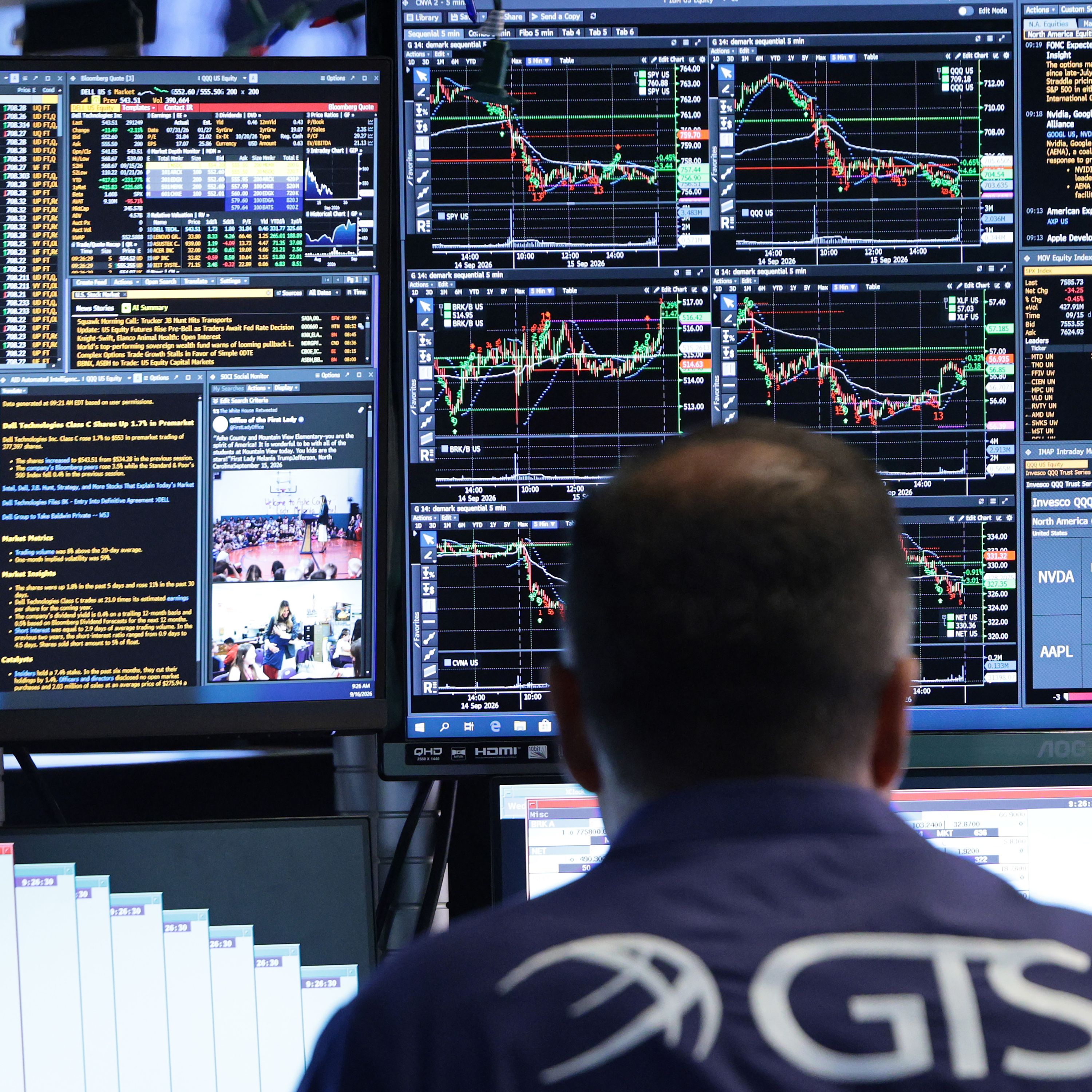
Photo: Traders work on the floor of the New York Stock Exchange during morning trading on September 16, 2026 in New York City. (Photo by Michael M. Santiago/Getty Images)
Hosted by Simplecast, an AdsWizz company. See pcm.adswizz.com for information about our collection and use of personal data for advertising.
Get every episode summarized
Each time The Brian Lehrer Show publishes, we email you a written briefing from the transcript — the topics, who appeared, and any specific claims, with the ad reads skipped.
Email me new episodesFree for 3 shows. No card needed.
Hosts & guests
Transcript ready
205 searchable segments. Every word is indexed and playable.
Full transcript
The Brian Lehrer Show — A Wall Street Fall. Machine-transcribed; use the interactive transcript above to jump the player to any line.
It's the Bryant Latter Show on WNIC. Good morning again everyone. Now we'll turn to a new biography of one of the biggest names on Wall Street and one of the biggest names in the Epstein files. When the Justice Department released millions of pages in January, a lot of powerful people had explaining to do, right? Few had more to explain than Leon Black, the New York billionaire who co-founded the Investment Giant Apollo Global Management, chaired the board of MoMA and as the world learned back in 2021, paid Jeffrey Epstein at least $158 million for tax and estate advice according to the investigation that Apollo's own board commissioned. Yesterday, Wednesday, the House, the House of Representatives voted unanimously to hold Black in contempt of Congress for defying two subpoenas in its Epstein investigation. My guest interviewed Black for
hours on the record for the book, which is about Black, also the firm he built and what the firm is now doing with a lot of Americans' retirement savings. It also kind of takes a big picture look at the economy and the rules of the economy and who can exploit the rules of the economy really over the last 30 years and we're also going to talk about this news of the day from the Fed. So joining us now is William Cohen, co-founder of Puck News and the author of many books including Money to Burn, the Unvarnished Truth about Leon Black, Apollo and the rise of the new Wall Street. Bill always good to have you on the show. Welcome back to WNYC. Thank you for having me, Brian. It's great to be here this morning. Can I get you on the news of the day first? President Trump's hand pick, new Fed Chairman Kevin Marsh led the board to raise interest rates a quarter point yesterday, very much against the wishes of the president. Why did he do it? Well, first of all, I applaud him for striking a note of independence for the Fed, which is very important and so doing he of course
seems to be defying the president who appointed him not so long ago, which again is a great message to be sending to the financial markets. And more importantly, it's actually the right thing to do at this particular moment because inflation has been persistently above the Fed's 2% target rate. It's been running at about 3.5% this year. Thanks in large part to Trump's Warren Rand, which has raised oil prices dramatically and that is showing up for consumers at the pump. And it sends the signal to financial markets that the Fed is actually serious about tackling inflation, which is a very important message to send. And interest rates, long-term interest rates, especially, have been moving up dramatically in the last six months or so. And by raising short-term
interest rates, which is what the Fed can control and sending a message to the markets that it's serious about fighting inflation that actually has started to ease the increase in long-term interest rates. Bond prices have moved up a little bit and interest rates, long-term interest rates have moved down. I know it's a little counterintuitive, but that kind of messaging to the markets about a willingness to fight inflation is very important. Right. And it seems to me, and I think, to me, this aspect hasn't gotten enough press. You kind of suggested it. The confidence of the financial markets in the federal government of the United States and the sort of stability of the US dollar, you know, as a safe investment, when a lot of our listeners probably cheered Kevin Wars yesterday for showing his independence from Trump. Some of it was probably least some, somebody standing up to Trump who Trump appointed and, you know, showing their independence and
what's supposed to be an independent agency. But the financial consequences of that could be really huge because if people thought that the US Fed was just under the control of the political whims of whoever happens to be president, then that destroys trust in the US dollar as a safe currency, right? Well, and the confidence that we have in the financial markets and the treasury markets, which are, you know, hugely important to the world economy. We now have, as I'm sure your listeners know, an astounding $40 trillion of national debt are annual budget deficits are running at 6% of the budget, which is an absurd high level. And of course, Congress has packed its bags and gone home instead of trying to focus on solving or beginning to figure out a way to reduce
the national debt and the big and the big budget deficits. We're now spending about $1.1 trillion a year on interest payments on treasuring on our national debt on these treasury securities, which is more than we spend on our military and national defense and with interest rates backing up going higher in the last six months by like 100 basis points from like roughly 4% on the 10 year treasury to 5% on the 10 year treasury. That means that, you know, we're going to continue to pay more and more for interest expense on the national debt and those budget deficits are going to continue to spiral upward. That's why this was so important yesterday that Kevin Warsh, who, you know, said what he had to say to the president to get appointed, is now striking an important note for Fed independence, which nothing, you know, in terms of financial markets and our economy
and the way we're perceived because ultimately financial markets and are the strength of the dollar and our economy generally is a confidence game. And if there's no one willing to stand up to the president who's clearly out of control on the economy and in so many ways, which we don't even have to touch on today, but to have Kevin Warsh stand up to him is very, very important. And today the financial markets are reacting positively to that. And of course, the $40 trillion deficit and how much of the federal budget and the implications for the future, you know, that situation is a bipartisan failure. But here's a short clip of Trump reacting to the Fed's interest rate hike yesterday, objecting to it. Of course, here he is. Interest rates are too high. We should have the lowest interest rate anywhere in the world because we're the best credit. Because we're the best credit. And of course, like he probably says about
anybody who disagrees with him publicly on anything, you said this. They're raising the rates to make Trump do as bad as they can possibly do. The problem they have is that we have the greatest economy in history. So they're raising that only for political reasons and that's a raise against Trump. So it's pretty unbelievable to say even Kevin Warsh is just hurt to, out to her Trump, because he doesn't like Trump for some reason or for some political reason. But last thing on this and then we will get to the book, I promise. The, the argument that were the best credit risk in the world so interest rates shouldn't go up. Also ties to the argument that, hey, this inflation being caused by the war and the tariffs could be transitory, there a matter of short term policy. And interest rates aren't going to do anything to knock that inflation down. So raising rates is irrelevant. What's your response to
that? Yeah, well, that's, that's just not true. So for starters, neither is what the Trump was saying. Of course, not much of what he says is true, but he says it anyway. And unfortunately, some people believe it. When you have 40 trillion of debt in a 30, so or trillion dollar gross domestic product, GDP economy, that's a fair amount of leverage. That certainly does not make it the strongest economy in the world because you've got that's a lot of debt and a lot of leverage. And nobody's doing anything about it. I mean, we've got if Trump, you know, who seems to get the Republicans to line up to do whatever he wants at any time, why isn't he being pushing a program of fiscal responsibility, paying down debt, trying to balance the budgets? I'm sure he could get every,
every Republican to go along with that if he he pushed it, but that's not what he's pushing. Instead, what he's pushing is getting his name on the Kennedy Center. And if he doesn't get his way there, he's going to tear it down. He's completely off in La La land and avoiding the reality of serious fiscal problems. But but briefly, because I think it's important on the idea that the kind of inflation that we have is not actually interest rate sensitive. Well, that's not, that's not true because you have to, if you're at the Fed, signal to the financial markets that you're willing to fight inflation and the way you fight inflation, at least, you know, in terms of the way, you know, central bank policy is to raise short long, you know, short term interest rates so that it costs more, you know, it cools things down a little bit in the economy. And therefore, inflation perhaps will begin to ease and their goal is to get 2% inflation and we're basically
been double that rate. All right, if you're just joining us, my guest is William Cohen, COHAN, co-founder of Pock News. And now the author of Money to Burn, the Unvarnous Truth about Leon Black Apollo and the rise of the new of a new Wall Street. And I should say you'd been working on this book for years before the Epstein files came out in January. Why did you want to write about Leon Black in the first place and we will get to his Epstein connection? Well, Brian, I'm always looking for a great narrative, a great story. And, you know, having worked on Wall Street for 17 years, I was obviously well aware of the arc of the narrative of Apollo and rising from the ashes of Drexel, which, you know, allows me to talk about Drexel and what happened there in Mike Milken and the creation of the high yield market and how that all collapsed in 1990. And out of that, Leon Black and his colleagues from Drexel founded Apollo. And, you know, one thing after another,
I just knew it was a great story. Oh, an old Wall Street scandal, Drexen Burnham Lambert from the 1980s into 1990. So here comes, here comes Apollo. Out of those ashes. Yeah. And you open the book with Leon Black's father, Eli Black. He died by suicide in the 1970s. Why does that matter to understanding his son and for that matter, the rise of a new Wall Street, as you call it? Well, his father was the CEO of an important Wall Street conglomerate, a public company, sort of a big deal guy and was involved in a bribery scandal involving tariffs placed on bananas being exported from Central America countries to the US because as people know, we don't grow bananas in this country. And his conglomerate was the largest importer of bananas, the own Chiquita bananas. And he got caught up in a bribery scandal. And, you know, the family was very prosperous,
lived on Park Avenue and his office was at the Pan Am building, now the MetLife building. He went up to the 44th floor of his office in February 1975 and somehow smashed through the windows of the office and jumped out onto Park Avenue. And it was front page news of the New York Times. And so obviously, if you're his son and his only son, you know, who he admired greatly and respected and looked up to, that's going to have a pretty big impact on his life. And at that time, he was in his second year at Harvard Business School with basically very little interest in going to Wall Street, but he, the family's fortune, which was tied to the stock of this company, United Brands, basically diminished rapidly after his father's tragic suicide and this scandal emerged. And so Leon realized he had to take over as the sole breadwinner for his family and see what he could do,
which is why he ended up going to Wall Street and Drexel in the first place. And on the Epstein connection, the number that I see is $158 million dollars all of it paid after Epstein's 2008 guilty plea in Florida. You had a lot of time with Leon Black for this book and maybe you want to say why he gave you so much access. He might have thought you would be a skeptic of him or critic, but you asked him how a famously tough negotiator pays that much to a registered sex offender without keeping track. And he said something about the way he buys art. Yes, you can't really make that up. And it's true. He basically said he's a complicated figure. He used that word many times and that there are contradictions in his behavior. So on the one hand, he can be seen on Wall Street as one cover of Business Week, put it one-spongebob,
a ruthless character, a ruthless negotiator, a very tough negotiator who's now got a net worth of $18 billion dollars. And at the same time, he has a world class art collection. As you said, he's on the board, who's board chairman of the Museum of Modern Art. He was also one of the only people also on the board of the med at the same time. He gave that seat up to his wife. And he has a world class art collection, maybe one of the best in private hands. And here's a guy whose world were named tough negotiator on deals. And also at the same time, as he told me, he paid $50 million for each for two small Raphael drawings. He also paid close to $130 million for one of the four copies of the screen that exists. And he's paid hundreds, if not billions of dollars for more incredible art. Being on the board of MoMA and the Matt, now there's a conflict
of interest. But let's get to the other news of the day. He was held in contempt of Congress yesterday. And some of the background, he had gone to the House Oversight Committee voluntarily for a hearing in June, but walked out before the hearing was over. Then, as I understand it, he skipped a deposition refused to turn over a non-disclosure agreement, sued the committee, and then yesterday, the House did hold him in contempt. What is Congress trying to find out from Leon Black that they don't already know? You know, that is a good question, because Jim Comer, who is the Kentucky Congressman who is head of the Oversight Committee, has got like a B and his bonnet. I mean, just looking at this objectively, he's got a B and his bonnet. He thinks that somehow Jeffrey Epstein helped Leon Black negotiate a number of non-disclosure agreements with a number of women that he had affairs with. Leon admits to the affairs. He even admits to some of the NDAs what he does not
admit to, and what Comer cannot seem to get through his head is that Jeffrey Epstein, at least according to Leon and there's no evidence to the contrary, had anything to do with helping him negotiate these NDAs. So, why Comer wants the null set in effect and is going to the mat for them, is sort of defies logic. But on the other side of that, there's apparently something that Leon Black doesn't want him to see or to know. No, actually, I don't necessarily agree with that. He showed up on that. But why would he resist and allow himself to be held in contempt of Congress if he's not hiding something? Because he can't control whether Congress holds him into contempt. He did voluntarily appear for the deposition or an appearance in June. He was with the purpose of tell us about your relationship with Jeffrey Epstein. And he was actually in the process of providing that testimony when out of the blue, Comer delivered him these two subpoenas,
one for him to deliver these NDAs that he thinks he had Jeffrey Epstein help him negotiate with and one also to appear for deposition, which was scheduled for September 3rd. And he was prepared to appear for that deposition on September 3rd. But Comer just like continued to demand this sort of null set of these NDAs that he thinks Jeffrey Epstein helped Leon with. And he said, look, I've given you one NDA. I'll give you another. But Jeffrey Epstein had nothing to do with negotiating these NDAs with these women. So I don't know what you're going on about. And he had his lawyers trying to negotiate all the lawyers for both sides were negotiating. Finally, September 3rd rolls around and there was no agreement. Comer was still off the reservation. So Leon didn't show up and instead sued the committee, believing that they're overstepping their authority. And in response to that, you have this contempt of Congress resolution that, I mean, this is a Congress that can't do
anything that walked out the door yesterday too. But before they did, they decided to hold Leon in contempt. And now it goes to the Justice Department to see if they'll actually prosecute him for it. Is it fair to say accurate to say that Leon Black lost Apollo over his Epstein connection in 2021? Yes, it is. I mean, he lost it in the sense that he was already prepared to resign as CEO. He had that succession process had been mapped out at the same time as this report that you alluded to in the opening was actually issued in January of 2021. He was going to retire CEO in June of 2021 and just remain as the chairman of the board. That was the plan. But then that got accelerated in March of 2021 when a woman that he has been a fair with, who actually he did get to sign an NDA with and that NDA had been turned over to Comer, went public with allegations against him. And so he
resigned at that point. But yes, it is definitely fair to say if he had not had any involvement with Jeffrey Epstein, he would still be running Apollo, but he's still the largest shareholder of Apollo. Before you go, I want you to give us the biggest think thought you can think and deliver from your book on the nature of the finance industry in the United States because the subtitle of the book is not just the unvarnished truth about Leon Black. It's the unvarnished truth about Leon Black, Apollo, and the rise of a new Wall Street. So what's the new Wall Street that you were referring to and with what impact on our society? Well, the new Wall Street is in the post 2008 financial crisis environment. There's a whole series of firms Apollo being one of the leaders of it, Blackstone, KKR, Brookfield, a bunch of others who have risen up to take a huge chunk of what's now called the
private credit market where these companies are lending huge trillions of dollars to companies all over the world and providing them credit that basically the old Wall Street firms, Goldman Sachs, JPMorgan Chase, and others have been curtailed in their ability to do. And I don't think people realize this and we don't really know the consequences of this yet. This is something that everybody on Wall Street is very focused on and looking at. But in addition to that, we have created a class of people in this country, many of which are financially involved in the financial industry, others in the tech industry who are extraordinarily wealthy, who have been able to, you know, as Tom Wolf once said in a bonfire of the Vanities, insulate, insulate, insulate. We've created a class of people who have perfected the art of insulation from society as generally speaking, from some form of accountability. And this is also in Washington, as we all know. And you know,
we're able to hire the best lawyers and any advisor they need to, you know, mitigate any potential liability or damage against them or their reputation. William Cohen, co-founder of Puck News, where I read his trench and takes on the economy regularly. And he's got a new book, Money to Burn, the Unvarnous Truth about Leon Black, Apollo, and the rise of the new Wall Street. Thank you for sharing it with us. Thank you. Always a pleasure to be here. W. N. Y. C's journalism and storytelling is heard by millions of passionate listeners, sponsors of our programming gain our listeners attention and their respect. Learn about how your organization can support WNYC and WNYC studios at sponsorship.wnyc.org.
More episodes
More from The Brian Lehrer Show

Who's Running This Place: Agita over AI in NY
The Brian Lehrer Show

30 Issues in 30 Days: NYS Utility Costs
The Brian Lehrer Show

On AI, Trump Calls for 'Self-Regulation'
The Brian Lehrer Show

Title IX Discrimination and Women's Sports
The Brian Lehrer Show