Get every episode summarized
Each time Fresh Air publishes, we email you a written briefing from the transcript — the topics, who appeared, and any specific claims, with the ad reads skipped.
Email me new episodesFree for 3 shows. No card needed.
About this episode
Fresh Air is made possible by:
“This week on Weight Weight Don't Tell Me, we talk with our panel, Josh Goblin and Dulce Sloan and Faith Saley about the journalists who were banned this week from the White House. You think they were really sad or is it one of them days?”From the transcript
Also, Maureen Corrigan reviews the novel American Hagwon, by Min Jin Lee.
Subscribe to our free weekly newsletter
Follow us on Instagram
Subscribe to our YouTube channel
Check out the Fresh Air Archives
See pcm.adswizz.com for information about our collection and use of personal data for sponsorship and to manage your podcast sponsorship preferences.
NPR Privacy Policy
Get every episode summarized
Each time Fresh Air publishes, we email you a written briefing from the transcript — the topics, who appeared, and any specific claims, with the ad reads skipped.
Email me new episodesFree for 3 shows. No card needed.
Hosts & guests

Transcript ready
479 searchable segments. Every word is indexed and playable.
Full transcript
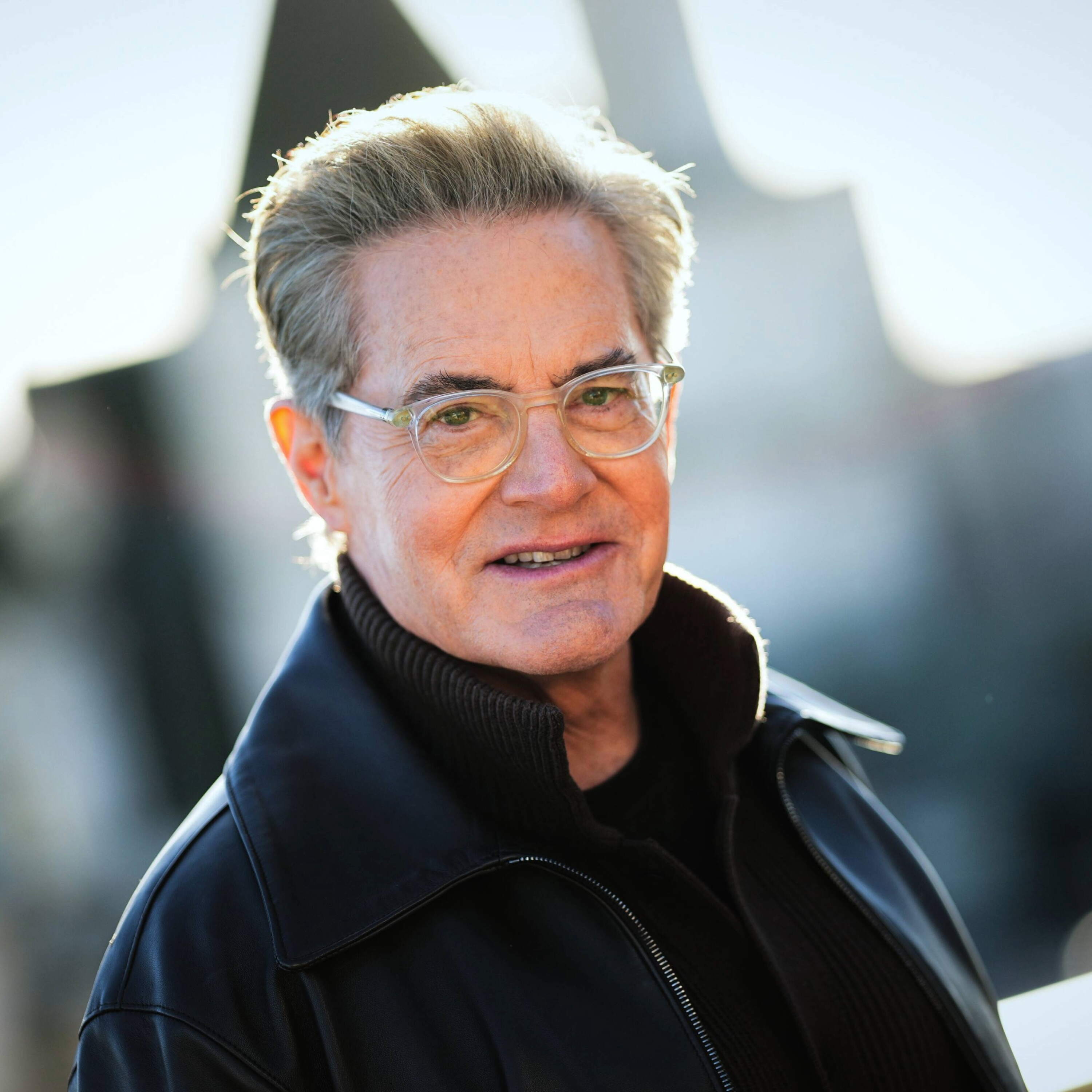
Fresh Air — Kyle MacLachlan was David Lynch’s ‘submersible’ into dark places. Machine-transcribed; use the interactive transcript above to jump the player to any line.
This week on Weight Weight Don't Tell Me, we talk with our panel, Josh Goblin and Dulce Sloan and Faith Saley about the journalists who were banned this week from the White House. You think they were really sad or is it one of them days? It was like a snow day as a kid. Yeah. They're probably just forgetting what stale, big Mac smells like. Yeah. Don't miss our full conversation and the rest of our games, listen to the Weight Weight Don't Tell Me podcast on the NPR app or wherever you get your podcasts. This is Fresh Air. I'm Terry Gross. Diane, 11.30 a.m. February 24th. Entering the town of Twin Peaks. It's five miles south of the Canadian border 12 miles west of the state line. I've never seen so many trees in my life. The WC fields would say it rather be here than Philadelphia. 54 degrees on a slightly overcast day where the man said rain. You could pay that kind of money for being wrong, 60% of the time, and be working. I might like just 79,345 gigs on his roof.
You may recognize that as my guest Kyle McLaughlin in the first episode of the David Lynch TV series, Twin Peaks, as FBI special agent Dale Cooper recording a message as he drives. At the time, Twin Peaks was the strangest most dreamlike series ever on TV, like a lot of dreams. The meaning of the imagery and story were often elliptical, hard to interpret. To everyone's surprise, Twin Peaks became a big hit. McLaughlin says he wouldn't have become the person he is without David Lynch. Just months after acting school, McLaughlin seemed destined for a meteoric rise. Lynch was making an adaptation of Frank Herbert's 1965 science fiction novel, Dune, and he cast the young McLaughlin as the lead. Along with the part, came a multi-picture deal with its producer, Dino Dilerrantis. After the movie flopped, the deal was canceled. McLaughlin had to rewrite his plans and wasn't sure how.
His next break came when Lynch cast him in Blue Velvet, which was a turning point in American film for its nightmarish imagery and threatening performances. Lynch and McLaughlin teamed up again for the TV series Twin Peaks and the return of Twin Peaks, and for the Twin Peaks movie Firewalk With Me. While McLaughlin was writing his new memoir, Lynch died. The memoir is called Fictional Selves. The title is a reference to who people think he is based on his roles, and who he really is, and how confusing that can be for him. You may also know Kyle McLaughlin from his roles, including showgirls, sex in the city, desperate housewives, Portlandia, overcompensating, and fallout. Kyle McLaughlin, welcome to Fresh Air and Congratulations on your memoir. I'm very grateful to be here and thank you for having me on the show. So in the scene we just heard, David Lynch was in the backseat of the car, directing you, as you read the message you were recording.
Do you remember what kind of direction he was giving you from the backseat? Well, I don't recall the specifics of it, but I do recall that the distance that we had to travel because we were on a tow rig, basically, so my vehicle was being towed by a vehicle in front of me. Oh, so that you didn't have to really drive? I didn't have to really drive, which is very disconcerting, to be honest, because when you're behind the wheel of a car, you feel like you should be driving, and in fact, you're just putting your hands on the wheel, you're not really driving. It's a little different. It's a little distracting. After I got over that and just started in with the dialogue, the other challenge was that we only had a short distance to make this run. And so I had to basically just blister through the dialogue, which I think was ultimately helpful in establishing the character. I've always said that that introduction is certainly the best introduction to a film or a television
program I've ever had. And I think it ranks pretty high as an introduction for any character, because you get so much of who he is about in a short period of time. And these intricities and the strangeness of who this man is, it just deepens the mystery. Is it reassuring to have your director in the back seat, or does it make you more self-conscious? It's both. First of all, I will get into David in our relationship, but having him near always made me feel better. So that wasn't even part of it, because there was never judge, I never felt there was judgment coming from David. It was always just joy and pleasure. I mean, in a strange way, I think the pressure was really sort of self-delivered by me. And it's like I want to do a great job here, and I want to get everything the way I imagine it to be. And David's help and input was always to expand what I'd started.
And just more to think about more colors, more ideas, more suggestions about how to really deepen and enrich at the character, the scene, the moment, whatever it might call for. You're right, you didn't use your real speaking voice for the role. What did you change? Well, it was heavily influenced by David, because I recognized that Cooper shared so many of David's quirks, I guess, personality attitudes. So I tried to... At least but weird. Yeah, yeah, just a little bit off, right? And I feel like the voice, I just sort of I don't know. Oftentimes things come and I do them. And I'm like, I'm not exactly sure why I'm doing it this way, but I'm just going to trust it. But it was kind of a more of a, you know, now listen, Sheriff. And it had a little bit of an almost a nasal quality to it.
And David's speaking voice, not all the time, but he can be, you know, he'd be kale. Hey, you know, sorry, I'm thinking blowing out the speakers here, but it had a certain pitch. And I just found myself kind of burrowing into that. David Lynch, who was your mentor, your director, and your good lifelong friend, died while you were writing the memoir. How did his death change what you wanted to say, changed the mood of the rest of the book, changed your mood while you were writing it? Well, yeah, first it was a significant loss. And obviously when someone passes so suddenly like that, it's there's a shock, you know, and you just disbelief. And the beautiful thing about
a memoir is that you then can go back and say, and from that, I grew to this, or I learned this, or this changed in me. Obviously, I didn't know how he would feel about some of the stories that I tell some of the difficult times that we went through as friends and as creatives. He was such a private person, you know, that to share those intimate intimacies and those moments, I felt like he would need to be okay with that. You didn't want to feel like you were violating him. I didn't, you know, and I just said, I hope that there's an understanding there. I don't know. You never know. Is there an example of one of those dark times that you refer to in your relationship with Lynch?
Yeah, we during the course of the making of Twin Peaks, the original Twin Peaks, there which was actually a really a pretty short window, a small short window of time between the first filming and then the second season. We only had two seasons. But during that time, there was a struggle. I felt I was definitely trying to, you know, it wasn't the sinking ship necessarily, but I felt like I was trying to like keep something afloat that I didn't know how to keep afloat. I didn't have the skill set. I didn't have the knowledge. Well, David Lynch had left the series during the second season. And he was the sensibility behind the show. So with him gone, there were new writers. And you felt as like the person whose point of view we most often see and as someone who is very close to Lynch that you should be an anchor and you should help keep the ship afloat.
I did feel that responsibility. And it was difficult. And at the same time, I'm like, I can't blame anyone honestly knowing David as I did in his personality and his creative self. Running a show is not what David wants to do. Every day is going to be a different place, you know. So it was foolish of me to expect that he would remain in place and basically be there every day. And you know, the writing and answer the questions and all the things that a good showrunner has to do. So that wasn't the answer. So there was no answer. There was no what can we do to bring back the that essence. You talk about that thing, you know, that made Twin Peaks so special, which is really David and Mark Frost, the co-creator, because it was sort of the combination of the two of them. But in terms of the direction and the unusual nature of Twin Peaks, the mood,
the vibe, that's pretty much David. And it came back occasionally when he was directing, because he came back to direct a couple of episodes in that second season. And you could feel the cast myself included just open. You know, it was like suddenly, you know, there was moisture in the air and everybody was like, oh my gosh, everything we can breathe. The creative energy had returned, you know, and then it was taken away again. You know, and you're like, you can't help but urine for that when it's not there. Lynch had a way of getting to the dark underside of things, the things that aren't necessarily visible, the people who you don't necessarily know who are kind of crazy. And the danger that you may be attracted to in some way, but if you're in the middle of it,
it's really dangerous. That's not, is like not fun. So I'm wondering, acting in so much of David Lynch's work and being absorbed in his sensibility, did it bring out a dark side of you, of your personality, of your inner thoughts that you hadn't been in touch with so much before? You know, I think there was only one instance in the newest season, the Twin Peaks Return, that I played three different characters, actually a few others, but three main characters during the filming of that. And one of those characters was, as you described, very dark, psychopath. And that was really the only time I felt during that journey that I felt like, okay, I am now going to enter into a dark world. And that was a deliberate putting on of the character
in the morning when I got to set. And that would happen as I was getting my makeup done, and then I would put on the wardrobe. And as I put on everything, I began to, you know, breathe like that character. At the end of the day, I was like, I am now ready to get to let this guy go. And it was such a relief. I said, I do not want to carry any of this energy back to my home, back to my family. And I left and put him away in the closet, in the trailer, when I would get undressed and get back into my regular clothes. Were you afraid that he was a dark side of you and you didn't want to live in that part of you? Like, what was it that you had to put away and make sure it was just because he was a bad, you know, an evil character, or did you feel this personal connection that you wanted to put away to? Terry, I definitely felt a connection there because I mean, I think that has to exist when you're working as an actor, you really are,
you know, we carry around a lot of selves, each of us. But also did you feel like Lynch saw something dark in you that you had not been, that you'd been trying to keep your distance from? Yeah, I think so. I think, you know, when we did that, we'd known each other for 30 years, you know, so he had seen behavior from me. And I'm pretty good at hiding that, hiding that, but he'd seen it, you know, as a good friend would. And, you know, David has always said to me, he really believed I could do anything, which as an actor that's incredibly empowering, because I often don't think I can do, as I didn't think I could do Mr. C, this is the character, I was like, oh boy, okay, I've never had to do something like this. And it's not that I don't think I can't, I think I can, but I'm going to need, you know, help, you know, and David was there
for that and for me. But I had to go in there myself. So that's opening up things inside of me and behavior and that was both frightening and high intensity, but also kind of alluring. The rest of the time, you know, thinking about Blue Velvet and particularly Blue Velvet and the first Twin Peaks. And I talk about David, you know, he creates these incredible worlds, incredible environments and slightly separate realities. And I recognized pretty early on, particularly in Blue Velvet, that I was tasked with the job of going into these worlds, maintaining, maintaining an innocence, which got synched, let's say, in Blue Velvet,
until I came back out again. But ultimately, I was the audience's guide into a very scary place and dealing with scary situation and an extremely scary person and Frank Booth played so brilliantly by Dennis Hopper. And I understood that and I saw that and I said, okay, this is, it's like I'm sort of David's submersible. You know, it's not alter ego, it's not, you know, doppelganger, whatever, I feel like it's more of a submersible. So I'm tethered to the mothership, right? But then I'm now kind of on my own exploring this dark place. That's a great analogy. So you were 23, just a few months out of drama school, when you auditioned for your first movie, which was Lynch's adaptation of the 1965 Frank Herbert Science Fiction Novel Dune, which is set on a desert planet. The movie was released in 1984. You first read Dune when you were 14. You used to write quotes from Dune on the blackboard
in high school and one of the quotes that you put on the blackboard, it's a line, it's a paragraph that you get to say at a key moment in the film adaptation of Dune. And just to set the scene for that, you're being tested to see if you were that special person who can be an incredible hero or villain because you have all this special power and bravery and tolerance for pain. So to test to see if you were that person, she is testing you for your pain threshold. And she says, put your hand in this box and you're suffering, but you're not taking your hand out. So what was it like for you to actually inhabit the part with the quote that you put on the blackboard when you were in high school because the novel meant so much to you? Isn't it just the strangest thing, Terry? I mean, there's no way I could have ever imagined
the love that I had for this book when I was 14, 15, perfect age as a young man to read this heroic journey of the boy on the cusp of manhood who is unaware that he's been brought to this point through generations, like thousands of generations of breeding to culminate in this. Basically a super being, not unlike Neil, I guess, in the Matrix, the one, you know. And to have this such a strong connection to that character, to the point where it really sort of sustained me through those very difficult junior high years and high school years, to, you know, get a call on my answering machine saying, there's a casting agent coming to Seattle and they want to meet you for the role of Paul and Dune and I thought for sure this was a complete joke. You know, he's been 40 years or something more years. I don't think I have yet sort of
figured out how, maybe I don't think I'll ever figure out how that happened. So I want to read the full quote here. I'd rather you do it, but you want to do the whole thing. I'm like, remember it, I'm not going to get it exactly right. It starts with I must not fear. I must not fear. Fear is my killer. Fear is the little death that brings total obliteration. I will face my fear. I will permit it to pass over me and through me. And when my fear is gone, I will turn and see where it is going. No, I don't have exactly the last part. It's not exactly right. But you basically turn and see where the fear is gone and only I will remain is the last line. Now, I will point out that when you were in your teens, when you were a kid, you had a lot of fear and you were not a kind of very physical person. You got beaten up in school. You hated Jim. The worst part was the locker room. I can laugh now, but yes. The character in the story is saying, I must not fear. And he conquers his fear.
But you had a lot of fear as a kid and in your teens. And I'm not sure you conquered it. So was this like an aspirational identification with the character that you wished you could conquer your fear? Absolutely. So yeah, it's an uncertain, insecure place. At least that was most of my grade school junior high and Dune was a lifeline to me. That character and that journey was a lifeline, honestly, and sustained me for the most part, you know, through those years. I began to find another lifeline, a preserve, or whatever it is, floating in the ocean that I grabbed onto, which was performing acting. Started in late junior high, you know, eighth ninth grade, and then carried over into high school.
My guest is Kyle McLaughlin and his new memoir is called Fictional Selves. We'll be right back. I'm Terry Gross and this is Fresh Air. Stay tuned for the following announcements and messages from our sponsors. This election season, you can streamline your news intake without first our team of reporters and editors works overnight so you can start every morning with three stories you need to know. In short episodes, 12, 14 minutes long to save you time and your sanity. Follow up first on the NPR app or wherever you get your podcasts. This fall, there are a lot of movies and TV shows on tap for you to see, and we're as excited for all of it to arrive as you are. On top culture happy hour, we've got a guide to what's worth keeping on your radar. Listen via the NPR app or wherever you get your podcasts. This is Fresh Air. I'm Terry Gross. Let's get back to my interview with actor Kyle McLaughlin. His new memoir is called Fictional Selves. He became known for his starring roles in the David
Lynch film Blue Velvet and Lynch's TV series Twin Peaks. You may also know him from his roles and showgirls, sex in the city, desperate housewives, Portlandia, overcompensating and fallout. When we left off, we were talking about McLaughlin's first film role in David Lynch's 1984 adaptation of Doom. You had big expectations. You had multi-picture deal with Dino Dillerent, S with Doom being the first several sequels and then other films as well. Then the film flop, the deal was canceled and suddenly you were just floating. There was also a clause in your construct that there was a certain amount of time two years in which you wouldn't be allowed to be in any other movies. I guess they wanted a fresh face. It wasn't even a question of not having auditions or not getting part. You weren't allowed to. You went to Europe instead. I had to figure out the next part of your life. That changed when David Lynch sent you the script
for Blue Velvet. David actually gave me Blue Velvet during the filming of Doom. We were actually shooting and he sent me the script that I found incredibly exciting. We were going to film that right after Doom was released. We were going to film that in January or February of that year. When Doom was sadly not well received, everything as you said fell away. I was Blue Velvet. It's supposed to be part of that deal. One of the pictures that you'd make for Dino Dillerent. It was one of the non-Dune option pictures of which I had. In the first iteration of the contract, I had one and then they had a de-second and ultimately did indeed, would have been one of the non-Dune option pictures that I was required to do for the company. But gosh, it was like the street with tumbleweeds going down. There was nothing going on. And there was no way for me to hedge, let's say I'd finished filming Doom and then I was allowed to work.
I could have used the potential of what Doom was going to be to maybe nail down a couple other leading type roles in interesting films that I could have banked. So your mother sounds like a lovely person interested in the arts, interested in drama and encouraging you to act, but also very cautious and very conservative when it came to pop culture. She did not approve when you told her about Blue Velvet. She did not want you to do the movie. And she had cancer at the time and didn't live long enough to see the completed film. You almost turned down, you've actually the first time you did turn down Blue Velvet, you told lunch that you couldn't do it and you explained why, but eventually you decided to do it. Can you describe what kind of dialogue was going on in your mind when part of you really wanted to please your mother or at least like not hurt her, especially considering how sick she was,
but at the same time wanting to pursue your aesthetic and personal relationship with David Lynch. What was the dialogue in your mind or maybe the argument in your mind about? Well, honestly, Terry, there was no argument. I spoke to my stepfather at the time and he said in a very gentle way that she would really upset by the script. You know, and my first mistake was getting it to her to read in the first place, but I wondered to her be included, you know, and she read it and she didn't respond. He called me. She wouldn't have wanted to have stopped me. There was no question in my mind. It's like, well, then I'm not doing it. In this moment, at this place in time, this is not what I want her to have to think about, worry about me being in this movie. And over the course of
a few weeks anyway, maybe a month or so, a number of things were play. One is, there's no film work at all. No one was interested in working with me. I was auditioning, but there was nothing that was there. And the greater part of that puzzle was the fact that I really liked the script. And I'd work with David, and I loved David, and I knew David. And I said, you know, mom, you can read in the script. As I say in the book, you know, she put her thing on it. It's very, very descriptive. The script was very, very precise and descriptive, you know. And if you're reading that and you don't know. To know the central scene. Yes, yes. And as well as what happens with Frank and Dorothy, right? These are my mom. She was very, this was not right in her mind. This was this is this is a territory you do not go into. And I was like, but but it's going to be more than that. There's more
happening and it's going to be okay. I just said it's going to be okay. I trust David. It's going to make it okay. And she said okay. If she said okay. Yeah. So it's like, okay, thank you. And I called David and he said, okay, I never doubted you. And he must have trusted somehow that I would come around or I don't know. It just it worked out. Was it frightening acting opposite Dennis Hopper because he is so scary in that movie. He's so like out of control. And he inhales some kind of drug from a gas mask, which makes him even more threatening. And he's so believable in the role. I mean, he puts everything into it. And he's doing it right in your face in some scenes. So what was like, did you experience actual fear from him? Yes, I did. I did. It was so funny because Dennis was so charming, so lovely, so delightful, so soft spoken, so much fun, you know, around the set
and you know, during filming and the trailer and stuff. And the minute we were getting into the environment to shoot and it began to sort of descend in the character, I didn't need to do anything through. All I needed to do was stand there in the scene and react basically to what he was giving me because it was incredibly frightening and manipulative. And I was truly in shock. And then we would cut and he'd, you know, do that great. Gotcha. You know, we're the Hopper laugh, you know. And I was just like, oh my god, Dennis, you were so frightening. He said, I know. And he, I think he really, really, he really loved the role. He really just played that kind of that. In Blue Velvet, you have a love scene with Isabella Russolini in which she asks you and then insists that you hit her and you don't want to hit her. But she basically is so insistent, you actually hit her hard. What was going through your mind as you shot that scene? One of the great things about it was David and then there's
Isabella and we're just the three of us, you know, we're just rehearsing the scene and maybe there's the DP is nearby. But we're talking through it very matter-of-factly. So, you know, this happens and then this happens and this happens and this happens. And I remember just going, okay, how does she, how do we get to the point where he actually does slap her? I'm like, I don't know how to get there, you know. And we came upon the idea like that she kind of initiates actually. She does, she's laughing first and then I, and I in a reaction respond back like that. And then I see what it does to her and cut to the next morning and I'm in bed and I'm like, who am I? You're weeping. Yeah, I recognize that I've descended into a place at this point. I don't know who I am. I don't know, I do not know what to do. When you were in acting school, you had trouble
exposing emotion. Yeah, boy yes. And you didn't know if you'd ever be able to like cry on cue, which actors are often required to do. Was this the first time that you had to weep like that with feeling that you you violated your own self, your own principles in addition to, you know, harming Isabella Russell, any character? Yes, it was. I think it was a different type of emotional response, but this was, yeah, this was one of the much deeper. And as you described, and I go into detail in the book again, just about my struggle with this during acting school, and I just figured, you know, I'm going to be the comedian, I'm going to be the funny guy, I'm not going to be the emotional guy, I'm not going to happen. Primarily because I recognize it's going to be a complete loss of control. And I said, no, I got to be in control here. That has been part of my acting journey all the way through, which is basically letting go of
control, letting go of the reins as much as I can. But they gave me the time and I, I came out of it and I was like, there was like a weight had lifted, not lifted. It had lessened. It's like, okay, you can do it. It took a lot. I don't know if you can do it again, but you did it. If you're just joining us, my guest is actor Kyle McLaughlin, his new memoir is called fictional selves. We'll be right back. This is fresh air. Stay tuned for the following announcements and messages from our sponsors. This week on Sources and Methods Defense Secretary Pete Hegseth delivers a state of the force address. We are no longer the woke department or the weak department. What we're hearing from current and former military leaders about Hegseth's message. If anything, the Pentagon is in disarray. Plus, more of the week's big national security news on Sources and Methods from NPR. This week on Shore Whiff, the internet is obsessed
with inflammation and yeah, it is true. Inflammation is at the heart of nearly every disease in the body, but it's also the body's natural response to danger. So who really needs to be worried about it? Find out on Shore Whiff, the science podcast from NPR. This message comes from Mint Mobile. If you're tired of spending hundreds on big wireless bills, bogus fees and free perks, Mint Mobile is for you. Shop plans at MintMobile.com slash switch. Taxes and fees extra. See Mint Mobile for details. This is fresh air. Let's get back to my interview with actor Kyle McLaughlin, his new memoir is called fictional selves. He became known for his starring roles in the David Lynch film Blue Velvet and Lynch's TV series Twin Peaks and has since done a lot more. When you were young, I think you were young then, your father changed careers. Instead of doing what his father wanted him to do,
which was be a lawyer, he was very unhappy as a lawyer. So he changed careers and went into finance. I think he became a stockbroker. Did that give you a sense of permission to pursue what you were really passionate about, which was acting as opposed to doing something that had more security? Yeah. That was part of the deal. His father, my grandfather, wanted him to become a lawyer, which was of the time and place. Certainly the family history was his, my grandfather's attempt to sort of have my father propel forward and never have to have the life that he had, which was very difficult, you know, traveling salesmen kind of difficult stuff. And my dad went to law school and he passed the bar and he started work in practice in Yaukama. He changed careers when I was five or six or seven, somewhere in there, very young and not really aware of what was happening. That change affected his relationship with his father, with my grandfather and
there was definitely some icing that went on there. And they didn't, you know, the story goes, they didn't speak for a couple of years. When my dad did that, the gradually that thought and and everything was fine. But my dad was happy as a broker. He loved it. And I think from that experience, my dad never insisted that any, that me or my brothers pursue a certain career. There was conversation. There was like, hey, what about, you know, this, but it was never like you do this or were disowning you kind of thing. Originally, you thought you might pursue opera. You start in high school productions of musicals, including my fair lady. Have you ever sung on screen? Well, I did the anthem for Portlandia. Oh, okay. I don't think that's what you're referring to, what? That's very. Have I ever sung on screen? I don't think I have not like, you know, proper proper singing, proper song. But yeah, I studied with Gus Palyalunga at the University of Washington
when I was there in school. Musical theater was really going to be my thing. And I classically trained and voice lessons and dance lessons and all that stuff. And then when movies popped in, I just, I made like a, I just say me like a right turn dropped down to California instead of going across country to New York. But I haven't really ruled out the possibility. I just, I've not really pursued it. You've had two relationships with people who you were acting with. One was with Laura Dern when you were in Blue Velvet. That relationship lasted a long time. You fell in love while your characters were falling in love on screen. And you and Laura Flynn Boil fell in love when you were doing Twin Peaks. You were both doing Twin Peaks. So especially with Laura Dern, how did chemistry on screen affect falling in love and how did falling in love affect chemistry on screen? Well, Laura is just magical. She's one of our great actresses. And she's always been a great actress.
Laura was so present. And the things that Jeffrey and Sandy were experiencing together, Kyle and Laura were experiencing together as well. And there's your character, life screen life, and then there's your real life. And these were definitely blending. And honestly, I don't think David didn't necessarily discourage it either. He said, you know, you recognize that this is actually something that is going to be good for the film. And he really loved the idea that Jeffrey and Sandy were going to be a couple. And that's a crazy thing about David. The worlds that he creates are real, you know, in his mind. They exist. So the fact that this was happening was he was very pleasing to him. David Lynch and Isabelle WrestleMania, one of the stars of the film, they had a relationship too. So that must have been just like so unusual. And I think you were all
staying. I'm not sure about Isabella WrestleMania, but at least three of you were at the same bed and breakfast. Yeah. So Isabella and Laura were at the same bed and breakfast. I had a separate place, but I was over at Laura's place all the time. And then David had a place out on the beach. He had a place out there who were filming in Wilmington. And I don't, you know, I don't know. Everybody was pretty, you know, we were all pretty, I don't know, for spectacles the word, but we were, you know, we were not running around, you know, making out of a corner of the set, you know, it was like, we were like, you know, trying to keep it, you know, pretty, you know, pretty on the low low down, you know, low key. But there was definitely a lot of love around on the set, which was kind of remarkable considering the tone was quite dark and intense. And I think what happened sometimes on films, at least in this case, the positivity, the love, the joy that was there kind of carried us through some of the darker scenes, darker moments of
which there were quite a few. But we all just, we just, we were able to separate somehow, you know, who we were with, who these characters were, you know, in a, think of a very healthy way. Actors are afraid of looking older, I think, because it's sometimes harder to get roles, especially for women. I think that for a lot of people when they're young, their face is still kind of unformed, their personality and life haven't written themselves on their faces yet. I think your face has gotten more interesting with age and I'm wondering if you agree. Thank you, Terry. I agree. And it comes back to the theater tradition, you know, that you, you start as an orange and new or a juvenile, you know, and you're playing the young roles and you work your way through some of those roles. And then the middle of those particularly Shakespeare, I think. And as you get older, then you're expected to do, you know, some of the other was the King Lear's, you know, to me, these, these kind of things, the goggles, you know, these kind of things where the, where a little bit of age helps, you know, and granted, you know, I think men
have an easier time with it, aging over women. But I do feel like the face, I mean, it's really your tool, right? It's what you have to work with, your emotion, your facial emotion. So everyone has to make those choices and everything. But I'm pretty happy with the way things are going. And, and, you know, I've got added inspiration because my son is 18. So I darn, darn, we'll better stay fit to keep up with him. Carmichael, thank you so much for talking with us. I really appreciate it. Terry, is it just been a complete pleasure. I'm such a huge fan. Thank you for having me. Oh, thank you so much. Carmichael, new memoir is called fictional selves. After we take a short break, Marine Carrigan will review Minjin Lee's new novel. Marine says it's an overwhelming reading experience. This is fresh air. Stay tuned for the following announcements and messages from our sponsors. This week on the MPR Politics podcast, a vibe check on election security,
with barely a month left until the midterms were talking about vote by mail, the possibility of ice at polling stations, and what the Trump administration is doing in the name of preventing fraud, which we know is not a widespread problem. Plus, the latest on how voters are feeling about all of that. Listen now on the NPR Politics podcast. Hey, how are you feeling right now? Exhausted from the summer? Overwhelmed with the new school year? Restless? Anxious? Life kit is here to help. Consider us your mental health accountability, buddy, with episodes on everything from navigating social anxiety to unlearning perfectionism. Listen to the Life kit podcast in the NPR app or wherever you get your podcasts. Chris Brown is in the news. Again, and that means that people are publicly relearning and relitigating his history of violence toward women. Many of us are wanting to be protective of black men and boys. To the point that we're unwilling to hold them accountable for the things that
they do to women and girls. Listen to MPR's code switch podcasts in the NPR app or wherever you get your podcasts. This is fresh air. Min Jin Lee's new novel, American Hogwon, is the third in her projected four novel series about the Korean diaspora. Bichinco, the second in the series, was a finalist for the National Book Award. Our book critic, Marie and Karakin says she didn't think Bichinco could be topped until she read American Hogwon. Here's her review. Min Jin Lee's new novel, American Hogwon, has been nearly ten years in the making. If it had taken twenty, I'd still wonder how she held all these stories, these lives, such pain and love in her imagination for the time it took to find the words to embody them on the page. As simultaneously sweeping but intimate novel about the complexities of immigration, the fragile promise of America, and the purpose of education.
American Hogwon is also a classic page-turner, populated by characters who are hard to leave behind at the end of 600 plus pages. It's an overwhelming reading experience, one that appeals to the head as well as the heart. The co-family is at the center of this teaming narrative which spends the years 1992 to 2007. When we meet them, John and Helen Coe have just returned to Seoul, South Korea from six years in Sydney, Australia, where John, a senior manager for a Korean conglomerate, had been stationed. Before Australia, the co-s were in the US. All three of their now adolescent children, Bo, D.H. and Mido, were born in Paramus, New Jersey. But given their on-the-move family life, Korea doesn't exactly feel like home anymore, and thirteen-year-old daughter Mido, the shy,
youngest child, is having an especially hard time in school. Korea, however, will turn out to be yet another temporary post thanks to a cowardly betrayal by John's oldest friend and superior at his company. Tae-hoon Shin, were told, was a man who was clear in his professional goals and muddy in his private life. Shin, a married man and exuberant cheater, has become besotted with a beautiful, sexually adventurous young employee named Donby. Because Donby is pressuring him to leave his wife, Shin orders John to set up Donby to fail at the company and then fire her. John, a man of integrity, objects, but finally must obey his best friend's orders. That's when Donby, a femfital to the max, turns the tables and sets John up for a fall. The novel soon jumps to 1997,
when the Asian financial crisis wreaks more havoc. Most of the co-family, along with the multitude of other fully realized characters, wind up in Southern California, even Shin and Donby eventually land there. A network of family, as well as friends from school and the Korean church, help prevent the newcomers from going under, although the co-s must settle for less. John finds work in the kitchen at Shrimp Castle, a fish place in a Korean shopping mall. By the end of a long day, his hair was matted down with sweat and oil beneath the net, and his crisp white apron from the morning was spotted with oil and soapy disinfectant. Almost everyone else we meet works themselves to the bone. Late in the novel, our omniscient narrator surprisingly introduces another key character. Shin's estranged wife Mary, who works in a
florist shop in New Jersey, Mary pointedly reflects that, over the years at her church, poor men and women her age had died of different cancers, and sometimes Mary wondered if hard work alone could kill people. The co-offspring in whom all hopes for a better future reside also work, all three of them at one time or another are employed by a haguan, and after school private prep academy. Most haguans in Korea and here in America prepare their students to excel academically and preferably go on to Ivy League schools, but the haguan the co-kids work at is run by an idealistic Korean American nicknamed Lion, who thinks differently. The bitter sweet set piece towards the end of this novel, where Lion addresses a gymnasium packed with some 500 parents,
all ethnically Korean, and tells them education should be transformative, not just transactional, is so powerful it should be read by anyone called upon to defend a liberal arts education. Lee's style throughout American haguan is striking in that it counters the old show don't tell writing adage. Instead there's plenty of exposition in this novel, and yet not a page is workman like. In fact Lee is so deft that she conjures epiphanies out of the simplest material. I wish I could read to you the very last sentence of American haguan to demonstrate her mastery, but instead I'll just say that the simple possessive pronoun his unexpectedly appears in that sentence, and its effect is spiritually redemptive and emotionally shattering. What a novel.
Maureen Karagen is a professor of literature at Georgetown University. She reviewed American haguan by Min Jin Lee. Tomorrow on fresh air, our guest will be Mahmoud Khalil. He was the face of the pro-Palestinian protests at Columbia University, when immigration agents arrested him, despite having a green card and no criminal record and sent him to detention in Louisiana. He writes about it in his memoir No Land to Stand On. I hope you'll join us. To keep up with what's on the show and get highlights of our interviews, follow us on Instagram at NPR Fresh Air. Fresh air is executive producer Sam Brigger. Our technical director and engineer Isadri Bentham, our engineer today is Adam Stanishevsky. Our interviews and reviews are produced and edited by Phyllis Myers and Rebodonato Lauren Crenzel, Theresa Madden, Monique Nazareth, Thaya Challener, Susan Yukindi, Anna Bauman, and Nico Gonzalez Whistler. Our digital media producer
is Molly C. V. Nesper. Roberto Shorrock directs the show. Our co-host is Tanya Mosley. I'm Tery Gross. Stay tuned for the following announcements and messages from our sponsors. This message comes from Thumbtack. Recommendations can be great. Maybe someone recommended this podcast and here you are. But home projects are different. If a podcast isn't your thing, you lose a few minutes. If you hire your cousin's neighbor to mount your TV, you might end up with a lopsided screen and wall damage. That's why Thumbtack works. It matches people with top rated local pros, with photos, reviews, and credentials all in one place. For your next home project, try Thumbtack. Hire the right pro today. This election season let the NPR Politics podcast save your time and your sanity. We'll help you understand key races, which polls you can safely ignore and what might happen if power shifts in Congress. Our short daily episodes come out every afternoon so you can spend less time scrolling through each chaotic news cycle.
Make NPR Politics your hub for midterm election coverage. Follow our podcast on the NPR app or wherever you get your podcasts.
More episodes
More from Fresh Air

A John Prine Appreciation
Fresh Air

Veteran White House reporter April Ryan’s ‘Blacklash’
Fresh Air

How Defense Secretary Pete Hegseth brought the culture wars to the military
Fresh Air

‘Showbiz!’ entertainer Murray Hill became what he didn’t see
Fresh Air