Get every episode summarized
Each time The Brian Lehrer Show publishes, we email you a written briefing from the transcript — the topics, who appeared, and any specific claims, with the ad reads skipped.
Email me new episodesFree for 3 shows. No card needed.
About this episode
“When you buy business software from lots of vendors, the cost's at up and it gets complicated and confusing. It's a single company that sells a suite of enterprise apps that handles everything from accounting to inventory to sales.”From the transcript
Amanda Jack, director of policy with criminal law reform at The Legal Aid Society, talks about the rise in low-level NYPD summonses in the latest Mayor's Management Report and what it says about Mayor Mamdani's promise to move away from broken windows policing.
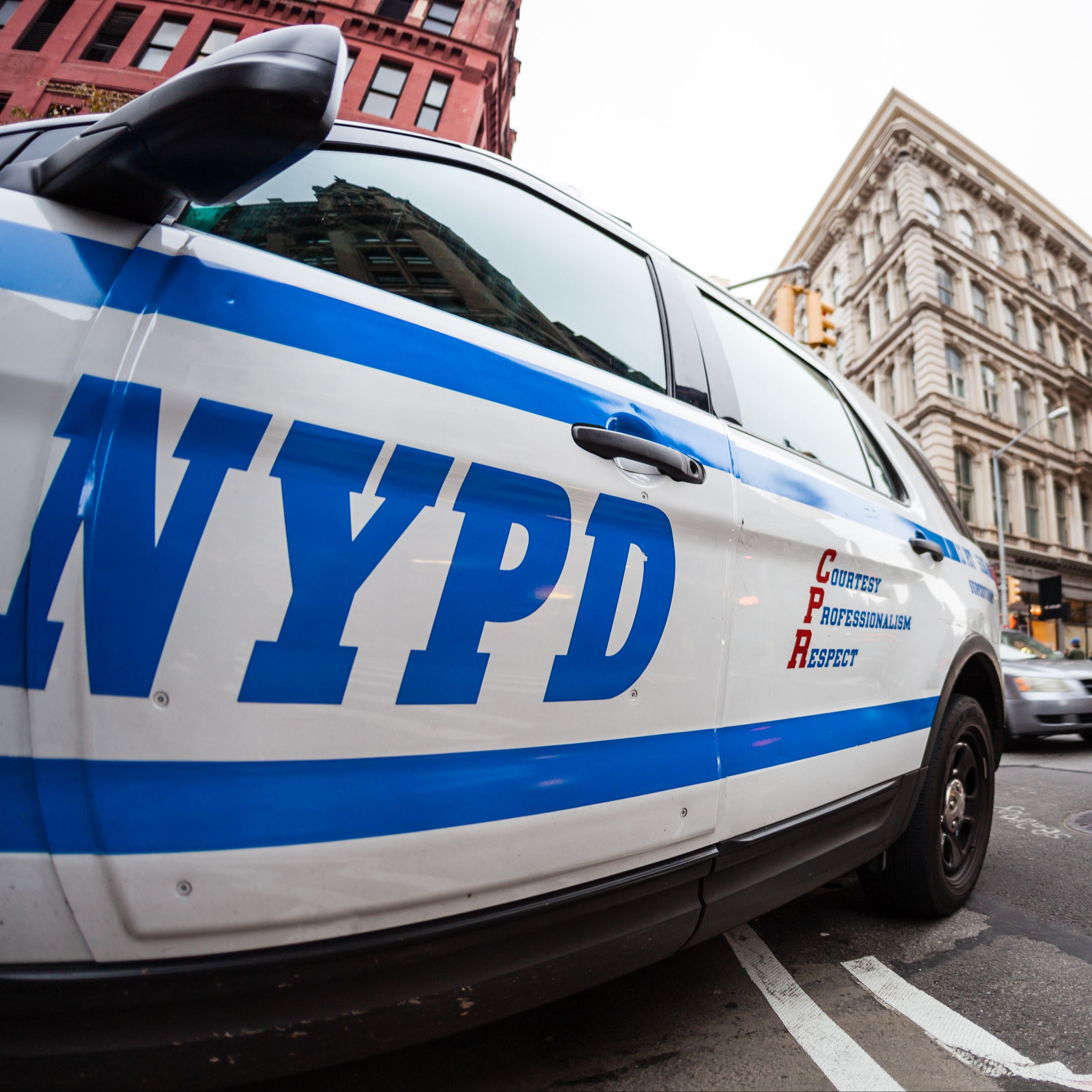
Photo: Close up of the NYPD logo on a police car. (Tim Drivas Photography via Getty Images)
Hosted by Simplecast, an AdsWizz company. See pcm.adswizz.com for information about our collection and use of personal data for advertising.
Get every episode summarized
Each time The Brian Lehrer Show publishes, we email you a written briefing from the transcript — the topics, who appeared, and any specific claims, with the ad reads skipped.
Email me new episodesFree for 3 shows. No card needed.
Hosts & guests
Transcript ready
319 searchable segments. Every word is indexed and playable.
Full transcript
The Brian Lehrer Show — Mayor Mamdani's 'Broken Windows' Promise. Machine-transcribed; use the interactive transcript above to jump the player to any line.
WNYC Studios is supported by ODO. When you buy business software from lots of vendors, the cost's at up and it gets complicated and confusing. ODO solves this. It's a single company that sells a suite of enterprise apps that handles everything from accounting to inventory to sales. ODO is all connected on a single platform in a simple and affordable way. You can save money without missing out on the features you need. Check out ODO at odo.com. Coming up on today's, please advise. Do you know about please advise yet? It's our new one o'clock hour Monday through Wednesday. Advice call and show. Please advise. I love this one for today. Pull it surprise winning art critic, Jerry Salts, shares advice on how to look at art and how to talk about it. Please advise at one here on WNYC. Brian Lair on WNYC.
Now we'll go back to the Mayors Management Report. The annual report card, the city gives itself on how its agencies are doing. Yesterday Katie Hohnen from the city reporter joined us to walk through Mayor Mamdani's first one. Today we're turning to policing to take a deeper dive at that aspect of the Mayors Management Report. Starting with one number, the NYPD issued more than 220,000 low-level summons last fiscal year up from about 196,000 the year before. Now we should say the fiscal year covers the last six months of the Adams administration and only the first six months of Mamdani's, so it's half and half. But in a statement on Monday responding to the report, the Legal Aid Society said the number show the city, quote, continuing down the same troubling path, unquote, of aggressive low-level enforcement, and that Mayor Mamdani has not delivered on his promise to move New York away from circle-broken windows policing.
And related, I'll also note that the number of people in New York City jails is up slightly in the last fiscal year despite the goal of getting it down so they can close right to his island and move to a smaller, burrow-based system. Joining us now to discuss what the numbers in these category show is Amanda Jack, Director of Policy with Criminal Law Reform at the Legal Aid Society. Amanda, thanks for coming on. Welcome to WNYC. Good morning, Brian. Thanks for having me. In that statement, your organization called this a troubling increase in NYPD-broken windows enforcement. What kinds of offenses are people receiving these low-level summons as for? Well, and let me zoom out for a quick second. Brian, just to set the table, that these numbers are also, we're seeing them nine months into the administration. When we had, when Mayor Mamdani, he really refreshingly so, campaigned on a very different vision of public safety, one that didn't rely on broken windows and quality of life policing, one that centered a public health approach to safety,
and had greater reliance on the health and social service responses that we know work to help keep our communities safe. So, you know, nine months in, we're seeing a lot of retraction of those promises or delusion of those promises, and then we see these numbers. And, you know, ask your question, Brian, that the quality of life summons is, are for things like, you know, taking up two seats on a subway, public urination, the kinds of small crimes that we've been hearing about for decades, and the theory of which has long been debunked, right? Pop-broken windows policing does not make our community safer. You said nine months in. Of course, it's nine months in now, and maybe this is splitting hairs, but the Mayor's Management Report just covers the first six months, because it's that fiscal year of July 1st to June 30th. So, these numbers are from the first six months of the Mamdani administration, as well as the last six months of Adams. Let me ask kind of a pushback question on what this actually
means. So, the increase in quality of life summons is by the NYPD. I'll say the number again. It went up from 196,000 over the course of that year to 220,000. That's a 13% increase. According to the news organization, City and State, one driver of that increase was a 16% bomb in noise complaints, bigger than the overall bump by a few points. So, does that change your judgment of whether the Mamdani administration is doing old school broken windows policing, you know, the Giuliani Bloomberg type that led to mass incarceration rather than actually just addressing quality of life? Noise is a perennial complaint in the city, as you know, that many New Yorkers feel is perennially under-addressed. That's, it's true, Brian. We all live with a different decibel, don't we? But no, it doesn't address our concern, because these are still police
response to social problems. Like, why are we having police respond to quality of life? You know, Brian, something that I'll point out is one of the other offenses, you know, within these civil summons is public urination. And a great example of what to do rather than have police respond is something that the administration recently announced, which is more public, publicly available restrooms. And as a mom of two young kids, I know I certainly appreciate more publicly available restrooms in our city. And that's the kind of response that we hope to see more of, not this continued issuance of civil summons and of policing responses to things like noise complaints. Also, that stat of a 13% increase in quality of life summons as summons are not arrests, right? They're just giving someone a ticket. So do we have the same kind of issue as if quality of life arrests, putting people in jail? We're going up like that? Sure, Brian, because the civil summons still come with a lot of problems, right? They have fines that can be associated
with them. And for people who are experiencing poverty or not able to get by day to day, that's a huge disruption, right? That could create future warrants for unpaid fines. And it's also missing the day, going down to oath and spending the whole day fighting a ticket. People who have nine to five jobs don't often have the days to take off to fight these. So it's not really addressing something that I think this administration has been great about talking about, which is making life just a little bit easier, a little bit more affordable, you know, filling the potholes to create more trust with government. If we're ticketing New Yorkers or these kinds of things, expecting them to pay fines, spend days in court, maybe fighting them, etc. We're not fulfilling that promise of smoothing the way for everyday New Yorkers. But even though this increase was not about arresting people, it was about ticketing people, there is also a rise in the daily population in city jails reflected in the mayor's management report. I'll give these numbers. It's at right about 7,069.54. So right about 7,000 people currently in city jails
or in city jails over the course of the last fiscal year, only slightly more than the previous fiscal year, but still up, not down, even though mom Donnie and the mayor is the mayor. City in state says that's an ongoing complication in the plan to close Rikers Island and build burrow-based jails designed to hold just over 4,000 people in total. So why can't mom Donnie who I think believes that too many New Yorkers are arrested and jailed or held for too long? Why couldn't he make an early dent? I mean I can't speak the city hall of course, but I think he's inherited a huge problem obviously, but there's so many partners across the city who are willing and able to work with them. And a lot of this is about putting resources into the kinds of community-based programming, behavioral health programming, supportive housing, stable and affordable housing that really help address the instability that often causes people to find themselves in the criminal legal system.
And Brian, we're still in an era where Rikers Island is the largest mental health institution, you know, in our state, in our country. And that's a problem that is deep-seated and we'll take really serious thought and movement and moving investments to create programming that isn't reliant on policing and incarceration. Listeners, does anybody have a personal experience with or a question or comment about the criminal justice aspects of the mayor's management report covering the last six months of the Adams administration and the first six months of the Montani administration, the headline here being showing not much change in the rate of summances for low-level quality of life crimes and not much change in the rate of people being incarcerated, 212433WNYC, 212433, 9692, call or text for Amanda Jack from the Legal Aid Society,
that group obviously not happy with the pace of change. We got a few texts like this. So I'm going to read one that will stand for a little handful that are coming in and invite you to make your case. Listen to rights. Why is this guest arguing for the convenience of people who have committed civic violations? Where does he stand on the issue that people made the complaint for a specific civic reason? It's as if those people have vanished in her logic. What would you say to that listener and a few other folks who have tested things like that? Listen, I sympathize with noise complaints. I too have tried to put down a, you know, baby while sirens wail and music blast outside my apartment window. But the issue here is about how we approach those situations, right? And a policing approach where we're sending out Q teams, specialized units, which have high rates of known misconduct and brutality into our communities is not keeping all New Yorkers safe. There are still high rates of racial disparities in the NYPD
specialized units. So it doesn't make any sense to continue to use debunked theories and over reliance on policing for these social issues. And so we have to be willing to move toward a more common sense approach that addresses the issues in a way that doesn't involve policing. And the dragnet of law enforcement, right? Which has real consequences. It has immigration consequences for people wrapped up in it. And it has the kind of the day in day out consequences for people who are already living paycheck to paycheck and maybe can't afford the fines and the misstays of work. Here's I think a little more pushback from the listener with a different conclusion than I think the one you were just reaching about policing itself. Brock on the Lowery side around WNYC. Hello Brock. Well, thank you very much. I just want to while I'm very happy crime has dropped, I'm so happy for this. I've been lived through the 70s and the 80s in the 90s. And yes, we need to address social issues. There's no question about that.
It must be done. But not at the expense of lower policing efforts. Still to this day, 90% of all persons incarcerated come from seven neighborhoods in New York City. Statewide. So there is still, you can say, yes, social issues need to do to be put in place to reduce this. I'm all for that, but not at the expense of less policing. The thing we know that it's one guy committing a hundred crimes, not a hundred people committing a hundred guys. You've got to get that one guy off the street. And it's the same guy who pisses up against a car. It's the same guy who jumps the turn style. These are historical predators on us. And they have to be removed. And low level crimes are present. We apologies to Brock and listeners. If you heard a little gap there, he said one word that the FCC
requires us to edit out. But I think his overall comment still was coherent to you, Amanda. So go ahead and reply. Sure. No, I hear what Brock is saying. But it's based in again, this debunked idea that low level policing leads to the deterrence of more serious crimes. It just doesn't. We've known this for decades. Study after study has disproven that 1985 theory of a broken windows policing. And getting the one person off the street at the expense of New Yorkers who are stopped and frisked unconstitutionally, perhaps only because they're black New Yorkers or brown New Yorkers should not be acceptable to any New Yorker. And so the things that when I also say to Brock's point about the seven neighborhoods, I don't have those stats up in front of me. I know that he's probably referring to the million dollar blocks of the past. And what that's an indicator of, in my opinion, is that we have a reason to rest do show things like that too. A lot of the
shootings are concentrated in a few neighborhoods, things like that. Right. And so my response to that, Brian, is policing is not stopping those shootings. You know what, you know what a proven tactic is? Is our crisis management system in the city, the violence and eruptors that go in and stop violence before it begins? Those are the kinds of investments that we should be making. Those are the kinds of public health approaches, right? That are then candidate Mamdani talked about using. And those are the investments we should be making, not an increasing police presence. And you know, like you said, 7,000 people sitting at Rikers Island, the majority of whom have not yet gone to trial. So we have a lot of work to do in the city. Is 7,000 people in jail a lot out of 8 million New Yorkers? That would be less than one tenth of 1% of the population. Does that represent a society that is over policing or over punishing or targeting black and brown people who make up most of the city one tenth of 1% of
the population? Yeah, I contend that it does, Brian. I think that any person sitting in a cage is a public policy failure. And again, you look at the racial disparities in policing and incarceration and black and brown New Yorkers are overrepresented in our city jails and our state prisons. And you have the staff of half of the people sitting at Rikers Island right now have a known serious mental health diagnosis. We need to be doing more. We can't just keep using the courts and policing as the only response, right? It's the classic. If all you have is a hammer, all you see is a nail. And for decades now, we've been using police and incarceration as our public health response. It's not enough. On the caller's argument that more police helps keep crime down. Would you say it's accurate to look at recent history and say the progressive argument on this has changed to some
degree? I think around 15 years ago, maybe when DiBlasio was coming in, I don't remember if he himself said it or not. I think maybe did. The argument was let's not have Bloomberg and Giuliani style stop in frisk and the kinds of mass incarceration that the city had at that time. But more police with the community policing approach, the numbers of police officers going up, helps keep community safer while giving them less temptation to act more aggressively, partly because the numbers were high. That used to be a progressive argument, didn't it? I think that's right, and that's how we've gotten to a police force that tops out at 35,000, certainly largest in the country. But I don't agree with that approach. And I think especially important to point out, Brian, that one of the other promises that were made during the campaign last year and that we haven't really seen movement on is oversight of the police. We
have a civilian complaint review board, which is civilian oversight of the police department, but it does not have final authority on discipline decisions. So the fact that we've been increasing policing in line with whatever, former progressive ideal might have been touted is problematic when we still don't have any meaningful oversight or discipline. And a lot of these Nick Pinto over at Hellgate a couple weeks ago did a deep dive into officers with misconduct patterns and the community response teams and found that they've just been shuffled around, often promoted, and that certain officers had multiple claims of misconduct and substantiated claims. So part of the problem with this huge police force, this huge militarized police force is that we also don't have any meaningful oversight or way to ensure that discipline and consequences are enforced. And there is risk for people who are detained for minor things. Our colleagues at Gothamists have reported that at least five people have died this year after medical emergencies while being
held at NYPD booking facilities. Men named Hector Sierra died in Brooklyn Central booking in April after he was stopped simply for fair evasion. Vincent Tom's died in March while waiting to see a judge on a shoplifting charge. The city's Department of Investigation has been looking into deaths in New York City in NYPD custody since last year. And City Hall said in July it was revealing every stage from arrest through a rainment. So that based on our own Gothamist reporting, what do you know about where those reviews stand if anything? Well, we've certainly been pressing for that kind of investigation too. But the issue whenever someone dies in police custody is that it doesn't trigger the same automatic investigation as it does when someone dies in the city's custody in the jails, right? So one of the things that we've been calling for is that CCRB should be able to automatically independently investigate every death in NYPD custody. And to do so, they need direct access to the
relevant NYPD records and databases because people should not be dying in custody, no matter the charge, but the people that you just mentioned, Brian, those were all low level charges and don't forget that a woman gave birth in Brooklyn arrangements this spring as well. So we just have a real lack of care once people are in NYPD custody. What I do know, what my colleagues in the trial offices will tell you is there is a lack of care for people in their custody, many of whom are some of our most vulnerable neighbors. The Gothamist article from this from September on this does also say that the medical examiner ruled three of the first four booking deaths this year were accidents caused by acute drug intoxication. Mr. Sears was fentanyl. Three others, I'm not going to go down the names of the people, but they also, you know, three of them of those first four were caused by
acute drug intoxication. So can you blame the arrest rather than the amount of drugs that the person took? I think we certainly have to examine the reason that someone that might be in that kind of a state from drug use is being arrested in the first place and not being taken immediately to see to seek medical help. I think that's what we have to ask ourselves is why are we creating only policing responses to these kinds of public health crises? We need more behavioral response teams on the ground, more access to safe sites for people. So certainly you can't squarely put that on on the arrest itself, but the policy of arresting people in that situation needs to be examined and reformed. Jessica and Brooklyn, you're on WNYC. Hi Jessica. Hi, I was just curious if you had listened to the New Yorker hours show that they had Malcolm Gladwell on and he was talking about
he was comparing the United States to some social democracies in Europe and maybe Canada were in fact they have more police presence and the money is put toward police and not toward jails. This doesn't this doesn't address the mental health issues, but I was just curious what the speaker thought about that. Thank you. Are you familiar with that aspect? He's he's scheduled here too to talk about his next book and this I guess is one of the things in it that David Remnik touched on with Malcolm Gladwell on the New Yorker radio hour this weekend where he was citing what the caller said more police in some of the social democracies in Europe though not more arrests. Well I mean I think I'd start too with socialized health care exists in Canada and not in our and market country either. I didn't hear that segment. I think you know obviously that's an interesting thought. I don't think given the history of policing in this city in this country that more police is ever going to be
the solution. You know and it's another promise that was talked about during the campaign and a focus was taking police out of mental health crisis response right and this is kind of there's the pilot in the city with the B-Herd program which is supposed to be a co-response between police and behavior health professionals but you know we've seen real success in other cities that use a peer-led response team you know that combines folks that have been through similar situations with licensed medical workers and social workers and I think that's what we hope. That's what we hope at Legal Aid to see more of and to see some serious thoughts and investments put into this office of community safety to really shift their response in these crisis calls too because we've seen you know we've seen the police be called by families who want an ambulance who want help for their loved one who's you know experiencing a medical crisis. And then sometimes a person winds up shot. Exactly. Oh and sure. Do you have a take at Legal Aid because this question comes up
all the time on that topic. How when somebody calls 911 that the spatcher can decide whether the mental health crisis is a threat to other people that requires a police officer to be included with a mental health worker or when a mental health worker can do it on their own. Yeah I do have it we do have a take we don't think it's working. Those the 911 colors are NYPD are trained by NYPD so Brian not to be redundant but again all you have is a hammer all you see is a nail so those scripts really direct the dispatcher to include police response. It's also a pilot program that's only in gosh I don't know off the top of my head Brian but it's not maybe a dozen precincts that have it which is one of the problems too so those teams aren't always available so we need a true alternative to calling 911 because even when families have followed every instruction. So let me revise the question even if it's not 911 whatever the alternative
number is somebody's going to have to determine this is what comes up all the time that somebody's going to have to determine whether that person just needs a crisis counselor or whether they are a threat to physical safety that might require a police officer to be included. Do you find it a legitimate question? Of course we don't want anyone including the the workers that would show up to be put into a dangerous situation but I think the problem is that right now the default response is is police carrying guns show up usually with guns brandished at the door which just escalates the situation. So we need to create a program that would take all of those factors into consideration and get people with the kind of deescalation training and behavior health response on the scene and keep them safe right we can do both it doesn't have to be either or it can be both. Okay one more stat from the mayor's management report in the top you know in the area of criminal justice and this one kind of goes in the other direction because we've been talking about how little has actually
changed under mob Donnie but according to the analysis done by the city reporter 93% of civilian complaint review board discipline recommendations you know that's against police officers charged with misconduct have resulted in sanctions punishment up from about only half under most of the Adams administration so from about half of those CCRB discipline recommendations being carried out up to 93% of them encouraging absolutely encouraging as is the appointment of the first permanent chair of CCRB Jennifer Jones Austin and I think six years we love to see that we also know that CCRB has I think compared to the NOIPD budget about half a less than half a percent is their budget right so we need more funding to CCRB so more of those cases can be heard and investigated and recommendations can be made. Band to Jack direct the director of criminal law
reform policy at the legal aid society on the criminal justice aspects of the mayor's management report thank you so much for joining us. Thanks for having me Brian. W. N. Y. C's journalism and storytelling is heard by millions of passionate listeners sponsors of our programming gain our listeners attention and their respect. Learn about how your organization can support W. N. Y. C and W. N. Y. C's studios at sponsorship. W. N. Y. C dot org.
More episodes
More from The Brian Lehrer Show

Who's Running This Place: Agita over AI in NY
The Brian Lehrer Show

30 Issues in 30 Days: NYS Utility Costs
The Brian Lehrer Show

On AI, Trump Calls for 'Self-Regulation'
The Brian Lehrer Show

Title IX Discrimination and Women's Sports
The Brian Lehrer Show