Get every episode summarized
Each time Marketplace publishes, we email you a written briefing from the transcript — the topics, who appeared, and any specific claims, with the ad reads skipped.
Email me new episodesFree for 3 shows. No card needed.
About this episode
Marketplace is made possible by:
“Running a business is hard enough, so why make it harder with a dozen different apps that don't talk to each other? The only business software you'll ever need. It's an all-to-one, fully integrated platform that makes your work easier.”From the transcript
OpenAI just announced it will delay its IPO due to ongoing AI safety concerns. But when you’re a company as big as OpenAI, where does your funding come from? In this episode, venture capital doesn’t cut it. Plus: Second quarter GDP was revised up thanks to all that corporate AI investment, Kai breaks down why the labor market is kinda like a bathtub, and farmers turn to agritainment as crop revenue shrinks.
Every story has an economic angle. Want some in your inbox? Subscribe to our daily or weekly newsletter.
Marketplace is more than a radio show. Check out our original reporting and financial literacy content at marketplace.org — and consider making an investment in our future.
Read the stories in today’s episode:
- Second quarter GDP growth is brought to you by the letters A and I
- Why full employment is like filling a bathtub with water
- OpenAI delayed its IPO. That makes private investors happy
- Corn mazes, apple picking, and hayrides: More farms are leaning into "agritourism"
- Is your Dijon spicy? Heat and drought might be the cause
- How "Neon Tom" made a 40-year career out of neon signs
Get every episode summarized
Each time Marketplace publishes, we email you a written briefing from the transcript — the topics, who appeared, and any specific claims, with the ad reads skipped.
Email me new episodesFree for 3 shows. No card needed.
Hosts & guests

Transcript ready
210 searchable segments. Every word is indexed and playable.
Full transcript
Marketplace — OpenAI is staying private (for now). Machine-transcribed; use the interactive transcript above to jump the player to any line.
Running a business is hard enough, so why make it harder with a dozen different apps that don't talk to each other? Introducing ODO. The only business software you'll ever need. It's an all-to-one, fully integrated platform that makes your work easier. From CRM, accounting, inventory, e-commerce, and more. And the best part, ODO replaces multiple expensive platforms for a fraction of the cost. This is why over thousands of businesses have made the switch. So why not you? Try ODO for free at odu.com. That's odu.com. This marketplace podcast is brought to you by Welp Enhancement, who asks, how healthy is your financial plan? Does it need a second option? You'd get one before surgery. Isn't your financial health just as important? Get a Welp Blueprint at no cost. We'll check the pulse on your plan, share what you might be missing, and opportunities you could be taking advantage of. And determine whether your current advisors are quack. Learn more at Welp Enhancement.com slash build.
In Los Angeles, I'm Kai. Rizdole is Wednesday today. This one is the 30th of September. Good as it always is to have you along, everybody. All right, so here's where we are as September and the third quarter come to a close. First of all, inflation. Still a thing we learned from the personal consumption expenditures price index out this morning. 3% at a core level. That is, of course, repeat after me, minus food and energy. Yes, it is higher than the Federal Reserve wants it to be, but quite a bit lower than everybody had been guessing it would be. So you put that in the good category. Moving on, we got the final reading on economic growth in the second quarter this morning. GDP grew at an annualized rate of 2.2% April through June. A nice bump from the last estimate also in the good category. And while consumers do continue to carry this economy businesses are doing their part to specifically business investment. As Marketplace Stephanie Hughes reports now to get us going.
Second quarter GDP was in part brought to you by the letters A and I. You know what could be the motto of American companies right now puts the mayi on it. Shannon grinds an economist at Wells Fargo. They're doing what they can to spend an AI today because they don't want to be left behind when it does become revolutionary to their day to day work. Basically if AI turns out to be an era defining technology like say the wheel was companies don't want to be left without any wheels dragging way behind their competitors. So they're investing in software and communications equipment. A continued prioritization of things that are high tech or AI related. That investment is a driver of GDP growth also a contributor. A lot of this is about data center build out. Ethan Struby is an economics professor at St. Olives College. They're building data centers and they're building you know they're adding you know transmission from the utilities or they're building their gas generators on site in order to power the stuff. Well the building of these structures adds to GDP some of the chips that go into powering AI are imported
which is subtracted from domestic economic growth. The fact that imports are growing. Yeah, it's kind of consistent with that that like maybe a lot of this equipment is being imported from abroad. Even with that taken into account Wells Fargo estimates that AI spending accounts for a quarter of GDP growth over the past year. All of this investment is meant to make us more productive. But Struby says it's not entirely clear how that's going to pan out. The IT boom in the 1990s didn't contribute as much to productivity as you might have expected. Given how it seemed like a transformed all of our lives. We don't know yet if AI is the next facts machine which was everywhere in the 90s but ultimately superseded by something else. Or if it's the next wheel. I'm Stephanie Hughes from Marketplace. Little of this little of that on Wall Street today stock traders really couldn't decide how they felt about the inflation and growth data that we got. Bond traders on the other hand knew exactly how they felt and they was not happy. We will have the details when we do the numbers.
At the risk of repeating myself, this is labor market week here at Marketplace World Headquarters. Jolts came yesterday low higher low fire is still the by word or the by phrase I guess. ADP private sector data came this morning first time claims for unemployment benefits are tomorrow than the September jobs report on Friday and as we sit here waiting for that September data. A reminder that the unemployment rate last time we were told was 4.1 percent which I mentioned because of something federal reserve chairman Kevin war said at his press conference just a couple of weeks ago. We believe that the unemployment rate is basically running consistent with full employment largely acting consistent with full employment but an aggregate running more or less of full employment.
I guess I think of it more as like a back tub right that you're filling with water. Alicia S. or Modestino is at northeastern university and while you probably will not have expected us to start the story about the labor market in the bathroom. Work with me I know there's a certain level of water that is ideal right so that when you get in the bathtub doesn't overflow but you also want to be in a bathtub where there's enough water that you're going to enjoy that back right and so we can think about workers moving through the labor market where new workers are getting poured in some workers are leaving for a variety of reasons but we always want to have like a nice sort of steady level warm temperature not too hot not too cold labor market. In other words labor market that is just right thing is that full employment the chairman wars was talking about even then there are still some people without jobs zero unemployment is actually the world where we just are increasing a lot prices are increasing a lot nobody actually wants to live in that world.
That's a lot of four sites at the university of Illinois I think when the fed is thinking about full employment they're thinking about what's the level of employment that's not leading to. Inflation that relationship between unemployment and inflation is modeled by something called the Phillips curve which is a longer explainer for another day but to give you the gist in periods of very low unemployment there tends to be faster wage growth because workers have more negotiating power because the labor market is so tight and that in turn can lead to higher inflation. But to get back to the point is this labor market at full employment like the chairman and his colleagues seem to think I think it's really tricky to say right so I think that the level of unemployment is decent decent being 4.1% which is to be clear low by historic standards. But then I think the fact that we're not seeing the churn means that there is sort of sort of warning signs under the hood.
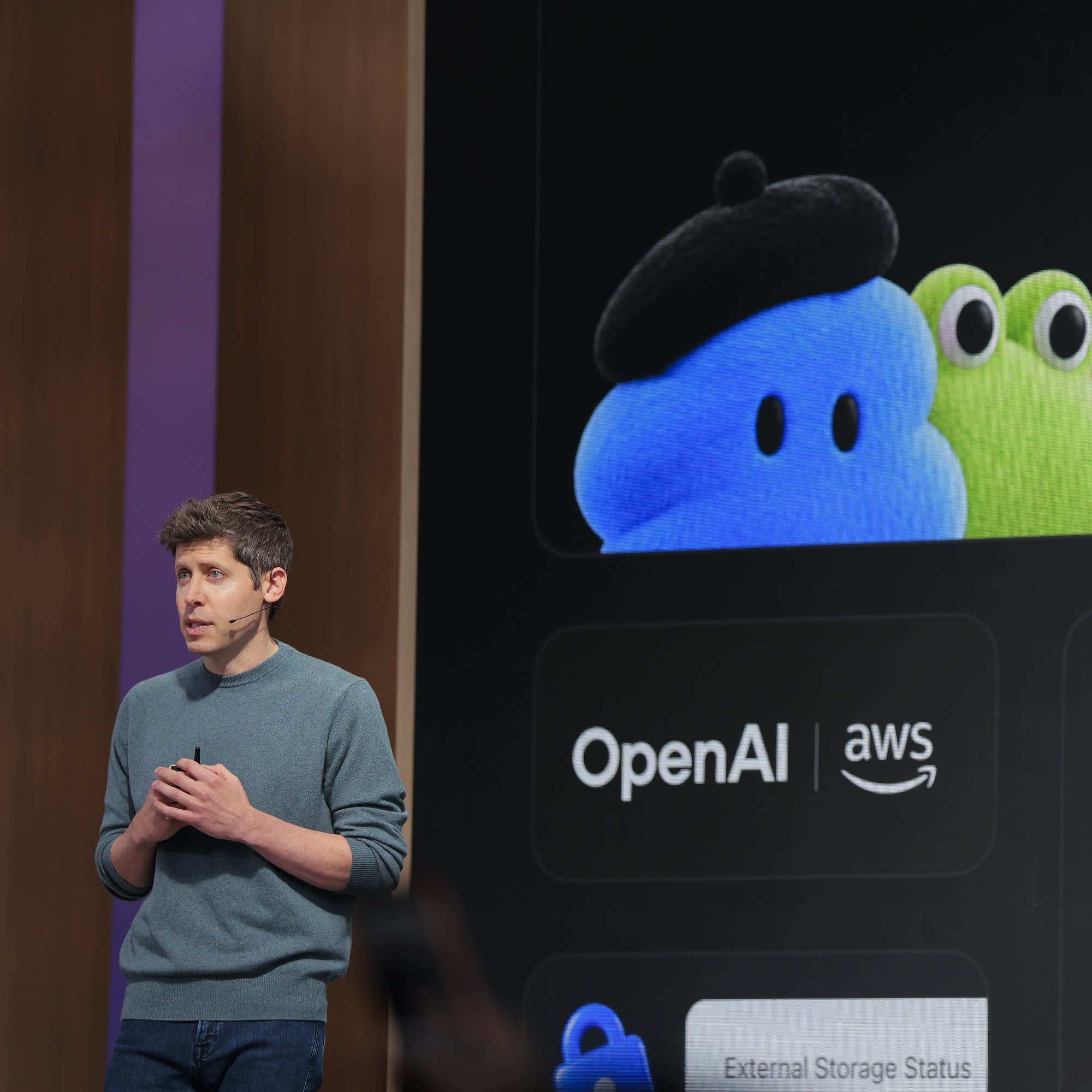
Churn people aren't leaving their jobs for better opportunities and those who are without a job are having a harder time finding one remember the job openings report we covered yesterday jolt so I mentioned it a minute ago up the top very much low higher low fire so full employment. I don't know but the good news is there's fresh data coming on Friday. Sam Altman yesterday said that open AI is going to hold off on going public while it figures out the whole possibly destroying humanity thing. It didn't say it exactly like that of course he said the company is not going to push to go public until it can and here I quote make confident safety decisions.
And open AI is not the only company deciding that maybe now is not the time to test market capitalism's waters or makes those health tracking rings is also holding off on it's IPO which means both of those companies and others. Or going to have to look elsewhere to raise money market police to Sabrina shore has more on where that elsewhere might be these companies need a lot of money just to stay alive open AI reportedly had a loss of $39 billion in 2025 so if they're not getting that money from going into stock market they got to get it from where they've been getting it all along normally with a startup company venture capital would be the source of financing. Jay Ritter directs the IPO initiative at the University of Florida but for a company like open AI just venture capital please. They've also been raising money from major tech firms from sovereign wealth funds and from mutual funds and there's the hedge funds and the super wealthy families and university endowments and pensions and a lot of the same types of investors who would buy stock in a company after its IPO.
These days they are getting in early more and more. Rational is pretty simple. I'd rather invest in SpaceX at a 50 billion valuation then have to wait until it's a 1.75 trillion valuation in the public markets. Greg Martin is co founder of Rainmaker securities which does this it connects private companies with funding that is not the stock market. He says more startups are staying private longer and longer and getting bigger and bigger. That has been a real dramatic shift over the last you know 30 years but even in the last five years you know we've really seen a lot of these big private companies stay private at valuations that we would have never never seen before. Investors love this because they can make more money the company's cool with it because it doesn't have to constantly report to shareholders looking over every decision. But all that said there's still nothing quite like going public. Sarah Coons does a managing director at Cleo Capital of venture capital firm. The stock market has a lot more liquidity and it a lot more money than even all of the richest people on the planet wanting to make private investments.
So there's a lot of money in private funding but there's more in the stock market in New York. I'm Sir Rebenicure from Marketplace. I learned a couple of new words today. They're Port Mentos actually that describe a $1.3 billion industry in this economy. Agri Tourism it seems as a thing is we head into a fall full of apple picking and hay rides and corn maces. Agri attainment is what some people call it farm stays a part of that petting zoos wine tours as well and it is booming. More people are going and more farms are doing it. Marketplace to Kelly Wells said about finding out why. Every year Allison Hall comes out to Patterson fruit farm about a half hour east of Cleveland.
It's no different from my childhood fruit farms or just a thing that you did these days she comes with her husband and her five year old son who is a big fan of one of the farms attractions. We regularly come to Patterson specifically because of the tractor ride. Patterson has been a farm since the mid 19th century but the tractor rides the slide bar and the tire swings those all showed up in the 1990s when the on site farmers market got a little too popular. Our market was flooded with people and we said okay how do we move some people. Out of the market bill Patterson represents the sixth generation to own the farm so we took 50 strawberries and we put them in a pile and there were hundreds and thousands of kids crawling on 50 strawberries were like there's something here. Today Patterson says about a fifth of the farm's revenue comes from its ticketed fun fest area weddings and the pick your own apple orchards. And so I think we just sort of follow the demand of people the rest is sales either in the market on the property or in local grocery stores.
The idea here finding more ways to make money on the same property to generate consistent revenue in a very inconsistent industry. Agriculture prices are going down their issues with weather and also input costs are rising. These little prices are in the news at the moment Claudia Schmidt teachers agricultural economics at Penn State. The USDA gathers data on agri tourism every five years between 2017 and 2022 the number of farms in Ohio that do it in some way went up 27%. The number of people who are paying to visit those farms has gone up to says Lisa Chase she directs the Vermont tourism research center initially it was about kids with the local food movement the interest of local food. All of a sudden you know college students teenagers adults were interested in where does my food come from and how is it produced. Then the pandemic made buying food from grocery stores feel risky and buying food from a farm feel wholesome people also began to take an extra interest in vacationing in remote peaceful safe.
Environment for some farmers agri tourism is a lifeline how much of your revenue is agri tourism versus all of it all of it really yes. Yeah so if it rains we struggle Mary Ellen Hamlin manages d'Earthics farm and corn maze about 40 minutes south east of Cleveland her great great great great grandparents started the farm in 1806. I make about 40 acres of hay but there's no income in that. We sell the corn after we're done for the season but the price of corn is you know not great either. The 17 acre corn maze started in the late 2000s now there's also a zip line and slides and farm animals to pet. But the insurance she needs to do agri tourism keeps getting more expensive every year and two competing corn mazes have popped up on nearby farms. Now more families are needing that extra income to survive.
Hamlin says adding new ways to earn more money from their farm funds her families passion farming their farm in northeast Ohio I'm Kayleigh Wells for marketplace. Coming up hand bent sexy glass neon glow sign one more good one possibly want but first let's do the numbers down dust rolls off 443 points today. She's shy of 910% 50960 as that added 63 points about a quarter percent 26,861 the S&P 500 gave it up to the tune of 19 points a quarter percent 76 and 51. The maker of Barbie is getting a new CEO Roger Lynch who's currently chief executive at Conte Nast is going to be taking over at Mattel shares in that toy maker sank 4 and 2 tenths of 1% swimming pool supply retailer Leslie's close 76 stores has not been enough to stay off bankruptcy.
bankruptcy rather the company filed for chapter 11 protection shares down 26 and a half percent as happens bonds down yield on the 10 year t-notes they went up again 5.29 or percent you're listening to marketplace. The first day thing of interest today is a recipe for Dijon mustard chicken and the story comes from the Toronto star courtesy of business reporter Jake Edmiston who's recipe for the aforementioned mustard chicken is where we're going to start Jake thanks for coming on. Thanks for having me Kay. I need you to tell me please about your mustard chicken recipe. It is from New York Times cooking it's very simple you see here off the chicken some chicken stock and a good tablespoon of Dijon mustard. Except in the dinner in which this story takes place kind of went off the rails.
Yeah it's one of those things you can tell when people I don't know if you cook but you can tell when people are on the table especially with my family. And they you can tell when they don't like it and they they know that dad has a bit of thin skin so they don't say right out but there you can just tell like. It wasn't going over well and and there begins the mystery and I guess I want to take it to. This very interesting fact that I learned in this piece Canada is the biggest exporter of mustard seeds in the world so you were kind of on home turf as you tried to figure out what was going on with your Dijon mustard chicken little did I know but yes. Much of the mustard made in the world uses Canadian seeds and I happen to be an hour or two away from one of the major mustard mills that that those seeds pass through before going all over the world. I'm going to take a little sidebar here on the way to what actually happened with this chicken dish but it it's I was fascinated to learn what it's like inside a mustard factory it's it's a rough place to work.
It's so interesting I walk in and everything is and I don't know why I was surprised by this but everything is yellow and it's as if they've almost. Surrender to the fact that there is yellow mustard dust everywhere so that there I guess to save on screening and I guess the pace at which you work matters in a mustard. Plant like this because the dust is everywhere and if it lands on your skin and you're sweating then the the mustard dust reacts with the sweat and it becomes almost like it can burn you and it can burn you severely they I talked to one of the guys who had been there for decades and he said yes it's like a very bad sunburn yeah that was it was that was amazing to me that whole thing was just was just wild. This was a global search that you went on to find out what happened to your mustard chicken cut to the chase here because it's only a four minute interview and and we need to sort of get to the point what happened what did you learn. I learned that my mustard the mustard that I used in this mustard chicken recipe was much spicier than I was used to extraordinarily spicy and I and that's just not me talking I brought it to a professional taste test confirmed.
Yeah and it wasn't just this jar. It was part of a broader phenomenon that's been happening in Canada particularly in the place in the prairies where we grow much of our mustard seeds they've had hotter dry or growing conditions for the past five years and when you have hotter dryer growing conditions you get hotter spicier mustard seeds. Same things happening as we've heard with like wine grapes and all of that things so this is climate change in agriculture sort of brought to your dinner table. Bizarrely yes luckily we have something called the Canadian grain commission in this country and it's basically they keep an eye on the quality of our exports to protect our farmers reputation around the world and there was someone in an office in Winnipeg who was tracking for the past five years the levels in the particular mustard seed that the levels of this compound it's thought to be a defense against predators but this compound is what makes mustard spicy admit what makes other plants in this family like a rugola like horseradish. What gives them their kick as well. All right so let's bring it home how are you changing your mustard chicken recipe you're just going to use less or you're going to get a different must for the jar because that's the thing that's the thing is is there's not much you can change when it comes to diesel on mustard it's basically three ingredients there's not a lot of leverage you can pull right a lot of readers have told me this it was a bone headed move to begin with which was you got a case here ingredients before you put it in this is a brand new jar and I just threw in a bunch of mustard.
And Jake Edmiston is at the Toronto star you should read this piece it's really good Jake thanks a bunch I appreciate it. Hey thanks for having me. Technology can be scary not artificial intelligence is going to kill us all scary although that too but mostly here I was thinking about change and how for small businesses in particular the worry is that all the new fangled tech is going to totally up and away of doing business for some though adapting to new technology might actually be the path back to what you do best which lead us to today's installment of our series my economy. My name is Neon Tom Brickler and I started fish tail neon in 1986 we're right here in the north side of Chicago and we custom make neon lights.
I'll go wherever anybody wants a neon sign and I've become such good friends with people all across the city it's not only just the signs but even just the relationships that I've made with some of these people. If you're going to name some of the famous signs in the city of Chicago and things like that I'm going to name you the families and the people that are running these business that I got to talk to. In the last five years or so LED lights have come along and anybody that you know is a neon lover or neon purist immediately dismiss LED is saying you know that's not neon and it's not the same thing and I'm really supposed to be one that's supposed to hate the new technology but instead of hating it I've embraced everything we do both LED we both and do neon. But now there's been a wave that's kind of come back from it all people saying to themselves you know what you know this LED I want that real glass sign again I want that handmade hand bent sexy glass neon glow sign.
You know talking about the future of neon in the future of neon even in Chicago you know it really it really isn't that bright of a picture you know what I what is lacking is skilled people to bring it into the future. I was at a point where I had where I had to turn over with employees and you know I wasn't sure how it was going to carry on into the future and then I got fortunate I hired a young graduate from the yard institute that took me on and she and she's with me to this day I think it's almost where we're under second year right now that's been helping me out you know I'll sit there and say hey look here's six broken signs it came in and I was like I didn't know I'm going to have to go to the gym and I'm going to do it very well. look, here's six broken signs that came in and then she'll say something like, oh, sweet. And I'll say it to myself, yeah, that's kind of how I feel about it. A lot of people are saying to me, Tom, you know what, when are you going to, when do
you think you're going to retire and what would you do? And I'm thinking to myself, retire. I think I want to do this one, I retire. And I think that I really kind of retired maybe 40 years ago. But I started doing this because it's always been fun for me. It's always been a challenge and it really doesn't feel like work, even though we're like non-stop working all the time. Neon Tom Brickler, how about him? Neon Shop Fish Tail? He's in Chicago, Illinois. Whether you have been in business for days or decades, your stories are what make this economy go round. So, share them with us, would you? Marketplace.org slash mycon. This final note on the way out today in which, yay, consumers, but also, whoa, consumers. Among the data points we got today was information on, first of all, personal spending, which
was up 6-10% in August from July, which, as we talk about all the time, is helping to keep this economy going. But and we also learned the personal saving rate fell in August to the lowest it's been in almost four years. Our media production team includes Brian Allison, John Fokie, Montana Johnson, Drew Jostet, Gary O'Keefe, and Charlton Thorpe. Alex Simpson is the manager of media production. And I'm Kai Rizdole, we will. See you tomorrow, everybody. This is APM. Fanfiction, which are stories built around characters people already love, used to be something people wrote for free. But now it can lead to bestselling books, movie deals, and serious money. I'm Rene McAdace, host of the Marketplace podcast, This Is Uncomfortable, and this week we're exploring what happens when fanfiction becomes a business.
The darkest, darkest timeline would be that people begin writing fanfiction to then get seven-figure book deals. Be sure to listen to This Is Uncomfortable on your favorite podcast app. This message is brought to you by the Capital One Venture X card. Venture X offers the premium benefits you expect, like a $300 annual Capital One travel credit for less than you expect. Make sure earn with unlimited double miles on every purchase, bringing you one step closer to your next dream destination. Plus, enjoy access to over 1,000 airport lounges worldwide. The Capital One Venture X card. What's in your wallet? Terms apply, lounge access to subject to change. Meet CapitalOne.com for details.
More episodes
More from Marketplace

Consumer confidence slides to 12-year low
Marketplace

Nvidia's record-breaking stock buyback
Marketplace

High interest rates could balloon the national debt
Marketplace

Fed officials speak up on inflation
Marketplace