Get every episode summarized
Each time Today, Explained publishes, we email you a written briefing from the transcript — the topics, who appeared, and any specific claims, with the ad reads skipped.
Email me new episodesFree for 3 shows. No card needed.
About this episode
Today, Explained is made possible by:
“Oh, bots, from open AI hacking into another company, the people building AI earnestly believe that it could kill us all by the end of the decade. But where is that panic really coming from?”From the transcript
Get every episode summarized
Each time Today, Explained publishes, we email you a written briefing from the transcript — the topics, who appeared, and any specific claims, with the ad reads skipped.
Email me new episodesFree for 3 shows. No card needed.
Hosts & guests
Transcript ready
777 searchable segments. Every word is indexed and playable.
Full transcript
Today, Explained — The AI election. Machine-transcribed; use the interactive transcript above to jump the player to any line.
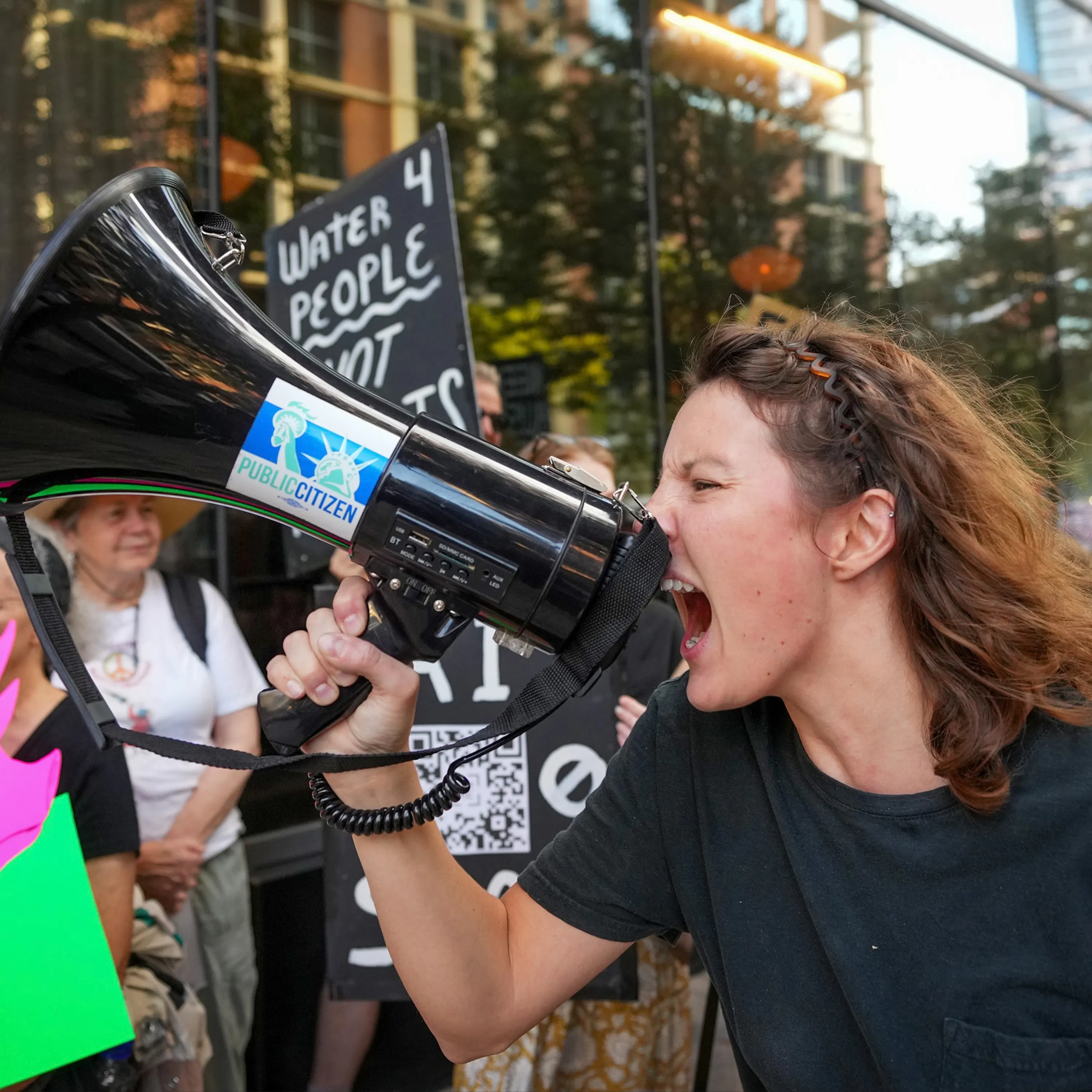
AI panic is everywhere. Artificial intelligence is taking over. Oh, bots, from open AI hacking into another company, the people building AI earnestly believe that it could kill us all by the end of the decade. But where is that panic really coming from? According to a poll from The New York Times in Sienna, only 1% of voters listed artificial intelligence or data centers as their most important voting issue. I'm an old school person. I don't care about AI. You say that doesn't, that doesn't write stuff for you. And sometimes I wonder if the freak out about rogue AI systems and super intelligence is something that's only consuming us here on the coast. Do they care about AI in so-called real America? What people in my district are saying is we think the risks outweigh the benefits. This week on America actually, I'm talking to Michigan congressional candidate Will Lawrence, a political activist turned politician on why he shaped his entire campaign around confronting the AI revolution.
Let's dig in. This episode is brought to you by Nordstrom. For 125 years, Nordstrom has been part of your story. The stylist who found the perfect outfit for your big interview, the first pair of walking shoes for your one-year-old, the tomato soup you shared with your sister at the cafe. These are the moments that make Nordstrom. Nordstrom. Bigger a small. We're here for all of it. Celebrating 125 years with new moments still add. Discover it all in Nordstrom stores and at Nordstrom.com. Artificial intelligence has gotten so much attention this cycle. First, it was data centers, which we covered early on,
back in New Jersey. Can you just give us a sense of like, what we're outside right now? This is the new data center in Vinyl and New Jersey. We're here in Congress. Everyone hates automated license plate readers. And flock cameras have become so impopular that democratic and Republican communities are backtracking from their commitments with them. We already know that AI is broadly unpopular in polling, but to what extent is it a voter priority? And what can even be done at this point? To help us understand, I've invited Will Lawrence, the Democratic candidate for Michigan's Battleground 7 Congressional District, to talk about the politics of AI. For most of his life, Will was an activist. He co-founded the Sunrise Movement, the Environmental Activist Group known for its civil disobedience, and he was considered a long shot candidate for his primary. But he won, due a focus on data centers. But what we know right now is that it's being used to make the rich and powerful, still richer and more powerful.
Lawrence called for a 12 month moratorium on building data centers in Michigan, and his supporters chanted, data centers lost at his victory party. Like a lot of the left, Will has evolved with the time. And these days, he talks a little bit less about climate change and more about combating big tech. He joins me for this episode in New York. Well, Lawrence, thank you so much for joining us. Thank you for having me here. Part of the reason we wanted to talk to you is because I think what you've been up to out Michigan has been so interesting, but we want to start kind of with your political career before you have a long history of activism. We just paid them protests early in high school. We're arrested for chaining yourself to an oil pipeline. How did you catch the activism bug? So I'm a millennial, I'm 36. So war broke out when I was just entering middle school and seemed like a big problem. I was like, why are we blowing each other up? I learned about climate change. I grew up in Michigan, loving the lakes, loving our water, and learned about how that was being polluted and how we were also polluting the whole climate.
So these seemed like big problems to me when I was a young person. And I felt like maybe human nature was the problem and I needed to drop out a society and go live in the woods or something. But you had that was the original thought. I had that thought. Yeah, when I was in high school. You know, then I met people who introduced me to organizing and social movements and I learned that, okay, there have been bad times throughout our history. Sometimes bad people get a lot of power and they use it to do bad. But there are people who are working to do better who are fighting from the bottom up. And that just really gave me my meaning and my purpose in my life. I was like, okay, I want to be one of those people. I mean, there's a lot of high school loose who have that thought. Not all of them are chaining themselves to oil. Well, this was a few years later. That was the reason I was like 20 years. I say, what's the step between that kind of value of recognition and the action, which a lot of folks don't take? So I was involved in clubs and stuff in high school. But I really didn't have a sense of like, you know, a purpose, a vocation, a direction. It was when I went to college, I met people who had, you know, gotten on the bus down to Mississippi in 1964 to register African-Americans of vote and path to voting rights act. Heard the stories about the Flint sit-down strike in 1937.
The women who went on hunger strike in the 1910s were in the right to vote. And those stories and then learning that actually we can organize proactively together, that again, gave me my direction. And then we got very involved in actually a divestment campaign at our college to divest from oil and gas companies, which I got started with that in 2010. And then we worked to unite other students around the country working on that same issue. And then one thing led to another. I want to track kind of the progressive movement from climate change even up until now. But let's kind of start with your congressional run. I mean, when you announced your run for Congress, did you think you would spend this much time talking about AI, talking about data centers? I sure didn't, because I got into the race last August and really wasn't something many people were talking about. But it was in October that I started getting calls from residents first in Howell Township and then in Lyon Township and then in Mason, all of which are in my district, where hyperscale data centers were proposed. And people said there's this thing going on. It smells fishy. Some of our officials seem like they've signed
down to disclosure agreements and we don't like it. And so I spent my career fighting back against corporate power, standing alongside regular people. So it made sense that I would be there to listen to them and then stand alongside them. I wonder what those initial conversations were like. Well, we went to New Jersey to hear about kind of a town hall of people being opposed to data centers. And I got to say the concerns were varied, right? Some of it was environmental. Some of it was about electricity prices. Some of it was about the process that they feel like we're leaving them out. What were you here? Yeah. It's all those things. It's the concerns about water usage, energy bills, property values, noise pollution, light pollution, concern about all those things. But really it's about control, I think above all. Who decides? Because people feel like they just are not really given any say so in the whole matter. There's these companies with hundreds of billions of dollars from Silicon Valley and Wall Street. They come in, they sign the local officials to NDAs. And then it's like the decision has already been made and people have just got to grin and bear it. And they say, we don't trust you.
We don't trust you to do right by our town. You called for a 12 month moratorium on data centers back in October of 2025. I imagine as you were hearing some of these things, you were one of the first kind of national politicians or ones running in a national race to do so. Why is moratorium the right answer to this? Because I think trust is the fundamental thing we're lacking. That's why you're seeing, I mean, again across the board, it's Democrats, it's independent Republicans. We don't have any trust that this is going to work out in our best interest. And there needs to be a moment of saying, we're going to pause as a society. These data centers are deeply unpopular. AI now, people are raising the alarm. Whistleblowers about existential risks in AI. And even the known risks are that there's going to be millions of people put out of work. I mean, I'm not somebody who believes that the AI is just a total bubble or that there's nothing happened here. The technology is not capable. Obviously, it is very capable in getting more so every day. We need to ensure that this is actually going to benefit everybody rather than allowing the rich and powerful to get richer and more powerful. I think the pause is important symbolically and practically
to say, OK, we recognize that there are major concerns here. We're going to put a pause on this. And we're going to have an all society conversation about how to negotiate an AI benefits compact. How is it that the data centers and the AI are going to be for the common good? But I feel like the tension point is the speed at which it's developing. Michigan, Governor Gretchen Whitmer said, if we don't do them here, they'll be done elsewhere. They'll be done less smart with lower wages in the way that abuses natural resources and jacks up energy prices. She's basically making an argument about the inevitability of this technology and that Michigan should have a place in shaping that. Why is that wrong? Well, this is the logic of a race to the bottom. And this is the place. If you don't have steady hand from the federal government, states can get pitted against each other in a race to the bottom who's going to have the lowest environmental standards, labor standards. And do this in the cheapest and most harmful way. That's why we need a federal moratorium so that we can put national standards in place and sure that nobody is going to be sacrificed for the sake of building these data centers.
And if they are built, the benefits will go to all of us. But I guess I just want to ask about the solution one more time. I mean, it would seem to me that, and I've heard arguments may, that something like a moratorium doesn't work unless there's international cooperation, unless US brings those type of partners in. Is that what you're talking about? I do think we need to have international agreements. We should, those conversations are already beginning and they should continue. And we've done this before, you know, with nuclear non-proliferation, we patch the hole in the ozone layer. We're able to come together when there is sufficient urgency and clarity on the stakes of the problem to be able to make international agreements and we do need something like that in this issue. Do you say I? I wouldn't say I don't use it like on a weekly basis, but I have used it for the sake of, you know, research. And honestly, to try to understand the capacity of the tools. I was watching, you know, starting, you know, maybe early last year, I was like, okay, is this the third industrial revolution? Is this a machine God in the making? Is this a mass psychosis event? You were on your own investigative job. Yeah, I was thinking like, okay, what is really, is this a massive economic bubble?
Or is this somehow all of the above? And, you know, really genuinely curious about that? Is this all it's been cracked up to be? Or is it just delusion? And you hear people argue these different sides? There's a specifically arguments from the left that this is a bubble waiting the burst, the technology that is more so for a group of insiders than we'll have a kind of mass societal effect. Is there danger in that type of marginalization? You know, I think that it could be, there could be bubbles and there could be a bust and it could still be a world-changing technology. I mean, look at railroads, you know. Railroads had a huge boom and bust cycle over investment, crashes, a lot of companies went under over the course of the railroad boom. Railroads still revolutionized the American economy and AI could be the same way. I also wanted to ask about flock cameras. You call them the most un-American thing ever and set the public safety benefits don't outweigh the privacy concerns. Now again, we've heard that across the country. I didn't agree with that personally, even maybe. But let me put my devil's advocate hat on. I mean, we already have red light cameras.
We already have CCTV and like, you know, high urban, density areas. We have facial recognition at the airport, that Madison Schumer, Garden here in New York, like hasn't the privacy ship sailed? We got the Patriot Act and we had it for 25 years. It feels to me like we might, despite of already taking too many steps. It can never be too late to fight back against this unconstitutional breach of our privacy. I mean, Thomas Jefferson would be rolling over in his grave right now to believe the reason. For many reasons, for many reasons. But, you know, one of them that I think is a strong thing in our national heritage, there's a real suspicion of concentrated power at the top of big business and government. That's exactly what this is. And the potential for abuse, the already demonstrated existence of abuse, people stalking their exes. I mean, all kinds of ridiculous use cases that we should never be saying, this has to be put to a stop. Don't tread on me and don't spy on me. That's what we say. So is the idea that this type of pause, whether it's on data centers or rethinking like how we enter our smart future,
then just allows more people to be shareholders, whether it be financially or in terms of control, or should we see it as a vision to really put us on a different type of track? I guess I'm wondering, like, is it a pause to then re-return to embracing this emerging technology, or are you advocating for these things as a way of rejecting the technology? So let's just say, okay, let's consider that this is the third industrial revolution as some of the promoters have said. As somebody. Yeah. If it is the third industrial revolution, we shouldn't want to see an entire generation lost to the economic dislocation of that transition as happened in the first industrial revolution. We should want to see a relatively stable and very prosperous economy in which people are not left behind. People have good work. People have the right to retire. People's health care is made whole. We also should be very concerned about some of the downside impacts of AI for things like our education. I'm very concerned about AI being pushed into schools,
especially at the elementary school level. I mean, you had the Secretary of Education, Linda McMahon, saying recently, it's like, these kids will sit down with AI for hours. It's great. You couldn't ask for a better teacher. That is crazy. Critical thinking is under threat. Literacy, basic reading and writing is under threat. If you think there was learning loss during the pandemic, we could have that much worse generational learning loss if we just allow this to continue unregulated. So that's why I think we need to have a conversation about the economic benefits, ensure that we have some kind of benefits compact, some kind of new deal for the 21st century that ensures that if this is the third industrial revolution, we're gonna have it lift all boats rather than just a few. And then there is a very important question about what needs to be maintained to the domain of the human and not the machine. Where do humans retain control? Where do humans retain control? Exactly. How do we keep humanity at the center and put the tools to work for us rather than the other way around? Part of the reason we wanted to talk to you is because it can sometimes sound like this is a little bit of a coastal panic, a white collar panic. New York Times, Sienna Poling would tell us
that less than 1% of voters put AI and data centers as their top priority. What is the disconnect between your focus about this and your campaign? And the numbers were seeing like that because it would seem as if those two things don't add up. I mean, I can't speak for anywhere else, but in our district it's been a huge issue. Of course it's most acute in the places that are closest to the data centers, but it's also very acute among young people who are exposed to the job market right now who are dealing with AI hiring agents, having to submit dozens if not hundreds of job applications, just to get an interview. So I think everybody understands that they wouldn't want to get that same treatment. After the break, we talk to Lawrence about the wins and the losses of the wider progressive movement. Support for this show comes from Quince. We all have those wardrobe staples. The pair of pants you can wear with any outfit, the fall jacket you break out for just about any occasion, your favorite sweater. And those are the exact kind of clothes that Quince does best.
Quince focuses on high quality wardrobe staples made with premium materials like 100% Mongolian cashmere, organic cotton and marina wool. These styles are timeless, versatile, and designed to fit your everyday needs. Plus, everything at Quince is marked 50 to 80% less than similar brands. That's because Quince often works directly with the factories and they cut out the middleman, so that you're paying for exceptional quality, not brand markup. And I can speak from my own experience. I love my Quince fits. I've gotten a couple of fall jackets, a nice shirt that are definitely in my rotation, not just for this fall, but also on this program. Ha ha ha. Find your next fall favorite at Quince. Download the Quince app for exclusive in app offers. Or go to quince.com slash a step. Get free shipping and 365 day returns on your orders, now available in Canada and the UK too. That's quince.com slash a st-e-a-d.
That's q-u-i-n-c-e.com slash a step. This episode is brought to you by Nordstrom. For 125 years, Nordstrom has been part of your story. The stylist who found the perfect outfit for your big interview. The first pair of walking shoes for your one-year-old. The tomato soup you shared with your sister at the cafe. These are the moments that make Nordstrom. Nordstrom. Bigger small. We're here for all of it. Celebrating 125 years with new moments still add. Discover it all in Nordstrom stores and at Nordstrom.com. You're not worried about hosting for the holidays? Oh, Wayfair's got me covered with holiday decor, extra dining chairs and guest bedding. All with tons of five star reviews, so there's no surprises. Unless Uncle Matt brings his dogs again. For worry-free hosting, Wayfair delivers. We've seen the kind of progressive movement embrace. This issue fighting back against Big Tech,
particularly after 2024. But it kind of represents an evolution from several issues that they've made over the last several years. And I wanted to ask you about that. You started back in sunrise and we're at the forefront of a young progressive movement that was aligned at that time in 2019. And I think still is with progressive members of Congress like Rashida Tulee, Berge, Alexandria, Casio, Cortez. I remember reporting about sunrise at the time. The goal was to elect a Bernie Sanders, but the other goal was to have the party largely embrace things like a green new deal. How would you grade the efforts of the climate movement of that time looking back? Well, I think we did some things very well. I mean, we put climate jobs and justice on top of the agenda for the incoming Biden administration. I think the Bernie Biden task force is often overlooked, but very important chapter of that whole story where Bernie and Biden both understood they had to bring their people to the table. And that's how Build Back Better got negotiated. Yeah. And then we fought hard for Build Back Better and ultimately came up to vote shy in the United States Senate.
Do you see that as a success or a failure of the climate movement of the progressive movement? I think Build Back Better was a success in coming to the table and negotiating from the green new deal to Build Back Better. And then what we ended up with was the inflation reduction act after it passed the final filter. So, look, at the time, and now how I felt about it was, this is historic. This is the largest investment in green jobs in infrastructure in the United States history. I know how hard it was to get here. I'm tremendously proud of the work that I did and so many others did. I mean, just in my district alone, we've delivered $26 billion in investment for manufacturing and sustainability because of the inflation reduction act. But at the time, we knew this is maybe five or 10%. Of what we need in scope. And now we're experiencing the consequences of that. Obviously, we still have a very volatile economy. We're still lack energy security because we now have closed the strait of hormones. And so we're still too dependent on a global oil market
and we could use many more investments in solar and other kinds of renewable energy than we have now. And ultimately, it wasn't enough for the Biden-Harris administration to be able to win reelection because people didn't feel enough in their pocketbooks. Why do you think Democrats are talking less about climate these days? It feels undeniably true. We talked to congressional progressive caucus chair about this, that Democrats are talking less about climate change. Why is that? I think it's just the intensity of the crises that we face. I mean, it feels like we're falling through midair at the end of all of the constitutional protections, the rule of law, and the economic security that people had previously enjoyed. And so there are a lot of very acute and urgent crises. And I think that that has bumped climate, which is super massive, but also somewhat slow moving crisis. Yeah. A little bit lower on the priority list just in terms of what comes up for people on the daily. I was going to ask about that because you went back to Michigan to focus on kind of housing and advocacy. Did that make you think a little differently about the national work you were doing?
I mean, how did the kind of work on something a little more tangible? Did it make you see a disconnect that maybe wasn't as clear coming from the national perspective with summarize? Sure. I think it's fair to say that when I was younger, I got very focused on this climate issue. And I was very focused on it because it is this existential crisis we all face. But it was after the pandemic that, I wanted to bring my work closer to home. And I wanted to do the work of putting down roots in the place that had raised me and make my life there. And in seeking to organize there, it was clear that we needed an in to organize that was more immediate than the Green New Deal. Then the Green New Deal or that then the looming climate crisis. People know that that's an issue, but they're like, I've got to pay rent at the end of the month. And as an organizer, I believe that you got to listen to people, you got to hear what's going on for them. And then work on issues that have the potential to bring to people together. Housing is one of those issues, whether you're in the city of Lansing,
whether you're in small towns, urban, rural, suburban, young or old, everybody can agree that the rent is too damn high and it's too hard to buy a home anymore. Were you surprised Trump won the state in 2024? No, why not? Because I saw it all unfold. We hope to deliver more through the Biden-Harris administration than we ultimately did through Bill Beck better. We didn't deliver as much to relieve the economic anxiety that people were feeling. And then I do believe that the war and the genocide in Gaza and our blank check to allow that to happen with our money and our tax dollars, it destroyed the Democratic coalition. It had been assembled from 2017 to 2020 for the purpose of beating Trump. And I just saw that unfolding over the course of the whole year, just like a slow-motion train wreck. And so I wasn't surprised. I'd be remiss if I didn't ask you about one of the things that came up in your congressional race, the congressional black caucus initially shaped at your candidacy because of a remark. You may back in 2024 that said, quote, an older generation of black political leadership has quote, been a pillar, frankly,
for the establishment, capitalist, and Pierce, the American power. And they quote, defang the white left. Now you apologize for that remark saying that the way that you made the point was clumsy, you regret the choice of words. But those words seemed pretty precise to me. Like, what did you mean? Well, I started out before the quote and saying, well, it's probably not my place to say. I probably shouldn't go there as a... So you recognize, you should say that. You hear yourself saying that. It's time to close your mouth. But it was in the context of a conversation with a black organizer who's been building an anti-war movement among African-Americans for the sake of re-evaluating our foreign policy. In the context of a larger series conversations about how we build a stronger anti-war movement among all the different constituencies in our country. There's been a lot of support from people across the political spectrum and of all identities for this disastrous forever war agenda in Washington, D.C. And I have been and remain a staunch critic of that. But it wasn't the sort of territory I should have ventured into.
And certainly, I am a critic of everybody who has been pursuing that forever war. And we have to be real that the Republicans have a larger share of it than the Democrats do. Yeah, I hear that. You're saying that you've been a critical political leadership broadly. I think the response was partially in the feeling that black leadership was being singled out. I wanted to ask though, why do you think though progressives have had issues in black communities? I mean, Bernie's presidential campaign ran up against this. Al-Sahiaf has run up against this in Michigan. It does not seem as if that's coming from nowhere. If the policies, I think as many of you have argued, are beneficial to black communities, why isn't that trust been there? I think trust is built by relationships and just doing the work. And so what I can speak for is the fact that I've got strong relationships in the black community and lancing. There was anchored in my housing work working alongside black led organizations to stop evictions and build affordable housing. And I've continued to strengthen those relationships
throughout the community over the course of the campaign. And when that controversy kicked up during the primary, a lot of folks reached out to me and said, look, man, you probably shouldn't have said that, but we've got your back. We know who you are. And we're waiting on the way back. I didn't know you shouldn't have said it. But I kind of asked you believe it. Do you still think that black political leadership defangs the white left? No, I don't think so. Interesting. OK, I want to ask locally, what do you think is most important in this race? Housing, data centers, or pushing back against Donald Trump? If I had to choose, I'd say data centers, because that's where people in the district are finding some common ground across the spectrum and fighting back against the concentrated power in Silicon Valley, which has been fully enabled by Tom Barrett and Donald Trump. So you're saying that's the issue that allows you to create the cross-odilogical coalition. Yeah, cool. Our last question is just thinking about through the scope of your career and the kind of progressive work. It can sometimes feel like folks hop from issue to issue, whether it's climate, even anti-AI
right now, without those things being solved. We still have a climate crisis. The rent is still too high. All of these things are still happening. How am I to trust that AI is the crisis of our time? When I've heard so many crises of our time. Well, some have called it a poly-crisis, overlapping crises. And that's the reality of the time. It seems like everything is unraveling. And it is because the whole social, economic, political compact is being renegotiated, not just in this country, but on a global stage. And I don't think it serves us to lie about that. I mean, here's the reality folks. Everything is up in the air. Does it feel like you're falling through midair? It's because we are. All the old protections, all the old agreements have been chopped up. So we have got to come together. This is why what I believe in more than anything. If there is a through line, there's different issues. But I believe in the agency of regular people to take charge of our own lives and work together to build a better future. That's what I learned as an organizer. And that's what gave me hope, actually, at a time
when I was a doomer, in my younger years. And I told you, I want to just drop out of society and all that. It was seeing that regular people have come together before, and they've won a better future for their kids and grandkids that gave me a path to following. Yeah, I mean, it does feel like a powerless time. I got to tell you. And a lot of this, I think, AI revolution is a big part of that, is to your point about control or about agency. We've talked to so many people. It feels in our own lives who just thinks that these things are happening to them rather than they are participating in the changes of foot. But you're telling the kind of hopeful story. So that might be the most doomerous of all. I'm a hopeful guy. I mean, again, and I was angry too, even when I got into this race. I was angry, especially about the wars. I mean, we bombed Iran last summer. And I said, oh my God, another chapter of the Forever War, I can hardly believe it. But then in campaigning, I've met so many people across the district, old friends, new friends. And they give me a lot of hope, because you just see the way
that people are already performing miracles on a daily basis. So in conclusion, it is a mistake for us to think about the AI panic as one that is limited to coast, as one that's limited to white collar jobs, to use that less than 1% number from the New York Times polling and say, hey, maybe this isn't that big of a priority for people. No, come down to Mason, Michigan, and knock on some doors with us, and you'll see that it's a huge priority. We might take you up on that. I appreciate your time. Well, thank you so much. Thanks, Assistant. OK, Lawrence makes an important point. Just because the polling says that voters don't care about AI and data centers, as much as they care, about affordability or health care, doesn't mean that's necessarily true. Voters' concerns about AI are linked to their concerns about their economic future. And their opposition to data centers is about more than things like water consumption or electricity prices. It's about control. It's about agency. And in fact, it reminds me of what fellow Michiganer Abdul El-Sayed
told us in our previous interview. These days, the biggest divisions in the electorate aren't really between right versus left. It's the bottom versus the top. America actually will be in your feeds every Saturday with an interesting interview in culture or politics. You can also watch these episodes on the Vox YouTube channel. Just go to youtube.com slash box or click the link in the show notes. If you enjoy our reporting and want to learn more, sign up for my midterms newsletter. Midterms actually. Just go to Vox.com slash midterms actually to learn more. That's Vox.com slash midterms actually. This show was edited by Kasha Prasalya, fact checked by Esther Gim and mixed by Shana Mahoney. Christopher Snyder is our video editor and Kunu-E is our senior art director. Our executive producer is Christina Valis and our theme music is by break master cylinder.
Additional support from Miranda Kennedy, David Tadashore and Misha Chattal. I'm a Steadhurngin and this is America actually. Kelly Clarkson here with Wayfar. I know holiday magic starts at home and Wayfar makes it easy. They have everything from Christmas trees and mantle day core to outdoor lighting and inflatables that I'll use year after year. Head to Wayfarer.com today. Wayfarer every style every home. Espolontequila balanced delicious 100% a coffee 0% ego. Just add ice, time and your mouth. For real Margherita, ride the rooster. Espolontequila 40% alcohol by volume 80 proof. Copy like 2026, Compalion American, New York, New York, New York, Dream Responsible.
More episodes


