Get every episode summarized
Each time Marketplace publishes, we email you a written briefing from the transcript — the topics, who appeared, and any specific claims, with the ad reads skipped.
Email me new episodesFree for 3 shows. No card needed.
About this episode
Marketplace is made possible by:
“Running a business is hard enough, so why make it harder with a dozen different apps that don't talk to each other? The only business software you'll ever need. It's an all-to-one, fully integrated platform that makes your work easier.”From the transcript
Diesel costs have nearly doubled over the last year, breaking record highs. In fact, some lawmakers are calling on the Trump administration to halt all diesel exports until they cool off. But experts say it's a recipe for price chaos that will leave us right back where we started. Also in this episode: A wide crude oil spread persists, butter and cheese become a bright spot on grocery receipts, and local bank consolidations leave customers frustrated.
Every story has an economic angle. Want some in your inbox? Subscribe to our daily or weekly newsletter.
Marketplace is more than a radio show. Check out our original reporting and financial literacy content at marketplace.org — and consider making an investment in our future.
Read the stories in today’s episode:
- The difference between the "paper" price of Brent crude and what refiners pay for it
- Trump and Xi meet this week. What can we expect?
- As grocery prices rise, cheese and butter get cheaper
- "Not such a good idea": How banning diesel exports to lower prices could backfire
- As banks consolidate, some customers aren’t so sure they’re happy
Get every episode summarized
Each time Marketplace publishes, we email you a written briefing from the transcript — the topics, who appeared, and any specific claims, with the ad reads skipped.
Email me new episodesFree for 3 shows. No card needed.
Hosts & guests

Transcript ready
378 searchable segments. Every word is indexed and playable.
Full transcript
Marketplace — Time for a diesel export ban?. Machine-transcribed; use the interactive transcript above to jump the player to any line.
Running a business is hard enough, so why make it harder with a dozen different apps that don't talk to each other? Introducing ODO. The only business software you'll ever need. It's an all-to-one, fully integrated platform that makes your work easier. From CRM, accounting, inventory, e-commerce, and more. And the best part, ODO replaces multiple expensive platforms for a fraction of the cost. This is why over thousands of businesses have made the switch. So why not you? Try ODO for free at odu.com. That's odu.com. This marketplace podcast is brought to you by Wealth Enhancement, who asks, do you have a Wealth Blueprint? Your advisor might not offer that. Which means your plan could be missing tax strategies, retirement, estate planning, or more. See what a comprehensive plan has to offer. Find out what the Wealth Blueprint had no cost, and see what comprehensive planning can do for you. Though you'll wonder what you've been paying for, learn more at Wealth Enhancement.com slash build.
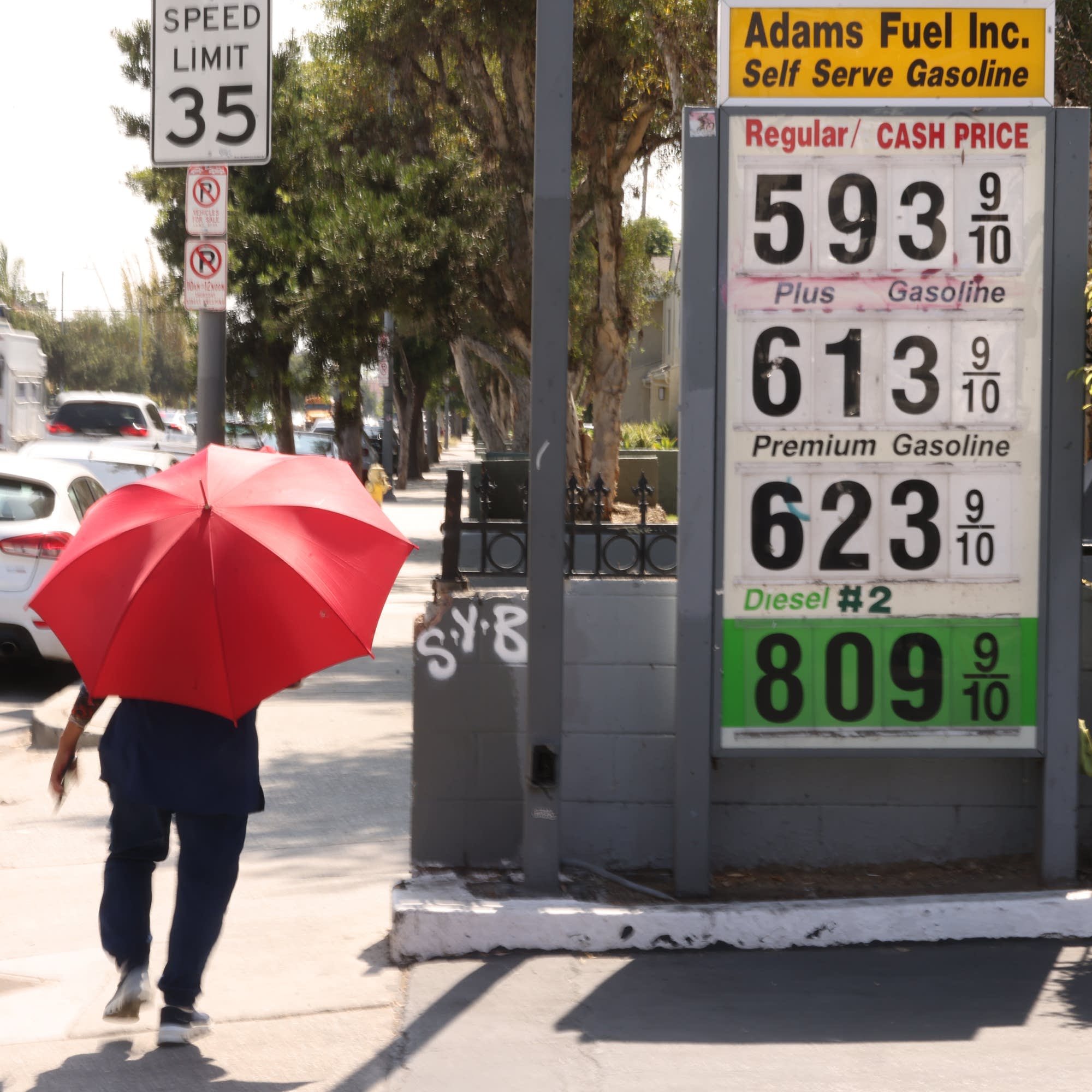
Coming up today on the program, be very careful what you wish for. From American public media, this is Market Plants. In Los Angeles, I'm Kai, Rizdal Tuesday today, the 22nd of September. Good as it always is to have you along, everybody. We're going to begin today with a story from the file I keep on my computer labeled. Are you really sure you want to do that? Depending on which official in the Trump administration you listen to, we are either looking at a temporary ban on exports of diesel fuel. That was Treasury Secretary Scott Besson today, or calling for a ban that was the president of the United Nations today. Various and sundry senators and governors have said essentially the same thing, trying to get the government to do something to bring diesel down off its record highs, $6.52 a gallon today on average, says AAA. This though is where I should probably tell you that the subheading on that computer file
is good examples of the law of unintended consequences. Here's Market Places Samantha Fields. When Sarah Dane last bought diesel for her farm equipment back in July, she paid $3.60 a gallon, which was still a little over a dollar more than I paid a year before that. Dane owns fresh, hopped farm about 700 acres in eastern Montana. We grow corn, soybeans, and wheat with some alfalfa. She's already harvested the wheat for the season, which took about 1,000 gallons of diesel. Now it's time to fill up her tanks again. I got my prices this morning and regular diesel is 6.14, and the dyed diesel that goes in the tractors is 5.60. So if I fill both of my tanks, which are both currently empty, it will cost me $11,740 as of this morning. That strain on farmers is why some officials are calling for a ban on diesel exports. Sounds like a fairly easy thing to do that would maybe increase the supply of domestic diesel.
But Hugh Dagle at the University of Texas at Austin says well, it might reduce prices temporarily. In the long term, it's probably not such a great idea. Diesel is a global market, and Bob McNally at Rapidand Energy Group says if you were to pull US exports out of that market, you would see global prices for diesel skyrocket. That would immediately push prices up on the east and west coasts, where most diesel is imported. Even though the US produces plenty, there's no good way to transport it across the country. Now, for a brief period of time, the pump price in Texas and Louisiana and some of the Midwestern states would collapse. But McNally says oil refiners would then see their profits collapse too. And in response to that, refiners will reduce their production, which would then push prices back up. I'm Samantha Fields from Marketplace. Consequences of the unintended kind. In Lower Manhattan today, the corner of Wall Street and Broad, not a whole lot of equity in fuzism,
bonds held pretty much steady, oil down again. We will have the details when we do the numbers. The big economic event of the week is Chinese President Xi Jinping's state visit. Artificial intelligence is, of course, going to get all the headlines, the war in the Middle East and its associated issues. We'll get some agenda time too. But as always, it would be a very big mistake to sleep on the trade relationship between the two biggest economies on the planet. So we have called Chad Bowneys, a senior fellow at the Peterson Institute of International Economics, to get some insights. Chad, it's good to have you on. Thanks for having me. Give me a general sense, would you, Chad,
of the state of play right now trade-wise between these two countries? Not good. I mean, in a sense, things have stabilized. So things got really, really bad in 2025. Obviously, with the United States imposing massive tariffs on China, China responding with tariffs of their own, imposing export restrictions. Trade really palmeted. But since the meeting last year, and then especially given the Supreme Court decision in February that reinforced the Trump administration to replace a lot of those 2025 tariffs, trade has leveled off both US exports to China and US imports from China, just at a much, much lower level than things were before the President Trump came along. Yeah, so, so flat is the new good here? Is that what we're saying? Yeah, things aren't getting worse, which is the new good. Okay, fair enough. I'm looking here on my computer in the studio at a handy dandy dashboard. Six updates on US China trade for the Trumpsy Washington summit, Chad P. Bound, Reginald Jones, senior fellow, Peterson Institute.
I'm interested in number two here. Trump's next tariffs could drive companies back to China. The President, as we all know, was threatening new tariffs pretty much every other day. The point of the original tariffs was to bring back some of the US supply chain. And now you're saying maybe if he does more tariffs, it'll drive things back to China? Yeah, so for a lot of products, I think we have to be realistic. The next best supplier is not going to be the United States. So if you're talking about maybe some assembly of clothing or consumer electronics, it's not going to be the United States. It's going to be somewhere else in the world. So what then really matters is how high the end game tariffs are that President Trump imposes on China relative to that next best alternative, that alternative source. And the challenge at the moment is China really is holding all the cards when it comes to the Trump administration. These export restrictions on products like rare earths and permanent magnets.
These are goods that are essential to the American economy. China produces virtually all of the world's supply of these things and threatening to cut Americans off really would be devastating. That threat has really limited the size of the tariffs that President Trump can impose on China. But President Trump loves tariffs. And so he really can't hold himself back when it comes to imposing tariffs on other countries. So the real worry is if he becomes constrained against China, the tariffs don't go up there, but the tariffs do creep up against all the rest of the countries in the world. Then some of the companies that had moved their supply chains out of China in the first place made aside, hey, China is actually getting lower tariffs than these other places. And there have a really efficient economy. They've got great infrastructure. Let's move back our sourcing to China. You used the President's favorite phrase there, the other sentence or two ago. You said China has all the cards. The Chinese know that, right?
They absolutely know that. And they're using it. And that's why they're not really giving much at all in these last few summits. Back in May, the best that President Trump got out of President Xi was a promise to buy a few more American airplanes. So Boeing, maybe some more soybeans, you look at the data. Yeah, there's maybe a little bit more, but not a whole heck of a lot, right? And this time around, I think it's going to be more of the same. There's just not much that we should expect to come out of this summit. That's a little depressing, Chad. It is. It's not a great state. There are a lot of problems out there in the world. It would be great if the United States had some leverage to induce incentivized China to make some changes. But that's not where we are today, unfortunately. So let's say you could get Treasury Secretary Scott Besen, who's been heavily involved in these negotiations or James McGurray, the trade representative.
Let's say you could get them on the phone. What would your council be to maximize the US results or maybe minimize the losses? The real big thing is the United States can do to tackle the problem, to help take away some of this leverage that China has. Really probably don't involve engaging with China. It's two things. Maybe some industrial policy, so finding alternative sources of supply where possible for rare earth's critical minerals in the United States. And they have done some of that. We're now subsidizing companies to do that sort of activity here. But also to work with other like-minded countries that are facing the very same problems with China. Some of these other countries may be better positioned to more quickly and more cheaply help us create these alternative sources of supply. But the countries like Australia, Japan, Canada, even, Europe. But the challenge at the moment often is President Trump doesn't see it that way. And instead he's threatening those countries with tariffs of their own.
Chad Bound, he's at the Peterson Institute for International Economics. He's also got a book out you should read with Semyon Keynes. It's called How to Win a Trade War. Chad, thanks a lot. I appreciate your time. Thanks for having me. The National Dead, as you have surely heard, topped $40 trillion last month. An enormous amount of money, yes, almost incomprehensible. But as so often happens with big headline numbers, there's more to it than just that headline. Totally US Dad is comprised of two parts. Lively Mitchell's a professor of business economics and public policy at Wharton. Dead Part One. Deadheld by the public.
Deadheld by the public is all the money the government owes its bondholders. That's US citizens, foreign governments, big pension funds, also banks. And as of the end of last week, it totalled $32 trillion, $401,900, and I could go on. But I will not dollars. The total federal debt includes all of that. Plus intergovernmental holdings. So it's money that one part of the federal government owes to another part of the government. And that comes to about $7.7 trillion. Well, they're mainly the holdings of the trust funds, primarily Social Security and Medicare. Eugene Sterley is the co-founder of the Urban Brookings Tax Policy Center. For years, those trust funds held a modest surplus. They especially grew in years in which the baby boomers were in the workforce and had yet retired. Excess cash is great, right? That modest surplus. But if you have it, you're going to want to learn, you're going to want to earn a little interest on it, yes?
So the excess cash was transferred to the Treasury. In return, the Social Security Trust Funds got special issue Treasury securities. Those special issue Treasury securities are an asset on the Social Security Trust Funds books. They're a liability on the Treasury Department's books because they will eventually have to be paid back in full. Point of fact, there's a file drawer in West Virginia that holds trillions of dollars of this special issue bonds. All right, honestly that file drawer? I have a picture of it. It's probably electronic now. We'll save that story for another day. But the point is the Bureau of Fiscal Service in the Treasury Department keeps records of every penny, literally every single penny, that one part of the government owes another. And that $7.7 trillion includes governmental loans, intergovernmental loans rather, for military pensions, the highway trust fund is in there as well, a bunch of others.
But Social Security and Medicare are by far the biggest. And with more Americans retiring and starting to draw down on them, those trust funds are being depleted, those assets are being sold metaphorically. The filed cabinet will be empty in 2032. Which means the Treasury Department is going to have to rely even more on debt-soul to investors outside the government to keep on paying our bills. And that, as those rising government bond deals that we keep on telling you about, is getting more and more expensive. Well, I know it doesn't feel like it food prices being what they are, but there are some things in your pantry and refrigerator that are getting cheaper.
The Economic Research Service, that's part of the Department of Agriculture, is out with its regular livestock, dairy and poultry outlook. And it says there's some solace to be found in the dairy aisle. Marketplace's Caitlin Tan has more. Ben Lane says he's always thinking about dairy. He's an analyst for Terrain Ag and he has a conference tomorrow. It's a dairy nerd fest. And for the dairy nerds, lower cheese and butter prices are not surprising. But when I hear people in the grocery store talking about butter being reasonably priced, I think that's a good sign to me that it's reaching the consumer. Rices always come down to supply and demand, but in this case, it's more on the supply side. That's according to Kara Murphy with high ground dairy. It's just we have so much. We just have too much butter. Same with cheese. Murphy says lately our dairy cows have been producing more and a handful of new cheese production plants recently opened in the Midwest. Plus one of the main buyers is having a hard year.
The food service sector is not doing very well and that sector uses a significant amount of cheese. People aren't going out for a cheeseburger or cheese pizza as much. And since unused dairy products have a limited shelf life, literally, they might end up at your neighborhood grocer on sale. There's a gas station in Wisconsin that if you could get the 99 cent bar, it's always the talk of the town. Kathleen Noble Wolfley is with the analytics company Ever Ag. She admits four sticks of butter under a dollar is an unusual deal, but she expects butter and cheese prices across the country to be relatively low for a while. That's partly because of a food trend that on the surface doesn't seem to have anything to do with dairy. The protein craze absolutely plays into some of the dairy dynamics today. That giant tub of chocolate protein powder likely contains way, which historically was just a byproduct of cheese making.
But here in 2026, it's looking more like way is the big driver bottom line. The cheese for your holiday casserole or butter for your apple pie will probably be a little cheaper this year. I'm Caitlin Tan from Marketplace. Coming up, the tech is better, the app is better, the website is better. What more do you need? First though, let's do the numbers.
Down Duster is down 185 today more than 3.10% 51,000 to 863. The NASDAQ up 122 points, 4.10% 27,244. S&P 500 basically flat 7.764. AutoZone reported fourth quarter earnings today while the company missed sales expectations. Sales did still reach $6.6 billion, 5% higher than last year. Thus, shares accelerated 3.25%. Staying with cars and car parts are highly automotive. So shares increased 3.5%. Advanced auto parts, up 4% on the day. Bond prices went up and when that happens, you'll go down. You'll be on the 10-year treasure note dipped to 4.95% and you are listening to Marketplace. Running a business is hard enough, so why make it harder with a dozen different apps that don't talk to each other? Introducing ODO. The only business software you'll ever need. It's an all-to-one fully integrated platform that makes your work easier. From CRM, accounting, inventory, e-commerce, and more.
And the best part, ODO replaces multiple expensive platforms for a fraction of the cost. This is why over thousands of businesses have made the switch. So why not you? Try ODO for free at ODO.com. That's ODO.com. This Marketplace podcast is sponsored by the University of Illinois Geese College of Business. For many, the next step in their career is an MBA. But finding the time and budget can be a challenge. The University of Illinois Geese College of Business offers their online MBA, the I MBA. It's fully online, flexible, and delivered at a fraction of the cost of a traditional MBA. Students get the same world-class Illinois faculty and an interactive global network all designed to fit their lives. To learn more about the Geese I MBA, visit onlinemba.illinois.edu. That's onlinemba.illinois.edu. AI is only as smart as the data it's built on.
When it comes to your e-commerce business, you don't need a general-purpose tool. You need an all-in-one intelligent shipping platform built to optimize your workflow and help you make smarter decisions. That's SHIP Station. Powered by specialized AI trained on decades of data from billions of worldwide shipments, SHIP Station simply adapts to your business. It alerts you when stock is low, recommends the best pre-negotiated carrier rates, and automates everyday tasks to effortlessly save you time. With inventory syncing across sales channels and a branded returns portal, SHIP Station handles the heavy lifting, keeping you in control, shipping made smarter. The sooner you switch, the sooner you start saving time and money. Get started with SHIP Station today and get 60 days free at SHIPstation.com with code marketplace. That's SHIPstation.com code marketplace. SHIPstation.com code marketplace. Taxes and fees apply. Family Pack. Sound serious. 2.99 a pound?
Sounds seriously good. Fresh chicken tenders are just 2.99 a pound through September 22nd at Grocery Outlet. Go ahead, make dinner look easy. Shop smart. Discover more. This is Marketplace. I'm Kai Rizdal. Oil, as I said, real quick up at the top of the program. It fell again today. Brent crew, the global benchmark, $98 a barrel and change. West Texas Intermediate, right around $90 a barrel. Cheaper than it was earlier this month, but still very much not cheap. Thing is though, that that $90, that's a paper price. What a buyer's agreeing to pay for in today's trading, November delivery, the front month, it's called. It's not what a refiner in, I don't know, Asia is paying for crew today. And that price, as Marketplace's Elizabeth Trova tells us, could be a whole lot higher. There are so many different crude oils and prices. Tom saying with Texas Christian University says, of course, you've got your West Texas Intermediate, your Brent.
There's OPEX selling price Mexico in the, there's even a crude price called Mars. So Mars is actually an offshore platform, the Gulf of Mexico. But lately, something unusual has been happening with Europe's benchmark crude oil. Brent says Joe Delora with Robo Bank. The current state of unreality between like futures prices for oil and physical prices for oil. It's just blowing my mind. We don't have a $26 spread again between Brent physical and Brent futures. That's a big gap between the price being paid for Brent futures, the financial world's price of oil, versus what people are actually paying to get physical delivery of a barrel of oil. We just keep talking about futures. Like, oh, futures are down $4 today. Okay, who cares? Well, futures don't mean anything. Physical oil means everything.
And because of the Iran war, the physical market is tight. Dan Pickering is with Pickering Energy Partners. Physical buyers are dealing with barrels available soon right now, a specific point in time. And those two markets, financial versus physical, can diverge and have diverge. And while the energy market chaos may not be good for consumers, farmers or shippers, there are some winners, says Mark Finley with Rice University. Trading houses that thrive on volatile markets, they're in their element right now. On the other hand, Finley says that large oil companies making long-term investment decisions can't afford to chase up and down the price of oil. I'm Elizabeth Trovall for Marketplace. Should you miss something on the actual radio, we get it. We understand life is busy. Good thing then, that we've got a podcast, you can get it Marketplace.org or wherever you subscribe.
To your podcast, just follow us. In 1986, there were about 18,000 banks in this country, just 40 years ago. Today, just over 4,200 banks. The word you're looking for here is consolidation. And over the past couple of years, that has been intensifying. Higher interest rates help banks make more money. And that's what banks do when they make more money is often by other banks. That can help banks cut their costs and modernize their technology, pulling more deposits to do better business.
But it changes things for consumers too. Marketplace Adjust and Ho report. There's a sandwich shop in Baltimore called EkiBent. And for about five years or so, its owner, Steve Chu, banked with a small local financial institution. Last year, that bank was purchased by a bigger regional one. Chu says in a lot of ways things have improved. One of my grabs for the smaller bank was like the online platforms terrible, the websites horrible. But now that they got purchased, the tech gets better, the assets better, the websites better. On the other hand, Chu says the new bank feels less personal. For instance, he says if he wanted to get a loan at his old bank, he could just pick up the phone and call one person. And they could kind of fast track us and now they get us through the bank bureaucracy. But now we're finding out we just run type bureaucracy more and more and makes banking a lot less smooth. That loss of a personal relationship to a banker has real effects on small businesses. It's become more difficult for them to access capital.
That's Matt Hetric. He's the president of Harmony Group, an accounting and advisory firm. He says at a smaller bank, even if he's had a bad year, you're able to tell them, hey, this is what's going on. Here's how we're rectifying it and here's some results you can see and just talk about it. And they understand that, hey, the loans, not one that we have to think of that's troubled. Hedrick says about 30 to 40 of his clients, mostly restaurants have been through bank mergers and wind up doing business at much larger financial institutions. For our clients, what will happen a lot of times as you lose the one banker that you built a relationship with, you'll get introduced to a new one, but that person doesn't check in as often. You know, they don't know about you. So they're not as willing to lend to you. Bank mergers can also mean higher fees for small businesses says Jeremy Cress, a professor of business law at the University of Michigan. So even if the bank is answering the phone when you call, if you're not paying attention to the fine print, you may be getting worse terms than you thought when you signed up. Cress says there are also consequences for the bank's local community.
Small banks reinvest locally big banks, not so much. I live in in our Michigan. If my local bank is acquired by a New York city bank, we can expect that that New York bank will divert the deposits from Michigan to lending in New York. Some small bankers are using this moment to try to win over new customers. Robert James II runs Carver Financial Corporation, which owns banks in Birmingham, Alabama and Savannah, Georgia. Or it's now the only locally owned bank in the city. There was one other bank that was locally owned bank in little over a year ago. They got acquired by a bigger regional bank. And then that bank got acquired within less than a year. James says his bank's been stepping up its marketing on social media at local events and with local business groups. Infocizing that we're the only locally owned bank in the market, the only place where you know for sure that all the decisions are being made locally. James says the bank has been able to convince some new customers to deposit money.
And he says one day he hopes to be able to show them the results of that decision. Because we'll be able to show that you know keeping your money local is improving your community and improving you know access to capital for people here in the local market. And so far James says those new deposits are helping the bank get more loans out into the community. I'm Justin Howe from Marketplace. This final note on the way out. I don't know if you heard or saw the president speech the United Nations today. It was something the geopolitical details of which will be widely reported elsewhere. I did just want to note though that even though the president also said he is in that speech he's going to rebrand artificial intelligence to super intelligence.
That's true. He actually said that. And he also said that change will be reflected in all government documents on this program. It's going to stay AI. Jordan Mangy, San El Maharaj, Janet Wynn, Olga Oxman and Virginia K Smith are the digital team. I'm Kai Rizdal, we will see you tomorrow everybody. This is APN. Through every up and down of the market supporting marketplace is always a smart investment and now could not be a better time to do it. We're kicking off our fall campaign with new hoodies and caps and mugs for our savvy investors like you. Be among the first to choose a thank you gift when you donate. Support the reporting that starts your day and keeps you informed. Donate now at marketplace.org or through the link in the show notes.
This message is brought to you by the capital one venture X card venture X offers the premium benefits you expect like a $300 annual capital one travel credit for less than you expect. Elevator earn with unlimited double miles on every purchase bringing you one step closer to your next dream destination plus enjoy access to over 1000 airport lounges worldwide. Capital one venture X card what's in your wallet terms apply lounge access is subject to change see capital one dot com for details.
More episodes


