Get every episode summarized
Each time The NPR Politics Podcast publishes, we email you a written briefing from the transcript — the topics, who appeared, and any specific claims, with the ad reads skipped.
Email me new episodesFree for 3 shows. No card needed.
About this episode
The NPR Politics Podcast is made possible by:
“Support for NPR and the following message come from Washington Wise. Decisions made in Washington can affect your portfolio every day. Washington Wise from Charles Schwab is an original podcast that unpacks the stories making news in Washington.”From the transcript
This episode: voting correspondent Miles Parks, and White House correspondents Emily Feng & Franco Ordoñez.
This podcast was produced and edited by Casey Morell and Bria Suggs.
Our executive producer is Muthoni Muturi.
Support public media with NPR+ and enjoy perks for over 25 podcasts like this one. This show’s perks include bonus episodes and sponsor-free listening. Learn more at plus.npr.org.
See pcm.adswizz.com for information about our collection and use of personal data for sponsorship and to manage your podcast sponsorship preferences.
NPR Privacy Policy
Get every episode summarized
Each time The NPR Politics Podcast publishes, we email you a written briefing from the transcript — the topics, who appeared, and any specific claims, with the ad reads skipped.
Email me new episodesFree for 3 shows. No card needed.
Hosts & guests


Transcript ready
209 searchable segments. Every word is indexed and playable.
Full transcript
The NPR Politics Podcast — Trump takes the world stage. Machine-transcribed; use the interactive transcript above to jump the player to any line.
Support for NPR and the following message come from Washington Wise. Decisions made in Washington can affect your portfolio every day. Washington Wise from Charles Schwab is an original podcast that unpacks the stories making news in Washington. Listen at Schwab.com slash Washington Wise. It's going to be a busy few days on the international stage for President Trump. He's addressing the United Nations. He's meaning with China's leader Xi Jinping. Oh, there also seems to be a deal about Greenland. Let's go around the world in 20 minutes. Hey there, it's the MPR Politics podcast. I'm Miles Parks. I cover voting. I'm Emily Van. I cover the White House. And I'm Franco Adonias. I also cover the White House. And Emily, I want to start with Greenland. There was a deal on Friday night that President Trump announced on social media related to the autonomous Danish territory. He said, quote, the United States of America has entered into an agreement with the Kingdom of Denmark and Greenland that gives the United States permanent control over security and all other
needs in Greenland, completely addressing all of our many US concerns. And quote, Greenland is a place that US President has had his eyes on for quite a while. What else can you tell us about this deal? The answer is not much. The announcement came out in a flurry of true social posts that he was publishing throughout Friday afternoon, Friday evening. There has been no public copy of the agreement. Denmark has had a statement but not confirmed that the agreement is binding. What we do know is that according to Trump, the agreement lasts into perpetuity. It would make the US the guarantor essentially of Greenland, this territory's security. And that if any adversary or other nation wanted to set up a military presence on Greenland, it would have to get US approval first. Got it. But this is not like the United States taking over Greenland as was kind of feared in some way a few months ago, right? So Denmark has come out with this statement. They said this does not see it any sovereignty. Got it. And privately, I think Danish politicians have been optimistic about this. You know, it's not set in stone just yet, but this
is effectively potentially the status quo of Greenland right now, which is the US has been the assumed security guarantor of Greenland and Denmark. And we have to see whether this means an increase to US military presence there if at all. What do you make of this Franco? Yeah, I mean, I think this is very typical Trump. I mean, Trump is so into making announcements announcing some good news. You know, obviously there's been so much bad news going on over the last few weeks. Here's a chance to deliver some good news. And on the day's perspective, I imagine it's a lot more pleasant to have this announced ahead of UNGA instead of maybe perhaps or after it definitely takes this issue off the table. That's the United Nations General Assembly, which is happening this week in New York. Yeah, absolutely. So for Trump, this kind of like kind of tables this issue or at least moves it aside. And I think the rest of Europe, not only the Danes, but the rest of you are maybe breathing a little bit of a sigh of relief. I do want to talk about the UNGA, United Nations General Assembly. A lot of world leaders are going to make speeches this week.
President Trump is expected to make a speech tomorrow. He has obviously ruffled a lot of feathers in the international community this year. Do we have any sense on what he's going to say or the message that he's going to be giving to the United Nations? Yeah, we know a little bit. And I can assure you that the world leaders are definitely going to be watching this speech very closely. Not only has Trump ruffled feathers with allies, he's been ruffling feathers. With this speech year after year after year, if you remember, I think it was 2018 when Trump actually boasted that his administration had accomplished more than any other in American history. And leaders actually started laughing during the speech, or when he threatened to wipe North Korea off the face of this earth. Or even last year when he blasted the UN for not living up to its potential. So a lot of attention is going to be on this speech. And I can tell you from most recent conversations with the White House that Trump is expected to basically paint himself as a
peacemaker, highlighting the peace deals that were announced that he helped broker around the world. He's also going to defend his Iran policy, which will be very, very interesting because he's going to be doing that during his speech while there will be Iranian leaders in the room, including the Iranian president, who is also going to be giving a speech the following day on Wednesday. Awkward? A little bit awkward, right. And I guess that's what I'm wondering is how much when when President Trump came into office, I think he started with a sort of divisive message for the rest of the world with US allies. And I'm wondering how much the Iran conflict has played into that? I mean, how has that strained these other relationship with US allies? Very much so. I mean, the relationship has only gotten more and more of our, as we know, we've reported many, many times. The US did not consult with traditional allies before the US and Israel kind of attacked Iran. They've been kind of kept out the loop for so long. So that has already
added to challenges that the US has had with traditional allies. Trump has always made clear that he doesn't have the same affinity for those and that dates back to the first administration. So you have in the room, basically, you know, a group that's going to be kind of cool on Trump himself because these allies basically are really starting to hedge against Washington. You know, these are countries that for many, many years heavily relied on Washington to, and frankly, they still do, but they're starting to pull back both militarily and economically because of all that uncertainty about US policy. And they're basically turning to each other in other like-minded countries. I mean, the big example most recently is Canada and it's moved to, you know, closer to the European Union. Right. So these meetings at the UN, we're going to be watching speeches from Trump and from other world leaders. They also involve a lot of these bilateral conversations.
Conversations between the United States and other countries kind of on the sidelines. What are we watching for there? Yeah, I mean, I think that's where the real action is going to be. The United Nations General Assembly and the UN Security Council have really been weakened over the years. You know, so these meetings are largely where a lot of the business is going to get done. I mean, Trump is going to meet with Ukraine's President Vladimir Zelensky, the British Prime Minister Andy as well as Gulf leaders and Venezuela's interim president Delce Rodriguez, which is particularly fascinating considering she was the VP under Nicholas Maduro, who was being held in a detention center not too far from the General Assembly. Oh, well, I didn't even think about that. Yeah, that's crazy. So, you know, just to your point, I mean, that's just fascinating, but to your point, here you have kind of a weakened United Nations, a weakened General Assembly. And it's kind of funny that so much of this business is happening on the sideline. So it's kind of like,
anger is more the location for bilateral meetings where Trump likes to do things because he, as we've reported many times, he really appreciates bilateral where he can go one-on-one and have more transactional kind of diplomacy. Are we expecting anything on the Russia Ukraine front this week? Ukraine and Russia is going to be a huge issue. I mean, that's part of the reason why Trump is meeting with Zelensky. The big question with Zelensky, Putin is not going to be there, but the big question with Zelensky is Trump has been putting more and more pressure on Zelensky over the last few weeks to stop bombing Russian oil infrastructure, particularly diesel fuel infrastructure facilities. So that is something that Trump has really been harping on. So I would anticipate that we're going to hear more of that kind of more of that pressure cooker, that pressure on Zelensky. I'm always kind of skeptical anytime a big announcement comes out about progress. That said, certainly,
you know, Trump continues to say that he's meeting with Putin and Putin wants to make a deal, but again, the proof will be with the pudding. Yeah, and it's so it's notable Putin's not coming. It's also notable that Trump is heading into anger a couple days after he has signed this Lindsey Graham Russia sanctions law that was championed by the late Senator Graham and it targets Russia's energy sector. In particular, it personally sanctions Putin and it also allows the U.S. the president in particular to sanction the top five buyers of Iranian oil, which include India and China. China's leaders also not going to be at anger. So it's going to be interesting how that legislation has any effect at all given that the White House is really held off on asking China to help out with Russia sanctions and Iran sanctions. Okay, let's leave it there and let's talk more China after the break. This message comes from BetterHelp. Imagine carrying a backpack every day. Inside it, every conversation, every mistake, every expectation. It is easy not to notice how heavy it is, until someone asks if you want to put it down. Sometimes feeling better starts exactly like that.
Better isn't one size fits all. Better as personal. It's therapy tailored to the individual to help lighten what you carry. Match with a therapist who truly understands. Visit betterhelp.com slash NPR. This message comes from Betterment. Dan Egan, VP of Behavioral Finance and Investing, explains why Betterment was designed to take the time-consuming work out of smart investing. I was doing all of these things that were pretty straightforward to implement. I just needed to spend my time doing them. Betterment automates the same practices so that I know I'm doing portfolio management and goal-based planning without me having to spend hours of my life doing it. Learn more at Betterment.com, investing involves risk. Performance not guaranteed. This message comes from Mint Mobile. If you're tired of spending hundreds on big wireless bills, bogus fees and free perks, Mint Mobile is for you. Shop plans at MintMobile.com slash Switch. Taxes and fees extra. See Mint Mobile for details.
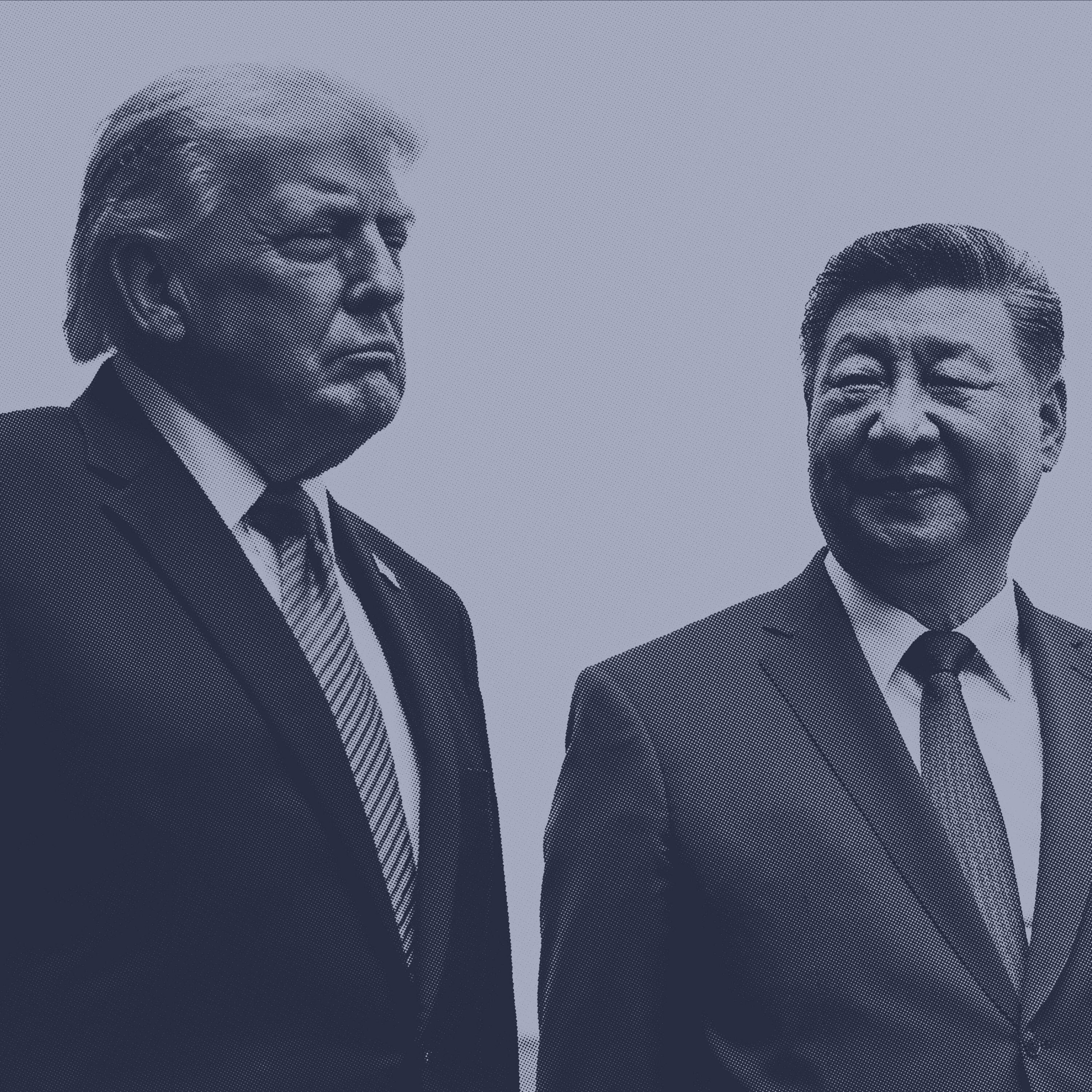
And we're back. So Emily, early in the week, President Trump giving this speech before the UN General Assembly, a couple days later, Chinese leader Xi Jinping is coming to the White House. What else can you tell us about what we're expecting in that visit? Trump is going to personally greet Xi Jinping when he lands. In the US, at Joint Based Andrews, this is Wednesday night. This is pretty big. I mean, it shows how much Trump finds this visit important. This honor was not bestowed upon him when he went to Beijing. It was the second in command, basically in China, who greeted him at the tarmac. Melania Trump and President Trump are going to welcome Xi in at the White House on Thursday. They're going to have a military flyover, which is also something that Trump didn't get. There had been this rhetoric of perfect reciprocity that former and current newest officials were telling me was the organizing principle of this visit. You know, that like the US was not going to seed anything more to China than what President Trump got when he went to Beijing in the spring. But already we're seeing in the announced ceremonial details that Xi Jinping of China is going to get quite a lot of pomp and circumstance
from the US. I can't think of a single example of President Trump going to JBA to meet a world leader. And I'm not saying it hasn't happened, but I just want to say that to him. It speaks to how rare it is, including the first or the second administration. Well, tell me more about what are we supposed to take away from that in terms of how President Trump is viewing this visit? He clearly feels like he has a special relationship with Xi Jinping and has made statements to the press to the effect of he is somehow more respected by the Chinese leader and somehow that's going to translate into geopolitical or trade winds for the US. I've been told to expect much more symbolism and a general direction and how the US-China relationship is going to go in the next couple of months, rather than very concrete commitments from both countries. But they're going to talk about some nitty-gritty stuff, like each side is expected to offer tariff reductions on about $30 billion worth of goods. This was agreed on when Trump went to Beijing and the spring. There might be some extension of a rare earth's truce, rare earths, or these things that China mostly makes and the
US really needs and tech and defense products. And they're going to touch upon artificial intelligence. There were talks between the Treasury Department and the Ministry of Commerce in China over the weekend in New York. And so that's setting the stage for more dialogue between the two countries. And if this visit goes well, I would expect, in the Chinese if I'm pushing the US hard on this, I would expect President Trump to then go to the APEC meeting. This is the Asia-Pacific Economic Cooperation meeting in Xinjiang, southern China in November. You call this a sort of dialogue or one step as part of a broader dialogue. Are we expecting, should we be expecting anything huge to come from this meeting? The most substantive thing would be this rare earth's truce. Okay. And my reporting on this shows China which threatened to cut off all rare exports to the US last year and then backed off on that. The China actually offered an extension of that truce into the end of Trump's term in 2029. But there's been so much distrust and suspicion that
the Chinese would actually hold up that end of the truce, that the US has rejected that and counteroffered a six-month extension, which the Chinese don't find very stable whatsoever. So there's still talking about that, but that would be the single most consequential thing coming out of this visit. And there's supposed to be maybe two more in-person meetings for the rest of the calendar year between Xi Jinping and Trump. So this is being framed as one of several conversations the two men are having. I mean, it's also important to note what may not be discussed in this meeting because Iran is a huge issue and support the Chinese support for Iran is going to be a massive deal. I mean, it was only a few weeks ago that Scott Bessent, the Treasury Secretary, announced this new program that they were going to go after sanctioned third party countries that were doing business with Iran. And the big question was whether Chinese banks would continue to do business with Iran. And the looming question was whether Trump would actually push that issue with Xi Jinping. I think there's a lot of skepticism whether do that. And we're talking about all this
pomp and circumstance and like the rolling out of the red carpet. I'm not sure Trump is going to want to touch such a tense issue. But if he doesn't, there will be questions about that. There's also this other issue that's come up related to Iran and China, right? Which is the question of whether Chinese intelligence was given to Iran that helped target American forces. I guess I'm just trying to read out when I hear about the welcome that the Chinese president is being given. And then I hear all these tension points. I guess I'm feeling a little bit of contradiction. I'm just trying to read exactly what the vibes are right now between the United States and China. There is a lot of contradiction in the relationship. And to be honest, there's a lot of contradiction on this administration's approach to China on any number of issues, whether it's technology competition or this war in Iran. Publicly, the vice president praised China in a way for at least not being the ones shooting people. I'm paraphrasing here. While also China has been the economic lifeline for Iran and perhaps even provided intelligence to Iran. So there's a lot of
tension in this. But the public messaging is both leaders from the US and China really want this visit to go well. It's also notable to me that Xi Jinping is making one stop only and that's in DC and he's not going to the UN General Assembly in New York. My understanding was that when this summit was proposed, the timing was chosen. So maybe Xi Jinping could go to Hong Kong. It seems like that. I mean, putting them both in the same week. It's kind of odd to me. But two things happened. One was again, the US insisted at the time on perfect reciprocity. So Trump only went to Beijing. Therefore, Xi should only come to Washington, DC. And the second was China doesn't prioritize multilateral forums like the United Nations as much anymore. And so I think this show, as Franco has has made this point before, that the geopolitical gravity of the UN Security Council has been diminished. And that was one of the reasons why the Chinese may have said, all right, this is not one of our priorities. I will note, if this summit goes well and Trump does go to southern China in
November, the main leaders in the room are going to be President Trump, Xi Jinping of China, and Vladimir Putin of Russia, who was going to the apex summit. What would we not coming to the UN? What would be, now I mean, that's like a great teaser for like, what would we be expecting? I guess like what, tell me a little bit more about what that could look like or what could be discussed then a meeting of the minds and a reshaping of an alternative world order. I don't know. Okay. Yeah, that's that that big topic of that would be the spheres of influence around the globe. Nothing big to discuss there. All right, well we can leave it there. I'm Miles Parks, I cover voting. I'm Emily Fang, I cover the White House. I'm Franco Adonias, I cover the White House. And thank you for listening to the Ampure Politics Podcast. This message comes from NetSuite. AI is changing the way businesses get work done. The questions they ask, the decisions they make, and the routine tasks they can hand off.
NetSuite understands, so that's why they put together a free expert guide you need to grab today, aligning for the agentic era, how AI is changing every day work. Download to see exactly how AI is reshaping work across every part of your organization and how to make sure you come out ahead. Get your free guide at netsuite.com slash story. Support for NPR and the following message come from Washington Wise. Decisions made in Washington can affect your portfolio every day. Washington Wise from Charles Schwab is an original podcast that unpacks the story's making news and how they may affect your finances and portfolio. Host Mike Townsend and his guests explore policy initiatives for retirement savings, taxes, trade, and more. Download the latest episode and follow at Schwab.com slash Washington Wise or wherever you listen.
More episodes
More from The NPR Politics Podcast

A trip to one of the last toss-up districts
The NPR Politics Podcast

It's time for a voting vibe check
The NPR Politics Podcast

What's next for the Freedom Caucus?
The NPR Politics Podcast

The NPR Politics Podcast — live from Seattle!
The NPR Politics Podcast