
Get every episode summarized
Each time Straight Talking Sustainability publishes, we email you a written briefing from the transcript — the topics, who appeared, and any specific claims, with the ad reads skipped.
Email me new episodesFree for 3 shows. No card needed.
About this episode
“Every week I'm going to answer your questions and help you navigate the choppy waters of sustainability in your business and try to cut through the noise and focus and choose the actions that really stick for lasting impact.”From the transcript
Emma Berlow marks 100 episodes of Straight Talking Sustainability by reflecting on why she started the podcast, what has surprised her, and where the show goes next.
In this episode
- Why a podcast felt more achievable than writing a book after nearly 30 years in sustainability 03:07
- The need for more female voices in sustainability podcasting 03:59
- How the podcast helps Emma Berlow share experience, connect with others, and create more impact 05:06
- Reaching 12,000 downloads, with an average of 128 downloads a week 01:57
- The importance of process, even for people who prefer to wing it 08:40
- Why podcasting is a “dark art” and why authenticity matters more than polished production 09:30
- The slow growth of podcast numbers and the danger of fixating on them 11:15
- Creating conversations that feel more like the valuable, informal discussions after a conference 12:29
- A sharper focus on practical questions, useful experiences, and getting “to the nub of the issue” 13:29
- Plans for more book reviews, a resource Padlet, and video episodes 15:47
Episodes recommended
- The 52 Sustainability Hacks series, including spring, summer, autumn, and winter editions 17:42
- Getting Past “Yes in Principle” 18:41
- Is Climate Anxiety Actually Healthy? 19:07
- Early episodes on working in communities and sustainability leadership 18:18
Key quote
“Winging it is great until it isn’t great.” 08:54
Emma Berlow invites listeners to share feedback, suggest future topics and books, and recommend the podcast to a friend or colleague. 19:52
Book a Power Hour with Emma
https://calendly.com/emma-lighthouse/power-hour
Connect with Emma
Get every episode summarized
Each time Straight Talking Sustainability publishes, we email you a written briefing from the transcript — the topics, who appeared, and any specific claims, with the ad reads skipped.
Email me new episodesFree for 3 shows. No card needed.
Hosts & guests
Transcript ready
183 searchable segments. Every word is indexed and playable.
Full transcript
Straight Talking Sustainability — What 100 Episodes Have Taught Me. Machine-transcribed; use the interactive transcript above to jump the player to any line.
Hi, welcome to Straight Talk and Sustainability. I'm Emma Burlow. Every week I'm going to answer your questions and help you navigate the choppy waters of sustainability in your business and try to cut through the noise and focus and choose the actions that really stick for lasting impact. We're all about sharing and making connections. So are you ready? Should we dive in? Hello and welcome to this week's episode of Straight Talk and Sustainability. Bit of a special one. It's episode 100, which is a bit mad, isn't it? What is for me? Anyway, I kind of blinked and I missed it. So who would have thought it? You know, you brew and mull and stress and worry about whether a team start a podcast and then before you turn right and just suddenly a 100 episodes in? Oh man, I know time moves fast, but that is bonkers. But what I wanted to do today
was reflect on the good, the bad and the ugly, to share with you kind of what I've learned because I am learning in my grand old age that reflecting is a really good thing to do. It's really useful along with listening like DUR. Took me a long time to learn that, but yeah, I am learning that reflecting is a really useful thing. So I'm going to share with you kind of why did I start the podcast? Was it worth it? What is it worth it? What did I learn? And what can you expect from future episodes? Because hey, you know, there's going to be future episodes, so that's pretty cool. So obviously, I haven't hated it enough to stop. That's the first thing. And I'm quite proud that we've had 12,000 downloads and I know that's nothing compared to the great and the good of podcasting, but that's a lot for me, a little of me, an average of 128 a week.
And I get some really lovely messages from people. And I get a lot of people saying, oh, I've heard your podcast, I've listened to your podcast. I get loads of people saying, I never knew you had a podcast, so I'm obviously really shit at marketing, but no surprise that. And I get loads of people saying, I don't really listen to podcasts. So it's a niche kind of world. So thank you. Thank you for coming on this journey with me every Monday, and I hope you find it useful. Tell me why you do. So why did I originally start it? I started it for a couple of reasons, really. The main ones being I had a lot of thoughts, notes on notes, I'm a real sort of list and note takeer. I have brainwaves all the time, right? But I am a starter, not a finisher. So I had all these things and I thought, I don't know what I want to write a book coming up to 30 years, it's 30 years this year. It, I've been in this profession since I left university. And I thought, I've got to
something, I've put it right book. And then I thought, I don't know what, I'm just going to never get around to it. Maybe I will. That's one of the outcomes of this. I'll get to that. But doing a podcast seemed to suit my love of talking. Let's face it, a bit better. It seemed a bit quicker. It seemed a bit more accessible. Trigger warning there. It wasn't accessible at all. So I did it. I just thought, why not? You know, maybe it just seemed a bit less commitment than a book. So I did that and actually went through a kind of starting-round podcast program. So that kind of helped. Secondly, and this is really important, I was looking for other podcasts to listen to and found most of them to be hosted by really decent male people in our sector. Despite the sector being predominantly female, and a lot of people I train and a lot of people who want to be
trainers and a lot of people who ask the same military professionals being female or facing. I guess the same, but also very different issues to men in the sector. So I wanted to offer some balance to that sort of sea of male faces in the podcast sector. Now I know there are other women like Jane Gayle and others doing podcasts and my favourite, my kind of standout podcast, outrage and optimism has obviously the fabulous Christina as one of the panelists. So I wanted to add some balance to that. So yeah, I'm here for the ladies. I'm here for you guys as well. Apple podcast tells me that most of our listeners are women. So if you're a man listening, share it with another man, would be great. And finally, I just wanted to share just at this overwhelming kind of urge that maybe it's because I work mainly on my own. I've got the wonderful Hayley at Lighthouse, but I'm working from home and I'm on my own quite a bit, but maybe it's my way
of being a bit more kind of sharing and social with people. So I worked out that there's zero point in doing all this work for all these years and having all this experience if it just stays in one head. I mean, what's that all about? So it was a way of having more impact. Since I finished working in consultancy, I became independent. I get invited less to speak on things, which is interesting because often people don't want to pay speakers. And I think if you're an independent or a sole trader, you don't carry the weight of that big brand of the corporate or the consultancy and you're not getting paid. So actually, this was one of my ways of still getting on the stage, if you like. If you want me to come and speak anything and you can pay my expenses, I will. But yeah, that's an interesting thing about going self-employed. The speaking engagement was dropped off the cliff. So we can talk about that again if anyone else has got similar or a different experience. So it was a way of having more impact and it was a way of supporting and
hopefully inspiring people, not just women, but people in what can be quite a tricky profession. It's an involving profession. So therefore, there are gaps. There are gaps in how we learn, there are gaps in things we need to know. There are gaps in the network. There are gaps in the, I was talking to ISAP, yes to say, to Sarah. So future guests, Sarah McAjee. There are gaps in the kind of governance and the professional pathways, right? So how? I saw the gaps and I went for it. And here we are, 100 episodes later. Was it worth it? Emila Wies, well, yes, I think it has been worth it. My great reflection on this personally. I think it's been worth it. I can't really count the reward in pounds, if I'm honest, but I can really count in how it's helped clarify my thoughts, how it's fulfilled my love of meeting and talking to wonderful knowledgeable experienced people.
And it's worked in how I think it's filling a need. Now there's the bit I want to work on. Okay, I've got to hone that down. I'm really make sure we're fulfilling the needs, but for that, I need you to tell me what you need. So that's on you guys. So it's really rewarding. Like I love learning stuff. So the fact that this has been a bloody huge learning curve and continues to be so. And the fact that I'm entirely so low here, I am rowing my own boat as it were. It's really daunting, and it has been quite daunting at times. But so empowering, right? So it's a bit like drum put in the cold ocean, isn't it? Once you've done it a few times, it gets a lot easier and you start to wonder why other people can't do it. But you forget that it was really quite tough at the beginning. So what did I learn? Well, it loads. The first thing I learned was that having a process is really
important if you want an easy life. Not being particularly processed and systems led. That's tricky for me. You know, fine-boating seat of your pants is loads of fun when you can pull it off. Winging it is great until it isn't great. So this has taught me again and again and again that to do good work, to create better quality, to make more sense to people, to be more accessible. You have to do the boring process stuff. Okay. I know you can see I'm still fighting that one a little bit, but I'm getting better at it. So it's only been a hundred episodes. I also learned that podcasting is a dark art, another one. So that was quite challenging. I've been through three editors, for example, all very different, all with major major plus points and some minor points.
And I still have issues with audio and tech and stuff. So it's not been easy. They'll tell you there's blueprints, but there's blueprints on blueprints. Unless you have oodles of cash, it's going to be ropey. I'm not going to suggest it's impossible because it's definitely not. But you're going to have to lower your bar. It's not going to be, you know, super polished, Deborah Mead and style podcast. We even had raging optimism. It's going to be you on your phone, or Zoom, or Riverside. Okay. But there's loads of things to help you. It's perfectly, particularly if you're a little bit capable of tech and audio and stuff, it's perfectly doable. If I can do it with 50s, then anyone can, frankly. So a bit of a dark art, but perseverance and when I say lower in the bar, I don't mean, you know, putting out grab. I mean, just not worrying too
much. Now that's difficult. Depends on your personal perception of what you have to put out, etc., etc. But everyone has told me that being authentic means more to them than being overproduced and having a studio and all that stuff. So I'm going with that, frankly. Getting the numbers is really slow. Like fixating on the numbers will drive anyone potty, I think. So if you do only focus on that, and if you do really want big numbers and you're going to be upset if you don't get them, then be ready to cry into your pillow because it ain't like that. It's a slow burn. And the podcast people will tell you this, right? So what I've learned about myself also, the things I love, I just keep doing. Right. Having said that I'm not a complete to finish. I must enjoy this because I keep doing it. So I'm going to keep doing it. I don't do
it out of duty. I don't do it out of all God now I've started. I'll have to finish. If I wanted to stop, I just stop. And that's quite liberating. So I do it because I find it really good fun finding out new stuff about my work. And if you listen to me, you'll hear me in the background, I'm like, wow, oh my God, I love that. It seems to be one of my favourite phrases. That's me really like, hopefully you can tell. Right. I just love listening to people. And hopefully I've created a safe enough space that they can relax a little bit and tell us the bits that maybe don't get said on conference stages. You know how when you go to a conference or you're on a webinar and when the event stops, everyone starts having a chat. And that's the best bit that sort of off camera bit. That's what I'm trying to recreate here. Not there yet, but certainly
getting there. So can I read nice free flowing conversations? I like solving problems. I'm a problem solver, a solution-y type person. And I think this helps. And I will come back to something. I'm going to extend on that. Right. In this next bit, what can you expect? So I'm trying to get more organised, structure. But what can you expect from future episodes? I'm going to try to focus more on what actually helps people. Maybe not just what I'm interested in. Getting to the nub of the issue. So this is about structuring your question a bit better, not allowing things to just be a chat. Really drilling down. Now I need my guests to be on board for that and most of them are, but some maybe aren't, so they need to be briefed for that. Again, can they say things that they maybe wouldn't say elsewhere? Now that's not possible in a lot of corporate kind of jobs.
So you'll notice we don't have a lot of people from that background because I tend to be fairly cautious about what they can say. We don't have a lot of people on promoting what they're doing. We have people on who are working in the intersections and they can help, who have experience, good and bad, who have seen things go wrong, right? Who have managed programmes, have moved on, maybe have global experience, maybe have really deep local experience. So trying to learn from that breath is really what I'm trying to do. Inspiring people is really important to me. This is a bloody hard job working in sustainability. It's tiring, it can be moralising. So every week I want to give people a little lift. So get to another bit Emma. Don't beat around the bush. It's called straight talking sustainability and inspire people not to
work harder and harder, but to get more bang for their effort. Okay, we need to sustain each other. We need to be resilient. I know it's a cliche. We can't do that while we're running around, head us chickens banging our head against every ballroom wall. Okay, we need to cut through. And I think the best way to do that is to listen to really wise people. So that's my rule for the next 50 episodes. Get wise people on the podcast. So what else I'm going to do? I'm going to do. So I'm going to focus more on what helps you not and you've got to tell me what you want. I'm going to do more book reviews because that's quite fun and people love books and I noticed on LinkedIn when someone puts a book list up, everyone's like, yeah, I love that book. What about this one? So I did start last year and did one or two.
But I'm going to do more. So I've got Rob Hopkins coming up and Victoria Hearth coming up. I'm going to try and get John Alexander, I'm sure. So again, if you've got any that you've read that you'd love me to invite onto the show, let me know. I had Mark Shader on last year talking about his book, for example. So if you haven't listened to that one, off you pop and find that. I'm mulling over these next two things. One is a resources padlock. So we use padlock a lot in training. And this is somewhere that you can go to find all of the links, all of the shows, all of the episodes. Right? Because this is starting to build quite an ice race horse and where the hell does it go? Once you've listened to it out of your head and God knows where, right? It's impossible to ever find it again. So that's going to be a bit of a job building that, but more on that because we're creating another role at night ice. So that person, that magical person might be able to help. And also getting
videos onto YouTube. So we record in video every week. And I know most of you are listening in audio. So that's the next challenge, which we and my son Lewis did try over the summer holidays and failed miserably. So another tech challenge can anyone help. Not a massive thing, but it's a putting things out for people to see and hear in different mediums. So have a browse back through the back catalog. Did you know it was a hundred episodes? I'm going to recommend the most listened to episodes here for you. And they are the 52 sustainability hacks episodes. So maybe they appeal to the broadest audience, which is really nice. There's also a PDF that goes along with that on our website, lighthouse sustainability.co.uk 52 sustainability hacks. And there's four of those spring summer autumn winter. You don't necessarily have to wait. Just go and listen to them. They're really nice. They're really light. So that's that's a good easy one. You could bang through
those in a weekend. Any of the early episodes you might have missed particularly some real goodies. Jen Gale talking about working communities in Andy Middleton, who is one of my gurus and a great friend as well. Really nice. There's a few others in there as well. So go back to sort of November, December, January last year. And two others that stand out in terms of their download numbers. Okay. One is getting past yes in principle. So that you know, you leave the room. Yes. We like the idea of in principle, but you know what's coming, don't you? That whole sustainability leadership saying how do you get past that yes with Brianie Pete? So go back and find that. So we just search in the podcast thing. Brianie Pete yes in principle. And then the other one, from Stephanie Bedner-Eck is climate anxiety actually healthy. So she, Stephanie is a climate
psychologist, a job that clearly didn't exist 10 years ago. And that was a really, really interesting episode. Loads of them are interesting, but these two from Stephanie and Brianie are my standouts in terms of early episodes that you might have missed. All right, love these. I will see you again next week with another brilliant episode with the CEO of ISAP, Sarah McGee. So keep it up please, keep giving me some feedback. Remember I'm on my own here. If you can give me more feedback, more ideas, I may never stop. But share the pod with a friend or colleague as well because that's slow organic growth. It's really what keeps me coming back week after week. Have a good week, everybody. You're working really hard. You're doing a great job. And I hope in some way,
100 episodes of Straight Talking Sustainability is helping you. See you again next week. Thanks for listening to Straight Talking Sustainability. If you find this episode useful, please share it with somebody who you think needs to hear it. And don't forget to subscribe, follow, rate, review, all that stuff really helps more people find the podcast. I'd love to connect with you on LinkedIn. Or if you want to find out more about what we do, just visit us on lighthouse-sustainability.co.uk and you can subscribe to our newsletter, The Beacon. I hope you join me next week for more Straight Talking Sustainability.
More episodes
More from Straight Talking Sustainability

How to survive a sustainability recession
Straight Talking Sustainability
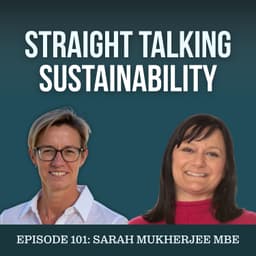
'Plan for 2... Stress test for 4' with Sarah Mukherjee CEO of ISEP
Straight Talking Sustainability

Can Sex Sell Climate Change? With Jessica Riches, Adult Content Creator
Straight Talking Sustainability
Should We Be Talking About 1.8°C?
Straight Talking Sustainability