Get every episode summarized
Each time happy healthy hustle publishes, we email you a written briefing from the transcript — the topics, who appeared, and any specific claims, with the ad reads skipped.
Email me new episodesFree for 3 shows. No card needed.
About this episode
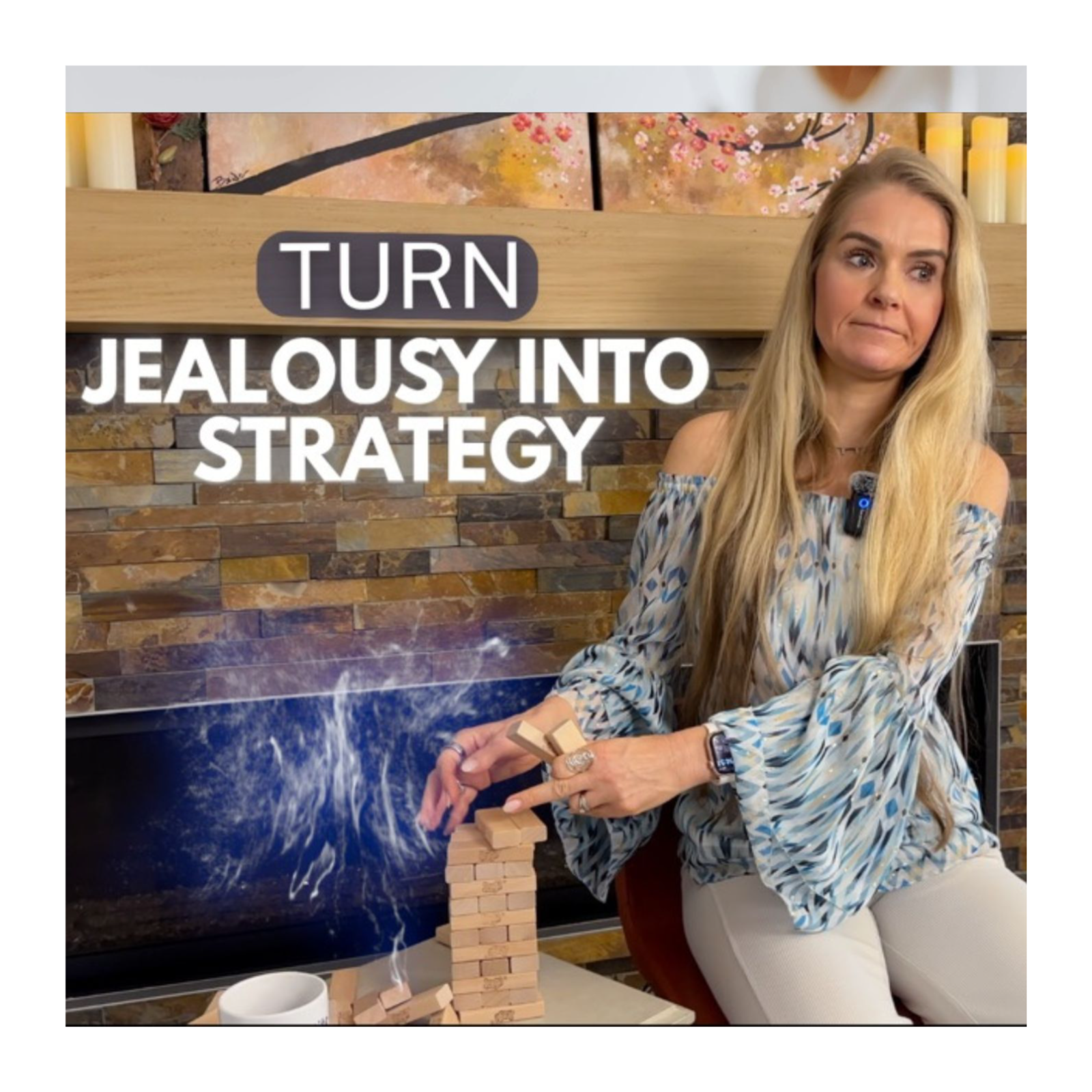
“In the next few minutes, I will show you how to turn jealousy into a next step. When someone sees a block, they want, they rush. They try to stack too many things all at once. And just like Jenga, when you rush, the tower collapses.”From the transcript
What if jealousy isn't a flaw at all?
What if it is one of the clearest signals you will ever get about what matters to you?
In this episode of the Happy Healthy Hustle Podcast, I explain why jealousy is not weakness and why leaders do not judge signals. They use them.
I share a personal story from college, when I spent hours trying to understand a math concept while the person next to me seemed to get it in minutes. That moment used to make me question myself until I realized I was not comparing myself to everyone.
I was comparing myself to the best in the room. And I never questioned myself in the classes where I naturally thrived.
That realization changed how I see jealousy.
- I see information.
- I see desire.
- I see direction.
In this episode, I introduce a metaphor you already understand.
Jenga.
Because the moment the tower wobbles, you cannot pretend it is stable.
That wobble is jealousy.
And instead of rushing, copying someone else’s structure, and collapsing under pressure, you can learn to place the next block well.
If you have ever felt stung by someone else’s success, this episode will shift the way you see jealousy and show you how to turn it into your next step.
In this episode, I explore:
➡️ Why jealousy is data, not something you need to fix
➡️ Why the “wobble” is useful and what it is trying to reveal
➡️ The difference between missing and unplaced and why that distinction changes everything
➡️ Why copying someone else’s structure leads to collapse
➡️ The real cost of collapse: confidence, momentum, and trust in your own judgment
➡️ Why Petite Practice is how leaders build progress that lasts
➡️ The question that turns jealousy into action: “What is the next block I can place well?”
The truth is simple:
- You do not need to knock down anyone else’s tower.
- You do not need their structure.
- You do not need their speed.
- Your responsibility is to keep building.
One block at a time.
Placed intentionally.
Repeated consistently.
This Week’s Petite Practice®:
When jealousy shows up this week, pause and ask: "What is the next block I can place well?"
Not the most impressive block.
Not the loudest block.
The one that fits now.
Explore more episodes of the Happy Healthy Hustle Podcast: doctorchristiane.com/podcast/
Take the Superpower Quiz: doctorchristiane.com/quiz/
Connect on LinkedIn (Petite Practice Journal): linkedin.com/in/christianeschroeter/
Book me to speak: doctorchristiane.com/speaking-5/
Watch on YouTube: youtube.com/@doctor.christiane
Get every episode summarized
Each time happy healthy hustle publishes, we email you a written briefing from the transcript — the topics, who appeared, and any specific claims, with the ad reads skipped.
Email me new episodesFree for 3 shows. No card needed.
Hosts & guests
Transcript ready
144 searchable segments. Every word is indexed and playable.
Full transcript
happy healthy hustle — Why Jealousy is not a Weakness. Machine-transcribed; use the interactive transcript above to jump the player to any line.
Jealousy is a signal. Leaders don't judge signals. They use them. In the next few minutes, I will show you how to turn jealousy into a next step. I'm your host, Dr. Cristiana. Welcome to the Happy Healthy Hustle podcast. Let's get into it. When someone sees a block, they want, they rush. They try to stack too many things all at once. They copy someone else's structure. They skip the foundational pieces. And just like Jenga, when you rush, the tower collapses. So today, I want to show you how you can flip jealousy from something that drains energy into something that builds direction. I'm going to use a metaphor. You already understand. In college, I would spend hours trying to understand a math concept.
And the person next to me would get it in minutes. And I would think, how is this so easy for them? Am I behind? Am I in the wrong major? That feeling? That's jealousy. And it's not a flaw. It's data. Now, here's the thing, because let me say something, most people get wrong. jealousy is not a weakness. It's not insecurity, and it's not something you need to fix. Jealousy is information. In fact, people who think clearly don't ignore information. They learn how to read it. High-level decision-makers don't judge emotions. They study patterns. And jealousy is one of the clearest patterns there is. Now, here's what changed everything for me. One day, I realized I wasn't comparing myself to everyone. I was comparing myself to the best people in the class I struggled in.
The students who made it look effortless. And although it's sudden I realized what's even more interesting, I never had that thought in marketing or sales classes, because those came naturally to me. In those classes, when I was thriving, I wasn't looking around thinking, why does it come so easily to them? I just did the work. And in that odd, I think in general, when we struggle, the grass is always growing now on the other side. When we thrive, we don't even notice the other side exists. That moment taught me something I used to this day as a leadership expert and behavioral economist. Jealousy isn't proof something is wrong with you. Jealousy is proof that something matters to you. It's your attention lighting up a desire. So today, I want to show you how you can flip jealousy from something that drains energy into something that builds direction.
I'm going to use a metaphor. You already understand. Jenga. I have it right here. Most people think Jenga is a pretty game. It's not. In fact, Jenga is a game about structure becoming visible. Because the moment the tower wobbles, you can't pretend it's stable. Your body reacts before your brain explains it away. That's jealousy. Jealousy is the wobble. Think of your life like a Jenga tower. Every block represents something you want. Not abstract goals, concrete desires, confidence, clarity, visibility, and a certain pace of work, a way of living that feels sustainable. Everyone has blocks.
That's not the difference. The difference is how people stack them. So jealousy shows up the moment you notice a block and someone else's tower that you haven't placed yet in your own. And here's the key distinction most people miss. That block isn't missing. It's just unplaced. So those are not the same thing. Missing sounds like not for me. Unplaced sounds like not yet. Missing creates shame and place creates strategy. Most people experience jealousy and immediately personalize it. They ask, what's wrong with me or why does she have that and I don't? That's emotional thinking. Now here's the thing. Clear thinkers ask a different question. They ask, what information is this pointing to?
Because jealousy is not about the other person. That's how awareness arrives before action. It's your brain revealing a preference. You haven't admitted out loud. Now, let's talk about why people get this wrong. And this is actually the interesting thing. When someone sees a block, they want they rush. They try to stack too many things all at once. They copy someone else's structure. They skip the foundational pieces. And just like Jenga, when you rush or the tower collapses. Not immediately, eventually. And that is really important. That collapse is expensive. It costs confidence. Momentum. Trust in your own judgment. This is where petite practice matters. Petite practice is not about doing less. Petite practice is about placing the next block. Well, one block, chosen deliberately, placed with care in Jenga.
You don't grab the biggest piece first. You look for the one that fits. Small blocks matter, placed well, large blocks matter. And what matters is stability. Slow doesn't mean you're stuck. No means stable. People who build towers that last understand this. They don't compare structures. They don't borrow blocks. They don't much somebody else's pace. In fact, they build according to their own base. Here's the practical shift. The next time jealousy shows up, don't shame it. Don't spiral. Don't talk yourself out of it. Pause and ask one question. What is the next block? I can place well. Not the most impressive block. Not the loudest block. Not the one that gets applause. The one that fits? No.
That question alone separates reactive thinkers from leaders. Because leaders don't eliminate tension. They work with it. You don't need to knock down anyone else's tower. You don't need their structure and you don't need their speed. Your only responsibility is to keep building. One block at a time, placed intentionally, repeated consistently. That's how real momentum is built. Quietly, steadily, in a way that holds when pressure hits. If this changed how you see jealousy, stay here. This channel is about thinking clearly, making better decisions, and building progress that lasts. I invite you to watch the next episode and go back to preview our previous ones. We would love to stay on and let us know in the comments what you enjoyed most.
More episodes
More from happy healthy hustle

More Than a Mug: Memories Over Followers
happy healthy hustle

Lead Yourself First: Petite Practices for Calm
happy healthy hustle

Why Your Goals Keep Falling Apart
happy healthy hustle

Why "Leader" Also Means "Ladder
happy healthy hustle