Get every episode summarized
Each time Radiolab publishes, we email you a written briefing from the transcript — the topics, who appeared, and any specific claims, with the ad reads skipped.
Email me new episodesFree for 3 shows. No card needed.
About this episode
Radiolab is made possible by:
“That's why drivers have enjoyed Progressive's Name Your Price Tool for years now. With the Name Your Price Tool, you tell them what you want to pay, and they'll show you options that fit your budget.”From the transcript
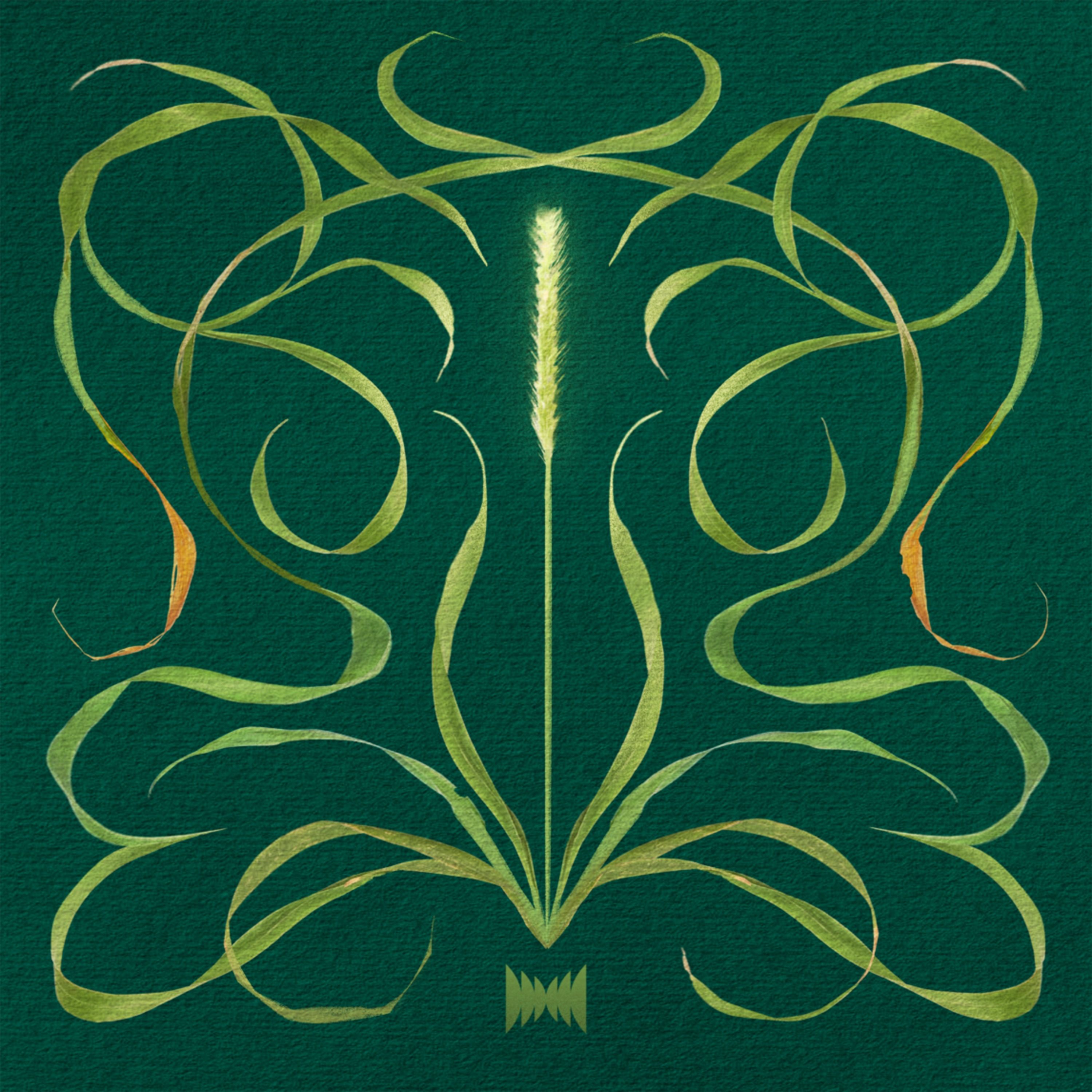
When you think about grass, what do you think of? Pool parties? Suburbs? Allergies? What about: human history? It turns out, unassuming grass, which exists on every continent, has an epic story to tell. One of transforming the planet, and … us. From what we eat, to how our body might be shaped and the ways we perceive the world. Senior Correspondent Molly Webster speaks to biologist and writer David George Haskell in this tiny ode to Grass.
This episode was inspired by “Grass Fed”, a Radiolab outdoor theatre performance at Little Island in New York City. “Grass Fed” featured biologist and writer David George Haskell; Foley artist Steven Wendt; and dance company, Pilobolus. Special thanks to all the artists, and to Little Island, Sarah Sandbach, Natalia Ramirez, and Soren Wheeler.
EPISODE CREDITS:
Hosted by - Molly Webster
Reported by - Molly Webster
with help from - Jo Strogatz and Anisa Vietze
Produced by - Sarah Qari
with help from - Jo Strogatz, Molly Webster
Original vocals from - Jo Strogatz
with mixing from - Jeremy S. Bloom
Fact-checking by - Nora Belblidia
and Edited by - Pat Walters
EPISODE CITATIONS:
Articles -
- The Other Almanac 2026 (https://www.otheralmanac.com/), by David George Haskell a print-only magazine contains an essay All Hail Grass, Maker of Humans! by David George Haskell all about grass’s role in human history.
Books -
- How Flowers Made Our World” (https://zpr.io/r4ybZJea8WV9) by David George Haskell which has a chapter all about grass in it (it’s a flowering plant, if you didn’t know!)
Sign up for our newsletter!! It includes short essays, recommendations, and details about other ways to interact with the show. Signup (https://radiolab.org/newsletter)!
Radiolab is supported by listeners like you. Support Radiolab by becoming a member of The Lab (https://members.radiolab.org/) today.
Follow our show on Instagram, Twitter and Facebook @radiolab, and share your thoughts with us by emailing [email protected].
Leadership support for Radiolab’s science programming is provided by the Simons Foundation and the John Templeton Foundation. Foundational support for Radiolab was provided by the Alfred P. Sloan Foundation.
Hosted by Simplecast, an AdsWizz company. See pcm.adswizz.com for information about our collection and use of personal data for advertising.
Get every episode summarized
Each time Radiolab publishes, we email you a written briefing from the transcript — the topics, who appeared, and any specific claims, with the ad reads skipped.
Email me new episodesFree for 3 shows. No card needed.
Transcript ready
267 searchable segments. Every word is indexed and playable.
Full transcript
Radiolab — Grass Apes. Machine-transcribed; use the interactive transcript above to jump the player to any line.
Radio Lab is brought to you by Progressive Insurance. Insurance isn't one size fits all. That's why drivers have enjoyed Progressive's Name Your Price Tool for years now. With the Name Your Price Tool, you tell them what you want to pay, and they'll show you options that fit your budget. So whether you're picking out your first policy or just looking for something that works better for you and your family, they'll make it easy to see your options. Visit Progressive.com, find a rate that works for you with the Name Your Price Tool, Progressive casualty insurance company and affiliates price and coverage match limited by state law. WNYC Studios is supported by WISE. WISE, the smart way to manage the currencies you need around the world. With a WISE account, you can spend and receive in up to 40 currencies with only a few simple taps. Be smart, get WISE. Download the WISE app today, terms and conditions apply. Hey, I'm Molly Webster from Radio Lab and I am in studio today with Anisa Vita. Hi, Molly. Hi, I'm Sistim Producer, but also a really amazing artist, and so we have her do a lot of our
cool visuals for the show. And Anisa, you're here to talk about this awesome thing you just made for us. What is it? I have been wanting a Radio Lab Fanny Pack slash crossbody bag for probably as long as I've worked here, but everyone hated the idea. And then some listeners asked us for it, and now all of a sudden, you have your finally ready to do my vision. I will just say I am a good pairing for you on this Fanny Pack promo because I love a Fanny Pack slash crossbody bag. So what does this one look like and how often will I use it? So I wanted to do some drawings that were Radio Lab related. Okay. It's sort of like blue, almost woodblock prints like drawings of a couple recent, my favorite recent episodes. One of them is actually your episode, Molly. I made it, I did not know this, I made it onto the bag. Yes, you made it onto the bag. How which which what, what was it? I feel like grass has become a huge part of our lives here in the office. Now I've learned more about grass than I ever possibly could have imagined and
appreciated it more. Okay. So I wanted that to make it on the bag and then I've also drawn a bird from Annie's Nigel episode, Nigel again it. I just wanted these two things that have been little joyful Radio Lab stories. I heard you paid extra for an interior pocket. Yes, we did. That was important to me. Kick it. Can't say that on the radio. If you want to get your hands on this finally, finally, we've got one Fanny Pack, please join the lab, which is our membership program. Membership starts at just $7 a month and it comes with extra perks like sponsor free episodes, bonus content, members only swag this Fanny Pack and lots more. And if you join the lab now and get this crossbody bag, then I will be vindicated to people really do want a Fanny Pack, but more than that, really what you're doing is you're helping us make Radio Lab. The center support is so so central to what we do. We just made it through our first year without federal funding. Thanks in large part to you to people, individuals helping us supporting us
each month. It's totally true like individual donations let us get out into the field and report on that infamous moment when a reporter through a shoe at former president George W. Bush or report on stuff like the resurgence of flesh eating screw worms. That was a good one. We also just had our holy shivers episode about goose bumps. Basically, if you have learned something or been moved by Radio Lab in the last few months or you just really love a Fanny Pack, please consider becoming a member of the lab. It is easy and it really does go a long way in making Radio Lab possible. To become a member, go to radiolab.org slash join or you can text lab to 83763. That's 83763 to make your donation. Thank you in advance. Thank you Anisa for making this Fanny Pack. Of course. Yeah, I can't wait to wear it and now you get to listen to the show. Oh, wait, you're listening to radio lab from W and Y.
Hey, I'm Molly Webster. This is Radio Lab and today's show is inspired by an invitation that I got last spring, which was essentially to tell a story for a park about parks. It was a little more complicated than that, but basically they were like, can you make a story out of the space that were in, which happened to be this shady glade. It had a lawn down the middle and trees around the side and rocks and things. So I looked around the space and I was like, okay, maybe there's something to do with mushrooms or I don't know squirrels. It's New York City. And as I was talking about these scintillating ideas with people, I started having a conversation with a horticulturist and they said, you know what I think about all the time, grass. And I completely ignored them because I thought
what could be interesting about grass. Then they started talking about how landscapers use grass and that grass is like an instrument that makes sound. And I felt myself get a little pulled toward grass like maybe there was something there I wasn't seeing. So I wrangled producers and Nisa Vita and Joe Strogatz to go out into the parks of New York City and ask people this question. What do you think about grass? What do I think about grass? Grass? You mean this grass? They got a lot of blank stairs. Do you feel like it's a weird question to ask? But people had a lot to say. Let me think in general I would probably be thinking about they talked about rolling round, mowing lawns, my daughter grass memories, playing cats, girlhood, feelings, horses chewing it. Grass dains, grudges, their square teeth grind it, grind it, grind it up. I like all the trees, the
shrubs, flowers, random associations. The other type of grass comes to mind as well. I like the smell. But no one feels great on your feet. Oh God. I love it. Told us a story about grass itself. Grass. Grass. Grass. Grass. It was like grass was everywhere. But also invisible. I mean we even have a terminate our culture, the green screen, right? Which is the screen that will be removed, that will be erased for the important stuff to stand out in the foreground. And I think grass for many of us is that green screen. Honestly, that's how I thought about grass too as that green screen, until I talk to this guy. I am David George Haskell, I'm a writer and a biologist. And David is grass's number one fan. Because grass is when you do start to learn about their lives, their transformative effect on the whole planet,
and their role in catalyzing human evolution. Suddenly they become extraordinarily fascinating. David says, if we ignore grass, if we look past it, we don't just miss out on the story of grass, but we miss out on one of the most incredible stories of human history. Indeed, if you had to pick one group of plants that we could count as our co-creators, the group of plants that are vitally important to the appearance of humans on this planet, it would have to be the grasses. And that story starts according to David, a very, very, very long time ago. When you go way back, so if you go 30 million years ago, our ancestors and the ancestors of all the apes were mostly forest-twelling creatures, eating insects, eating fruit.
And back then, there weren't many grasslands around. But then things started to change. The little patches of grass has started to appear in the forest. The planet was cooling, the polar ice caps were expanding, and places were getting just a little drier. And then 10, 20 million years ago, those grasslands expanded more and more. So different time scales on different continents, but the overall pattern is a move away from very wooded planet to a planet that's wooded but has a lot of different grasslands mixed in as well. But does that mean grasses are like stronger than trees, and they just started taking over, and like saying trees get out of here, we're taking over your space, or it was something else happening that led to this reconstruction of the landscape. So grasses have also, in a trick, to take advantage of external changes.
So for example, over this time period, the concentration of carbon dioxide in the atmosphere really dropped. And grasses are really good at sucking up carbon dioxide and using it to make sugars. They're also very good in seasonally arid climates. These are climates where it can be very lush and rainy part of the year, but then you go for months where it's just dry, dry, dry, and that's the kind of situation where you get fire moving in. And the genius of most grasses, it was that they figured out how to thrive in a very fire prone environment by keeping their growing tissue very low to the ground or in the ground. So fire comes through, all those disposable leaves get burned up, they're gone, but when the fire moves on, the sense of tissues from which new stems, new roots, new leaves will grow, they're unharmed, and the grass sprouts right back up.
So after grasslands appeared, lots of mammals like horses and hippopotamus and other creatures started moving out to the forest and eating the grass, but grass blades, they're long, they're stringy, but they're also tough and they've got little bits of glass, like material inside them. Glass? All grasses have these little pieces of silicate, which is essentially like grass, glass. It's very hard to say grass and glass, right? Right, right, right, that's just, but wait, there's little bits of silicate in the blades of all grasses. Of almost all grasses, and some have more than others, and this is a defense against the wind tearing the grass up, but also against animals being over enthusiastic and grazing too much on them. Really? It makes me think of like, you know, when I was growing up, like my dogs would eat grass to throw up, like they would eat grass and then bomb. Yeah, so your dogs are probably actually eating it to purify their gut. It can act as a dewormer because it will cause the animal to vomit or it will poop it out the
other end and all of that grass tangle physically will just bind up with some of those worms and get rid of them. Oh my god, you're literally just like scraping out your insides, which you can't reach with your hand. Yep, that's cool. Yeah. Puking dogs aside, many mammals are actually good at eating grass. They got tougher teeth for some, they've all very complex, multi-parted stomachs with bacteria and protests that can digest grass. Do you think that we tried to eat the grass like our ancestors did and how did that go? Yeah, well, I probably gave us some stomach upsets. I'd imagine for some ancestors, grass, just grass leads were part of the diet also some other vegetation. I mean, they can be nutritious, but so can a lot of other things that don't have glass like particles inside of them. So we didn't really bother. But there's another way to eat grass and that is to eat the seeds.
So through some series of experimentation that we don't really know about, our ancestors started to eat grass seeds and this is where the story of grass and humans really heats up. So the grass sends up a flower store and it flows. It makes held little eggs on the flower store and pollen joins with the egg and then the grass seeds are held up on what was the flower store. And those seeds contain two really important parts. There's the embryo, which will grow into the new baby grass plant. But then most of the inside of the seed is a food store that the mother plant puts into the seed is literally taking food out of their own their body, the grass plants body and putting it into the seed that when the seed leaves and lands somewhere the embryo will eat that food store to power its first few days and weeks of life. So the mother is sending the offspring out
with little food supplies like a little lunch box or something. Except it's the lunch box that is eight times the size of the kid who's carrying it. Is that unusual for seeds? I think in my mind I would kind of expect that that's how a seed works. So grass is, I've got especially big food stores which can be 80% of the inside of the seed filled with starch and proteins and some oils. And when our ancestors discovered these nutritious little packets they were like, oh this is something we can eat. And I think learning and realizing that most of our food comes from grasses, oh completely transforms and transformed how I even experience eating dinner. Wait say more on that. What do you mean most of our foods? So at lunchtime and at dinner time at breakfast the oats in your oatmeal that's a form of grass. The bagels are made from wheat which is another kind of grass rice is a grass corn maze those grasses. So one food after another and if you add it all up
a very large portion of calories that humans consume around the world come directly from grasses. In fact wheat, corn and rice together comprise about 60% of all the calories that humans eat on this planet. Oh wait are they grasses like like the grass in my backyard grass or they like a different type of grass. They're a different species but it's basically the same body plan. If you were to not moe your lawn it would grow up it would produce little flower stalks and those flower stalks would mature and have lots of tiny little seeds attached to this stalk sticking up above the leaf blades. That is essentially corn, wheat and rice that just a little bit. Just a mini. Yeah it's a bigger version of that that has you know over the last 10,000 years at least humans have been working with these plants to get fat or kernels and kernels that stay on the stem rather than falling off when they mature all sorts of things that benefit us. Wait to do the list again what are food items that are
grasses, corn, wheat and rice and oats and millet and barley and sorghum and sugar cane. So like sugar sugar like the sugar I eat comes from a grass. Yes if you're eating high fructose corn syrup which is probably not a great idea that came from corn but sugar cane just imagine your lawn but then it gets about a thousand times bigger and stalkier and then cow in a beef and lamb and even chicken. These are animals that even though we might be eating meat they either ate grass out in a pasture or were fed corn or oats or other kinds of plant derived food. Yeah mostly grass-based but with soybeans and other things but almost everything on our plate I found it on grasses. The idea of eating grass makes me think about like when you go over to your friend's house and like their parents feed you and you're like oh I'm like it's like the grass mothers are feeding
the grasses but I get to go over and be the friend that comes over after school and like benefits from like that mother's cooking. And you know the grasses are doing that for all of us I mean that's so they are mothering their own offspring their own seeds but they're also mothering us when we eat pasta or tamales or nice rice dish we are being nurtured by grass motherhood. So grasses took over the planet and they became the foundation of our diet and in a very real sense we are actually made of grasses we are grass fed just as much as a grass fed cow but grasses also shaped us in a deeper way one that may have helped us to become well us. That part of the story is after our break.
Radio Lab is supported by Capital One with no fees or minimums on checking accounts it's no wonder the Capital One Bank guy is so passionate about banking with Capital One. If he were here he wouldn't just tell you about no fees or minimums he'd also talk about how Capital One cafes are open seven days a week to assist with your banking needs even on weekends it's pretty much all he talks about in a good way. Let's end your wallet terms apply see capital one dot com slash bank guy capital one and a member of FDIC. This episode is sponsored by BetterHelp. You know something I would like to wake up tomorrow and be better at speaking another language one of the things that holds me back is you know feeling vulnerable that I'm going to mess up my pronunciation or how I look in front of other people or getting something wrong and so in the process I get self-conscious and I cut myself off and I don't end up speaking the language at all so I actually get worse not better getting better at something is a feeling defined by you and for BetterHelp it's a BetterHelp
therapist who really gets you it's a focus on global emotional well-being with thousands of therapists and millions of members in over 100 countries it's progress sign up and get 10% off at BetterHelp.com slash radio lab that's better H-E-L-P.com slash radio lab. Radio lab is supported by planet visionaries the podcast created in partnership with the Rolex perpetual planet initiative they tune for a trailer and subscribe wherever you get your podcasts. Do you want to hear about visionaries creating a better world? People working in conservation, exploration, science and tech alongside storytellers imagining and creating a better future. I'm Alex Honnold professional rock climber and founder of the Honnold Foundation bring you season six of planet visionaries. This season I speak to guests like National Geographic photographer Tom Peshach and Anna Rathman executive director of the Jane Goodall Institute USA in partnership with the Rolex perpetual planet initiative watch planet visionaries on YouTube or wherever you get your podcasts. Radio lab is supported by Bombus. Cozy season is quickly coming upon us that means crisp
fall mornings and layers bombus makes your comfyest fall staples so you can make the most out of one of the best seasons of the year fall weather can be fickle but with bombus in your sock drawer you can rest assured that there's a perfect pair for whatever your day holds after all your first layer should be your comfyest layer then there's bombus compression sock collection specialized designs for travel every day workout and recovery there's a fatigue fighting pair for every moment and the best part about bombus for every item you purchase they donate an essential closing item to someone facing housing insecurity one purchase equals one donation with over 200 million donated and counting head over to bombus.com slash radio lab and use code radio lab for 20% off your first purchase that's B-O-M-B-A-S dot com slash radio lab code radio lab at checkout I'm Molly this is radio lab and we are back with David George Haskell and our ancestors who are
spending more and more of their time out in the grasslands. If you're in a grassland there's no more branches to cling onto so your forelimbs are freed up to do clever things with your hands and so in a way being bipedal probably evolved to walk around in the grassland. Really? Yep. Okay so obviously there are many many different things that led us to being bipedal in regards to grass you know there's this idea that maybe grasses were tall and so we wanted to see above them and so we got up on our hind legs to do that but more so if you're out in an open field it is much more energy efficient to move through space on two legs instead of four. In fact our bodies have become so good at walking on two legs I recently learned that our feet have tons and tons of receptors in them that are sensitive to the topography of grass down to being able to feel a single
blade and that sort of foot sensitivity is still true today like physical therapists for certain mobility issues will actually prescribe barefoot walking in grass. I mean the times that I've walked on grass it's extraordinary the the amount of information that we're getting from our feet and of course bottom is my feet are quite soft because I wear shoes a lot so I realize wow I've really need to do some work here to reclaim my grass ape ancestry. I love thinking of us as grass apes not jungle apes because like I think I think about apes is living in mostly forests or just at the edge of grasslands and it's just this fun idea. Absolutely if we were named for our primary food source and for the habitat which we evolve we would be the grass apes best softball team in the county yeah. Yeah homopoacia is the family of crosses which distinguishes us from the bonobo's at chimpanzees homopoacia I'm trying to get that
into the into the common language yeah so Gen Z is winning with their like touch grass campaign is what I'm what I'm hearing. Yeah. We have spent so much time in grasslands that grasses are sort of squeezed inside of us into our furthest corners so much so that if you're playing in your back yard or lying in a field somewhere your body is connecting to grass in a deep timeless way on many different levels. For example listen to the soundscape in the park. I'm imagining prospect park here the plains flying over to La Guadilla every two minutes. You got people honking at grand amoeu plaza but then you put your head down close to the grass and the grass absorbs high frequency
sounds and it dampens and softens all the other sounds around us. If you think about the texture on the surface of the grass each grass blade is pointing in a somewhat different angle and so the sound waves bounce off in all kinds of different directions and we experience that as a softening of the sound and you lose some frequencies especially the higher pitched frequencies get absorbed by the grass. So if I go and lay in some grass it's not just calming because I'm not doing anything and I'm away from buildings it's calming because it's literally dampening and quieting the sounds. The sound is different a lot less harsh you're also inhaling the aromas of the grass itself especially if you rub the grass a lot of those aromas bind to our nerve cells some of them might even get into our bloodstream and those calm us down and you've got soil aromas particularly if it
rained a couple days ago the soil is activated so the microbes and the fungi and the soil that are working with the grass roots right that's all part of one big community we're smelling those as well and that's our original human habitat right grasslands that are healthy and growing really well so we're immersing ourselves in the aroma that was the sign of good life for our ancestors for literally hundreds of thousands of years if not millions of years it is the last day of summer the sun still feels hot on my skin my shoes are off I'm in shorts in a tank top and I'm sitting in some grass I'm going to try the credits out here this episode is produced by
Sara Cari with reporting and production help from Joe Strogatz, Anise Vita and me Molly Webster vocals by Joe Strogatz editing by Pat Walters and fact checking by Nora Belbledia you can find David George Haskell down at Emory University in Atlanta I bet you there's a lot of grass down there or in a bookstore his latest book is how flowers made our world the story of nature's revolutionaries this episode is based on a live show we did all about grass it was at little island in New York City it featured David fully artist Stephen Went and dance company Pilobilus special thanks to Sara Sandback and Natalia Ramirez and of course grass another plane is going by but I'm going to keep going our newsletter this week is absolutely nothing to do with grass but I still think you should sign up radio lab dot org slash newsletter there's ants all over my bag and I'm gonna go see you next time this is radio lab i'm Molly Webster goodbye
hi I'm Josh and I'm from Plainfield New Jersey and here are the staff credits radio lab is hosted by Lulu Miller and Lutthesnosser soren Wheeler is our executive editor Sara Sandback is our executive director our managing editor is Pat Walters Dylan Keath is our director of sound design our staff includes Jeremy Bloom W. Harry Fortuna David Gable Maria Paz Gutierrez Sindunyan and Sam Bandam Matt Kielty Mona McGalker Annie McEwan Alex Niesen Sara Carrey Natalia Ramirez Joanna Strogatz Anisa Vita Ariane Wack Molly Webster and Jessica Young with help from iAAPOB Molemette our fact checkers are Nora Belblidia Hilary Elkins Rachel Gross Diane Kelly Emily Krieger Natalie Middleton and Sophie Semy hi I'm Aubrey calling from Salt Lake City Utah leadership support for
radio lab science programming is provided by the Simon Foundation and the John Templeton Foundation foundational support for radio lab was provided by the Alfred P. Sloan Foundation there's rewarding and then there's remarkably rewarding with Chase Sapphire Reserve like earning three times points undying and access to Sapphire Reserve exclusive tables learn more at chase.com slash Sapphire Reserve cards issued by JP Morgan Chase Bank and a member FDIC subject to credit approval terms apply
More episodes


