Get every episode summarized
Each time Marketplace publishes, we email you a written briefing from the transcript — the topics, who appeared, and any specific claims, with the ad reads skipped.
Email me new episodesFree for 3 shows. No card needed.
About this episode
“Running a business is hard enough, so why make it harder with a dozen different apps that don't talk to each other? The only business software you'll ever need. It's an all-to-one fully integrated platform that makes your work easier.”From the transcript
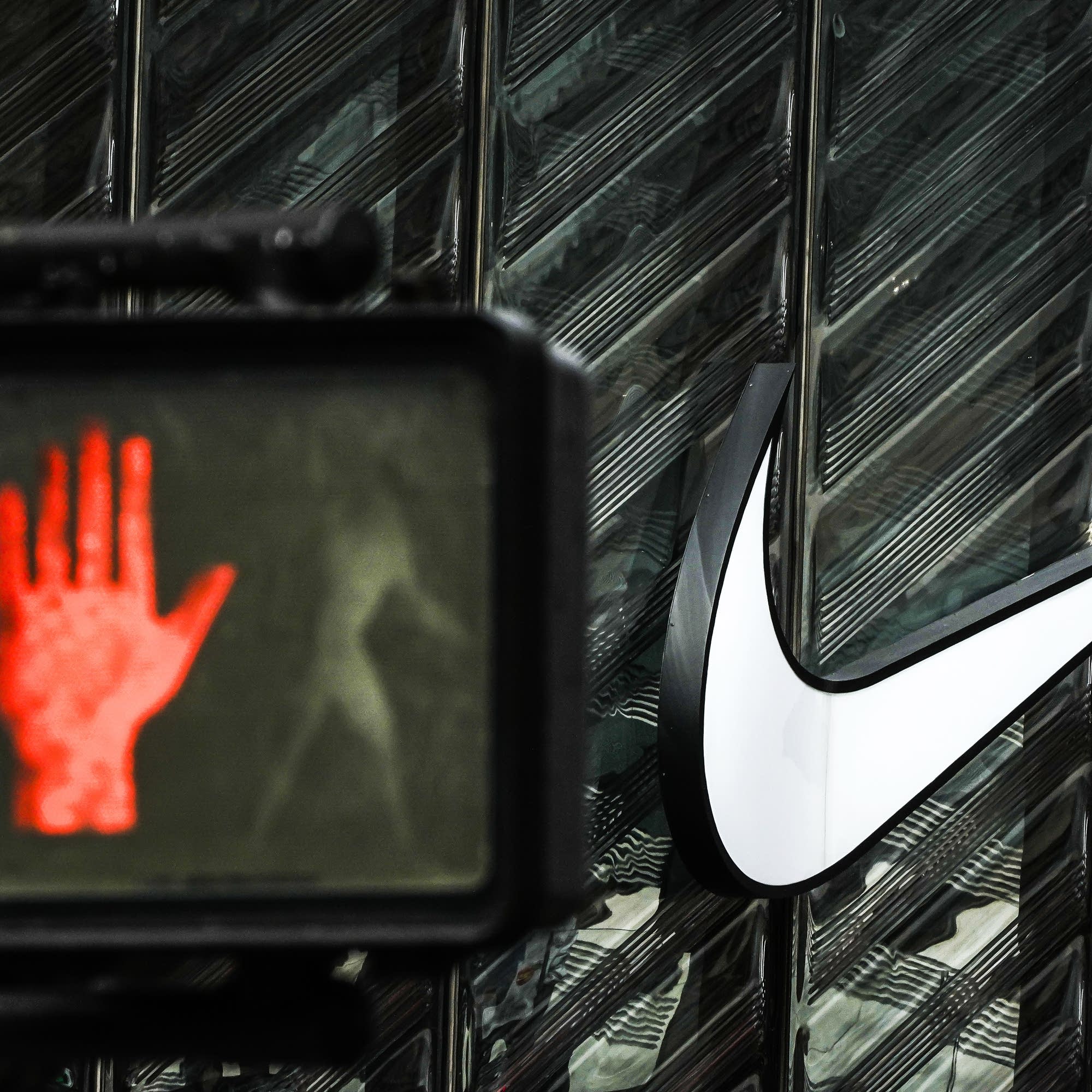
In Nike’s earnings report this week, the brand said it may begin shrinking its operations and laying off workers. It’s been losing market share for a while now. We look at what went wrong in the last decade. Also in this episode: the government-funded EV discounts that still remain, the business of affiliate links, and a former business owner’s mini retirement during fatherhood.
Every story has an economic angle. Want some in your inbox? Subscribe to our daily or weekly newsletter.
Marketplace is more than a radio show. Check out our original reporting and financial literacy content at marketplace.org — and consider making an investment in our future.
Read the stories in today’s episode:
Get every episode summarized
Each time Marketplace publishes, we email you a written briefing from the transcript — the topics, who appeared, and any specific claims, with the ad reads skipped.
Email me new episodesFree for 3 shows. No card needed.
Hosts & guests

Transcript ready
284 searchable segments. Every word is indexed and playable.
Full transcript
Marketplace — Nike's not just doing it. Machine-transcribed; use the interactive transcript above to jump the player to any line.
Running a business is hard enough, so why make it harder with a dozen different apps that don't talk to each other? Introducing ODO. The only business software you'll ever need. It's an all-to-one fully integrated platform that makes your work easier. From CRM, accounting, inventory, e-commerce, and more. And the best part, ODO replaces multiple expensive platforms for a fraction of the cost. This is why over thousands of businesses have made the switch. So why not you? Try ODO for free at odu.com. That's odu.com. Hey everybody, if you're looking to upgrade your home and don't want to tear down walls or build additions, reach out to the design consultants at 3-day blinds. Their team can show you how your home will look with updated window treatments. See real spaces on 3-dayblinds.com and learn about the benefits of motorized treatments with smart integration. Schedule a free consultation with a design expert and see shudders, blinds, drapes, and more at 3-dayblinds.com. Alright, you know what? This week we got a pretty good picture of where this economy stands.
From American public media, this is Marketplace. In Los Angeles, I'm Kyle Rizdal. It is Friday, Friday, Friday. Today this one is the second of October because it always is to have you along everybody. Alright, we got jobs, we got inflation, we got GDP, and we got six and one half minutes to make it all make sense. And the people left to do it are Jordan Holman at the New York Times and Sidney Bredy at MS now. Hey you two. Hey Kyle. Jordan, I'm going to give you three numbers. You get to pick which one you want to talk about jobs today. 29,000 new jobs on employment rate of 4.2%. We got PCE this week at 3%. That's inflation at the core level. And we got gross domestic product at 2.2% in the second quarter. Which of those would you like to tackle first? The jobs number because I feel like you cannot look away from that number coming in so low. So I spend my time talking to executives and it's almost been a bit frustrating when I'll lay out data points and say there is a frustration among workers or Americans about the economy and points to all the other things.
I feel like with these numbers it kind of speaks to the fact that sure maybe we're not seeing mass layoffs but there is something happening where a lot of companies are just not hiring. And then also that impacts the way people are thinking about staying in their roles, promotions, all of that. So what's really clear from this number is something that's been happening for a while is that the shift of balance has really shifted to employers. And at the same time going to some of the other numbers you threw out wages aren't growing. So people are facing higher prices and it just makes for a very difficult economic picture. Absolutely. So Sudip, higher prices you get to tackle that inflation number PCE at 3%. Not terrible but not going the right way, you know? Yeah, look on all of this stuff, the GDP numbers. We're not booming job growth, not great but it's been not disastrous for a while. Unemployment rates basically been relatively stable for years at this point.
But it's always inflation, inflation, inflation. It is the thing that has everyone feeling so crummy. It is the thing that is on all of our minds. Obviously the gas pump and what's happening with the war is driving a lot of that concern but there are other factors as well. And just under all of this is just displeasure and worry about what's happening with AI. What are the forces that are going to drag down the power of labor and the power to actually bid up your wages. And that is the reason why everyone's so unsettled in this moment. Yeah, Jordan, same more about what we have now come to call the low higher, low fire job market. And when you talk to CEOs and you sort of bring that up and the labor market and wages, what do they say? I mean, did they get it? Do they understand why consumers are so cranky? Yeah, I mean, I think at any level a leader has to say that they understand that in that kind of dynamic, it's not fun.
But with the low higher, low fire, like it's clear that a lot of companies, they might say they overhired or they just have enough people from the pandemic. And then like the people saying we have AI, which clearly is taking a right task that people are doing. So the calculation that executives are making is we can get as much productivity as we can, maybe more and not have to hire more people to get that productivity at a time when they're also facing higher cost. And so they're just trying to find margin. So that's the scenario that's happening right now. So it's not that they're saying we're going to do mass layoffs, even though you have seen some from the tech world. That's really still in the tech world. But overall, a lot of companies are saying, leave the workers we have, but we're definitely going to be using AI and getting that in their hands so we can make more money. I was down in New Orleans and the last week doing some events and every single event I did, AI came up as a big, big deal.
So deep, let us transfer our attention now to one Kevin Warsh and the gang at the Federal Open Market Committee. Today's job numbers do nothing to change sort of the rate, high expectations, right? There will still be that continued expectation of a hike again this year. The big question now is whether the Fed actually needs to go through with this at the end of the month days before the election. There are some other Fed officials in the top of the Fed who have suggested, well maybe we don't need to do it right now. And the weak jobs numbers just shows that there's not going to be pressure from the labor market. A tightening labor market would actually create that problem for the Fed. So now they all recognize that they've got a problem. They've been way off on inflation and meeting the Fed's 2% target for many years now. And they obviously need to get ahead of this problem, but they can keep the expectations in place that there will be another hike by the end of the year without going crazy right now and ramping it up, which is probably a more comfortable place to be than they thought a few weeks ago.
There's still of course in almost 2 weeks another inflation report with that could force their hand if it gets bad. Right. Good change things. Jordan, can we get back to wages for one second because you properly brought them up, but we did kind of blow by it. Real wages are not keeping up with inflation. Full stop. Yeah, prices. Yes, and prices have been rising faster than paychecks in recent months. And so I recently chatted with the CEO PNG, so the maker of tide, Pampers, Dr. Gamble. Dr. Gamble. And so that is a good measure of seeing what's happening there. Whereas market, they're losing some market share because store brands, which are usually cheaper than their brands, people are turning to that. So we've seen for years at this point that people are making trade-offs in what they're buying. I just think when you add the other numbers that we've been talking about, it's going to be harder to look away as seeing that there has been a real change in how people have to navigate the wallets given all of the higher prices that they're seeing.
And if wages don't grow, people have to make more trade-offs. We've been in the K-shaped economy for some time, but the question is, will that bleed into other parts of our economy? Sure, sure. So do you pay very quick question about the politics of this economy? Kevin Haset at the White House, one of the President's key economic advisors. Actually, he said something today that made sense. He said, look, this job support isn't great. And do you suppose it's sinking in over there? They are looking for a lot more. They're looking for a message to sell. Obviously, when everybody feels so bad about inflation and recognizes that as the driving factor in an election that is going away from the President's party right now, they're hoping for something to hang on to, and they're not getting it. They're not going to be able to have a whole lot to sell in just over a month from now.
So they are trying to grow them. It is indeed. So Deep Ready and MS now in Jordan, Holmanth and New York Times, see you too. Thanks. Thanks guys. Thanks for having us. Wall Street today, you know, it's a Friday. It's a Friday. We'll have the details when we do the numbers. Remember, just do it and the solution air Jordans. A lot of us do, but Nike seems to have lost its way and along with it a whole lot of market share. There have been a couple of quarters of falling revenue and the company expects sales to keep dropping. In its earnings report this week, Nike said it's going to get smaller as a company,
part of which of course will mean laying off some portion of its workforce. What happened? Here's marketplace is Christen Schwab. When Christopher Burns was growing up in Memphis in the 80s, Nike was the shoe. Every kid in the hood wanted to wear Jordans. The cool guys were Jordans. Burns, who's a sneaker industry analyst, says Nike was for high performance athletes and also everyday people. And they've always been very aligned with the culture. No more. Burns says in the last decade, Nike lost its way. It went through a big corporate restructuring. It lost contracts with track Olympian Allison Felix and soccer star Killian and Bob Bay. It overproduced Air Force ones and dunks and fell behind on running shoe technology. There are all of these underlying things in the company that they should have been taking care of and now all of that has come to a head. You might argue Nike is so big it doesn't have room to grow.
But the sportswear and sneaker industries are expanding every year. And Jessica Ramirez at the Consumer Collective says Nike is losing its share to brands like On and New Balance, both here and in China, Japan and Korea. You know, these are very crucial markets right now with huge growth engines. What worries Ramirez is not that Nike is cutting costs. It's that executives haven't said much about how they'll reinvest. I don't know that there is a real strategy that makes me feel they're headed in the right direction in Mendy. These days just do it. Just isn't enough. I'm Kristen Schwab for Marketplace. President Trump and Republicans in Congress ended federal tax credits for electric vehicles a year ago this week.
And the prospect of not getting $7,500 off a new EV or $4,000 off a used one had the behavioral economic effect one might imagine. Sales spiked just before the credits went away and then faded hard after they were gone. And it wasn't just a consumer thing either. Car makers canceled their electric model some of them anyway and took billions of dollars in losses. EVs however are not dead. Cox automotive says they were almost 6% of all the new cars bought in August. Also not dead by the way. State funded EV rebates. So as Marketplace's Henry app reports, getting a discount to go electric now depends on your zip code. If you live in Colorado, you make below the median income for your county and you want to trade in your gas powered car for an electric one you're in luck. The state will give you a bunch of money to make that trade says Edward Piersa who oversees Colorado's vehicle exchange program. It's a point of sale rebate that's up to $9,000 for a new EV or up to $6,000 for a used EV.
Over 4,300 Coloradans have gotten the rebate in the past three years. It's funded by a small fee that residents pay on deliveries from Amazon FedEx and the like. And it's just one of the incentives that the state has for EVs. Any resident of any income can get a $750 rebate on many models and that's going to increase to $2,000 in January. Says Will tour executive director of the Colorado Energy Office. It's part of the state's goal to cut carbon emissions and improve air quality by growing the market for electric vehicles. Obviously Colorado can't step in and replace the work of the federal government. We can at least try to continue moving in the right direction. But Colorado is in the minority. Five years ago, most states had some form of rebate or incentive for EVs according to the national conference of state legislatures. Many of them used federal funds from Biden era infrastructure and climate bills, which have run out. So along with the federal tax credits, many state incentives are gone too. What we have is a real patchwork now.
Mark Murrow is a senior fellow at Brookings Metro. He and a colleague did an analysis of EV policies at the state level back in June of this year. At that point, they found about 20 states still offered some form of an electric car rebate, but some of those programs have since closed or run out of funds. The piecemeal nature of the remaining EV incentives makes electric vehicles less accessible to many Americans. At a time of concern about inflation and costs of living, some significant supports to afford ability to households and their transportation bills have disappeared. Also gone says Ingrid Momgren with the EV advocacy group Plugin America is the signal that the federal tax credit sent to encourage automakers, EV charging companies, battery manufacturers. To really invest in EV technology and innovation state level incentives. She says can't replicate that signal.
So some car companies have nixed their EV plans. Honda and Acura canceled an electric lineup forward ended production of its electric F-150. The remaining EVs in the US now have to find their own way. The training wheels are off. They have to thrive on their own merits and we're starting to really see that happen. EV sales peaked at 10% of the new car market just before federal tax credits ended last year. They've stayed around 6% of the market since, according to Cox Automotive. And the market for used EVs has grown quickly too. Though the past year hasn't exactly been smooth for Jesse Lawre who runs used EV dealerships in New Hampshire and Massachusetts. His sales fell after the federal credit went away last year, grew as gas prices rose in the spring, then cooled off over the summer. That volatility of boom and bust cycles even within the course of a couple quarters has been difficult to manage. One tailwind for his sales though state rebate programs in both Maine and Massachusetts.
Residents of both states can use them at his dealerships. Though a lot of his customers have come in not knowing they exist. But then after we helped them get access to the rebate, they could find an electric car that really worked for their family. About 60 customers have used the state discounts in the past year, Lawre says. A far cry from the 110 federal credits he processed in just the last three months before they ended last year. And Henry App for Marketplace. Coming up! I show up on time, I work hard, I know how to swing a hammer. I mean that's pretty good resume right? First though, let's do the numbers. Down does draws up 250 points today, I have 51,176. The NASDAQ added 319 points, 1 and 2 tenths percent, 27,199. S&P 500 picked up 56 points, Jashaya 3.4%, 77,22.
For the five days gone by, the Dow gave up 1 and 3 tenths percent. NASDAQ up about a half percent, S&P 500 subtracted 3 tenths of 1 percent. A tidbit for this morning's jobs report. For most major demographic groups in this economy unemployment rate didn't really change. Had all men out of women teenagers, people were white Asian, Hispanic, all little or no change from August. The one group was unemployment rate went up in September? Black Americans, 7% that's almost twice the rate for white Americans. You're listening to Marketplace. Running a business is hard enough, so why make it harder with a dozen different apps that don't talk to each other? Introducing ODO, the only business software you'll ever need. It's an all-to-one fully integrated platform that makes your work easier. From CRM, accounting, inventory, e-commerce, and more. And the best part ODO replaces multiple expensive platforms for a fraction of the cost. This is why over thousands of businesses have made the switch. So why not you? Try ODO for free at odu.com. That's odo.com.
This is Marketplace. I'm Kai Rizdal. You know how when you're scrolling through your social feeds and you come across a recommendation for and a link to buy? Something you didn't know you needed until you just saw it right now? That's what's known in the trade as an affiliate link. And according to the research firm, EMarketer Affiliate Marketing drove more than $200 billion in USC Commerce sales just last year. Cheryl Wishover wrote about the booming business of affiliate links and how everybody is using them. She wrote about it in Bloomberg the other day. Cheryl, welcome to the program. Thank you so much for having me for the unfamiliar. What are affiliate links and how do they work? Affiliate links are usually connected to some sort of recommendation that someone is making online, usually to buy something like here's a pair of boots I really love. They provide a link to buy it and it ends up going to the retailer from where you can purchase it. But there are little pieces of code in there that tell the link to pay the person who recommended it a commission basically.
Right. Now used to be that it was influencers with really big followings and who were like somebody who would do these things. Now you're right though. It's just regular people doing it. Yes, for a long time, the sort of gatekeepers that controlled the links only wanted to work with really large influencers, people with big followings. But there is an entity called shop my who has sort of opened it up to regular normal people to share links with their friends in their group chats, things like that. Whatever happened to just being altruistic and say, hey man, I got this. I don't even know what it is. Widget and it's amazing you should buy it. Now everybody's trying to make a buck out of it. Yeah, that's interesting because one of the marketing professors I spoke to for the story said something to me that has stuck with me since then that the generosity has gone out of the culture of recommendations because everything's becoming monetized. And I think I don't know, especially younger generations have been raised on the internet and they understand that there's a way to make money on the internet.
Why aren't we, you know, the money is there. Why shouldn't we try? And you're okay with your friend getting like 3% right? I mean, I would want to maybe know that they're getting it, but I, I don't know how I feel about it honestly. It would depend. It does smack a little bit of multi level marketing. No, little MLM action here. Yes, honestly, because these entities provide referral fees, so there's an incentive for people to say you should join this too. And you can get, you know, you can make commission to and the fact that they're dropping links everywhere. You know, it's not just altruism. They know they're making money off of it too. So yes. Right, right. On the theory that nobody wants my recommendations, I will not be doing this. But you know, you're somebody now. You write in Bloomberg. Is this something you would do? I wouldn't do it. I mean, I am faced with the possibility of doing it because I write a newsletter and I am on Instagram.
Oh, you can't. You basically have to do now. Yeah, I personally wouldn't feel great about doing that. But so many people have told me what a dummy I am for not doing it because I'm leaving money on the table. So that's on me, I guess. So, well, look, I will subscribe to your newsletter and I expect to see some affiliate links in there. Sounds good. Just buy something that I recommend. Okay. That's right. That's right. That's the catch. You got to, you got to buy. Show a wish over running of an affiliate links in Bloomberg. Show thanks a lot. Thanks for having me. We know, thanks to today's jobs report, that there are 171 million people in the US labor force and 105 million working age people out of it. That includes people who've retired, non-working students, unpaid caregivers, and anybody else who's choosing not to work right now, whatever their reason might be.
With that, here's today's installment of our series, Clockdown. My name is Ryan Nichols. I am a father and partner, and currently I am sitting by the ocean in Westport, Washington. I left home when I was 18 to move out west to climb and ski and surf a bit. A lot of my transient lifestyle was funded by showing up in the ski town or climbing area and just saying, look, man, I showed up on time, a work hard. I know how to swing a hammer and getting paid cash to do that. On a layover in my late 20s, my buddy and I hatched a plan to start a green building company in Nashville. We didn't know how to advertise what to do. We were like, let's just build a house as a commercial. We're literally screwing poster boards to telephone poles, kind of like the way an indie artist would advertise, saying, like, green home this way.
That home was on the market when Lehman Brothers collapsed. I had a front row seat to the great financial crisis, and there was a big kind of financial and emotional tool there. Every month felt desperate. Ultimately, this triggered chronic illness that my buddy and partner had. It caused my buddy his life at the end of the day. Coming out of that was really dark and hard. The economy did what it did for the next 10 years, which in Nashville was absolutely explode. Even as COVID hit, I just felt like it had been all gas for a decade. In the midst of all that, my child was born. And as I sat there, kind of rocking me home to sleep at night, I just felt like I did not want to be a stressed out, not present.
Dad, at that point, I just started making plans to shut my business down. It took a while to kind of fulfill the obligations of the people that I had said I will build your home for you. But once those obligations were met, that was it. We sold our home, bought a van, and we've been on our road for about four months. My partner is a nurse, so she's going to be able to work again easily. She actually misses her job, which I am not quite there yet. And as far as what I do next professionally, I'm not sure right now what that's going to be. But coming a dad almost brought me full circle, and I'm a little bit closer to the values that I had in my early 20s. Having this time with my family right now does truly feel priceless.
Ryan Nichols there with his family, some place in the Pacific Northwest. Tell us, would you, about your journey through this labor market, whatever it might look like, marketplace.org slash, clocked out is where you can do that. This final note on the way out today in which context as always matters, you might have seen the news that G7 countries and their partners are going to release 100 million barrels of oil and diesel over the next four months to try to obviously bring prices down. So look, A for effort and all that, but I'm obliged to remind you here that we use globally 100 million barrels of oil every single day. Our theme music was composed by B.J. Leaderment, the market place's executive producer is Nancy Fargali.
Joanne Griffith is the chief content officer. Neil Scarborough is the vice president and general manager. I'm Kyle Rizdal, have yourselves a great weekend everybody. We will see you back here on Monday, all right. This is APM. I'm Lee Hawkins, host of Must Be the Money, a podcast for marketplace. Each week I speak with inspiring entrepreneurs and business leaders about their lived experiences and they share tangible insights to help guide your path to success. Here from icons like Angelica Nwandu, Van Lathan, Angelie, Matt Barnes and more about how to seize opportunity, manage money and meet challenges with resilience. Listen to Must Be the Money wherever you get your podcasts.
More episodes


